Encyclopaedia
PlantFreshwaterEasy
©AI Generated·Proprietary
Zosterella dubia
Zosterella dubia
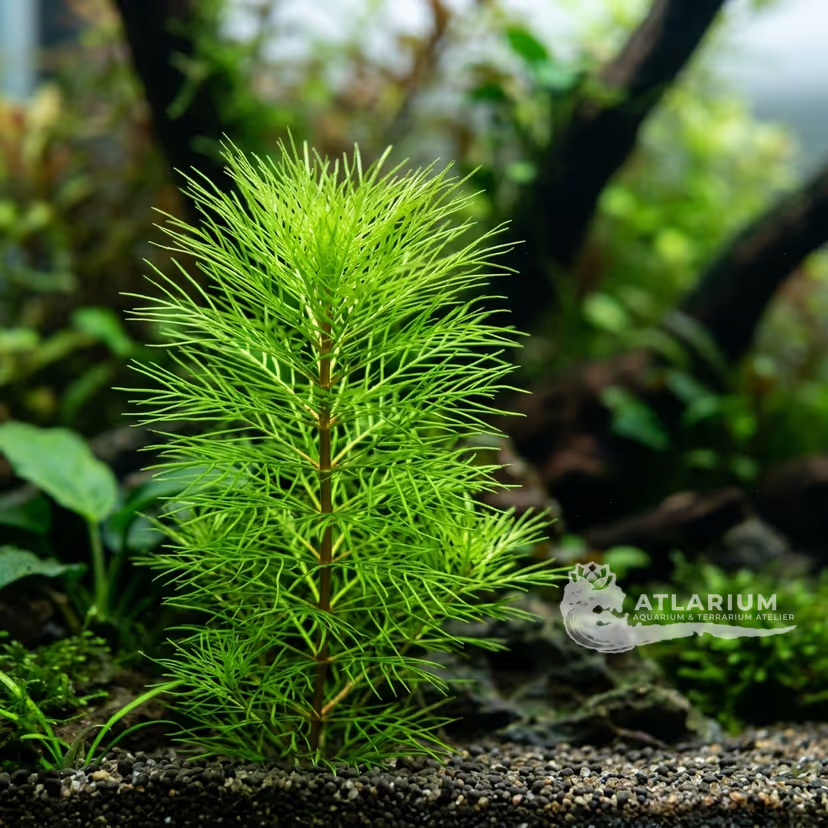
Zosterella dubia is a widespread American aquatic plant with grass-like leaves. It thrives under medium light, ensuring robust growth without excessive algal blooms.
Class:Liliopsida
Order:Commelinales
Family:Pontederiaceae
Genus:Zosterella
Species:Zosterella dubia
Formerly known as:
Share
Check out Zosterella dubia on Atlarium
Water Temperature
22 - 28 °C
pH Value
6 - 7.5
Water type
Freshwater
Light
Medium - High
CO2
Medium - High
KH
2 - 10 dKH
Species description
Geographical Origin and Habitat: Zosterella dubia is native to extensive regions of both North and South America, thriving in freshwater aquatic habitats ranging from slow-moving streams to ponds and lakes. This broad geographical distribution attests to its remarkable adaptability to diverse environmental conditions. It prefers tranquil or gently flowing waters, often forming dense populations that can cover large surfaces. Its presence in nature significantly contributes to water oxygenation and provides refuge for numerous aquatic species.
Taxonomy & Genetics: Belonging to the Pontederiaceae family, Zosterella dubia is scientifically recognized for its unique botanical characteristics that distinguish it from other species with which it is sometimes confused, such as Egeria densa or Elodea canadensis. Although they share superficial morphological similarities, differences in floral structure and reproductive organs confirm its specific classification. Its taxonomic designation reflects an evolutionary lineage within monocot aquatic plants. The Pontederiaceae family also includes plants like water hyacinths, albeit with very different growth habits.
Physical Structure: Zosterella dubia presents as a stem plant with elongated, slender stems that can reach considerable lengths, often extending up to the water's surface. Its linear, delicate leaves are arranged in whorls along the stem, creating a dense and lush appearance. This structure allows the plant to efficiently absorb light and nutrients from the surrounding water column. Nodes along the stem are points from which new roots or lateral shoots can emerge, facilitating its propagation and the formation of extensive colonies.
Color & Texture: The predominant color of Zosterella dubia ranges from a bright light green to a rich medium green, with hues that may lean towards yellowish-green under more intense lighting. Its texture is notably soft and delicate to the touch, a characteristic that contributes to a fine and natural aesthetic within the aquarium. This ethereal aspect of the foliage creates a pleasant contrast with plants featuring broader or more robust leaves. The uniformity of color and the fineness of the leaves make it an excellent choice for adding visual depth and softness.
Care, breeding and tankmates
Lighting & CO2: Zosterella dubia thrives under medium intensity lighting, which promotes robust growth and vibrant coloration without encouraging excessive algal growth on its leaves. Insufficient lighting can lead to etiolation of the stems, making them leggy and less dense, while excessive intensity, if not balanced with adequate nutrients and CO2, can stress the plant. Although not strictly indispensable, the integration of carbon dioxide (CO2) into the aquarium significantly enhances the growth rate and compactness of the plant. With added CO2, Zosterella dubia will exhibit more vigorous growth, shorter internodes, and an overall healthier appearance.
Nutrition & Substrate: Primarily a
Water Chemistry: Zosterella dubia is remarkably tolerant of a wide range of water chemistry parameters, making it suitable for various aquarium setups. It prefers temperatures between 20 and 28 °C, with an ideal pH range of 6.0 to 7.5. Carbonate hardness (KH) can vary from 2 to 12, indicating good flexibility regarding water hardness. Maintaining stable and clean conditions is more important than adhering strictly to specific values. Regular water changes contribute to replenishing essential minerals and diluting any harmful substances.
Space Management & Placement: Due to its stem plant nature and its ability to reach considerable heights, Zosterella dubia is ideally positioned in the midground or background of the aquarium. It can be used to create a lush "green wall" effect or to quickly fill empty spaces, providing excellent refuge for small fish and invertebrates. For a bushier, denser look, it is advisable to plant multiple stems close together, forming a group. Its upright growth makes it excellent for softening hardscape lines or concealing equipment. It can also be left to float temporarily as a surface plant if desired.
Pruning: Pruning Zosterella dubia is essential to control its growth, maintain the desired shape, and promote a denser, more branched appearance. Trimming the stem tops stimulates the growth of new lateral shoots from the nodes below, which will contribute to thicker, more compact foliage. Cuttings can be made at any desired height, preferably above a node. The removed apical sections can be replanted directly into the substrate to easily propagate new plants, taking advantage of its rapid rooting ability. Regular pruning prevents the plant from excessively shading underlying species and from reaching the water surface too quickly.
Risks & Diseases: Zosterella dubia is generally a robust plant, but it can exhibit problems if aquarium conditions are not optimal. Nutrient deficiencies often manifest as yellowing leaves (nitrogen or iron deficiency) or stunted growth. Algae can colonize its delicate leaves if lighting is too intense or if there is an imbalance between light and available nutrients, particularly a CO2 deficiency. Ensuring good aquarium hygiene and a balance of light, nutrients, and CO2 will significantly reduce risks. It is important to monitor the plant regularly for signs of stress or disease, intervening promptly.
Geographic Origin and Distribution
Zosterella dubia is native to extensive regions of both North and South America, thriving in freshwater aquatic habitats ranging from slow-moving streams to ponds and lakes. This broad geographical distribution attests to its remarkable adaptability to diverse environmental conditions. It prefers tranquil or gently flowing waters, often forming dense populations that can cover large surfaces. Its presence in nature significantly contributes to water oxygenation and provides refuge for numerous aquatic species.
Origin
North AmericaExtra-Amazon South America
Plant profile
- Placement
- No verified data available
- Botanical form
- No verified data available
- Growth
- No verified data available
- Substrate
- No verified data available
- Column fertilization
- No verified data available
- Root fertilization
- No verified data available
- Trimming
- No verified data available
- Propagation
- No verified data available
- Nutrients
- No verified data available
- Sensitivity
- No verified data available
- Layout role
- No verified data available
Image gallery
Licensed images linked to the species or, when marked, to the closest representative taxon.
Related species
Recommendations grouped by close relatives, companion choices, and similar care.