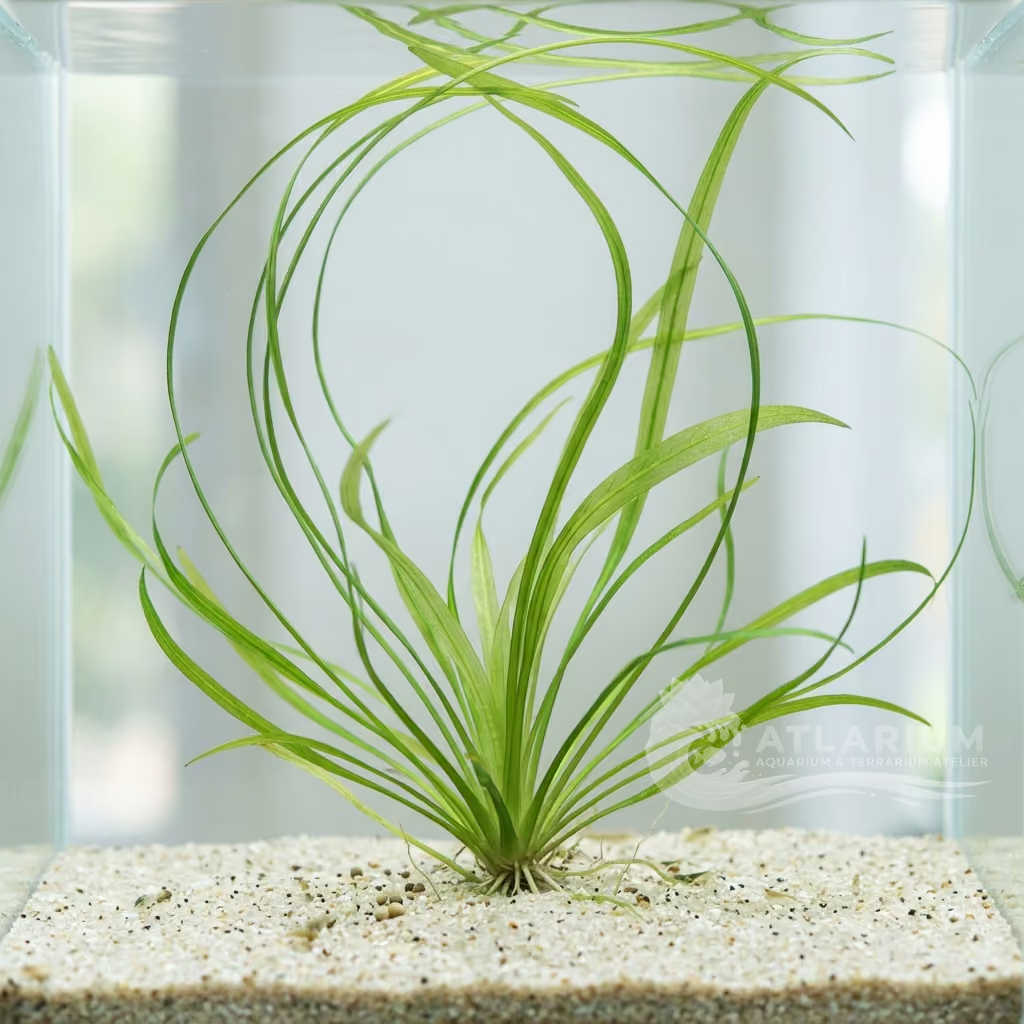
Echinodorus 'Reni'
Echinodorus 'Reni'
A famous, deeply red miniature hybrid perfect for aquascaping. It requires high-intensity lighting and nutrient-dense soil to maintain its beet-red hues and compact rosette.
Water Temperature
20 - 28 °C
pH Value
6 - 8
Water type
Freshwater
Light
Medium
CO2
Low
Expected height
20 cm
Expected width
15 cm
GH
4 - 20 dGH
KH
0 - 21 dKH

Species description
Geographical Origin and Habitat: This highly specific, incredibly compact and vividly red botanical cultivar does not exist in nature. Echinodorus "Reni" is an exceptionally famous, elite commercial hybrid created specifically for the high-end aquascaping hobby by the famed German breeder Tomas Kaliebe. It was meticulously crossbred from wild South American Amazon Sword stock to produce one of the smallest known red Echinodorus cultivars available in the trade. In the aquarium, it behaves perfectly like a resilient, miniature amphibious plant.
Taxonomy & Genetics: Scientifically classified within the Alismataceae family, "Reni" is a highly prized "miniature" modern red cultivar. Taxonomically, it is an extremely complex hybrid. Genetically, it possesses a severe, highly stable mutation that completely suppresses all traits for vertical gigantism, forcing it to remain exceptionally small and squat. Furthermore, its DNA actively forces the extreme, continuous production of heavily concentrated dark-red and beet-red anthocyanin pigments across its wide, compact leaves.
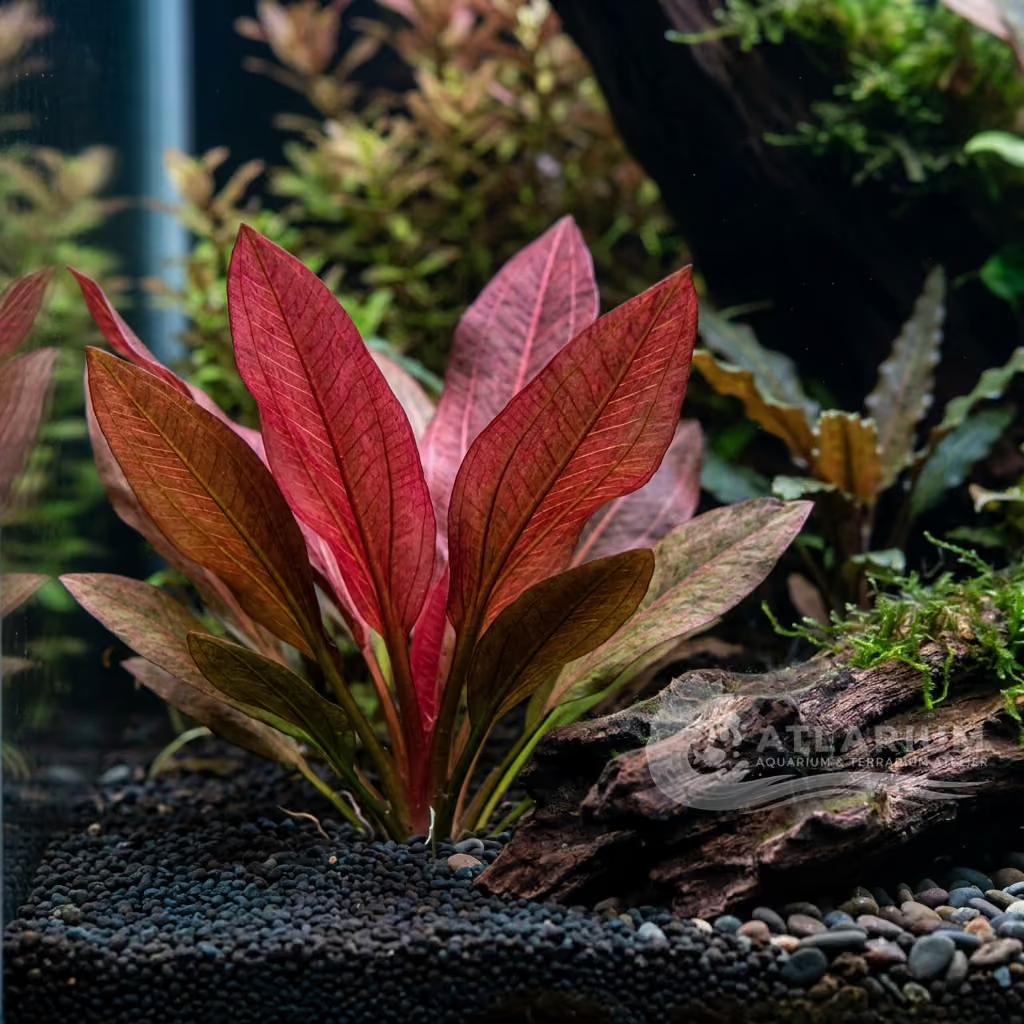
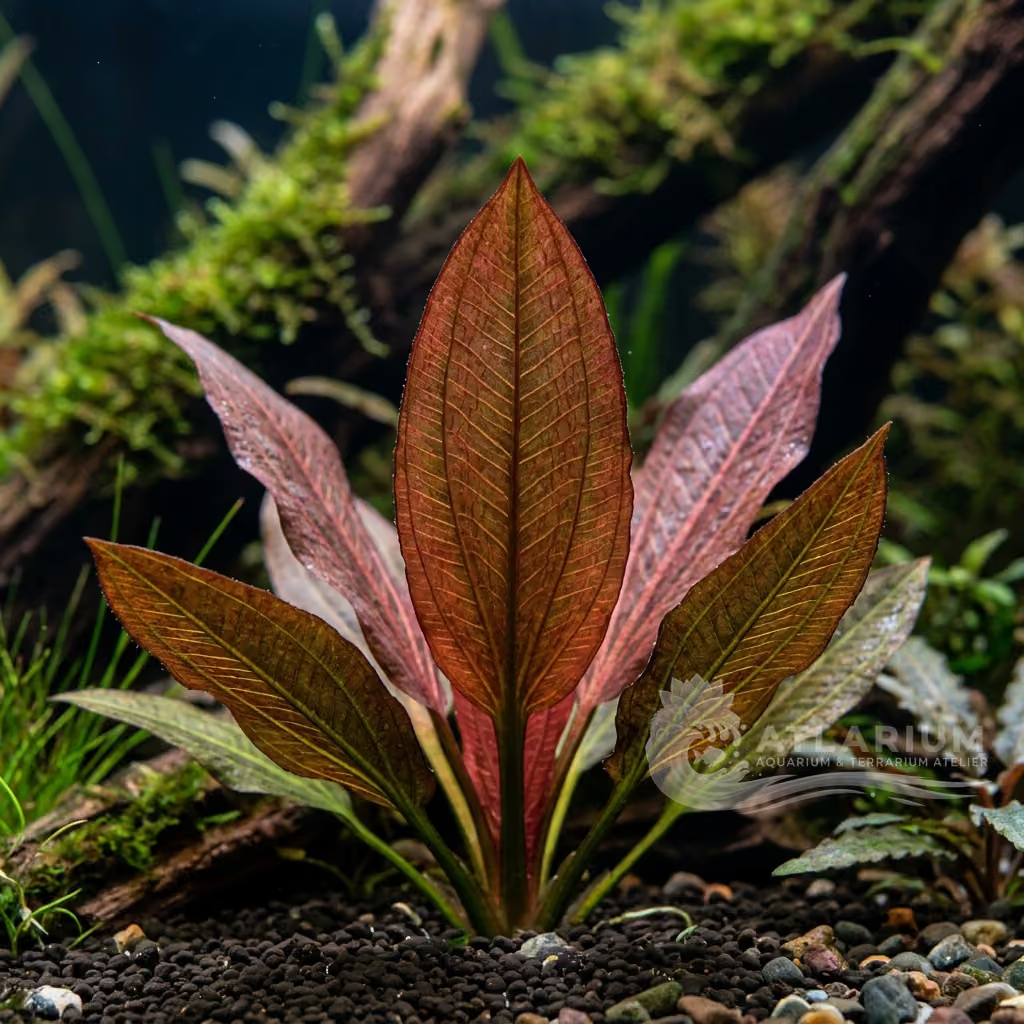
Physical Structure: The architectural structure of the "Reni" sword is violently compact, heavily structural, and fiercely disciplined. It is a miniature rosette plant completely lacking vertical stems. The foundation is a thick, tuberous subterranean rhizome that deploys a surprisingly aggressive, deep-reaching white root system. The leaves erupt tightly from the crown on extremely short, incredibly stiff petioles. The foliage is strictly broadly ovate, staying exceptionally small (rarely exceeding 15-25 cm), and deeply ribbed.
Color & Texture: The coloration is absolutely explosive, intensely rich, and heavily saturated. Grown submerged under intense lighting, the compact rosette erupts as a blindingly vibrant, solid, glowing beet-red or deep copper. As the small leaves age, they transition into a very dark, deeply saturated dark-olive or bronze base with striking dark red veins. The texture is intensely rigid, heavily leathery, and beautifully smooth compared to heavily hammered variants, though still exhibiting prominent structural ribs across the leaf.

Care, breeding and tankmates
Lighting & CO2: It is an ultra-compact, heavily pigmented plant that demands explosive energy to maintain its extreme beet-red color and squat shape. While it will survive in low-light, its spectacular genetics will completely fail; the small leaves will lose their fiery-red color, fade to a dull muddy green, and stretch aggressively upward, ruining the compact aesthetic. To force its ultra-compact rosette shape and blindingly bright red colors, blasting, high-intensity LED lighting is absolutely mandatory. Pressurized CO2 is highly recommended.
Nutrition & Substrate: As an elite, heavily pigmented Amazon Sword hybrid, "Reni" is an aggressive, obligate root feeder despite its tiny size. Its root system strictly demands a very deep (minimum 5 cm / 2 inches), heavily nutrient-dense substrate. It absolutely demands premium aquasoil heavily enriched with iron and macro-nutrient root tabs directly beneath the tuber to fuel its intense beet-red pigmentation. If starved of root nutrients, the small colored leaves will quickly turn pale, turn violently yellow, and dissolve into mush.
Water Chemistry: Originating from highly stabilized German nursery conditions, it is practically invincible regarding standard water parameters. It thrives effortlessly in heated tropical aquariums (22-28°C) and is exceptionally adaptable, comfortably tolerating both soft, acidic blackwater and rock-hard, highly alkaline tap water (pH 6.0 - 8.0). The single most critical environmental requirement is absolute chemical stability. It drastically prefers stable, unchanging parameters over perfectly optimized ones. It demands moderate water flow.
Space Management & Placement: Due to its deliberately tiny size (rarely exceeding 15-25 cm in height), intensely rigid ovate leaves, and commanding beet-red color, "Reni" is strictly a solitary, dominant centerpiece for nano aquariums, or an elite foreground/midground accent for larger setups. It MUST be planted singularly, completely isolated. Because it grows as a violently compact rosette, it provides a perfectly organized visual anchor that violently draws the eye down to the substrate without aggressively shadowing surrounding plants.
Pruning: Pruning is a simple, infrequent, and highly necessary procedure to maintain its flawless shape. Never attempt to trim the thick, rigid leaves in half; the cut edge will instantly turn black, rot, and destroy the aesthetic. To prune dead, yellowing, or algae-covered older outer leaves, you must reach deep down into the absolute base of the compact rosette and cleanly slice the extremely short petiole directly at the crown. It rarely spreads via runners; instead, it slowly forms an impenetrable, tiny red core.
Risks & Diseases: The absolute greatest threat to the "Reni" sword is Green Spot Algae (GSA), Black Beard Algae (BBA), and nutrient starvation. Because the heavily ribbed, dark-red leaves are long-lasting and sit right on the substrate, they act as massive landing pads catching debris and devastating algae if phosphate levels drop. Once GSA or BBA aggressively spots the small leaves, it cannot be cleaned off and ruins the deep bronze coloration. If root nutrients are exhausted, the tiny plant will violently melt.

Geographic origin and distribution
This highly specific, incredibly compact and vividly red botanical cultivar does not exist in nature. Echinodorus "Reni" is an exceptionally famous, elite commercial hybrid created specifically for the high-end aquascaping hobby by the famed German breeder Tomas Kaliebe. It was meticulously crossbred from wild South American Amazon Sword stock to produce one of the smallest known red Echinodorus cultivars available in the trade. In the aquarium, it behaves perfectly like a resilient, miniature amphibious plant.
Origin
Selective breeding and cultivars

Plant profile
- Placement
- Midground
- Its small to medium size makes it an ideal choice for the midground, even in smaller aquariums. It serves as a beautiful, dark red focal point that contrasts perfectly with lighter green plants. Plant it where it will not be overshadowed by taller species.
- Botanical form
- Rosette
- Recognized as one of the smallest red Echinodorus cultivars, forming a compact rosette. The leaves are broad and ovate, emerging with deep red to beet-purple hues. Despite its smaller size, it develops a surprisingly extensive root system.
- Growth
- Medium
- Exhibits a moderate growth rate, but this can be increased with high light and CO2 injection. Under these optimal conditions, it remains compact and deeply colored. In low-tech setups, it grows slower and may lose some of its intense coloration.
- Substrate
- High
- Prefers a fine-grained, nutrient-dense substrate that allows for easy root penetration and nutrient uptake. Aqua soils or fortified clay substrates are ideal choices. Inert substrates will require frequent and heavy supplementation with root fertilizers.
- Column fertilization
- Recommended
- Liquid fertilization can be used to supplement trace elements and potassium in the water column. However, it should only be used as a secondary source of nutrition. The plant's primary feeding strategy relies on its roots.
- Root fertilization
- Required
- Root feeding is critical; the plant will struggle to maintain its color and size without a nutrient-rich substrate. The use of high-quality root tabs, particularly those rich in iron, is highly recommended. Ensure the roots have access to a constant nutrient supply.
- Trimming
- Occasional
- Trimming Echinodorus 'Reni' is straightforward; simply cut older, damaged, or overly large outer leaves as close to the crown as possible. Do not cut the leaves in half, as the remaining stalk will rot. Regular pruning encourages the plant to produce fresh, brightly colored new growth.
- Propagation
- Rhizome division
- Propagates primarily by producing adventitious plants on inflorescences. These can be separated and replanted once they have developed sufficient roots and leaves. It is a reliable and easy plant to propagate in the home aquarium.
- Sensitivity
- Moderate
- Echinodorus 'Reni' is generally quite hardy and adaptable to a range of water parameters. It is not particularly sensitive to most common aquarium medications or liquid carbon products. However, sudden extreme changes in water chemistry should still be avoided to prevent melting.
- Layout role
- Foreground, Midground, accent, Nano
- In an aquascape, Echinodorus 'Reni' serves as a magnificent centerpiece or structural background plant. Its red foliage provides excellent contrast against green stem plants and hardscape materials. It brings a natural, robust texture that anchors the overall design.

Image gallery
Licensed images linked to the species or, when marked, to the closest representative taxon.

Related species
Recommendations grouped by close relatives, companion choices, and similar care.