Echinodorus major
Aquarius major
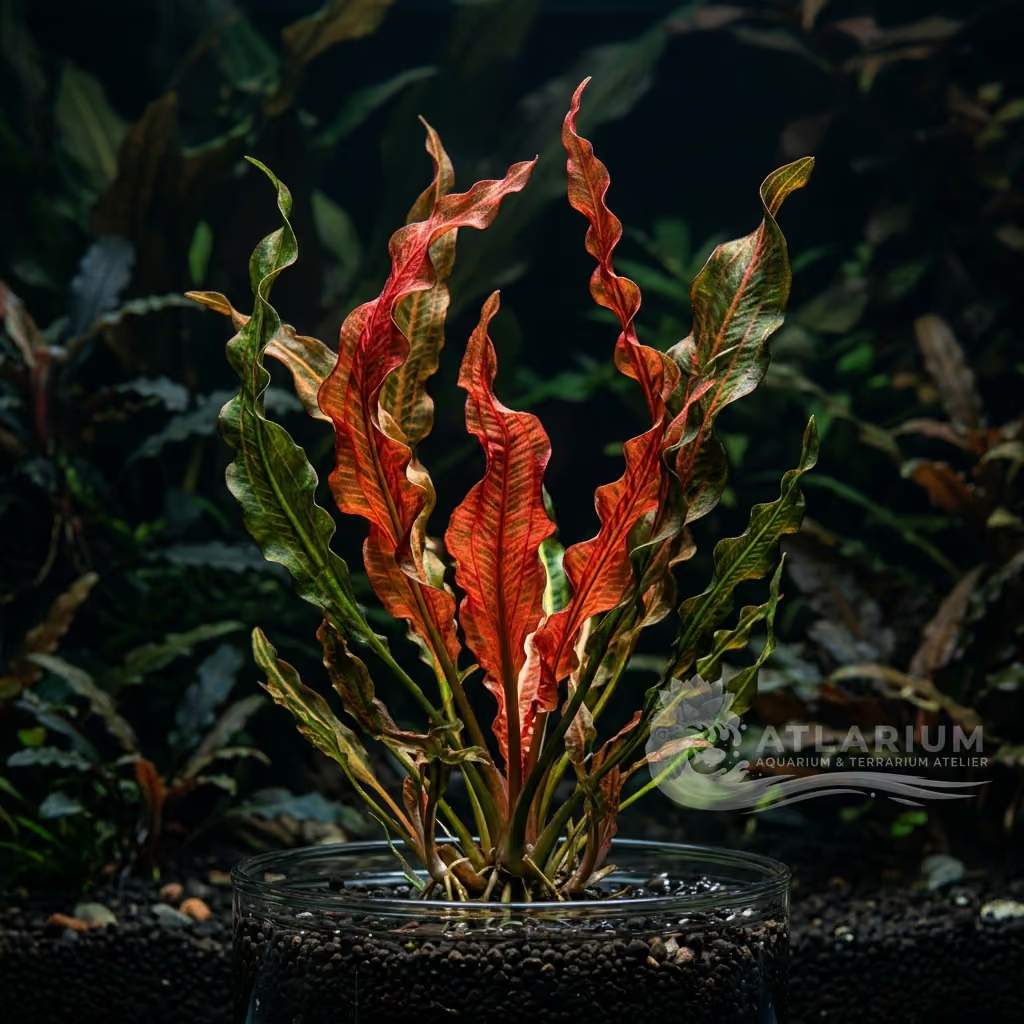
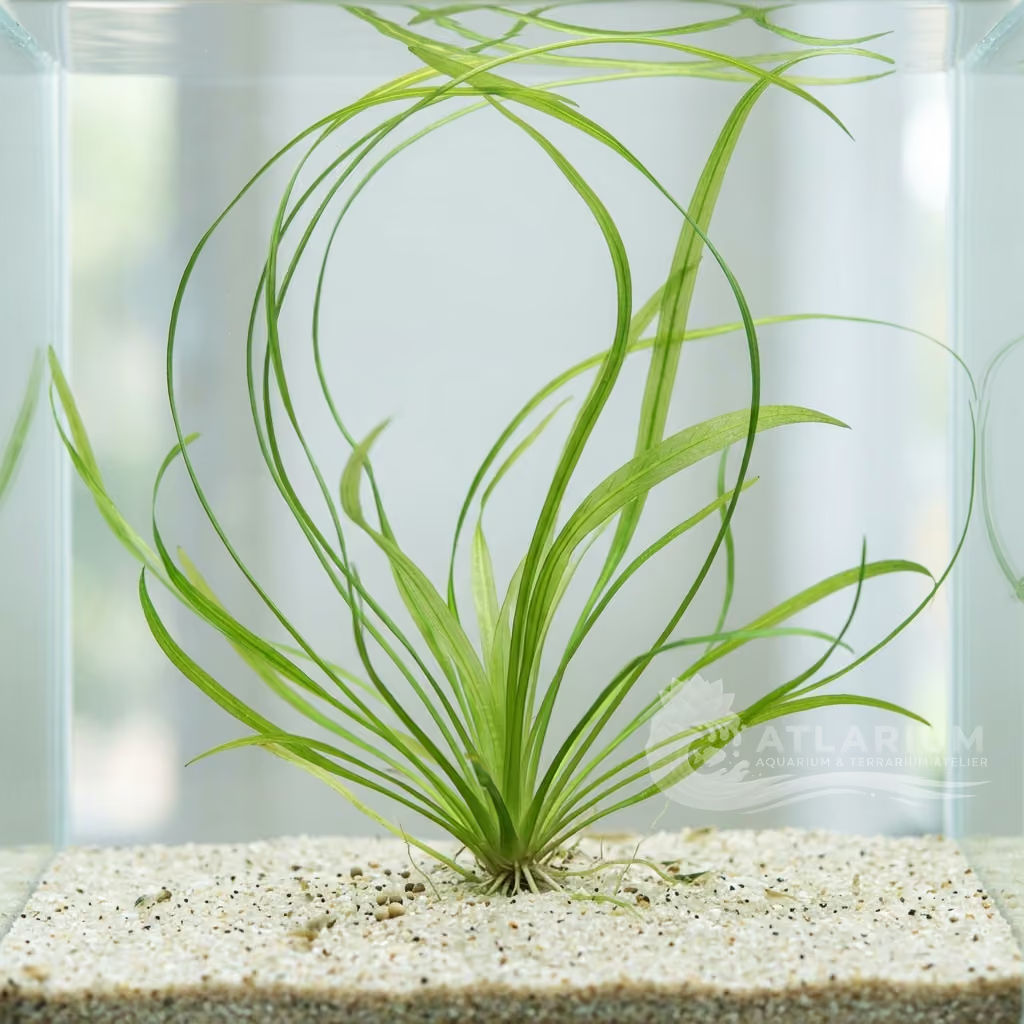
Echinodorus major is a breathtakingly tall, heavily ruffled wild-type sword featuring incredibly long, ribbon-like, translucent light-green leaves of massive scale.
Water Temperature
20 - 28 °C
pH Value
6 - 8
Water type
Freshwater
Light
Medium
CO2
Low
Expected height
60 cm
Expected width
25 cm
GH
4 - 20 dGH
KH
2 - 15 dKH

Species description
Geographical Origin and Habitat: Endemic exclusively to the deeply flooded, extremely hot regions of the Brazilian Amazon, particularly concentrated around the Araguaia and Tocantins river basins. Echinodorus major (formerly known as E. martii) is a massive, true wild-type aquatic swamp plant. It is a wildly fast-growing, highly specialized survivor perfectly evolved to exploit the deeply submerged wet season. Unlike many Amazon Swords that rapidly breach the surface to become terrestrial, E. major prefers to remain fully submerged, growing monstrously long, ruffled leaves underwater.
Taxonomy & Genetics: Scientifically classified within the Alismataceae family, E. major is a colossal, true wild-type morph. Taxonomically, it is globally famous in the aquarium hobby under its older, invalid name "Echinodorus martii." Genetically, it is completely hard-wired for extreme structural gigantism, explosive vegetative propagation via massive runners, and the production of incredibly elongated, dramatically ruffled leaves. It completely lacks the biological mechanism to produce any red or bronze anthocyanin pigments, remaining a solid, bright green.
Physical Structure: The architectural structure of E. major is overwhelmingly dominant, violently fast-growing, and highly elongated. It is a gigantic rosette plant completely lacking vertical stems. The foundation is a massive, incredibly thick, tuberous subterranean rhizome that deploys an aggressive, deep-reaching root system capable of shattering pots. The leaves emerge tightly from the crown on incredibly short petioles. The foliage is the defining structural feature: strictly narrowly lanceolate to strap-shaped, massive (up to 50-60 cm long), and wildly, deeply ruffled along the margins.
Color & Texture: The coloration is distinctly pure, solid, and completely uniform. Grown submerged under standard lighting, the massive, deeply ruffled strap-like leaves are a solid, glowing bright apple-green. Because it completely lacks red pigments, it remains an unwavering, intensely bright pure green even under blasting high-intensity light. The texture is intensely rigid, extremely leathery, and perfectly smooth on the surface, but the defining feature is the violent, extreme waviness (ruffling) along the entire edge of the massive leaf.

Care, breeding and tankmates
Lighting & CO2: It is an incredibly resilient but highly demanding titan. To sustain its terrifyingly rapid, towering growth rate and support its massive, ruffled leaves, medium to high-intensity LED lighting is mandatory. If severely shaded, the massive green leaves will turn pale yellow, rot, and the plant will melt. Because it is biologically programmed for massive vegetative growth, pressurized CO2 drastically accelerates its vertical race, forcing the production of incredibly wide, deeply ruffled leaves that stretch to the water surface.
Nutrition & Substrate: As a colossal, wild-type Amazon Sword, E. major is a terrifyingly aggressive, obligate root feeder. Its massive root system strictly demands a very deep (minimum 10 cm / 4 inches), heavily nutrient-dense substrate. It absolutely demands premium aquasoil heavily enriched with iron and macro-nutrient root tabs directly beneath the massive tuber. It will rapidly strip a standard gravel bed of all nutrients within weeks. If starved of root nutrients, the towering ruffled green leaves will quickly turn white, rot, and dissolve.
Water Chemistry: Originating from the hot, deeply flooded Brazilian Amazon, it is practically invincible regarding standard water parameters, provided the water is kept exceptionally warm. It thrives effortlessly in heated tropical aquariums (24-30°C) and is exceptionally adaptable, tolerating both soft, highly acidic blackwater and rock-hard, highly alkaline tap water (pH 6.0 - 8.5). The single most critical environmental requirement is intense root nutrient supplementation. It drastically prefers moderate water flow to ripple its massive ruffled leaves.
Space Management & Placement: Due to its absolute monstrous size (capable of reaching 60+ cm in length) and wildly dominant nature, this plant is strictly reserved as an extreme background centerpiece for very large, tall aquariums (minimum 300 liters). It MUST be planted singularly. Because it grows as a towering, heavily ruffled rosette, it will rapidly form a breathtaking, impenetrable green wall that violently draws the eye. Its incredibly long, ruffled leaves will eventually arch across the water surface, shadowing the tank.
Pruning: Pruning is a constant, brutal, and necessary procedure if you wish to control its massive spread. Never attempt to trim an incredibly thick, ruffled leaf in half; the cut edge will instantly turn black and rot. To prune dead, yellowing, or excessively massive older leaves that are shadowing the entire tank, you must reach down to the absolute base of the massive rosette and cleanly slice the petiole directly at the crown. It throws out massive, thick runners covered in baby plants that must be severed.
Risks & Diseases: The absolute greatest threat to this titan is nutrient starvation and self-shading. Because its growth rate is so violently fast, it will rapidly strip the substrate of all available nutrients. The moment it runs out of food, the massive green leaves will immediately turn translucent and melt into a massive amount of slimy organic waste. The second major risk is self-shading; once the massive, deeply ruffled leaves reach the surface, they bend over and completely block the light, causing submerged leaves to rot.

Geographic origin and distribution
Endemic exclusively to the deeply flooded, extremely hot regions of the Brazilian Amazon, particularly concentrated around the Araguaia and Tocantins river basins. Echinodorus major (formerly known as E. martii) is a massive, true wild-type aquatic swamp plant. It is a wildly fast-growing, highly specialized survivor perfectly evolved to exploit the deeply submerged wet season. Unlike many Amazon Swords that rapidly breach the surface to become terrestrial, E. major prefers to remain fully submerged, growing monstrously long, ruffled leaves underwater.
Origin
Amazon, Orinoco, and Guianas

Plant profile
- Placement
- Background
- Due to its substantial size, it belongs in the background or as a centerpiece in large aquariums. It requires significant vertical space to accommodate its tall, upright leaves. Ensure it is not cramped, as its wavy leaves need room to unfurl properly. Smaller, delicate plants should not be placed directly underneath its canopy.
- Botanical form
- Rosette
- It is renowned for its long, strap-like leaves with highly ruffled or undulated margins. The leaves are light green, somewhat translucent, and can grow quite long, reaching the water's surface. It forms a large, commanding rosette that creates a strong vertical presence. The ruffled edges add excellent textural variety to the aquascape.
- Growth
- VERY_FAST
- Its growth rate is fast under favorable conditions, readily producing new leaves from the center of the rosette. High lighting, CO2 injection, and rich soil significantly accelerate its development. In lower light setups, it grows moderately but maintains its striking appearance. Consistent care rewards the aquarist with a massive, imposing plant.
- Substrate
- High
- Aquarius major requires a deep, rich substrate environment to accommodate its large form and expansive root network. A thick bed of at least 7-10 cm of aqua soil or laterite-based substrate is essential for proper root penetration and long-term anchorage. As a heavy consumer of soil-based nutrients, this plant will stunt if the substrate becomes exhausted of essential minerals. Routine insertion of root fertilizers is critical to sustain its impressive leaf size and overall vitality.
- Column fertilization
- Recommended
- While it draws most of its sustenance through the roots, it benefits from regular column fertilization. A comprehensive liquid fertilizer provides necessary trace elements that might be missing in the substrate. Liquid potassium is critical to prevent holes from forming in the older leaves. It effectively absorbs nutrients from the water through its large leaf surface area.
- Root fertilization
- Required
- A nutrient-rich substrate or the consistent use of root tabs is critical for this species. Insert root tabs deeply into the substrate near its extensive root mass every few months. Starving its roots will quickly result in stunted growth and a loss of the characteristic leaf ruffles. It establishes an incredibly strong and widespread root system.
- Trimming
- Regular
- Remove older, damaged, or algae-covered leaves by cutting the petiole close to the base. If it grows too large for the tank, carefully prune the outermost leaves to reduce its footprint. Regular trimming encourages the plant to continually push out fresh, healthy growth. Avoid topping the leaves, which will leave unsightly stubs.
- Propagation
- Runners
- Propagation is straightforward via adventitious plantlets that develop on submerged or emersed floral stalks. Wait until the plantlets have formed a few leaves and a strong root system before detaching them. The stalk can be bent down into the substrate to encourage rooting before separation. It can also, albeit rarely, be propagated by carefully dividing the mature rhizome.
- Sensitivity
- Moderate
- It is generally a robust plant but is sensitive to prolonged nutrient deficiencies. Sudden changes in water parameters can trigger temporary leaf melt. It does not tolerate heavy shading; it requires direct light to maintain its ruffled leaf margins. Ensure the water flow is gentle enough not to tear its large, delicate leaves.
- Layout role
- Background, accent
- It is a classic background plant that adds dramatic height and texture to large aquascapes. The ruffled leaves provide a beautiful contrast against finely leaved background stems. It is a staple in Amazon biotope aquariums, looking highly natural and authentic. The broad leaves are frequently used by angelfish and discus as spawning sites.

Image gallery
Licensed images linked to the species or, when marked, to the closest representative taxon.

Related species
Recommendations grouped by close relatives, companion choices, and similar care.