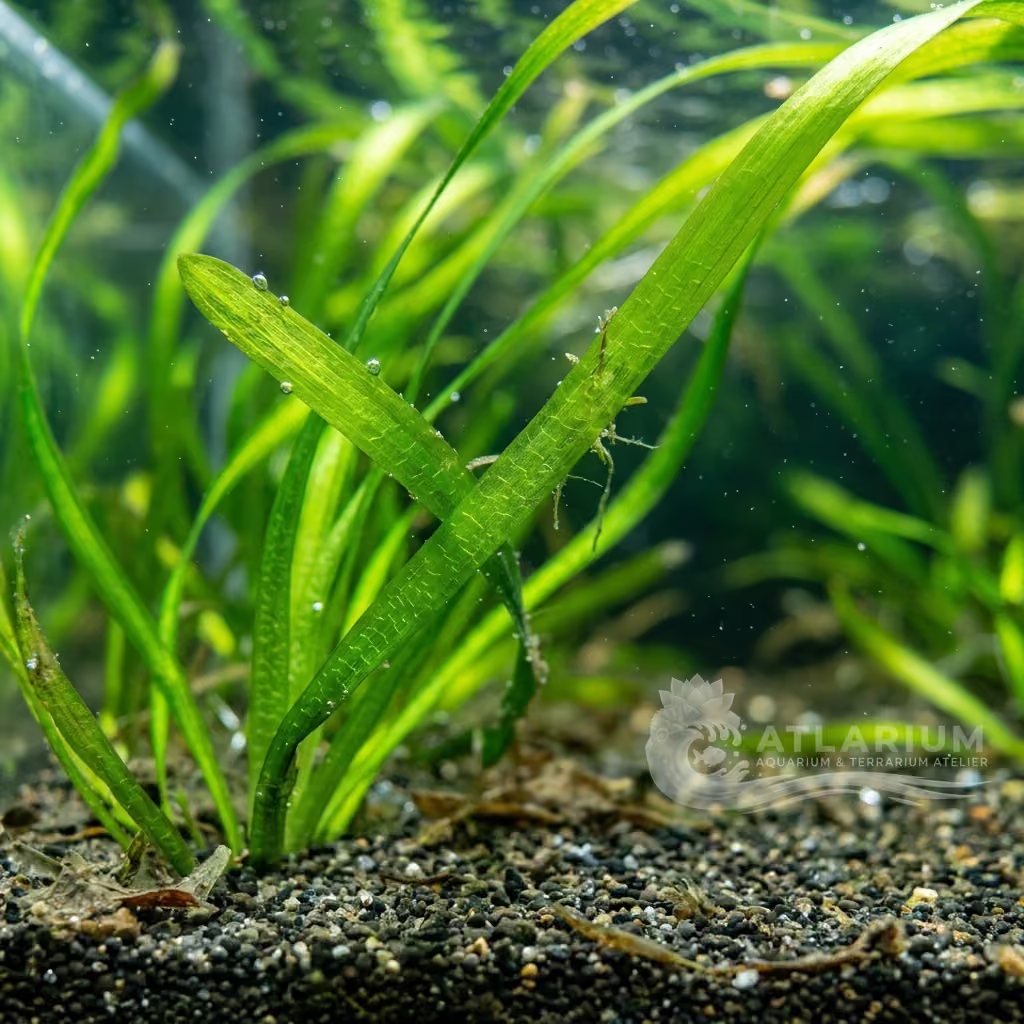
Sagittaria graminea
Sagittaria graminea
Sagittaria graminea is a versatile aquatic plant ideal for the midground of an aquarium, prized for its strap-like leaves and ability to form dense carpets. It requires moderate care and offers significant visual impact due to its orderly growth and bright green coloration.
Water Temperature
15 - 28 °C
pH Value
5.5 - 7.5
Water type
Freshwater
Light
Medium - High
CO2
Low - High
Expected height
20 cm
Expected width
15 cm
KH
2 - 12 dKH

Species description
Geographical Origin and Habitat: Sagittaria graminea originates from extensive regions across North and South America, where it colonizes diverse aquatic and wetland environments. It typically thrives in ponds, slow-moving rivers, and ditches, anchoring itself in muddy or sandy substrates along the banks. This broad geographical distribution highlights its adaptability to a variety of environmental conditions, although it prefers relatively clean, nutrient-rich waters.
Taxonomy & Genetics: Belonging to the Alismataceae family, Sagittaria graminea is a member of the Sagittaria genus, known for including numerous aquatic plant species. Its scientific classification clearly distinguishes it from other similar species, such as Sagittaria subulata, although it can sometimes be confused due to leaf shape. Genetic and morphological studies are essential for correct identification and understanding the evolutionary relationships within the genus, confirming its botanical uniqueness.
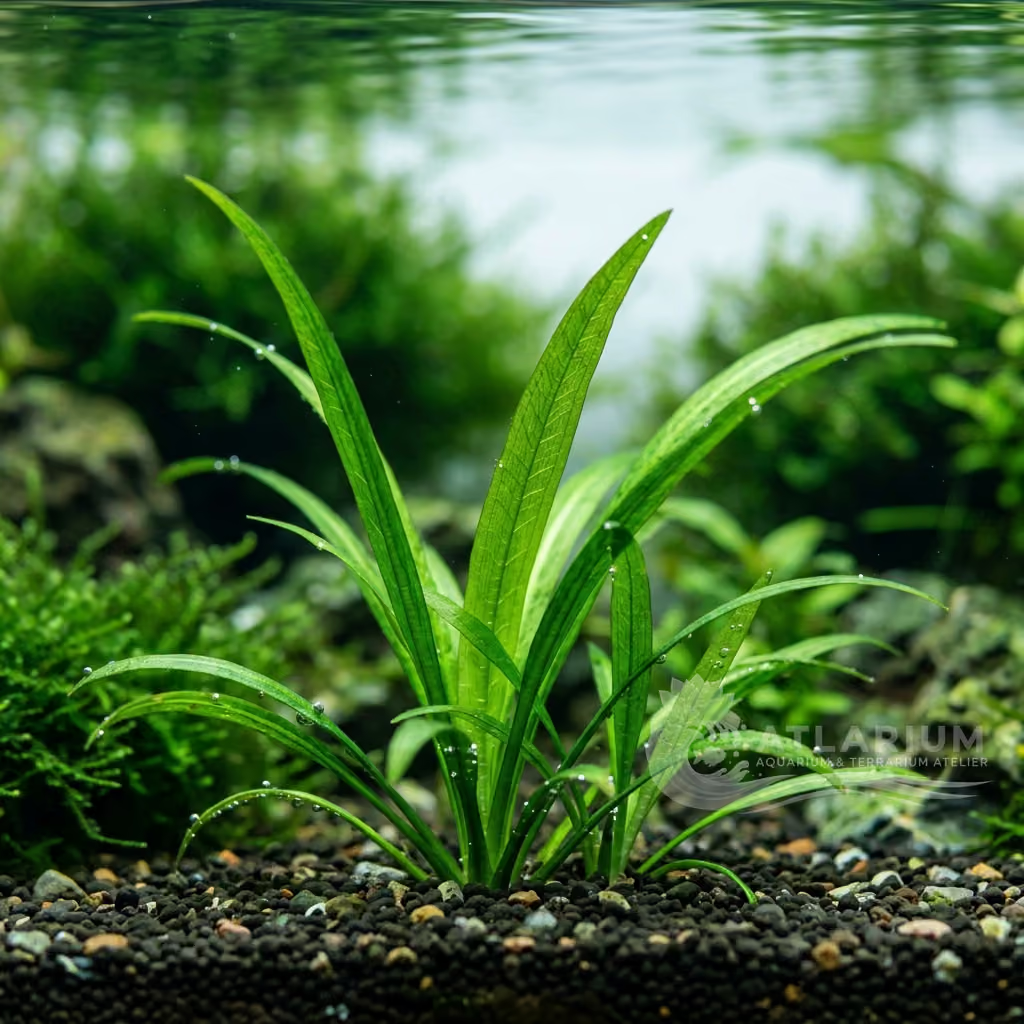
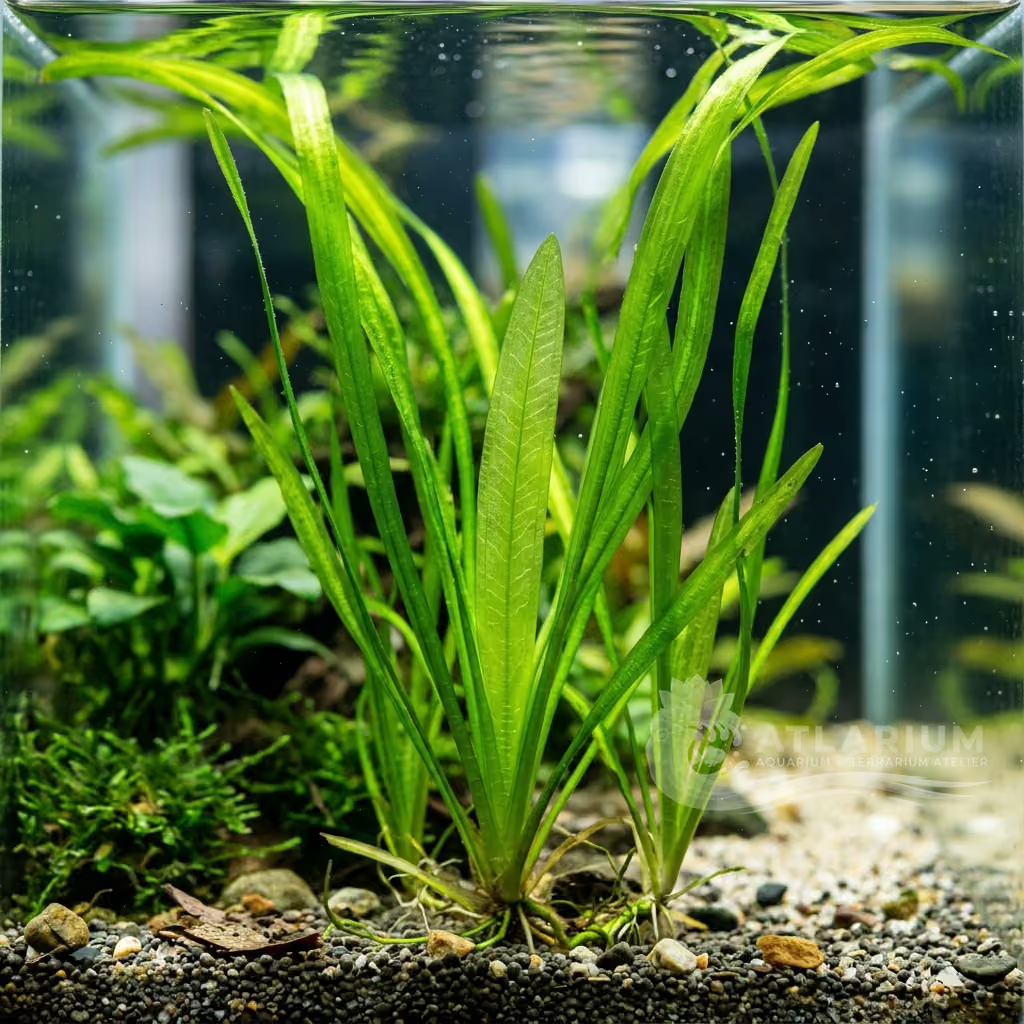
Physical Structure: Sagittaria graminea is characterized by its ribbon-like, narrow, and elongated leaves, which can reach varying lengths depending on growth conditions. The leaves emerge from a creeping rhizome that produces runners, allowing the plant to expand horizontally and form dense carpets. Its fibrous root system is well-developed, firmly anchoring the plant to the substrate and facilitating nutrient absorption.
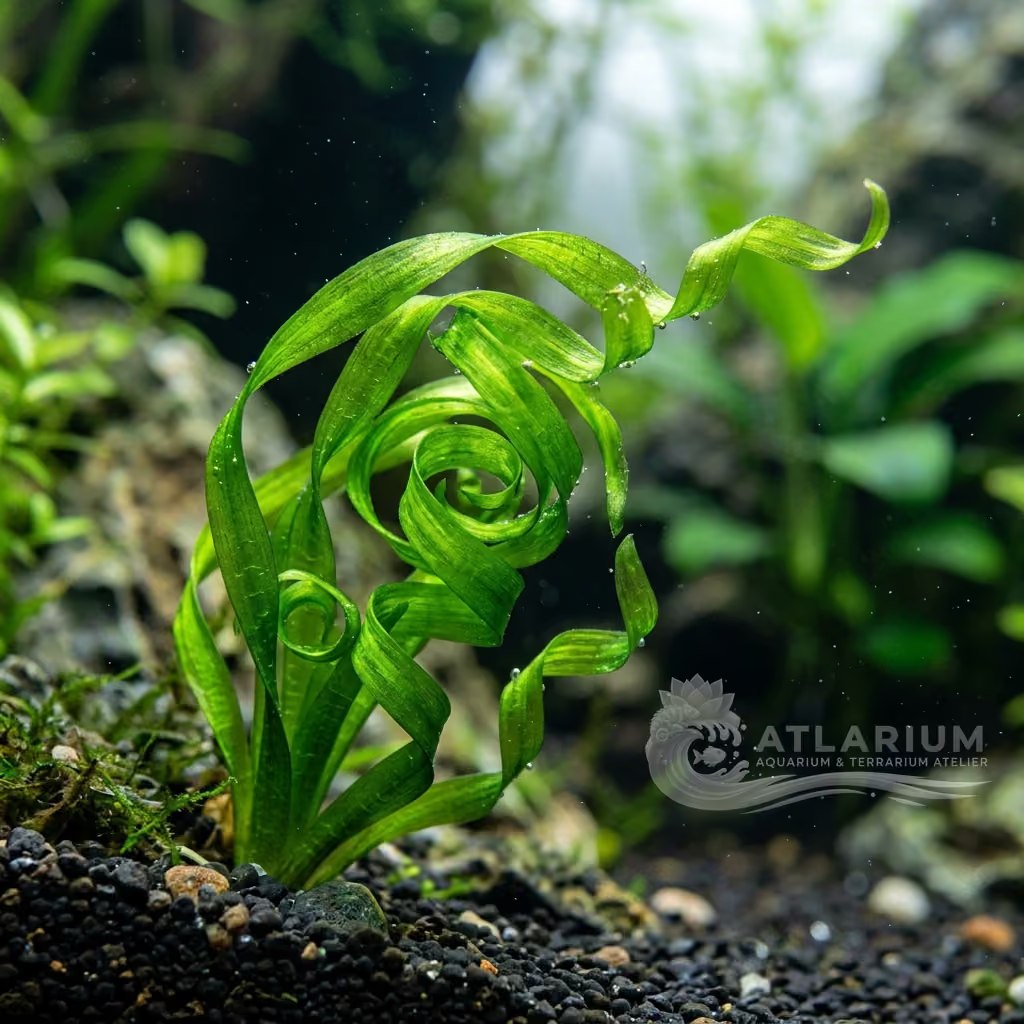
Color & Texture: The leaves of Sagittaria graminea display a vibrant, bright green color that may vary slightly in intensity depending on lighting and nutrient availability. Their surface is smooth and slightly glossy, lending a fresh and healthy appearance to the aquarium. The texture of the leaves is fine yet resilient, contributing to the plant's overall elegance and its ability to thrive in an aquatic environment.

Care, breeding and tankmates
Lighting & CO2: For Sagittaria graminea, medium intensity lighting is sufficient for healthy growth, while also helping to prevent excessive algae proliferation. However, more intense lighting, combined with CO2 supplementation, will promote denser, more compact growth, encouraging runner formation and a lusher carpet. Carbon dioxide injection is particularly beneficial for maximizing this species' growth potential.
Nutrition & Substrate:
Water Chemistry: Sagittaria graminea thrives in a water temperature range of 20 to 28 degrees Celsius, making it suitable for most tropical aquariums. It prefers slightly acidic to neutral pH levels, between 6.0 and 7.5, and a carbonate hardness (KH) between 2 and 12 dKH, indicating good tolerance to various water conditions. Maintaining stable parameters is essential to avoid stress and promote vigorous growth.
Space Management & Placement: Sagittaria graminea is ideally placed in the midground of the aquarium, where its ribbon-like leaves can create a sense of depth or form a transition between shorter and taller plants. Due to its tendency to produce runners, it can also be used as a foreground plant to create a dense carpet, although it will require regular control to prevent excessive spread. Space planning is essential to best utilize its aesthetic potential.
Pruning: Pruning Sagittaria graminea is relatively simple and necessary to maintain the desired shape and prevent overgrowth. Older or damaged leaves can be removed at the base to encourage the growth of new, healthier foliage. To control carpet spread, runners that extend too far can be trimmed and replanted or simply removed. Regular pruning encourages denser, more orderly growth.
Risks & Diseases: Sagittaria graminea is generally hardy but can be susceptible to nutrient deficiencies if the substrate is not adequately fertilized, manifesting as yellowing leaves or stunted growth. Like many aquatic plants, it may suffer from filamentous algae growth on its leaves if there are imbalances in light or nutrients. Careful aquarium management, including regular maintenance and parameter checks, minimizes these risks.

Geographic origin and distribution
Sagittaria graminea originates from extensive regions across North and South America, where it colonizes diverse aquatic and wetland environments. It typically thrives in ponds, slow-moving rivers, and ditches, anchoring itself in muddy or sandy substrates along the banks. This broad geographical distribution highlights its adaptability to a variety of environmental conditions, although it prefers relatively clean, nutrient-rich waters.
Origin
North AmericaExtra-Amazon South AmericaCentral America and Caribbean

Plant profile
- Placement
- Midground
- Due to its potential size, it is generally best placed in the midground or background of the aquarium. It can form a dense, grass-like thicket that serves as an excellent hiding place for fish and fry. In very large or tall tanks, it can even be used as a grassy foreground if trimmed regularly.
- Botanical form
- runner
- Sagittaria graminea features long, ribbon-like leaves that are somewhat broader and more substantial than other Sagittaria species. The leaves grow in a rosette formation from a central crown rooted in the substrate. Depending on the environment, it may occasionally produce emergent arrow-shaped leaves or small white flowers.
- Growth
- Medium
- The growth rate is moderate to fast depending on the availability of light, nutrients, and CO2. Once established, it will aggressively send out runners in all directions, quickly colonizing the surrounding substrate. In low-tech conditions, it grows much slower but remains relatively robust.
- Substrate
- High
- This species develops a very strong and expansive root system, making a deep, nutrient-rich substrate highly beneficial. It thrives in both specialized aqua soils and enriched gravel or sand setups. Providing root tabs will significantly accelerate its growth and the production of new runners.
- Column fertilization
- Recommended
- While it draws most of its nutrients from the substrate, column fertilization provides a good secondary source of nutrition. Dosing a comprehensive liquid fertilizer ensures that trace elements and potassium are always available. This is particularly important if the plant is kept in an inert substrate without root tabs.
- Root fertilization
- None
- Heavy root fertilization is the most effective way to cultivate this plant successfully. It is a heavy root feeder, and placing fertilizer capsules deep near the crown will result in thicker, longer leaves and faster runner production. Replenishing these root tabs every few months keeps the plant looking its best.
- Trimming
- Occasional
- Maintenance is simple; remove older, decaying outer leaves by pinching them off at the base. To control its spread, trim the runners periodically. Do not cut the leaves across the middle, as they will rot down to the base.
- Propagation
- Runners
- Propagation is incredibly simple as the plant naturally reproduces by sending out runners along the substrate. Small plantlets will develop at the nodes of these runners and quickly establish their own root systems. These daughter plants can be snipped off and moved to other parts of the tank once they have several leaves.
- Sensitivity
- Moderate
- A hardy and adaptable plant, tolerant of various water parameters and lighting conditions. It is relatively resistant to algae unless the leaves begin to degrade. A great choice for beginners due to its undemanding nature.
- Layout role
- Midground, Foreground
- Functions well as a grassy background in smaller tanks or a midground accent in larger setups. Its simple, linear leaves provide a natural, calming effect. Useful for adding vertical lines and a sense of height to the aquascape.

Related species
Recommendations grouped by close relatives, companion choices, and similar care.