Salvinia cucullata
Salvinia cucullata
Salvinia cucullata is a very-fast growing floating fern that, despite its 'midground' placement, effectively colonizes the water surface, creating a lush canopy that can influence the lighting for plants below. Its rapid proliferation makes it an excellent nitrate consumer and a dynamic element for aquascape layouts, especially where surface cover is desired.
Water Temperature
18 - 32 °C
pH Value
5 - 8
Water type
Freshwater
Light
Medium to High
CO2
High
KH
0 - 21 dKH

Species description
Geographical Origin and Habitat: Salvinia cucullata originates from tropical and subtropical regions of Asia, particularly found across India, Southeast Asia, and parts of China. This floating fern thrives in still or slow-moving freshwater environments such as ponds, ditches, rice paddies, and the calm margins of rivers and lakes. In its natural habitat, it forms dense mats on the water surface, providing shelter for aquatic fauna and often dominating light access to the water column below.
Taxonomy & Genetics: Salvinia cucullata belongs to the Salviniaceae family, a group of aquatic ferns distinguished by their unique free-floating nature and absence of true roots. As a heterosporous fern, it produces two types of spores: microspores and megaspores, though propagation in aquaria is primarily vegetative through fragmentation. Its genetic makeup allows for rapid asexual reproduction, contributing to its designation as an invasive species in certain non-native ecosystems, highlighting its robust adaptive capabilities.
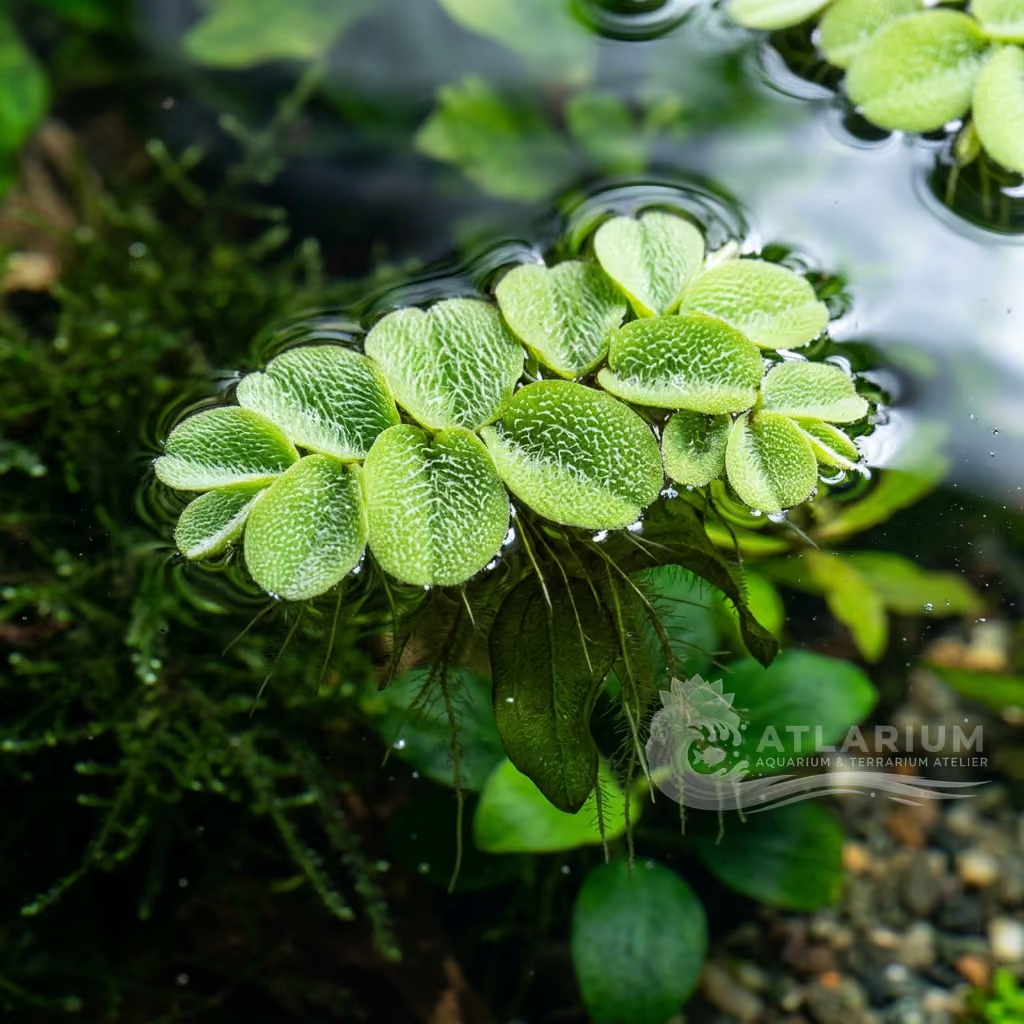
Physical Structure: The physical structure of Salvinia cucullata is characterized by small, buoyant leaves arranged in pairs along a creeping rhizome that floats just beneath the water surface. Each leaf is typically round to oval and features distinctive, hood-like or cupped shapes, often covered in fine, water-repellent hairs. These specialized hairs, called trichomes, trap air bubbles, providing buoyancy and preventing the leaves from becoming waterlogged, a crucial adaptation for its floating lifestyle. Submerged, modified leaves function as root-like structures, absorbing nutrients directly from the water column.
Color & Texture: Salvinia cucullata displays a vibrant light to medium green coloration on its upper leaf surfaces, which can sometimes deepen with optimal lighting and nutrient availability. The texture of the leaves is notably velvety or fuzzy due to the dense covering of hydrofuge hairs, giving them a unique tactile quality and a slightly frosted appearance when dry. This intricate surface not only repels water but also contributes to the plant's overall aesthetic, offering a soft, intricate visual element to the water's surface.

Care, breeding and tankmates
Lighting & CO2: Salvinia cucullata benefits from medium to high lighting, which promotes vigorous growth and a healthy green coloration. While it thrives under brighter conditions, it is not particularly demanding of high-tech CO2 injection systems, as it primarily accesses atmospheric carbon dioxide from the air above the
Water Chemistry: surface. However, sufficient light ensures robust photosynthesis, allowing for its characteristic very-fast growth rate and effective nutrient absorption. Insufficient light can lead to stunted growth and a paler appearance.
Nutrition & Substrate: As a free-floating plant, Salvinia cucullata does not require a substrate for root anchoring and derives all its necessary nutrients directly from the water column. It is an excellent consumer of nitrates and phosphates, making it highly beneficial for maintaining water quality and preventing algae outbreaks. Regular dosing of a comprehensive liquid fertilizer, rich in macronutrients and trace elements, is essential to support its very-fast growth and prevent deficiencies, even if the tank is heavily stocked.
Water Chemistry: Salvinia cucullata is quite adaptable regarding water chemistry, tolerating a broad range of parameters. It thrives in temperatures between 18.0 and 32.0 C, making it suitable for most tropical setups. The plant also accommodates a wide pH range from 5.0 to 8.0 and a KH range from 0.0 to 21.0, indicating its resilience to varying water hardness. Maintaining stable parameters within these ranges will foster optimal health and growth for this floating fern.
Space Management & Placement: Given its very-fast growth rate, Salvinia cucullata requires active space management to prevent it from completely shading out submersed plants. Although listed for 'midground' placement, it is a surface-dwelling plant that covers the water surface, thereby influencing light penetration to the midground and foreground below. It can be strategically placed to provide shaded areas for light-sensitive fish or plants, but regular removal of excess growth is crucial to ensure light reaches other inhabitants.
Pruning: Pruning Salvinia cucullata primarily involves removing excess growth to control its rapid proliferation and prevent it from completely covering the water surface. This mechanical removal ensures that adequate light penetrates to plants below and maintains good gas exchange at the water's surface. Simply scoop out handfuls of the plant every few days or weekly, depending on its growth rate, making sure to discard the removed biomass to export nutrients from the aquarium system.
Risks & Diseases: Salvinia cucullata is generally robust and not highly susceptible to diseases in a well-maintained aquarium. However, risks include nutrient deficiencies, which can manifest as yellowing or browning leaves, and excessive condensation on the tank lid, which can lead to soggy leaves and decay if the plant remains perpetually wet from above. Pests are rare, but vigilant observation for any unusual growth or deterioration is always recommended to address issues promptly.

Geographic origin and distribution
Salvinia cucullata originates from tropical and subtropical regions of Asia, particularly found across India, Southeast Asia, and parts of China. This floating fern thrives in still or slow-moving freshwater environments such as ponds, ditches, rice paddies, and the calm margins of rivers and lakes. In its natural habitat, it forms dense mats on the water surface, providing shelter for aquatic fauna and often dominating light access to the water column below.
Origin
South and Southeast AsiaEast Asia

Plant profile
- Placement
- Floating
- It must be placed floating on the surface of the aquarium. It is excellent for open-top tanks or paludariums where its interesting top-down view can be appreciated. It provides wonderful shade and cover for labyrinth fish, shrimp, and fry, but must be managed so it doesn't shade out bottom dwellers.
- Botanical form
- Floating
- This species is famous for its highly distinct, hood-like or cupped leaves that curl upwards at the edges. Like other Salvinia, the upper surface is covered in tiny water-repellent hairs, while root-like structures dangle below. The cupped structure gives the plant a fascinating, deeply textured three-dimensional appearance.
- Growth
- VERY_FAST
- Under high light and nutrient-rich conditions, the growth rate is exceptionally fast. It will rapidly multiply and can easily cover the entire surface area of the tank in a short period. Frequent harvesting is necessary to prevent it from choking out light and reducing surface gas exchange.
- Substrate
- None
- This is a strictly free-floating species, meaning it has zero interaction with the aquarium substrate. It absorbs all of its required nutrients directly from the water via modified leaves that act as roots. Consequently, the type of substrate used in the aquarium is irrelevant to this plant's success.
- Column fertilization
- Recommended
- Liquid fertilization is absolutely mandatory, as it is the plant's only source of nutrition. Dosing a high-quality, comprehensive fertilizer ensures that the rapid growth is sustained without deficiencies. Because of its massive nutrient uptake, it is frequently used to naturally combat algae blooms.
- Root fertilization
- None
- Root fertilization is entirely useless for this plant, as it does not root in the soil. All of its 'roots' are actually modified leaves suspended in the water column. Rely entirely on liquid fertilizers to meet its nutritional demands.
- Trimming
- Regular
- Maintenance involves physically removing excess plants from the water surface rather than trimming them with scissors. Scooping out a portion of the colony weekly prevents it from blocking too much light. Ensure that discarded plants are disposed of properly and never introduced into local waterways. Regular thinning keeps the remaining plants healthy and vibrant.
- Propagation
- Cuttings
- Propagation happens automatically and rapidly through the continuous division of its stems. As the plant expands across the water surface, sections naturally break off to become independent plants. The aquarist only needs to remove excess growth to keep the population under control.
- Sensitivity
- Moderate
- While generally hardy, Salvinia cucullata is sensitive to strong surface agitation and excessive splashing, which can sink or damage its delicate leaves. It also dislikes condensation dripping onto its surface in closed-lid aquariums. High humidity combined with poor ventilation can lead to leaf rot. Ensure adequate airflow above the water surface for best results.
- Layout role
- Floating, Background
- In the aquascape, Salvinia cucullata serves to create a natural, shaded environment reminiscent of a tropical stream or pond. The dangling roots provide a sense of depth and offer excellent hiding places for fry and small fish. It helps to diffuse intense lighting, creating a softer mood for the tank. Additionally, it aids in biological filtration by absorbing excess nutrients.

Related species
Recommendations grouped by close relatives, companion choices, and similar care.