Azolla filiculoides
Azolla filiculoides
An aggressive, microscopic free-floating aquatic fern from the Americas. It carpets stagnant water surfaces and features a velvety, water-repellent texture.
Water Temperature
15 - 26 °C
pH Value
6 - 8
Water type
Freshwater
Light
High
CO2
Low
Expected height
2 cm
Expected width
5 cm
GH
4 - 20 dGH
KH
0 - 12 dKH

Species description
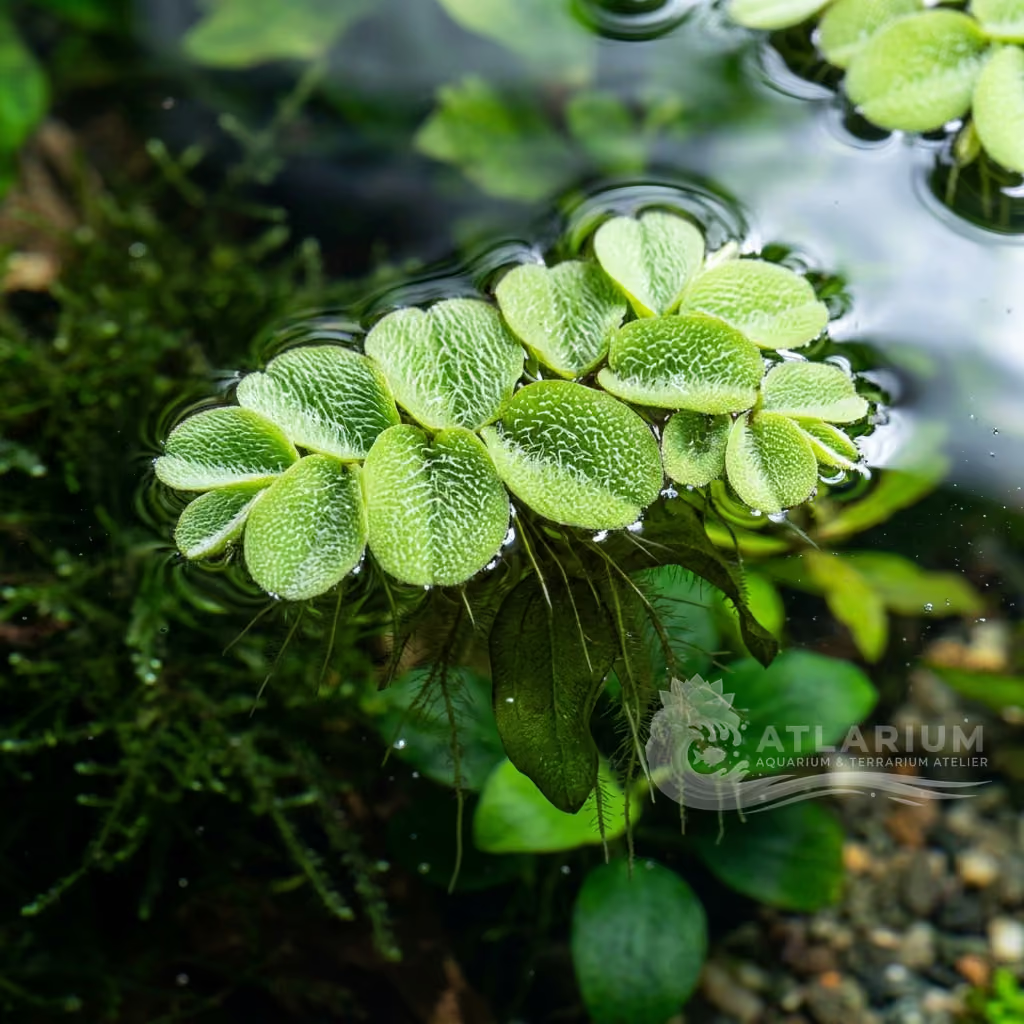
Geographical Origin and Habitat: Endemic originally to warm temperate and tropical regions of the Americas, Azolla filiculoides is a highly aggressive, microscopic free-floating aquatic fern. It has evolved to absolutely dominate and carpet the surface of stagnant, deeply sheltered bodies of water—such as heavily shaded swamps, silent drainage ditches, and completely still, nutrient-rich agricultural ponds. To survive on the water's surface without sinking, it evolved a highly complex, water-repellent micro-texture on its leaves and a legendary symbiotic relationship with nitrogen-fixing cyanobacteria.
Taxonomy & Genetics: Belonging to the Salviniaceae family, A. filiculoides is a true fern, despite looking nothing like terrestrial ferns. It is slightly larger, more elongated, and has a more distinctly "fern-like" branching structure under a microscope than its close relative A. cristata. Biologically, it is famous in scientific circles for the "Azolla Event" theory—a massive, prehistoric global blooming of this exact fern genus that allegedly pulled so much carbon and nitrogen from the Earth's atmosphere that it triggered a global ice age.
Physical Structure: The architecture of this plant is fractal, geometric, and microscopic. It has no true roots in the substrate; it relies entirely on a tiny, fragile, floating horizontal rhizome. From this central axis, microscopic, tightly overlapping, scale-like leaves branch out in a beautiful, feather-like fractal pattern. Extremely fine, hair-like rootlets dangle just below the water surface. While an individual plant is barely 1-3 cm in size, they aggressively interlock like Velcro to form an incredibly dense, solid, impenetrable floating carpet.
Color & Texture: The tiny, overlapping scale-leaves are entirely coated in microscopic, water-repellent hairs (trichomes) that grant the plant a famously soft, velvet-like texture and incredible buoyancy. Under standard lighting, the plant is a vibrant, velvety emerald green. However, as a stress response to high-intensity lighting, cold temperatures, or extreme nutrient depletion, the plant undergoes a profound chemical shift, turning a spectacular, deep rusty-red or rich burgundy color.

Care, breeding and tankmates
Lighting & CO2: It is an extremely high-energy, fast-growing surface weed. Under low or moderate light, it will grow steadily and remain bright green. However, if blasted with intense, high-energy LED lighting, it will rapidly multiply and trigger its dramatic crimson-red stress coloration. Because it floats entirely on top of the water, it draws 100% of its required carbon dioxide directly from the atmosphere. Therefore, injecting pressurized CO2 into the aquarium provides absolutely no benefit to this plant.
Nutrition & Substrate: This plant is the ultimate biological filter and water-column scavenger. It never touches the substrate and requires absolutely no soil. While it rips phosphorus and potassium directly from the aquarium water via its dangling rootlets, its true power lies in its symbiotic cyanobacteria, which allows it to pull pure nitrogen directly from the air. It rapidly consumes heavy metals and excess nitrates, making it an unparalleled, aggressive purifier for heavily stocked or over-fed aquariums.
Water Chemistry: It is an incredibly robust, virtually unkillable survivor. It thrives in standard tropical temperatures (20-28°C) but is highly tolerant of cold water, surviving mild frosts in outdoor ponds. It completely ignores chaotic pH fluctuations and extreme water hardness. The only absolute requirement for its survival is flow: it demands completely stagnant, still water. Strong surface agitation, filter splashing, or turbulent powerheads will rapidly drown, batter, and disintegrate the delicate floating fern.
Space Management & Placement: It exists exclusively on the water surface. Because its growth rate is terrifyingly exponential (capable of doubling its entire biomass every 3 days), space management is a constant, brutal battle. It will rapidly interlock to form a solid, velvet-like mat 2-3 cm thick that blocks 100% of the light from reaching the submerged aquarium. It is fantastic for creating dark, shaded blackwater environments for shy fish (like Bettas or Gouramis), but a death sentence for demanding submerged stem plants.
Pruning: Pruning is a relentless, mandatory weekly chore. Because it multiplies exponentially by fragmentation, you must use a net to physically scoop out and discard massive handfuls of the floating carpet every single week. If the mat becomes too thick, the lower layers will be forced underwater, where they will instantly rot and cause a catastrophic ammonia spike. Dispose of the excess responsibly (compost); never flush it into local waterways, as it is a globally recognized, highly invasive species.
Risks & Diseases: The plant is completely immune to disease and aquatic algae. The absolute primary risk is the danger it poses to the REST of the aquarium ecosystem. If neglected for even two weeks, its exponential growth will completely suffocate the surface, permanently blocking all oxygen/gas exchange, causing the fish to suffocate, while simultaneously blocking all light and killing every submerged plant. It demands aggressive, ruthless weekly harvesting without fail.

Geographic origin and distribution
Endemic originally to warm temperate and tropical regions of the Americas, Azolla filiculoides is a highly aggressive, microscopic free-floating aquatic fern. It has evolved to absolutely dominate and carpet the surface of stagnant, deeply sheltered bodies of water—such as heavily shaded swamps, silent drainage ditches, and completely still, nutrient-rich agricultural ponds. To survive on the water's surface without sinking, it evolved a highly complex, water-repellent micro-texture on its leaves and a legendary symbiotic relationship with nitrogen-fixing cyanobacteria.
Origin
North America

Plant profile
- Placement
- Floating
- It is a floating plant that resides exclusively on the water's surface. It can be used to dim the lighting for plants below or to provide a dense mat for surface-feeding fish and labyrinth fish to build bubble nests. In open-topped tanks, it provides a striking visual element when viewed from above.
- Botanical form
- Floating, Fern
- Azolla filiculoides is a small floating fern composed of tiny, overlapping, scale-like leaves. The fronds are relatively loose and spreading compared to other Azolla species, giving it a slightly more open appearance. The leaves are water-repellent, and numerous fine roots hang beneath.
- Growth
- Fast
- This species has one of the fastest growth rates of any aquatic plant, capable of doubling its surface coverage in just a few days under ideal conditions. It will aggressively uptake nutrients from the water, making it a superb natural filter. Consequently, frequent and substantial harvesting is mandatory.
- Substrate
- None
- Azolla filiculoides is a free-floating fern that completely eschews substrate anchoring. Its small, dangling roots absorb dissolved nutrients directly from the water column, while it fixes its own nitrogen in symbiosis with cyanobacteria. The tank's bottom composition is entirely irrelevant, though the plant demands nutrient-rich water to multiply rapidly.
- Column fertilization
- Recommended
- Liquid dosing is the only way to fertilize this plant. A well-rounded liquid fertilizer program will ensure it doesn't deplete the water of essential micro and macronutrients. Care must be taken not to overdose, as this plant is very efficient at absorbing whatever is available.
- Root fertilization
- None
- Root tabs and enriched substrates are entirely ineffective for Azolla filiculoides. It is a strictly floating species, meaning its roots rely solely on the water column for nutrient acquisition.
- Trimming
- Occasional
- Routine maintenance consists of physically removing large portions of the plant mass from the aquarium surface. It should not be allowed to form a multi-layered, thick mat, as this can severely restrict gas exchange and light penetration. Discard the removed biomass safely in a compost bin or trash.
- Propagation
- Division, Fragmentation
- Propagation happens effortlessly through vegetative fragmentation. The plant naturally breaks into smaller pieces as it grows, rapidly spreading across the surface. No intervention is required by the aquarist to encourage propagation.
- Sensitivity
- Moderate
- It prefers calm water surfaces; strong currents from filters or powerheads can damage the fronds and push the plant underwater, leading to decay. It is also highly sensitive to condensation dripping from tightly sealed aquarium lids. Ensuring proper ventilation above the water surface will help prevent rot.
- Layout role
- Floating
- As a surface floater, it plays a critical role in light management and providing shelter at the very top of the water column. The delicate roots create a microhabitat for fry and small shrimp. Aesthetically, its potential to turn deep red adds a dramatic flair to the upper reaches of the aquascape.

Image gallery
Licensed images linked to the species or, when marked, to the closest representative taxon.

Related species
Recommendations grouped by close relatives, companion choices, and similar care.