Salvinia natans
Salvinia natans
Salvinia natans is a versatile floating aquatic fern, excellent for providing surface coverage and shade in the aquarium, contributing to natural filtration and ecosystem balance. With its medium growth rate, it is easy to manage and suitable for various aquascapes.
Water Temperature
20 - 28 °C
pH Value
6 - 7.5
Water type
Freshwater
Light
Medium - High
CO2
Medium - High
KH
2 - 10 dKH

Species description
Geographical Origin and Habitat: Salvinia natans is a cosmopolitan species, widely distributed across temperate and subtropical regions of Europe, Asia, and Africa. It thrives in calm freshwater environments such as ponds, lakes, ditches, and slow-moving river margins, where it forms dense floating colonies on the water surface. Its presence often indicates relatively still waters rich in nutrients, which are essential for its proliferation and dense mat formation.
Taxonomy & Genetics: Belonging to the family Salviniaceae, Salvinia natans is a heterosporous aquatic fern, meaning it produces two distinct types of spores (macrospores and microspores) for reproduction. Despite its unique morphology, it is sometimes confused with other floating plants like Azolla or Lemna, but it stands out due to the specific structure of its leaves and the absence of true roots. Its classification as a fern is crucial for understanding its life cycle and specific cultivation requirements.
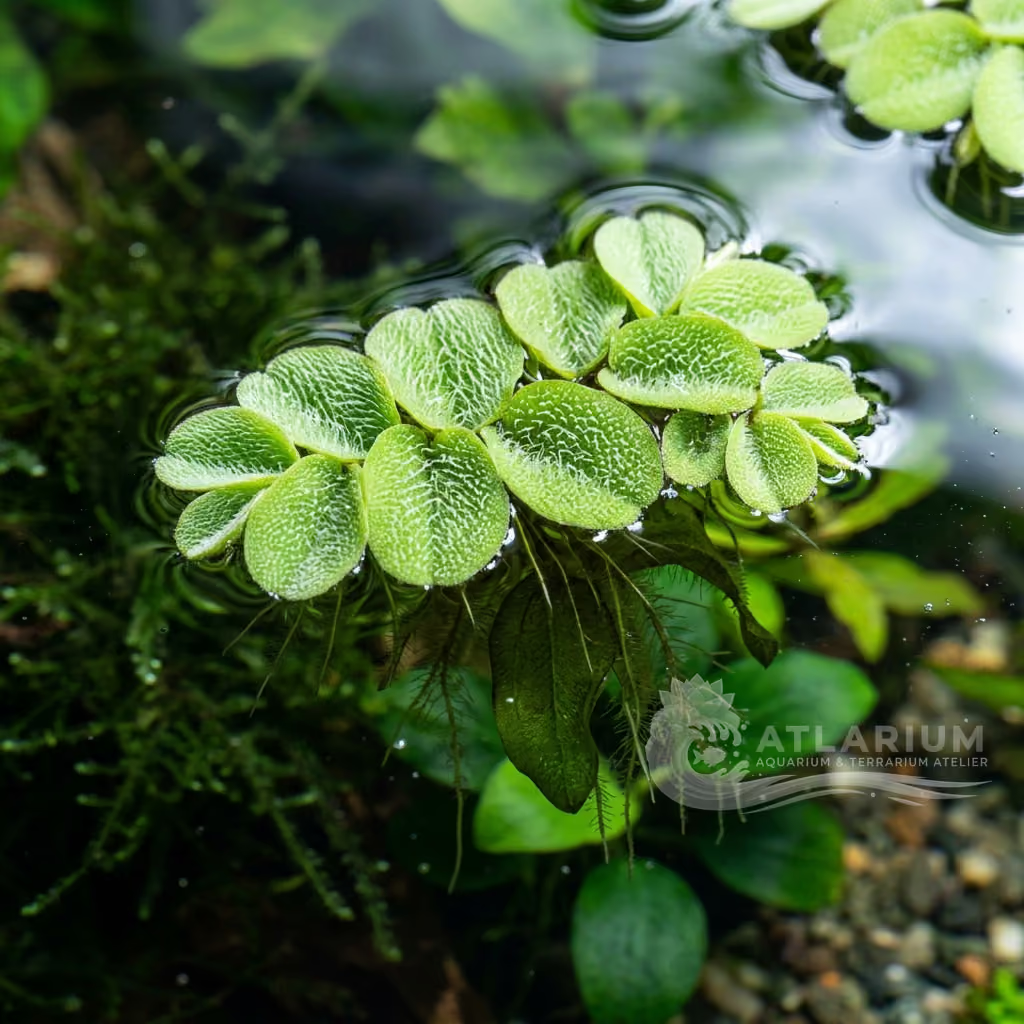
Physical Structure: The physical structure of Salvinia natans is particularly distinctive, characterized by horizontal, branching stems that bear whorls of three leaves. Two of these leaves are oval, pubescent, and float on the water surface, while the third is submerged, finely divided, and functions as an absorbing root-like structure. The tiny, water-repellent bristles (trichomes) on the upper surface of the floating leaves allow it to remain buoyant and prevent submersion.
Color & Texture: The floating leaves of Salvinia natans display a color range from bright green to deep green, depending on light intensity and nutrient availability. Their upper surface is covered with a dense, velvety hair, composed of trichomes that trap air, giving them a distinctive texture and significant water repellency. This tactile peculiarity makes it easily recognizable among floating plants and contributes to its aesthetic appeal.

Care, breeding and tankmates
Lighting & CO2: Salvinia natans requires medium intensity lighting to thrive and maintain vigorous growth, though it can adapt to lower light conditions with slower development. Good lighting promotes the intense green coloration of the leaves and a denser floating mat. It does not require CO2 supplementation, as it absorbs carbon dioxide directly from the atmosphere, but benefits from good air circulation above the
Water Chemistry: surface to facilitate this process efficiently.
Nutrition & Substrate: This floating plant primarily absorbs its nutrients directly from the water column through its modified submerged leaves, acting as an excellent natural filter. It does not require a specific substrate since it is not rooted, but it benefits from the presence of liquid fertilizers providing essential macro and micronutrients. Its assimilation of nitrates and phosphates is particularly efficient, helping to maintain clean water and control algae growth.
Water Chemistry: Salvinia natans thrives within a temperature range of 20 to 28 °C, preferring slightly acidic to neutral pH, ideally between 6.0 and 7.5. Carbonate hardness (KH) should be maintained between 2 and 12, indicating good tolerance to various water conditions, as long as they remain stable. It is crucial to avoid extreme fluctuations in these parameters to prevent stress to the plant and promote healthy, robust growth.
Space Management & Placement: As a floating plant, Salvinia natans naturally positions itself on the water surface, where it rapidly spreads to form a dense mat. Although categorized as "midground," for a floating plant this means it offers shade and shelter to the middle sections of the aquarium, benefiting fish and submerged plants sensitive to intense light. It is an excellent choice for reducing algae growth, providing refuge for fry, and creating a more natural environment, but its growth must be managed to prevent complete surface obstruction.
Pruning: The "pruning" of Salvinia natans primarily involves the manual removal of excess plants to control the water surface coverage. Since it propagates rapidly, it is essential to regularly remove individual plantlets or portions of the floating mat. This maintains adequate light levels for submerged plants and ensures proper water oxygenation, preventing the surface from becoming completely overgrown and suffocating the underlying ecosystem.
Risks & Diseases: Generally robust, Salvinia natans can face risks related to nutrient deficiencies, manifesting as yellowing leaves if essential macro or micronutrients are lacking. Excessive surface coverage can suffocate underlying plants and reduce gas exchange, leading to nighttime oxygenation issues. It is also sensitive to oily films on the water surface, which can impair its buoyancy and atmospheric CO2 absorption, causing decline.

Geographic origin and distribution
Salvinia natans is a cosmopolitan species, widely distributed across temperate and subtropical regions of Europe, Asia, and Africa. It thrives in calm freshwater environments such as ponds, lakes, ditches, and slow-moving river margins, where it forms dense floating colonies on the water surface. Its presence often indicates relatively still waters rich in nutrients, which are essential for its proliferation and dense mat formation.
Origin
Europe, Mediterranean, and West AsiaAfrica and MadagascarSouth and Southeast AsiaEast Asia

Plant profile
- Placement
- Floating
- Salvinia natans should be left to float unhindered on the surface of the aquarium water. It strongly prefers areas with minimal surface agitation, as constant splashing will wet the tops of its leaves and cause them to slowly degrade and rot. When placed in calm water, it will quickly form an attractive, textured mat that provides excellent cover for labyrinth fish and shrimp. This placement naturally shades the tank, which must be considered when choosing submerged plants to grow beneath it.
- Botanical form
- Floating
- Salvinia natans is a delicate, free-floating aquatic fern that features pairs of flat to slightly curved, oblong leaves sitting on the water's surface. These floating leaves are covered in distinct, stiff bristles (trichomes) that repel water and ensure the plant remains buoyant. Beneath the water, a third, highly modified leaf structure hangs downward, functioning identically to a root system for nutrient absorption and stability. This unique morphology perfectly adapts the plant to a life spent entirely on the water's surface.
- Growth
- Medium
- In an environment with strong lighting and plenty of nutrients, Salvinia natans exhibits a remarkably fast growth rate. It is highly capable of covering a large water surface area in a matter of weeks, aggressively outcompeting algae for available resources. To maintain a healthy balance and allow light to reach the lower levels of the tank, aquarists must be prepared to harvest handfuls of the plant regularly. While not always as explosive as its cousin S. molesta, its growth is still impressively rapid.
- Substrate
- None
- Because it is an obligate floating fern, Salvinia natans requires absolutely no substrate to grow successfully. Its nutrient uptake is handled entirely by finely divided, modified leaves that hang beneath the water's surface acting as roots. Whether your aquarium features sand, gravel, specialized aquasoil, or no substrate at all, it will not affect this plant in the slightest. This characteristic makes it a perfect addition to quarantine tanks or breeding setups where bare bottoms are common.
- Column fertilization
- Recommended
- Liquid column fertilization is the only effective method for providing nutrients to Salvinia natans. A regular dosing schedule utilizing a high-quality, comprehensive liquid fertilizer is highly recommended to support its rapid growth and prevent deficiencies. The addition of supplemental iron is often necessary to keep the floating leaves looking robust and vibrantly green. Because it cannot feed from the substrate, consistent water column dosing is the key to long-term success with this species.
- Root fertilization
- None
- Root fertilization provides absolutely zero benefit to Salvinia natans. The plant lacks true roots that penetrate the substrate, so inserting root tabs or using nutrient-rich soils will not aid its growth in any way. All required nutrients must be dissolved directly into the water column where its submerged, root-like leaves can readily absorb them. Aquarists can completely ignore the substrate when considering the nutritional needs of this floating fern.
- Trimming
- Regular
- Maintenance involves physically removing excess plants from the water surface rather than trimming them with scissors. Scooping out a portion of the colony weekly prevents it from blocking too much light. Ensure that discarded plants are disposed of properly and never introduced into local waterways. Regular thinning keeps the remaining plants healthy and vibrant.
- Propagation
- Cuttings
- Propagation of Salvinia natans is an effortless process that happens entirely on its own through vegetative fragmentation. The plant's brittle stems naturally break apart as it grows, and each separated piece quickly develops into a new, independent floating colony. This continuous dividing process allows it to spread rapidly across any available surface space. When thinning out the plant, simply scooping out the excess sections is enough to manage its propagation in the aquarium.
- Sensitivity
- Moderate
- While generally hardy, Salvinia natans is sensitive to strong surface agitation and excessive splashing, which can sink or damage its delicate leaves. It also dislikes condensation dripping onto its surface in closed-lid aquariums. High humidity combined with poor ventilation can lead to leaf rot. Ensure adequate airflow above the water surface for best results.
- Layout role
- Floating, Background
- In the aquascape, Salvinia natans serves to create a natural, shaded environment reminiscent of a tropical stream or pond. The dangling roots provide a sense of depth and offer excellent hiding places for fry and small fish. It helps to diffuse intense lighting, creating a softer mood for the tank. Additionally, it aids in biological filtration by absorbing excess nutrients.

Related species
Recommendations grouped by close relatives, companion choices, and similar care.