Salvinia minima
Salvinia minima
Salvinia minima is a very fast-growing floating fern, ideal for surface coverage in aquariums and efficient nutrient absorption. It provides excellent shade for light-sensitive inhabitants and plants below.
Water Temperature
18 - 32 °C
pH Value
5 - 8
Water type
Freshwater
Light
Medium to High
CO2
High
KH
0 - 21 dKH

Species description
Geographical Origin and Habitat: Salvinia minima originates from the tropical and subtropical regions of the Americas, where it thrives in calm or slow-moving freshwater habitats. It is commonly found in still ponds, lakes, ditches, and quiet river backwaters, adapting perfectly to varying light conditions and warm temperatures. Its broad environmental tolerance has facilitated its widespread distribution, though in some areas it is considered an invasive species. Understanding this natural habitat of still waters is crucial for its care in an aquarium.
Taxonomy & Genetics: Belonging to the Salviniaceae family, Salvinia minima is a true aquatic fern, distinguishing itself from rooted plants anchored in the substrate. The genus Salvinia is known for its unique floating leaves and the absence of true roots, which are instead replaced by modified submerged leaves. This taxonomic peculiarity grants it a highly efficient reproductive and nutritional system adapted for surface life. Its genetics allow for extremely rapid vegetative growth through fragmentation.
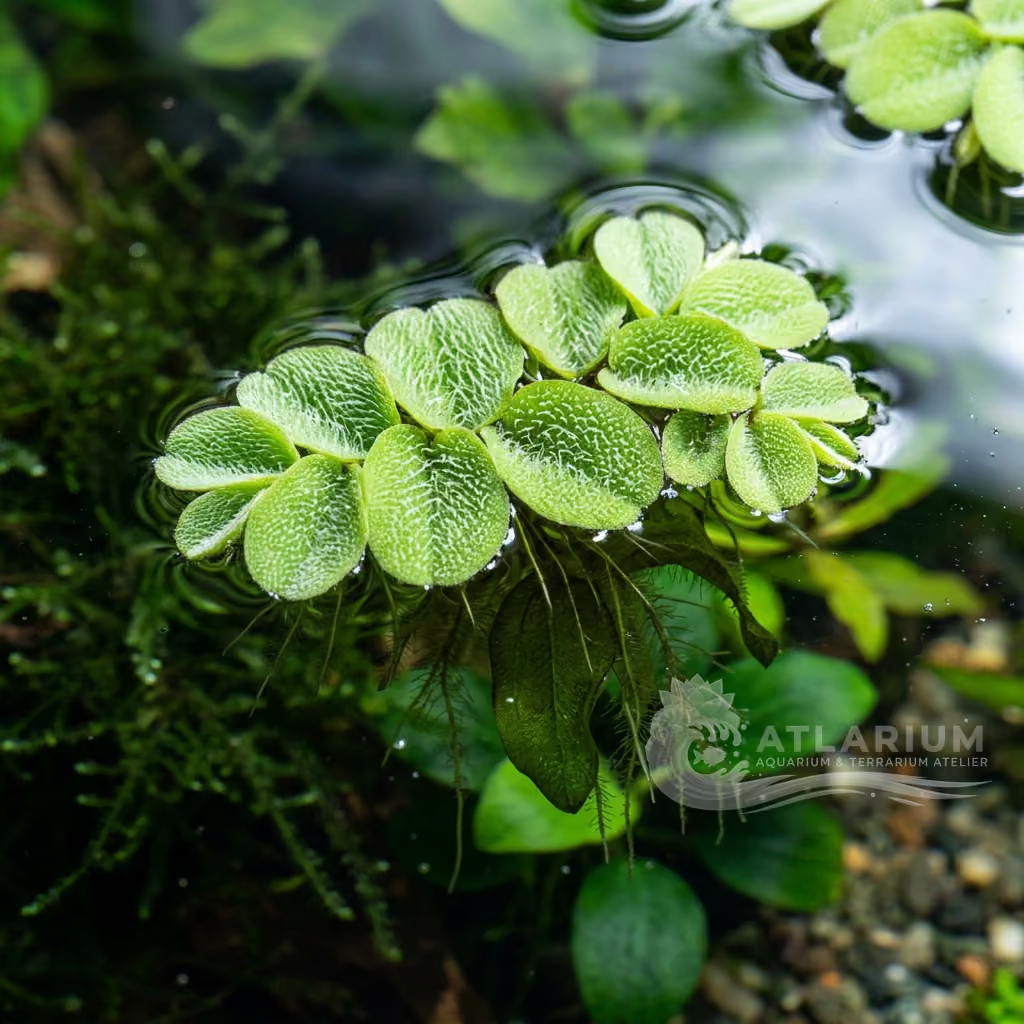
Physical Structure: The physical structure of Salvinia minima is characterized by small, oval leaves, typically arranged in whorls of three per node, with two floating and a third modified leaf hanging submerged, serving a root-like function. The floating leaves are covered with fine, hydrophobic hairs that trap air, enabling the plant to float and resist submersion. These distinctive features allow the plant to thrive on the water surface, forming dense mats. The horizontal stem, or rhizome, branches incessantly, generating new leaves and contributing to its rapid expansion.
Color & Texture: The leaves of Salvinia minima display a coloration that ranges from vibrant green to yellowish-green under intense illumination, taking on darker hues in lower light conditions. The surface texture is distinctively velvety, attributed to the fine, water-repellent hairs which not only facilitate buoyancy but also create an interesting iridescence in the light. The submerged, root-like leaves are more filamentous and darker in color, often brownish. This combination of color and texture significantly contributes to the aquarium's aesthetic, providing a natural contrast.

Care, breeding and tankmates
Lighting & CO2: For Salvinia minima, medium to high light is ideal to promote vigorous growth and maintain the vibrant green color of its leaves. While it does not directly require CO2 injection, good surface aeration and efficient gas exchange benefit its overall health. It is crucial to monitor that Salvinia's density does not completely occlude light for submerged plants below. Excessive light intensity without adequate nutrients can sometimes lead to slight yellowing or stunted growth.
Nutrition & Substrate: Salvinia minima is primarily a
Water Chemistry: This floating fern exhibits remarkable adaptability to a broad range of water parameters, tolerating temperatures from 18.0 to 32.0 C, pH between 5.0 and 8.0, and carbonate hardness (KH) from 0.0 to 21.0. However, for optimal growth and lasting health, it is advisable to maintain stable values within these ranges, avoiding extreme fluctuations. Water that is too acidic or too alkaline outside these limits could stress the plant. Its tolerance makes it suitable for a wide variety of aquariums.
Space Management & Placement: Salvinia minima, although sometimes listed for "midground" placement, is a floating plant that creates a dense mat on the water surface, influencing the aquarium environment at all levels. Its rapid growth necessitates constant space management to prevent it from completely suffocating the surface, blocking light for underlying plants and limiting gas exchange. Used strategically, it provides valuable shade for fish species and plants that prefer attenuated light conditions. Its position on the surface significantly contributes to the overall ecosystem balance.
Pruning: Pruning Salvinia minima is a crucial aspect of its maintenance, given its extremely fast growth rate. To control its expansion and prevent excessive shading of submerged plants, it is necessary to regularly remove significant amounts of biomass. Simply scooping out excess plants from the surface with a net or by hand is the most effective method. This process not only manages space but also serves as an effective nutrient export mechanism from the aquarium.
Risks & Diseases: The primary risk associated with Salvinia minima is its potential for overgrowth, which can lead to complete light blockage and reduced surface gas exchange, suffocating the underlying ecosystem. While generally hardy against diseases, unfavorable water conditions or the presence of oily films on the surface can weaken it, causing leaf rot. It is important to monitor its health to prevent it from becoming a problem rather than an asset. It can also serve as a refuge for small pests if introduced without proper quarantine.

Geographic origin and distribution
Salvinia minima originates from the tropical and subtropical regions of the Americas, where it thrives in calm or slow-moving freshwater habitats. It is commonly found in still ponds, lakes, ditches, and quiet river backwaters, adapting perfectly to varying light conditions and warm temperatures. Its broad environmental tolerance has facilitated its widespread distribution, though in some areas it is considered an invasive species. Understanding this natural habitat of still waters is crucial for its care in an aquarium.
Origin
Central America and CaribbeanExtra-Amazon South AmericaNorth America

Plant profile
- Placement
- Floating
- This species should always be placed gently on the surface of the aquarium water where it can float freely. It is important to ensure it is not submerged, as prolonged immersion or strong surface agitation will cause the leaves to rot. When positioned in areas with relatively gentle flow, it quickly forms an attractive floating canopy. This placement provides excellent shade for light-sensitive fish and helps reduce algae growth by blocking excess light.
- Botanical form
- Floating
- Salvinia minima is a small, free-floating fern characterized by pairs of oval, slightly cupped leaves that rest on the water surface. The upper surface of the leaves is densely covered in specialized, water-repellent hairs called trichomes, which prevent the plant from becoming waterlogged. Beneath the surface, it features modified submerged leaves that function much like true roots, absorbing nutrients and providing balance. This unique botanical structure allows it to thrive exclusively at the air-water interface.
- Growth
- VERY_FAST
- Under optimal conditions with strong lighting and abundant nutrients, Salvinia minima exhibits an incredibly rapid growth rate. It can quickly cover the entire surface of an aquarium within a few weeks, outcompeting algae for available resources. Regular and sometimes aggressive harvesting is necessary to ensure that enough light penetrates the water column for submerged plants below. Its fast growth makes it an excellent candidate for nutrient export in heavily stocked tanks.
- Substrate
- None
- Because Salvinia minima is a true floating plant, it does not require any substrate whatsoever to thrive. Its root-like structures dangle freely in the water, serving purely as nutrient-gathering organs and offering shelter for small fry or shrimp. The type of substrate at the bottom of the aquarium has absolutely no impact on its growth or health. This makes it an ideal choice for bare-bottom breeding tanks or setups with specialized soils.
- Column fertilization
- Recommended
- This floating fern is completely reliant on liquid column fertilization since it has no access to the substrate. Regular dosing of a comprehensive liquid fertilizer containing nitrogen, phosphorus, potassium, and micronutrients is highly recommended for optimal health. Pay special attention to iron levels, as floating plants often consume it rapidly due to their high growth rates. Consistent water column supplementation ensures the leaves remain robust and vividly green.
- Root fertilization
- None
- Root fertilization is entirely unnecessary and irrelevant for Salvinia minima. Since the plant floats on the surface and never anchors into the substrate, root tabs or nutrient-rich soils provide no direct benefit to its growth. All essential nutrients must be absorbed directly from the water column through its submerged structures. Therefore, aquarists should focus all fertilizing efforts on liquid additives rather than substrate enhancement.
- Trimming
- Regular
- Maintenance involves physically removing excess plants from the water surface rather than trimming them with scissors. Scooping out a portion of the colony weekly prevents it from blocking too much light. Ensure that discarded plants are disposed of properly and never introduced into local waterways. Regular thinning keeps the remaining plants healthy and vibrant.
- Propagation
- Cuttings
- Propagation of Salvinia minima is incredibly straightforward and occurs naturally through vegetative fragmentation. The plant continuously produces new leaves and lateral branches along a fragile central stem, which easily breaks apart as the cluster expands. Each small fragment containing a few leaves can quickly grow into a completely new colony under the right conditions. Simply separating the clusters by hand is the most effective way to distribute the plant or thin out an overgrown canopy.
- Sensitivity
- Moderate
- While generally hardy, Salvinia minima is sensitive to strong surface agitation and excessive splashing, which can sink or damage its delicate leaves. It also dislikes condensation dripping onto its surface in closed-lid aquariums. High humidity combined with poor ventilation can lead to leaf rot. Ensure adequate airflow above the water surface for best results.
- Layout role
- Floating, Background
- In the aquascape, Salvinia minima serves to create a natural, shaded environment reminiscent of a tropical stream or pond. The dangling roots provide a sense of depth and offer excellent hiding places for fry and small fish. It helps to diffuse intense lighting, creating a softer mood for the tank. Additionally, it aids in biological filtration by absorbing excess nutrients.

Related species
Recommendations grouped by close relatives, companion choices, and similar care.