Cryptocoryne aponogetifolia
Cryptocoryne aponogetifolia
The towering titan of the Cryptocoryne genus from the Philippines. It features massive, heavily hammered, ribbon-like leaves up to a meter long. It thrives in hard water, shade, and low-tech conditions.
Water Temperature
22 - 28 °C
pH Value
6.5 - 8
Water type
Freshwater
Light
Low
CO2
Low
Expected height
50 cm
Expected width
20 cm
GH
4 - 20 dGH
KH
7 - 21 dKH

Species description
Geographical Origin and Habitat: Endemic exclusively to the fast-flowing, highly oxygenated, and heavily mineralized tropical rivers of the Philippines. Cryptocoryne aponogetifolia is the undisputed, towering titan of the entire Cryptocoryne genus. It thrives completely submerged in deep, crystal-clear limestone rivers, aggressively anchoring its massive root system into hard gravel and clay beds. It is an extreme biological survivor, perfectly adapted to withstand pounding aquatic currents and highly alkaline, calcium-rich water chemistry that would instantly melt softer aquatic plant species.
Taxonomy & Genetics: Scientifically classified within the Araceae family, it derives its specific name ("aponogetifolia") directly from its striking physical resemblance to the towering, crinkled leaves of the Aponogeton genus. Taxonomically, its genetics dictate the production of absolutely massive, monstrously long leaves. It is genetically distinct from the extremely similar-looking C. usteriana, differentiated primarily by the fact that C. aponogetifolia completely lacks the bright wine-red leaf undersides found in its close cousin, remaining steadfastly solid green.
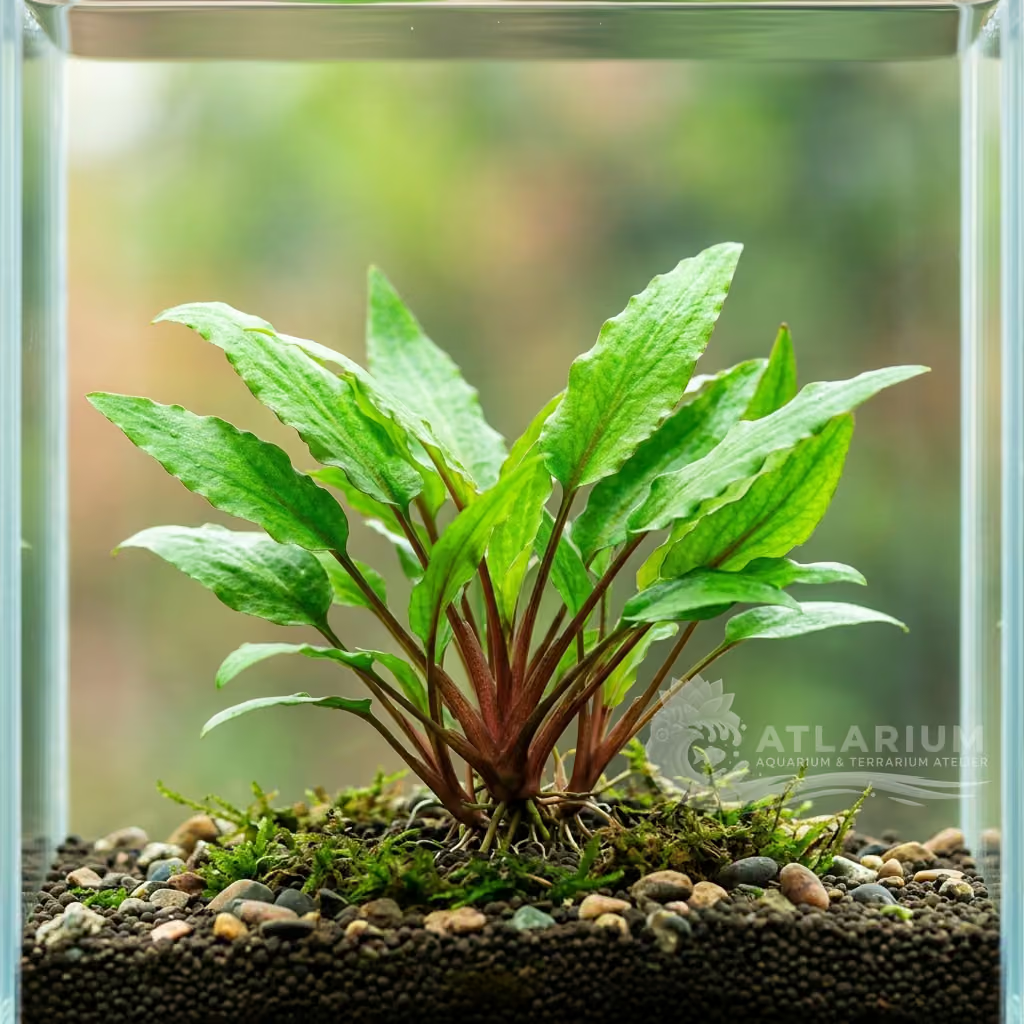
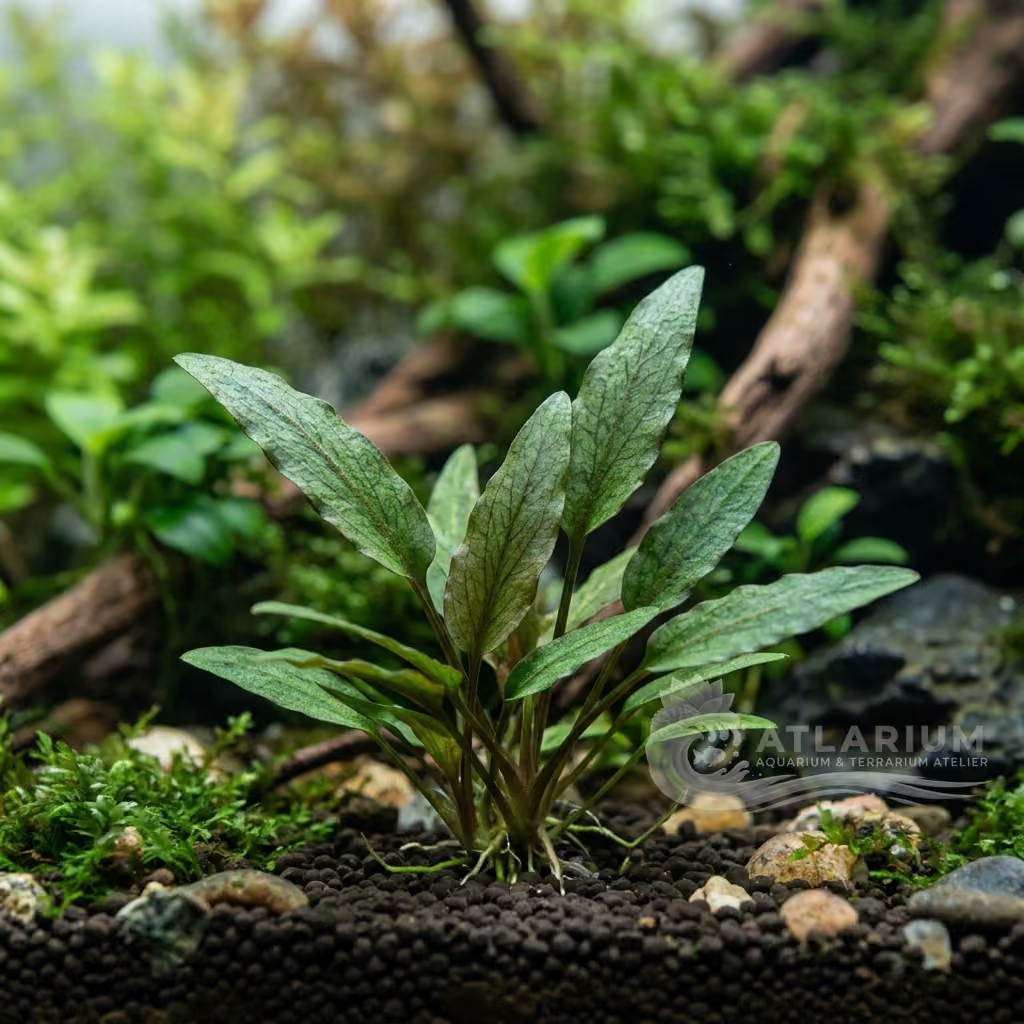
Physical Structure: The structural architecture of this legendary plant is dominant, heavy, and breathtakingly immense. It is a massive rosette plant that completely lacks vertical stems. The foundation is an enormous, woody subterranean rhizome that deploys thick, iron-grip roots deep into the substrate. The leaves erupt directly from the crown on incredibly thick, rigid petioles. The leaves themselves are the defining feature: they are strictly lanceolate, ridiculously long (capable of exceeding 100 cm / 40 inches), and completely covered in intense, deep hammering (bullate texture), resembling green alligator skin.
Color & Texture: The coloration is a brilliant, solid, perfectly uniform bright apple-green to mid-green across both the top and bottom of the leaves. It completely lacks the biological mechanism to produce any red or purple pigments. The texture is notoriously rigid, intensely leathery, and incredibly tough, feeling exactly like thick, heavily rippled plastic. Because the heavily hammered leaves are so massive, rigid, and thick, they are virtually completely immune to damage from aggressive, destructive, herbivorous fish (like African Cichlids or Plecos).

Care, breeding and tankmates
Lighting & CO2: It is an extremely forgiving, incredibly resilient giant. It will comfortably survive and slowly produce its massive hammered leaves in deeply shaded, low-tech aquariums. However, to force the massive rhizome to rapidly deploy its 100-cm-long leaves, medium LED lighting is recommended. While injected CO2 is not required for survival, pressurized CO2 drastically accelerates the plant's slow metabolism, powering the immense energy required to grow such massive, fleshy foliage and drastically increasing the intensity of the "hammered" leaf texture.
Nutrition & Substrate: As a colossal true rosette plant, C. aponogetifolia is an extremely aggressive, obligate root feeder. It MUST be planted in a very deep (minimum 10 cm / 4 inches), mature substrate. Because it evolved in limestone rivers, it absolutely demands a heavy, nutrient-dense gravel or aquasoil bed enriched with heavy, iron-rich root tabs. It will rapidly deploy a massive root system that spreads across the entire bottom of the tank. If the substrate is depleted of nutrients, the giant hammered leaves will quickly turn yellow and melt away.
Water Chemistry: This is its defining biological advantage: C. aponogetifolia is the absolute king of hard water. It thrives in standard heated tropical aquariums (22-28°C) but strongly prefers extremely hard, highly alkaline tap water (pH 7.2 - 8.5) loaded with calcium and magnesium. It is the premier, ultimate background plant for African Cichlid tanks (Lake Malawi / Tanganyika setups) because it thrives in the exact same harsh, alkaline water chemistry. The only other requirement is strong water flow to keep its massive leaves free of detritus.
Space Management & Placement: Due to its colossal 100-cm leaf length, heavily hammered texture, and dominant nature, this plant is strictly an architectural centerpiece for very large aquariums (minimum 300 liters). It should be planted as a standalone specimen plant in the extreme background. Its long, rippled green ribbons will gracefully drape across the water's surface, completely blocking light to the areas below. It must never be crowded, as its massive root system will violently choke out and destroy any smaller competitors.
Pruning: Pruning is a delicate, rare procedure due to its slow growth rate. Because the broad leaves emerge directly from the rhizome, you cannot cut a leaf in half; a severed leaf will never regrow, and the thick cut edge will quickly rot. To prune dead, yellowing, or algae-covered leaves, you must reach down to the absolute base of the rosette and cleanly snap or slice the petiole directly at the gravel line. To manage its eventual spread, dig into the substrate and cleanly sever the thick subterranean runners.
Risks & Diseases: Like all Cryptocorynes, the absolute greatest threat to this indestructible titan is "Crypt Melt." A sudden, massive fluctuation in water chemistry—especially a sudden drop in pH or temperature—will cause the plant to panic and violently dissolve its massive green leaves into a foul, toxic mush. The second major risk is Black Beard Algae (BBA). Because the huge, hammered leaves live for years and grow slowly, they act as massive landing pads for devastating algae if water flow is inadequate.

Geographic origin and distribution
Endemic exclusively to the fast-flowing, highly oxygenated, and heavily mineralized tropical rivers of the Philippines. Cryptocoryne aponogetifolia is the undisputed, towering titan of the entire Cryptocoryne genus. It thrives completely submerged in deep, crystal-clear limestone rivers, aggressively anchoring its massive root system into hard gravel and clay beds. It is an extreme biological survivor, perfectly adapted to withstand pounding aquatic currents and highly alkaline, calcium-rich water chemistry that would instantly melt softer aquatic plant species.
Origin
South and Southeast Asia

Plant profile
- Placement
- Background
- Cryptocoryne aponogetifolia is strictly a background plant or a solitary centerpiece for very large, tall aquariums. Its leaves can grow over a meter long, eventually floating across the water surface and creating a dense, shaded canopy. It provides fantastic cover for larger fish and is tough enough to withstand the grazing and digging of African cichlids. Place it in areas with moderate flow to allow its leaves to ripple beautifully.
- Botanical form
- Rosette
- This species forms an enormous rosette of extremely long, strap-like leaves characterized by a profoundly 'hammered' or bullate texture. The leaves strongly resemble those of an Aponogeton, from which it derives its specific name. The foliage is thick, leathery, and bright to dark green, making it incredibly resilient against physical damage. It is one of the most structurally impressive and largest plants in the Cryptocoryne genus.
- Growth
- Medium
- It is a slow grower, taking considerable time to acclimate and establish its massive root system in a new aquarium. However, once established, it steadily and continuously produces huge new leaves that can dominate the tank. Because of its slow pace, it requires virtually no maintenance or trimming. Its size means it will eventually outcompete smaller plants for light and space.
- Substrate
- High
- Due to its immense potential size, a very deep and fertile substrate is mandatory for its thick, extensive root system. A deep bed of sand or gravel enriched heavily with root tabs works well, as does a mature, deep layer of aquasoil. The roots require significant depth to anchor the huge leaves properly against water currents. Disturbance of the substrate near its base should be strictly avoided.
- Column fertilization
- Recommended
- Liquid fertilization plays a very minor role in the care of this plant, as its thick leaves are primarily designed to withstand current rather than absorb nutrients. Occasional dosing of a comprehensive liquid fertilizer will ensure trace elements remain balanced in the water. Heavy column fertilization is unnecessary and will likely only benefit algae. Focus on providing clean, hard water and a pristine environment.
- Root fertilization
- None
- It is a massive root feeder and its size relies entirely on the quality and nutrient density of the substrate. Large, robust root tabs containing iron and potassium must be inserted deep under its root mass every few months. A well-fertilized root zone prevents the older leaves from yellowing and deteriorating prematurely. Neglecting root fertilization will result in stunted, smaller leaves and a general failure to thrive.
- Trimming
- Occasional
- Trimming consists solely of removing the oldest, outermost leaves as they begin to show signs of damage or decay. Sever the leaves near the base of the rosette. Never trim the leaves midway, as this ruins the aesthetic and leads to rotting of the cut leaf.
- Propagation
- Rhizome division, Runners
- Propagation occurs via strong, thick subterranean runners that eventually push up new, smaller rosettes some distance from the mother plant. These daughter plants grow very slowly and should be left attached until they are substantial in size with a strong root system. Once they reach about 6 to 8 inches in height, the runner can be severed and the new plant relocated. Uprooting large specimens is very disruptive and can trigger severe melting.
- Sensitivity
- Moderate
- It is remarkably hardy once settled, but like all Cryptocorynes, it can suffer from leaf melt during major transitions or severe water chemistry swings. The key to success is providing a stable environment with hard, alkaline water, which it prefers over soft, acidic conditions.
- Layout role
- Background
- It dominates the background and surface areas of large tanks, creating a dense, flowing canopy. Its tough nature makes it one of the few plants suitable for aquascapes with large, destructive cichlids. It provides incredible structural movement and shelter in the upper water column.

Image gallery
Licensed images linked to the species or, when marked, to the closest representative taxon.

Related species
Recommendations grouped by close relatives, companion choices, and similar care.