Red Devil Cichlid
Amphilophus labiatus
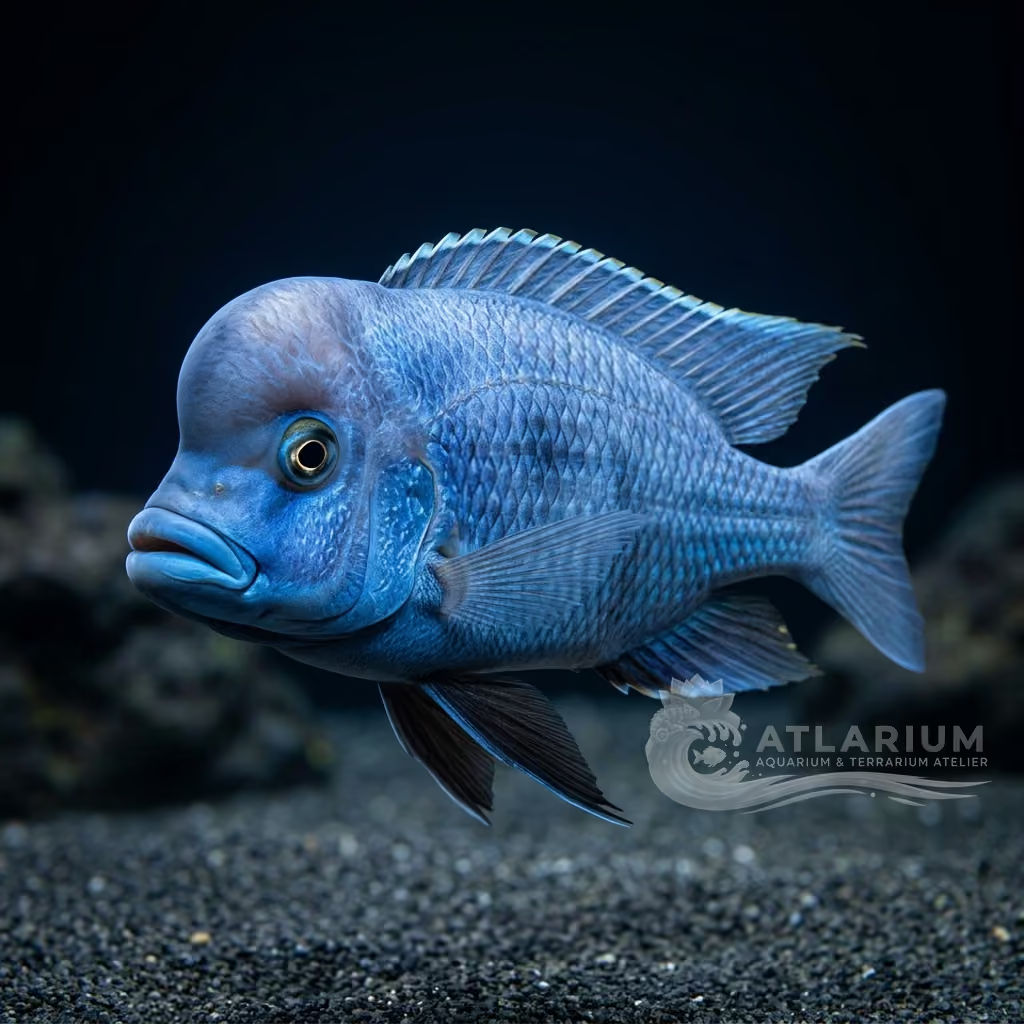
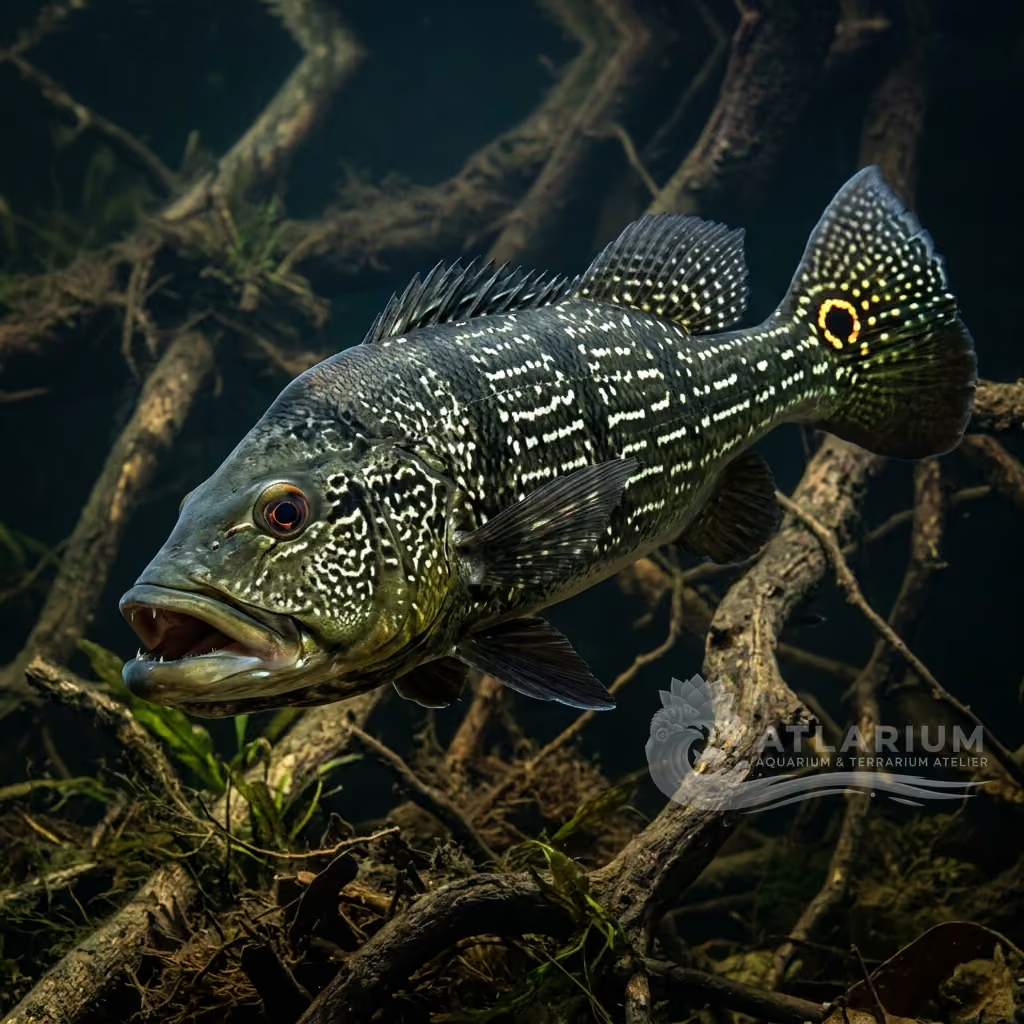
The 'Red Devil Cichlid' (35 cm). A furious and imposing predator native to the lakes of Nicaragua. Very famous for its monstrous and fleshy red lips and the marked peach-red or yellow coloration. Extremely territorial and lethal towards other species; must be bred only as an isolated "pet fish" in enormous and armored tanks.
Water Temperature
24 - 28 °C
pH Value
6.5 - 8
Water type
Freshwater
Tank level
Bottom and middle
Adult size
35 cm
Minimum tank volume
>= 300 L
Minimum group
>= 1
GH
6 - 20 dGH
KH
3 - 10 dKH
TDS
120 - 400 ppm
Conductivity
188 - 625 uS/cm

Species description
Geographical Origin and Habitat: Endemic to the Great Lakes of Nicaragua and Managua (Central America). Populates the warm and vast open waters of volcanic origin, descending to the depths to hide among majestic limestone rock structures.
Taxonomy and Morphology: Red Devil Cichlid (Amphilophus labiatus). One of the quintessential "Tank buster" cichlids. "Labiatus" alludes to the thick fleshy lips it develops in the lake (often reduced in farm-bred specimens). Boasts a powerful body and an impressive nuchal hump in males.
Social Behavior: Extreme. The "Red Devil" is notorious for its relentlessly aggressive temperament. It will destroy thermometers, move titanic rocks, bite whoever reaches in to clean the tank, and kill most tankmates.
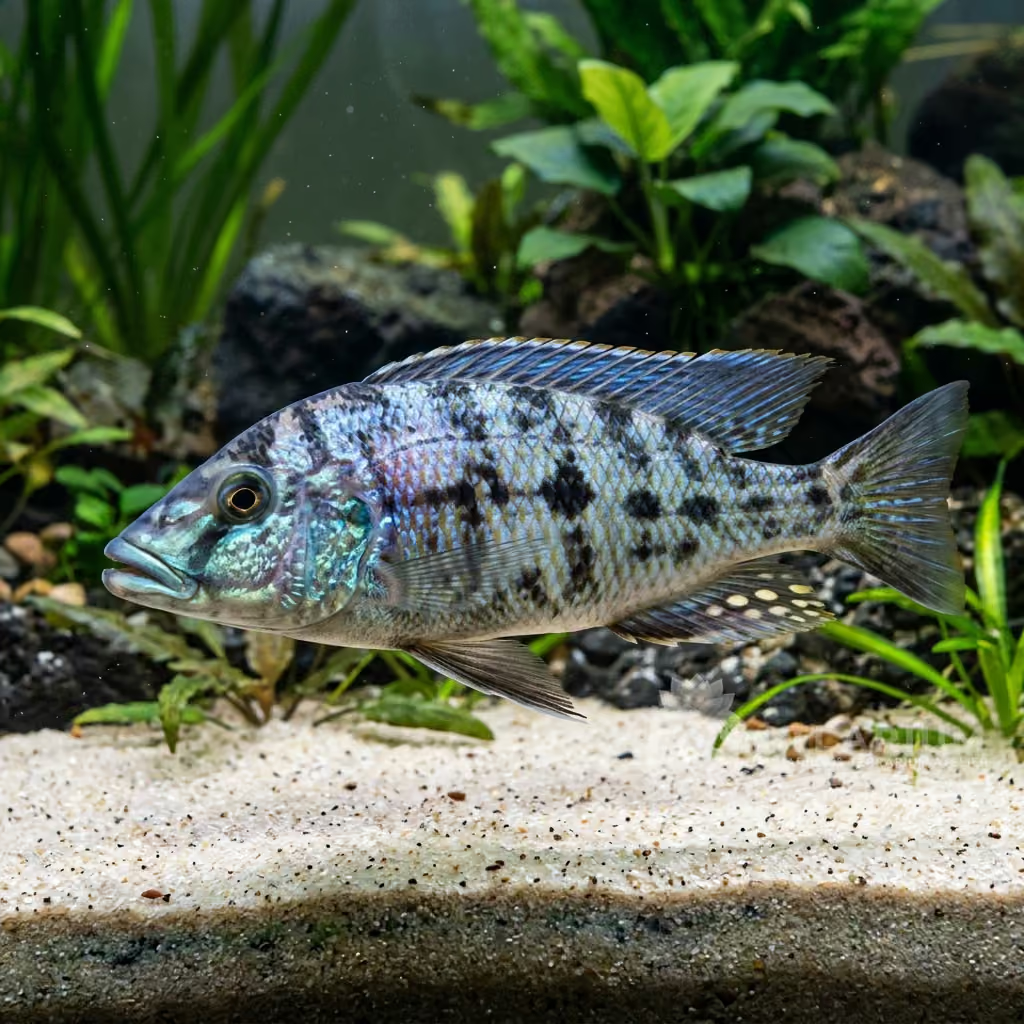
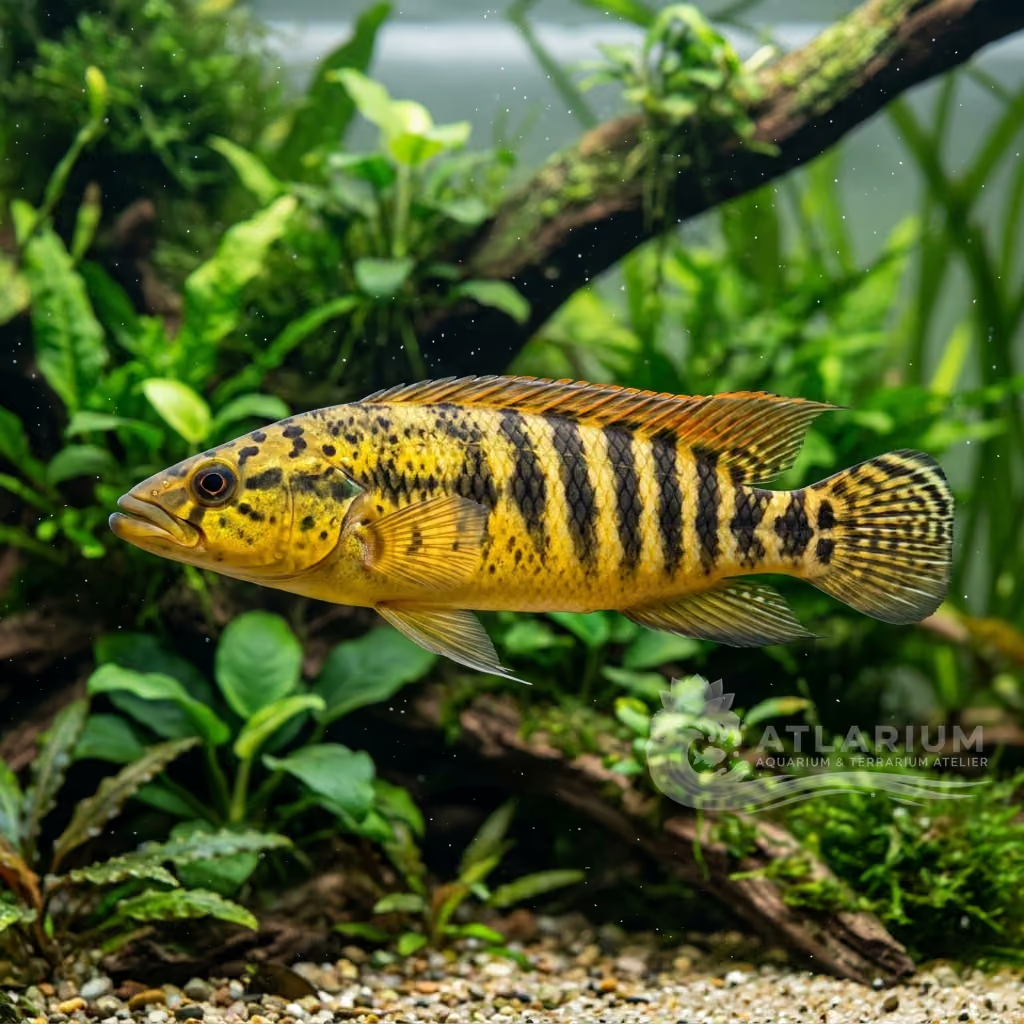
Coloration and Sexual Dimorphism: Highly variable. The "wild" color is brown or gray, but the market offers xanthic color variants: pure fiery red, orange or white/peach. Males become enormous (over 30 cm / 12 inches) developing mammoth nuchal humps at maturity.

Care, breeding and tankmates
Aquarium Setup: Cyclopean and shatterproof: at least 200 cm (80 inches) for adult fish, and reinforced glass (it often bangs fiercely to attack through the glass). No plant will survive. The rocks used must weigh dozens of kilos and rest firmly on the bottom glass, or it will lift them and break it.
Diet and Feeding: Ravenous Omnivore. Swallows XXL pellets for massive Central American Cichlids. Must be fed with huge earthworms, shelled shrimp, fish meat, but never beef heart (which causes lethal liver degenerations).
Water Quality: Hardy to the point of indestructibility. Hard (GH 6-20) and moderately alkaline (pH 6.5-8.0) water. The power of its nitrogenous waste is such as to make massive and drastic weekly water changes (50%) essential.
Compatibility and Cohabitation: It is the perfect "Solitary" Cichlid (Wet pet). Often even coexistence with its own female ends in femicide if the tank is not boundless (over 1000 liters / 260 gallons). Only a few huge armored Loricariids can endure its tolerance.
Aquarium Breeding: Very easy and very violent. They lay hundreds of eggs on vertical stones. Biparental care is fierce and in this phase the pair attacks "the glass" biting it when the tank owner passes by. Impossibly prolific.
Risks and Diseases: Sensitive to "Hole in the Head" (HITH) disease if fed solely on warm meats (beef heart/liver) and kept in water dirty with droppings. Extremely painful and bleeding bite for the aquarist.

Geographic origin and distribution
Endemic to the Great Lakes of Nicaragua and Managua (Central America). Populates the warm and vast open waters of volcanic origin, descending to the depths to hide among majestic limestone rock structures.
Origin
Central America and Caribbean

Fish profile
- Temperament
- Semi-aggressive
- Amphilophus labiatus is widely recognized as one of the most aggressive and territorial cichlids in the aquarium hobby. They display an intense level of hostility toward other fish and will actively defend their perceived territory against any intruders. This species is highly intelligent and often interacts with its owner, showing a curious and engaging personality outside of its territorial aggression. Because of their fierce temperament, they are best kept alone in a dedicated species tank.
- Diet
- Omnivore
- Amphilophus labiatus is an opportunistic omnivore with a strong carnivorous preference in the wild, feeding on small fish, snails, and insects. In captivity, they should be fed a varied diet consisting of high-quality large cichlid pellets as a staple. This can be supplemented with frozen or fresh foods such as shrimp, krill, earthworms, and chopped fish fillet. Occasional vegetable matter, like spirulina or blanched peas, should also be offered to maintain proper digestive health.
- Life expectancy
- 10-15 years
- Adult size
- 35 cm
- Sex ratio
- 1:1 ratio
- Due to their extreme territoriality, keeping a single specimen of Amphilophus labiatus per tank is highly recommended for most hobbyists. If breeding is desired, they are best kept in a strict 1:1 male-to-female pair in a very large aquarium. Keeping them in groups or harems is generally not feasible as dominant individuals will violently attack and potentially kill weaker tankmates. Close monitoring is always necessary, even when keeping a single pair, as males can easily turn aggressive toward females.
- Feeding frequency
- Twice daily
- Juvenile Amphilophus labiatus should be fed two to three times daily to support their rapid growth and development. Adult specimens are best fed once or twice per day, offering only what they can consume within a few minutes. It is important not to overfeed, as this species is prone to digestive issues and excess food will quickly foul the water. Implementing a weekly fasting day can also benefit their digestive system and help prevent obesity.
- Bioload
- High
- Amphilophus labiatus is a very large cichlid that produces a significant amount of organic waste, resulting in a high biological load on the aquarium. To manage this bioload, a powerful filtration system, such as a heavy-duty canister filter or sump, is absolutely essential. Weekly water changes of 30% to 50% are strongly recommended to keep nitrate levels within a safe range. Debris and uneaten food should be siphoned out regularly to prevent rapid deterioration of water quality.
- Flow
- Stagnant
- Originating from the large lakes of Central America, Amphilophus labiatus prefers a low to moderate water flow in the aquarium. High-intensity or turbulent currents can stress the fish and force them to exert unnecessary energy. The filtration system should provide efficient turnover without creating strong jets of water across the tank. Aquarists can use spray bars or flow deflectors to distribute the current evenly and create calmer areas where the fish can rest.
- Jump risk
- Yes
- Despite their robust and heavy bodies, Amphilophus labiatus poses a moderate to high jump risk, especially when startled or during feeding times. They are strong, powerful swimmers that can easily crash into the aquarium cover or jump out of the tank if it is left open. A heavy, secure, and tightly fitted lid is essential to prevent accidental escapes and potential injuries. Equipment like heaters and filter intakes should also be protected, as these fish can accidentally dislodge or break them when jumping or thrashing.
- Reproduction
- Oviparous
- Breeding Amphilophus labiatus is relatively straightforward but requires careful management of parental aggression. They are substrate spawners that lay hundreds of eggs on flat rocks, slate, or inside large caves. Once spawning is complete, both parents protect the nest and fry with extreme vigor, often attacking any hand placed in the tank. However, because males can become highly aggressive toward females, a divider is often necessary to protect the female during the breeding process.
- Compatibility & tankmates
- Semi-aggressive
- Due to their extreme aggression, Amphilophus labiatus is generally incompatible with other fish species. Keeping them in a community setup is highly discouraged, as they will attack and likely kill any smaller or less aggressive tankmates. In exceptionally large aquariums (over 200 gallons), they may sometimes be housed with other robust, large Central American cichlids or armored catfish. However, the safest and most successful way to keep this species is as a solitary individual in a dedicated tank.
- Tank level
- Middle/Bottom
- Amphilophus labiatus is an active and curious fish that utilizes all levels of the aquarium, though it spends most of its time in the middle and bottom zones. They are known for their digging behavior, frequently rearranging the substrate and moving gravel or sand on the bottom. Aquarists should ensure that heavy decorations like rocks and driftwood are firmly secured to prevent them from being undermined and falling. Adequate open space should be provided in the middle section of the tank to allow this large fish to swim freely.

Scientific Parameters & Models
FishBase
Window to the official scientific data of the species
FishBase v25.04Data synced on: 06/15/2026
- Trophic level
- 3.5 ± 0.51 se
- Resilience
- Medium (1.4 - 4.4 years)
- Phylogenetic uniqueness (PD50)
- 0.5
- Bayesian Length-Weight
- a = 0.01413, b = 3.07
- VulnerabilityLow vulnerability (18 / 100)

Related species
Recommendations grouped by close relatives, companion choices, and similar care.