

Encyclopaedia
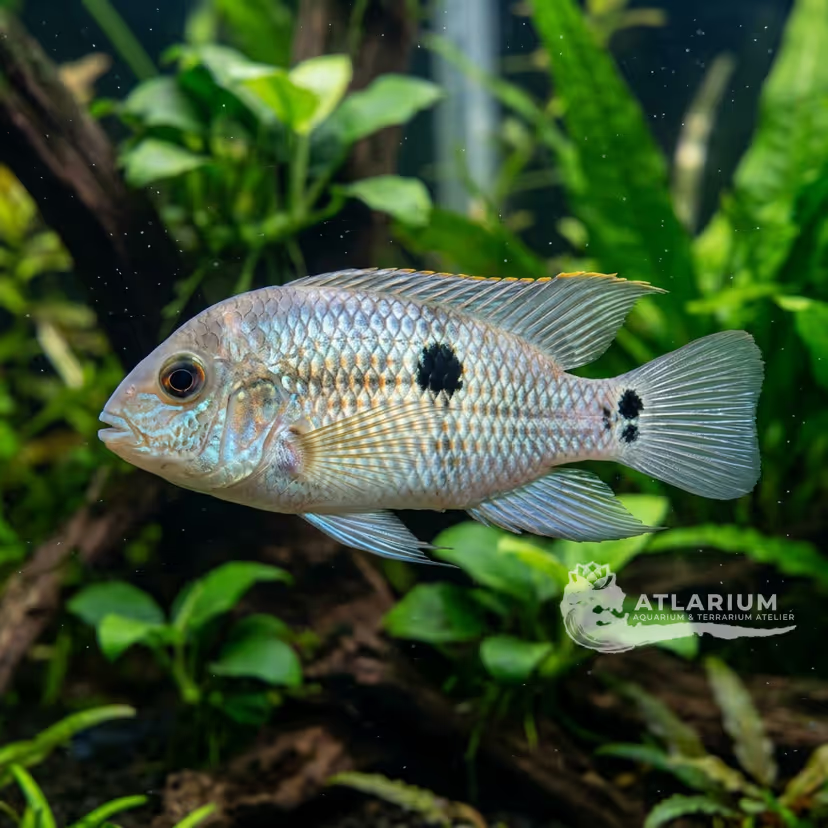
Black Acara (Two-spot Cichlid)
Cichlasoma bimaculatum
The serene and fascinating 'Black Acara' or 'Two-spot Cichlid' (12-15 cm). While lacking the flashy iridescence of its cousins (such as Andinoacara pulcher), it amply compensates with a proverbial hardiness and a quiet temperament. Extraordinary for crowded Amazonian community tanks, it is an easy and modest cichlid.
Share
Check out Black Acara (Two-spot Cichlid) on Atlarium
22 - 28 °C
6 - 7.5
Freshwater
Bottom and middle
20 cm
>= 180 L
>= 1
4 - 12 dGH
2 - 6 dKH
80 - 240 ppm
125 - 375 uS/cm
Species description
Care, breeding and tankmates
Geographic Origin and Distribution
Origin
Fish profile
- Temperament
- Semi-aggressive
- Diet
- Omnivore
- Sex ratio
- Solitary
- Feeding frequency
- Twice daily
- Bioload
- The black acara produces a moderately heavy bioload due to its messy eating habits and relatively robust size. They are opportunistic omnivores that require substantial daily feedings, which subsequently generates a high amount of physical waste and dissolved organics. High-capacity canister filtration and routine gravel vacuuming are essential to prevent the accumulation of detritus and nitrate spikes. An undersized filtration system will quickly be overwhelmed by the bioload of a fully grown adult.
- Flow
- Stagnant
- Reproduction
- Oviparous
- Compatibility & tankmates
- It is compatible with robust fish of similar size, such as medium-to-large characins, armored catfish, and other peaceful cichlids. Small fish or highly timid species must be avoided as they will likely be intimidated or eaten. During the breeding cycle, the pair will claim a large territory, making temporary isolation beneficial.
- Tank level
- Middle/Bottom
Window to the official scientific data of the species
Scientific Parameters & Models
- Trophic level
- 3.6 ± 0.53 se
- Resilience
- Low (4.5 - 14 years)
- Phylogenetic uniqueness (PD50)
- 0.5001
- Bayesian Length-Weight
- a = 0.02188, b = 3.05
Image gallery
Licensed images linked to the species or, when marked, to the closest representative taxon.
Related species
Recommendations grouped by close relatives, companion choices, and similar care.
Variants and close relatives
Same atlas type, nearby scientific identity, genus, or family.

Amazon Cichlasoma (Cichlasoma amazonarum)
Cichlasoma amazonarum

Dimerus Cichlid
Cichlasoma dimerus
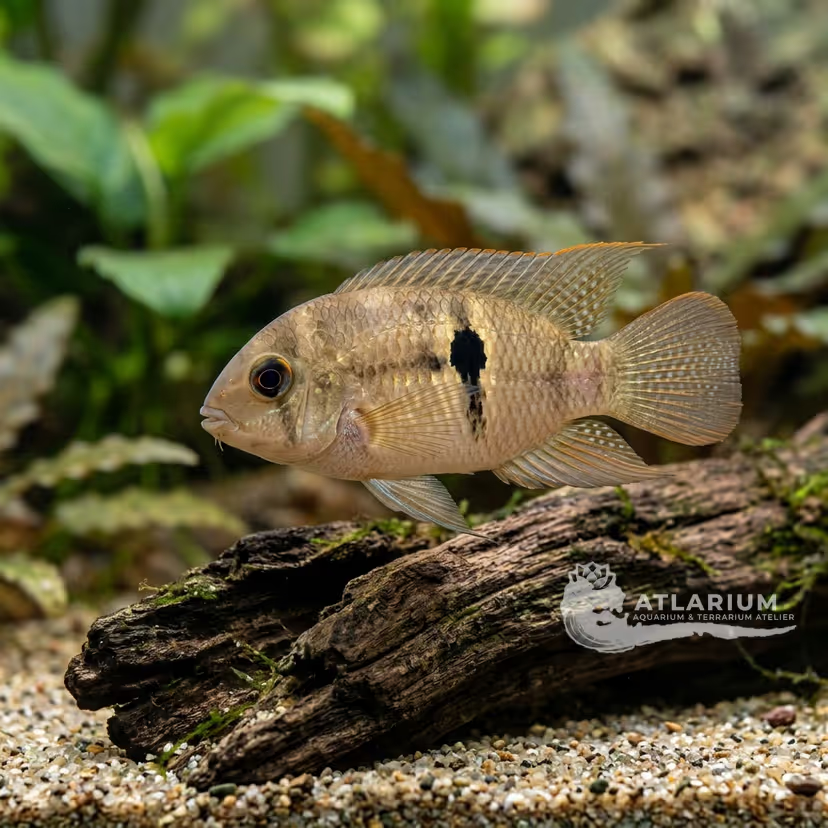
Keyhole cichlid
Cleithracara maronii

Paraguay Mouthbrooder (Bujurquina vittata)
Bujurquina vittata

Oscar
Astronotus ocellatus
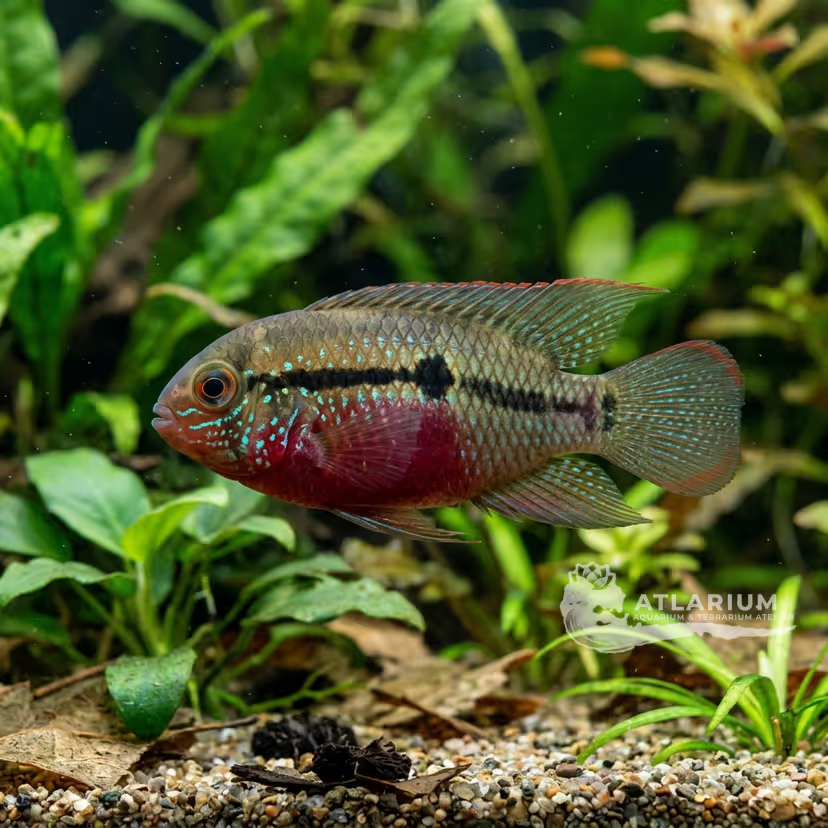
Redbreast Acara
Laetacara dorsigera

Diadem Cichlid (Aequidens diadema)
Aequidens diadema
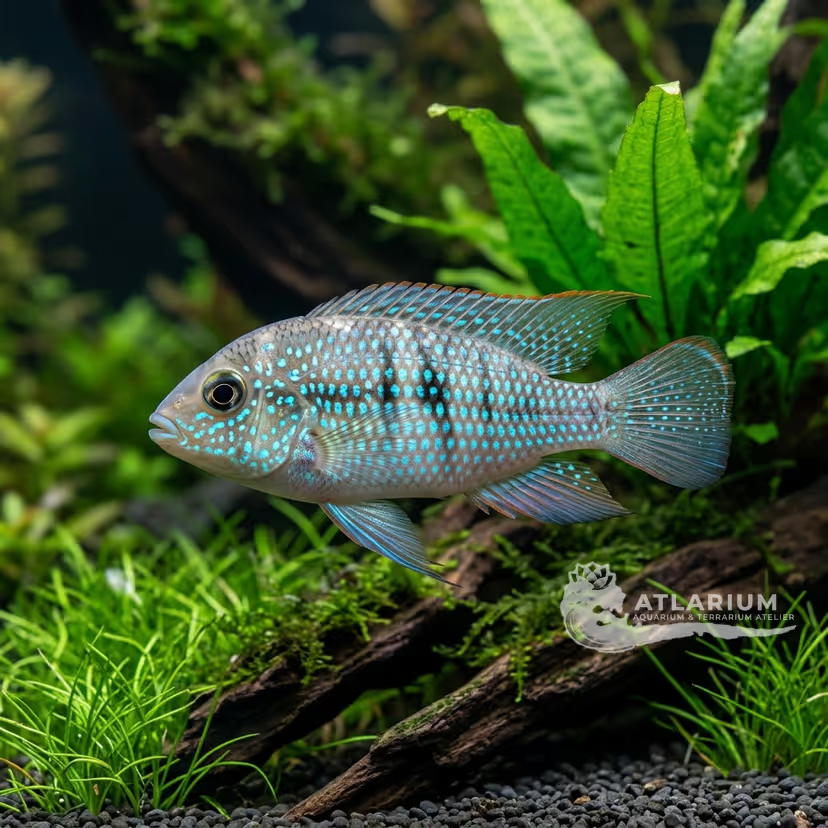
African Butterfly Cichlid
Anomalochromis thomasi

Bolivian Ram
Mikrogeophagus altispinosus
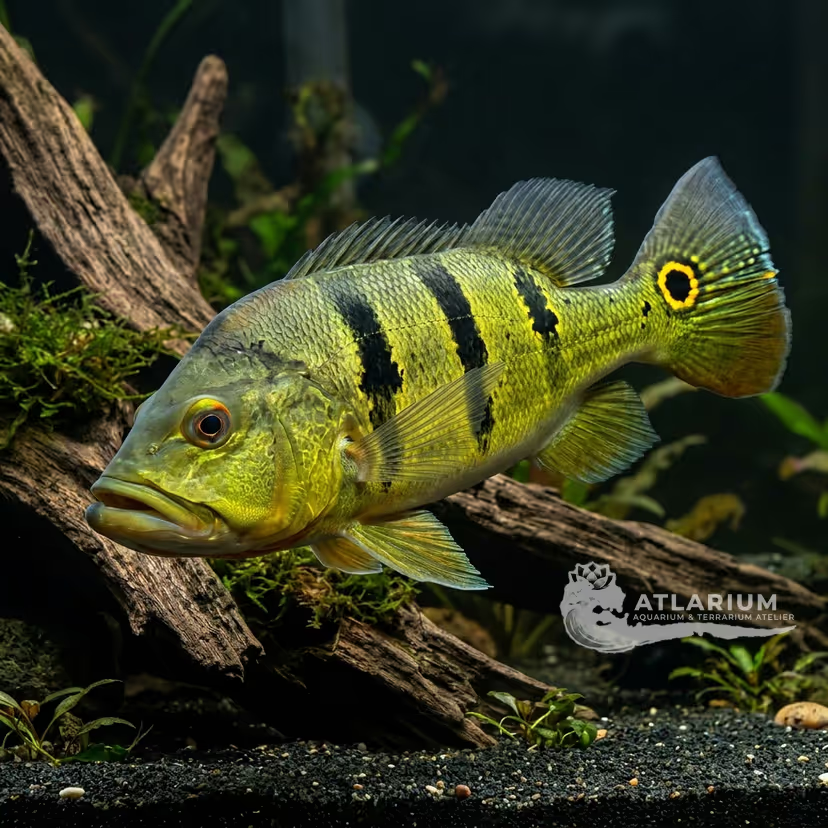
Peacock Bass (Butterfly Cichla)
Cichla ocellaris

Three-Stripe Dwarf Cichlid (Apistogramma trifasciata)
Apistogramma trifasciata

Angelfish
Pterophyllum scalare

Red-eye Krobia
Krobia xinguensis

Kraussii Basketmouth (Caquetaia kraussii)
Caquetaia kraussii

Cockatoo Cichlid
Apistogramma cacatuoides

Blue Acara
Andinoacara pulcher
Recommended companions
Compatible cards from coherent ecosystems with matching parameters.

Ammannia sp. 'Bonsai'
Ammannia sp. 'Bonsai'

Arrowhead Anubias
Anubias hastifolia

Bacopa sp. "Japan"
Bacopa sp. "Japan"

Bolbitis heteroclita
Bolbitis heteroclita

Alternanthera reineckii "rosaefolia minor"
Alternanthera reineckii "rosaefolia minor"

Ammannia mauritiana
Ammannia mauritiana

Blyxa alternifolia
Blyxa alternifolia

Blyxa cf. vietii
Blyxa cf. vietii

Bucephalandra motleyana "Braun-rot" ("Serimbu")
Bucephalandra motleyana "Braun-rot" ("Serimbu")

Bucephalandra motleyana "Kapit"
Bucephalandra motleyana "Kapit"

Bucephalandra motleyana "Pancuraji"
Bucephalandra motleyana "Pancuraji"

Bucephalandra sp. "Bukit Kelam / Sintang"
Bucephalandra sp. "Bukit Kelam / Sintang"

Bucephalandra sp. "Melawi"
Bucephalandra sp. "Melawi"

Bucephalandra motleyana "Braun-rot narrow"
Bucephalandra motleyana "Braun-rot narrow"

Bucephalandra motleyana "Riam Macam"
Bucephalandra motleyana "Riam Macam"

Ammannia latifolia
Ammannia latifolia
Similar care
Cards with similar requirements, difficulty, habitat, and husbandry profile.

Pike Cichlid (Crenicichla lepidota)
Crenicichla lepidota
Double-spot Acara (Aequidens pallidus)
Aequidens pallidus

Regan's Dwarf Pike Cichlid
Crenicichla regani

Threadfin Acara
Acarichthys heckelii

Checkerboard Cichlid (Crenicara punctulatum)
Crenicara punctulatum

Macmaster's Dwarf Cichlid
Apistogramma macmasteri

Zebrina Pike Cichlid (Crenicichla zebrina)
Crenicichla zebrina

Sailfin Dwarf Cichlid (Apistogramma velifera)
Apistogramma velifera

Hongslo's Dwarf Cichlid
Apistogramma hongsloi

Viejita dwarf cichlid
Apistogramma viejita

Meta Cichlid / Yellow Acara (Aequidens metae)
Aequidens metae

Bass Tetra
Hemigrammus marginatus

Rabaut's Corydoras / Rust Corydoras
Corydoras rabauti

Three Stripe Corydoras (False Julii)
Corydoras trilineatus

Zygatus Cory
Corydoras zygatus

Dwarf Pike Cichlid
Crenicichla compressiceps