Encyclopaedia

FishFreshwaterAdvanced

Zebrina Pike Cichlid (Crenicichla zebrina)

Crenicichla zebrina

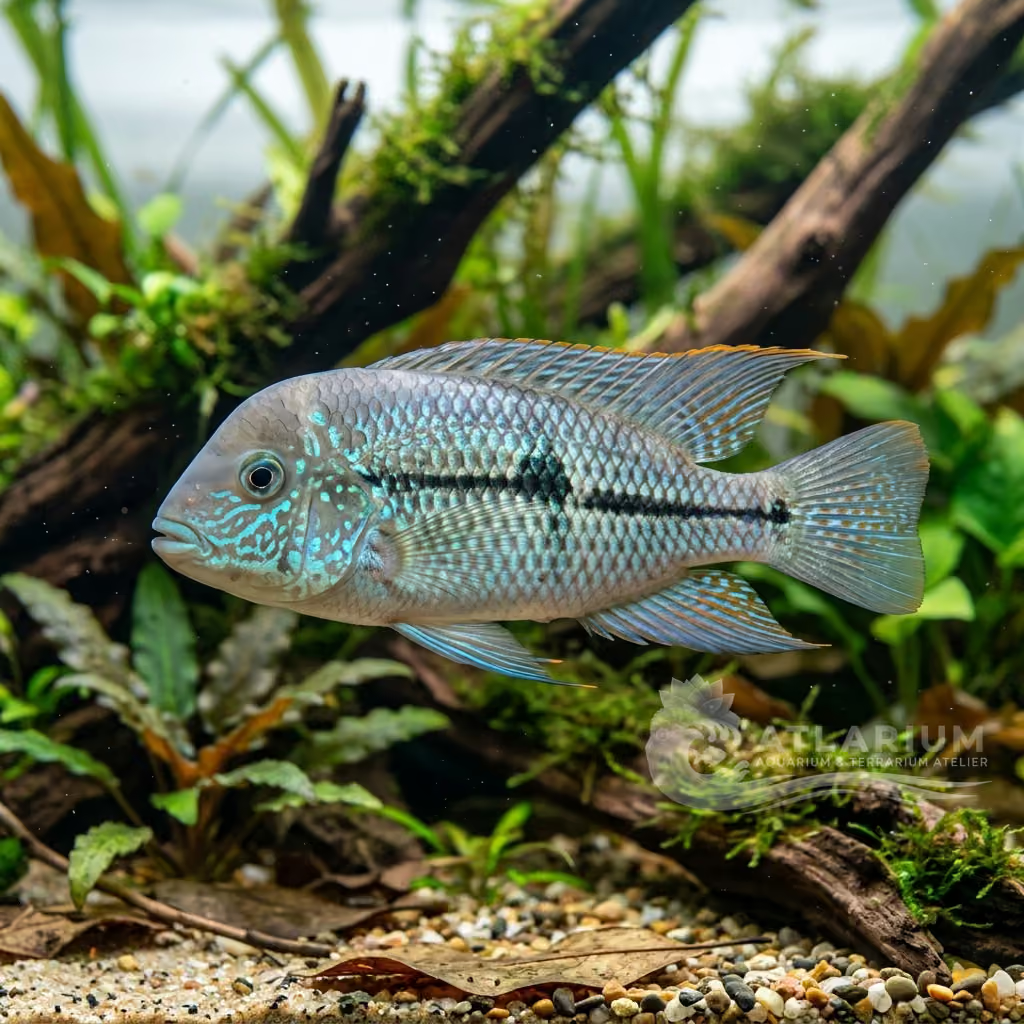
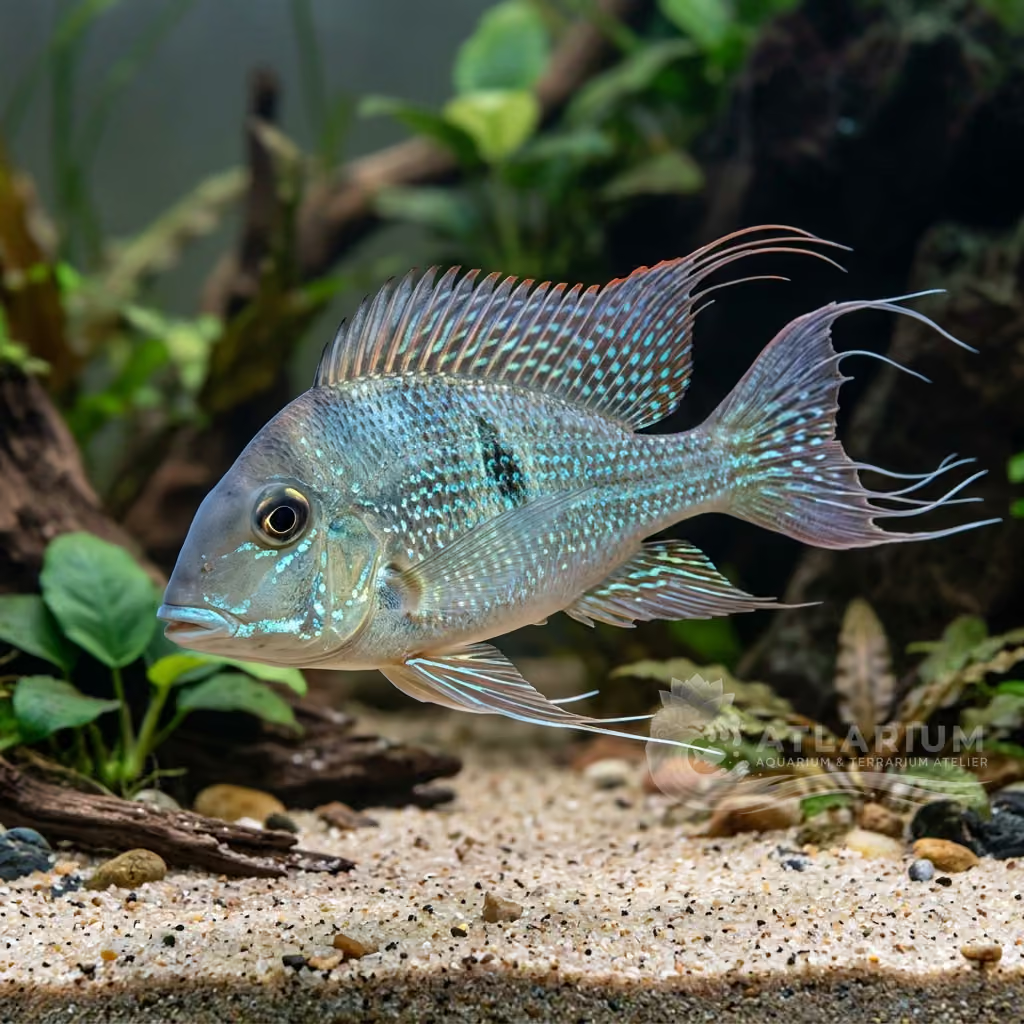
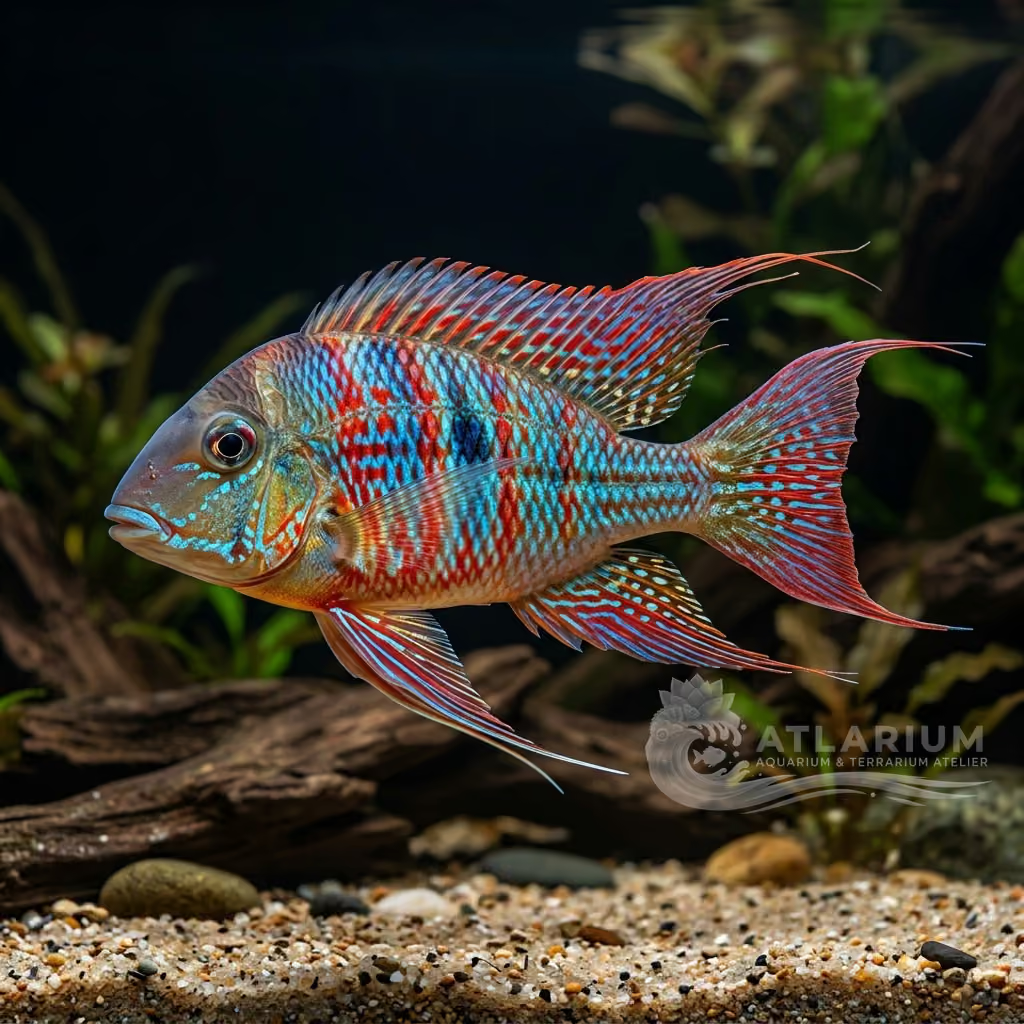
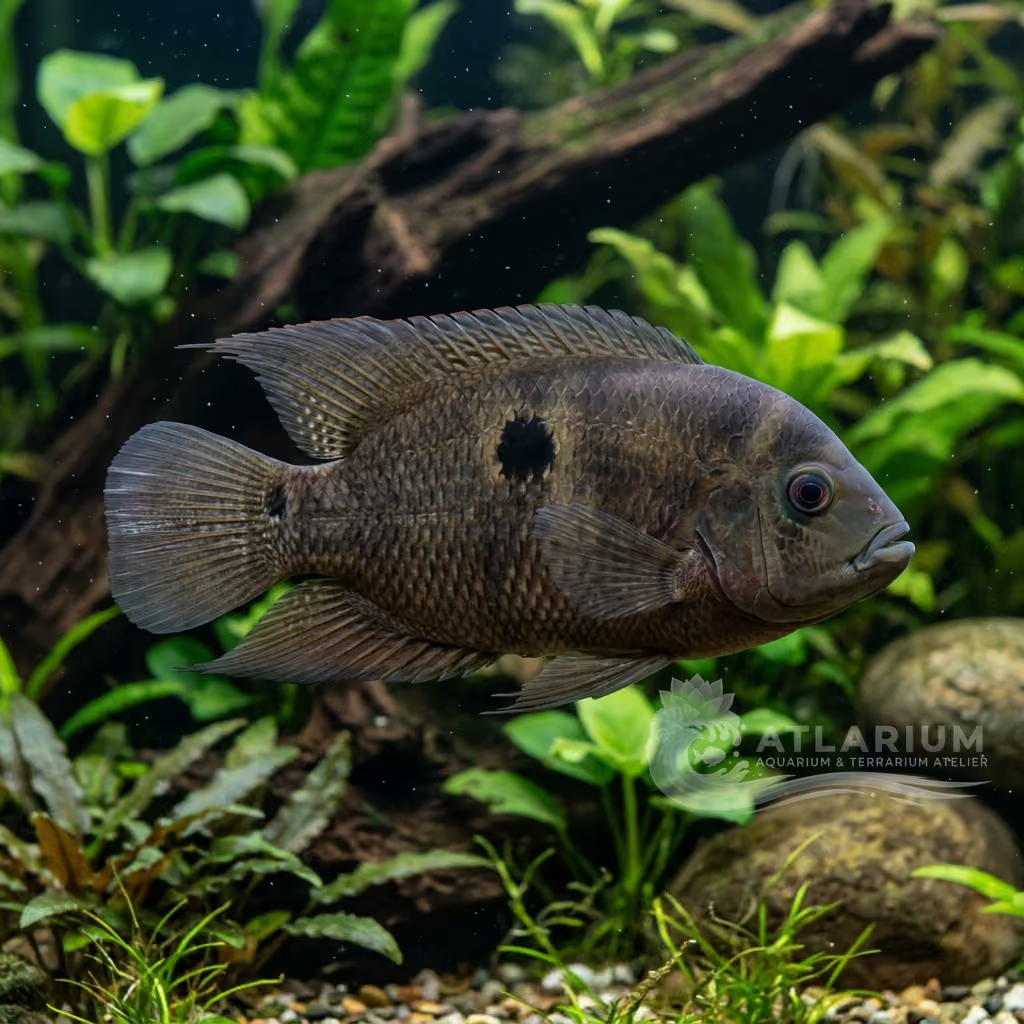
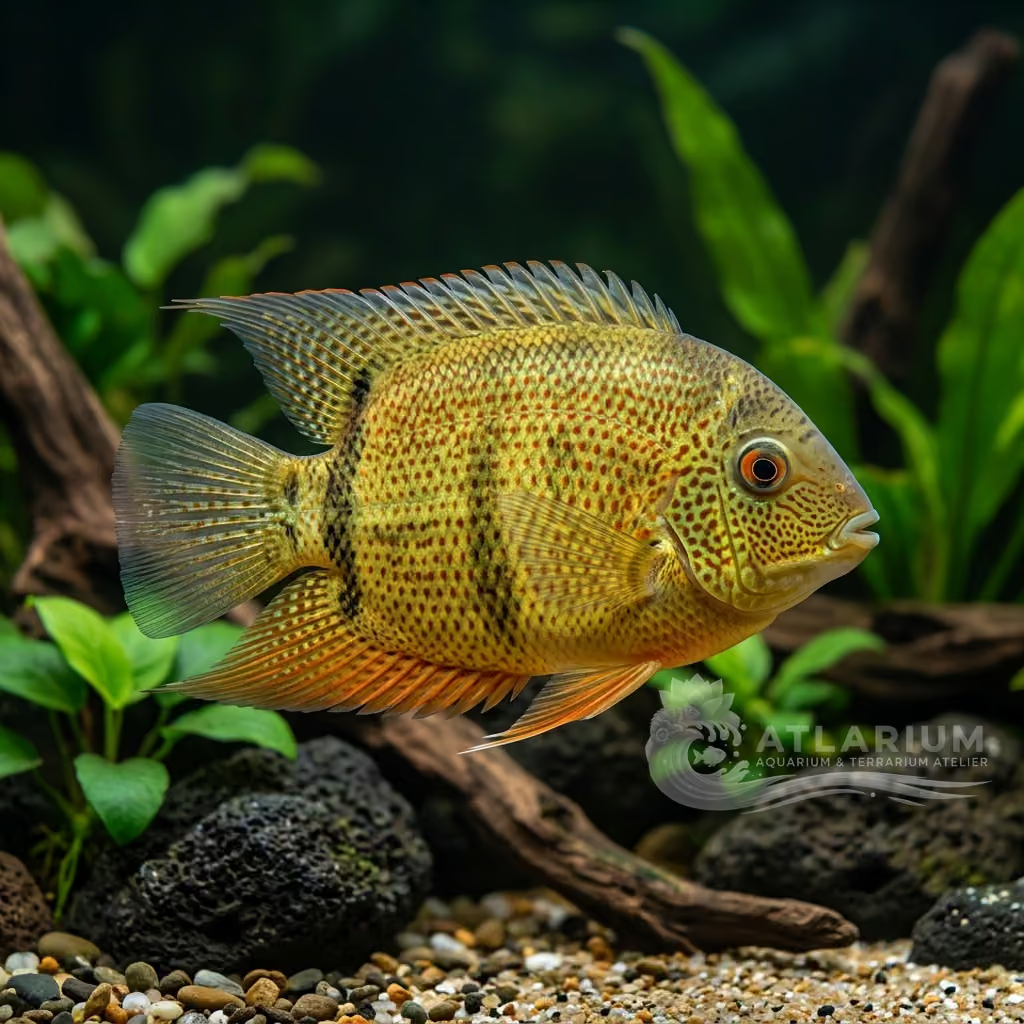
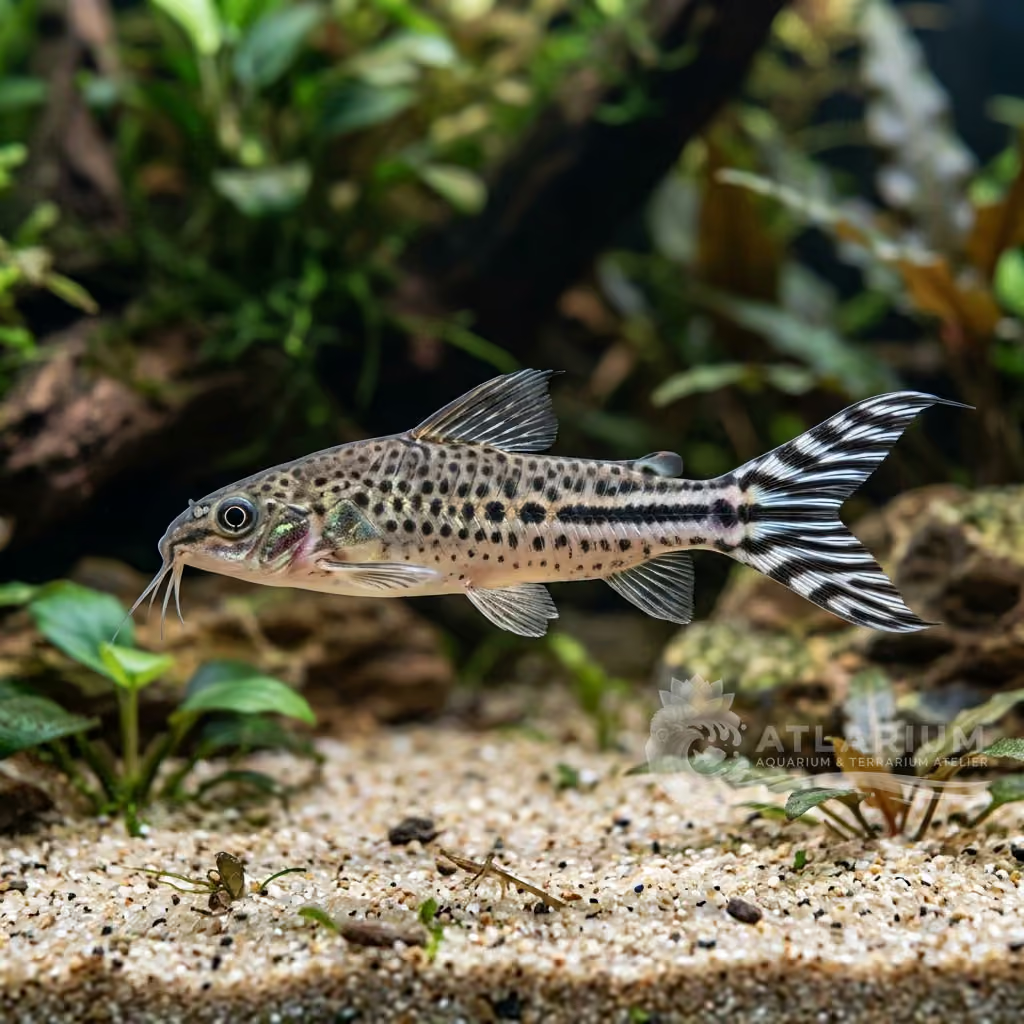
The colossal and extremely rare 'Zebrina Pike Cichlid' (25-30 cm). Considered one of the most coveted, expensive and unobtainable Crenicichlas on the global market. Belonging to the group of large Pike Cichlids, the specimen shows off a shocking parade dress: a very intense black and cream zebra pattern that covers the posterior half of the body as if painted. It is an exacting and very robust giant hyper-predator, governed by a very high metabolism in warm and torrential waters, and fiercely aggressive towards any other rheophilic cichlid.

Taxonomy
Class:Actinopteri
Order:Perciformes
Family:Cichlidae
Genus:Crenicichla
Species:Crenicichla zebrina

Share

Check out Zebrina Pike Cichlid (Crenicichla zebrina) on Atlarium

PracticeRecognition quizzesPhotos, names, origins, and puzzles to review Atlas species.Open quizzes
Water Temperature

24 - 28 °C

pH Value

6 - 7.2

Water type

Freshwater

Tank level

Bottom and middle

Adult size

35 cm

Minimum tank volume

>= 300 L

Minimum group

>= 1

GH

2 - 10 dGH

KH

1 - 5 dKH

TDS

40 - 200 ppm

Conductivity

63 - 313 uS/cm

Species description

Geographical Origin and Habitat: Endemic to the Ventuari River, upper Orinoco in Venezuela. Inhabits exclusively the main rapids and rocky areas with incredibly strong, clear and highly oxygenated waters.
Taxonomy and Morphology: Zebra Pike Cichlid (Crenicichla zebrina). One of the largest, most spectacular and expensive Pike Cichlids, with a massive and elongated "missile" body capable of contrasting tumultuous torrents.
Social Behavior: Extremely territorial and aggressive apex predator. In nature it lives solitary to dominate a fishing radius or in a stable pair during reproduction. Does not tolerate its kind nearby.
Coloration and Sexual Dimorphism: Breathtaking dark yellow or greenish livery, crossed up to mid-body from the tail by conspicuous black oblique "zebra" stripes on the flanks. Adult females often display a bright red outline on the dorsal fin.

Care, breeding and tankmates

Aquarium Setup: Requires immense aquariums (minimum 180-200 cm / 72-80 inches / 800 liters). Mastodontic filtration, powerful circulation pumps to simulate rapids and large river boulders firmly fixed with silicone. No delicate plant will survive.
Diet and Feeding: Massive piscivorous predator. Must be fed with whole small fish, strips of fish fillet, defrosted prawns (with shell), giant earthworms. Juveniles accept large sticks for big cichlids.
Water Quality: No compromises: requires hyper-oxygenated water and zero pollutant levels. Massive weekly water changes are mandatory to sustain the organic load of this carnivorous giant.
Compatibility and Cohabitation: Anything that fits in its immense mouth is food. Should only be placed in "Monster Fish" tanks with large Loricariids (large Pseudacanthicus or Panaque) or Pacu and Myleus. Not recommended to associate it with other benthic Cichlids.
Aquarium Breeding: Very rare in captivity due to the need for cyclopean tanks to avoid uxoricide and the difficulty of recreating tumultuous floods. Spawns in very large ravines between boulders.
Risks and Diseases: Hole-in-the-head disease (Hexamita) guaranteed in case of dirty water or deficient diet. Will ruthlessly kill tankmates if the space available to it is inadequate.

Geographic Origin and Distribution

Endemic to the Ventuari River, upper Orinoco in Venezuela. Inhabits exclusively the main rapids and rocky areas with incredibly strong, clear and highly oxygenated waters.

Origin

Amazon, Orinoco, and Guianas

Fish profile

Temperament
Semi-aggressive
They are exceptionally aggressive and territorial, typical of the larger Crenicichla species. They will fiercely defend their territory from any perceived intruders, regardless of species. Their predatory instinct is strong, and they will instinctively attack anything resembling prey. Only experienced aquarists should attempt to keep this formidable and challenging species.
Diet
Omnivore
Crenicichla zebrina is a specialized piscivore that naturally hunts smaller fish. In captivity, they require a diet based on whole meaty foods like lancefish, shrimp, mussels, and high-quality large pellets. It is important to avoid mammalian meat like beef heart, which they cannot digest properly. Feeding them live feeder fish should be avoided due to the risk of introducing diseases.
Sex ratio
Solitary
It is generally safest to keep them singly unless a compatible male and female pair has formed from a group of juveniles. Keeping multiple males or adults together in anything but a public aquarium-sized display will result in severe aggression. Bonded pairs can turn on each other if the tank is too small or if environmental conditions shift. Great caution must be exercised when attempting to pair them.
Feeding frequency
Twice daily
Adults typically only need to be fed once every day or every other day. Overfeeding these large predators can lead to serious health issues and rapid deterioration of water quality. Juveniles may be fed slightly more often to support their rapid growth rate. Their metabolism will dictate the precise frequency, but a day of fasting weekly is beneficial.
Bioload
This large and highly predatory species produces a substantial bioload. The aquarium requires heavy, efficient filtration to handle the waste generated by their high-protein diet. Large and frequent water changes are absolutely necessary to keep nitrates at acceptable levels. Over-filtration is highly recommended to ensure pristine water conditions at all times.
Flow
Stagnant
They are accustomed to fast-flowing rivers and streams in the wild and appreciate strong water movement in the aquarium. Powerheads or strong filter returns can provide the necessary current and oxygenation. The turbulent water helps recreate their natural environment and keeps them active. However, ensure there are some areas of lesser flow where they can rest behind hardscape.
Reproduction
Oviparous
Reproduction in captivity is extremely rare and requires a massive aquarium to accommodate a breeding pair. They are cave spawners that need a suitably massive structure to lay their eggs. The aggression between partners can be lethal, so observing them closely during courtship is critical. Both parents are fiercely protective, making tank maintenance difficult during breeding.
Compatibility & tankmates
They are highly aggressive and highly predatory fish, best kept in a species-only tank or with very large, robust tankmates. Any fish that can fit into their impressively large mouths will eventually be eaten. Even similarly sized fish might face relentless aggression and territorial disputes. Cichlids of similar size and aggression, or heavily armored catfish, might work in extremely large aquariums.
Tank level
Middle/Bottom
They predominantly occupy the middle and lower levels of the water column. They love to ambush prey from hiding spots among large rocks and submerged wood near the bottom. While they will swim throughout the tank, they feel most secure when close to substantial hardscape. Providing large, secure structures is essential for their well-being.

Window to the official scientific data of the species

Data synced on: 06/15/2026

Scientific Parameters & Models

Trophic level
3.3 ± 0.5 se
Resilience
Medium (1.4 - 4.4 years)
Phylogenetic uniqueness (PD50)
0.5
Bayesian Length-Weight
a = 0.00741, b = 3.11
VulnerabilityLow vulnerability (22 / 100)

Image gallery

Licensed images linked to the species or, when marked, to the closest representative taxon.

Related species

Recommendations grouped by close relatives, companion choices, and similar care.

Variants and close relatives

Same atlas type, nearby scientific identity, genus, or family.

Regan's Dwarf Pike Cichlid

Regan's Dwarf Pike Cichlid

Crenicichla regani

View details->
Dwarf Pike Cichlid

Dwarf Pike Cichlid

Crenicichla compressiceps

View details->
Pike Cichlid (Crenicichla lepidota)

Pike Cichlid (Crenicichla lepidota)

Crenicichla lepidota

View details->
Red-tailed apisto

Red-tailed apisto

Apistogramma erythrura

View details->
Threadfin Acara

Threadfin Acara

Acarichthys heckelii

View details->
Diadem Cichlid (Aequidens diadema)

Diadem Cichlid (Aequidens diadema)

Aequidens diadema

View details->
Double-spot Acara (Aequidens pallidus)

Double-spot Acara (Aequidens pallidus)

Aequidens pallidus

View details->
Amazon Cichlasoma (Cichlasoma amazonarum)

Amazon Cichlasoma (Cichlasoma amazonarum)

Cichlasoma amazonarum

View details->
Angelfish

Angelfish

Pterophyllum scalare

View details->
Three-Stripe Dwarf Cichlid (Apistogramma trifasciata)

Three-Stripe Dwarf Cichlid (Apistogramma trifasciata)

Apistogramma trifasciata

View details->
Keyhole cichlid

Keyhole cichlid

Cleithracara maronii

View details->
Paraguay Mouthbrooder (Bujurquina vittata)

Paraguay Mouthbrooder (Bujurquina vittata)

Bujurquina vittata

View details->
Checkerboard Cichlid (Crenicara punctulatum)

Checkerboard Cichlid (Crenicara punctulatum)

Crenicara punctulatum

View details->
Macmaster's Dwarf Cichlid

Macmaster's Dwarf Cichlid

Apistogramma macmasteri

View details->
Viejita dwarf cichlid

Viejita dwarf cichlid

Apistogramma viejita

View details->
Kraussii Basketmouth (Caquetaia kraussii)

Kraussii Basketmouth (Caquetaia kraussii)

Caquetaia kraussii

View details->

Recommended companions

Compatible cards from coherent ecosystems with matching parameters.

Alternanthera reineckii "rosaefolia minor"
Plant

Alternanthera reineckii "rosaefolia minor"

Alternanthera reineckii "rosaefolia minor"

View details->
Ammannia mauritiana
Plant

Ammannia mauritiana

Ammannia mauritiana

View details->
Ammannia sp. 'Bonsai'
Plant

Ammannia sp. 'Bonsai'

Ammannia sp. 'Bonsai'

View details->
Blyxa alternifolia
Plant

Blyxa alternifolia

Blyxa alternifolia

View details->
Blyxa cf. vietii
Plant

Blyxa cf. vietii

Blyxa cf. vietii

View details->
Arrowhead Anubias
Plant

Arrowhead Anubias

Anubias hastifolia

View details->
Bacopa sp. "Japan"
Plant

Bacopa sp. "Japan"

Bacopa sp. "Japan"

View details->
Bolbitis heteroclita
Plant

Bolbitis heteroclita

Bolbitis heteroclita

View details->
Bucephalandra motleyana "Braun-rot narrow"
Plant

Bucephalandra motleyana "Braun-rot narrow"

Bucephalandra motleyana "Braun-rot narrow"

View details->
Bucephalandra motleyana "Riam Macam"
Plant

Bucephalandra motleyana "Riam Macam"

Bucephalandra motleyana "Riam Macam"

View details->
Bucephalandra motleyana "Braun-rot" ("Serimbu")
Plant

Bucephalandra motleyana "Braun-rot" ("Serimbu")

Bucephalandra motleyana "Braun-rot" ("Serimbu")

View details->
Bucephalandra motleyana "Kapit"
Plant

Bucephalandra motleyana "Kapit"

Bucephalandra motleyana "Kapit"

View details->
Bucephalandra motleyana "Pancuraji"
Plant

Bucephalandra motleyana "Pancuraji"

Bucephalandra motleyana "Pancuraji"

View details->
Bucephalandra sp. "Bukit Kelam / Sintang"
Plant

Bucephalandra sp. "Bukit Kelam / Sintang"

Bucephalandra sp. "Bukit Kelam / Sintang"

View details->
Bucephalandra sp. "Melawi"
Plant

Bucephalandra sp. "Melawi"

Bucephalandra sp. "Melawi"

View details->
Anubias
Plant

Anubias

Anubias barteri

View details->

Similar care

Cards with similar requirements, difficulty, habitat, and husbandry profile.

Hongslo's Dwarf Cichlid

Hongslo's Dwarf Cichlid

Apistogramma hongsloi

View details->
Oscar

Oscar

Astronotus ocellatus

View details->
Black Acara (Two-spot Cichlid)

Black Acara (Two-spot Cichlid)

Cichlasoma bimaculatum

View details->
Sailfin Dwarf Cichlid (Apistogramma velifera)

Sailfin Dwarf Cichlid (Apistogramma velifera)

Apistogramma velifera

View details->
Cupid cichlid

Cupid cichlid

Biotodoma cupido

View details->
Meta Cichlid / Yellow Acara (Aequidens metae)

Meta Cichlid / Yellow Acara (Aequidens metae)

Aequidens metae

View details->
Cockatoo Cichlid

Cockatoo Cichlid

Apistogramma cacatuoides

View details->
Severum (Banded Cichlid)

Severum (Banded Cichlid)

Heros severus

View details->
Bolivian Ram

Bolivian Ram

Mikrogeophagus altispinosus

View details->
Two-Stripe Dwarf Cichlid

Two-Stripe Dwarf Cichlid

Apistogramma bitaeniata

View details->
Peacock Bass (Butterfly Cichla)

Peacock Bass (Butterfly Cichla)

Cichla ocellaris

View details->
Red-eye Krobia

Red-eye Krobia

Krobia xinguensis

View details->
Speckled Peacock Bass (Tucunaré Açu)

Speckled Peacock Bass (Tucunaré Açu)

Cichla temensis

View details->
Orinoco Cupid Cichlid (Biotodoma wavrini)

Orinoco Cupid Cichlid (Biotodoma wavrini)

Biotodoma wavrini

View details->
Redbreast Acara

Redbreast Acara

Laetacara dorsigera

View details->
Umbrella dwarf cichlid

Umbrella dwarf cichlid

Apistogramma borellii

View details->
Last updated: 06/30/2026
Zebrina Pike Cichlid (Crenicichla zebrina) Care Guide & Tank Setup | Atlarium