Encyclopaedia

FishFreshwaterEasy
©AI Generated·Proprietary

Severum (Banded Cichlid)

Heros severus

The 'Severum' (20 cm). The fake Amazonian Discus. A large compressed disc-shaped fish, known for being one of the hardiest and most peaceful giant South American cichlids. Loves to voraciously feed on plant matter. Magnificent golden and red varieties.

Taxonomy
Class:Actinopteri
Order:Perciformes
Family:Cichlidae
Genus:Heros
Species:Heros severus

Share

Check out Severum (Banded Cichlid) on Atlarium

PracticeRecognition quizzesPhotos, names, origins, and puzzles to review Atlas species.Open quizzes
Water Temperature

25 - 30 °C

pH Value

5 - 7

Water type

Freshwater

Tank level

Bottom and middle

Adult size

25 cm

Minimum tank volume

>= 300 L

Minimum group

>= 1

GH

1 - 10 dGH

KH

1 - 5 dKH

TDS

25 - 200 ppm

Conductivity

39 - 313 uS/cm

Species description

Geographical Origin and Habitat: Extended in large parts of the Orinoco and Rio Negro (Venezuela/Brazil). This is the inhabitant of the submerged forest waters, gliding slowly between impenetrable roots fleeing from Piranhas and open river predators.
Taxonomy and Morphology: Banded Severum (Heros severus). Often confused as the "base Severum", in reality the efasciatus is the most widespread. The TRUE H. severus is less frequent, with a markedly more tapered facial disc, and retains the classic "prisoner" bars.
Social Behavior: Large, fearful and phlegmatic cichlid. It does not prey proactively and shuns conflict. A tank with glaring lights terrifies it, causing it to smash against the glass ruining its fins; it needs safe "retreats" in the shadows.
Coloration and Sexual Dimorphism: Yellow-brown base (cream when healthy), marked by 8 vertical black bands that remain visible even in adulthood (unlike other Heros). In heat the male acquires lower ventral reddish tones. Female visibly lacking facial spotting (worming).

Care, breeding and tankmates

Aquarium Setup: Blackwater tanks (150+ cm / 60+ inches). Bottom in sand only (moved to sift), immense branches arranged vertically (to simulate flooded trees), decomposing oak leaves on the bottom. It is an exterminator of green plants.
Diet and Feeding: Strictly vegetarian diet. It must be able to graze: spinach, blanched peppers, spirulina pellets, plecostomus tablets and algae wafers. Integrate weekly with a little thawed mysis or brine shrimp. Reject beef heart pastes!
Water Quality: Absolutely demanding regarding "soft" and warm water. It despises high calcium/magnesium salts (GH over 12), which dull its scales, inducing a perennial lethargy until the development of the lethal HITH (Hexamita).
Compatibility and Cohabitation: A perfect companion for slow-swimming and shy Amazonian fish, it is a giant Dither fish. Discus, Uaru, Mesonauta (Flag cichlid) and large Loricariids. It gets stressed to death if paired with Astronotus (Oscars) or Central American terrorists.
Aquarium Breeding: Unlike the efasciatus, the true Heros severus is, incredibly, a larvophile mouthbrooder! They lay eggs on wood, and once hatched, the larvae are hidden in the parents' mouths for three weeks in safety.
Risks and Diseases: The fake Severus. What the shopkeeper sells you for 5 euros as a green or golden "Heros severus" is actually the cousin "efasciatus". The true severus (identifiable by the persistent stripes and mouthbrooding) is very rare and expensive.

Geographic Origin and Distribution

Extended in large parts of the Orinoco and Rio Negro (Venezuela/Brazil). This is the inhabitant of the submerged forest waters, gliding slowly between impenetrable roots fleeing from Piranhas and open river predators.

Origin

Amazon, Orinoco, and GuianasEurope, Mediterranean, and West Asia

Fish profile

Temperament
Semi-aggressive
They are renowned for their peaceful, almost dog-like temperament and intelligence. Severums quickly learn to recognize their owners and will often beg for food at the front of the glass. While peaceful, they have a robust build and will firmly defend themselves if bothered by aggressive fish. Their calm demeanor makes them a favorite among South American cichlid enthusiasts.
Diet
Omnivore
Severums are omnivorous with a strong preference for plant matter in their daily diet. They will readily consume high-quality cichlid pellets, spirulina flakes, and fresh blanched vegetables like zucchini or peas. Meaty foods such as bloodworms and brine shrimp should be offered sparingly as treats. Live aquarium plants are often viewed as a food source and may be eagerly consumed.
Sex ratio
Pair
Sexing severums can be challenging, but mature males often develop distinct facial markings and extended fin trailers. Females are generally slightly smaller and have a plainer facial pattern without the intense worm-like markings. They are best kept in pairs or as a single focal point fish in a community setting. Keeping multiple males may lead to mild territorial posturing in smaller tanks.
Feeding frequency
Twice daily
These cichlids thrive when fed one to two times a day with a carefully balanced diet. Offer only what they can consume within a few minutes to prevent food decay and water fouling. Growing juveniles can be fed slightly more often to support healthy development. Providing a scheduled fasting day once a week can help prevent digestive issues.
Bioload
Severums are substantial fish that produce a considerable amount of waste as they grow. Adequate filtration, such as a large canister filter, is necessary to maintain excellent water quality. Weekly water changes of at least thirty percent are recommended to keep nitrates low. Proper tank maintenance ensures these cichlids do not suffer from stress-related illnesses.
Flow
Stagnant
They prefer gentle to moderate water flow, mimicking the sluggish rivers and calm lakes of their native South America. Overly turbulent water can cause them stress and make it difficult for them to swim naturally. Standard filtration flow is usually adequate without the need for additional powerheads. Ensure there are calm areas decorated with driftwood for them to rest.
Reproduction
Oviparous
Depending on the exact species, severums are either substrate spawners or specialized mouthbrooders. They form strong monogamous pairs and display intense parental care during the breeding process. Substrate spawners will clean a flat rock to lay eggs, while mouthbrooders will protect the fry inside their mouths. Breeding pairs can become territorial, so a separate breeding tank is often recommended.
Compatibility & tankmates
Unlike many large cichlids, severums are remarkably peaceful and make great additions to large community tanks. They can be safely housed with other peaceful to semi-aggressive fish of similar size. They generally ignore smaller fish, though extremely tiny species might occasionally be eaten by large adults. They pair well with peaceful catfish, large tetras, and other mild-mannered cichlids.
Tank level
Middle/Bottom
Severums are versatile swimmers that utilize the middle and lower levels of the water column. They enjoy navigating through complex environments made of submerged branches, roots, and smooth rocks. They will occasionally venture to the surface during feeding time. Providing vertical structures gives them a sense of security and encourages natural behavior.

Window to the official scientific data of the species

Data synced on: 06/15/2026

Scientific Parameters & Models

Trophic level
2.9 ± 0.33 se
Resilience
High (less than 15 months)
Phylogenetic uniqueness (PD50)
0.5312
Bayesian Length-Weight
a = 0.0302, b = 3.03
VulnerabilityLow vulnerability (14 / 100)

Image gallery

Licensed images linked to the species or, when marked, to the closest representative taxon.

Related species

Recommendations grouped by close relatives, companion choices, and similar care.

Variants and close relatives

Same atlas type, nearby scientific identity, genus, or family.

Cupid cichlid

Cupid cichlid

Biotodoma cupido

View details->
Meta Cichlid / Yellow Acara (Aequidens metae)

Meta Cichlid / Yellow Acara (Aequidens metae)

Aequidens metae

View details->
Agassiz's Dwarf Cichlid

Agassiz's Dwarf Cichlid

Apistogramma agassizii

View details->
Sailfin Dwarf Cichlid (Apistogramma velifera)

Sailfin Dwarf Cichlid (Apistogramma velifera)

Apistogramma velifera

View details->
Hongslo's Dwarf Cichlid

Hongslo's Dwarf Cichlid

Apistogramma hongsloi

View details->
Threadfin Acara

Threadfin Acara

Acarichthys heckelii

View details->
Orinoco Cupid Cichlid (Biotodoma wavrini)

Orinoco Cupid Cichlid (Biotodoma wavrini)

Biotodoma wavrini

View details->
Speckled Peacock Bass (Tucunaré Açu)

Speckled Peacock Bass (Tucunaré Açu)

Cichla temensis

View details->
Mueller's Dwarf Cichlid

Mueller's Dwarf Cichlid

Apistogramma paulmuelleri

View details->
Checkerboard Cichlid (Crenicara punctulatum)

Checkerboard Cichlid (Crenicara punctulatum)

Crenicara punctulatum

View details->
Macmaster's Dwarf Cichlid

Macmaster's Dwarf Cichlid

Apistogramma macmasteri

View details->
Viejita dwarf cichlid

Viejita dwarf cichlid

Apistogramma viejita

View details->
Mouthbrooding Dwarf Cichlid

Mouthbrooding Dwarf Cichlid

Apistogramma barlowi

View details->
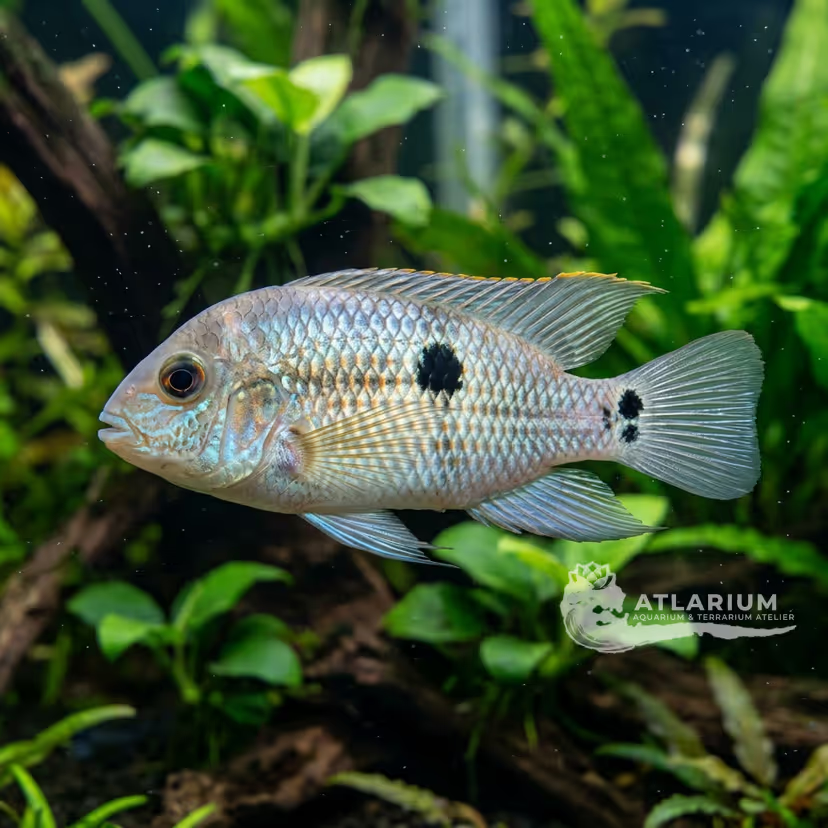
Dwarf Pike Cichlid

Dwarf Pike Cichlid

Crenicichla compressiceps
View details->
Double-spot Acara (Aequidens pallidus)

Double-spot Acara (Aequidens pallidus)

Aequidens pallidus

View details->
Red-eye Krobia

Red-eye Krobia

Krobia xinguensis

View details->

Recommended companions

Compatible cards from coherent ecosystems with matching parameters.

Aldrovanda vesiculosa
Plant

Aldrovanda vesiculosa

Aldrovanda vesiculosa

View details->
Bacopa crenata
Plant

Bacopa crenata

Bacopa crenata

View details->
Aciotis acuminifolia
Plant

Aciotis acuminifolia

Aciotis acuminifolia

View details->
Anubias gracilis
Plant

Anubias gracilis

Anubias gracilis

View details->
Blyxa alternifolia
Plant

Blyxa alternifolia

Blyxa alternifolia

View details->
Blyxa cf. vietii
Plant

Blyxa cf. vietii

Blyxa cf. vietii

View details->
Ammannia latifolia
Plant

Ammannia latifolia

Ammannia latifolia

View details->
Ammannia crassicaulis
Plant

Ammannia crassicaulis

Ammannia crassicaulis

View details->
Golden Nesaea
Plant

Golden Nesaea

Ammannia pedicellata

View details->
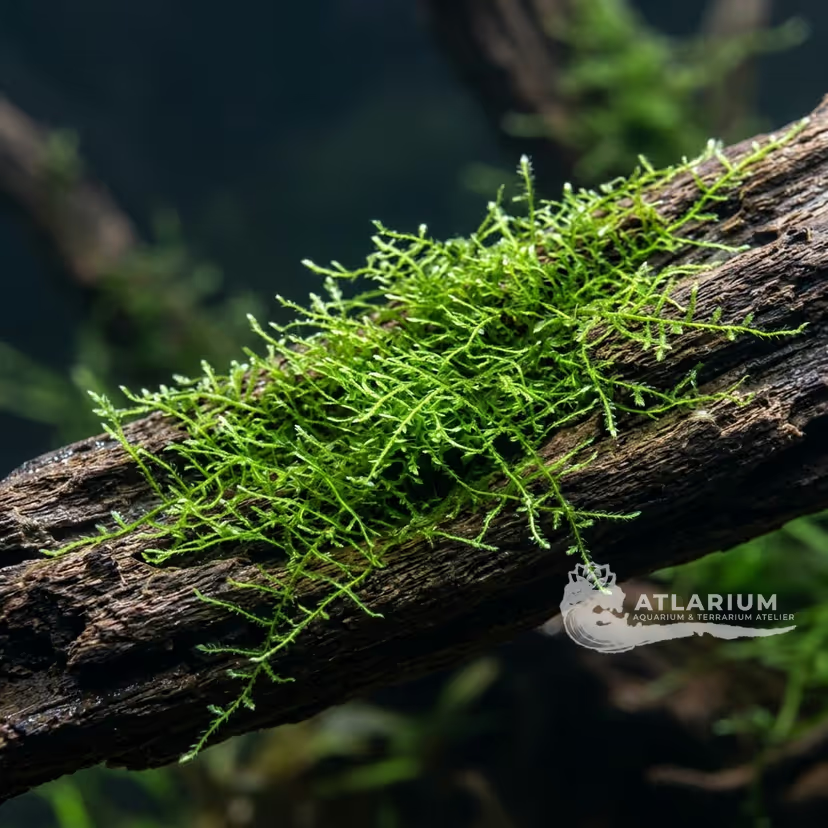
Amblystegium serpens
Plant

Amblystegium serpens

Amblystegium serpens

View details->
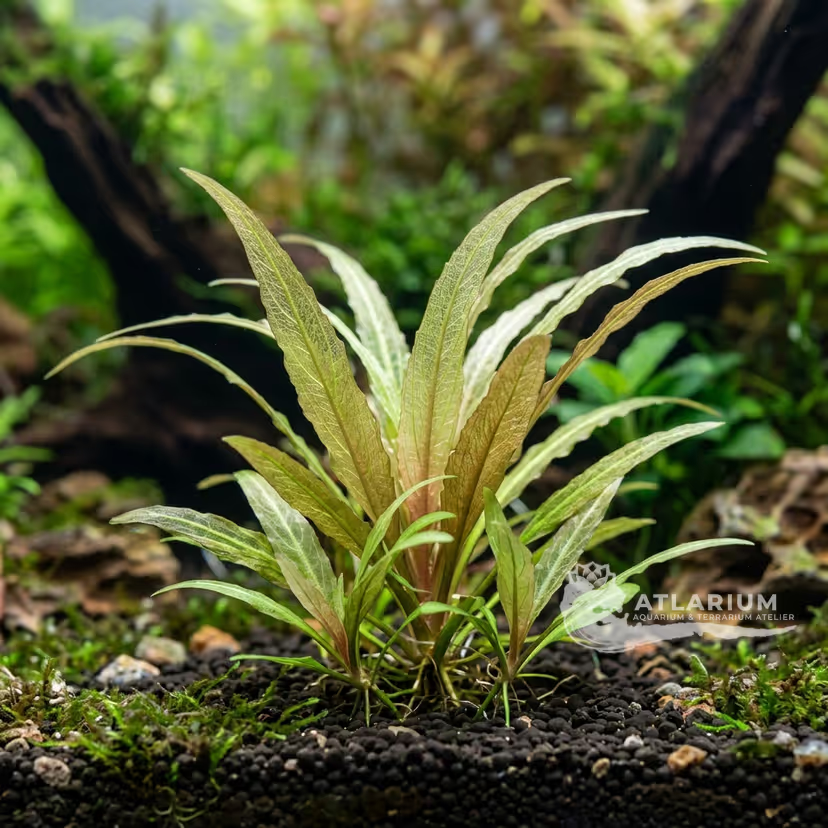
Ammannia praetermissa
Plant

Ammannia praetermissa

Ammannia praetermissa
View details->
Blyxa japonica var. alternifolia
Plant

Blyxa japonica var. alternifolia

Blyxa japonica var. alternifolia

View details->
Alternanthera reineckii "rosaefolia minor"
Plant

Alternanthera reineckii "rosaefolia minor"

Alternanthera reineckii "rosaefolia minor"

View details->
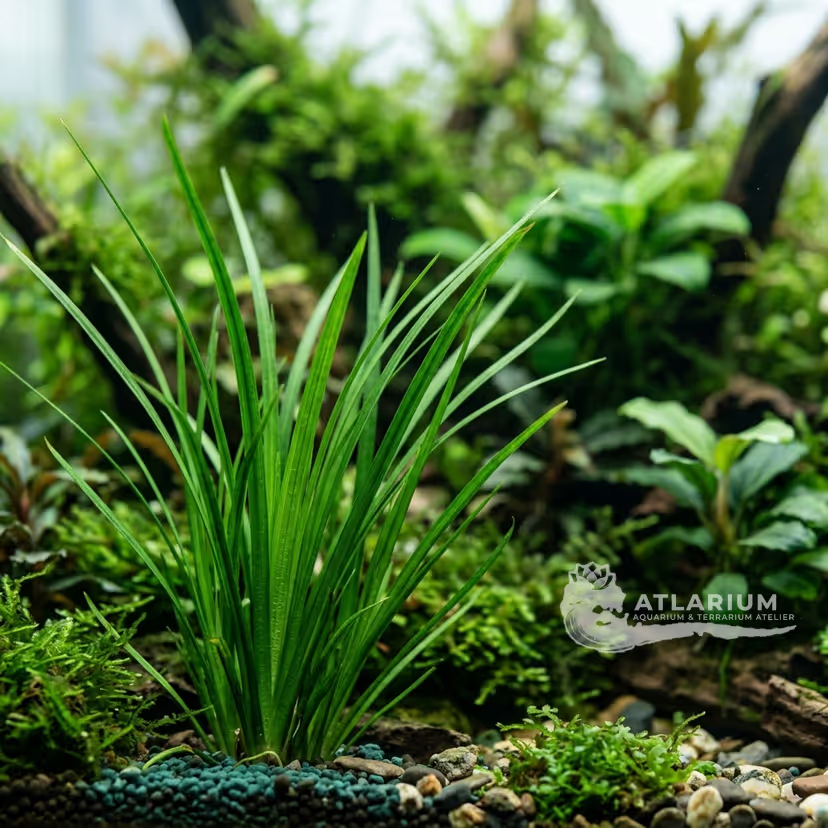
Ammannia mauritiana
Plant

Ammannia mauritiana

Ammannia mauritiana
View details->
Acorus gramineus
Plant

Acorus gramineus

Acorus gramineus

View details->
Anubias "nangi"
Plant

Anubias "nangi"

Anubias "nangi"

View details->

Similar care

Cards with similar requirements, difficulty, habitat, and husbandry profile.

Regan's Dwarf Pike Cichlid

Regan's Dwarf Pike Cichlid

Crenicichla regani

View details->
Two-Stripe Dwarf Cichlid

Two-Stripe Dwarf Cichlid

Apistogramma bitaeniata

View details->
Amazon Cichlasoma (Cichlasoma amazonarum)

Amazon Cichlasoma (Cichlasoma amazonarum)

Cichlasoma amazonarum

View details->
Bolivian Ram

Bolivian Ram

Mikrogeophagus altispinosus

View details->
Kraussii Basketmouth (Caquetaia kraussii)

Kraussii Basketmouth (Caquetaia kraussii)

Caquetaia kraussii

View details->
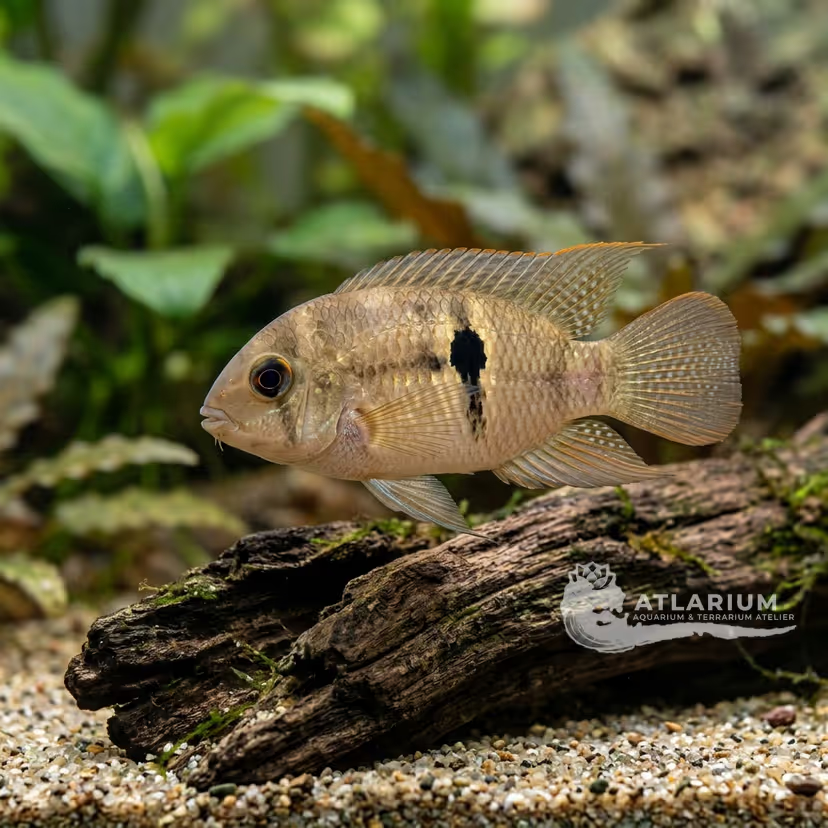
Black Acara (Two-spot Cichlid)

Black Acara (Two-spot Cichlid)

Cichlasoma bimaculatum
View details->
Keyhole cichlid

Keyhole cichlid

Cleithracara maronii

View details->
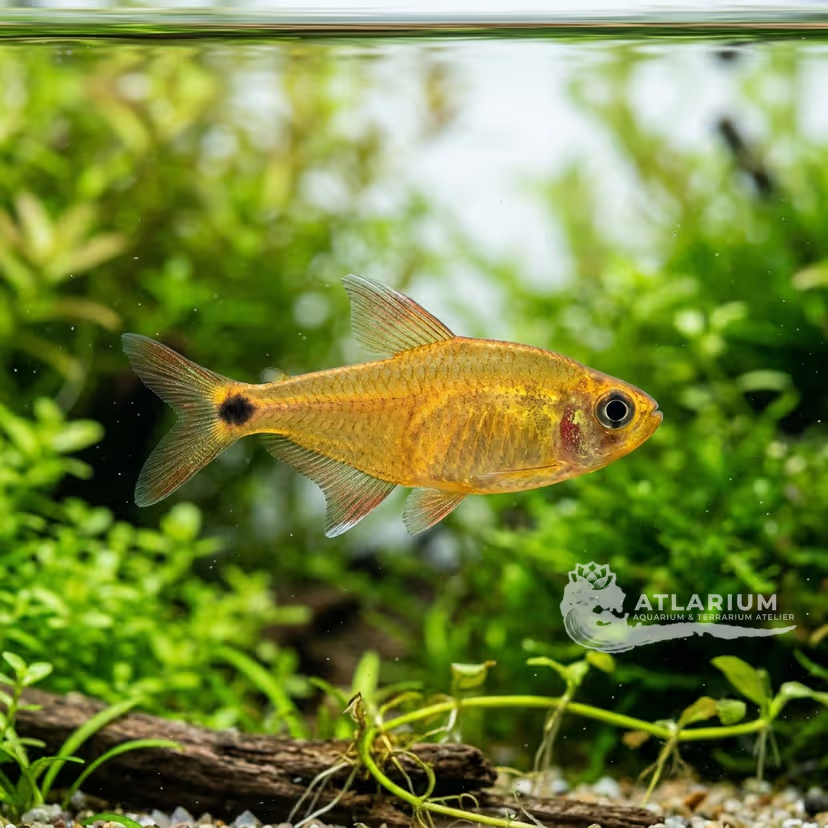
Cockatoo Cichlid

Cockatoo Cichlid

Apistogramma cacatuoides
View details->
Dawn Tetra

Dawn Tetra

Hyphessobrycon eos

View details->
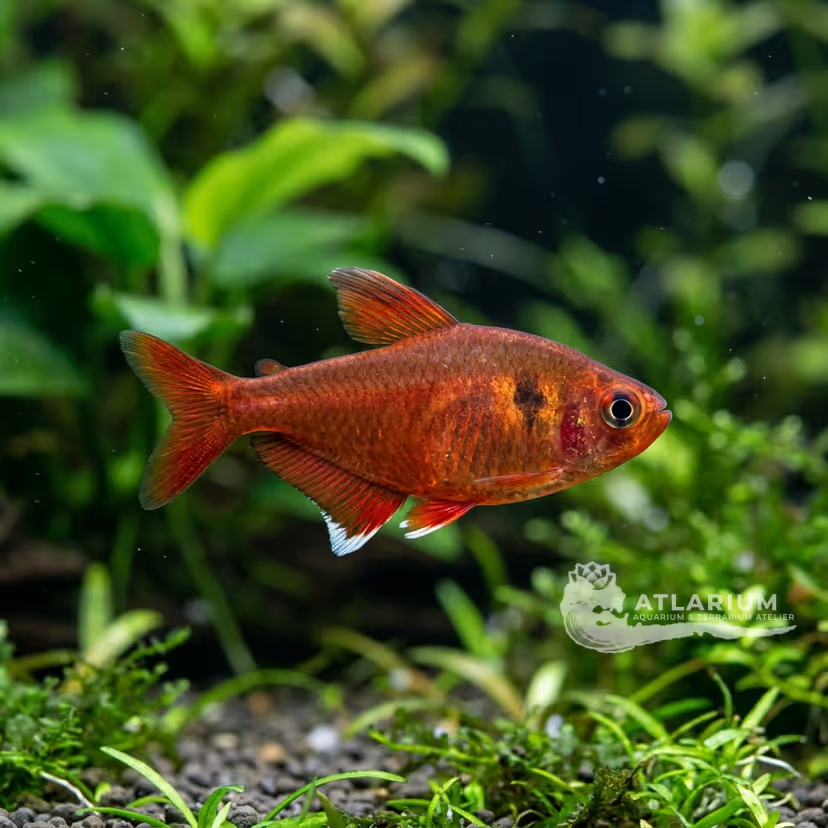
Flag Acara (Smiling Cichlid)

Flag Acara (Smiling Cichlid)

Laetacara curviceps
View details->
Copeland's Tetra

Copeland's Tetra

Hyphessobrycon copelandi

View details->
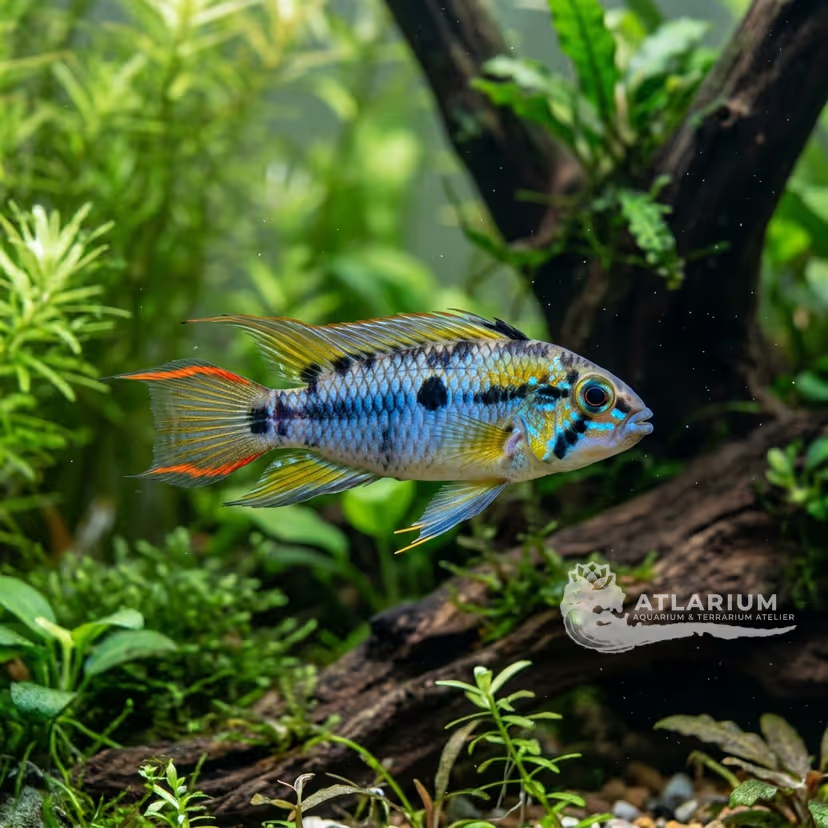
Three-Stripe Dwarf Cichlid (Apistogramma trifasciata)

Three-Stripe Dwarf Cichlid (Apistogramma trifasciata)

Apistogramma trifasciata
View details->
Panduro Dwarf Cichlid (Apistogramma panduro)

Panduro Dwarf Cichlid (Apistogramma panduro)

Apistogramma panduro
View details->
Dash-dot Tetra

Dash-dot Tetra

Hemigrammus bellottii

View details->
Coffee-bean Tetra

Coffee-bean Tetra

Hyphessobrycon takasei

View details->
False Bandit Cory

False Bandit Cory

Corydoras melini

View details->
Last updated: 06/30/2026