Encyclopaedia

FishFreshwaterEasy

Socolof's Tetra

Hyphessobrycon socolofi

Socolof's Tetra thrives in the acidic, tannin-rich blackwater tributaries of the Rio Negro. It absolutely needs a shaded biotope with a white sand bottom, dry leaf litter, and natural roots.

Taxonomy
Class:Actinopteri
Order:Characiformes
Family:Characidae
Genus:Hyphessobrycon
Species:Hyphessobrycon socolofi

Share

Check out Socolof's Tetra on Atlarium

PracticeRecognition quizzesPhotos, names, origins, and puzzles to review Atlas species.Open quizzes
Water Temperature

24 - 28 °C

pH Value

5.5 - 7

Water type

Freshwater

Tank level

Middle

Adult size

4.5 cm

Minimum tank volume

>= 80 L

Minimum group

8

GH

1 - 10 dGH

KH

1 - 4 dKH

TDS

25 - 190 ppm

Conductivity

39 - 297 uS/cm

Species description

Geographical Origin and Habitat: Originating from Brazil, particularly in the Rio Negro system. Inhabits the slow "blackwater" tributaries (Igarapés), acidic and impregnated with tannins released by the decomposition of the thick forest above.
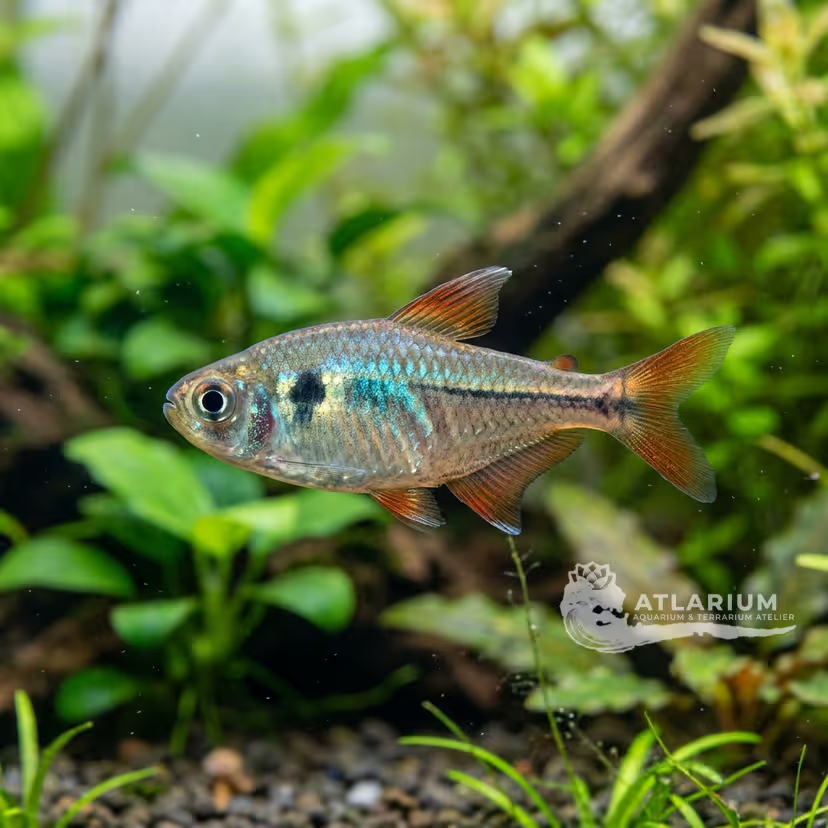
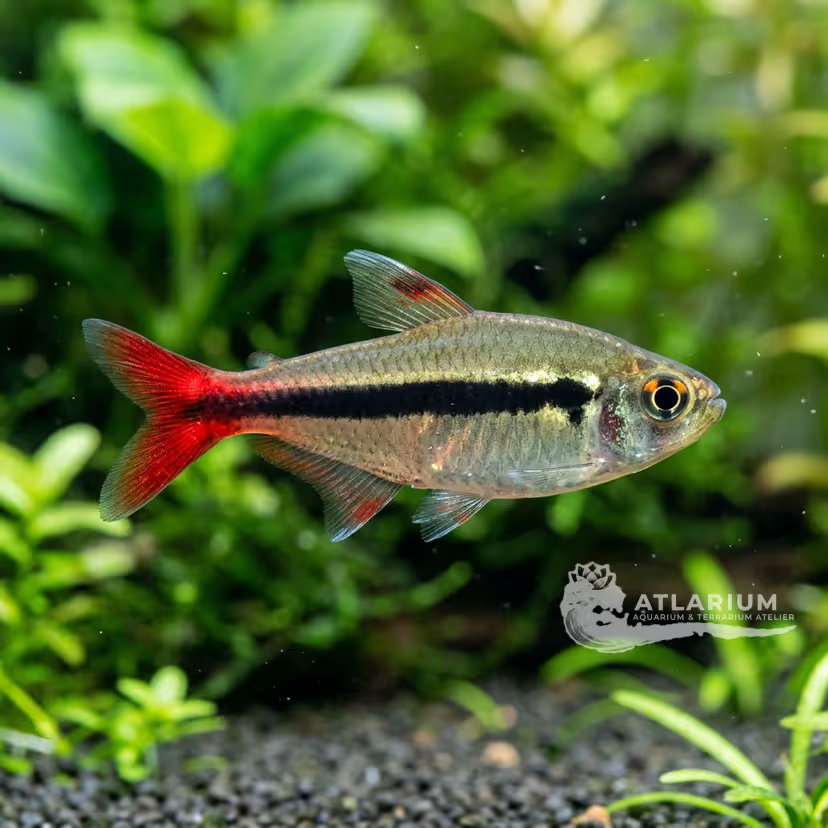
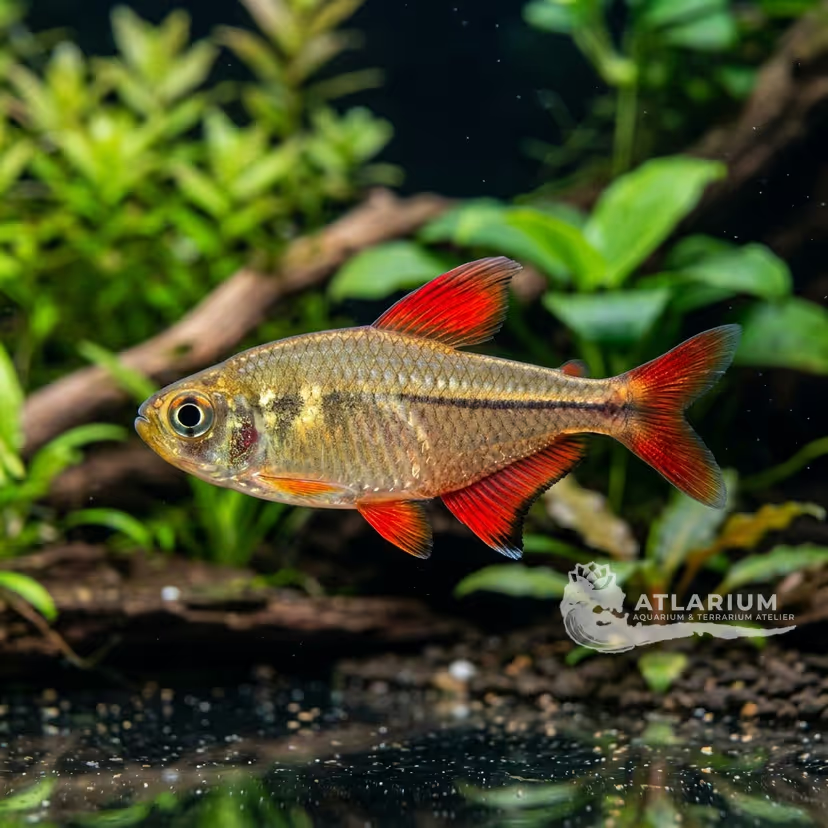
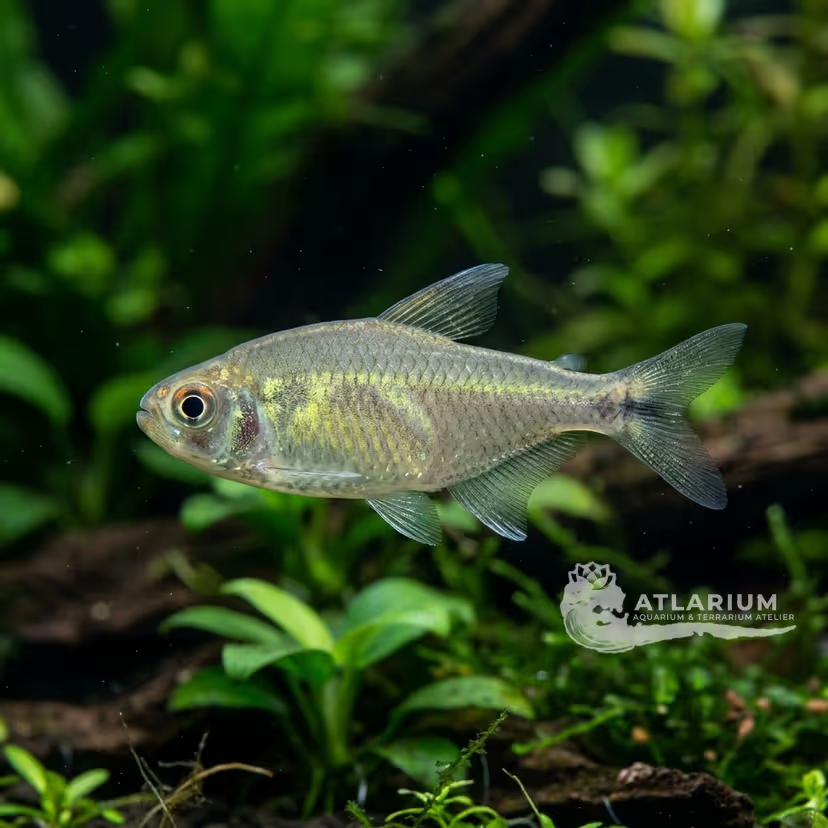
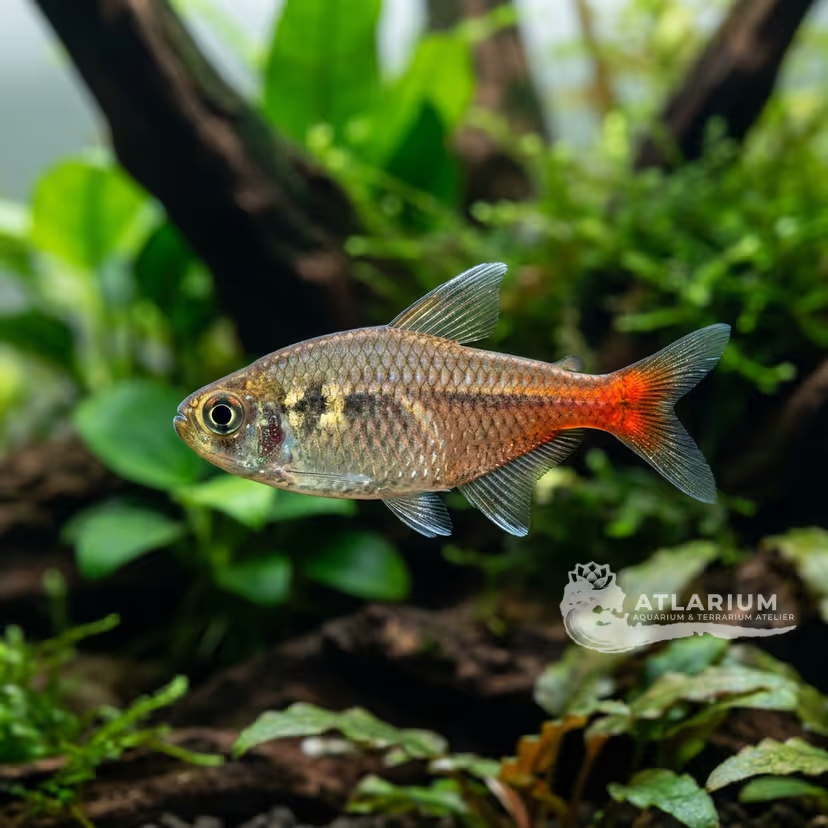
Taxonomy and Morphology: Socolof's Tetra / Spotfin Tetra (Hyphessobrycon socolofi). Dedicated to importer Ross Socolof. It has the classic moderately compressed body of the Hyphessobrycon genus and is renowned for its appearance extremely similar to H. erythrostigma (Bleeding Heart) but on a smaller scale and without a red spot.
Social Behavior: Strongly schooling and peaceful. Males tend to spar without ever hurting themselves for the control of a tiny temporary territory in the thick of the tank. Must reside in groups of at least 8 individuals.
Coloration and Sexual Dimorphism: Splendid contrast: semi-diaphanous pinkish body, but unlike erythrostigma, it does not have the "bleeding heart". The key feature is a large conspicuous dark spot on the dorsal fin, often bordered with bright white. Males with a larger and more pointed dorsal fin.

Care, breeding and tankmates

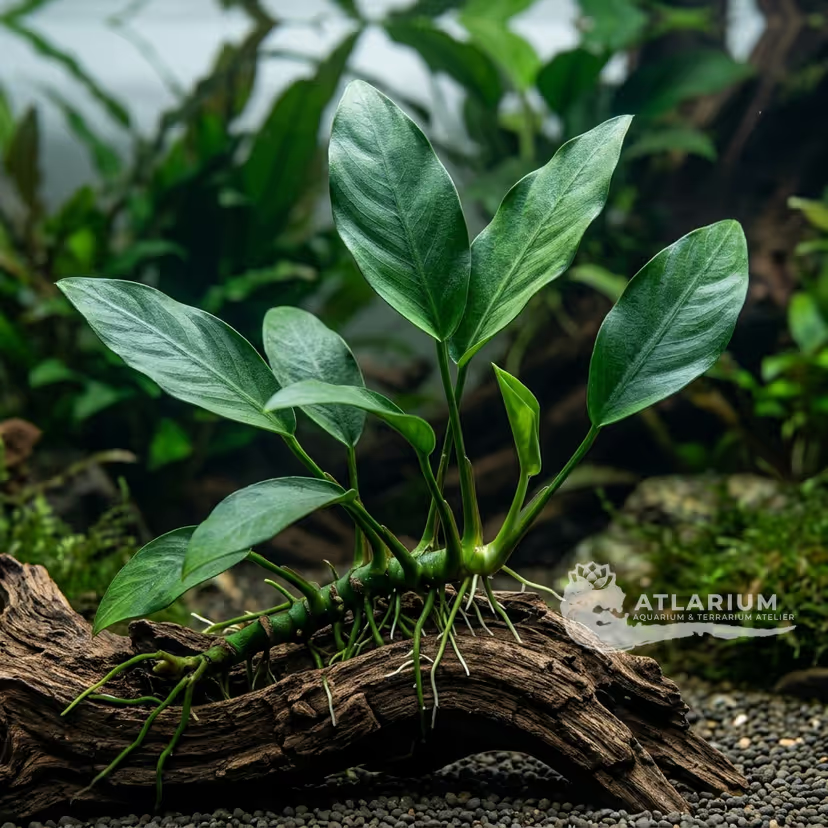
Aquarium Setup: Prefers shade and a true Blackwater biotope. Tanks of at least 80 cm (32 inches), sifted white sand bottom, very few shade-loving plants (Anubias, Moss) covered by roots projecting tangles and dry leaves over the entire substrate.
Diet and Feeding: Natural insectivore/micro-predator. In addition to quality crumbled dry food, to keep the white color of the fin vivid it is necessary to provide micro-organisms such as daphnia, brine shrimp, and small larvae (bloodworms).
Water Quality: Not suitable for beginners or aquariums with hard tap water. Strictly demands soft (low GH) and acidic (pH around 6.0) water, with frequent water changes and the use of filtering peat.
Compatibility and Cohabitation: Excellent to accompany acidic water cichlids such as Discus (if the tank is not too hot, max 28°C / 82°F), ramirezi, apistogramma or large schools of Hemigrammus bleheri or Paracheirodon axelrodi.
Aquarium Breeding: Complex, as it depends on correct pH and very low conductivity. Pairs, isolated in 20-liter tanks in dim light, scatter their eggs in the morning. Remove the adults immediately. Larvae are extremely photophobic.
Risks and Diseases: The large fins of the males are delicate and subject to bacterial infections (Fin rot) if nitrates and ammonia are not meticulously monitored. Failure to acclimate gently leads to osmotic shock.

Geographic Origin and Distribution

Originating from Brazil, particularly in the Rio Negro system. Inhabits the slow "blackwater" tributaries (Igarapés), acidic and impregnated with tannins released by the decomposition of the thick forest above.

Origin

Tropical oceans and reefsAmazon, Orinoco, and Guianas

Fish profile

Temperament
Semi-aggressive
The Hyphessobrycon socolofi is renowned for its peaceful, albeit somewhat shy and timid, temperament. They are highly social fish that absolutely depend on the presence of a sizable school for their confidence and well-being. When kept in sufficient numbers, they exhibit a lively and inquisitive nature, gracefully exploring the aquarium. However, if kept alone or in very small groups, they will likely become withdrawn, pale, and prone to hiding constantly.
Diet
Omnivore
In its natural habitat, the Hyphessobrycon socolofi is a micro-predator that primarily feeds on tiny invertebrates and zooplankton. In captivity, they eagerly accept a staple diet of high-quality crushed flakes and micro-pellets. To support their overall health and promote optimal development—such as their distinctive red spot on the flank and colorful fins—their diet should be frequently supplemented with live or frozen foods like Daphnia and cyclops. A diverse nutritional profile is crucial for maintaining a robust immune system.
Sex ratio
School
When establishing a school of Hyphessobrycon socolofi, maintaining a relatively balanced mix of males and females is beneficial. Males generally exhibit a slimmer profile and often display their characteristic pinkish-silver body more intensely compared to the plumper females. Having slightly more females than males can help dissipate any minor intra-species sparring when males display for dominance. Ultimately, keeping a large enough overall group size is more critical than the exact sex ratio.
Feeding frequency
Twice daily
For optimal health, the Hyphessobrycon socolofi should be fed small portions two to three times a day. Only offer an amount of food that the school can completely consume within two minutes to prevent water fouling. Overfeeding is a common issue with small characins, so strict portion control must be maintained. This frequent, small-meal approach closely mimics their continuous foraging behavior in the wild.
Bioload
The Hyphessobrycon socolofi contributes a very low bioload to the aquarium ecosystem due to its small size. This makes them highly suitable for densely planted nano tanks and community setups alike. Despite their low waste production, maintaining a strict schedule of weekly water changes is highly recommended. A standard, high-quality biological filtration system will easily process the minimal waste generated by a healthy school.
Flow
Stagnant
The Hyphessobrycon socolofi naturally inhabits slow-moving streams and flooded forest areas, meaning they prefer gentle water flow in the aquarium. Strong currents from overpowered filters can quickly exhaust these small fish and cause chronic stress. A sponge filter or a baffled hang-on-back filter is usually the most appropriate choice to provide oxygenation without turbulent flow. Providing dense clusters of aquatic plants will also give them tranquil resting spots.
Reproduction
Oviparous
Breeding the Hyphessobrycon socolofi requires a separate, dimly lit breeding tank equipped with soft, slightly acidic water. They are typical egg-scatterers that exhibit no parental care whatsoever, and they will readily consume their own eggs if left in the breeding tank. Spawning typically occurs among fine-leaved plants, after which the adults must be immediately removed. The microscopic fry require infusoria or specialized liquid foods until they are large enough to eat freshly hatched brine shrimp.
Compatibility & tankmates
As a peaceful schooling species, the Hyphessobrycon socolofi thrives when kept in a vibrant community aquarium. They require the security of a group, so maintaining them in schools of at least eight individuals is essential. Excellent tank mates include small rasboras, Corydoras catfish, and other equally peaceful characins. Aggressive, large, or excessively boisterous fish should be strictly avoided to prevent them from becoming stressed or preyed upon.
Tank level
Middle
The Hyphessobrycon socolofi is an active swimmer that primarily occupies the mid to upper levels of the aquarium water column. They deeply appreciate having a large, open swimming space in the center of the tank to school properly. They will often dart around the middle strata during the day, occasionally diving to the substrate during feeding times. Tall background plants and floating vegetation help them feel secure in these preferred swimming zones.

Window to the official scientific data of the species

Data synced on: 06/15/2026

Scientific Parameters & Models

Trophic level
3.2 ± 0.4 se
Resilience
High (less than 15 months)
Phylogenetic uniqueness (PD50)
0.5002
Bayesian Length-Weight
a = 0.01995, b = 3.01
VulnerabilityLow vulnerability (10 / 100)

Image gallery

Licensed images linked to the species or, when marked, to the closest representative taxon.

Related species

Recommendations grouped by close relatives, companion choices, and similar care.

Variants and close relatives

Same atlas type, nearby scientific identity, genus, or family.

Bleeding Heart Tetra

Bleeding Heart Tetra

Hyphessobrycon erythrostigma
View details->
Dawn Tetra

Dawn Tetra

Hyphessobrycon eos

View details->
Epicharis Tetra

Epicharis Tetra

Hyphessobrycon epicharis

View details->
Coffee-bean Tetra

Coffee-bean Tetra

Hyphessobrycon takasei
View details->
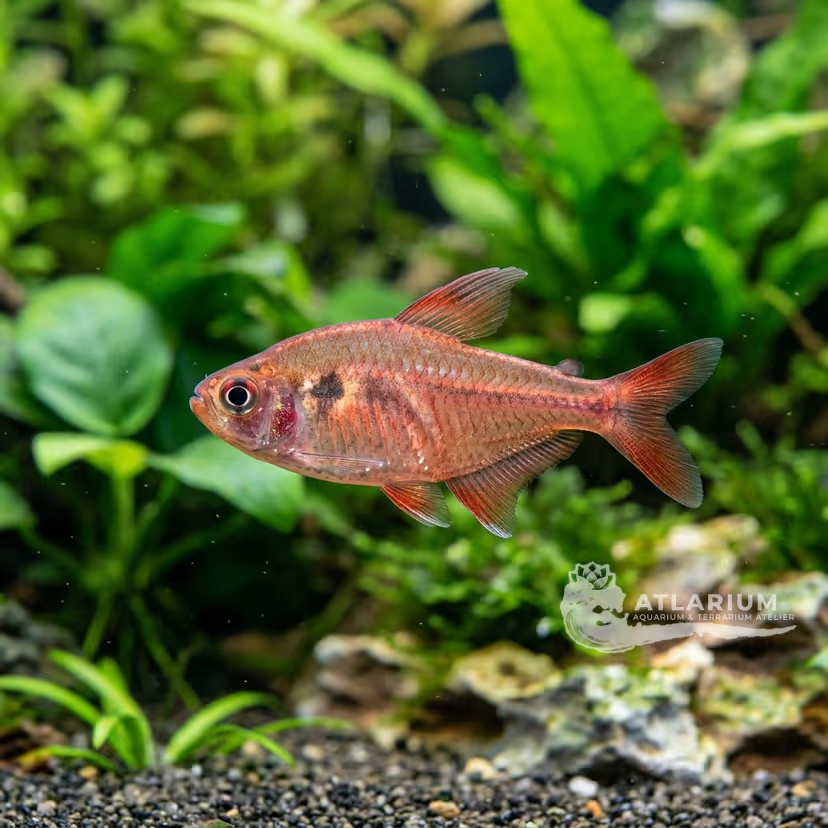
Copeland's Tetra

Copeland's Tetra

Hyphessobrycon copelandi
View details->
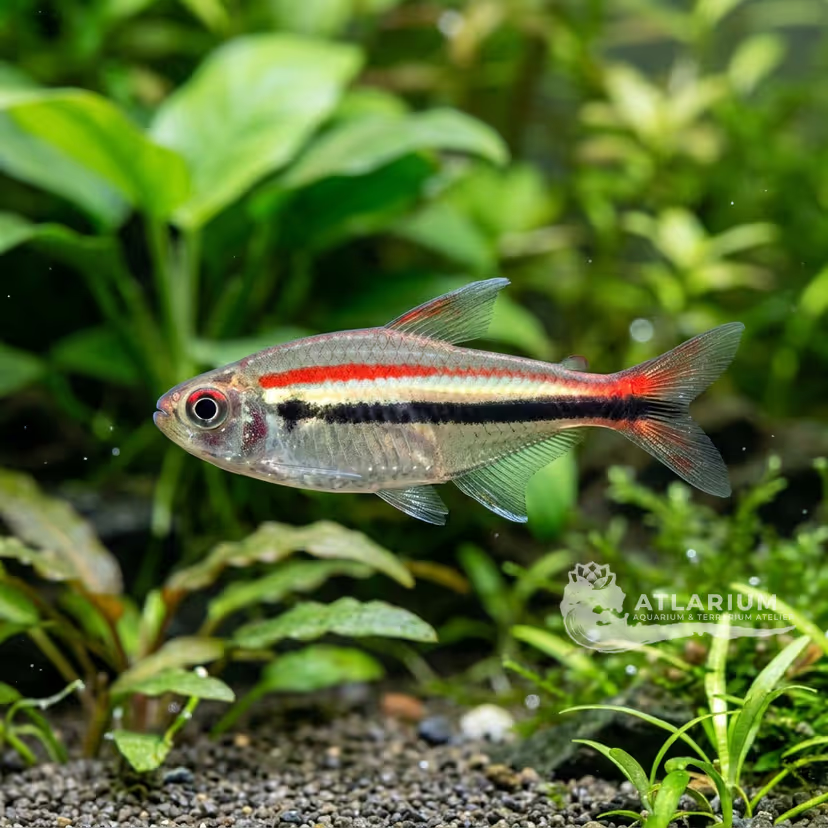
Georgette's Tetra

Georgette's Tetra

Hyphessobrycon georgettae
View details->
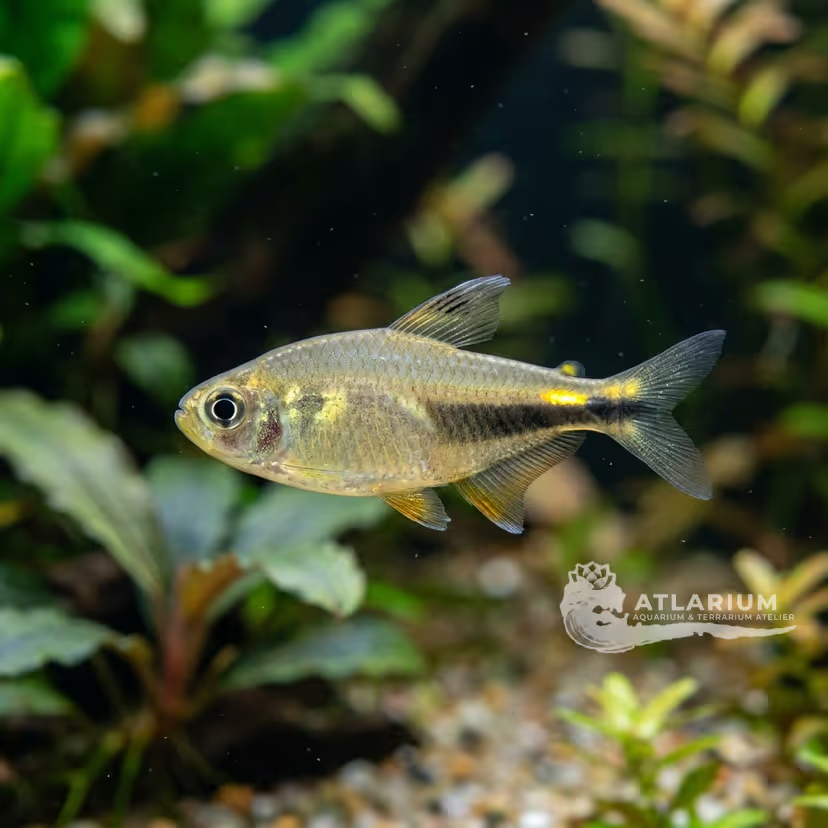
Flag Tetra

Flag Tetra

Hyphessobrycon heterorhabdus
View details->
Meta Tetra

Meta Tetra

Hyphessobrycon metae

View details->
Agulha Tetra

Agulha Tetra

Hyphessobrycon agulha

View details->
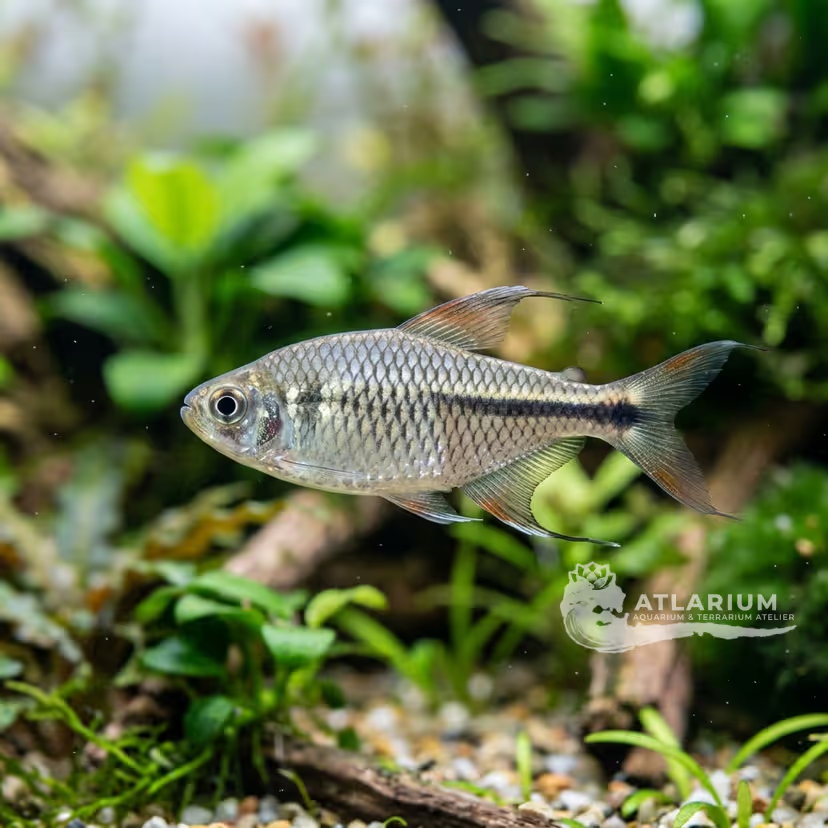
Blue-ribbon Tetra

Blue-ribbon Tetra

Hyphessobrycon melanostichos
View details->
Reticulated Tetra

Reticulated Tetra

Hyphessobrycon reticulatus

View details->
Vilma's Tetra

Vilma's Tetra

Hyphessobrycon vilmae

View details->
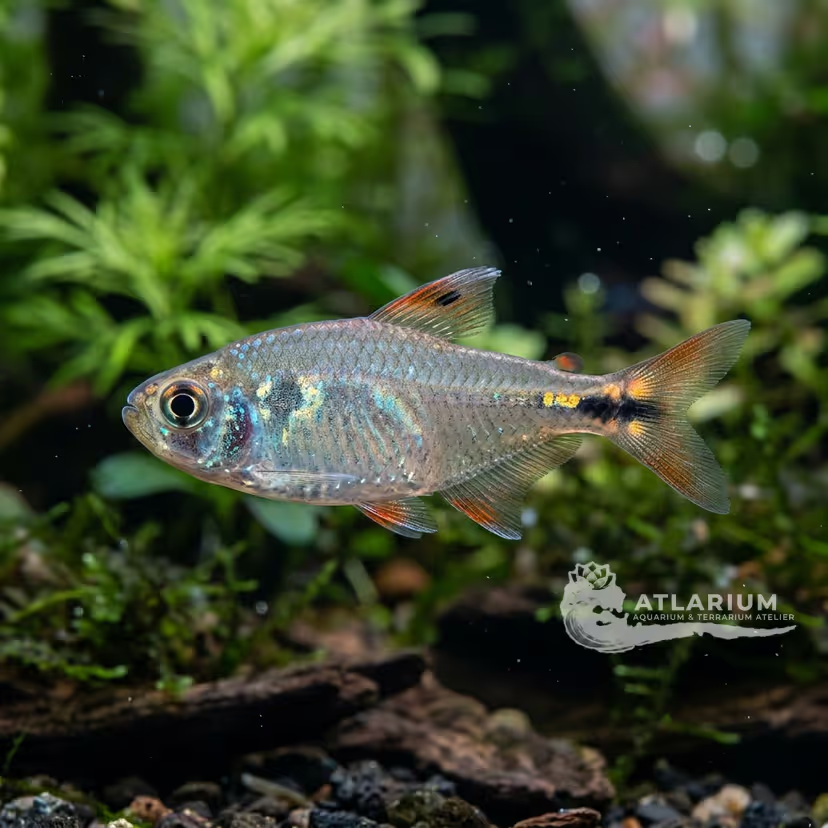
Mutabilis Tetra

Mutabilis Tetra

Hyphessobrycon mutabilis
View details->
Diancema Tetra

Diancema Tetra

Hyphessobrycon

View details->
Loreto Tetra

Loreto Tetra

Hyphessobrycon loretoensis

View details->
Black neon tetra

Black neon tetra

Hyphessobrycon herbertaxelrodi

View details->

Recommended companions

Compatible cards from coherent ecosystems with matching parameters.

Blyxa alternifolia
Plant

Blyxa alternifolia

Blyxa alternifolia

View details->
Blyxa cf. vietii
Plant

Blyxa cf. vietii

Blyxa cf. vietii

View details->
Alternanthera reineckii "rosaefolia minor"
Plant

Alternanthera reineckii "rosaefolia minor"

Alternanthera reineckii "rosaefolia minor"

View details->
Ammannia mauritiana
Plant

Ammannia mauritiana

Ammannia mauritiana

View details->
Ammannia latifolia
Plant

Ammannia latifolia

Ammannia latifolia

View details->
Ammannia sp. 'Bonsai'
Plant

Ammannia sp. 'Bonsai'

Ammannia sp. 'Bonsai'

View details->
Aldrovanda vesiculosa
Plant

Aldrovanda vesiculosa

Aldrovanda vesiculosa

View details->
Amblystegiaceae sp. "Manaus"
Plant

Amblystegiaceae sp. "Manaus"

Amblystegiaceae sp. "Manaus"

View details->
Bacopa crenata
Plant

Bacopa crenata

Bacopa crenata

View details->
Arrowhead Anubias
Plant

Arrowhead Anubias

Anubias hastifolia

View details->
Anubias
Plant

Anubias

Anubias barteri

View details->
Anubias nana
Plant

Anubias nana

Anubias barteri var. nana

View details->
Bacopa sp. "Japan"
Plant

Bacopa sp. "Japan"

Bacopa sp. "Japan"

View details->
Bolbitis heteroclita
Plant

Bolbitis heteroclita

Bolbitis heteroclita

View details->
Aciotis acuminifolia
Plant

Aciotis acuminifolia

Aciotis acuminifolia

View details->
Bucephalandra motleyana "Braun-rot narrow"
Plant

Bucephalandra motleyana "Braun-rot narrow"

Bucephalandra motleyana "Braun-rot narrow"

View details->

Similar care

Cards with similar requirements, difficulty, habitat, and husbandry profile.
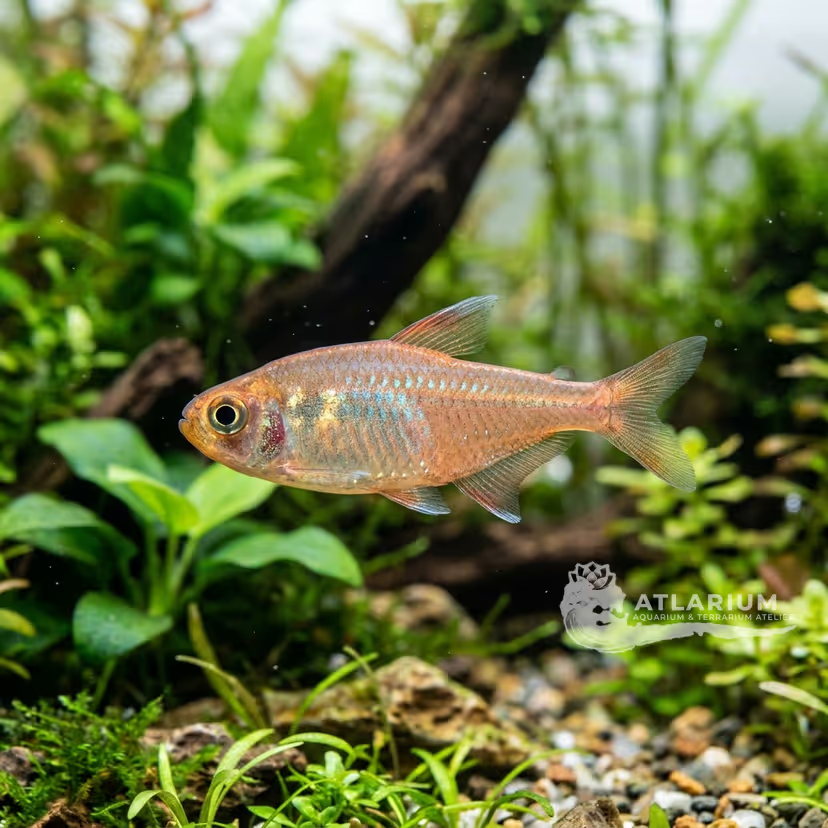
Vorderwinkler's Tetra

Vorderwinkler's Tetra

Hemigrammus vorderwinkleri
View details->
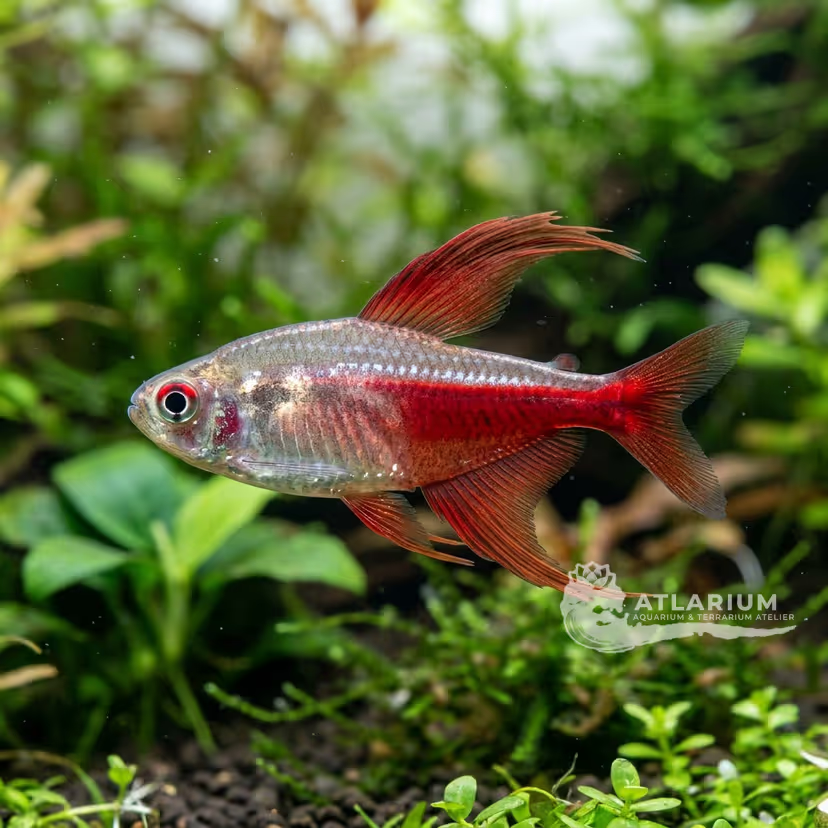
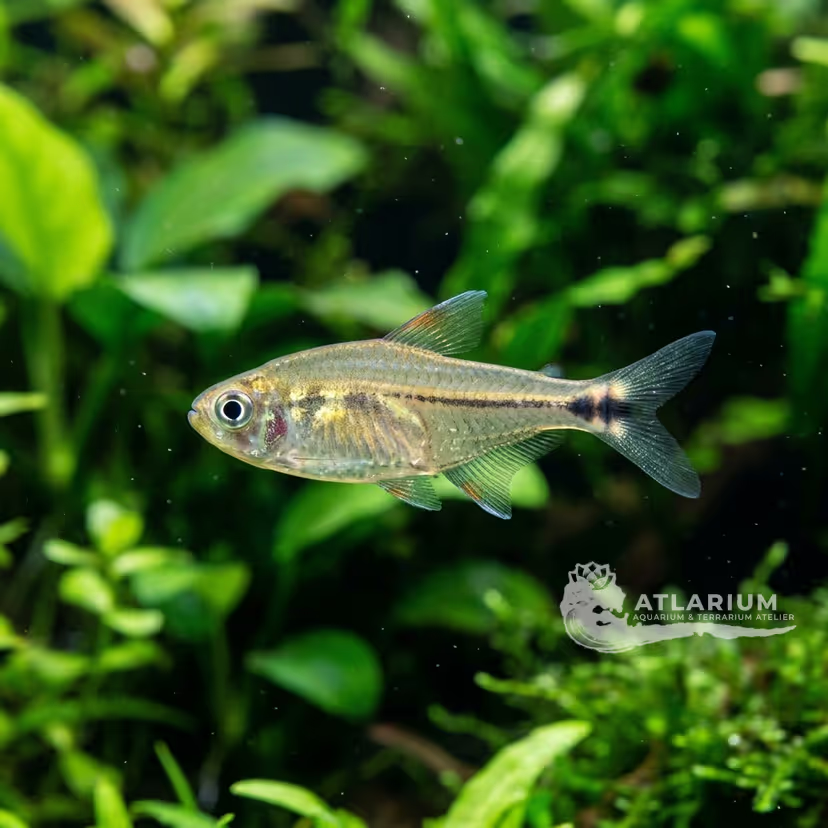
Red Sailfin Tetra

Red Sailfin Tetra

Hemigrammus coeruleus
View details->
Dash-dot Tetra

Dash-dot Tetra

Hemigrammus bellottii

View details->
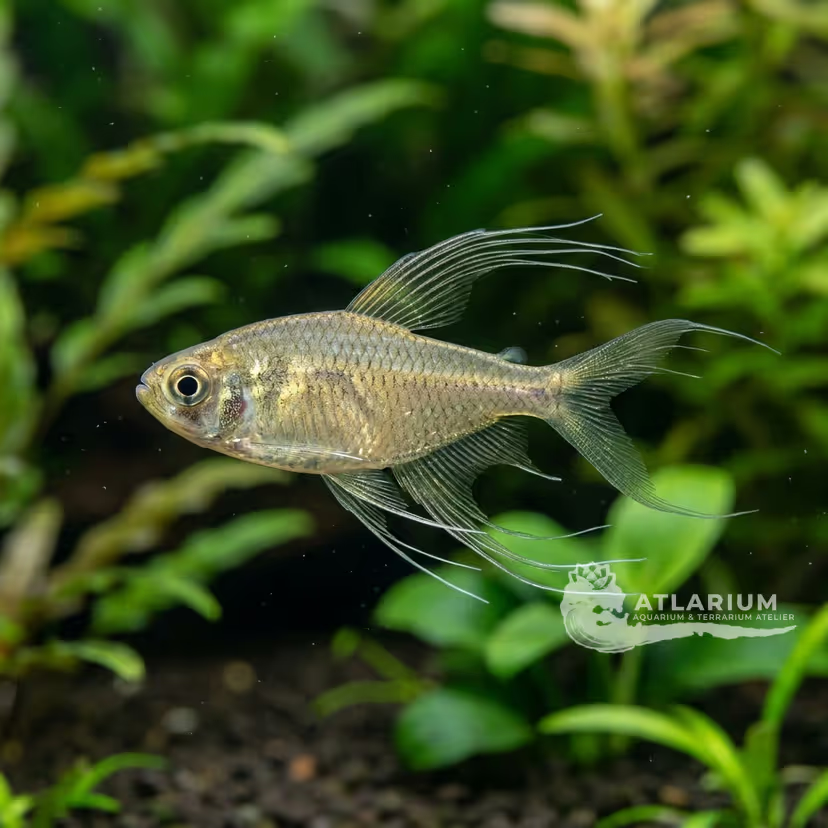
Franke's Tetra

Franke's Tetra

Hyphessobrycon frankei
View details->
Phoenix Tetra

Phoenix Tetra

Hemigrammus filamentosus

View details->
Brilliant Rummy-Nose Tetra (Bleheri)

Brilliant Rummy-Nose Tetra (Bleheri)

Hemigrammus bleheri

View details->
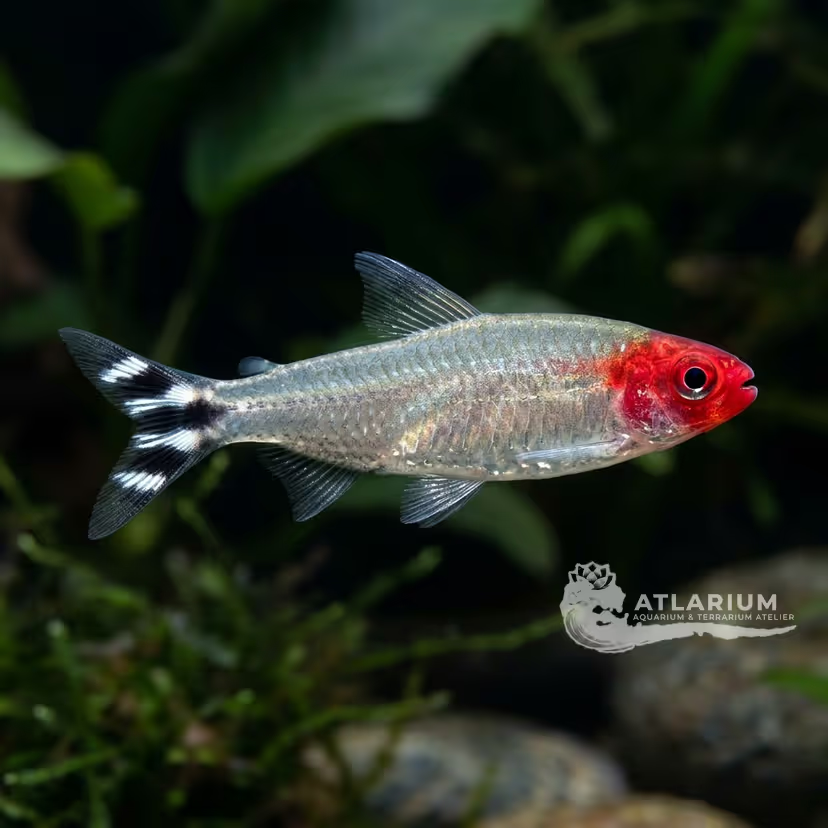
Flameback bleeding heart tetra

Flameback bleeding heart tetra

Hyphessobrycon pyrrhonotus
View details->
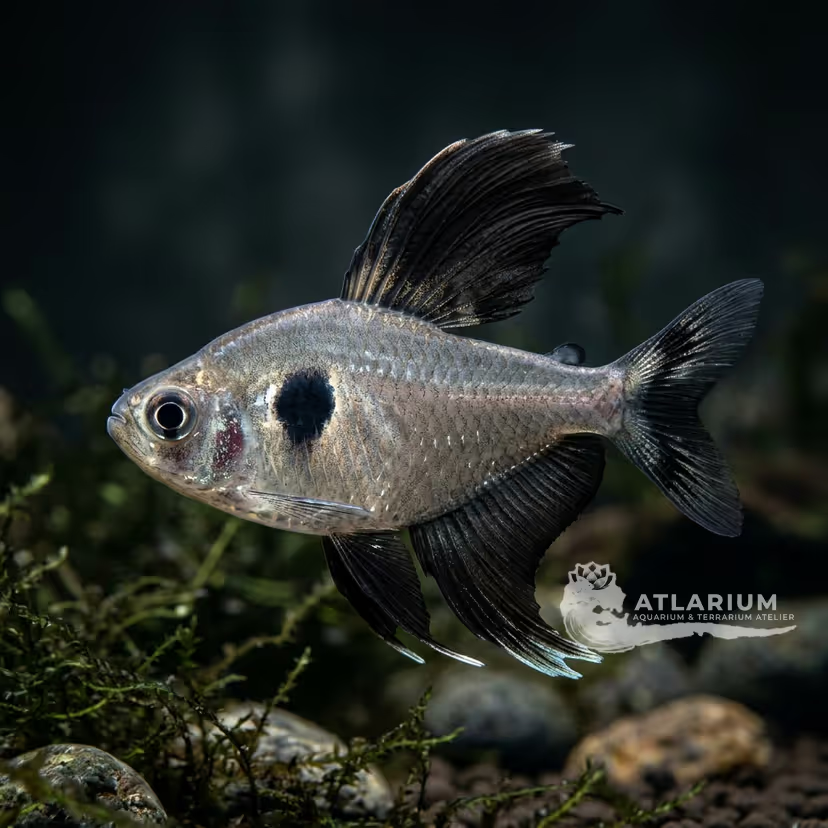
True Rummy-Nose Tetra

True Rummy-Nose Tetra

Hemigrammus rhodostomus
View details->
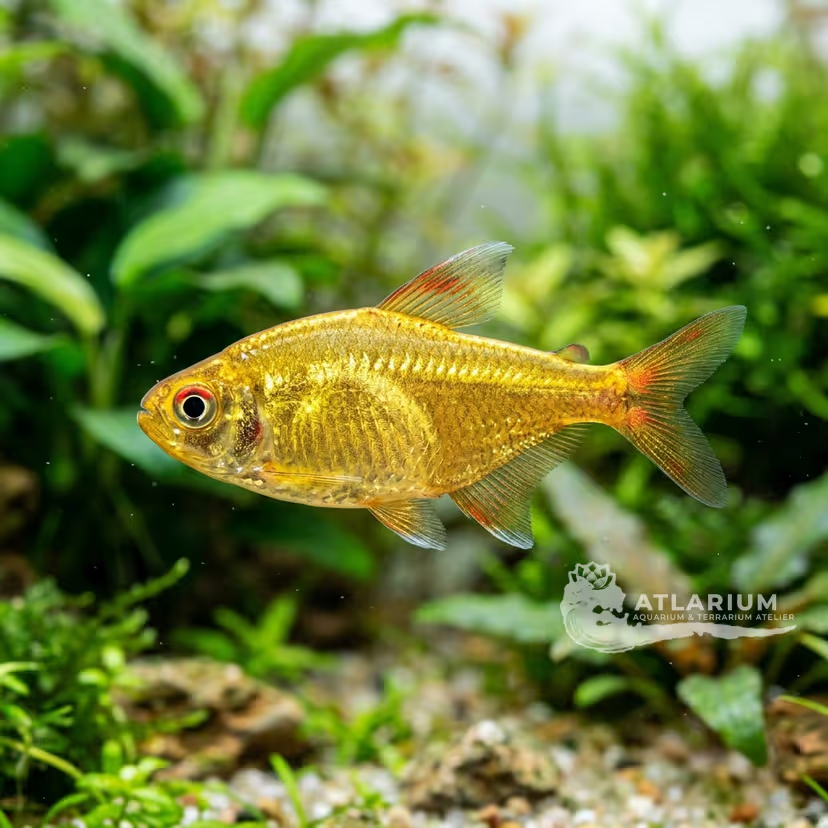
Black Phantom Tetra

Black Phantom Tetra

Hyphessobrycon megalopterus
View details->
Golden Tetra

Golden Tetra

Hemigrammus levis

View details->
Diamond Tetra

Diamond Tetra

Moenkhausia pittieri

View details->
Flame tetra

Flame tetra

Hyphessobrycon flammeus

View details->
Balbus Tetra

Balbus Tetra

Hyphessobrycon balbus

View details->
Bass Tetra

Bass Tetra

Hemigrammus marginatus

View details->
Red spot tetra

Red spot tetra

Hemigrammus stictus

View details->
Bucktooth Tetra

Bucktooth Tetra

Exodon paradoxus

View details->
Last updated: 06/30/2026
Socolof's Tetra (Hyphessobrycon socolofi) Care Guide & Tank Setup | Atlarium