Bucktooth Tetra
Exodon paradoxus
The 'poor man's Piranha', this aggressive Characin relies on its protruding buckteeth to viciously tear scales from prey. It requires immense swimming space and strictly single-species setups.
Water Temperature
24 - 28 °C
pH Value
5.5 - 7.5
Water type
Freshwater
Tank level
Surface and middle
Adult size
15 cm
Minimum tank volume
>= 180 L
Minimum group
>= 6
GH
1 - 10 dGH
KH
1 - 5 dKH
TDS
25 - 200 ppm
Conductivity
39 - 313 uS/cm

Species description
Geographical Origin and Habitat: Amazon River basin (Brazil) and Branco River. Prefers open waters with little vegetation and sandy bottoms in rivers in full current, hunting frantically.
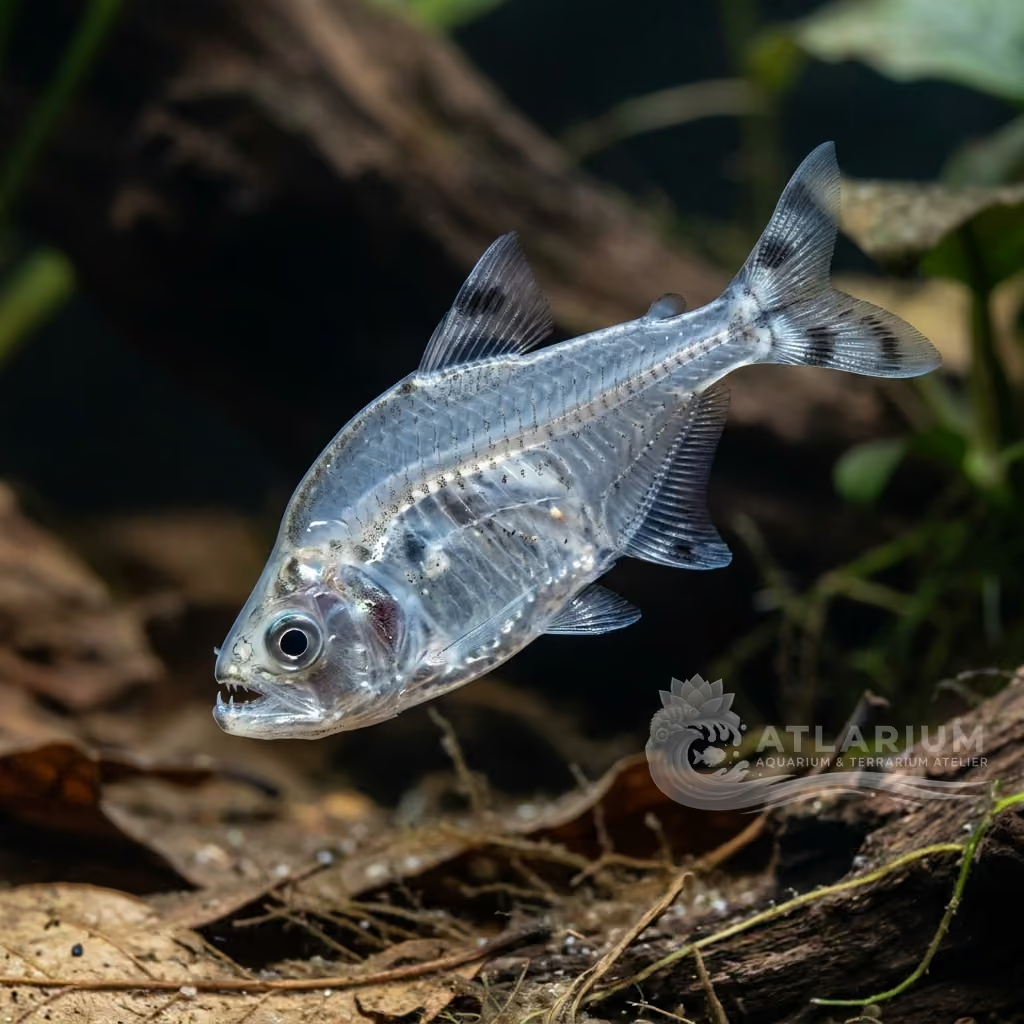
Taxonomy and Morphology: Bucktooth Tetra (Exodon paradoxus). Large lethal characin. Its jaws (oversized compared to the tapered tetra body) are armed with massive and protruding teeth (buckteeth) similar to incisors, to tear off scales.
Social Behavior: The poor man's Piranha. Hunts in "wolf packs", frantic and unstoppable. Intra-specific aggression is so high that in small groups (e.g. 5-8 individuals) the dominants will tear each other to pieces until the last one dies. Keep only in schools of AT LEAST 15-20.
Coloration and Sexual Dimorphism: Iridescent metallic shiny silver background. It has two marked black spots, one circular before the tail and one rhomboidal halfway down the flank. All fins blaze with a bright yellow or blood red. Slender males.

Care, breeding and tankmates
Aquarium Setup: Immense aquarium (at least 150 cm / 60 inches) for almost or totally single-species use. Vast, immense areas for free swimming. Use very massive sand and roots. Plants will be fine, but will often be "nibbled" by mistake in the heat of meals.
Diet and Feeding: Carnivorous lepidophage. In nature it survives even by tearing scales from other fish. In the aquarium it accepts everything: flakes, pellets, thawed fish, krill. Upon introduction of food the water boils (violent feeding frenzy).
Water Quality: Needs very sustained current and very high oxygenation. Being a hyper-competitive and voracious eater, the filters must be excellent to dispose of the high organic load.
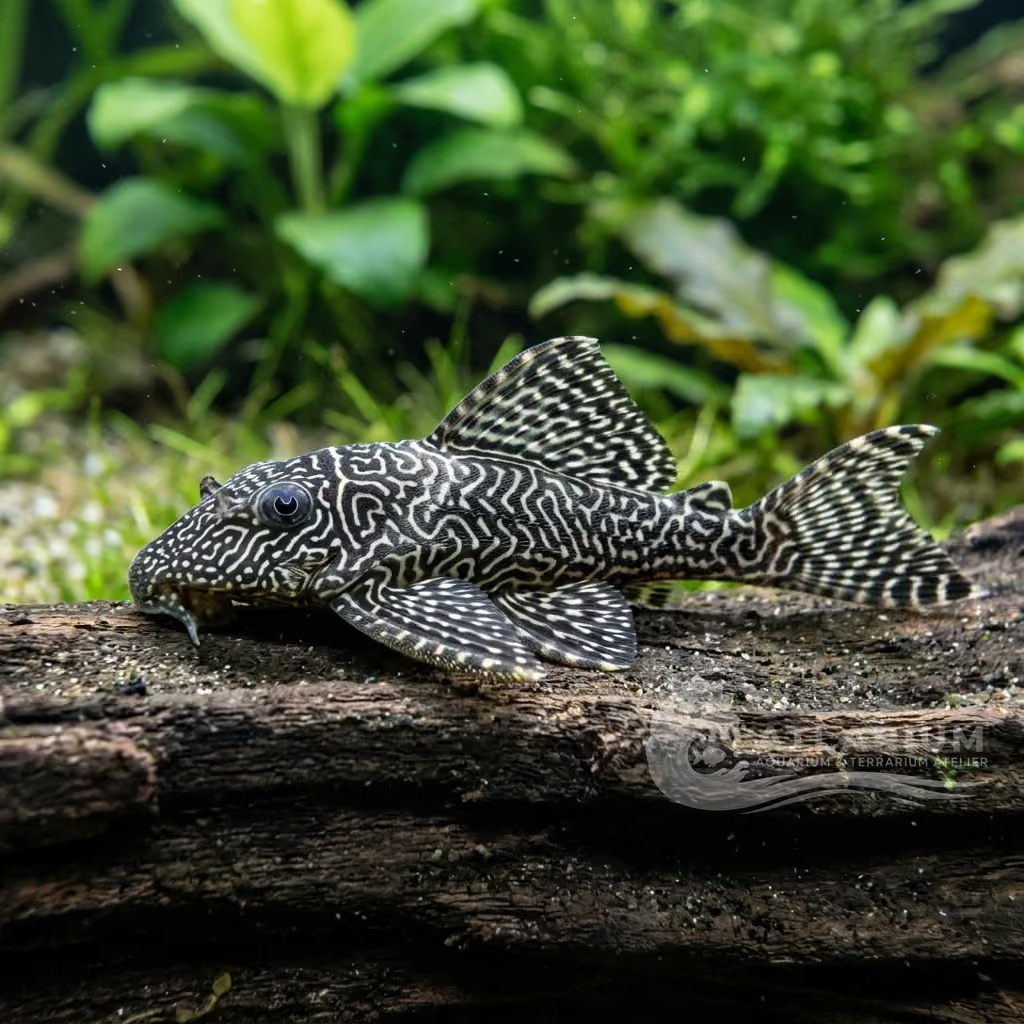
Compatibility and Cohabitation: NOT a community fish. Strictly forbidden any tankmate, under penalty of the poor cohabitant being stripped alive with bites. It is possible to attempt cohabitation in mastodontic tanks only with extremely armored (and adult) Loricariids.
Aquarium Breeding: They scatter eggs among the foliage, and then immediately feed on their own work. It is necessary to isolate the breeders on grids on the bottom.
Risks and Diseases: Decimation of the school. Failure to respect the minimum numbers (at least 15-20 fish) and tanks that are too short (<120 cm / 48 inches) invariably lead to the extermination of the entire group due to deadly quarrels in a few months.

Geographic origin and distribution
Amazon River basin (Brazil) and Branco River. Prefers open waters with little vegetation and sandy bottoms in rivers in full current, hunting frantically.
Origin
Amazon, Orinoco, and GuianasEurope, Mediterranean, and West Asia

Fish profile
- Temperament
- Semi-aggressive
- They are hyperactive, highly aggressive, and relentlessly predatory towards anything they perceive as food or competition. Their schooling behavior is chaotic and primarily serves to distract from their constant infighting. Despite their beautiful appearance, they are strictly not suitable for any community aquarium.
- Diet
- Omnivore
- They are primarily carnivorous, feeding heavily on insects, small crustaceans, and the scales of other fish in the wild. In captivity, they eagerly devour high-quality carnivore flakes, frozen bloodworms, and chopped prawns. Ensure a varied diet to maintain their vibrant coloration and extreme energy levels.
- Life expectancy
- 6-8 years
- Adult size
- 15 cm
- Sex ratio
- School
- To disperse their intense intraspecific aggression, they must be kept in very large schools of at least twelve individuals. Keeping them in smaller numbers inevitably leads to the dominant fish systematically killing the weaker ones. The sex ratio is less important than maintaining a large overall group size.
- Feeding frequency
- Twice daily
- Because of their hyperactive swimming, they should be fed two to three times daily. Frequent feedings help to somewhat curb their natural aggression towards one another. Offer only what they can consume in a few minutes in a frenzied feeding flurry.
- Bioload
- Low to Medium
- The Bucktooth tetra produces a surprisingly high bioload due to their hyperactive nature and voracious carnivorous diet. Strong biological and mechanical filtration is absolutely essential to maintain safe water parameters. Regular weekly water changes are highly recommended to prevent the buildup of organic waste.
- Flow
- Stagnant
- They originate from heavily flowing rivers and actively appreciate strong, oxygenated water movement. A powerful filter return or added powerhead will stimulate their natural schooling behavior and keep them occupied. Adequate flow also helps keep their densely populated tanks clean from uneaten food.
- Jump risk
- Yes
- They are incredibly fast, skittish fish that possess a very high risk of jumping out of the tank. A tightly secured, heavy lid is completely mandatory, especially during their chaotic feeding times. Any gaps around heaters or filters should be securely blocked.
- Reproduction
- Oviparous
- Captive breeding is very rarely achieved due to their extreme hyperactivity and constant egg-eating habits. They are egg-scatterers that provide no parental care whatsoever. To breed them, a separate, heavily planted spawning tank with a mesh bottom is strictly required.
- Compatibility & tankmates
- Species only
- They are notoriously vicious fin-nippers and specialized scale-eaters that will relentlessly attack almost any tank mate. They are best kept in a dedicated, large species-only aquarium to avoid inevitable casualties. Even armored catfish or fast-swimming species are not safe from their constant harassment.
- Tank level
- Top/Middle
- They are exceptionally active swimmers that will aggressively utilize the entire middle and upper levels of the water column. They rarely settle down and are constantly on the move, scanning for food or skirmishes. A long aquarium with plenty of open swimming space is absolutely necessary.

Scientific Parameters & Models
FishBase
Window to the official scientific data of the species
FishBase v25.04Data synced on: 06/15/2026
- Trophic level
- 3.8 ± 0.61 se
- Phylogenetic uniqueness (PD50)
- 1
- Bayesian Length-Weight
- a = 0.01318, b = 3.07
- VulnerabilityLow vulnerability (10 / 100)

Image gallery
Licensed images linked to the species or, when marked, to the closest representative taxon.

Related species
Recommendations grouped by close relatives, companion choices, and similar care.