Congo Lamprologus
Lamprologus congoensis
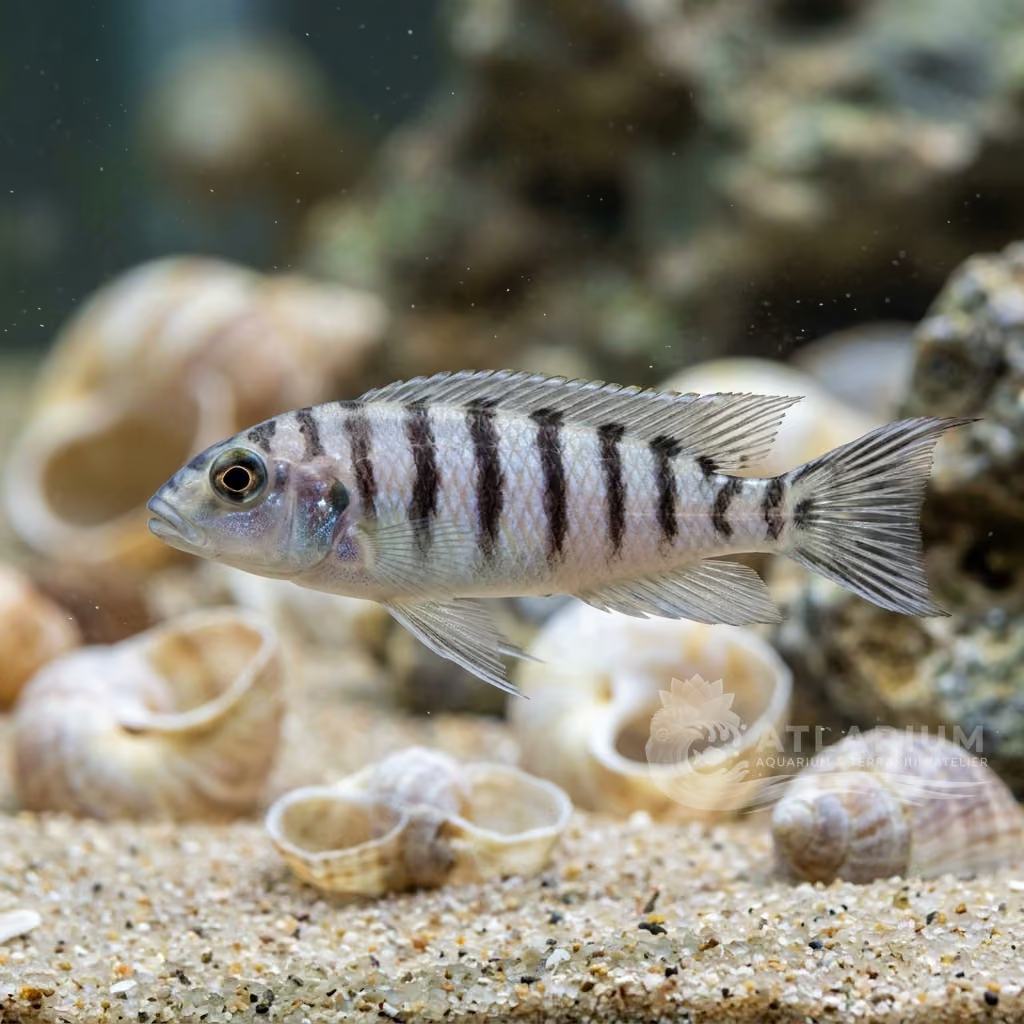
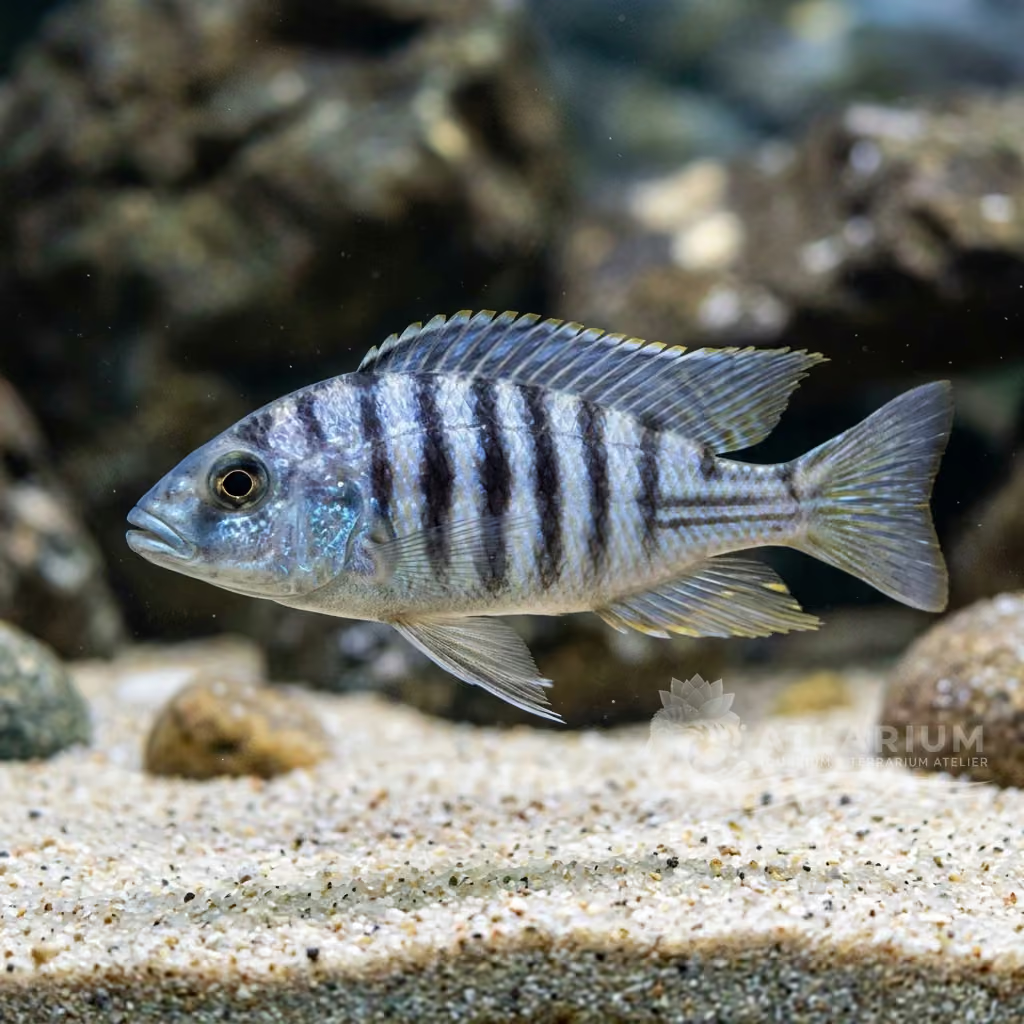
One of the rare riverine Lamprologus. Massive and oblong rheophilic body, with gray-purplish scales and a curious fleshy nuchal bump (hump) in dominant males.
Water Temperature
24 - 28 °C
pH Value
6.5 - 7.5
Water type
Freshwater
Tank level
Bottom and middle
Adult size
15 cm
Minimum tank volume
>= 150 L
Minimum group
>= 1
GH
4 - 15 dGH
KH
4 - 10 dKH
TDS
100 - 325 ppm
Conductivity
156 - 508 uS/cm

Species description
Geographical Origin and Habitat: Congo River Basin (Central Africa). It does not inhabit the lakes of the Rift Valley, but the thick and highly oxygenated rapids of the Congo River (Malebo Pool). The substrate is composed of rocks smoothed by the very strong current.
Taxonomy and Morphology: Congo Cichlid (Lamprologus congoensis). An "atypical" river Lamprologus. It has a very pronounced hydrodynamic (torpedo-shaped) shape, similar to gobies, to escape the push of the water, with a pointed head.
Social Behavior: Very aggressive, just like its lake congeners. Fiercely defends the shelter areas among the stones. Outside the breeding season it tolerates conspecifics little and actively attacks anyone who enters its line of sight.
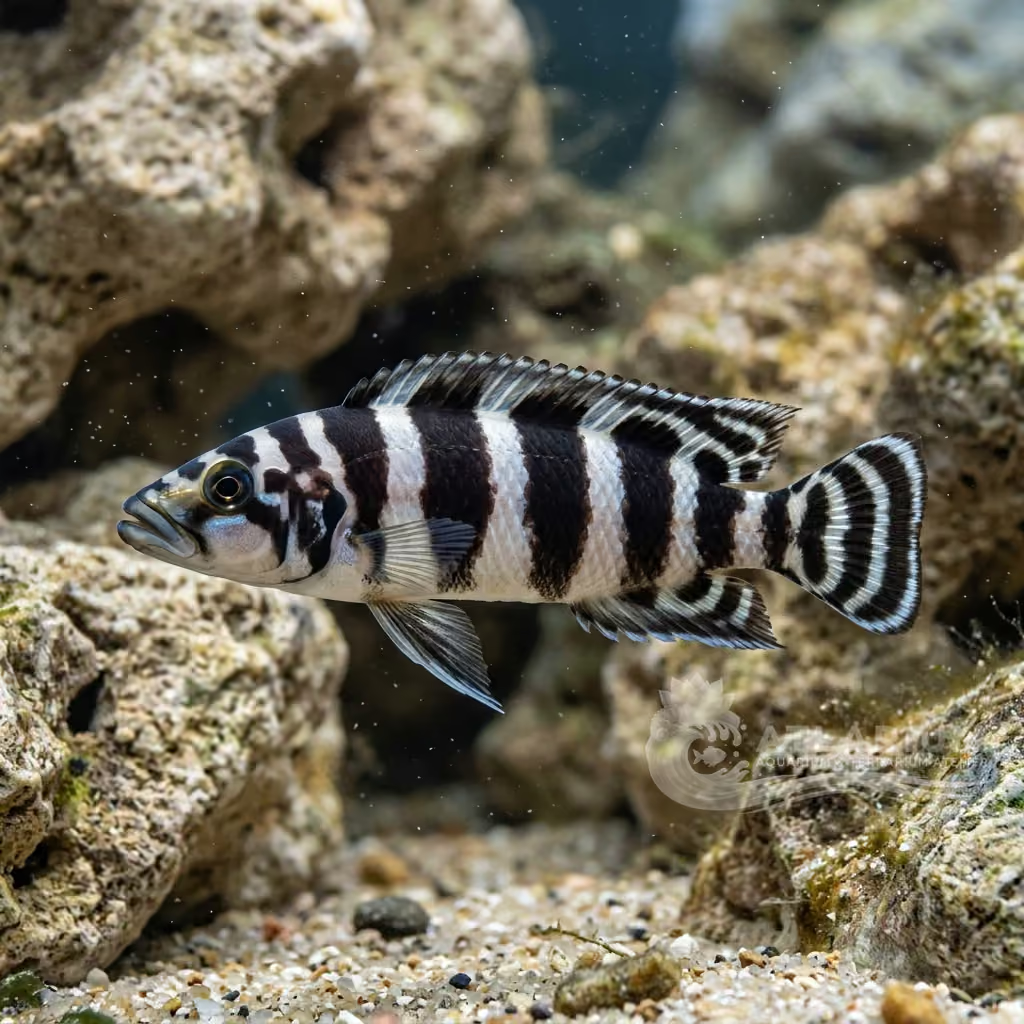
Coloration and Sexual Dimorphism: The base body is beige/yellowish but disappears under marked black scales, giving it a honeycomb lattice or dark bands. The unpaired fins have reddish borders and blue dots. The male develops a massive nuchal hump and is noticeably larger.

Care, breeding and tankmates
Aquarium Setup: Rheophilic setup (River-Tank). Minimum 120 cm (48 inches) aquarium. Gravel, large round pebbles to recreate crevices (must be heavy and stable). It is fundamental to use huge wavemakers to simulate the rapids of the Congo River.
Diet and Feeding: Current micro-predator. In nature it tears insect larvae anchored to the stones. In the tank it is a vigorous eater: administer frozen bloodworms, krill, chopped shrimp and excellent quality flake/pellet feed.
Water Quality: Unlike the Tanganyika Lamprologus, it demands neutral water (pH 6.5 - 7.5) and moderately soft. Hates extreme limestone. An extremely high level of dissolved oxygen is essential, guaranteed by the movement of the water.
Compatibility and Cohabitation: Can only coexist in large tanks with equally reactive species capable of swimming in extreme currents: Phenacogrammus interruptus (Congo Tetra), Steatocranus casuarius, and large Synodontis. Do not pair with slow or shy fish.
Aquarium Breeding: Cave spawners. The male dominates a harem, each female guards a narrow crevice. The eggs adhere firmly to the rock wall (so as not to be washed away in nature). They are ruthless defenders of the offspring.
Risks and Diseases: Oxygen deficiency. Being a rapids fish, if the filter breaks or the wavemaker is turned off, L. congoensis will suffocate and die much sooner than any other standard cichlid.

Geographic origin and distribution
Congo River Basin (Central Africa). It does not inhabit the lakes of the Rift Valley, but the thick and highly oxygenated rapids of the Congo River (Malebo Pool). The substrate is composed of rocks smoothed by the very strong current.
Origin
Africa and Madagascar

Fish profile
- Temperament
- Semi-aggressive
- This is a fiercely territorial species that will aggressively defend its chosen cave and surrounding area. They are unapologetically aggressive toward any fish that intrudes upon the lower levels of the aquarium. Providing an enormous amount of rockwork is the only way to manage their natural belligerence.
- Diet
- Carnivore
- In their natural riverine habitat, they are aggressive predators feeding on small fish, insect larvae, and crustaceans. In captivity, they must be offered high-quality protein such as sinking carnivore pellets, frozen bloodworms, and mysis shrimp. Plant-based foods are generally ignored and do not provide the nutrition they require.
- Life expectancy
- 7 years
- Adult size
- 15 cm
- Sex ratio
- Pair
- Due to their extreme intraspecific aggression, they are best kept as a single male-female pair. Finding a compatible pair can be difficult and often requires raising a group of juveniles together until they pair off. Once paired, the remaining fish must be immediately removed to prevent them from being killed.
- Feeding frequency
- Twice daily
- Adults should be fed once or twice daily with appropriately sized meaty foods. Because they are highly active, they require substantial calories, but overfeeding can still cause digestive issues. Monitor their intake carefully to ensure no uneaten food is left to decay.
- Bioload
- Medium
- This rheophilic African cichlid produces a moderately high bioload due to its carnivorous diet. It requires excellent water quality with exceptionally low nitrate levels to thrive long-term. Powerful filtration and frequent large water changes are absolutely necessary.
- Flow
- Stagnant
- Originating from the fast-flowing rapids of the Congo River, they absolutely demand a very strong current. A river-manifold system or powerful circulation pumps are required to replicate this highly oxygenated environment. Without strong flow, they will become lethargic, lose coloration, and eventually succumb to stress.
- Jump risk
- Yes
- Due to their streamlined bodies and preference for fast water, they are capable jumpers. Any sudden fright or aggressive chase can easily result in them breaching the surface. A heavy, tight-fitting lid is absolutely essential to keep them safely in the aquarium.
- Reproduction
- Oviparous
- They are secretive cave spawners that typically lay their eggs in deep, dark crevices. The female fiercely guards the eggs and newly hatched fry while the male patrols the wider territory. Breeding requires highly oxygenated water and an abundance of suitable smooth rocks forming caves.
- Compatibility & tankmates
- Territorial
- They are aggressive and highly territorial, especially towards conspecifics and similarly shaped fish. They can be kept in a very large aquarium with robust, fast-swimming upper-level fish like Congo Tetras. Avoid keeping them with peaceful bottom-dwellers that will easily be outcompeted or killed.
- Tank level
- Middle/Bottom
- They are highly benthic and spend almost all their time darting among the rocks at the bottom of the tank. Their bodies are specially adapted to hug the substrate against strong currents. They will only briefly venture into the middle water column to capture sinking food.

Scientific Parameters & Models
FishBase
Window to the official scientific data of the species
FishBase v25.04Data synced on: 06/15/2026
- Trophic level
- 4 ± 0.6 se
- Resilience
- High (less than 15 months)
- Phylogenetic uniqueness (PD50)
- 0.5
- Bayesian Length-Weight
- a = 0.01445, b = 2.99
- VulnerabilityLow vulnerability (10 / 100)

Related species
Recommendations grouped by close relatives, companion choices, and similar care.