

Encyclopaedia
Bolivian Ram
Mikrogeophagus altispinosus
The Bulletproof Dwarf Cichlid (3 inches / 8 cm). The Bolivian Ram is the much larger, infinitely hardier, and wildly peaceful cousin of the extremely fragile, disease-prone German Blue Ram. It doesn't have blinding neon colors, but it rewards you with subtle, gorgeous peach/gold bodies, black chest spots, and blazing red-edged fins. They are 'Earth-Eaters', meaning they possess a fascinating, maniacal instinct to scoop up mouthfuls of sand, chew it to extract bugs, and spit the sand back out of their gills.
Share
Check out Bolivian Ram on Atlarium
22 - 28 °C
6.5 - 7.5
Freshwater
Bottom and middle
8 cm
>= 100 L
>= 1
1 - 12 dGH
1 - 6 dKH
25 - 240 ppm
39 - 375 uS/cm
Species description
Care, breeding and tankmates
Geographic Origin and Distribution
Origin
Fish profile
- Temperament
- Semi-aggressive
- Diet
- Omnivore
- Sex ratio
- Solitary
- Feeding frequency
- Twice daily
- Bioload
- The Bolivian Ram produces a moderate bioload typical for a dwarf cichlid of its size. Because they require pristine water conditions to thrive, efficient biological filtration and regular water changes are absolutely necessary. Although hardier than their German Blue Ram cousins, high nitrate levels will still compromise their immune system over time.
- Flow
- Stagnant
- Reproduction
- Oviparous
- Compatibility & tankmates
- They are remarkably peaceful cichlids that do wonderfully well in community aquariums with other non-aggressive fish. Excellent tank mates include small to medium-sized tetras, rasboras, and corydoras catfish. They should not be kept with overly boisterous or aggressive species that will outcompete them for food or bully them.
- Tank level
- Middle/Bottom
Window to the official scientific data of the species
Scientific Parameters & Models
- Trophic level
- 3.1 ± 0.5 se
- Resilience
- High (less than 15 months)
- Phylogenetic uniqueness (PD50)
- 0.75
- Bayesian Length-Weight
- a = 0.01445, b = 3.08
Image gallery
Licensed images linked to the species or, when marked, to the closest representative taxon.
Related species
Recommendations grouped by close relatives, companion choices, and similar care.
Variants and close relatives
Same atlas type, nearby scientific identity, genus, or family.
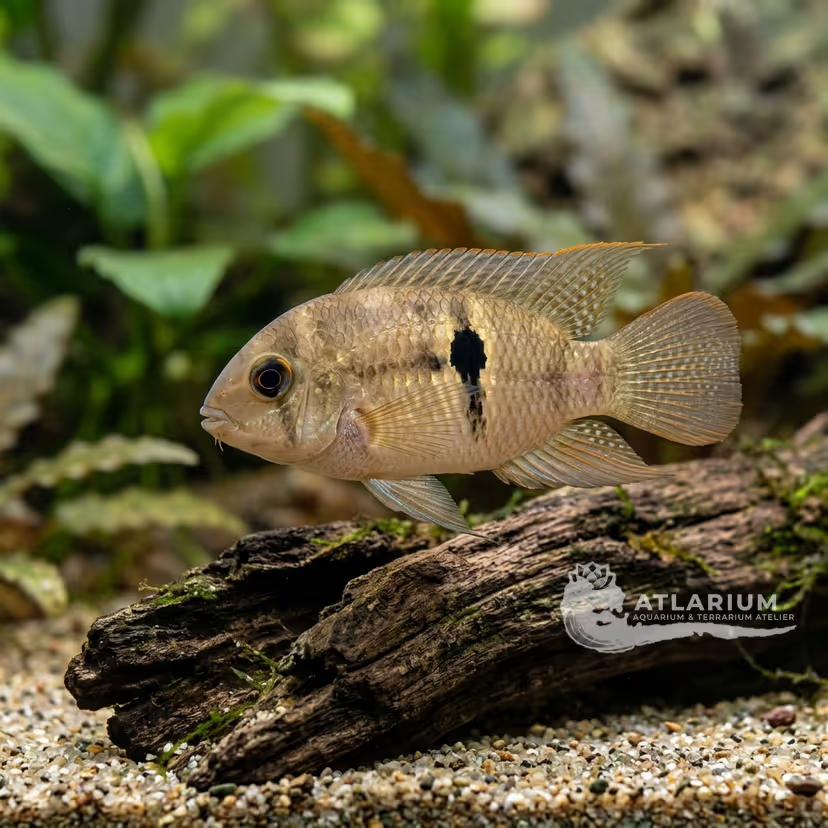
Keyhole cichlid
Cleithracara maronii

Paraguay Mouthbrooder (Bujurquina vittata)
Bujurquina vittata
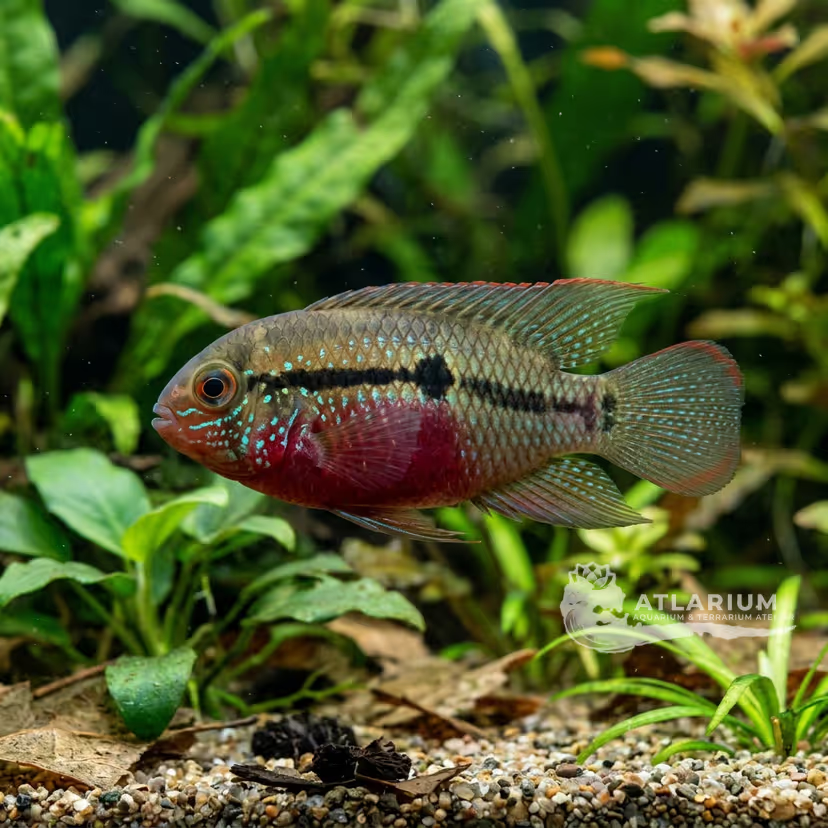
Redbreast Acara
Laetacara dorsigera

Oscar
Astronotus ocellatus

Black Acara (Two-spot Cichlid)
Cichlasoma bimaculatum

Diadem Cichlid (Aequidens diadema)
Aequidens diadema

Three-Stripe Dwarf Cichlid (Apistogramma trifasciata)
Apistogramma trifasciata

Blue Acara
Andinoacara pulcher

Red-eye Krobia
Krobia xinguensis

Blue Acara
Andinoacara pulcher

Amazon Cichlasoma (Cichlasoma amazonarum)
Cichlasoma amazonarum

Cockatoo Cichlid
Apistogramma cacatuoides

Angelfish
Pterophyllum scalare
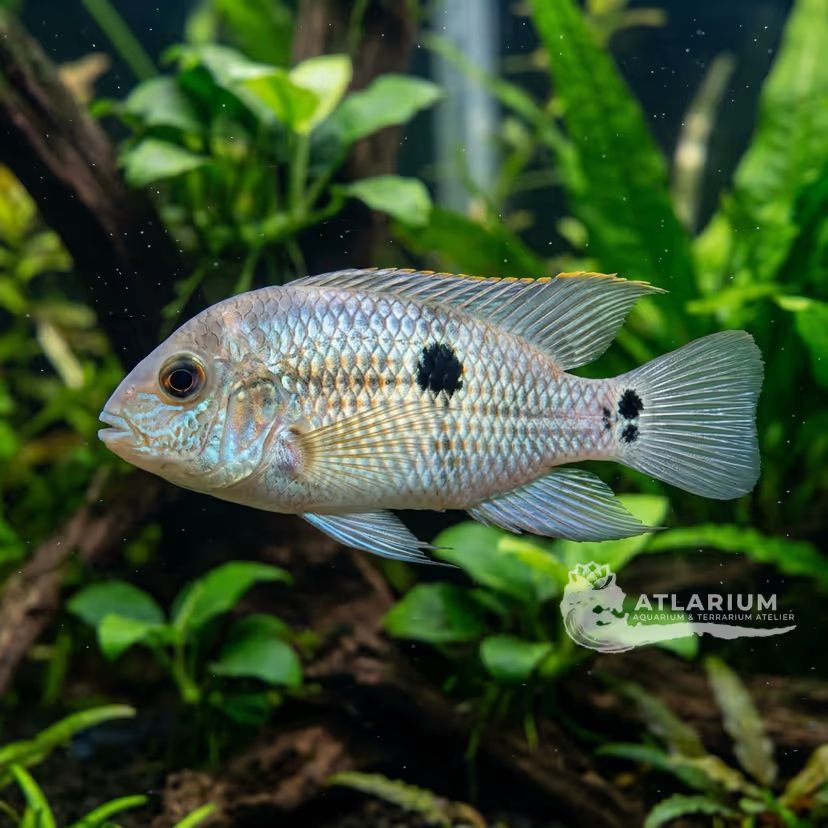
Double-spot Acara (Aequidens pallidus)
Aequidens pallidus

Regan's Dwarf Pike Cichlid
Crenicichla regani

Kraussii Basketmouth (Caquetaia kraussii)
Caquetaia kraussii
Recommended companions
Compatible cards from coherent ecosystems with matching parameters.
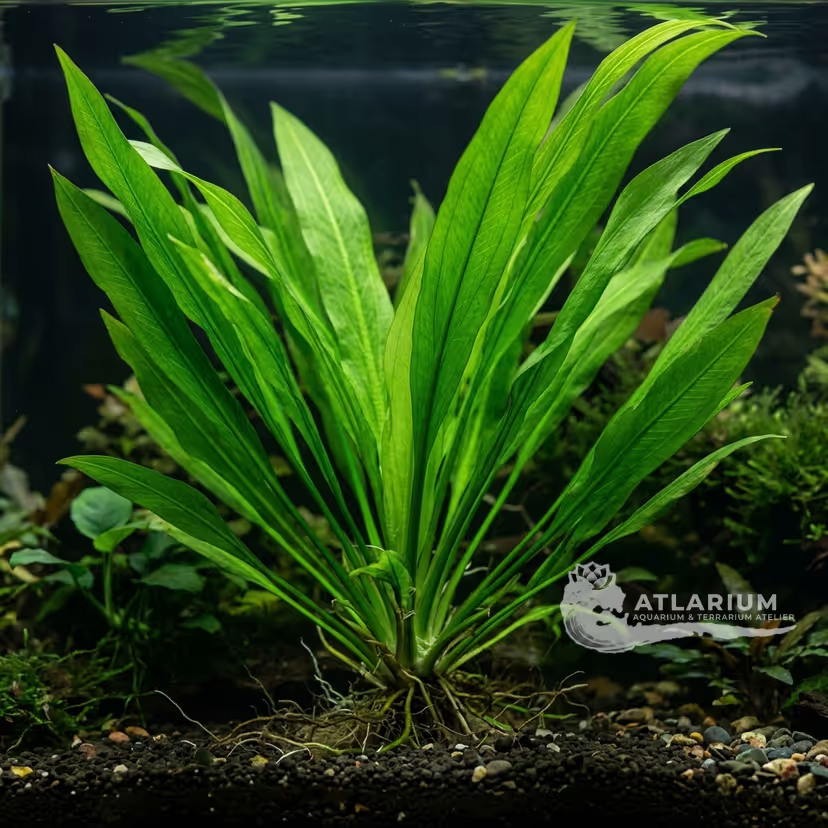
Amazon Sword
Aquarius grisebachii

Ammannia sp. 'Bonsai'
Ammannia sp. 'Bonsai'

Arrowhead Anubias
Anubias hastifolia

Bacopa sp. "Japan"
Bacopa sp. "Japan"

Bolbitis heteroclita
Bolbitis heteroclita
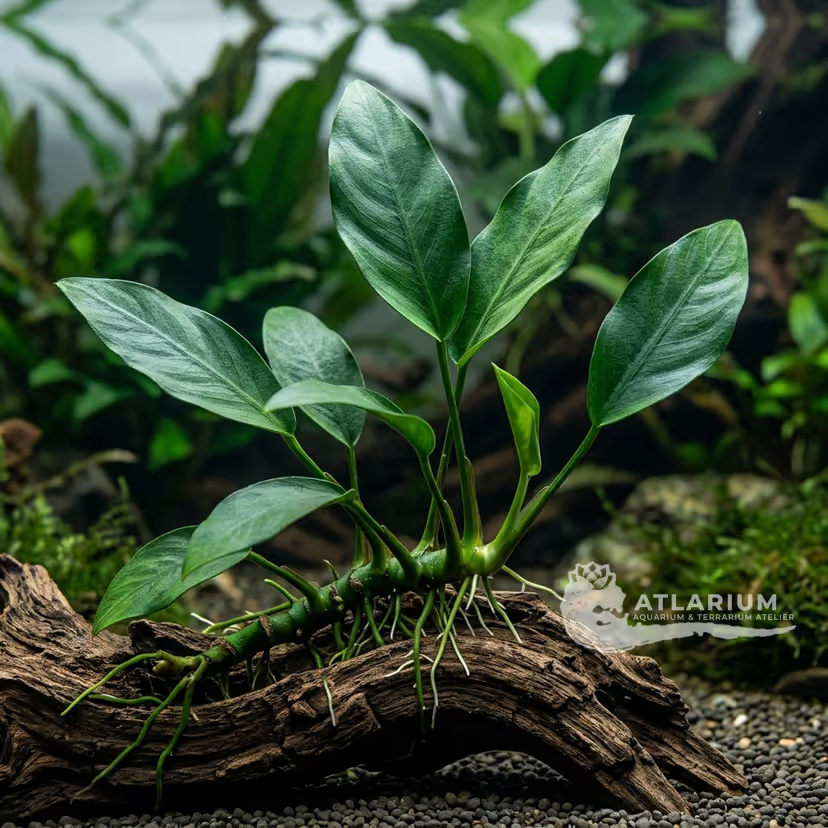
Anubias
Anubias barteri

Anubias nana
Anubias barteri var. nana

Bucephalandra motleyana "Braun-rot narrow"
Bucephalandra motleyana "Braun-rot narrow"

Bucephalandra motleyana "Riam Macam"
Bucephalandra motleyana "Riam Macam"

Ammannia latifolia
Ammannia latifolia

Bucephalandra motleyana "Braun-rot" ("Serimbu")
Bucephalandra motleyana "Braun-rot" ("Serimbu")

Bucephalandra motleyana "Kapit"
Bucephalandra motleyana "Kapit"

Bucephalandra motleyana "Pancuraji"
Bucephalandra motleyana "Pancuraji"

Bucephalandra sp. "Bukit Kelam / Sintang"
Bucephalandra sp. "Bukit Kelam / Sintang"

Bucephalandra sp. "Melawi"
Bucephalandra sp. "Melawi"

Alternanthera reineckii "rosaefolia minor"
Alternanthera reineckii "rosaefolia minor"
Similar care
Cards with similar requirements, difficulty, habitat, and husbandry profile.

Checkerboard Cichlid (Crenicara punctulatum)
Crenicara punctulatum

Macmaster's Dwarf Cichlid
Apistogramma macmasteri

Sailfin Dwarf Cichlid (Apistogramma velifera)
Apistogramma velifera

Hongslo's Dwarf Cichlid
Apistogramma hongsloi

Viejita dwarf cichlid
Apistogramma viejita
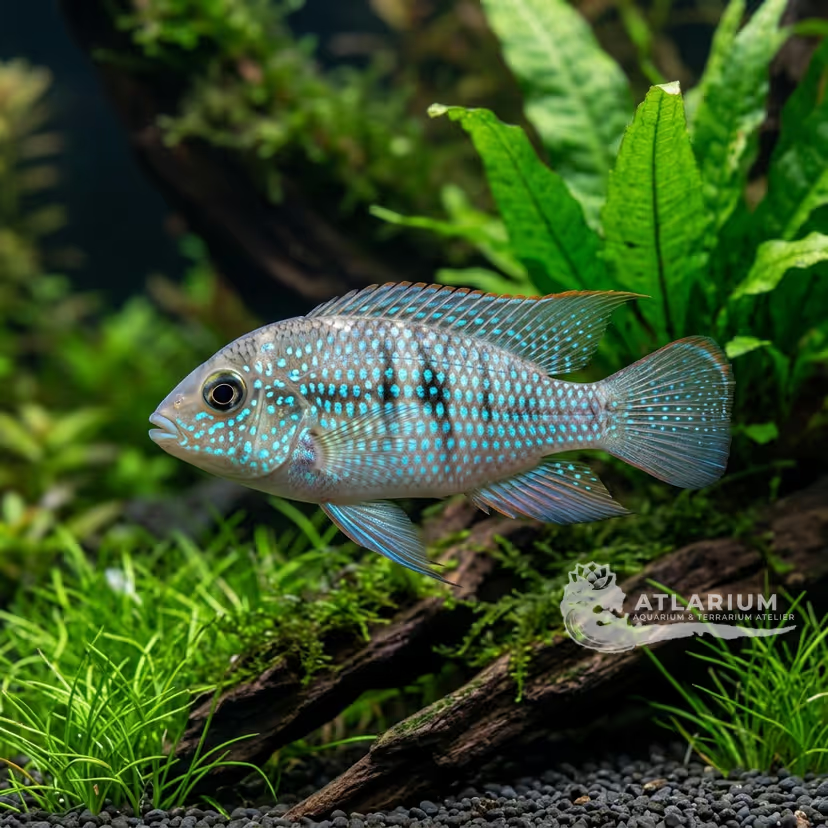
African Butterfly Cichlid
Anomalochromis thomasi

Three Stripe Corydoras (False Julii)
Corydoras trilineatus

Zygatus Cory
Corydoras zygatus

Flag Acara (Smiling Cichlid)
Laetacara curviceps

Dwarf Pike Cichlid
Crenicichla compressiceps

Two-Stripe Dwarf Cichlid
Apistogramma bitaeniata

Rabaut's Corydoras / Rust Corydoras
Corydoras rabauti

Umbrella dwarf cichlid
Apistogramma borellii

Agulha Tetra
Hyphessobrycon agulha

Bass Tetra
Hemigrammus marginatus

False Spotted Corydoras
Corydoras leucomelas