
Encyclopaedia
Ocellated Shell-dweller (L. ocellatus)
Lamprologus ocellatus
Tiny and fierce 'Shell-dweller' (5 cm) from Tanganyika. Spends its life burying empty snail shells in the sand, using them as a home. Fearless, it will attack human hands or much larger fish if they approach its shell.
Share
Check out Ocellated Shell-dweller (L. ocellatus) on Atlarium
24 - 28 °C
8 - 9
Freshwater
Bottom
5 cm
>= 100 L
>= 1
10 - 25 dGH
5 - 12 dKH
200 - 495 ppm
313 - 773 uS/cm
Species description
Care, breeding and tankmates
Geographic Origin and Distribution
Origin
Fish profile
- Temperament
- Semi-aggressive
- Diet
- Omnivore
- Sex ratio
- Harem
- Feeding frequency
- Twice daily
- Bioload
- This famous shell-dwelling cichlid creates a very light bioload owing to its incredibly small size. They are remarkably clean fish that do not heavily soil the water if fed correctly. Regular water testing and modest weekly water changes are sufficient to maintain a healthy environment.
- Flow
- Stagnant
- Reproduction
- Oviparous
- Compatibility & tankmates
- They possess an astonishing level of aggression and cannot be kept with other bottom-dwellers. They will aggressively attack any Corydoras, Plecos, or dwarf cichlids that invade their space. Keep them in a species-only setup or with fast-swimming upper-level dither fish like Cyprichromis.
- Tank level
- Bottom
Window to the official scientific data of the species
Scientific Parameters & Models
- Trophic level
- 3.5 ± 0.41 se
- Resilience
- High (less than 15 months)
- Phylogenetic uniqueness (PD50)
- 0.5
- Bayesian Length-Weight
- a = 0.01905, b = 3.01
Image gallery
Licensed images linked to the species or, when marked, to the closest representative taxon.
Related species
Recommendations grouped by close relatives, companion choices, and similar care.
Variants and close relatives
Same atlas type, nearby scientific identity, genus, or family.

Emperor Cichlid / Giant Cichlid
Boulengerochromis microlepis

Brichard's Masked Cichlid
Chalinochromis brichardi

Eureka Red Peacock
Aulonocara jacobfreibergi
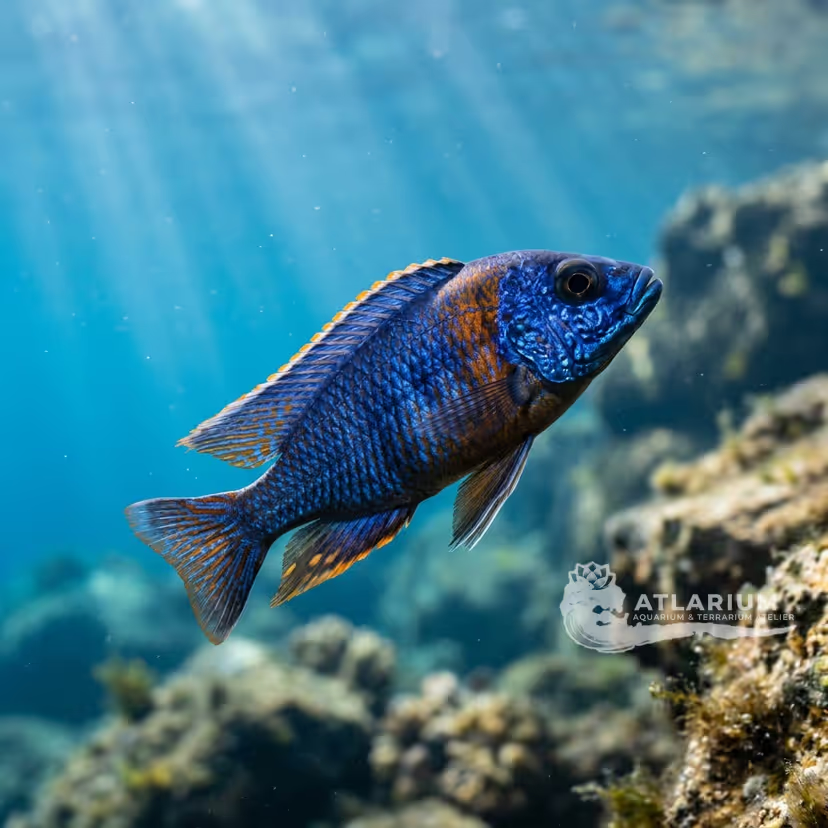
Flavescent Peacock / Stuartgrant's Peacock
Aulonocara stuartgranti

Kadango Red Fin
Copadichromis borleyi

Peacock Cichlid
Aulonocara baenschi

Calvus Cichlid
Altolamprologus calvus

Compressiceps Cichlid (Altolamprologus)
Altolamprologus compressiceps

Convict Cichlid
Amatitlania nigrofasciata

Midas Cichlid / Red Devil
Amphilophus citrinellus

T-Bar Cichlid (Sajica)
Amatitlania sajica
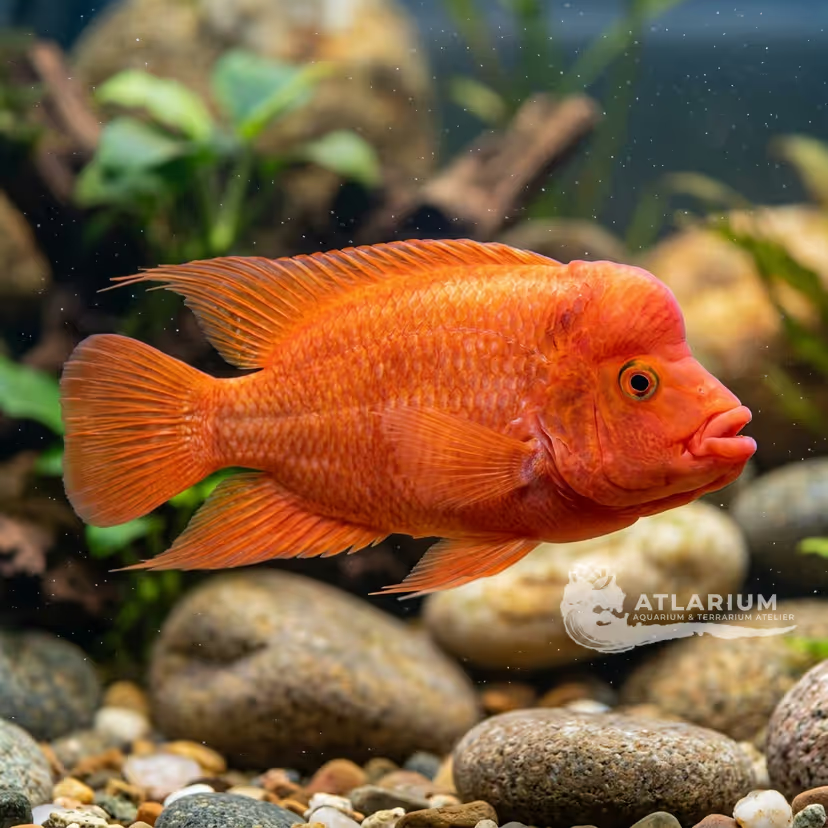
Red Devil Cichlid
Amphilophus labiatus

Nicaragua Cichlid (Macaw Cichlid)
Hypsophrys nicaraguensis

Yellow Dwarf Cichlid (Yellow Convict)
Amatitlania nanolutea

Angelfish
Pterophyllum scalare

Amazon Cichlasoma (Cichlasoma amazonarum)
Cichlasoma amazonarum
Recommended companions
Compatible cards from coherent ecosystems with matching parameters.

Arrowhead Anubias
Anubias hastifolia
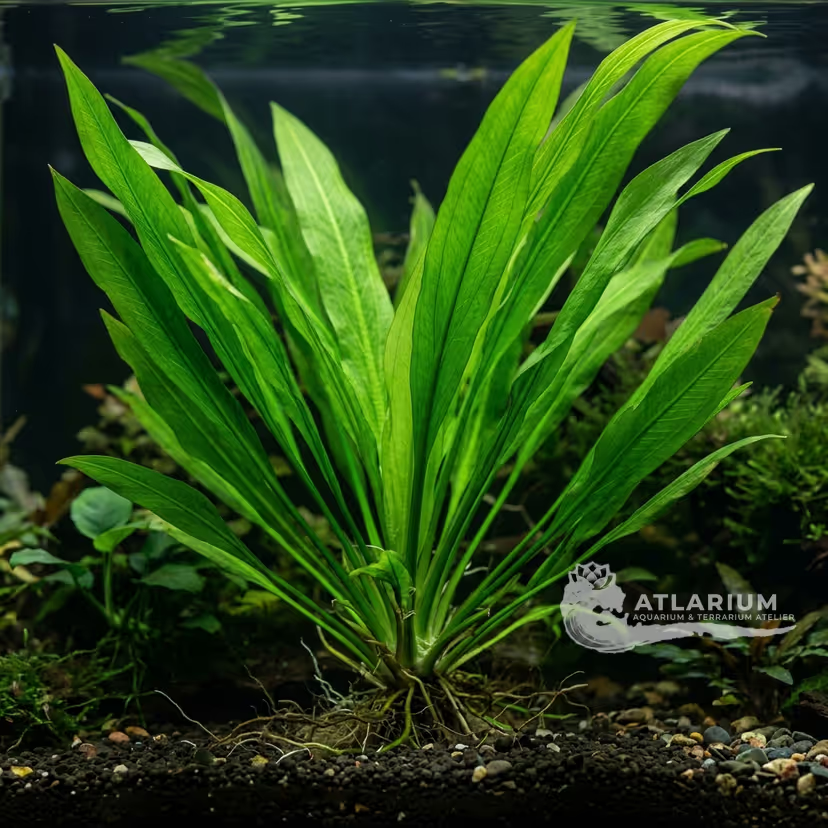
Amazon Sword
Aquarius grisebachii

Anubias barteri var. nana 'Round Leaf'
Anubias barteri var. nana 'Round Leaf'

Anubias congensis
Anubias congensis

Anubias gigantea
Anubias gigantea

Anubias lanceolata
Anubias lanceolata
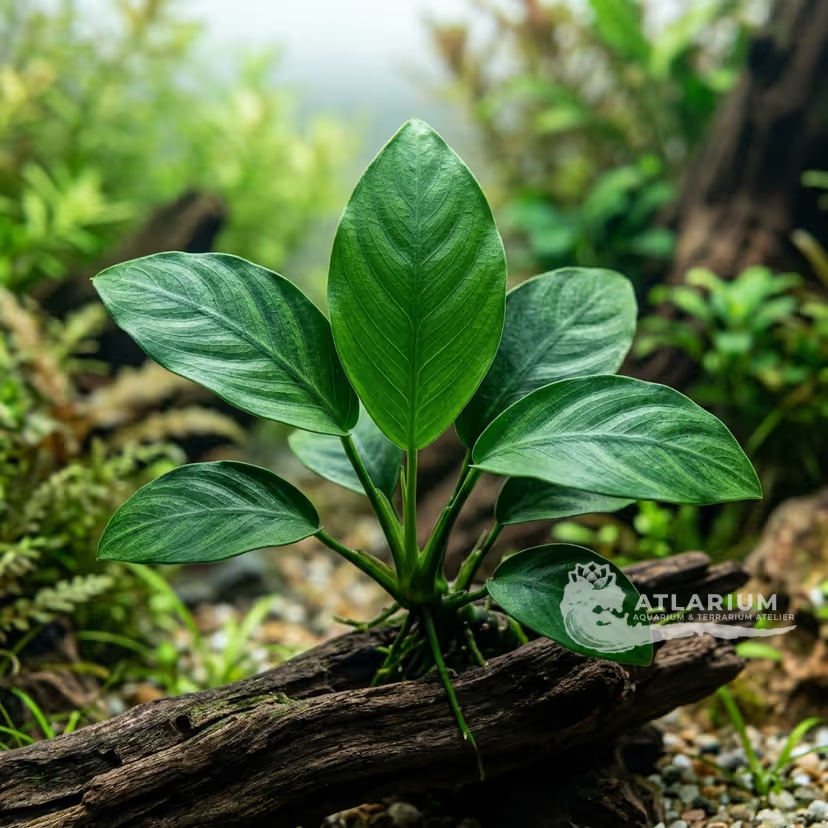
Anubias minima
Anubias minima
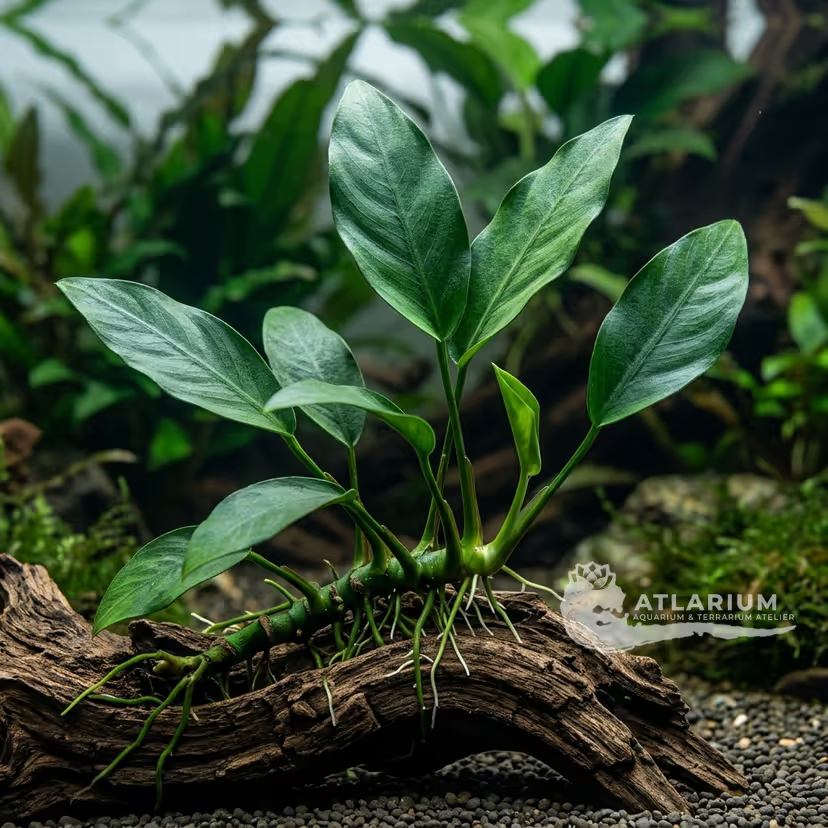
Anubias
Anubias barteri

Anubias nana
Anubias barteri var. nana

Ammannia latifolia
Ammannia latifolia

Ammannia sp. 'Bonsai'
Ammannia sp. 'Bonsai'

Bucephalandra motleyana "Braun-rot" ("Serimbu")
Bucephalandra motleyana "Braun-rot" ("Serimbu")

Bucephalandra motleyana "Kapit"
Bucephalandra motleyana "Kapit"

Bucephalandra motleyana "Pancuraji"
Bucephalandra motleyana "Pancuraji"

Bucephalandra sp. "Bukit Kelam / Sintang"
Bucephalandra sp. "Bukit Kelam / Sintang"

Bucephalandra sp. "Melawi"
Bucephalandra sp. "Melawi"
Similar care
Cards with similar requirements, difficulty, habitat, and husbandry profile.
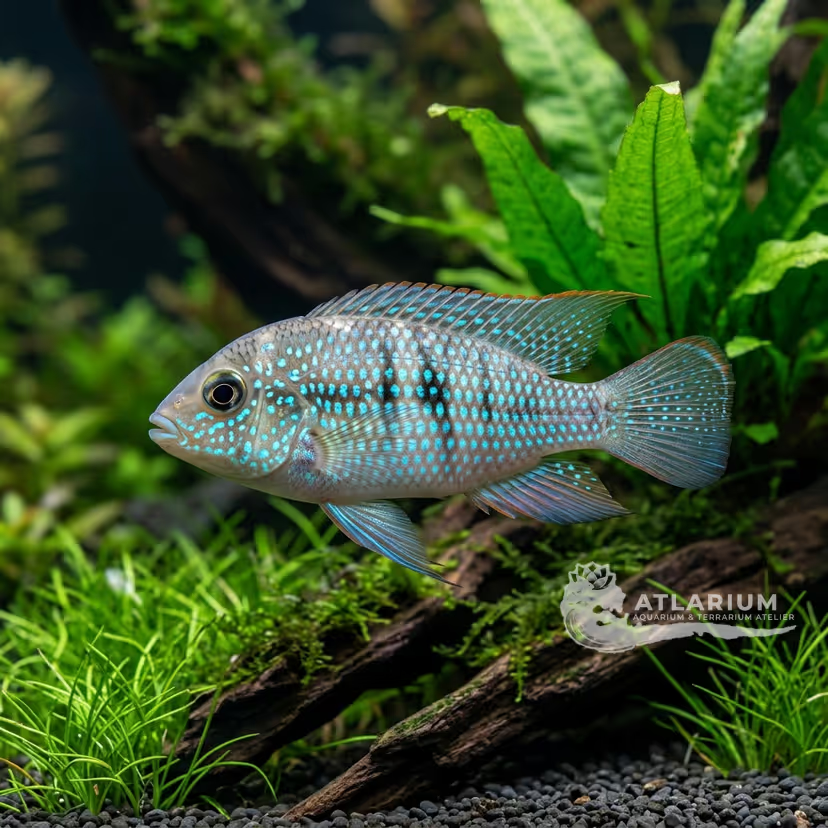
African Butterfly Cichlid
Anomalochromis thomasi

Clown Squeaker
Synodontis decorus

Paraguay Mouthbrooder (Bujurquina vittata)
Bujurquina vittata

Rabaut's Corydoras / Rust Corydoras
Corydoras rabauti

Three Stripe Corydoras (False Julii)
Corydoras trilineatus

Zygatus Cory
Corydoras zygatus
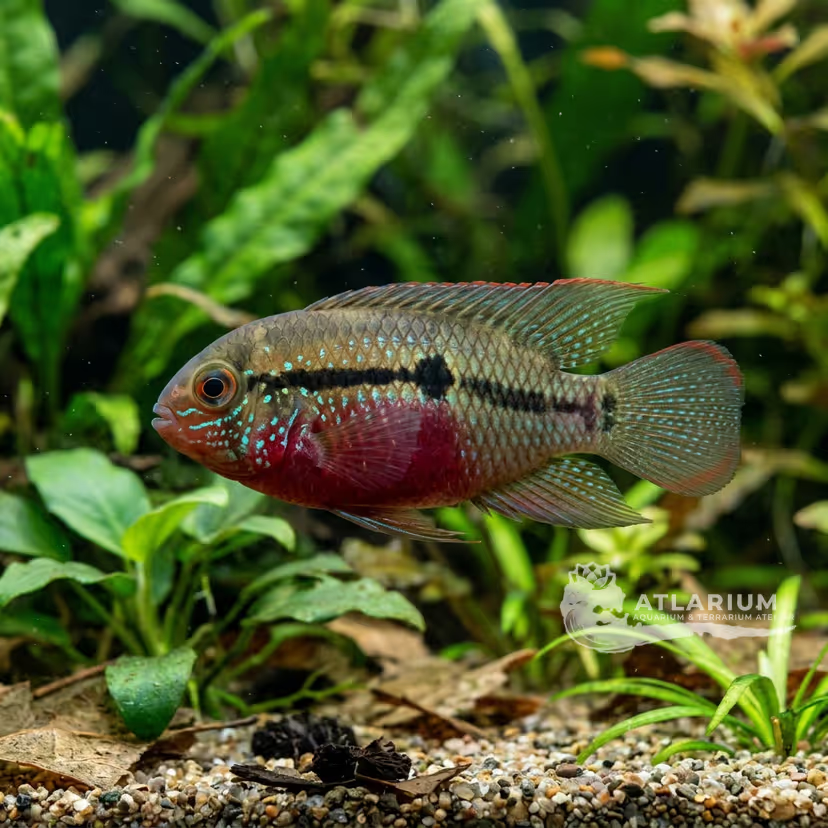
Redbreast Acara
Laetacara dorsigera
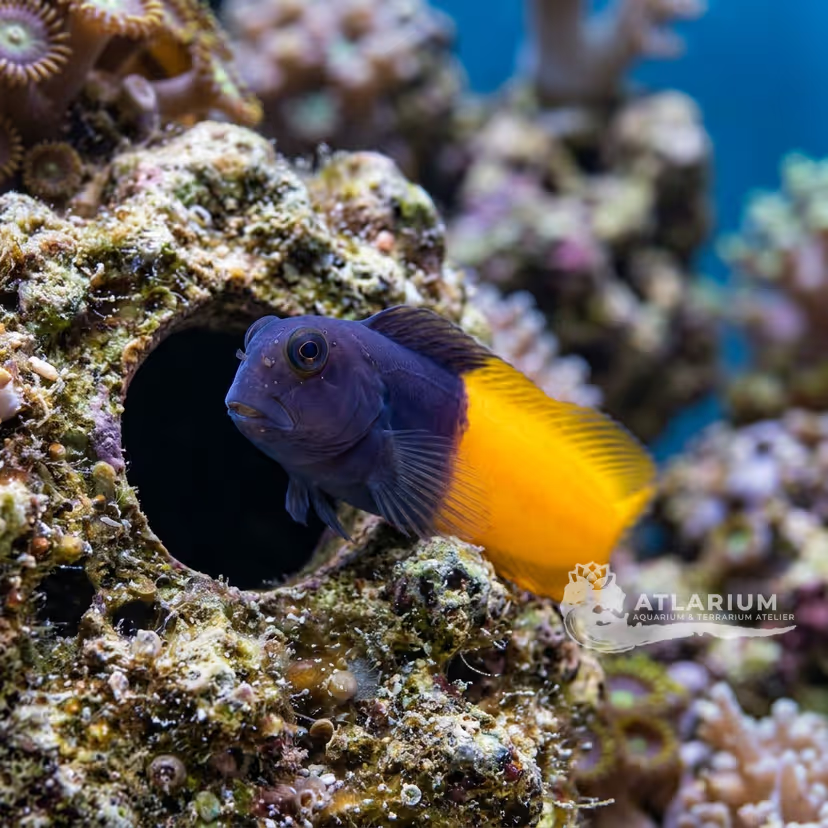
Bicolor Blenny
Ecsenius bicolor

Sterba's Corydoras
Corydoras sterbai

Bolivian Ram
Mikrogeophagus altispinosus

Blue Acara
Andinoacara pulcher
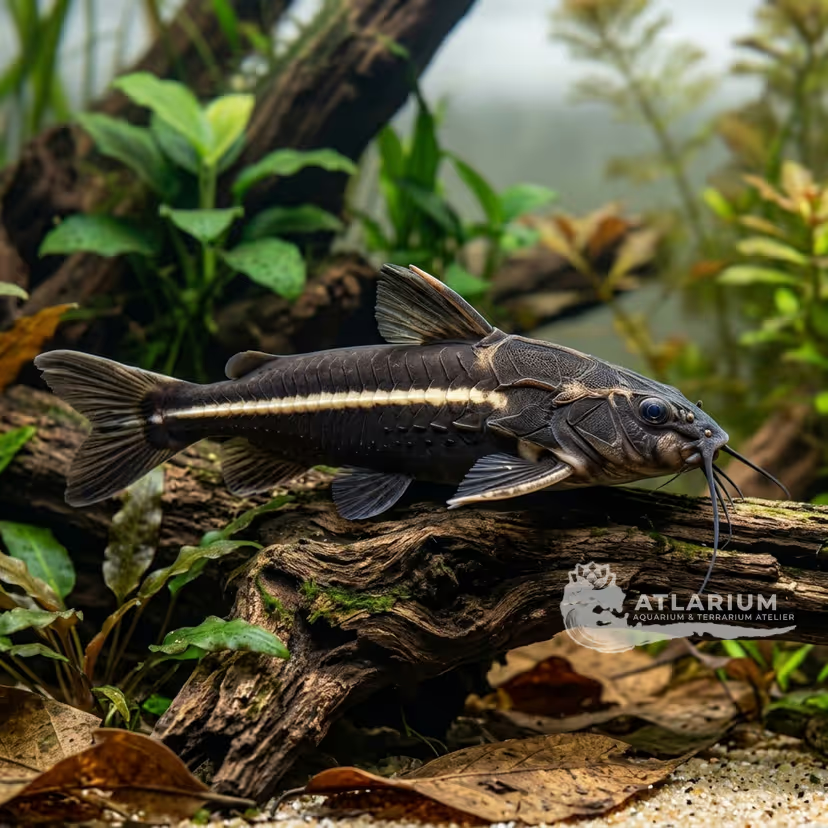
Costatus Striped Raphael
Platydoras costatus

Atipa, Brown Hoplo
Hoplosternum littorale

Bumblebee Catfish
Microglanis iheringi

Blackmask Corydoras
Corydoras atropersonatus

Kraussii Basketmouth (Caquetaia kraussii)
Caquetaia kraussii