Congo Puffer
Tetraodon miurus
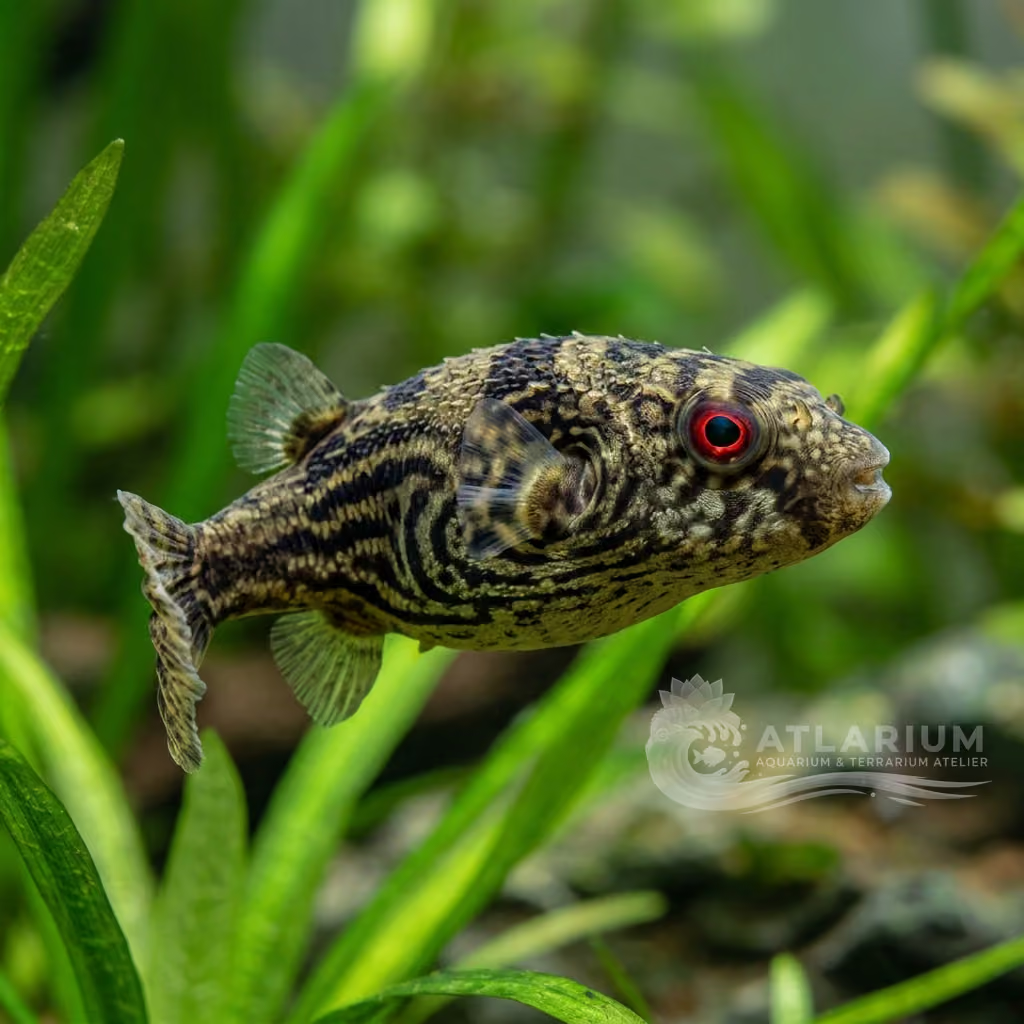
The Congo Puffer is a highly specialized freshwater ambush predator. It spends its life buried beneath fine sand with only its eyes exposed, waiting to ruthlessly strike at any unsuspecting tankmate.
Water Temperature
24 - 28 °C
pH Value
6.5 - 7.5
Water type
Freshwater
Tank level
Bottom
Adult size
15 cm
Minimum tank volume
>= 180 L
Minimum group
>= 1
GH
5 - 15 dGH
KH
2 - 7 dKH
TDS
95 - 295 ppm
Conductivity
148 - 461 uS/cm

Species description
Geographical Origin and Habitat: Endemic to the Congo River basin in Central Africa. It inhabits river sections with slow-to-moderate currents and expansive beds of deep, fine sand. In this natural biotope, it spends the vast majority of its life buried in the substrate, camouflaged among river debris in warm waters often stained with humic acids.
Taxonomy and Morphology: Belongs to the family Tetraodontidae, genus Tetraodon. It is a true freshwater pufferfish characterized by a dorso-ventrally compressed body, a large head, and highly mobile, prominent eyes positioned near the top of the skull for a wide field of view. Adult specimens reach a maximum length of about 15 centimeters.
Social Behavior: A highly aggressive, strictly solitary ambush predator. It buries itself under the sand by rapidly vibrating its flat body, leaving only its eyes and mouth exposed to wait for prey. When a fish passes overhead, the puffer erupts with explosive speed. It will viciously attack any living creature in its tank.
Coloration and Sexual Dimorphism: The coloration is highly variable and chameleon-like, adapting to match the color of the substrate. It can shift between brick red, bright orange, sandy beige, and dark mottled gray. The skin is thick, leathery, and entirely scaleless, sometimes displaying small retractile dermal spines. No visible sexual dimorphism.

Care, breeding and tankmates
Aquarium Setup: Requires a dedicated, species-only aquarium of at least 100-120 liters for a single specimen. The most critical, non-negotiable setup requirement is the substrate: provide at least 7-10 cm of ultra-fine, non-abrasive sand. Gravel or coarse sand will scratch its skin and prevent burying, causing fatal stress.
Diet and Feeding: Strictly carnivorous. Feed a diet of whole earthworms, shell-on shrimp, mussels, and thawed silversides. Providing hard-shelled snails and crustaceans is essential to naturally wear down the puffer's beak-like teeth, which grow continuously. It will not accept commercial dry flakes or pellets.
Water Quality: Demands clean, well-filtered water with stable parameters: water temperature between 24°C and 28°C, pH between 6.5 and 7.5, and a general hardness of 5-15 dGH. Due to the high organic waste generated by its meaty diet, use an oversized canister filter and perform frequent water changes.
Compatibility and Cohabitation: Zero compatibility. This fish must be kept strictly alone in its own enclosure. It will kill or severely mutilate any tankmate, regardless of size; smaller fish are swallowed whole, while larger fish have their fins and flesh bitten off. Conspecifics will also fight to the death.
Aquarium Breeding: Extremely rare and difficult to breed in captivity. The primary challenge is introducing a male and a female without triggering aggressive, lethal fights. In documented spawnings, eggs were laid on sandy substrates, and the male guarded the nest aggressively until hatching.
Risks and Diseases: Inadequate substrate (grava or abrasive sand) is the leading cause of stress and fatal skin infections. Overgrown teeth due to a lack of hard shell foods will prevent the puffer from eating, resulting in starvation. Meaty food decay can cause rapid water quality drops.

Geographic origin and distribution
Endemic to the Congo River basin in Central Africa. It inhabits river sections with slow-to-moderate currents and expansive beds of deep, fine sand. In this natural biotope, it spends the vast majority of its life buried in the substrate, camouflaged among river debris in warm waters often stained with humic acids.
Origin
Africa and MadagascarEast Asia

Fish profile
- Temperament
- Semi-aggressive
- They are highly aggressive, reclusive ambush predators with a fascinating but lethargic lifestyle. They spend hours completely motionless, camouflaged in the sand, waiting for a meal to swim by. While not active swimmers, their lightning-fast feeding strikes are spectacular to witness.
- Diet
- Omnivore
- They are highly specialized piscivores that feed almost exclusively on live fish in the wild. In captivity, they must be transitioned to a diet of frozen foods such as lancefish and shrimp. It is crucial to avoid a diet strictly of feeder fish due to disease risks.
- Life expectancy
- 5-12 years
- Adult size
- 15 cm
- Sex ratio
- Specific M:F ratio
- Identifying the sex of Congo puffers is difficult, though females may appear slightly plumper when mature. Because they are highly intolerant of each other, maintaining a sex ratio is irrelevant for most hobbyists. Keeping more than one in an aquarium usually results in fatal territorial disputes.
- Feeding frequency
- Twice daily
- Young Congo puffers should be fed small meaty meals once a day to promote healthy growth. Fully grown adults have a slower metabolism and should only be fed substantial meals every two to three days. A slightly rounded belly after eating is the indicator of a sufficient meal.
- Bioload
- Medium to High
- The Congo puffer produces a high bioload, typical of predatory carnivores with messy eating habits. Strong biological and mechanical filtration is necessary to promptly process their high-protein waste. Regular water changes are critical, as they are highly sensitive to elevated nitrates.
- Flow
- Stagnant
- They naturally inhabit rivers with moderate currents, so a steady water flow is beneficial in the aquarium. However, the current at the bottom should not be overpowering since they spend most of their time buried. Good filtration flow ensures optimal oxygenation and waste removal.
- Jump risk
- Yes
- While not known as active jumpers, their predatory lunges can accidentally send them out of the water. A secure lid is mandatory to prevent accidental escapes during feeding time or when startled. A lid also helps maintain a stable water temperature and prevents foreign objects from falling in.
- Reproduction
- Oviparous
- Breeding the Congo puffer in a home aquarium is exceedingly rare and difficult to achieve. They are highly aggressive toward conspecifics, making the introduction of a potential mate extremely risky. Raising the fry requires abundant microscopic live foods and exceptional water quality.
- Compatibility & tankmates
- Species only
- They are strictly solitary predators that should be kept in a species-only aquarium. They are highly aggressive ambush predators that will attack and consume almost any tank mate. Housing them with other species is universally discouraged to prevent inevitable casualties.
- Tank level
- Bottom
- They are exclusively benthic fish that spend almost their entire lives on or buried in the substrate. Their upward-pointing eyes and mouth are evolutionary adaptations for ambushing prey from below. A deep, soft sandy substrate is absolutely vital to allow them to bury themselves.

Scientific Parameters & Models
FishBase
Window to the official scientific data of the species
FishBase v25.04Data synced on: 06/15/2026
- Trophic level
- 3.4 ± 0.5 se
- Resilience
- High (less than 15 months)
- Phylogenetic uniqueness (PD50)
- 0.502
- Bayesian Length-Weight
- a = 0.0263, b = 2.88
- VulnerabilityLow vulnerability (10 / 100)

Related species
Recommendations grouped by close relatives, companion choices, and similar care.