Skunk loach
Yasuhikotakia morleti
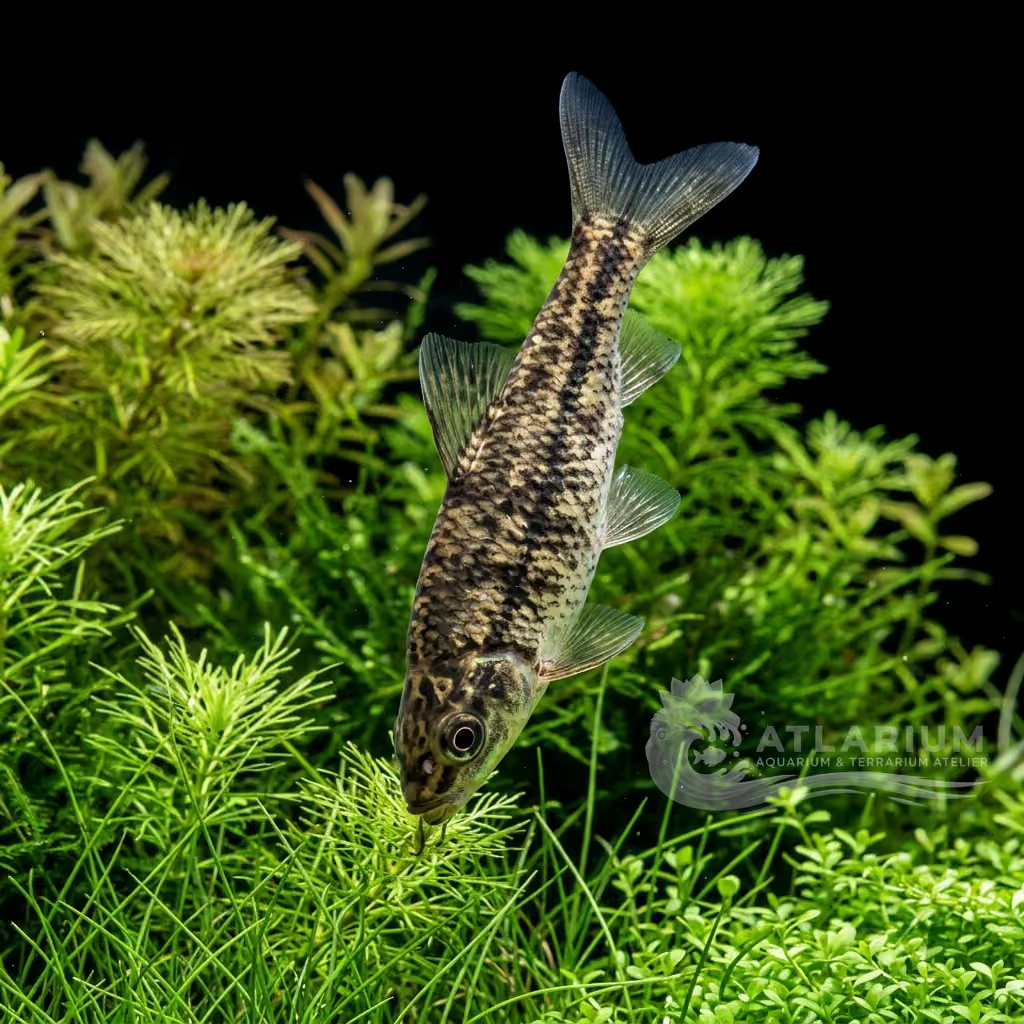
The Skunk Loach is an energetic, highly gregarious bottom-dweller easily identified by a thick black dorsal stripe. Despite its small size, it boasts a notoriously feisty attitude requiring robust tankmates.
Water Temperature
24 - 28 °C
pH Value
6 - 7.5
Water type
Freshwater
Tank level
Bottom
Adult size
10 cm
Minimum tank volume
120 L
Minimum group
>= 1
GH
2 - 12 dGH
KH
1 - 6 dKH
TDS
40 - 240 ppm
Conductivity
63 - 375 uS/cm

Species description
Geographical Origin and Habitat: Yasuhikotakia morleti, commonly known as the skunk loach, is native to Southeast Asia. It is widely distributed in the Mekong and Chao Phraya River basins, spanning parts of Thailand, Cambodia, Laos, and southern Vietnam. It inhabits a variety of riverine environments, including large rivers with moderate currents, clear hill streams, and seasonal flooded areas. It prefers substrates composed of fine sand, mud, or smooth pebbles, rich in submerged driftwood and riparian vegetation where it can hide during daylight hours.
Taxonomy and Morphology: It belongs to the class Actinopterygii, order Cypriniformes, family Cobitidae. It features a laterally compressed, slender body with an arched dorsal profile. It reaches a maximum adult length of about 7-8 centimeters. It possesses a downward-facing mouth equipped with four pairs of sensory barbels used to locate food in the substrate. Beneath its eyes is a bifid, erectile subocular spine, used as a defense weapon against predators.
Social Behavior: It is a gregarious, highly active, and territorial species. It must be kept in groups of at least 5-6 individuals to establish a natural social hierarchy and disperse aggression. It has a lively and sometimes semi-aggressive temperament toward slow-moving or long-finned fish, as well as other benthic species. It exhibits mainly crepuscular and nocturnal habits, spending daylight hours within shared shelters.
Coloration and Sexual Dimorphism: The coloration consists of a uniform beige, silvery-grey, or cream base color across the entire body. The key distinguishing feature is a prominent black longitudinal stripe running along the dorsal ridge, starting from the tip of the snout to the base of the tail, where it meets a vertical black band or ring encircling the caudal peduncle. The fins are translucent or slightly yellowish. There is no visible external sexual dimorphism, although mature adult females are slightly larger and rounder.

Care, breeding and tankmates
Aquarium Setup: It requires a tank with a minimum capacity of 120 liters. The substrate must be strictly composed of fine, smooth sand to allow the species to dig and to protect its delicate barbels from cuts and infections. The layout should include a generous amount of hiding places such as rock caves, tangled driftwood, coconut shells, and overturned terracotta pots. Plants must be very hardy (like Microsorum or Anubias) or protected at their bases, as this loach tends to dig around roots.
Diet and Feeding: It is an omnivorous and opportunistic carnivore. In the aquarium, it readily consumes high-quality sinking pellets or wafers, frozen or live foods such as bloodworms, mysis, brine shrimp, and tubifex. It is highly valued for its ability to prey on small pest snails (such as Planorbidae or Physa), cracking their shells with its strong jaws. A varied diet fed during evening hours is ideal to maintain its health.
Water Quality: It needs clean, well-filtered water with good oxygenation. The ideal parameters are a temperature between 24°C and 30°C, stable pH between 6.0 and 7.5, general hardness (gH) between 5 and 15 dGH, and very low nitrates. Because it is a scaleless fish (smooth skin), it is extremely sensitive to accumulations of organic pollutants, ammonia, and chemical medications.
Compatibility and Cohabitation: It must be kept in groups. If kept as a single specimen or in a pair, it can exhibit obsessive aggression toward other fish. Ideal tankmates are active, fast-swimming fish that occupy the middle and upper zones of the aquarium, such as barbs, danios, rasboras, or large tetras. Strictly avoid cohabitation with slow-moving or long-finned fish (such as angelfish or guppies) which could suffer fin-nipping, and small ornamental shrimp, which will be eaten.
Aquarium Breeding: Spontaneous breeding in home aquariums is extremely rare and is considered virtually impossible without hormone stimulation, which is utilized in commercial Asian breeding facilities. In the wild, it is a migratory fish that travels to flooded grasslands at the beginning of the rainy season to spawn among submerged vegetation before returning to the main river channel.
Risks and Diseases: Due to its thin, scaleless skin, it is highly susceptible to White Spot Disease (Ichthyophthirius). In case of treatment, it is crucial to dose medications with caution (often at half dose), as this species tolerates traditional therapeutic compounds like malachite green and copper-based treatments very poorly. Other risks include barbel infections caused by sharp, dirty substrates.

Geographic origin and distribution
Yasuhikotakia morleti, commonly known as the skunk loach, is native to Southeast Asia. It is widely distributed in the Mekong and Chao Phraya River basins, spanning parts of Thailand, Cambodia, Laos, and southern Vietnam. It inhabits a variety of riverine environments, including large rivers with moderate currents, clear hill streams, and seasonal flooded areas. It prefers substrates composed of fine sand, mud, or smooth pebbles, rich in submerged driftwood and riparian vegetation where it can hide during daylight hours.
Origin
South and Southeast Asia

Fish profile
- Temperament
- Semi-aggressive
- They possess an incredibly active, inquisitive, and sometimes comical temperament, constantly exploring their environment. They are highly social and rely on the presence of conspecifics to feel confident and exhibit their natural behaviors. While generally peaceful toward other species, their boisterous activity and intra-species squabbling can be overwhelming for shy or delicate tankmates. They establish a distinct pecking order, and harmless skirmishes to determine dominance are a normal and fascinating part of their behavior.
- Diet
- Omnivore
- They are enthusiastic micropredators and scavengers, requiring a varied diet rich in protein to thrive. A staple of high-quality sinking pellets or wafers is necessary to ensure the food reaches the bottom of the tank. They relish live and frozen foods such as bloodworms, daphnia, tubifex worms, and brine shrimp, which should be offered regularly. They are also known for their invaluable ability to hunt and eradicate pest snails in the aquarium.
- Life expectancy
- 5-8 years
- Adult size
- 10 cm
- Sex ratio
- Pair
- There is no strict sex ratio required, as they do not form pairs and their social structure is based more on size and dominance than gender. Purchasing a group of juveniles naturally results in a mixed sex ratio, which is perfectly fine for their complex social interactions. The alpha individual in the group is often a large, robust female. Keeping a sufficiently large group is more important than worrying about the specific number of males versus females to prevent bullying.
- Feeding frequency
- Twice daily
- Feeding them one to two times daily with small portions is generally optimal for their metabolism. Because they are active mostly near the bottom, care must be taken to ensure that aggressive mid-water feeders do not consume all the food before it sinks. Providing sinking wafers right before turning out the lights can help ensure these sometimes nocturnal or crepuscular fish get enough to eat. Overfeeding should be avoided to maintain water quality, but their energetic foraging means they need consistent nutrition.
- Bioload
- Low to Medium
- This loach has a moderate bioload, producing typical waste levels for a bottom-dwelling omnivore of its size. Because they often sift through the substrate and uproot fine detritus, they require good mechanical filtration to keep the water clear. Regular vacuuming of the substrate during water changes is essential to prevent the accumulation of organic matter where they spend most of their time. Excellent biological filtration is also required to maintain zero ammonia and nitrite, as they are highly sensitive to poor water quality.
- Flow
- Stagnant
- Originating from flowing rivers and streams, they have a distinct preference for moderately strong water flow and high dissolved oxygen levels. The use of a powerhead, wavemaker, or a high-capacity canister filter can simulate their natural environment and encourage healthy activity. Strong circulation helps to keep the bottom of the tank free of stagnant areas where debris might accumulate. While they enjoy current, it is also important to provide sheltered areas among rocks and driftwood where they can rest.
- Jump risk
- Yes
- They present a moderate jump risk, particularly when first introduced to a new aquarium or if the water parameters deteriorate. Their frantic swimming patterns when stressed can easily result in them launching themselves out of the tank. A tightly fitting lid with no large gaps around filter tubes or heaters is essential to keep them safe. Providing plenty of hiding spots on the substrate can make them feel secure, significantly reducing the likelihood of them attempting to escape.
- Reproduction
- Oviparous
- Breeding this species in the home aquarium is exceptionally rare and poorly documented, with most specimens in the trade being wild-caught or hormonally bred on commercial farms. They are believed to be egg scatterers that migrate to flooded areas or specific river zones to spawn during the rainy season. Replicating these complex seasonal changes, including fluctuations in water chemistry and temperature, is difficult for hobbyists. There are no reliable reports of spontaneous spawning occurring in standard community setups.
- Compatibility & tankmates
- Semi-aggressive
- They are generally social and active bottom dwellers, making them suitable for community tanks with fish that occupy the middle and upper levels. It is highly recommended to keep them in groups of at least five or six, as they are gregarious and establish a complex social hierarchy. If kept in too small a group, they can become withdrawn or excessively nippy toward other species. Avoid housing them with slow-moving or long-finned fish, as their boisterous nature can cause stress to more delicate tankmates.
- Tank level
- Bottom
- They are quintessential bottom dwellers, spending almost all of their time navigating the substrate, searching for food among the gravel and decor. They love to wedge themselves into tight crevices in rocks, driftwood, or PVC pipes to rest and feel secure. Occasionally, they may swim up the sides of the glass or engage in rapid, frantic swimming across the middle levels, particularly when playing or anticipating food. A soft, sandy substrate is strongly recommended to protect their delicate sensory barbels as they forage.

Scientific Parameters & Models
FishBase
Window to the official scientific data of the species
FishBase v25.04Data synced on: 06/15/2026
- Trophic level
- 3.5 ± 0.44 se
- Phylogenetic uniqueness (PD50)
- 0.5078
- Bayesian Length-Weight
- a = 0.00589, b = 3.08
- VulnerabilityLow vulnerability (10 / 100)

Image gallery
Licensed images linked to the species or, when marked, to the closest representative taxon.

Related species
Recommendations grouped by close relatives, companion choices, and similar care.