Western archerfish
Toxotes oligolepis
A remarkable brackish and freshwater fish known for its incredible ability to shoot down land insects from overhanging plants using precise water jets.
Water Temperature
22 - 28 °C
pH Value
7 - 8
Water type
Freshwater / Brackish
Tank level
Surface
Adult size
15 cm
Minimum tank volume
>= 200 L
Minimum group
>= 5
GH
4 - 15 dGH
KH
2 - 7 dKH
TDS
80 - 295 ppm
Conductivity
125 - 461 uS/cm

Species description
Geographical Origin and Habitat: Toxotes oligolepis is native to the Indo-Pacific and western Oceania, particularly found in the coastal and inland waters of Western Australia, Indonesia, and Papua New Guinea. It inhabits slow-flowing rivers, brackish estuaries, mangrove swamps, and coastal billabongs. It prefers shaded areas near overhanging bank vegetation where insects are abundant.
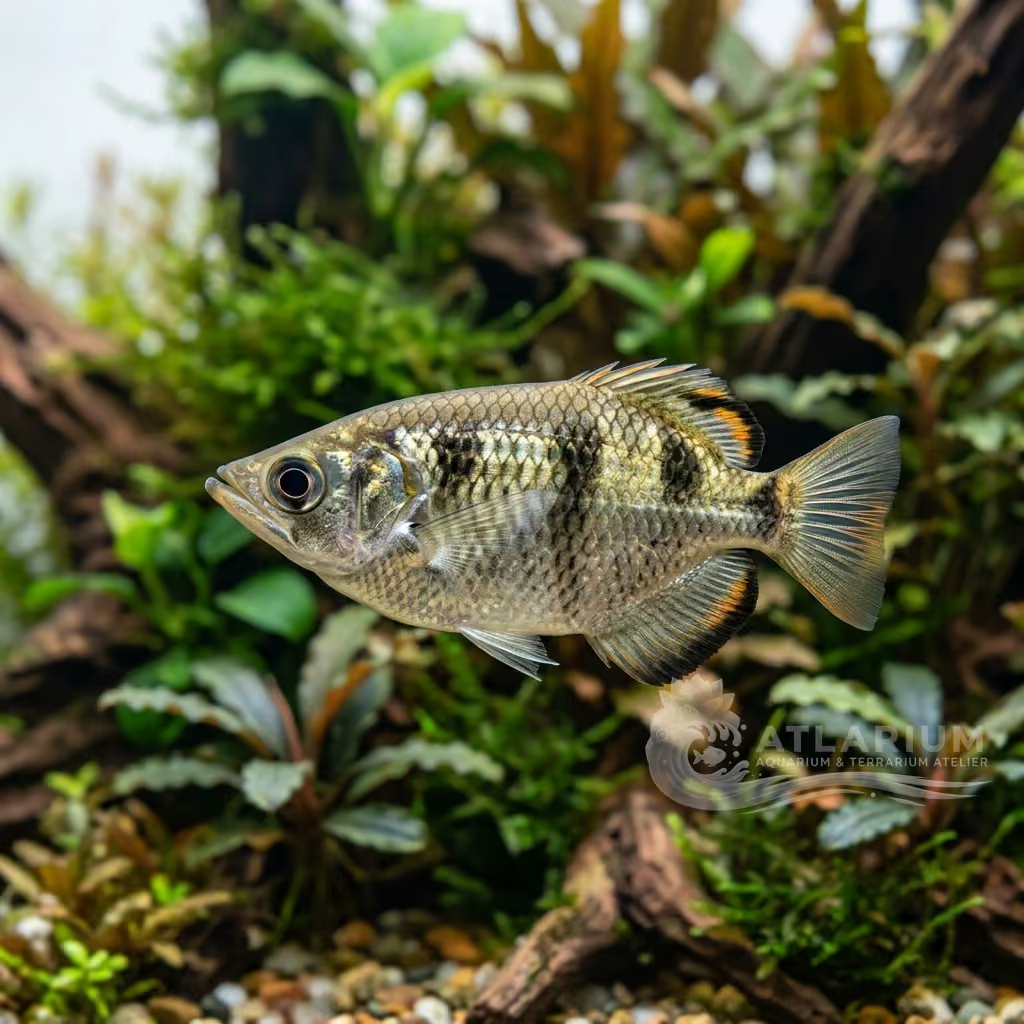
Taxonomy and Morphology: Belonging to the family Toxotidae and the genus Toxotes, this fish features a laterally compressed body with a straight dorsal profile and a large, upward-pointing, protractile mouth. A deep groove in the roof of its mouth, combined with its tongue, forms a tube through which it forces water by compressing its gill covers. Adults reach up to 15 cm.
Social Behavior: A shoaling fish that enjoys the company of its own kind, especially when young. It swims near the surface, keeping its eyes focused on the air to spot prey. It is peaceful toward similarly sized species, though lively food competition and minor chasing may occur when insects are introduced to the enclosure.
Coloration and Sexual Dimorphism: The body coloration is silvery-white with a yellowish or bronze hue on the back. It is marked with 4-5 irregular black vertical bands or blotches running down the upper half of its sides. The dorsal and anal fins often have dark margins. There is no visible external dimorphism; males and females look identical.

Care, breeding and tankmates
Aquarium Setup: Requires a large tank of at least 350-400 liters (approx. 90-100 gallons), ideally set up as a paludarium. It is vital to leave 15-20 cm of air space between the water surface and a secure screen lid, decorated with overhanging branches and plants, allowing the fish to practice its natural shooting behavior with live prey.
Diet and Feeding: Primarily insectivorous. The diet should center on live insects such as small crickets, fruit flies, houseflies, and mealworms. They will also accept floating frozen foods like krill, mysis, and brine shrimp, as well as high-quality floating flakes and pellets. They rarely feed on items that fall to the bottom of the tank.
Water Quality: Can be kept in hard freshwater or moderately brackish water (specific gravity of 1.002-1.005), which is often preferred for long-term health. Keep the water temperature between 24°C and 28°C (75-82°F), pH between 7.5 and 8.2, and water hardness medium to high. Good filtration is necessary, but avoid strong surface currents.
Compatibility and Cohabitation: Peaceful with fish of similar size that occupy the middle and bottom layers of the tank. Do not house with tiny fish or fry, which will be viewed as prey. Ideal tankmates include brackish puffers, scatophagus, monos, and other archerfish species, provided they are kept in groups of 4 or more.
Aquarium Breeding: Breeding in home aquariums is not documented. In their natural habitat, spawning is triggered by seasonal rains in coastal estuaries or marine waters. Females scatter thousands of buoyant eggs that float freely in the water column without parental guard, making replication in captivity extremely challenging.
Risks and Diseases: They are exceptional jumpers, capable of leaping out of the water to catch insects, so a completely closed lid is mandatory. Nutritional deficiencies may occur if fed exclusively dry food. Prone to fungal infections and skin parasites if water parameters fluctuate or if water quality degrades.

Geographic origin and distribution
Toxotes oligolepis is native to the Indo-Pacific and western Oceania, particularly found in the coastal and inland waters of Western Australia, Indonesia, and Papua New Guinea. It inhabits slow-flowing rivers, brackish estuaries, mangrove swamps, and coastal billabongs. It prefers shaded areas near overhanging bank vegetation where insects are abundant.
Origin
Tropical oceans and reefsAfrica and MadagascarSouth and Southeast AsiaAustralia, New Guinea, and Oceania

Fish profile
- Temperament
- Semi-aggressive
- They are peaceful toward fish they cannot eat. Intraspecies aggression is usually limited to feeding time. They are fascinating and interactive pets.
- Diet
- Carnivore
- They naturally hunt terrestrial insects near the water. They adapt well to floating pellets and dried insects. Frozen bloodworms are also a favorite treat.
- Life expectancy
- 5-10 years
- Adult size
- 15 cm
- Sex ratio
- Group
- A group of four or more is recommended. There are no strict sex ratio rules. Larger groups tend to be more confident and peaceful.
- Feeding frequency
- Twice daily
- Provide meals once or twice daily. Watch closely to ensure everyone gets a share. Avoid feeding more than they eat in three minutes.
- Bioload
- Medium
- The bioload is quite high due to their predatory diet. Regular maintenance and water changes are vital. A strong canister filter is highly recommended.
- Flow
- Strong
- Moderate flow with calm surface patches is ideal. Too much surface agitation ruins their hunting ability. A spray bar can help distribute the return flow gently.
- Jump risk
- Yes
- Like all archerfish, the jump risk is severe. They jump to catch prey in the wild. A completely covered tank is a strict requirement.
- Reproduction
- Oviparous
- Successful captive breeding is practically unheard of. They probably require complex environmental changes to spawn. There is little information on their exact breeding habits.
- Compatibility & tankmates
- Community
- They mix well with other medium-sized brackish or freshwater fish. Tiny fish will definitely be eaten. Avoid fin-nipping tank mates.
- Tank level
- Top
- They occupy the upper echelon of the aquarium. They constantly patrol the surface looking for food. Swimming space at the top is essential.

Scientific Parameters & Models
FishBase
Window to the official scientific data of the species
FishBase v25.04Data synced on: 06/15/2026
- Trophic level
- 3.2 ± 0.4 se
- Resilience
- High (less than 15 months)
- Phylogenetic uniqueness (PD50)
- 0.5156
- Bayesian Length-Weight
- a = 0.0166, b = 3
- VulnerabilityLow vulnerability (10 / 100)

Related species
Recommendations grouped by close relatives, companion choices, and similar care.