Valentin's sharpnose puffer
Canthigaster valentini
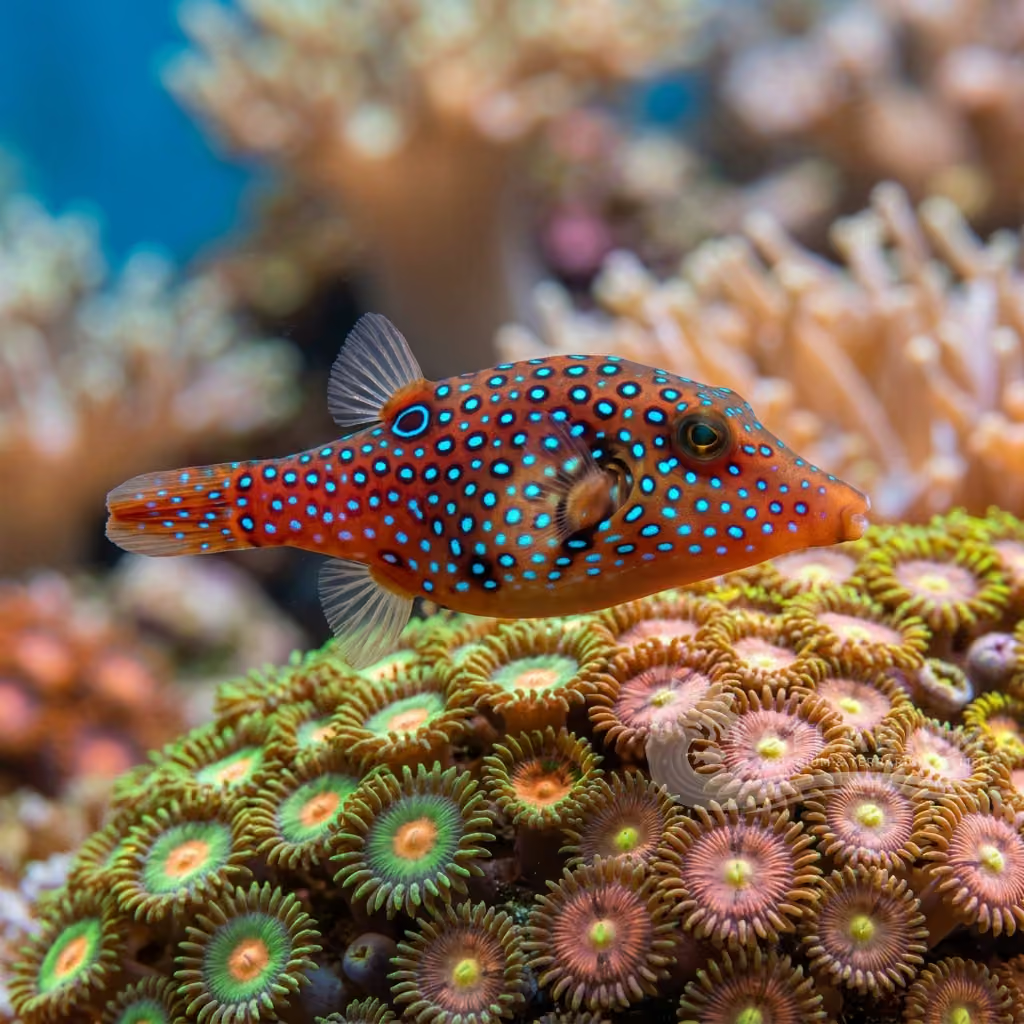
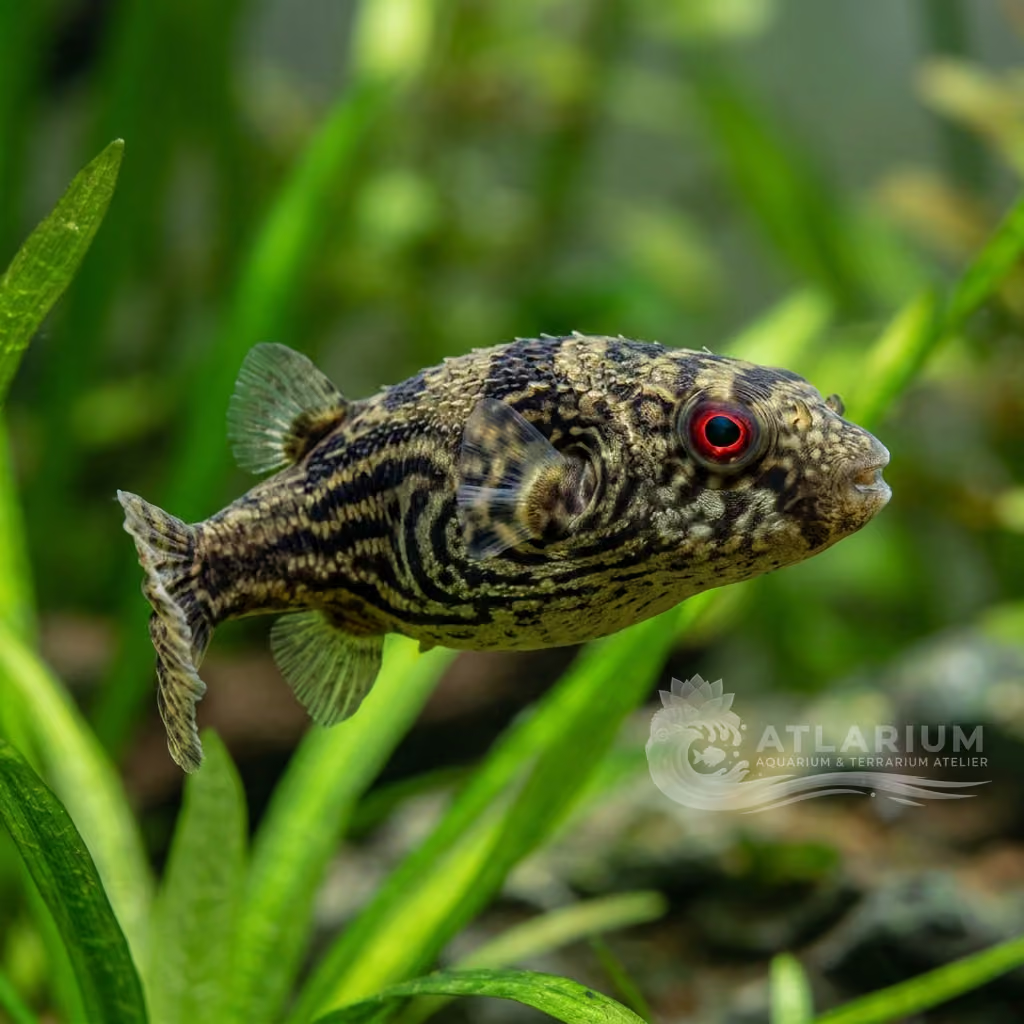
The Valentin's Sharpnose Puffer is a beautiful, highly toxic reef fish with a striking saddle pattern. It actively grazes on hard foods and requires caves to retreat and rest.
Water Temperature
24 - 27 °C
pH Value
8.1 - 8.4
Water type
Marine
Tank level
Bottom and middle
Adult size
10 cm
Minimum tank volume
>= 120 L
Minimum group
>= 1
KH
8 - 12 dKH

Species description
Geographical Origin and Habitat: Canthigaster valentini is widely distributed throughout the tropical waters of the Indo-Pacific, from the Red Sea and East Africa to the Tuamotu Islands, ranging north to southern Japan and south to the Great Barrier Reef and New South Wales in Australia. It primarily inhabits shallow lagoons, seagrass beds, and seaward slopes of coral reefs rich in soft and hard corals, down to depths of approximately 55 meters. It is frequently found associated with rocky formations and corals that provide shelter.
Taxonomy and Morphology: It belongs to the class Actinopterygii, order Tetraodontiformes, family Tetraodontidae, and subfamily Canthigasterinae. It is a small-sized pufferfish, reaching a maximum total length of about 11 centimeters. It features a stocky body and a pointed, elongated snout with protruding eyes capable of moving independently. It possesses the family's characteristic ability to inflate its body by swallowing water or air as a defense mechanism against predators.
Social Behavior: This species is diurnal, active, and territorial. Dominant males defend a territory that overlaps with those of several females with whom they mate. It shows peaceful behavior toward most fish that do not belong to the same family, but it can exhibit intraspecific aggression toward specimens of the same sex or species. It has a tendency to nip the fins of slow-moving or long-finned fish if bored or underfed.
Coloration and Sexual Dimorphism: The color pattern is highly distinctive, featuring four prominent dark brown or black saddle-like bands crossing a yellowish-white back dotted with small brown or orange spots. The fins are translucent or tinted yellow. Males can be distinguished by the presence of small, iridescent blue lines around the eyes and along the back, and they are generally slightly larger than females.

Care, breeding and tankmates
Aquarium Setup: It requires a well-established tank with a minimum capacity of 150 liters. The aquascape should feature a generous amount of live rock arranged to create caves, crevices, and swim-throughs to allow the fish to explore and hide. Although it can be kept in tanks with corals, it is not considered 100% reef-safe, as it may nip at the polyps of hard and soft corals, and will prey on small invertebrates like ornamental shrimp, snails, and tiny crabs.
Diet and Feeding: It is a carnivore with a robust appetite. In the aquarium, it must be fed a varied diet consisting of high-quality frozen foods such as mysis, brine shrimp, krill, chopped clams, shrimp, and squid. It is essential to regularly include hard-shelled items (such as small snails or unpeeled shrimp) in its diet to help wear down its continuously growing teeth, which could otherwise overgrow and prevent it from eating.
Water Quality: It requires excellent water quality and stable chemical parameters. Recommended parameters are: temperature between 24°C and 27°C, stable pH between 8.1 and 8.4, specific gravity between 1.021 and 1.025, and dKH between 8 and 12. Because it lacks typical protective scales, it is highly sensitive to accumulations of nitrates, phosphates, and ammonia. An efficient protein skimmer, solid filtration, and regular water changes are highly recommended.
Compatibility and Cohabitation: It can coexist with a wide range of active marine fish of similar or larger sizes, such as surgeonfish, dwarf angelfish, wrasses, and damselfish. Cohabitation with slow-moving or long-finned fish (such as lionfish or seahorses) should be avoided, as they may become targets for fin-nipping. It is not compatible with small ornamental shrimp or gastropods, which it views as prey. Keeping it as a single specimen is preferred in medium tanks to avoid intraspecific conflict.
Aquarium Breeding: Breeding in home aquariums is extremely rare but has been documented. During courtship, the male displays intensified coloration and nudges the female toward a nesting site prepared on rocks or algae. The deposited eggs are adhesive and are monitored by the pair. After hatching, the larvae enter a complex planktonic stage that is highly difficult to raise successfully in captivity without specific cultures of phytoplankton and rotifers.
Risks and Diseases: It is vulnerable to parasitic skin diseases such as Marine Ich (Cryptocaryon) and Velvet (Oodinium), especially when stressed. However, copper-based treatments must be used with extreme caution because pufferfish tolerate this metal poorly. Another serious risk is intestinal blockage from improper food, or tooth overgrowth if hard foods are not provided. Additionally, if it dies or is severely stressed, it can release a skin toxin (tetrodotoxin) that is toxic to other tankmates.

Geographic origin and distribution
Canthigaster valentini is widely distributed throughout the tropical waters of the Indo-Pacific, from the Red Sea and East Africa to the Tuamotu Islands, ranging north to southern Japan and south to the Great Barrier Reef and New South Wales in Australia. It primarily inhabits shallow lagoons, seagrass beds, and seaward slopes of coral reefs rich in soft and hard corals, down to depths of approximately 55 meters. It is frequently found associated with rocky formations and corals that provide shelter.
Origin
Tropical oceans and reefsAfrica and MadagascarEast AsiaAustralia, New Guinea, and Oceania

Fish profile
- Temperament
- Semi-aggressive
- Known for their curious, intelligent, and interactive behavior, these puffers make very engaging aquarium inhabitants. However, they can be semi-aggressive and territorial, especially toward conspecifics or similar-looking species like the mimic filefish. They are known to nip at the fins of slow-moving or long-finned fish, as well as pick at invertebrates. Despite these tendencies, they are generally peaceful toward unrelated, active tankmates.
- Diet
- Omnivore
- Canthigaster valentini is an omnivore that requires a varied diet rich in both meaty and plant-based foods. In the aquarium, they should be fed high-quality frozen foods such as mysis shrimp, krill, squid, and clams. Most importantly, their diet must include hard-shelled items like snails, unpeeled shrimp, or cockles to naturally grind down their beak-like teeth. They also feed on filamentous algae and spirulina-based preparations to round out their nutritional needs.
- Life expectancy
- 5-10 years
- Adult size
- 10 cm
- Sex ratio
- Harem
- In the wild, Canthigaster valentini forms haremic groups consisting of one dominant male and several females. In the home aquarium, it is usually best to keep them individually to avoid intense conspecific aggression. If keeping a pair or group is attempted, it requires a very large aquarium with clear territorial boundaries. Stocking multiple males in the same tank is highly discouraged as they will fight to the death.
- Feeding frequency
- Twice daily
- This active puffer has a high metabolism and should be fed small portions two to three times daily. Spreading out their meals helps satisfy their constant foraging instinct and prevents them from nipping at corals or tankmates out of hunger. Due to their messy eating habits, only feed what they can consume within a few minutes. Consistent feeding schedules combined with immediate removal of uneaten food will help maintain stable water quality.
- Bioload
- Medium to High
- Despite its small size, Canthigaster valentini produces a relatively high amount of biological waste. This is largely due to its messy feeding habits, which involve crushing hard-shelled prey and leaving debris. To handle this bioload, a robust filtration system, preferably with an oversized protein skimmer, is essential. Regular water changes and mechanical filtration cleaning are necessary to prevent nitrate and phosphate accumulation.
- Flow
- Strong
- This species prefers moderate to strong water flow, which mimics the currents of their natural coral reef habitats. However, because they are not strong open-water swimmers, they require plenty of low-flow zones to rest. Designing the aquascape with caves, overhangs, and behind-rock areas allows them to hover comfortably and sleep. Balanced water movement also ensures that food particles remain suspended and detritus is swept into the filtration system.
- Jump risk
- Yes
- Canthigaster valentini poses a moderate to high risk of jumping, particularly when startled or stressed. Despite their clumsy swimming style, they are capable of sudden, rapid leaps when spooked by sudden movements or lighting changes. A tight-fitting lid or a secure mesh cover is highly recommended to prevent escape. Providing ample hiding spots also helps reduce stress and the startled behavior that leads to jumping.
- Reproduction
- Oviparous
- Breeding Canthigaster valentini in the home aquarium is extremely difficult and rarely successful. In nature, they are demersal spawners where females lay adhesive eggs on filamentous algae within the male's territory. There is no parental care, and the eggs hatch into pelagic larvae that drift in the open ocean. Rearing these microscopic larvae in captivity requires specialized, tiny live foods and complex larval tanks, making successful breeding attempts a major challenge.
- Compatibility & tankmates
- Not reef safe
- This species is best suited for fish-only-with-live-rock (FOWLR) systems or reef tanks with caution. They are not reef-safe as they will readily eat ornamental shrimp, crabs, snails, and feather dusters, and may nip at soft corals. Ideal tankmates include active, quick-swimming fish such as wrasses, damsels, tangs, and larger gobies. Avoid keeping them with long-finned or slow-moving species, as well as other pufferfish.
- Tank level
- Middle/Bottom
- This species is primarily demersal, spending most of its time in the bottom to middle zones of the aquarium. It uses its unique swimming style to hover and navigate closely around live rock, caves, and coral heads in search of food. While it explores all areas of the tank, it relies heavily on the substrate and complex rockwork for security. Providing plenty of shelter is crucial to simulate its natural deep-reef and lagoon habitats.

Scientific Parameters & Models
FishBase
Window to the official scientific data of the species
FishBase v25.04Data synced on: 06/15/2026
- Trophic level
- 2.8 ± 0.3 se
- Resilience
- Medium (1.4 - 4.4 years)
- Phylogenetic uniqueness (PD50)
- 0.5
- Bayesian Length-Weight
- a = 0.03311, b = 2.84
- VulnerabilityLow vulnerability (10 / 100)

Related species
Recommendations grouped by close relatives, companion choices, and similar care.