Lantern toby
Canthigaster epilampra
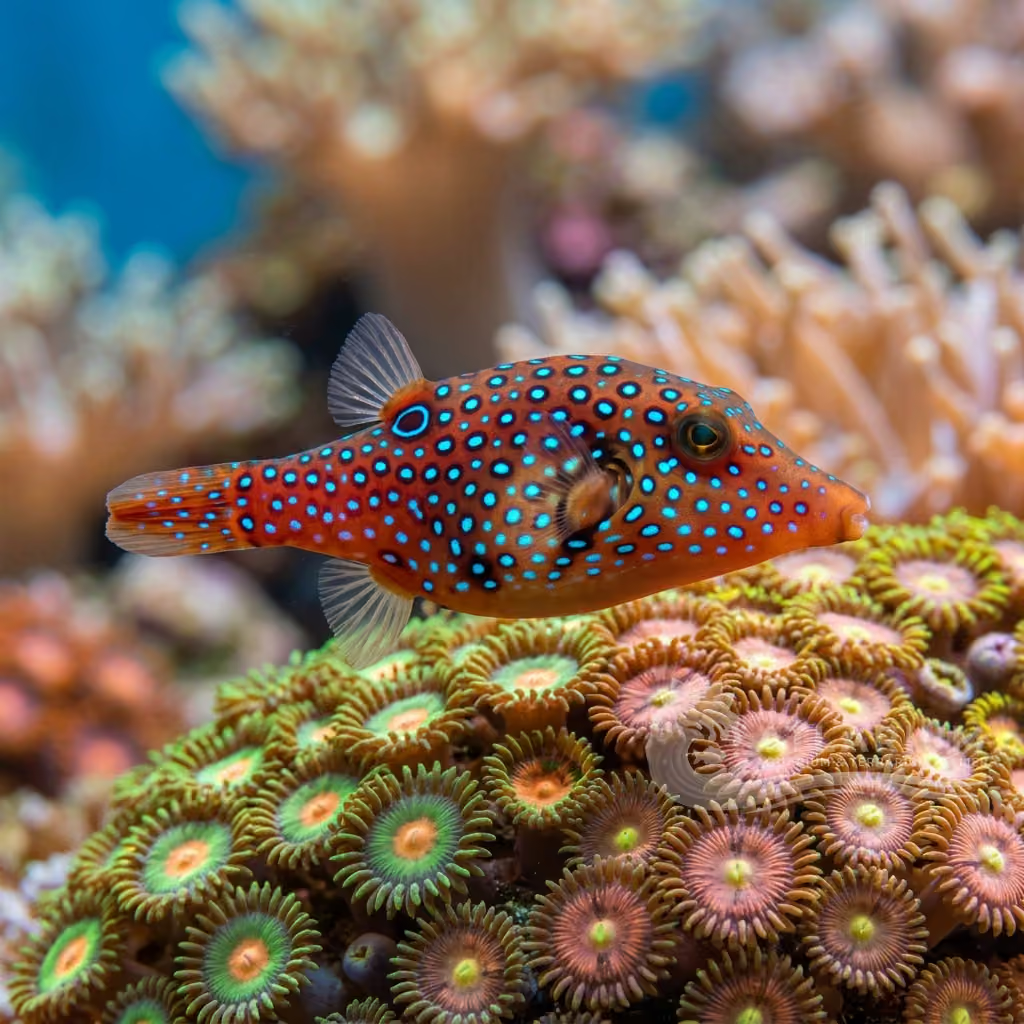
A small and colorful marine pufferfish adorned with iridescent blue spots and a yellow snout. Best suited for marine tanks with precautions regarding corals.
Water Temperature
23 - 27 °C
pH Value
8.1 - 8.4
Water type
Marine
Tank level
Bottom and middle
Adult size
12 cm
Minimum tank volume
>= 150 L
Minimum group
>= 1

Species description
Geographical Origin and Habitat: Native to the tropical Indo-Pacific, from coastal Kenya and central Pacific islands to Hawaii, and north to southern Japan. It inhabits seaward reefs, steep drop-offs, and caves at depths ranging from 6 to 60 meters.
Taxonomy and Morphology: Belongs to the family Tetraodontidae, subfamily Canthigasterinae, genus Canthigaster. It has a laterally compressed body, a strong beak, and a pointed snout characteristic of sharpnose puffers (tobies).
Social Behavior: Solitary and territorial. It can be aggressive toward conspecifics or similar-looking species. It is a slow, methodical swimmer that spends its time inspecting rocks for food.
Coloration and Sexual Dimorphism: Features an olive-grey to yellow body, covered with numerous iridescent light blue spots. Bright blue lines radiate from the eyes. No external sexual dimorphism is present.

Care, breeding and tankmates
Aquarium Setup: Requires an aquarium of at least 40-50 gallons (150-200 liters) with plenty of live rock arranged to create caves, crevices, and hiding spots for shelter and foraging.
Diet and Feeding: Omnivorous with a preference for meaty foods. Feed on small frozen crustaceans (mysis, brine shrimp, chopped krill), clams, and high-quality pellets. Incorporate algae or seaweed to balance the diet.
Water Quality: Requires stable and clean water. Ideal parameters: pH 8.1-8.4, specific gravity 1.020-1.025, temperature 24-26°C (75-79°F). Efficient filtration and skimming are recommended.
Compatibility and Cohabitation: Semi-reef safe with caution; it may nip at coral polyps, feather dusters, and small invertebrates like ornamental shrimp. Good with active, non-aggressive fish.
Aquarium Breeding: Not successfully documented in home aquaria.
Risks and Diseases: Susceptible to skin parasites such as marine ich. Lacking protective scales, it is highly sensitive to copper-based treatments.

Geographic origin and distribution
Native to the tropical Indo-Pacific, from coastal Kenya and central Pacific islands to Hawaii, and north to southern Japan. It inhabits seaward reefs, steep drop-offs, and caves at depths ranging from 6 to 60 meters.
Origin
Tropical oceans and reefsAfrica and MadagascarEast Asia

Fish profile
- Temperament
- Territorial
- The Lantern toby is peaceful but nippy, displaying a high level of curiosity and intelligence. They will often closely observe events happening outside the aquarium. While they don't aggressively attack other fish, their inquisitive nipping can be a nuisance to passive tank mates. They possess a bold personality packed into a very small, maneuverable body.
- Diet
- Omnivore
- The Lantern toby has a varied omnivorous diet and requires meaty foods to thrive. They should be offered small mysis shrimp, chopped krill, and finely diced clams. It is important to include hard-shelled foods occasionally to help keep their beak-like teeth filed down. They will also graze on natural algae and small organisms present on the live rock.
- Life expectancy
- 10 years
- Adult size
- 12 cm
- Sex ratio
- Harem
- Sexing the Lantern toby visually is difficult, though males may sometimes be slightly larger or more brightly colored. In the wild, they often live in small harems with one dominant male and several females. In a standard home aquarium, it is usually safest to keep them singly to avoid conspecific aggression. If keeping a pair, a very large tank with abundant hiding spots is required.
- Feeding frequency
- Twice daily
- These active little fish should be fed two to three times a day in small portions. Frequent feeding helps curb their tendency to nip at corals or the fins of their tank mates. They have a high metabolism and are constantly on the move, burning energy quickly. A varied feeding schedule ensures they receive a balanced nutritional profile.
- Bioload
- Medium
- The Lantern toby produces a relatively low to moderate bioload compared to larger puffer species. Because of their small size, their waste output is easily handled by standard biological filtration. However, they are messy eaters, so a good protein skimmer is highly recommended. Routine water changes will ensure the water remains pristine and free of excess nutrients.
- Flow
- Moderate
- Moderate water flow is ideal for the Lantern toby, providing enough current to mimic their natural reef environment. They are agile swimmers and enjoy navigating through gentle to medium currents. Overly strong, chaotic flow can be stressful and make it difficult for them to feed properly. Providing a mix of flow zones allows them to explore comfortably.
- Jump risk
- No
- Reproduction
- Oviparous
- Breeding the Lantern toby in captivity is extremely rare and difficult. They are known to be demersal spawners, laying eggs in a prepared nest or among algae in the wild. The male typically guards the eggs until they hatch into tiny pelagic larvae. The difficulty of raising these microscopic larvae means captive-bred specimens are largely unavailable.
- Compatibility & tankmates
- Reef safe
- While generally peaceful, the Lantern toby is notorious for being a fin-nipper, especially towards slow-moving, long-finned fish. They are not considered strictly reef-safe because they may nip at stony corals, zoanthids, and small invertebrates. They are best kept in a FOWLR setup or a carefully planned reef with noxious soft corals. Fast-moving, short-finned tank mates make the best companions.
- Tank level
- Middle/Bottom
- They are predominantly mid-to-bottom dwellers, spending most of their time hovering around live rock. The Lantern toby constantly inspects crevices and caves searching for small crustacean prey. They rarely swim openly at the very top of the water column unless food is present. A tank with a complex aquascape provides the environmental enrichment they crave.

Related species
Recommendations grouped by close relatives, companion choices, and similar care.