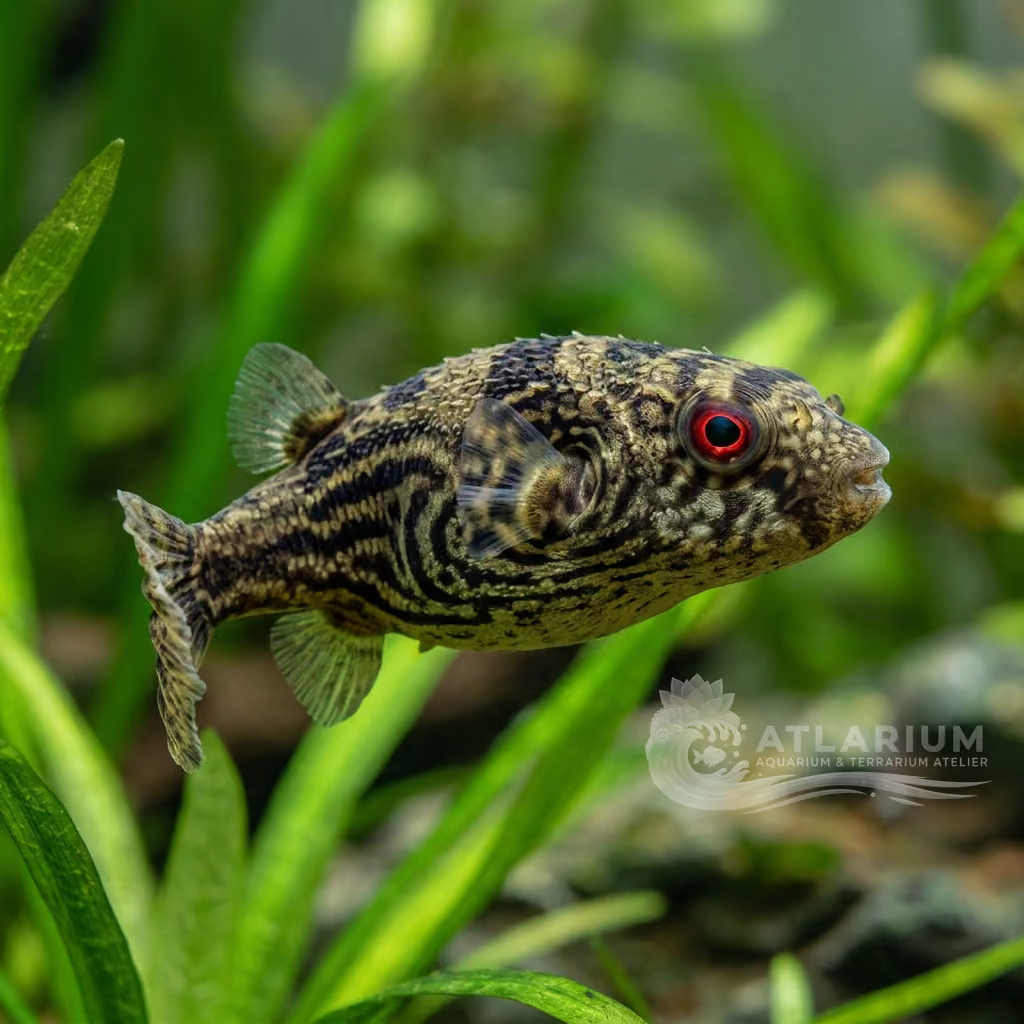
Spotted Sharpnose Puffer
Canthigaster solandri
The Spotted Sharpnose Puffer is a popular, small marine pufferfish covered in bright blue-green spots, known for its curious personality and hard teeth.
Water Temperature
24 - 27 °C
pH Value
8.1 - 8.4
Water type
Marine
Tank level
All levels
Adult size
11 cm
Minimum tank volume
>= 120 L
Minimum group
>= 1
KH
8 - 12 dKH

Species description
Geographical Origin and Habitat: Canthigaster solandri is widely distributed throughout the tropical Indo-West Pacific, ranging from the eastern coast of Africa to the Line and Tuamotu islands, north to southern Japan, and south to the Great Barrier Reef. It inhabits shallow lagoons, inner reef flats, and seaward slopes, typically staying at depths shallower than 30 meters where algae and rocky shelters abound.
Taxonomy and Morphology: A member of the Tetraodontidae family, subfamily Canthigasterinae (commonly referred to as sharpnose puffers or tobies). It possesses a compact, boxy body with a characteristic elongated, pointed snout. Lacking pelvic fins, its skin is scaleless but covered in tiny, retractable prickles. It reaches an adult length of 11-12 cm.
Social Behavior: It is a diurnal, highly territorial, and solitary fish, although established pairs can occasionally be found together. It actively spends the day inspecting the rockwork for prey. When severely threatened, it can inflate its body by swallowing water or air to deter predators. It can be aggressive toward conspecifics.
Coloration and Sexual Dimorphism: The body is reddish-brown to olive-green, adorned with numerous electric-blue or green spots. Bright blue lines radiate from the eyes, and a distinct black spot with a blue border is located at the base of the dorsal fin. Sexual dimorphism is minimal; males are slightly larger and brighter during mating.

Care, breeding and tankmates
Aquarium Setup: An aquarium of at least 150-200 liters is required for a single specimen. The setup must include plenty of live rock arranged to create caves, swim-throughs, and visual barriers to break territorial behavior. Provide open swimming space with moderate water flow from circulation pumps.
Diet and Feeding: Omnivorous with a strong preference for invertebrates. In captivity, feed a varied diet of frozen foods (mysis, krill, brine shrimp, clam) and hard-shelled foods (small unpeeled shrimp, snails) to wear down its constantly growing beak-like teeth. Supplement with dried seaweed (nori) and spirulina-enriched foods.
Water Quality: Sensitive to poor water chemistry. Maintain stable parameters: temperature 24-28°C, pH 8.1-8.4, specific gravity (SG) 1.020-1.025, and low nitrates and phosphates. A strong protein skimmer and regular 10-15% weekly water changes are highly recommended to sustain high water quality.
Compatibility and Cohabitation: Not entirely reef-safe; they will nip coral polyps (especially SPS and LPS) and eat small invertebrates like ornamental shrimp, crabs, and snails. They can be kept with larger, active tankmates, but avoid slow-moving or long-finned fish (such as lionfish) which they may persistently nip.
Aquarium Breeding: Extremely rare in home aquaria. They are egg-scatterers that form pairs to lay demersal eggs on algal beds. The male aggressively guards the nest. Raising the tiny pelagic larvae is exceptionally difficult due to their microscopic size at hatching, requiring specialized live feeds.
Risks and Diseases: Lacking scales, this species is highly susceptible to external parasites like Cryptocaryon (marine ich) and Amyloodinium (marine velvet). They are highly sensitive to copper-based treatments. If stressed or dying, they can release tetradotoxin from their skin, which can wipe out the tank.

Geographic origin and distribution
Canthigaster solandri is widely distributed throughout the tropical Indo-West Pacific, ranging from the eastern coast of Africa to the Line and Tuamotu islands, north to southern Japan, and south to the Great Barrier Reef. It inhabits shallow lagoons, inner reef flats, and seaward slopes, typically staying at depths shallower than 30 meters where algae and rocky shelters abound.
Origin
Tropical oceans and reefsAfrica and MadagascarEast Asia

Fish profile
- Temperament
- Semi-aggressive
- Canthigaster solandri is known for its intelligent, inquisitive, and bold personality, often interacting with its owner through the glass. However, they can exhibit semi-aggressive behavior and are highly territorial toward other puffers and similar-looking species. They may also nip at the fins of slow-moving or long-finned fish if they feel crowded or underfed. While generally peaceful with fast, active tank mates, their behavior can vary individually, requiring close observation.
- Diet
- Omnivore
- As an omnivore with strong carnivorous and algivorous tendencies, Canthigaster solandri requires a diverse diet. A critical aspect of their nutrition is the inclusion of hard-shelled invertebrates like snails, unpeeled shrimp, and clam on the half shell to wear down their continuously growing fused teeth. They should also be fed frozen foods such as mysis shrimp, krill, and chopped seafood, along with vitamin-enriched flakes or pellets. Incorporating algae-based foods, such as spirulina and dried nori, ensures they receive necessary vegetable matter.
- Life expectancy
- 5-10 years
- Adult size
- 11 cm
- Sex ratio
- 1:1 ratio
- In the wild, Canthigaster solandri exhibits a monogamous behavior, though dominant males may maintain a small harem of females within their territory. In the home aquarium, keeping more than one of these puffers is highly risky due to intense territorial aggression, especially among males. It is best to house them singly or as an established, bonded male-female pair. If one wishes to attempt a harem in a very large aquarium, a ratio of one male to three females is suggested, provided there are plenty of visual barriers and hiding places.
- Feeding frequency
- Twice daily
- Canthigaster solandri has a relatively small stomach and a high metabolism, meaning it should be fed small portions multiple times a day. Offering food two to three times daily is recommended to keep them healthy, active, and to minimize fin-nipping behavior. Spreading feedings throughout the day helps satisfy their natural urge to graze and search for food constantly. Consistent feeding schedules also reduce stress and promote overall vitality in captive environments.
- Bioload
- Medium
- Although Canthigaster solandri is a relatively small pufferfish, it produces a moderate biological waste load due to its high metabolism and messy eating habits. Pufferfish tend to shred their food, releasing small organic particles into the water column, which can rapidly degrade water quality. Therefore, a robust filtration system, including an efficient protein skimmer and regular water changes, is essential to manage nutrients. A minimum tank size of 30 to 50 gallons is recommended to ensure stable water parameters and dilute the biological waste.
- Flow
- Strong
- This species prefers moderate to low water flow in the aquarium, mimicking the calm waters of protected reefs, lagoons, and seaward slopes where they naturally dwell. High, turbulent flow can stress the puffer, as their round body shape and unique swimming style make navigating strong currents difficult. Creating areas of gentle circulation with plenty of quiet resting spots behind rocks is ideal. Proper flow management ensures they can swim easily without burning too much energy.
- Jump risk
- Yes
- Although pufferfish are not typically classified as notorious jumpers compared to other marine species, Canthigaster solandri can leap out of the water if startled or chased by aggressive tank mates. Sudden changes in light or poor water quality can also cause this fish to panic and jump. To prevent tragic accidents, a tight-fitting lid or a secure mesh cover is highly recommended. Ensuring a peaceful environment with minimal stress will further reduce the likelihood of this behavior.
- Reproduction
- Oviparous
- Breeding Canthigaster solandri in the home aquarium is exceptionally difficult and rarely documented, as they are demersal spawners with complex courtship behaviors. In the wild, they form monogamous pairs or small harems, and females lay adhesive eggs on substrate, rocks, or algae, which are then fertilized by the male. Raising the resulting tiny, planktonic larvae is the main obstacle, requiring specific micro-foods like rotifers and precise water quality control. Almost all specimens available in the aquarium hobby are collected from the wild due to these breeding challenges.
- Compatibility & tankmates
- Not reef safe
- Canthigaster solandri is generally compatible with active, semi-aggressive, or larger peaceful tank mates like damsels, clownfish, tangs, and wrasses. It is not compatible with members of its own species or other puffers, unless they are a mated pair. It is also unsuitable for reef aquariums with small invertebrates, as it will eagerly consume ornamental shrimp, crabs, snails, and tube worms. Additionally, long-finned or slow-moving fish should be avoided, as the puffer may nip at their fins.
- Tank level
- All levels
- Canthigaster solandri is an active and curious fish that utilizes all levels of the aquarium. It spends most of its time hovering in the middle and bottom regions, meticulously searching rockwork and crevices for food. While it constantly inspects the substrate and live rocks, it will also swim to the upper levels, especially during feeding times or when exploring. Providing a dynamic aquascape with plenty of caves and open swimming spaces will accommodate its inquisitive swimming patterns.

Scientific Parameters & Models
FishBase
Window to the official scientific data of the species
FishBase v25.04Data synced on: 06/15/2026
- Trophic level
- 3.6 ± 0.23 se
- Resilience
- High (less than 15 months)
- Phylogenetic uniqueness (PD50)
- 0.5
- Bayesian Length-Weight
- a = 0.03162, b = 2.84
- VulnerabilityLow vulnerability (10 / 100)

Related species
Recommendations grouped by close relatives, companion choices, and similar care.