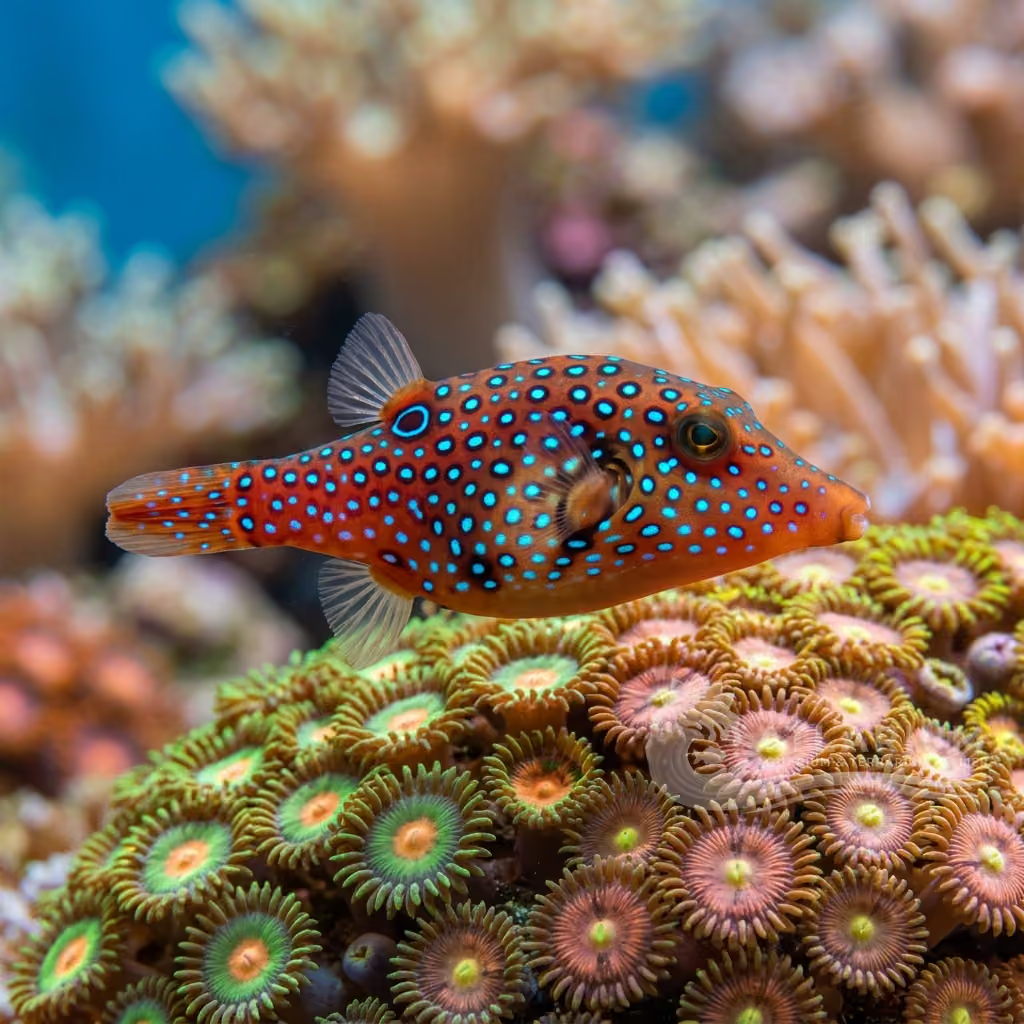
Compressed Toby
Canthigaster compressa
The Fingerprint Sharpnose Puffer is a patterned, coastal marine species. Best kept in tanks with moderate flow and extensive live rock, it is an engaging omnivore prone to jumping.
Water Temperature
22 - 27 °C
pH Value
8.1 - 8.4
Water type
Marine
Tank level
Bottom and middle
Adult size
12 cm
Minimum tank volume
>= 120 L
Minimum group
>= 1
KH
8 - 12 dKH

Species description
Geographical Origin and Habitat: Widespread in the tropical Western Indo-Pacific region, with key populations concentrated around the Philippines, Indonesia, Malaysia, Papua New Guinea, and the Solomon Islands. It primarily inhabits shallow, sheltered coastal lagoons, calm bays, and seagrass beds close to coral reefs at depths of 2 to 16 meters.
Taxonomy and Morphology: A member of the Tetraodontidae family, subfamily Canthigasterinae, and genus Canthigaster. Commonly known as the Compressed Toby or Fingerprint Puffer. It reaches a maximum adult size of 10 to 12 centimeters. Like all puffers, its teeth are fused into four bony plates, forming a sharp beak-like mouth.
Social Behavior: A highly curious, intelligent, and interactive fish. It swims slowly using a combination of its pectoral, dorsal, and anal fins, meticulously examining cracks in the rockwork for food. In response to extreme stress or threats, it can inflate its body with water or air to appear larger and ward off predators.
Coloration and Sexual Dimorphism: Features a highly intricate and beautiful coloration: a golden-brown or beige background pattern covered by a complex network of wavy, parallel blue-green lines resembling a human fingerprint or maze. Radial blue lines encircle the eyes, and a prominent dark eyespot (ocellus) is situated near the dorsal fin base.

Care, breeding and tankmates
Aquarium Setup: Requires an aquarium of at least 120 liters (30 gallons) with plenty of live rock arranged to create nooks, crevices, and swim-throughs. They prefer moderate to low water flow, as they are not strong swimmers. A secure lid is recommended, as they can jump in rare moments of panic or during night frights.
Diet and Feeding: Omnivorous. In captivity, they must be provided with hard-shelled foods to wear down their continuously growing beak. Feed half-shell clams, mussels, unshelled shrimp, krill, and small snails. It is crucial to supplement their diet with algae sheets (nori) and spirulina-based pellets to provide necessary vegetable fiber.
Water Quality: Requires stable marine conditions: temperature 22-27°C (72-81°F), pH 8.1-8.4, specific gravity 1.020-1.025. They are highly sensitive to copper-based treatments and ammonia swings. Keep nitrates low through efficient biological filtration and regular partial water changes.
Compatibility and Cohabitation: Reef-safe with caution. They are notorious for nipping at stony corals (SPS and LPS) and tubeworms, and will consume small invertebrates like ornamental shrimp, hermit crabs, and snails. Best kept with active, robust tankmates of similar size; avoid slow-moving or long-finned fish, as they may nip at them.
Aquarium Breeding: Captive breeding in home aquariums is extremely difficult and rarely documented. They are demersal spawners, laying adhesive eggs in nests prepared in sandy substrates or algae patches. Rearing the pelagic larvae requires specialized planktonic culture feeds and constant monitoring.
Risks and Diseases: Like other puffers, they carry tetrodotoxin in their skin and organs. If the fish dies or is severely stressed/damaged in the tank, it can release toxins that might poison the whole aquarium. Additionally, if their beak is not worn down with hard foods, it will overgrow, preventing the fish from feeding and leading to starvation.

Geographic origin and distribution
Widespread in the tropical Western Indo-Pacific region, with key populations concentrated around the Philippines, Indonesia, Malaysia, Papua New Guinea, and the Solomon Islands. It primarily inhabits shallow, sheltered coastal lagoons, calm bays, and seagrass beds close to coral reefs at depths of 2 to 16 meters.
Origin
Tropical oceans and reefsAfrica and MadagascarSouth and Southeast AsiaEast AsiaAustralia, New Guinea, and Oceania

Fish profile
- Temperament
- Semi-aggressive
- The compressed toby is a semi-aggressive and highly territorial species that exhibits a unique blend of curiosity and assertiveness. While they are peaceful towards fast-moving, non-similar species, they will show strong aggression towards other puffers and similarly shaped fish. They are also notorious fin-nippers, meaning slow-moving fish with long, flowing fins should not be housed with them. They are intelligent, active observers, often watching their surroundings and interacting with their keepers, but their predatory instincts make them unsafe for most delicate invertebrates.
- Diet
- Omnivore
- In their natural environment, compressed tobies are opportunistic omnivores that feed on a variety of benthic invertebrates, algae, and detritus. In the aquarium, their diet must be predominantly carnivorous and varied, containing high-quality meaty items such as Mysis shrimp, krill, and chopped seafood. Crucially, they must be regularly fed hard-shelled prey like small snails, unpeeled shrimp, or cockles in the shell to keep their continuously growing beak-like teeth naturally worn down. Supplementing their meals with marine algae or seaweed-based foods is also beneficial to mimic their natural grazing habits and support overall health.
- Life expectancy
- 5-10 years
- Adult size
- 12 cm
- Sex ratio
- 1:1 ratio
- In the wild, Canthigaster compressa is typically observed living in pairs or as solitary individuals within a structured social hierarchy. In a home aquarium, it is highly recommended to keep only a single specimen or a verified male-female pair to avoid severe territorial aggression. Males are extremely intolerant of other males, and keeping multiple males in the same tank will inevitably lead to violent fights. If attempting to house a pair, a large aquarium with plenty of visual barriers and hiding spots is necessary to allow the fish to escape each other's line of sight when needed.
- Feeding frequency
- Twice daily
- Due to their high metabolism and active searching behavior, compressed tobies should be fed small portions two to three times a day. Spreading out their meals helps prevent digestive issues and keeps them from becoming overly aggressive or bored, which often leads to destructive fin-nipping. Feeding should be carefully monitored to ensure they consume all food within a few minutes, reducing the amount of waste left to rot in the tank. Providing a small grazing opportunity, like a piece of shell-on food or algae sheet, can also occupy them between scheduled feedings.
- Bioload
- Medium to High
- The compressed toby is a relatively small pufferfish, but like all tetraodontids, it produces a significant amount of biological waste. Their messy feeding habits, which involve biting and crumbling hard-shelled prey, result in substantial debris that can quickly degrade water quality. Consequently, a strong filtration system, such as a high-capacity canister filter or protein skimmer, along with regular water changes, is essential to keep nutrient levels low. Maintaining pristine water conditions is crucial since this species is particularly sensitive to elevated nitrates and ammonia.
- Flow
- Moderate
- In their native environments, compressed tobies are typically found in sheltered areas such as shallow lagoons, silt-bottomed bays, and calm harbors. Therefore, they prefer weak to moderate water flow within the aquarium, as strong, turbulent currents can easily exhaust their rigid bodies and disrupt their precise hovering movements. While they need sufficient water movement to maintain high oxygenation and prevent dead spots, the tank layout should include low-flow areas behind rocks or decorations. Creating a gentle, consistent current allows them to swim naturally and explore their surroundings without fighting exhausting water movement.
- Jump risk
- Yes
- Although they are not known as active surface-dwellers, compressed tobies pose a notable jump risk when startled, stressed, or chased by tank mates. Their unique puffing defense mechanism can also be accompanied by erratic flight behavior, which can cause them to leap out of an uncovered aquarium. To prevent tragic accidents, a tight-fitting lid or a secure mesh cover is highly recommended for any tank housing this species. Additionally, providing ample hiding spots like caves and crevices helps them feel secure, reducing the likelihood of sudden, fear-induced jumping.
- Reproduction
- Oviparous
- Breeding the compressed toby in captivity is considered extremely difficult and is rarely achieved by home aquarists. In their natural habitat, they are oviparous, demersal spawners where dominant males defend territories containing multiple females. Courtship involves elaborate leading-and-following rituals, culminating in the female depositing her adhesive eggs onto a pre-cleaned algal nest on the substrate. The parents offer no care once fertilization is complete, leaving the eggs to hatch into tiny, planktonic larvae. Raising the delicate, microscopic fry requires specialized live starter foods like rotifers and precise environmental control, making commercial-scale breeding highly challenging.
- Compatibility & tankmates
- With caution
- The compressed toby is semi-aggressive and not suitable for peaceful community tanks or delicate reef systems. They should be housed with robust, active tank mates that can hold their own, such as medium-sized wrasses, damselfish, tangs, or hawkfish. Slow-moving species, especially those with long fins like lionfish or seahorses, must be avoided due to the toby's persistent fin-nipping habits. They are not reef-safe, as they will actively consume small ornamental shrimp, crabs, snails, and tube worms, and may also nip at hard and soft corals. Con-specifics or similarly shaped puffers should not be housed together unless they are a matched male-female pair in a very large tank.
- Tank level
- Middle/Bottom
- The compressed toby is a demersal species that spends most of its time hovering in the lower to middle zones of the water column. In their natural habitat, they frequent shallow, sandy lagoons, silty bays, and channels, staying close to the substrate and structures like reef rockwork or pier pilings. In an aquarium, they will actively patrol the rock formations and sandy substrate, searching for small invertebrates to graze on. Providing a mixture of open swimming space in the middle level and complex rock caves at the bottom aligns perfectly with their natural swimming preferences.

Scientific Parameters & Models
FishBase
Window to the official scientific data of the species
FishBase v25.04Data synced on: 06/15/2026
- Trophic level
- 3.5 ± 0.37 se
- Resilience
- High (less than 15 months)
- Phylogenetic uniqueness (PD50)
- 0.5
- Bayesian Length-Weight
- a = 0.04365, b = 2.91
- VulnerabilityLow vulnerability (10 / 100)

Related species
Recommendations grouped by close relatives, companion choices, and similar care.