Rusty angelfish
Centropyge ferrugata
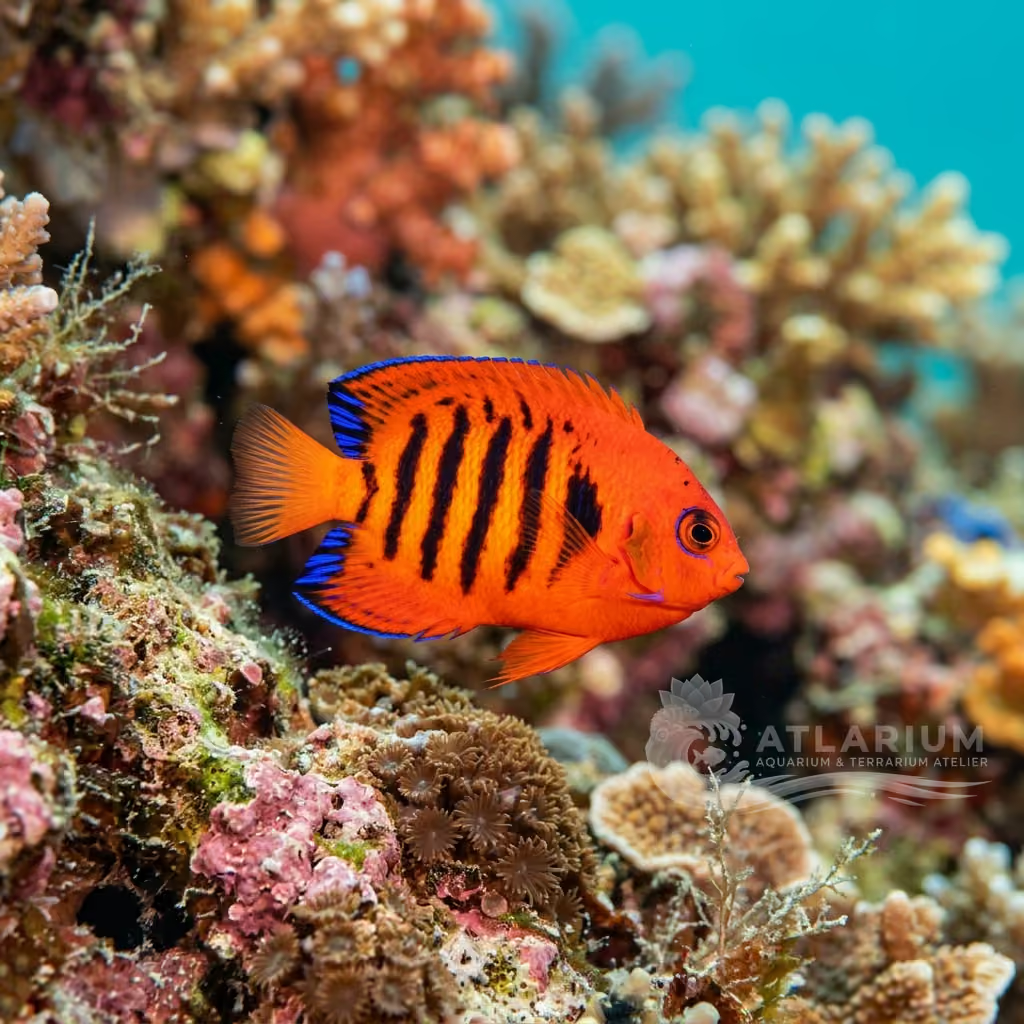
A hardy and vibrant dwarf marine angelfish, featuring a rusty reddish-orange body dotted with dark spots and highlighted by neon-blue fin edges, suitable for mature reef tanks.
Water Temperature
24 - 27 °C
pH Value
8.1 - 8.4
Water type
Marine
Tank level
Bottom and middle
Adult size
10 cm
Minimum tank volume
>= 120 L
Minimum group
>= 1
KH
8 - 12 dKH

Species description
Geographical Origin and Habitat: Centropyge ferrugata, commonly known as the rusty angelfish, is native to the tropical waters of the Western Pacific Ocean. Its range extends from southern Japan (including the Ryukyu and Izu Islands) southward to Taiwan and the northern Philippines. It inhabits seaward coral reefs and rocky reefs exposed to moderate currents, at depths ranging from 5 to 30 meters. It is typically found near shelters created by stony corals and rocks covered with benthic filamentous algae.
Taxonomy and Morphology: It belongs to the family Pomacanthidae (angelfish) and the genus Centropyge (dwarf angelfish). It features an oval, laterally compressed body with a prominent spine on the preoperculum (lower cheek), which is characteristic of all marine angelfish. Adults grow to a maximum length of approximately 10 cm (4 inches). No subspecies are recognized, but it is genetically closely related to other Centropyge species, with which it can occasionally hybridize.
Social Behavior: The rusty angelfish is an active, curious, and constant swimmer, spending its day picking at rock surfaces. It exhibits territorial behavior toward other dwarf angelfishes and species with similar body shapes or colors. In the wild, it lives in small harems consisting of one dominant male and several females. In a closed aquarium environment, it should be kept singly to prevent severe territorial aggression.
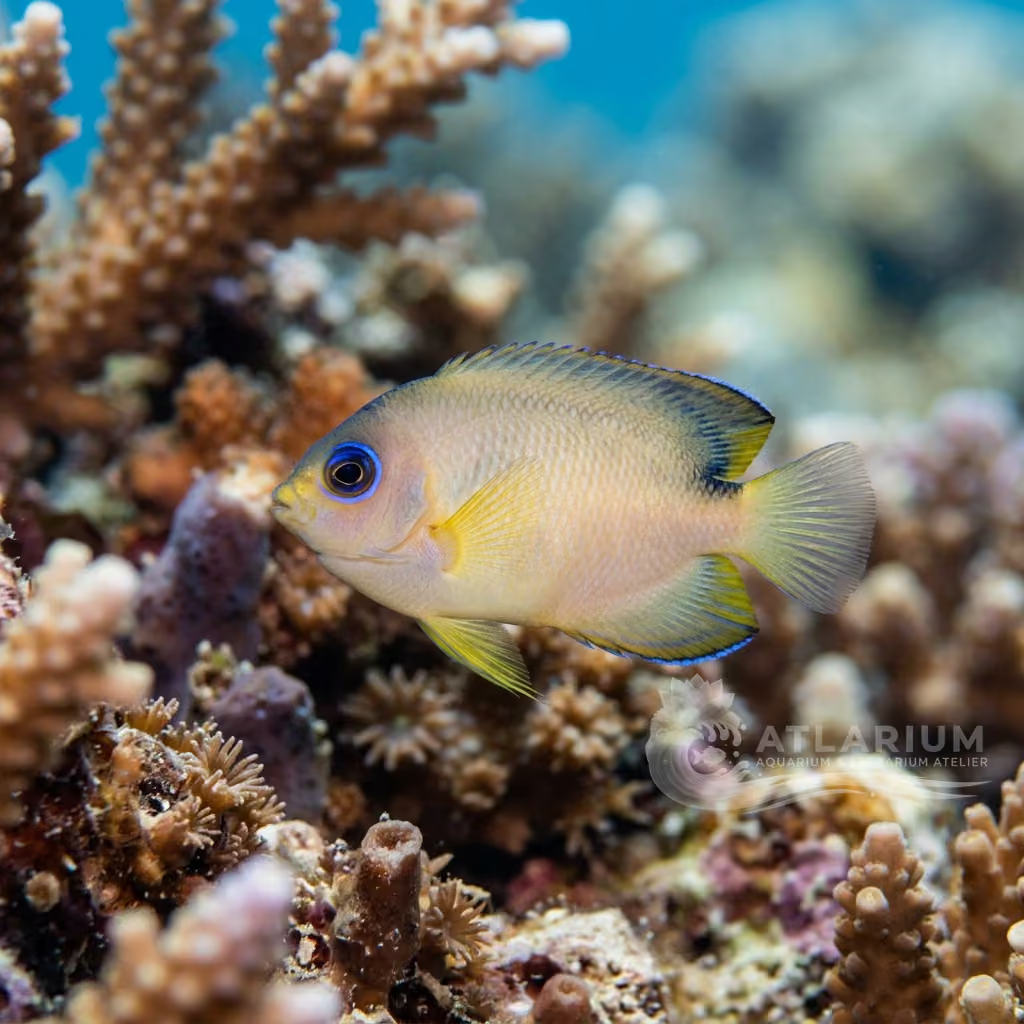
Coloration and Sexual Dimorphism: Its coloration is characterized by a rusty reddish-orange base color, heavily dotted with small black or dark brown spots across the main body. The margins of the dorsal, anal, and caudal fins are trimmed with a brilliant neon-blue edge. There is no major chromatic sexual dimorphism, but adult males tend to be slightly larger than females and may display brighter colors during courtship displays.

Care, breeding and tankmates
Aquarium Setup: Requires a mature marine aquarium of at least 120-150 liters (30-40 gallons) for a single specimen. The tank should be decorated with plenty of live rock arranged to create caves, crevices, and swim-throughs, allowing the fish to hide when startled and to graze on natural microalgae.
Diet and Feeding: It is an omnivore with a strong herbivorous preference. In captivity, it should be fed a varied diet including dried nori sheets, spirulina-based pellets or flakes, and frozen foods such as mysis shrimp, brine shrimp, and preparations containing marine sponges. Feed 1-2 times daily in small amounts.
Water Quality: Requires stable marine parameters and high-quality filtration. Maintain the water temperature between 24°C and 27°C, pH between 8.1 and 8.4, specific gravity (SG) between 1.020 and 1.025, and KH between 8 and 12. Keep nitrate and phosphate levels low with regular water changes and an efficient protein skimmer.
Compatibility and Cohabitation: Can be housed in community tanks with similarly sized or larger peaceful tankmates (such as tangs, chromis, and gobies). It is reef-safe with caution: it may nip at the polyps of large polyp stony (LPS) corals and the mantles of Tridacna clams, especially if it is underfed.
Aquarium Breeding: It is a protogynous hermaphrodite, meaning all individuals are born female and the dominant female transitions into a male. Spawning in home aquaria is extremely rare due to their broadcast pelagic spawning habits and the difficult larval stage, which requires microscopic live foods.
Risks and Diseases: Although one of the hardiest dwarf angelfishes, it is still susceptible to marine parasites such as marine ich (Cryptocaryon irritans) and marine velvet (Oodinium). Stress from aggressive tankmates or temperature swings can weaken its immune system. A quarantine period is highly recommended.

Geographic origin and distribution
Centropyge ferrugata, commonly known as the rusty angelfish, is native to the tropical waters of the Western Pacific Ocean. Its range extends from southern Japan (including the Ryukyu and Izu Islands) southward to Taiwan and the northern Philippines. It inhabits seaward coral reefs and rocky reefs exposed to moderate currents, at depths ranging from 5 to 30 meters. It is typically found near shelters created by stony corals and rocks covered with benthic filamentous algae.
Origin
Selective breeding and cultivarsSouth and Southeast AsiaEast AsiaTropical oceans and reefsCosmopolitan or introduced

Fish profile
- Temperament
- Semi-aggressive
- This species exhibits a semi-aggressive and highly territorial temperament, particularly toward other dwarf angelfish or similarly shaped species. They are generally peaceful toward unrelated, non-competitive tankmates but will defend their established territory vigorously. Bold and inquisitive, they will actively patrol the rockwork once acclimated. Introducing them as one of the last additions to the tank can help curb their territorial tendencies.
- Diet
- Omnivore
- The Rusty Angelfish is an omnivorous grazer requiring a diverse diet to maintain its health and vibrant coloration. In the wild, they feed on algae, detritus, and small invertebrates, which should be replicated in the aquarium. Offer a mix of high-quality marine algae, spirulina-rich flakes or pellets, frozen mysis, and brine shrimp. Formulations containing sponge material are also highly beneficial for dwarf angelfish health.
- Life expectancy
- 6-10 years
- Adult size
- 10 cm
- Sex ratio
- Harem
- In captivity, Centropyge ferrugata is typically kept singly to avoid territorial aggression. However, in larger aquariums (over 75 gallons), a mated pair or a small harem consisting of one male and multiple females can be successfully maintained. Introducing all individuals simultaneously as juveniles is crucial, as the largest and most dominant fish will transition into a male. Avoid housing multiple males together, as this will result in fatal fighting.
- Feeding frequency
- Twice daily
- It is recommended to feed Centropyge ferrugata two to three times daily in small amounts that they can consume quickly. Frequent feedings help satisfy their natural grazing instinct and significantly reduce the likelihood of them nipping at corals. A mature tank with natural microalgae growth on live rock provides constant foraging opportunities between feedings. Ensuring they receive regular nourishment is key to maintaining their energy and health.
- Bioload
- Medium
- The Rusty Angelfish (Centropyge ferrugata) has a moderate biological waste footprint due to its active nature and frequent feeding requirements. It requires a well-established filtration system, ideally equipped with a protein skimmer, to maintain pristine water quality. Regular water changes and carbon filtration are highly recommended to prevent the build-up of nitrates and phosphates. Providing a mature aquarium with ample live rock helps natural biological filtration cope with the bioload.
- Flow
- Moderate
- The Rusty Angelfish prefers moderate water flow, which mimics the shallow, rocky reef environments they inhabit in the wild. While they enjoy active currents in open areas, it is vital to provide low-flow shelter zones within the rockwork where they can rest. High, turbulent flow throughout the entire tank can stress the fish and restrict their natural swimming behavior. A balanced flow pattern promotes natural grazing and active exploration.
- Jump risk
- Yes
- The Rusty Angelfish presents a moderate risk of jumping, especially when startled or chased by tankmates. They are agile swimmers that can easily leap out of an open-top aquarium if they dart upward in fright. A secure, tight-fitting lid or a fine mesh cover is strongly recommended to prevent accidental escapes. Providing ample hiding spots also helps reduce stress and minimizes the likelihood of jump attempts.
- Reproduction
- Oviparous
- As protogynous hermaphrodites, Centropyge ferrugata begin life as females, with the dominant individual in a group transitioning into a male. Breeding in the home aquarium is challenging but has been achieved by experienced hobbyists. Successful spawning requires a deep tank to accommodate their vertical mating rise, along with warm temperatures and a nutritious diet. The pelagic eggs and tiny larvae are difficult to raise, requiring specialized live microscopic foods.
- Compatibility & tankmates
- Territorial
- They are compatible with a wide range of semi-aggressive and peaceful marine fish, such as clowns, damsels, wrasses, and gobies. However, they are not completely reef-safe and should be added with caution to reef tanks, as they may nip at large polyp stony (LPS) corals, soft corals, and clam mantles. Keeping them well-fed is the best way to minimize damage to sessile invertebrates. Avoid keeping them with larger, highly aggressive predators or similarly shaped dwarf angels.
- Tank level
- Middle/Bottom
- This species is primarily epibenthic, preferring the bottom to middle zones of the aquarium where it can weave through rockwork. It relies heavily on caves, crevices, and rubble zones for shelter and natural foraging surfaces. While they spend most of their time close to the substrate, they will occasionally venture into open water during feeding or courtship. A layout with numerous rock formations is essential to make them feel secure at these lower levels.

Scientific Parameters & Models
FishBase
Window to the official scientific data of the species
FishBase v25.04Data synced on: 06/15/2026
- Trophic level
- 2.8 ± 0.34 se
- Resilience
- High (less than 15 months)
- Phylogenetic uniqueness (PD50)
- 0.5
- Bayesian Length-Weight
- a = 0.0302, b = 2.89
- VulnerabilityLow vulnerability (10 / 100)

Related species
Recommendations grouped by close relatives, companion choices, and similar care.