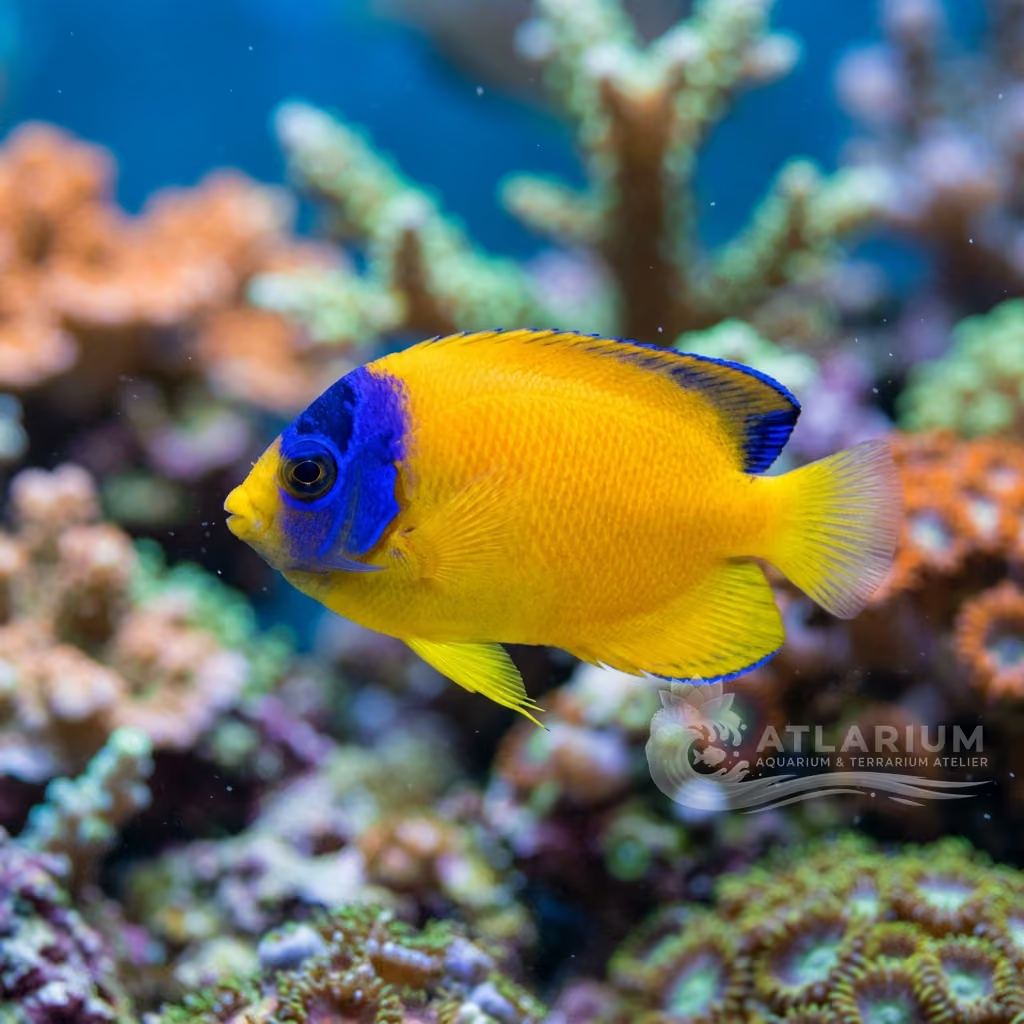
Shepard's angelfish
Centropyge shepardi
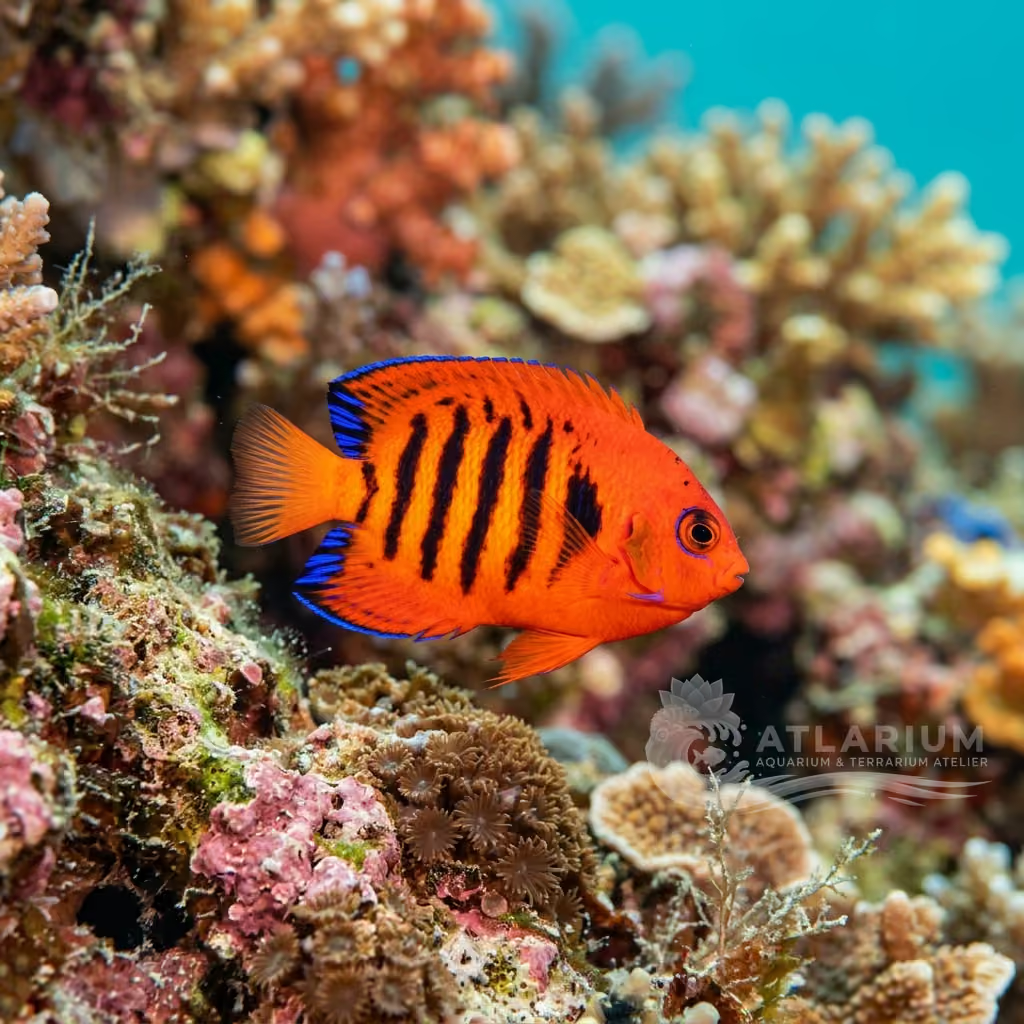
Shepard's Pygmy Angelfish from the Mariana Islands features a vibrant orange-red body with dark bars. It is semi-aggressive and grazes actively on live rock.
Water Temperature
22 - 28 °C
pH Value
8.1 - 8.4
Water type
Marine
Tank level
Bottom and middle
Adult size
9 cm
Minimum tank volume
>= 200 L
Minimum group
>= 1
KH
8 - 12 dKH

Species description
Geographical Origin and Habitat: Centropyge shepardi, commonly known as Shepard's pygmy angelfish, is native to the Northwestern Pacific Ocean, with its distribution centered around the Mariana Islands, the Ogasawara Islands, and Guam. It inhabits outer reef slopes, surge zones, and rocky drop-offs at depths ranging from 10 to 56 meters. It is closely associated with stony corals and rocky crevices, which provide both shelter and foraging grounds.
Taxonomy and Morphology: Belongs to the family Pomacanthidae and the genus Centropyge. It is a dwarf angelfish species that reaches a maximum length of approximately 9 to 12 cm. The body has the typical oval, laterally compressed shape of the genus, featuring a prominent spine on the lower margin of the preoperculum used for defense.
Social Behavior: Semi-aggressive and highly territorial toward other dwarf angelfish, especially in smaller aquariums. In the wild, they form small harems consisting of a single dominant male and several females (usually 2 to 7). It spends its time continuously grazing on algae and small invertebrates across the reef.
Coloration and Sexual Dimorphism: Features a vibrant orange-red to golden body color, marked with a series of dark vertical bars along the upper back and sides. The posterior sections of the dorsal and anal fins are dark blue-black with electric blue edges. Males are generally larger than females and exhibit more vivid colors and blue accents during courtship.

Care, breeding and tankmates
Aquarium Setup: Requires a well-established reef or FOWLR aquarium of at least 200 liters. The tank should be styled with plenty of live rock to create a complex network of caves, tunnels, and hiding spots, while still leaving ample open swimming space. Good water flow and structural grazing areas are essential.
Diet and Feeding: An omnivore that requires a varied diet. Feed high-quality commercial foods formulated for angelfish (containing marine sponge material), spirulina flakes, nori seaweed sheets, and frozen mysis or brine shrimp. Offer small feedings 2 to 3 times daily to prevent them from nipping at corals.
Water Quality: Maintain stable reef parameters: water temperature between 24 °C and 27 °C, pH of 8.1 to 8.4, specific gravity of 1.020 to 1.025, and dKH of 8 to 12. Keep nitrates low (below 10 ppm) and phosphates minimal by using a high-performance protein skimmer and regular water changes.
Compatibility and Cohabitation: Can be housed with peaceful or semi-aggressive tankmates such as wrasses, gobies, and larger damselfish. It is reef-safe with caution, as it may nip at large-polyp stony (LPS) corals, soft corals, or clam mantles, particularly if it is underfed or housed in a small tank.
Aquarium Breeding: Protogynous hermaphrodite. Spawning in home aquariums is exceptionally difficult and rare due to the pelagic nature of their eggs and the microscopic size of the larvae, which require specialized live foods (such as copepod nauplii) and pristine water quality.
Risks and Diseases: Prone to common marine parasitic infections like Ich (Cryptocaryon) and velvet (Amyloodinium) when stressed. A quarantine period is highly recommended. Use caution with copper-based medications, as dwarf angelfish can be sensitive to chemical treatments.

Geographic origin and distribution
Centropyge shepardi, commonly known as Shepard's pygmy angelfish, is native to the Northwestern Pacific Ocean, with its distribution centered around the Mariana Islands, the Ogasawara Islands, and Guam. It inhabits outer reef slopes, surge zones, and rocky drop-offs at depths ranging from 10 to 56 meters. It is closely associated with stony corals and rocky crevices, which provide both shelter and foraging grounds.
Origin
Tropical oceans and reefs

Fish profile
- Temperament
- Semi-aggressive
- This species exhibits a semi-aggressive temperament, which is typical for members of the genus Centropyge. They can be highly territorial toward other dwarf angelfish, particularly those with similar shapes or coloration. While generally peaceful toward unrelated tank mates, they may assert dominance over smaller, passive fish. Providing a spacious tank with visual barriers helps mitigate territorial behavior and potential aggression.
- Diet
- Omnivore
- Centropyge shepardi is an omnivore with a strong preference for detritus and benthic algae, which they graze on constantly in the wild. In the aquarium, their diet should consist of high-quality algae-based preparations, Spirulina, and specialized angelfish foods containing sponge material. They also benefit from regular feedings of meaty frozen foods like mysis shrimp, brine shrimp, and krill. Access to a mature aquarium with natural algae growth is beneficial to satisfy their grazing instincts.
- Life expectancy
- 5-10 years
- Adult size
- 9 cm
- Sex ratio
- Harem
- In the wild, Centropyge shepardi is a protogynous hermaphrodite that naturally forms harems consisting of one dominant male and several females. In captivity, they are best kept either singly to avoid territorial conflict or in a coordinated harem in very large tanks. If introducing a group, it is recommended to add multiple smaller individuals simultaneously so that the dominant one transitions into a male. Avoid housing more than one mature male together, as they will fight aggressively for dominance.
- Feeding frequency
- Twice daily
- To replicate their natural continuous grazing behavior, Centropyge shepardi should be fed small amounts 2 to 3 times daily. Offering multiple small feedings helps maintain their energy levels and reduces interest in nipping at corals. Live rock in a mature tank provides constant foraging opportunities between scheduled meals. Spacing out feedings throughout the day ensures they receive a balanced intake of nutrients without overloading the filtration system.
- Bioload
- Low to Medium
- Despite its small size, Centropyge shepardi produces a low-medium biological load in a marine aquarium. They require a well-established filtration system, ideally equipped with a protein skimmer, to handle the organic waste from their frequent feeding. Regular water changes and the presence of live rock help maintain the low nitrate levels they require to thrive. Efficient biological filtration is essential to prevent spikes in ammonia and nitrite, ensuring long-term health.
- Flow
- Strong
- This species prefers moderate to strong water flow, reflecting their natural habitat on outer reef slopes and clear lagoons. Good water movement promotes proper oxygenation and helps simulate the active currents of the reef. However, it is important to provide lower-flow areas, such as caves and crevices, where they can rest and seek shelter. A well-designed circulation system with powerheads will support their health and mimic their native environments.
- Jump risk
- Yes
- Centropyge shepardi poses a moderate jump risk, especially when startled, stressed, or pursued by more aggressive tank mates. They are agile swimmers capable of launching themselves out of the water through small openings. A tight-fitting lid or a secure mesh cover is highly recommended to prevent accidental escapes. Providing ample hiding spots can also reduce their stress levels and lower the likelihood of jumping behavior.
- Reproduction
- Oviparous
- Reproduction in the aquarium is highly challenging and rarely achieved by casual hobbyists. As protogynous hermaphrodites, they perform a vertical spawning rise at dusk, requiring a deep tank of at least 20 inches to spawn successfully. The resulting pelagic eggs and tiny larvae are extremely delicate and require specialized live foods, such as copepod nauplii. Consequently, raising the fry to adulthood is difficult and typically restricted to professional breeders.
- Compatibility & tankmates
- Semi-aggressive
- Shepard's Angelfish is compatible with many reef-safe fish, such as tangs, wrasses, chromis, and larger gobies. However, they should be kept with caution in reef aquariums, as they may nip at large polyp stony (LPS) corals, soft corals, and clam mantles. They are generally incompatible with other dwarf angelfish unless housed in a very large aquarium with distinct territories. Careful monitoring of their behavior toward invertebrates and corals is always recommended.
- Tank level
- Middle/Bottom
- This dwarf angelfish is primarily a bottom-to-middle dweller, spending most of its time darting among live rock and coral structures. They utilize caves, overhangs, and crevices for shelter and to search for microscopic food organisms. They rarely venture into the upper open-water zones except during feeding times or spawning rituals. Providing a dynamic aquascape with plenty of vertical structure is key to encouraging their natural behaviors.

Scientific Parameters & Models
FishBase
Window to the official scientific data of the species
FishBase v25.04Data synced on: 06/15/2026
- Trophic level
- 2 ± 0 se
- Resilience
- High (less than 15 months)
- Phylogenetic uniqueness (PD50)
- 0.5
- Bayesian Length-Weight
- a = 0.0302, b = 2.89
- VulnerabilityLow vulnerability (10 / 100)

Related species
Recommendations grouped by close relatives, companion choices, and similar care.