Cocos Pygmy Angelfish
Centropyge cocosensis
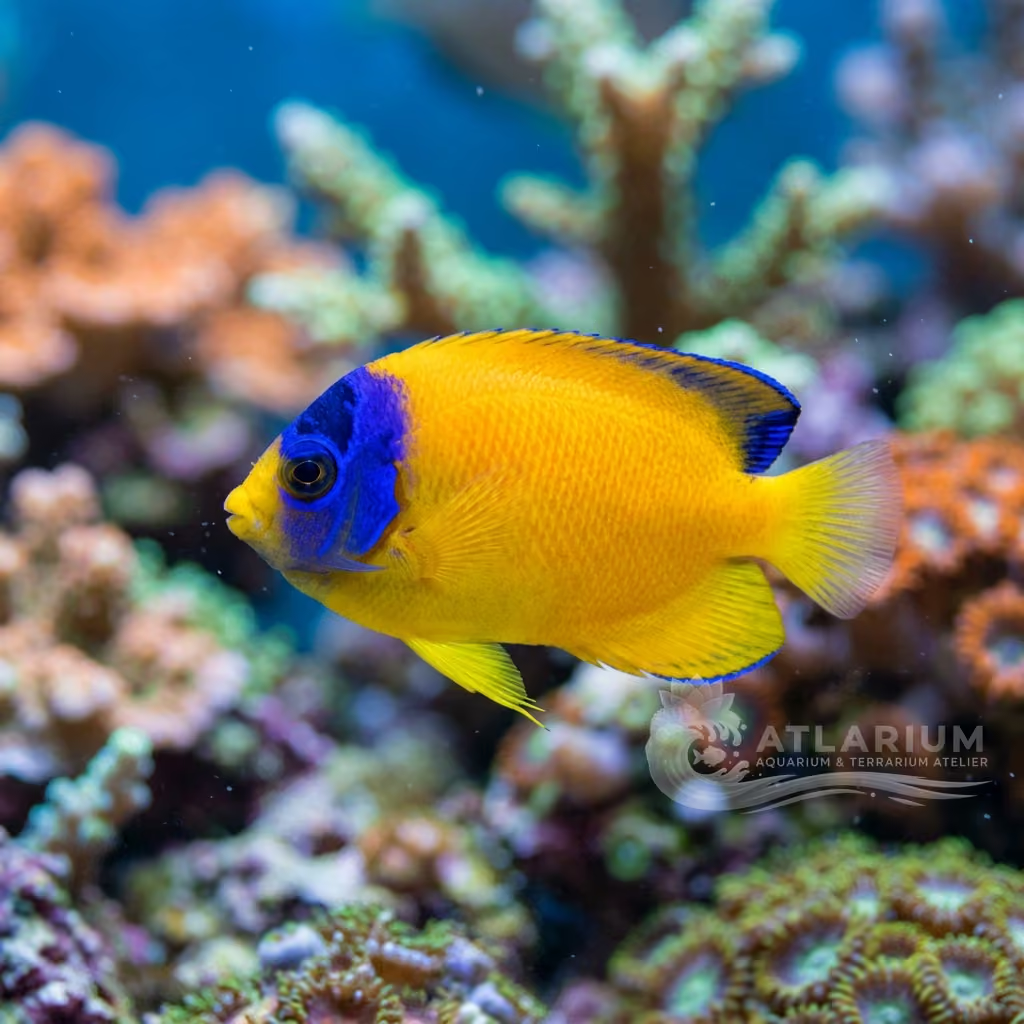
The Cocos pygmy angelfish is a small marine pomacanthid species endemic to the eastern Indian Ocean, recognized by its vibrant yellow color and distinct blue eye rings.
Water Temperature
24 - 28 °C
pH Value
8.1 - 8.4
Water type
Marine
Tank level
Bottom and middle
Adult size
7 cm
Minimum tank volume
>= 120 L
Minimum group
>= 1

Species description
Geographical Origin and Habitat: Centropyge cocosensis is a marine fish species endemic to the tropical waters of the eastern Indian Ocean, specifically found around the Cocos (Keeling) Islands and Christmas Island. Its natural biotope consists of deep outer reef slopes, drop-offs, and coral rubble beds at depths ranging from 5 to 70 meters. It prefers habitats with significant water movement and high levels of structural complexity, where it can easily find shelter among loose rock formations and crevices.
Taxonomy and Morphology: Taxonomically, it belongs to the class Actinopterygii, family Pomacanthidae, and the genus Centropyge, which comprises the dwarf or pygmy angelfish. Morphologically, it possesses an oval, laterally compressed body shape with a sharp spine located at the lower corner of the preopercle, a feature common to all marine angelfish used for defense. Adults reach a small maximum length of only 6 to 7 centimeters, making them ideal candidates for medium reef systems.
Social Behavior: The social behavior of this species is characterized by strong intraspecific territoriality. In the wild, they typically live in small harems consisting of one dominant male and two to five females sharing a defined territory. In a home aquarium, the Cocos pygmy angelfish will defend its territory against other dwarf angelfish or species of similar shape and coloration, while remaining peaceful and indifferent toward unrelated fish families.
Coloration and Sexual Dimorphism: The coloration of this species is a uniform, brilliant lemon yellow covering the entire body and fins. The most notable diagnostic features are a vivid cobalt blue ring encircling each eye and a small blue mark on the edge of the gill cover. They are protogynous hermaphrodites, meaning all individuals mature first as females, and the largest, most socially dominant female transitions into a functional male when the male is absent.

Care, breeding and tankmates
Aquarium Setup: Requires a well-established marine aquarium of at least 150 liters with a robust amount of live rock. The rockwork should be arranged to create numerous caves, overhangs, and swim-throughs to provide the fish with territorial boundaries and secure hiding spots, while still maintaining an open area in the front for active swimming.
Diet and Feeding: The diet must be highly varied to support its nutritional needs. They readily accept frozen foods such as mysis shrimp, brine shrimp, and finely chopped krill, but a continuous supply of marine algae, spirulina, and high-quality pellet foods is mandatory. Feeding specialized angelfish preparations containing sponge material is highly recommended to prevent nutritional deficiencies.
Water Quality: Maintaining stable water parameters is critical for the long-term health of this species. The water temperature should be kept between 24°C and 27°C, pH between 8.1 and 8.4, and specific gravity (salinity) between 1.020 and 1.025. Ammonia and nitrite levels must be kept at zero, while nitrates and phosphates should be managed at minimal levels using an efficient protein skimmer.
Compatibility and Cohabitation: Compatibility is generally excellent with peaceful, similar-sized tankmates such as clownfish, gobies, blennies, and medium-sized tangs. In a reef setting, they are considered 'reef safe with caution' because they may occasionally nip at the polyps of stony corals (both SPS and LPS) as well as the mantles of Tridacna clams, especially if they are underfed.
Aquarium Breeding: Breeding in home aquariums is extremely challenging and rarely documented successfully outside of professional aquaculture facilities. Spawning requires tall aquariums to accommodate their natural crepuscular spawning behavior, which involves a rapid vertical rise in the water column where the male and female release eggs and sperm simultaneously.
Risks and Diseases: The main health risks include common marine parasites such as Cryptocaryon irritans (marine ich) and Amyloodinium ocellatum (marine velvet). A strict quarantine period of at least three to four weeks is strongly recommended before introducing them to the main display tank to reduce shipping stress, verify health, and ensure they are eating prepared foods.

Geographic origin and distribution
Centropyge cocosensis is a marine fish species endemic to the tropical waters of the eastern Indian Ocean, specifically found around the Cocos (Keeling) Islands and Christmas Island. Its natural biotope consists of deep outer reef slopes, drop-offs, and coral rubble beds at depths ranging from 5 to 70 meters. It prefers habitats with significant water movement and high levels of structural complexity, where it can easily find shelter among loose rock formations and crevices.
Origin
Selective breeding and cultivarsSouth and Southeast AsiaTropical oceans and reefs

Fish profile
- Temperament
- Semi-aggressive
- Like most dwarf angelfishes, Centropyge cocosensis is semi-aggressive and highly territorial, particularly toward other members of the genus Centropyge or similarly colored species. They are active, curious, and constant searchers, showing great interest in their surroundings and frequently defending their feeding zones. While generally peaceful toward unrelated tankmates, they can show dominance over passive fish. Providing a spacious tank with visual barriers helps mitigate territorial aggression.
- Diet
- Omnivore
- The diet of Centropyge cocosensis is omnivorous, naturally consisting of benthic algae, detritus, small sponges, and micro-crustaceans. In the aquarium, they should be offered a varied diet consisting of high-quality marine algae, spirulina, and commercial foods formulated with sponge materials. Meaty foods such as frozen mysis and brine shrimp should also be included to meet their protein requirements. A varied diet is crucial not only for their health but also to deter them from nipping at corals.
- Life expectancy
- 5-11 years
- Adult size
- 7 cm
- Sex ratio
- Harem
- In the aquarium, Centropyge cocosensis is best kept as a single specimen to prevent severe territorial aggression, particularly in smaller setups. For very large aquariums with abundant rockwork, keeping them in a harem of one male and two or three females is possible. Since they are protogynous hermaphrodites, if two immature individuals are introduced together, the larger, dominant fish will transition into a male. Co-housing multiple males must be strictly avoided to prevent lethal fights.
- Feeding frequency
- Twice daily
- It is highly recommended to feed Centropyge cocosensis in small portions two to three times daily. Their natural grazing behavior means they have a high metabolic rate and are accustomed to feeding continuously throughout the day. Frequent feeding helps reduce aggression and lessens the likelihood that they will nip at sessile invertebrates. Any uneaten food should be removed promptly, and occasional fasting for one day a week can help maintain digestive health.
- Bioload
- Low to Medium
- Centropyge cocosensis has a low-medium biological load due to its relatively small adult size of approximately 9 to 10 centimeters. However, because they are active grazers that require multiple daily feedings, they can generate a moderate amount of organic waste. An efficient filtration system, including a reliable protein skimmer and mature live rock, is highly recommended to manage waste levels. Maintaining stable water parameters with low nitrate levels is essential, as this species is sensitive to sudden changes in water quality.
- Flow
- Strong
- This species prefers a moderate water flow, reflecting the conditions of its native coral reef slopes and drop-offs. High-velocity streams should be avoided, as they can exhaust the fish and prevent them from easily navigating their territory. The aquarium's water circulation should include both active current zones and calmer pockets behind rockwork where they can rest. A well-designed flow pattern promotes natural behavior and keeps the substrate clean of detritus.
- Jump risk
- Yes
- Centropyge cocosensis exhibits a moderate to high jump risk, especially when startled by sudden movements outside the tank or chased by aggressive tankmates. They are agile swimmers capable of launching themselves out of the water, particularly during the evening hours when they are most active. A tight-fitting lid or a fine-mesh cover is absolutely essential to prevent accidental escapes. Care should also be taken to seal any gaps around filters, cables, or overflow boxes.
- Reproduction
- Oviparous
- Breeding Centropyge cocosensis in the home aquarium is exceptionally difficult and rarely achieved by hobbyists. In nature, they are haremic, pelagic spawners that perform a complex courtship dance at dusk before releasing gametes into the water column. The resulting larvae are microscopically small and require specialized, live food sources like copepod nauplii to survive. While captive breeding has been achieved in professional facilities, raising the fry remains a significant challenge due to their delicate larval stage.
- Compatibility & tankmates
- With caution
- Centropyge cocosensis is reef safe with caution, as they are known to occasionally nip at fleshy large-polyp stony (LPS) corals, soft corals, and clam mantles. They are compatible with active reef fish of other families, such as wrasses, gobies, and damselfishes, which can handle their active nature. However, they should not be housed with other dwarf angelfish of similar color or shape unless the tank is exceptionally large. Careful monitoring is necessary when introducing them into a reef aquarium.
- Tank level
- Middle/Bottom
- This species is primarily a bottom-to-middle dweller, spending most of its time weaving through rock caves, crevices, and overhangs. They rarely venture into the upper water column unless darting for food or during rare crepuscular spawning rituals. A complex aquascape with plenty of vertical structures and swim-throughs will encourage natural swimming behaviors. Providing low-light shelters near the substrate is crucial for helping them feel secure and reducing stress.

Scientific Parameters & Models
FishBase
Window to the official scientific data of the species
Data synced on: 06/15/2026
- Trophic level
- 2.8 ± 0.3 se
- Resilience
- High (less than 15 months)
- Phylogenetic uniqueness (PD50)
- 0.5
- Bayesian Length-Weight
- a = 0.0302, b = 2.89
- VulnerabilityLow vulnerability (10 / 100)

Related species
Recommendations grouped by close relatives, companion choices, and similar care.