Blackspot Pygmy Angelfish
Centropyge nigriocellus
An extremely shy and tiny deepwater dwarf angelfish, the Blackspot Pygmy Angelfish needs a quiet, dimly lit tank with a labyrinth of mature live rock.
Water Temperature
25 - 28 °C
pH Value
8.1 - 8.4
Water type
Marine
Tank level
Bottom and middle
Adult size
6 cm
Minimum tank volume
>= 340 L
Minimum group
>= 1
KH
8 - 12 dKH

Species description
Geographical Origin and Habitat: Centropyge nigriocellus is native to scattered localities across the central and western Pacific Ocean, including Johnston Atoll, the Line Islands, the Mariana Islands, the Society Islands, and the Tuamotu Archipelago. It is a deep-dwelling reef species, inhabiting coral rubble, outer reef walls, and rocky crevices at depths between 12 and 60 meters, where it leads a cryptic lifestyle.
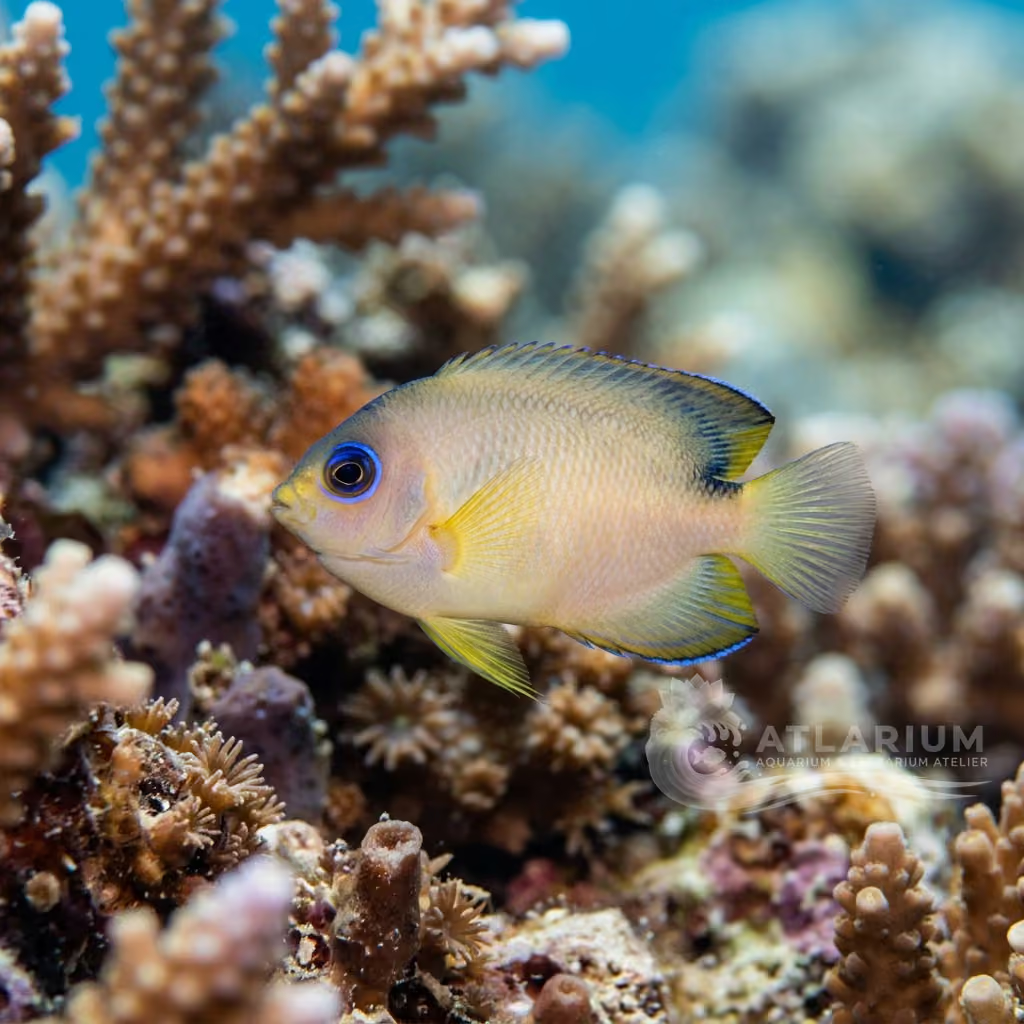
Taxonomy and Morphology: A member of the Pomacanthidae family and the genus Centropyge. It is commonly referred to as the blackspot pygmy angelfish. It is one of the smallest species in its genus, reaching a maximum adult length of just 6 cm. It features a laterally compressed, rounded body and a sharp preopercular spine typical of angelfishes.
Social Behavior: Extremely shy and secretive. It spends the vast majority of its life hidden deep within the labyrinth of crevices in the reef, rarely venturing into open water. While territorial towards other dwarf angelfishes of similar size, it is generally peaceful towards other non-related, non-aggressive tankmates.
Coloration and Sexual Dimorphism: The body coloration is pale, ranging from creamy white to pale yellow or light brown. Its most defining characteristic is a prominent black ocellus (eyespring) with a thin blue outline at the base of the pectoral fin, and another small black spot at the rear of the dorsal fin. There is no obvious visual sexual dimorphism.

Care, breeding and tankmates
Aquarium Setup: Requires an established, long-running marine aquarium of at least 150 liters. The tank must feature an extensive structure of live rock to create a maze of dark caves, tunnels, and crevices where the fish can retreat. Dimmed lighting or large shaded areas are crucial for making this species feel secure enough to feed.
Diet and Feeding: In nature, it feeds on microalgae, organic detritus, sponges, and small benthic invertebrates. Acclimating this species to aquarium foods is a significant challenge due to its shyness. Offer small frozen foods (cyclops, brine shrimp, finely chopped mysis) and specialized sponge-based angelfish foods several times a day. Natural algae on rocks is essential.
Water Quality: Requires clean, stable water conditions. Maintain a temperature range of 24-27°C, pH between 8.1 and 8.4, salinity (SG) of 1.022-1.025, and low nitrates (under 10 mg/l). A high-performance protein skimmer, efficient filtration, and routine water changes are mandatory for success.
Compatibility and Cohabitation: Like most dwarf angelfishes, it is not 100% reef-safe; it may nip at LPS coral polyps and clam mantles, though the risk is lower due to its tiny size. Ideal tankmates are peaceful, quiet species such as gobies, blennies, and pipefish. Avoid active, dominant, or aggressive tankmates.
Aquarium Breeding: Egg-scatterer and protogynous hermaphrodite. In the wild, they spawn at dusk, releasing gametes into the water column. There are no documented records of successful captive breeding due to the difficulty of harvesting and feeding the microscopic pelagic larvae.
Risks and Diseases: Due to its secretive nature and acclimation stress, it is prone to bacterial infections and external parasites (Cryptocaryon and Amyloodinium). It is highly sensitive to chemical treatments, especially copper-based products. A dedicated quarantine period in a quiet environment is strongly recommended.

Geographic origin and distribution
Centropyge nigriocellus is native to scattered localities across the central and western Pacific Ocean, including Johnston Atoll, the Line Islands, the Mariana Islands, the Society Islands, and the Tuamotu Archipelago. It is a deep-dwelling reef species, inhabiting coral rubble, outer reef walls, and rocky crevices at depths between 12 and 60 meters, where it leads a cryptic lifestyle.
Origin
Tropical oceans and reefs

Fish profile
- Temperament
- Territorial
- The Black-spot Angelfish is generally peaceful and significantly shyer than other members of its genus. It exhibits highly cryptic behavior, spending a large portion of its day hidden within caves and crevices of the reef. However, it can show territorial aggression toward other dwarf angelfish or species with similar shapes and coloration.
- Diet
- Omnivore
- This species is an omnivore with a strong preference for grazing on marine algae, detritus, and small benthos found on live rocks. In the aquarium, their diet should consist of high-quality spirulina flakes, specialized angelfish pellet foods, and frozen preparations like mysis and brine shrimp. Providing a constant supply of mature live rock is crucial for their grazing behavior.
- Life expectancy
- 5-10 years
- Adult size
- 6 cm
- Sex ratio
- Harem
- In the wild, Centropyge nigriocellus naturally organizes into harems consisting of a single dominant male and several females. In a home aquarium, keeping them singly is usually recommended unless the tank is exceptionally large and has numerous hiding places. Attempting to keep multiple males or pairing them without an established bond will lead to severe aggression, so a single specimen or a known mated pair is best.
- Feeding frequency
- Twice daily
- Because they are constant grazers in their natural habitat, they should be fed small portions two to three times daily. This frequent feeding schedule helps mimic their natural foraging behavior and keeps them active and healthy. A well-established aquarium with microalgae growth will also provide supplemental nutrition between feedings.
- Bioload
- Low to Medium
- The Black-spot Angelfish (Centropyge nigriocellus) has a relatively low biological load due to its small maximum size of around 6 centimeters. However, like all dwarf angelfish, it requires a mature aquarium setup with efficient filtration, including a protein skimmer and high-quality biological media. Stable water parameters are crucial for this cryptic species, meaning that overstocking or inadequate filtration can quickly lead to stress and health decline.
- Flow
- Strong
- Centropyge nigriocellus prefers moderate water flow, which mimics the shallow lagoon and reef slope environments it inhabits. High-flow zones should be balanced with plenty of low-flow crevices and caves where the fish can rest without fighting strong currents. Proper water movement also helps keep the water well-oxygenated and prevents detritus from accumulating.
- Jump risk
- Yes
- Although Centropyge nigriocellus spends most of its time close to the rockwork, it still poses a significant risk of jumping when startled or chased by tankmates. A secure, tight-fitting lid or a fine mesh cover is mandatory to prevent accidental escapes. This is especially important during the acclimation period when the fish is adapting to its new, unfamiliar surroundings.
- Reproduction
- Oviparous
- Like other dwarf angelfish, this species is a protogynous hermaphrodite, meaning all individuals are born female and the dominant fish transitions to male. They are broadcast spawners that release their gametes into the water column, usually at dusk. There are no recorded instances of successful captive breeding for this specific, highly elusive species.
- Compatibility & tankmates
- Peaceful
- This timid angelfish is compatible with peaceful, non-aggressive tankmates such as small gobies, dartfish, and anthias. It should not be housed with aggressive fish that might intimidate it into hiding permanently. Additionally, caution is advised in reef tanks as they may occasionally nip at large-polyp stony (LPS) corals, soft corals, or clam mantles.
- Tank level
- Middle/Bottom
- This species is highly cryptic and secretive, preferring to stay close to the bottom and lower-middle levels of the aquarium. It spends most of its time darting among rubble, live rock crevices, and caves rather than swimming in the open water column. Aquascaping with plenty of low-lying shelters is essential to make this dwarf angelfish feel secure enough to occasionally venture out.

Scientific Parameters & Models
FishBase
Window to the official scientific data of the species
FishBase v25.04Data synced on: 06/15/2026
- Trophic level
- 2 ± 0 se
- Resilience
- High (less than 15 months)
- Phylogenetic uniqueness (PD50)
- 0.5
- Bayesian Length-Weight
- a = 0.0302, b = 2.89
- VulnerabilityLow vulnerability (10 / 100)

Related species
Recommendations grouped by close relatives, companion choices, and similar care.