Encyclopaedia

FishMarineIntermediate
©AI Generated·Proprietary

Debora's Pygmy Angelfish

Centropyge deborae

A highly sought-after dwarf angelfish showcasing a deep velvet blue-black coloration, native to the deep waters of Palau, and recommended exclusively for expert aquarists.

Taxonomy
Class:Actinopteri
Order:Perciformes
Family:Pomacanthidae
Genus:Centropyge
Species:Centropyge deborae

Share

Check out Debora's Pygmy Angelfish on Atlarium

PracticeRecognition quizzesPhotos, names, origins, and puzzles to review Atlas species.Open quizzes
Water Temperature

22 - 26 °C

pH Value

8.1 - 8.4

Water type

Marine

Tank level

Bottom and middle

Adult size

8 cm

Minimum tank volume

>= 150 L

Minimum group

>= 1

Species description

Geographical Origin and Habitat: This species is endemic to the Palau archipelago in the western Pacific Ocean. It inhabits very steep outer reef slopes and drop-offs at significant depths, generally ranging from 50 to 90 meters, in areas characterized by strong currents and numerous rocky crevices.
Taxonomy and Morphology: Belongs to the Pomacanthidae family and the genus Centropyge. It features an oval, laterally compressed body typical of dwarf angelfish, reaching a maximum length of about 6-7 cm. Its skeletal structure includes a prominent spine on the lower margin of the preoperculum.
Social Behavior: A shy and territorial species that lives solitarily or in small haremic groups consisting of one dominant male and a few females. In captivity, it spends a significant amount of time retreating among live rocks, emerging primarily to feed or patrol its immediate territory.
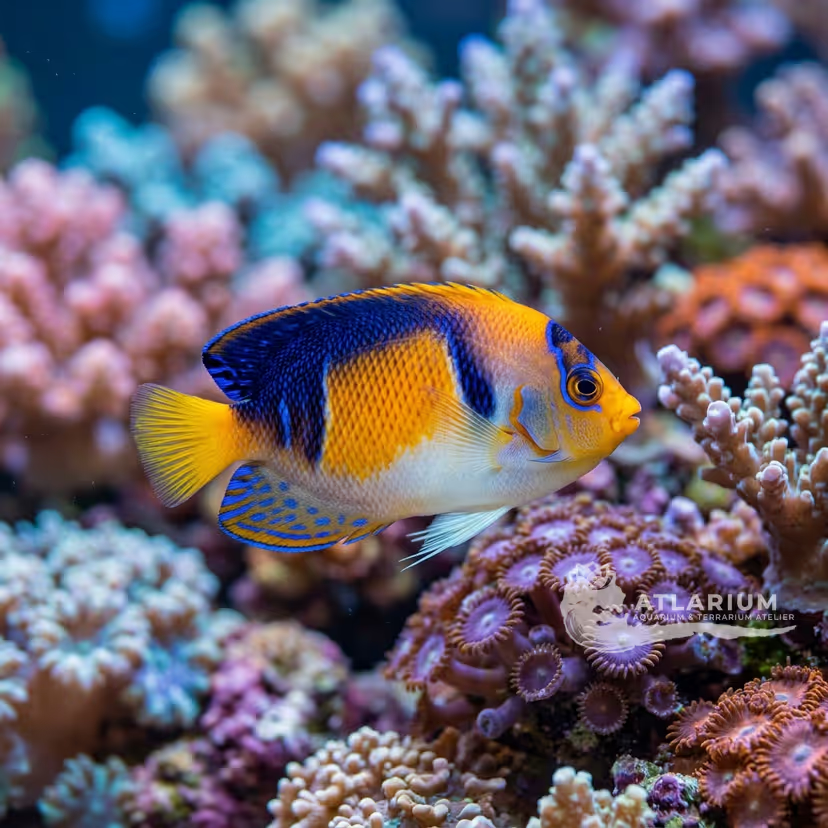
Coloration and Sexual Dimorphism: Displays a stunning deep blue-black velvet coloration, with subtle electric blue highlights along the margins of the dorsal, anal, and caudal fins. Sexual dimorphism is minimal; males are slightly larger than females and show more territorial behavior.

Care, breeding and tankmates

Aquarium Setup: Requires a mature aquarium of at least 150-200 liters with plenty of live rock arranged to create caves, crevices, and shaded areas to mimic its deep-water habitat. Providing ample open swimming space and an efficient filtration system to keep the water pristine is highly important.
Diet and Feeding: Omnivorous with a strong preference for marine algae, sponges, and small benthic invertebrates. In captivity, feed specialized angelfish preparations containing spirulina and sponge materials, supplemented with high-quality mysis, brine shrimp, and frozen foods.
Water Quality: It is essential to maintain stable, pristine water parameters. Temperature should be kept between 22 and 25 °C (preferring cooler water due to deep-water origin), pH 8.1-8.4, specific gravity 1.021-1.025, and minimal nitrates. An efficient protein skimmer is highly recommended.
Compatibility and Cohabitation: Can cohabit with peaceful reef fish of medium size. Like many dwarf angelfish, it may nip at stony coral polyps (SPS and LPS) and clam mantles (Tridacna), making its placement in reef aquariums a calculated risk that requires close observation.
Aquarium Breeding: Extremely difficult and not successfully documented in home aquariums. They are protogynous hermaphrodites, where all individuals are born female and the largest fish in the group transitions into a male. Spawning occurs in the water column at dusk.
Risks and Diseases: As a deep-water species, proper acclimation and decompression are critical. Highly susceptible to parasitic infections such as Oodinium and Ich. Requires a calm environment during introduction to prevent extreme stress, which can compromise its immune system.

Geographic Origin and Distribution

This species is endemic to the Palau archipelago in the western Pacific Ocean. It inhabits very steep outer reef slopes and drop-offs at significant depths, generally ranging from 50 to 90 meters, in areas characterized by strong currents and numerous rocky crevices.

Origin

Tropical oceans and reefs

Fish profile

Temperament
Semi-aggressive
This dwarf angelfish is generally peaceful but exhibits a semi-aggressive and territorial nature, particularly toward other members of its genus or species of similar shape and color. It is a very reclusive and shy species that spends its initial weeks hiding until it acclimates to the aquarium. Once established, it will actively patrol its territory and may chase off intruders that venture too close to its preferred caves. To minimize territorial aggression, it should be introduced to the tank after more peaceful tankmates are already established.
Diet
Omnivore
The Blue Velvet Angelfish is an omnivore that requires a varied diet consisting of both meaty foods and vegetable matter. In the wild, they graze on detritus, microalgae, and tiny benthic organisms found on reef rocks. In captivity, they should be offered high-quality marine pellets, flakes, frozen mysis, brine shrimp, and spirulina-enriched foods. Providing live rock with a healthy growth of microalgae is highly beneficial, as it allows them to satisfy their natural grazing instincts throughout the day.
Life expectancy
5-10 years
Under optimal aquarium conditions with high water quality and a proper diet, the Blue Velvet Angelfish can live for 5 to 10 years. Longevity in captivity depends heavily on a stress-free environment, stable water parameters, and the avoidance of aggressive tankmates. While some individuals may live shorter lives due to initial shipping stress or dietary deficiencies, well-established specimens are quite hardy. Sustaining a diet rich in vitamins and marine algae is key to maximizing their lifespan.
Sex ratio
Harem
In their natural habitat, these dwarf angelfish form haremic groups consisting of one dominant male and several females. In a home aquarium, they are best kept singly unless the tank is exceptionally large, in which case a harem of one male with two or three females can be established. It is important to introduce all individuals simultaneously to minimize territorial disputes. If a male is absent, the dominant female in the group will transition sex to become the new male.
Feeding frequency
TWO_THREE_DAILY
It is recommended to feed the Blue Velvet Angelfish small portions two to three times daily. Frequent feeding helps replicate their natural grazing behavior and keeps them active and healthy. Additionally, keeping them well-fed significantly reduces the likelihood that they will nip at corals or clam mantles in a reef setting. If the tank has a substantial amount of mature live rock with abundant algae, the feeding frequency can be adjusted slightly, but regular supplementations are still essential.
Bioload
Low to Medium
The Blue Velvet Angelfish is a relatively small species, resulting in a low-medium biological load on the aquarium. However, because it requires frequent feedings and constant grazing on live rock, a robust filtration system is necessary to manage waste. Regular water changes and a high-quality protein skimmer are recommended to maintain pristine water conditions. Ensuring low nitrate and phosphate levels will also promote the growth of natural microalgae, which supports their grazing behavior.
Flow
Strong
Inhabiting outer reef slopes and deep drop-offs in Fiji, the Blue Velvet Angelfish prefers moderate to strong water flow. Good water movement oxygenates the aquarium and mimics the active currents of their natural marine habitat. However, it is vital to ensure there are plenty of low-flow zones, caves, and crevices where the fish can rest and hide from the direct current. A well-designed aquascape with diverse flow patterns will provide the perfect balance for this species.
Jump risk
Yes
While not classified as notorious jumpers, the Blue Velvet Angelfish does pose a moderate jump risk, particularly when startled or during evening spawning behavior. A secure, tight-fitting lid or a fine mesh cover is highly recommended to prevent accidental escapes. This risk increases during the acclimation phase when the fish is adjusting to its new environment and lighting. Providing plenty of hiding places helps reduce their anxiety, making them less prone to launching themselves out of the water.
Reproduction
Protogynous hermaphrodite
Breeding the Blue Velvet Angelfish in a home aquarium is extremely difficult and rarely achieved by hobbyists. They are broadcast spawners that release pelagic eggs into the water column at dusk, which float with the currents. Raising the microscopic larvae requires specialized live foods, such as specific strains of copepods, and highly controlled water conditions. Success is usually limited to advanced aquaculture facilities with specialized breeding setups designed for dwarf angelfish.
Compatibility & tankmates
With caution
The Blue Velvet Angelfish is compatible with a wide range of peaceful to semi-aggressive reef fish such as clownfish, wrasses, gobies, and larger damselfish. However, they should not be housed with other dwarf angelfish unless the aquarium is large enough to support distinct territories. Caution is advised when keeping them with corals and sessile invertebrates, as they may nip at LPS corals, zoanthids, and clam mantles. Avoid housing them with large, predatory species that might view this small angelfish as prey.
Tank level
Middle/Bottom
The Blue Velvet Angelfish is a secretive and shy species that primarily occupies the bottom and middle zones of the aquarium. They spend much of their time darting in and out of rock crevices, caves, and rubble piles where they feel secure. While they may occasionally venture into upper levels to feed or during courtship at dusk, they rarely stay there for long. Providing ample structural cover in the lower half of the tank is crucial to encourage their natural behavior.

Window to the official scientific data of the species

Data synced on: 06/15/2026

Scientific Parameters & Models

Trophic level
2.8 ± 0.3 se
Resilience
High (less than 15 months)
Phylogenetic uniqueness (PD50)
0.5
Bayesian Length-Weight
a = 0.0302, b = 2.89
VulnerabilityLow vulnerability (10 / 100)

Image gallery

Licensed images linked to the species or, when marked, to the closest representative taxon.

Related species

Recommendations grouped by close relatives, companion choices, and similar care.

Variants and close relatives

Same atlas type, nearby scientific identity, genus, or family.
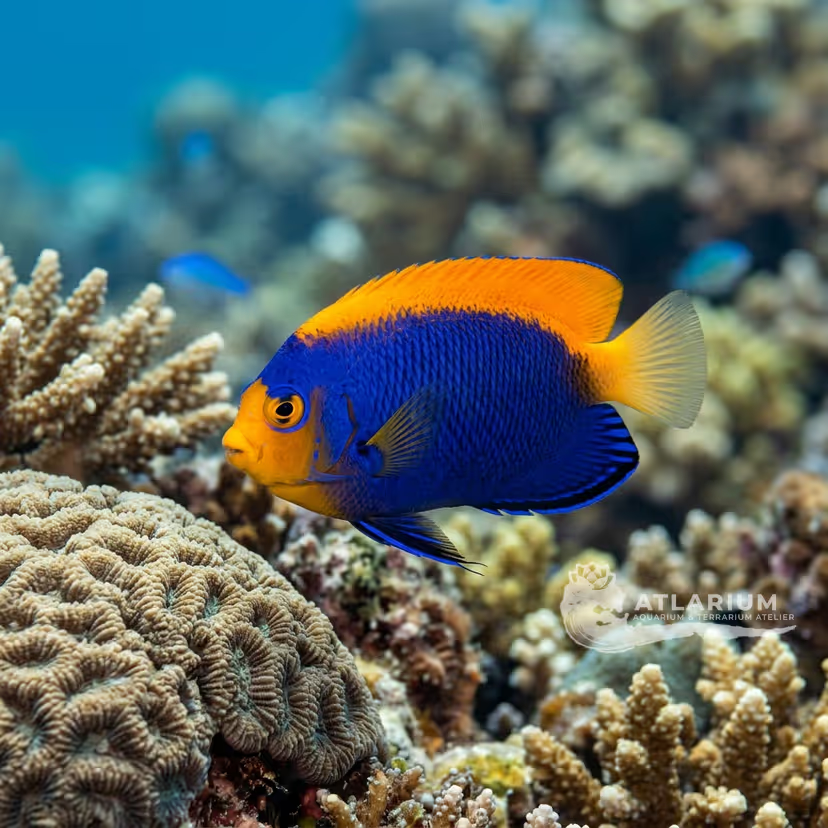
African flameback angelfish

African flameback angelfish

Centropyge acanthops

View details->
Flameback Angelfish

Flameback Angelfish

Centropyge aurantonotus

View details->
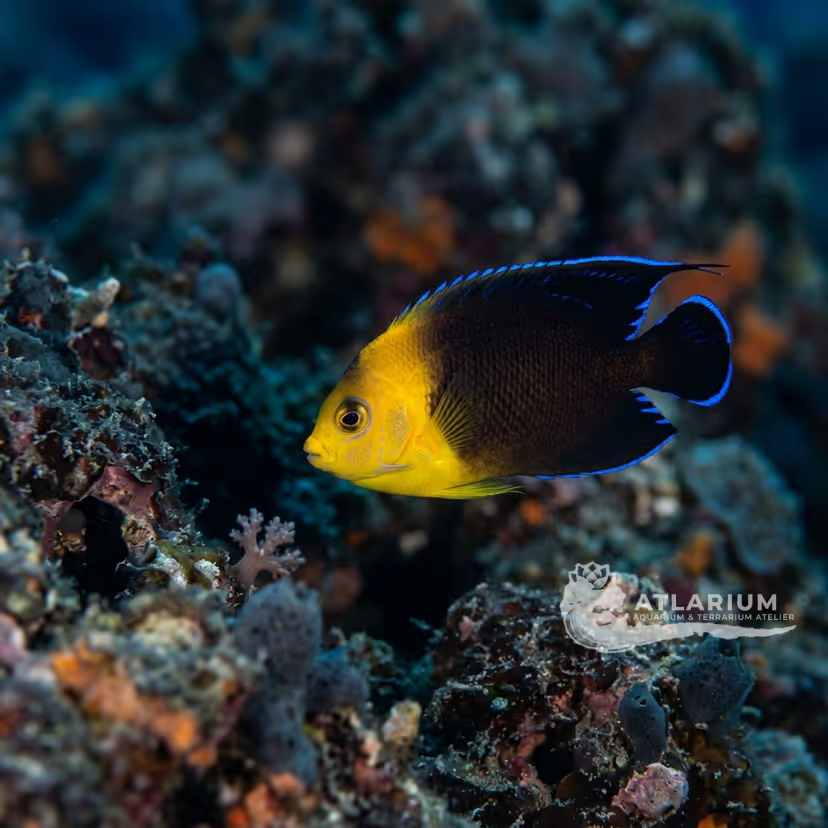
Joculator Angelfish

Joculator Angelfish

Centropyge joculator
View details->
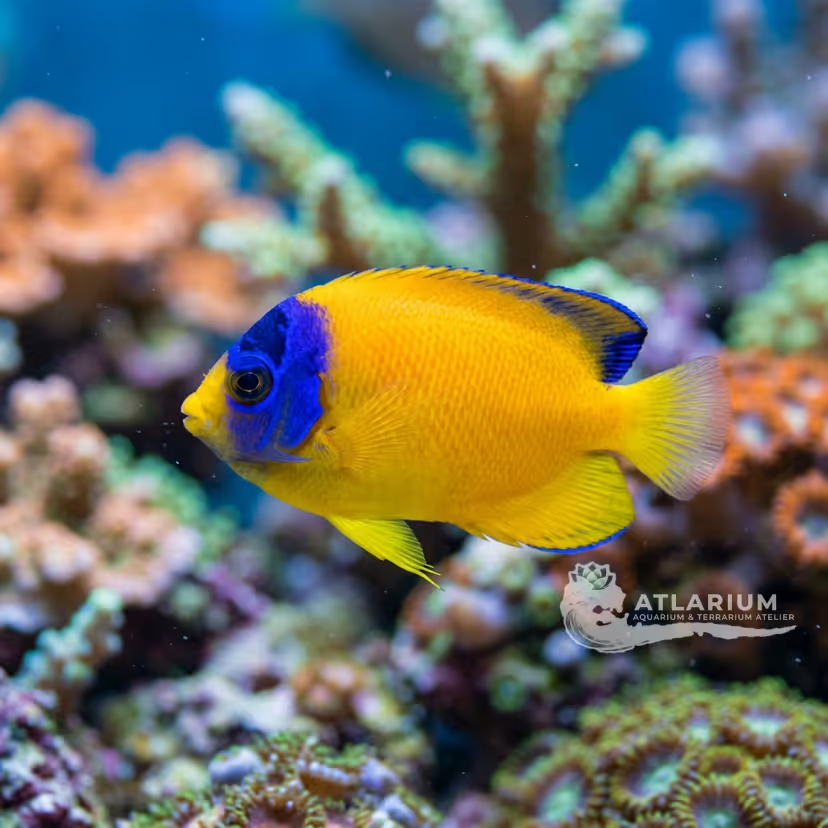
Nahacky's Angelfish

Nahacky's Angelfish

Centropyge nahackyi
View details->
Purplemask angelfish

Purplemask angelfish

Centropyge venusta

View details->
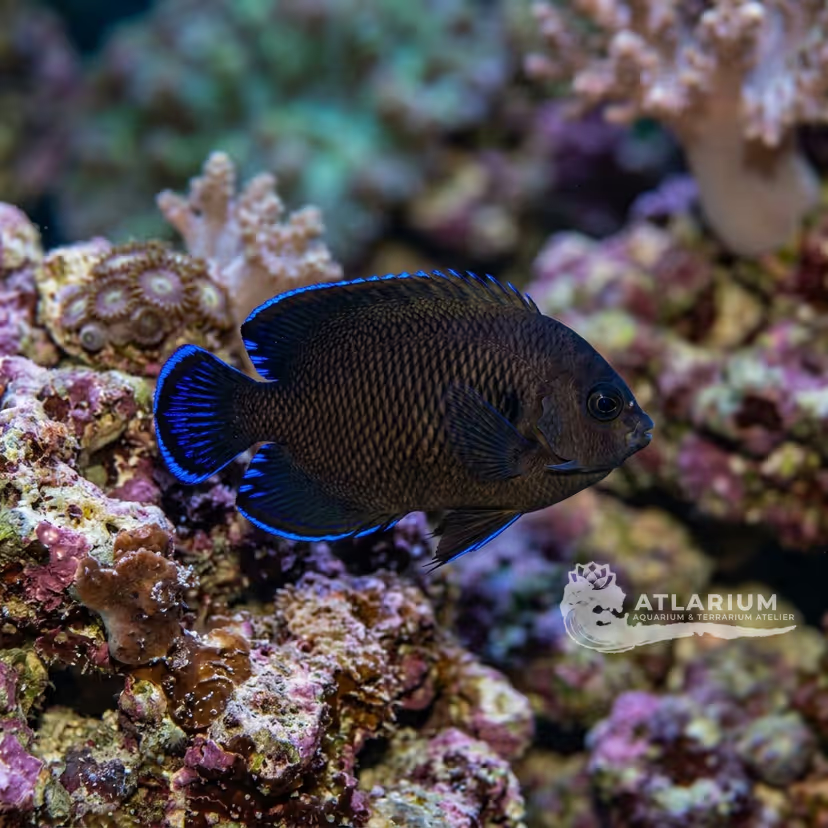
Yellowfin Angelfish

Yellowfin Angelfish

Centropyge flavipectoralis
View details->
Dusky Angelfish

Dusky Angelfish

Centropyge multispinis
View details->
Shepard's angelfish

Shepard's angelfish

Centropyge shepardi

View details->
Colin's Angelfish

Colin's Angelfish

Centropyge colini

View details->
Multicolor Angelfish

Multicolor Angelfish

Centropyge multicolor

View details->
Debelius' angelfish

Debelius' angelfish

Centropyge debelius

View details->
Fisher's Angelfish

Fisher's Angelfish

Centropyge fisheri
View details->
Japanese Pygmy Angelfish

Japanese Pygmy Angelfish

Centropyge interrupta
View details->
Potter's angelfish

Potter's angelfish

Centropyge potteri

View details->
Blackear Angelfish

Blackear Angelfish

Centropyge hotumatua

View details->
Coral beauty angelfish

Coral beauty angelfish

Centropyge bispinosa

View details->

Recommended companions

Compatible cards from coherent ecosystems with matching parameters.

Caulerpa prolifera
Plant

Caulerpa prolifera

Caulerpa prolifera
View details->
Caulerpa taxifolia
Plant

Caulerpa taxifolia

Caulerpa taxifolia
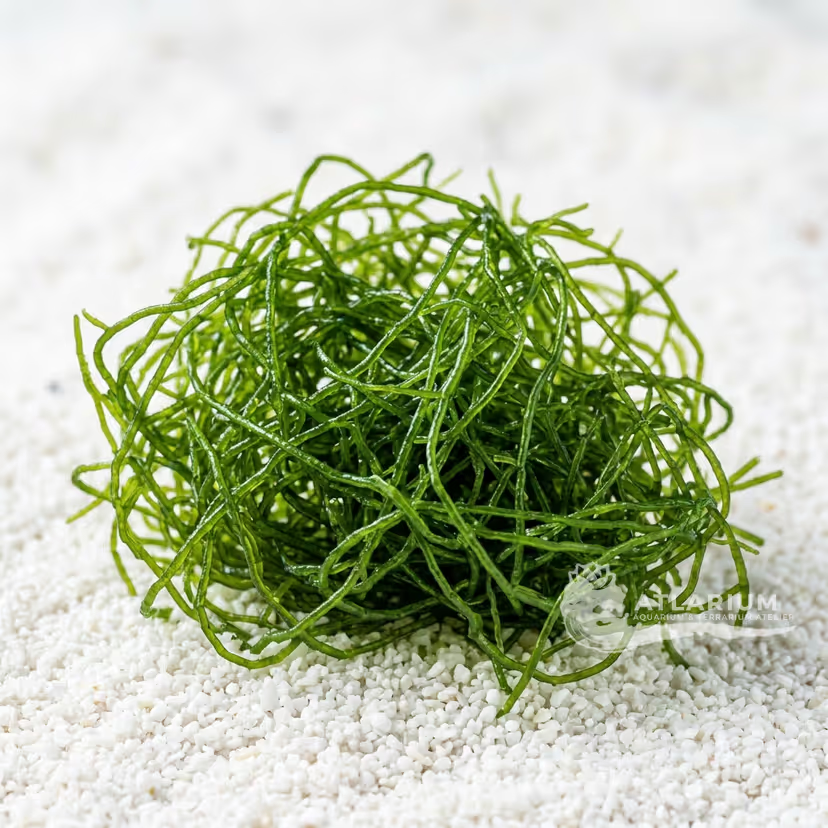
View details->
Chaetomorpha macroalgae
Plant

Chaetomorpha macroalgae

Chaetomorpha linum

View details->
Dead man fingers algae
Plant

Dead man fingers algae

Codium fragile

View details->
Grape caulerpa
Plant

Grape caulerpa

Caulerpa racemosa

View details->
Halimeda macroalgae
Plant

Halimeda macroalgae

Halimeda opuntia

View details->
Peacock tail algae
Plant

Peacock tail algae

Padina pavonica

View details->
Red gracilaria
Plant

Red gracilaria

Gracilaria parvispora

View details->
Red grape algae
Plant

Red grape algae

Botryocladia uvaria

View details->
Sea lettuce
Plant

Sea lettuce

Ulva lactuca

View details->
Red Mangrove
Plant

Red Mangrove

Rhizophora mangle

View details->

Similar care

Cards with similar requirements, difficulty, habitat, and husbandry profile.
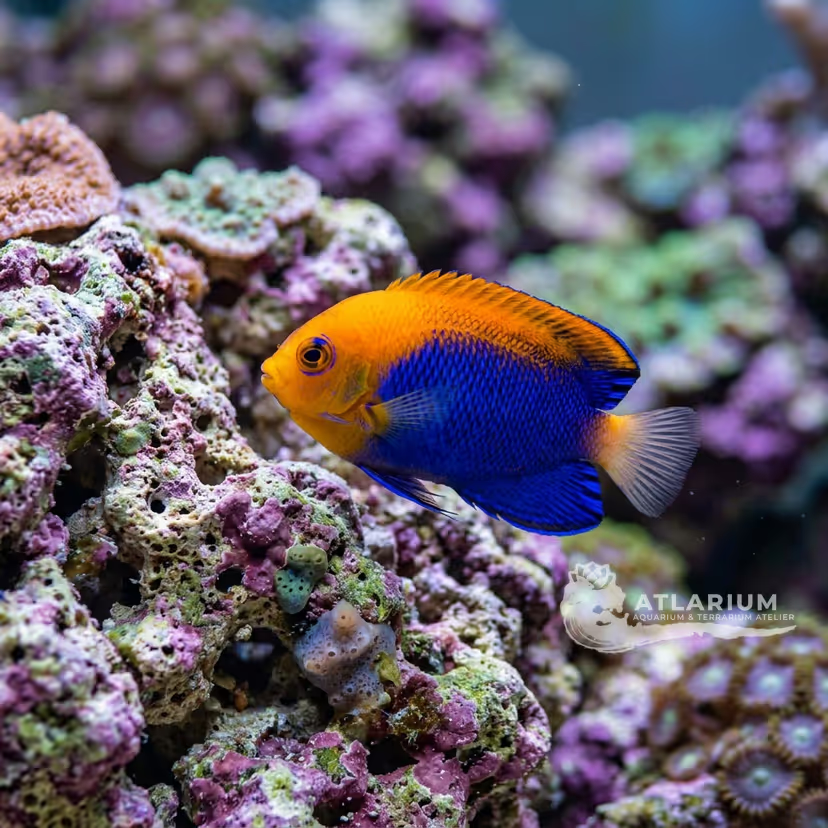
Resplendent Angelfish

Resplendent Angelfish

Centropyge resplendens

View details->
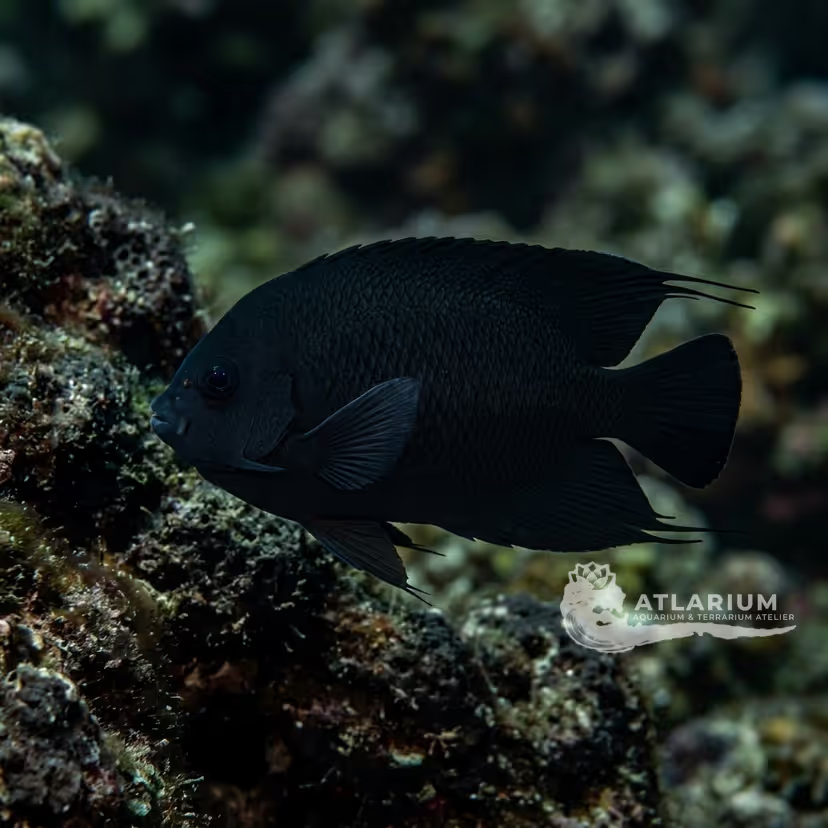
Cocos Pygmy Angelfish

Cocos Pygmy Angelfish

Centropyge cocosensis
View details->
Midnight angelfish

Midnight angelfish

Centropyge nox

View details->
Woodhead's Angelfish

Woodhead's Angelfish

Centropyge woodheadi

View details->
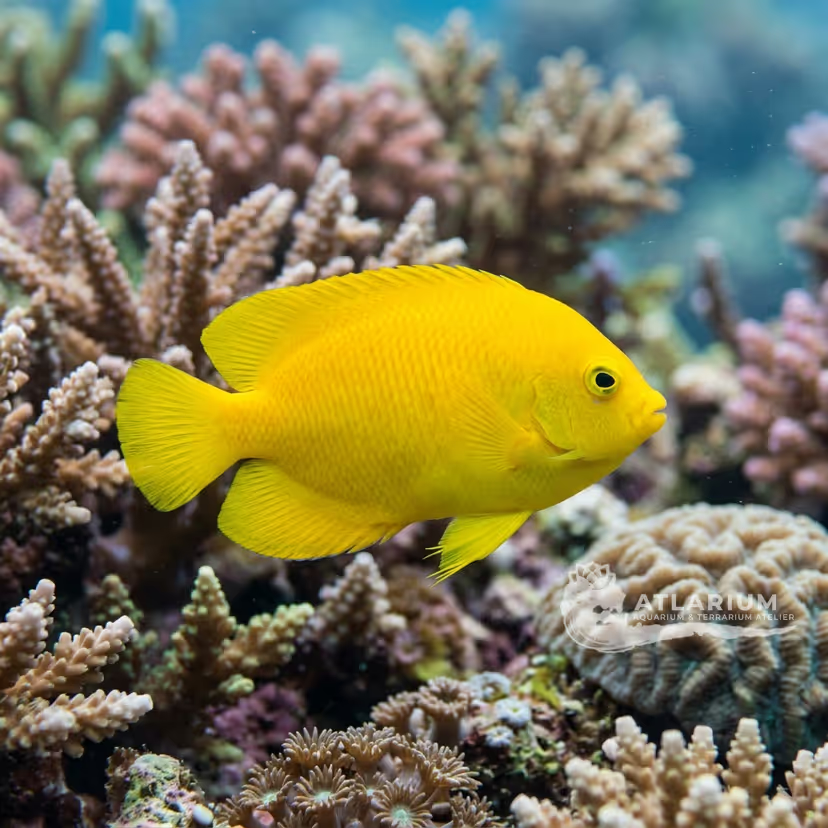
Half-black Angelfish

Half-black Angelfish

Centropyge vrolikii
View details->
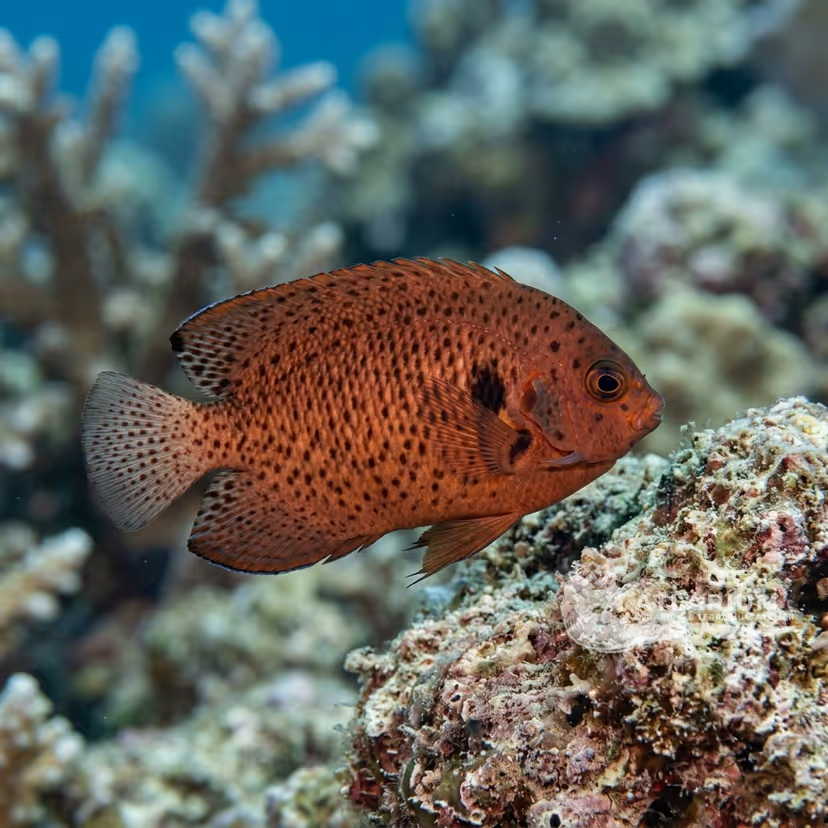
Herald's angelfish

Herald's angelfish

Centropyge heraldi
View details->
Rusty angelfish

Rusty angelfish

Centropyge ferrugata

View details->
Abe's Angelfish

Abe's Angelfish

Centropyge abei

View details->
Barred Angelfish

Barred Angelfish

Paracentropyge multifasciata

View details->
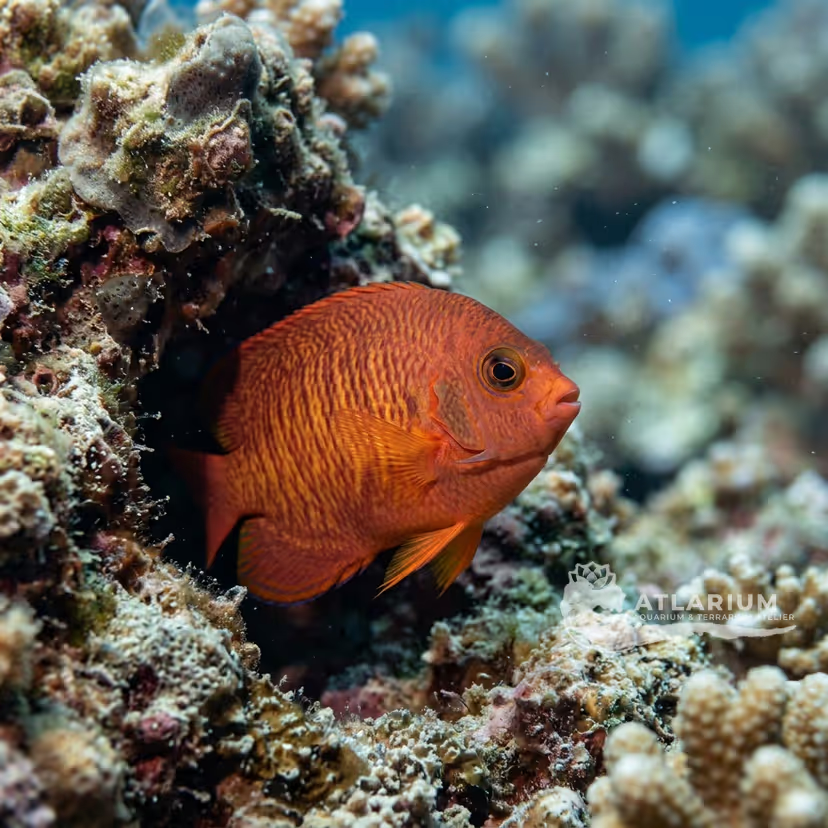
Lemonpeel angelfish

Lemonpeel angelfish

Centropyge flavissima
View details->
Golden angelfish

Golden angelfish

Centropyge aurantia

View details->
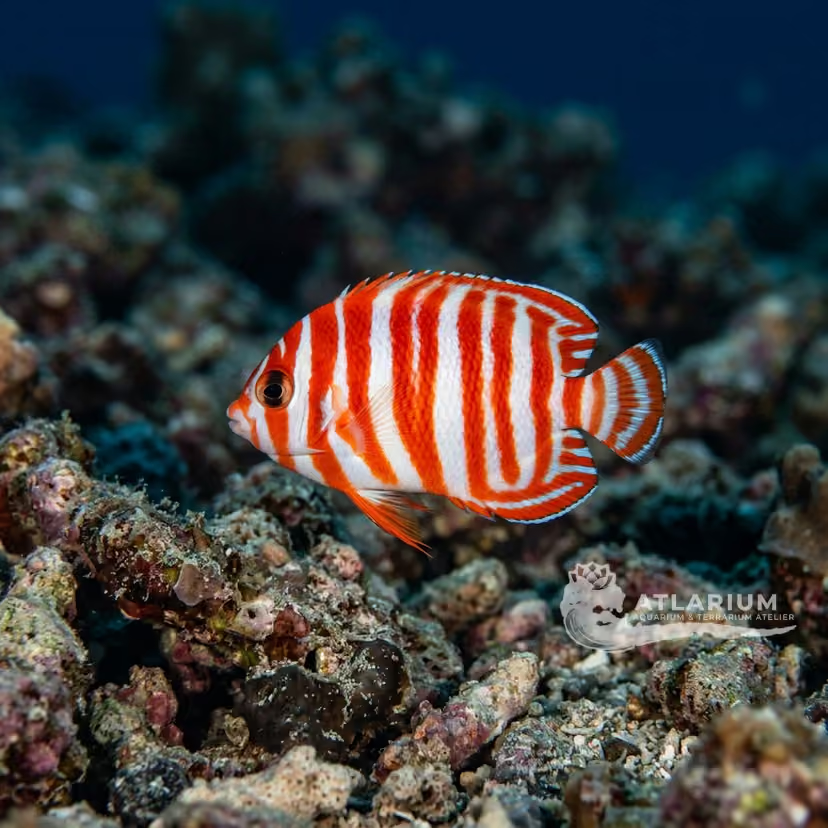
Blackspot Pygmy Angelfish

Blackspot Pygmy Angelfish

Centropyge nigriocella
View details->
Peppermint Angelfish

Peppermint Angelfish

Centropyge boylei

View details->
Narc Angelfish

Narc Angelfish

Centropyge narcosis

View details->
Eibli's Angelfish

Eibli's Angelfish

Centropyge eibli

View details->
Blackspot Angelfish

Blackspot Angelfish

Genicanthus melanospilos

View details->
Last updated: 06/30/2026
Debora's Pygmy Angelfish (Centropyge deborae) Care Guide & Tank Setup | Atlarium