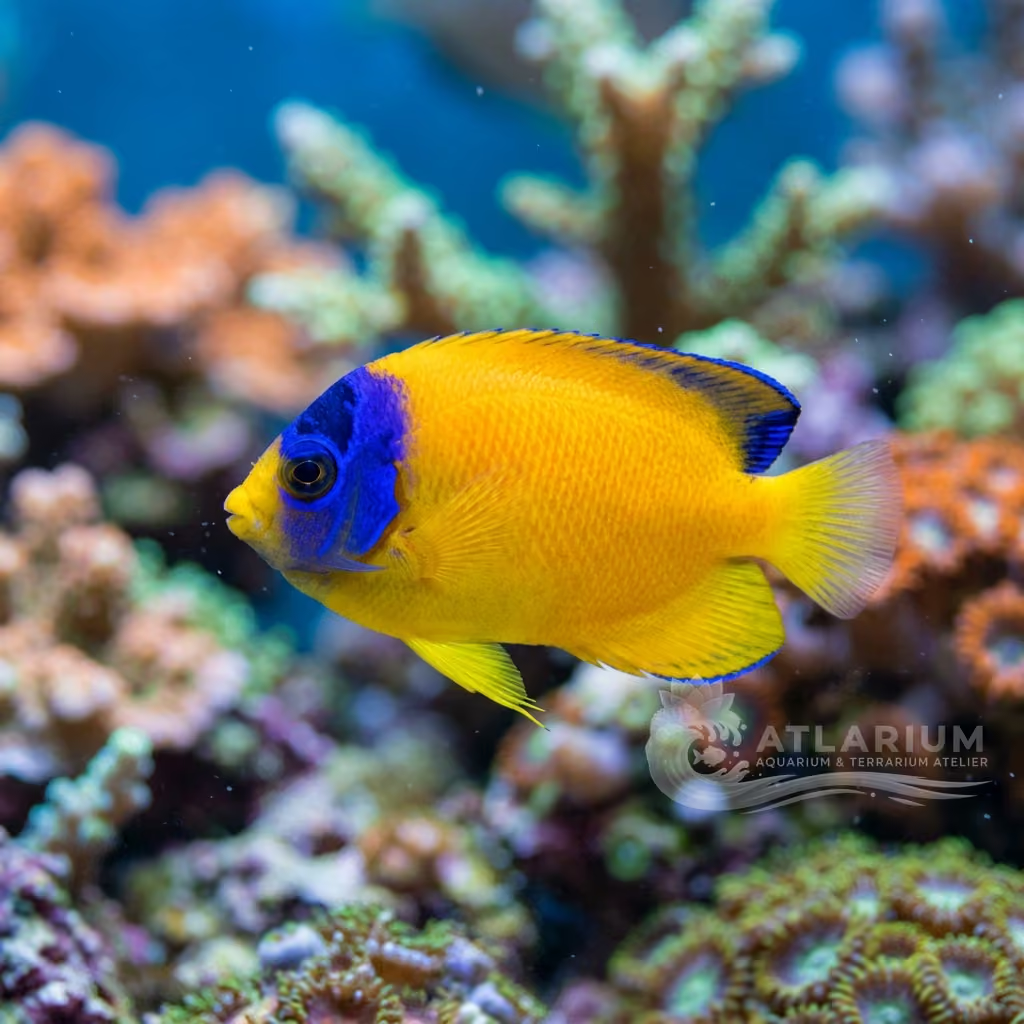
Resplendent Angelfish
Centropyge resplendens
The Resplendent Angelfish (Centropyge resplendens) is a rare, striking dwarf marine angelfish endemic to Ascension Island. Best suited for advanced aquarists, it thrives in well-established tanks of at least 88 gallons with abundant live rock for grazing and hiding. It requires a varied omnivorous diet including high-quality frozen mysis shrimp and algae-based foods.
Water Temperature
24 - 27 °C
pH Value
8.1 - 8.4
Water type
Marine
Tank level
Bottom and middle
Adult size
6 cm
Minimum tank volume
>= 150 L
Minimum group
>= 1
KH
8 - 12 dKH

Species description
Geographical Origin and Habitat: Southern Atlantic Ocean, endemic to the waters of Ascension Island. Inhabits rocky areas and outer reef slopes at moderate depths. Endemic to the volcanic rocky reefs of Ascension Island in the central Atlantic Ocean, where it inhabits rubble zones at depths between 15 and 40 meters.
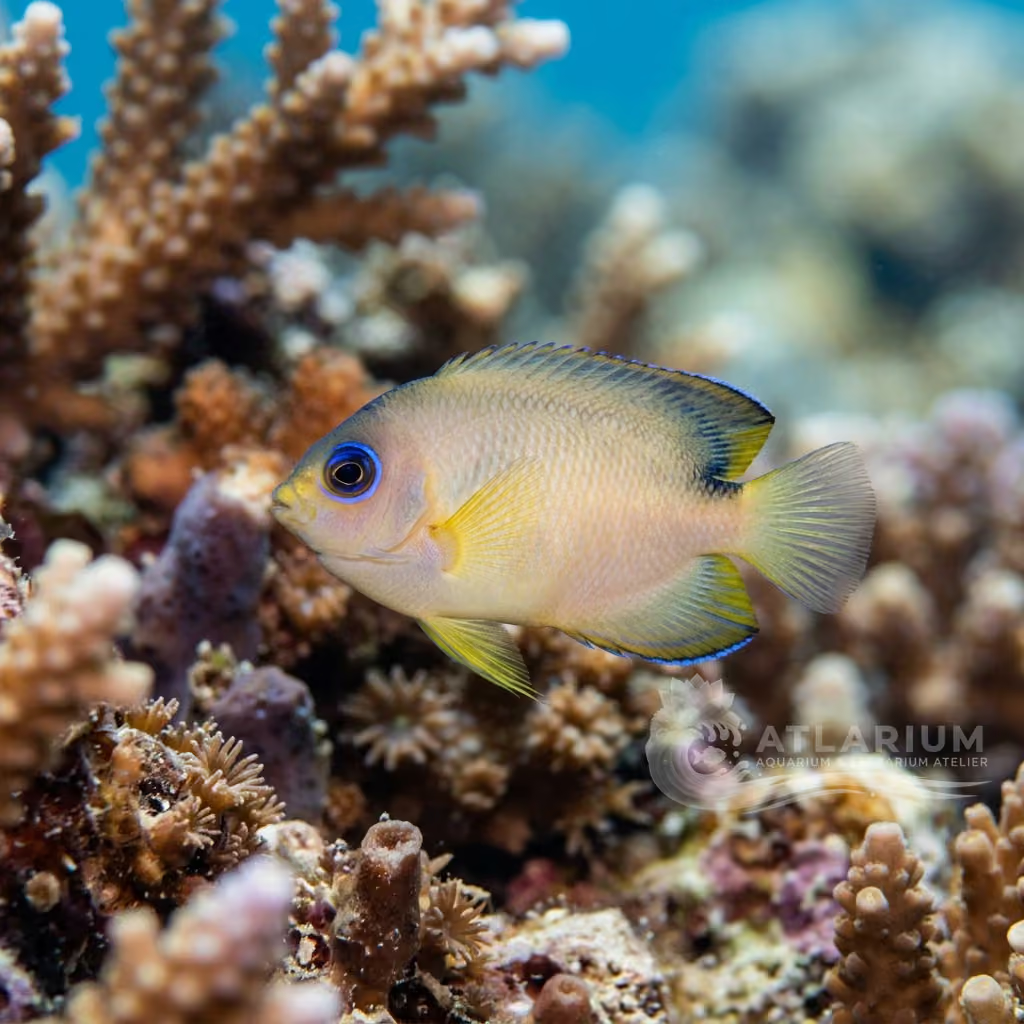
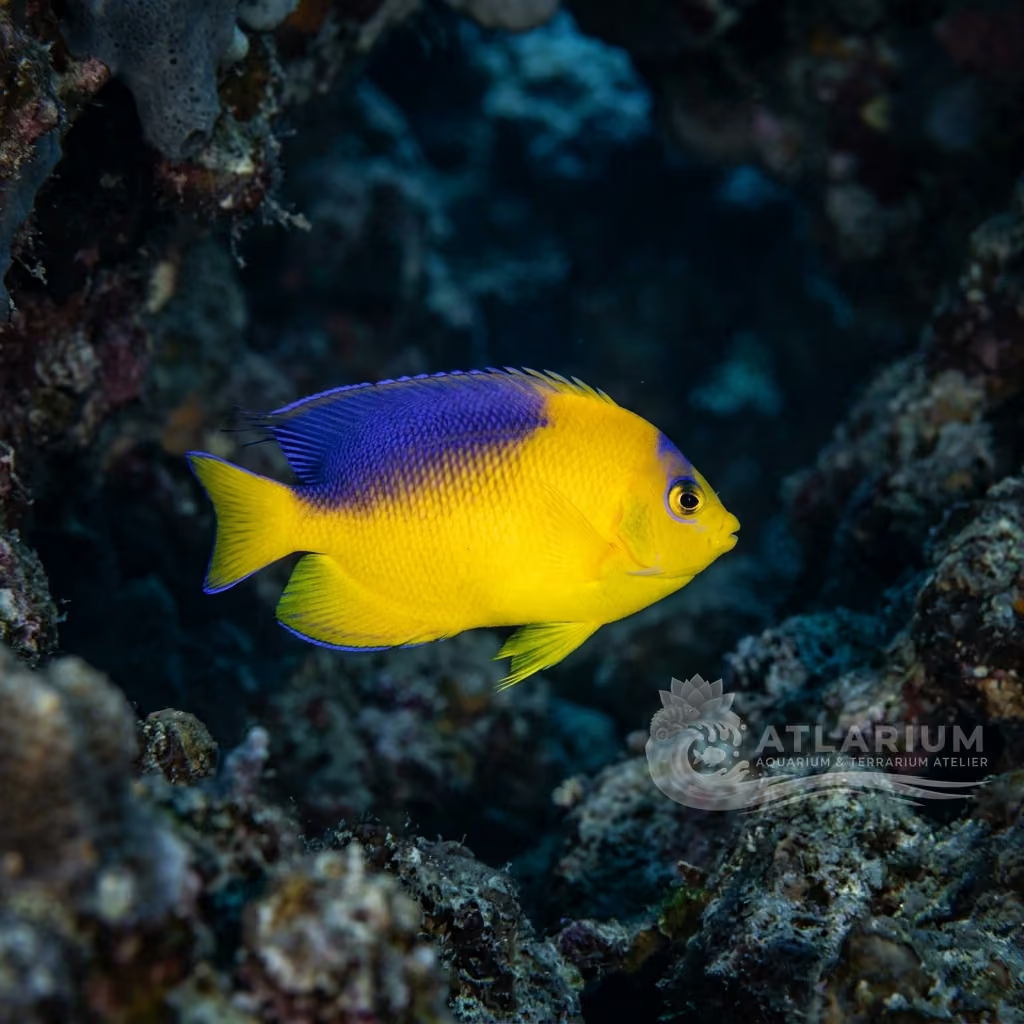
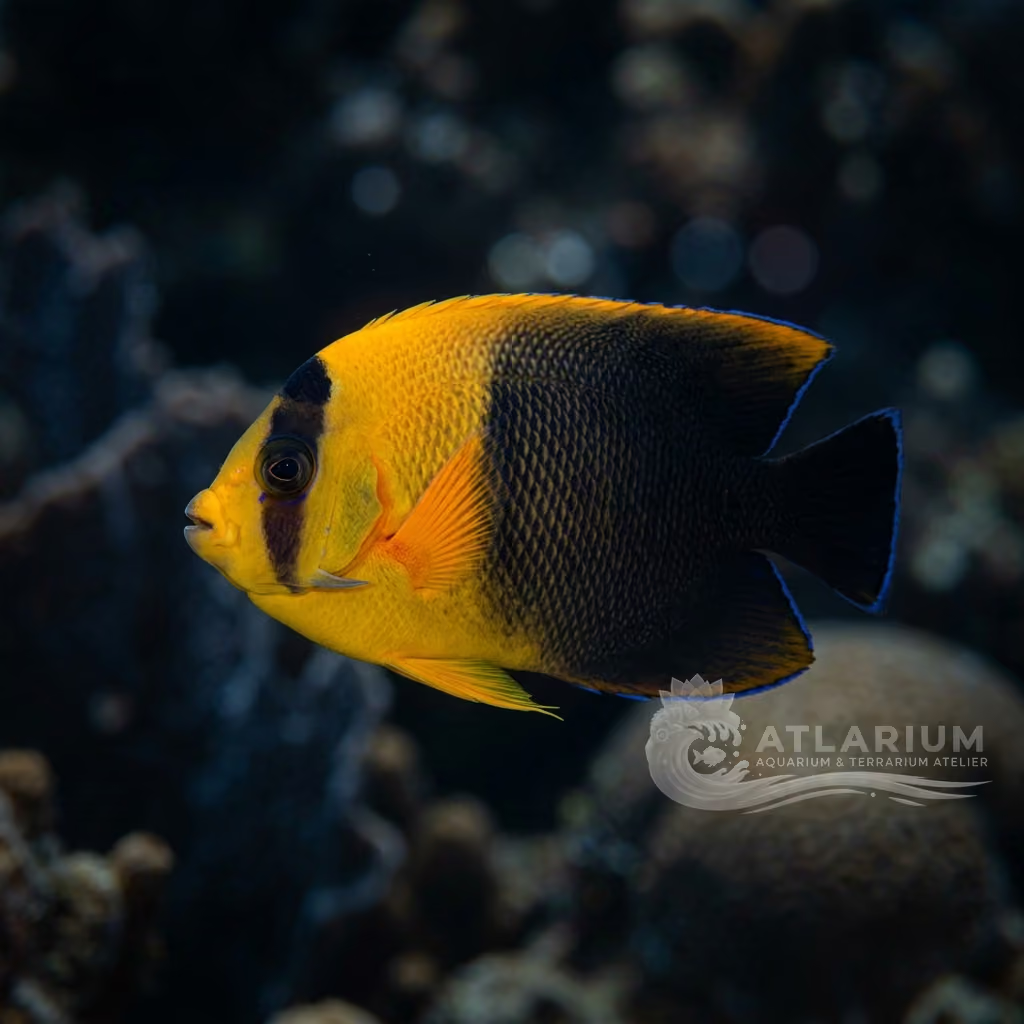
Taxonomy and Morphology: Pomacanthidae family, genus Centropyge. Grows to 6 cm (2.4 inches). Small, compressed body, deep blue color, with a bright orange back and tail. A dwarf angelfish characterized by a deep, laterally compressed body and a distinct preopercular spine characteristic of the genus Centropyge.
Social Behavior: Active and lively, constantly explores live rock in search of food. Exhibits territorial behavior toward other dwarf angelfish. Displays territorial and haremic behavior. Spends the day swimming close to rocky structures to forage for food and guard its designated territory.
Coloration and Sexual Dimorphism: Deep metallic blue body with a bright orange band running along the back, from the snout to the orange tail fin. Protogynous hermaphrodite. Features a spectacular coloration consisting of a deep blue-violet body contrasted by a brilliant yellow-orange band running along the back to the tail.

Care, breeding and tankmates
Aquarium Setup: Requires a mature aquarium of at least 150 liters with plenty of live rock arranged to create cracks and caves for hiding and grazing. Requires an aquarium of at least 150 liters (40 gallons) with plenty of live rock arranged to create complex cave networks and hiding spots.
Diet and Feeding: Omnivorous. Feeds on benthic algae and small invertebrates. Supplement with spirulina veggie pellets, mysis, and frozen brine shrimp. Omnivorous. Accepts high-quality dry pellets containing spirulina, frozen mysis, brine shrimp, and specialized foods formulated for sponge-eating species.
Water Quality: Stable temperature between 24°C and 27°C, pH between 8.1 and 8.4, salinity 1.020-1.025, KH 8-12, GH 15-25. Reliable filtration is necessary. Maintain excellent water conditions: temperature 22-26°C, pH 8.1-8.4, specific gravity 1.020-1.025, and a highly efficient biological filtration system.
Compatibility and Cohabitation: Omnivorous. Feeds on benthic algae and small invertebrates. Supplement with spirulina veggie pellets, mysis, and frozen brine shrimp. May occasionally nip at stony coral polyps (LPS/SPS) and clam mantles. Keeping them well-fed in larger aquariums minimizes this behavior.
Aquarium Breeding: Semi-aggressive. May nip at LPS coral polyps or clam mantles if underfed. Strong intraspecific territoriality. Protogynous hermaphrodite. In the wild, they live in small harems consisting of one male and several females. Captive breeding is rare and difficult.
Risks and Diseases: Susceptible to marine ich and nutritional stress in tanks lacking natural algae. Extremely rare and highly priced in the hobby. Prone to skin diseases like Marine Ich under stressful conditions. Offer a varied diet and ensure peace in the tank to support their health.

Geographic origin and distribution
Southern Atlantic Ocean, endemic to the waters of Ascension Island. Inhabits rocky areas and outer reef slopes at moderate depths. Endemic to the volcanic rocky reefs of Ascension Island in the central Atlantic Ocean, where it inhabits rubble zones at depths between 15 and 40 meters.
Origin
Tropical oceans and reefs

Fish profile
- Temperament
- Semi-aggressive
- This species displays a semi-aggressive and highly territorial temperament, particularly toward other dwarf angelfish or similar-looking competitors. They are generally timid when first introduced and need time to acclimate to their surroundings. Once established, however, they will actively defend their claimed territory within the rockwork. It is best to introduce them as the final additions to the tank to minimize territorial disputes with established fish.
- Diet
- Omnivore
- The Resplendent Angelfish is an omnivore with a strong herbivorous inclination, feeding primarily on microalgae and detritus in the wild. In the aquarium, they must be provided with a varied diet that includes high-quality marine algae, Spirulina, and specialized sponge-based foods. They also benefit from meaty items such as mysis shrimp, calanus, and enriched brine shrimp. Having an abundant growth of natural algae on live rock is ideal to support their constant grazing behavior.
- Life expectancy
- 5-10 years
- Adult size
- 6 cm
- Sex ratio
- Harem
- In the aquarium, the Resplendent Angelfish is best kept singly, as a mated pair, or in a small harem. When attempting to form a harem, a single male should be kept with several females in a very large tank to distribute aggression. Because they are protogynous hermaphrodites, placing a smaller juvenile with a larger individual will typically result in the larger fish transitioning into a male. Unestablished groups with multiple males should be avoided, as intense and potentially fatal territorial fights can occur.
- Feeding frequency
- Twice daily
- Because of their active nature and small stomachs, these fish should be fed small portions at least two to three times daily. Continuous grazing opportunities on mature live rock are highly beneficial and supplement their scheduled feedings. Regular, smaller meals help maintain their energy levels and mimic their natural foraging habits. Ensuring they receive a consistent food supply also reduces the likelihood of them nipping at corals or clams.
- Bioload
- Low to Medium
- The Resplendent Angelfish is a small species that generally contributes a low-to-medium biological load to the aquarium. However, because they are active grazers that constantly forage, they require a well-established filtration system to process metabolic waste. Maintaining low nitrate levels, ideally below 30 ppm, is critical for their health and disease prevention. The use of live rock, a refugium, and a protein skimmer is highly recommended to manage the waste produced by their frequent feedings.
- Flow
- Strong
- The Resplendent Angelfish prefers moderate water flow that mimics the dynamics of their native reef slopes and rubble zones. A gentle to moderate current helps distribute food throughout the tank while allowing them to swim comfortably. Avoid placing them in areas of extremely high or direct flow, as this can stress the fish and force them to hide constantly. Adequate water movement also helps keep the live rock clean and supports a healthy marine environment.
- Jump risk
- Yes
- While not classified as high-risk jumpers compared to wrasses or firefish, the Resplendent Angelfish can leap out of the tank when startled. During courtship or territorial chases, they may also perform quick upward movements that increase the risk of breaching the surface. A tight-fitting lid or a secure mesh cover is highly recommended to prevent accidental escapes. Providing ample hiding spots will also reduce the stress that often triggers jumping behavior.
- Reproduction
- Rare / not documented
- This species is a protogynous hermaphrodite, with the dominant female transitioning into a male when a harem is formed. They have been successfully bred in captivity, a process that requires a tall water column of at least 20 inches to allow for their vertical spawning rise. Courtship involves the male displaying to the female, culminating in a rapid ascent to release pelagic eggs. Rearing the larvae is quite challenging and requires specialized, extremely small live foods like copepod nauplii.
- Compatibility & tankmates
- Territorial
- They are compatible with a wide range of peaceful reef fish, such as gobies, clownfish, and anthias. However, caution should be exercised when keeping them with other dwarf angelfish or fish with similar shapes and colors, unless the tank is very large. While they can be kept in a reef tank, they carry a risk of nipping at stony corals, zoanthids, and clam mantles. Keeping them well-fed can mitigate this nipping behavior, but close monitoring is always advised.
- Tank level
- Middle/Bottom
- This dwarf angelfish primarily occupies the bottom-to-middle zones of the water column. In their natural habitat, they are closely associated with rockwork, rubble, and coral reefs, where they feel secure from predators. They spend most of their time darting in and out of crevices and grazing on the surfaces of live rock. A tank with abundant caves and hiding spots is essential to replicate this behavior and ensure they feel safe in captivity.

Scientific Parameters & Models
FishBase
Window to the official scientific data of the species
FishBase v25.04Data synced on: 06/15/2026
- Trophic level
- 2.9 ± 0.3 se
- Resilience
- High (less than 15 months)
- Phylogenetic uniqueness (PD50)
- 0.5
- Bayesian Length-Weight
- a = 0.0302, b = 2.89
- VulnerabilityLow vulnerability (10 / 100)

Related species
Recommendations grouped by close relatives, companion choices, and similar care.