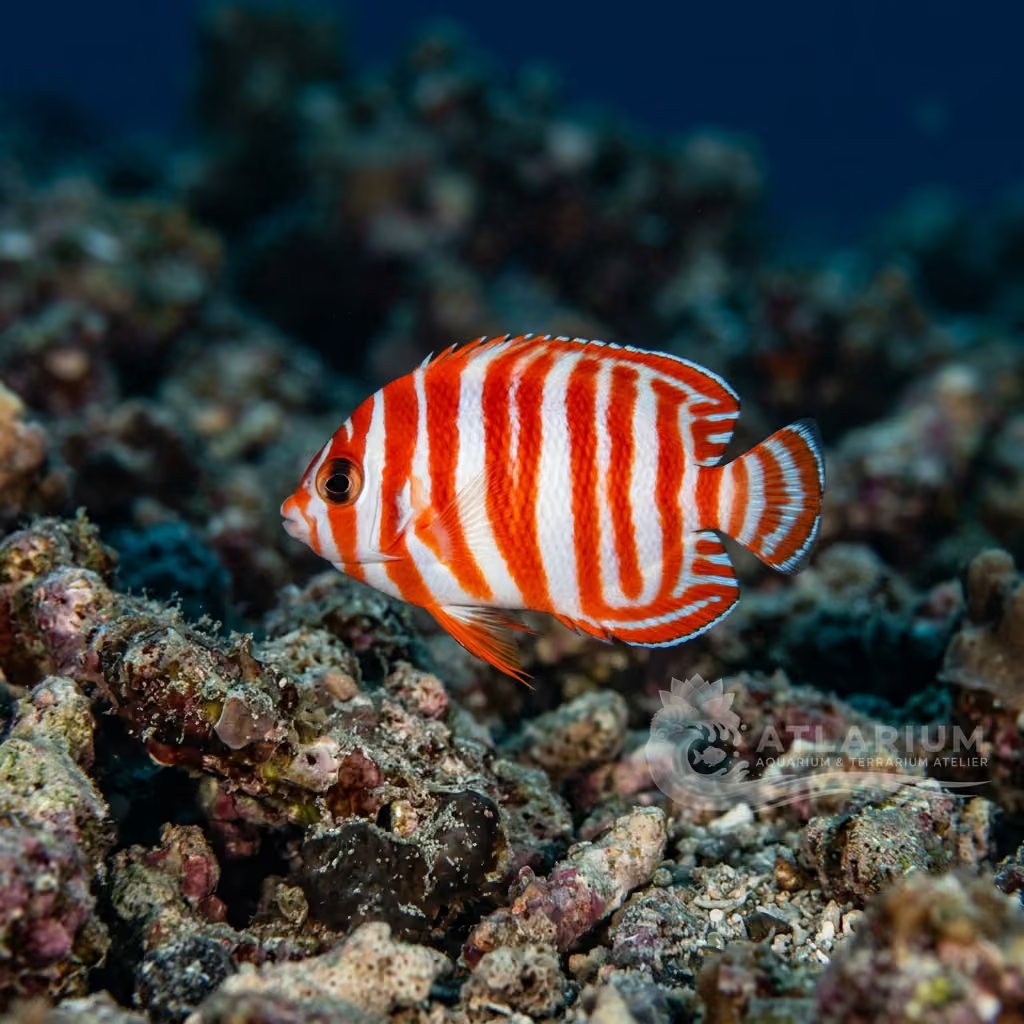
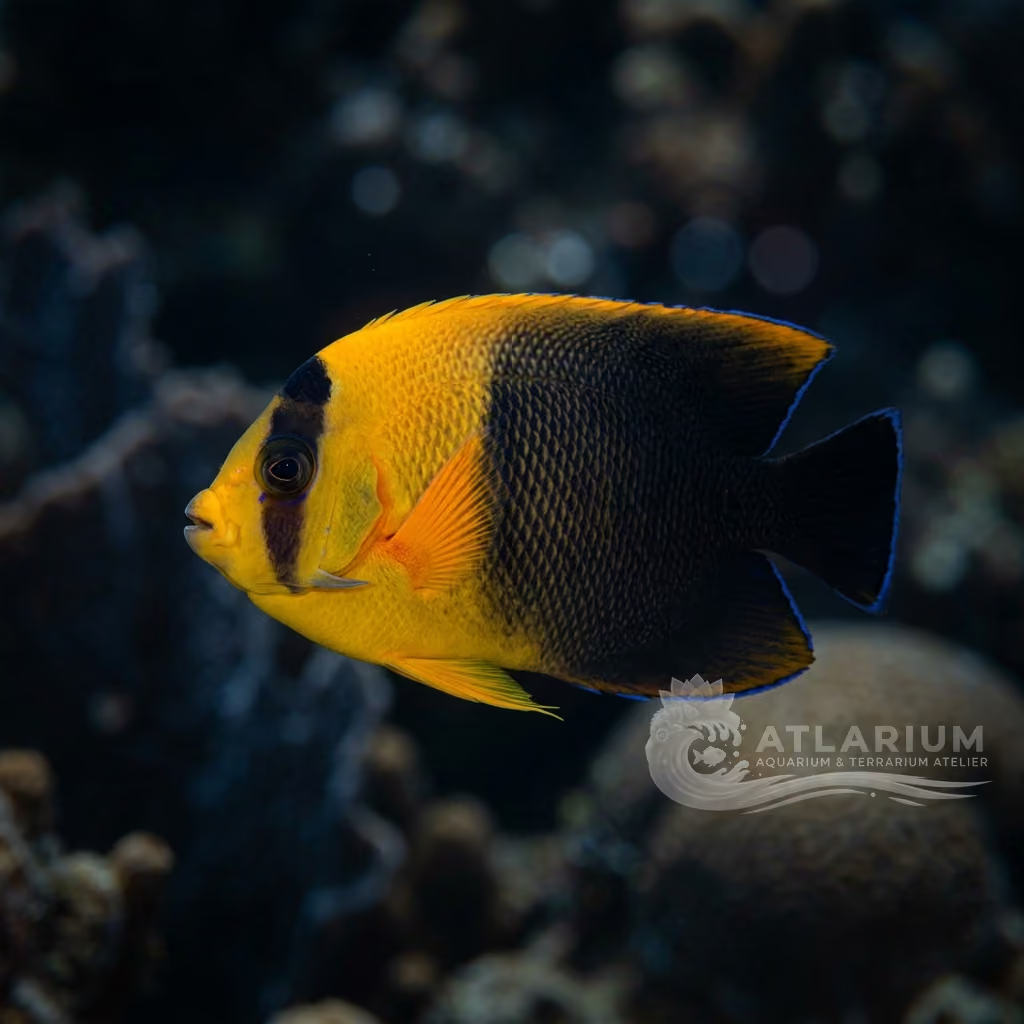
Half-black Angelfish
Centropyge vrolikii
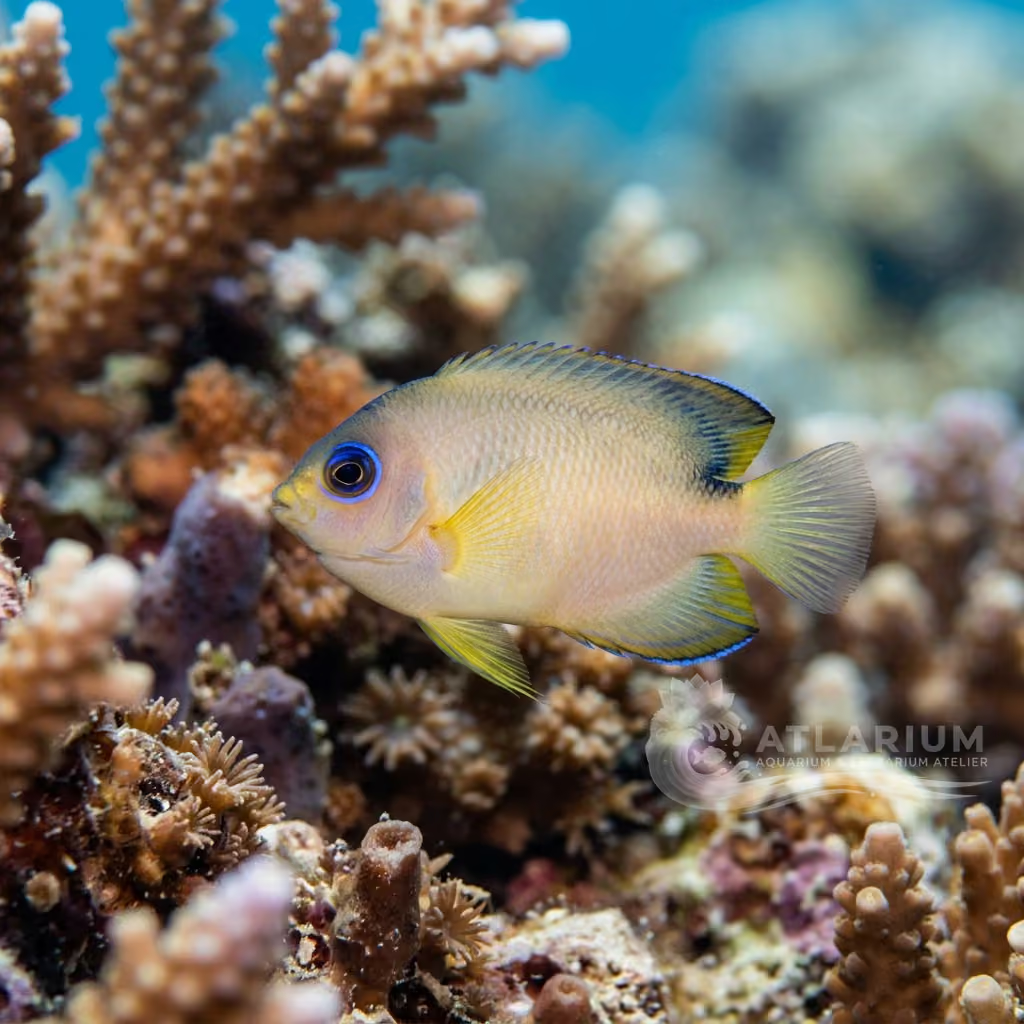
The Pearlscale Angelfish displays an elegant gradient from pearly-grey to solid black. This hardy and territorial fish constantly grazes among coral structures.
Water Temperature
24 - 27 °C
pH Value
8.1 - 8.4
Water type
Marine
Tank level
Bottom and middle
Adult size
12 cm
Minimum tank volume
>= 150 L
Minimum group
>= 1
KH
8 - 12 dKH

Species description
Geographical Origin and Habitat: Centropyge vrolikii is widely distributed throughout the tropical waters of the Indo-Pacific, ranging from Christmas Island and Indonesia to the Marshall Islands, Tuamotu, and southern Japan. This species primarily inhabits outer reef slopes and coral-rich lagoons at depths between 3 and 25 meters. It is constantly active among stony and soft coral structures, utilizing crevices and holes as immediate shelters from predators.
Taxonomy and Morphology: Belonging to the class Actinopterygii, order Perciformes, family Pomacanthidae, and genus Centropyge. It features a laterally compressed, oval body with a sharp preopercal spine located at the base of the gill cover, which is a characteristic trait of all marine angelfish. Adult specimens reach a maximum length of approximately 12 centimeters.
Social Behavior: It is a territorial and semi-aggressive species, especially toward conspecifics or other dwarf angelfish of similar size and shape. It lives solitarily or in small harems consisting of one dominant male and 2 to 4 females. They establish and patrol a defined territory on the reef, searching for food and driving off intruders.
Coloration and Sexual Dimorphism: The coloration is simple yet elegant: the anterior portion of the body is pearly-grey or beige, gradually shading into solid black on the posterior half and caudal fin. The margin of the opercle and the pectoral fins show orange highlights, while the dorsal and anal fins have a thin neon-blue border. They are protogynous hermaphrodites, with the largest female transitioning to male in the absence of a dominant male.

Care, breeding and tankmates
Aquarium Setup: Requires a mature marine aquarium of at least 150 liters for a single specimen, and larger if kept in a community tank. A complex live rock structure with numerous caves, swim-throughs, and hiding spots is essential to reduce territorial aggression. Water flow should be moderate to strong to simulate natural reef conditions.
Diet and Feeding: Omnivorous with a strong herbivorous preference. In captivity, it must be provided with a varied diet including dried marine algae (nori), natural algae biofilm, frozen foods such as mysis, brine shrimp, and krill, as well as commercial foods formulated for angelfish containing sponge material and spirulina. Feed twice daily.
Water Quality: Demands stable marine water parameters: temperature between 23 °C and 27 °C, pH 8.1 to 8.4, specific gravity (SG) between 1.020 and 1.025, and carbonate hardness (KH) of 8 to 12 dKH. Nitrates should be kept as low as possible. A protein skimmer is highly recommended to maintain high oxygen levels.
Compatibility and Cohabitation: Can be kept in reef aquariums, but with caution; it has a tendency to nip at the polyps of stony corals (especially LPS) and clam mantles, particularly if underfed. It is compatible with active, robust tankmates like wrasses and tangs. Avoid housing with other dwarf angelfish unless the aquarium is very large.
Aquarium Breeding: Extremely difficult to achieve in home aquariums. Spawning occurs at dusk in the water column where the pair releases eggs and sperm. The pelagic larvae are tiny and require specialized live micro-foods, which are difficult to culture successfully without professional hatchery setups.
Risks and Diseases: Prone to marine ich (Cryptocaryon irritans) and velvet disease (Oodinium) under stress. Its preopercular spines can easily entangle in standard fish nets during transfer, which can cause severe injury. Using solid plastic containers instead of nets is strongly recommended.

Geographic origin and distribution
Centropyge vrolikii is widely distributed throughout the tropical waters of the Indo-Pacific, ranging from Christmas Island and Indonesia to the Marshall Islands, Tuamotu, and southern Japan. This species primarily inhabits outer reef slopes and coral-rich lagoons at depths between 3 and 25 meters. It is constantly active among stony and soft coral structures, utilizing crevices and holes as immediate shelters from predators.
Origin
Tropical oceans and reefsSouth and Southeast AsiaEast Asia

Fish profile
- Temperament
- Semi-aggressive
- This species is semi-aggressive and can show territorial behavior, especially toward other dwarf angelfish or fish with a similar body shape. It is generally peaceful toward unrelated tank mates that do not compete with it for food or territory. However, individual temperament can vary, and some specimens may become dominant or bullies in smaller setups. Providing ample hiding spots helps reduce stress and defuses potential aggression within the aquarium community.
- Diet
- Omnivore
- The Pearlscale Angelfish is an omnivore with a diet that relies heavily on marine algae and micro-crustaceans. In the aquarium, it should be offered a variety of high-quality foods, including spirulina, marine algae, and specialized angelfish preparations containing sponge material. Frozen foods such as mysis shrimp, brine shrimp, and finely chopped seafood should also be provided to ensure a balanced diet. Natural grazing opportunities on live rock are highly beneficial for their digestive health and overall well-being.
- Life expectancy
- 5-12 years
- Adult size
- 12 cm
- Sex ratio
- Harem
- In the home aquarium, the Pearlscale Angelfish is best kept singly unless the tank is exceptionally large. If you wish to keep multiple individuals, they should be introduced together as a male-female pair or a small harem consisting of one male and several females. Because they are protogynous hermaphrodites, keeping a group of juveniles will allow the dominant fish to transition into a male. In small tanks, housing more than one specimen of the same sex will lead to severe territorial aggression.
- Feeding frequency
- Twice daily
- For optimal health, the Pearlscale Angelfish should be fed small portions two to three times a day. Frequent feeding helps replicate their natural grazing behavior in the wild, where they search for food throughout the day. If the aquarium has a large amount of mature live rock with abundant natural algae growth, the frequency can be slightly adjusted. Regular feedings also help deter them from nipping at corals or other sessile invertebrates.
- Bioload
- Low to Medium
- The Pearlscale Angelfish produces a moderate amount of biological waste for a fish of its size due to its constant grazing activity. To maintain pristine water conditions, a high-quality protein skimmer and efficient mechanical filtration are highly recommended. Regular water changes of 10% to 15% bi-weekly help control nitrate levels and keep the marine environment stable. A well-established aquarium with mature biological filtration is essential to support this species over the long term.
- Flow
- Moderate
- This species prefers moderate water flow, which mimics the conditions of their native coral reef and lagoon habitats. Adequate water movement ensures proper oxygenation and helps maintain high water quality throughout the aquarium. The flow should not be so strong that it prevents the fish from swimming comfortably or seeking refuge in caves. Creating areas of varied flow intensity within the tank allows them to choose their preferred resting spots.
- Jump risk
- Yes
- Like many dwarf angelfish, the Pearlscale Angelfish is capable of jumping out of the water if startled or chased by tank mates. A secure, tight-fitting lid or mesh screen cover is highly recommended to prevent accidental escapes. This risk is particularly high during the acclimation phase or when lights are suddenly turned on or off. Ensuring there are no gaps around equipment cords will keep this active swimmer safely inside the aquarium.
- Reproduction
- Oviparous
- Breeding the Pearlscale Angelfish in captivity is extremely difficult and rarely achieved by casual hobbyists. They are pelagic spawners that release their gametes into the water column, usually at dusk after a courtship dance. The resulting eggs float freely, and the tiny, fragile larvae require specialized live foods like copepod nauplii to survive. While spawning in large, quiet home aquariums is possible, raising the fry to adulthood requires professional-level setup and expertise.
- Compatibility & tankmates
- Not reef safe
- The Pearlscale Angelfish is semi-compatible with reef aquariums, as it may nip at large polyp stony (LPS) corals, soft corals, and clam mantles. It coexists well with peaceful to semi-aggressive fish like clownfish, wrasses, damselfish, and larger gobies. It should not be housed with large, predatory tank mates that could easily swallow it, nor with passive fish that are easily intimidated. To minimize aggression, it is best to introduce this angelfish as one of the final additions to the aquarium.
- Tank level
- Middle/Bottom
- The Pearlscale Angelfish is highly active and occupies the bottom and middle zones of the aquarium. It spends most of its time darting in and out of live rock, searching for food and defending its territory. While it may occasionally venture into the upper level to feed, it rarely stays there for long as it prefers the security of nearby rockwork. Providing a complex aquascape with plenty of caves and crevices is essential to satisfy its natural swimming behaviors.

Scientific Parameters & Models
FishBase
Window to the official scientific data of the species
FishBase v25.04Data synced on: 06/15/2026
- Trophic level
- 2.8 ± 0.31 se
- Resilience
- High (less than 15 months)
- Phylogenetic uniqueness (PD50)
- 0.5
- Bayesian Length-Weight
- a = 0.0302, b = 2.89
- VulnerabilityLow vulnerability (10 / 100)

Related species
Recommendations grouped by close relatives, companion choices, and similar care.