Encyclopaedia

FishMarineIntermediate
©AI Generated·Proprietary

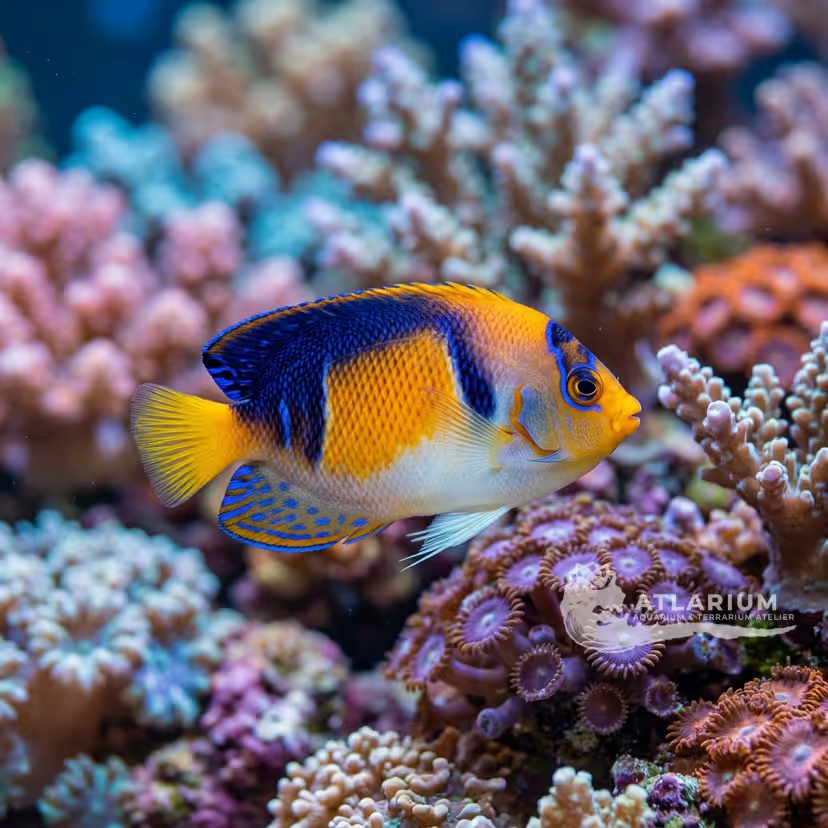
Purplemask angelfish

Centropyge venusta

A magnificent and highly prized Indo-Pacific pygmy angelfish, featuring a dramatic stark contrast of deep blue and vibrant yellow that elevates any premium reef setup.

Taxonomy
Class:Actinopteri
Order:Perciformes
Family:Pomacanthidae
Genus:Centropyge
Species:Centropyge venusta

Share

Check out Purplemask angelfish on Atlarium

PracticeRecognition quizzesPhotos, names, origins, and puzzles to review Atlas species.Open quizzes
Water Temperature

22 - 26 °C

pH Value

8.1 - 8.4

Water type

Marine

Tank level

Bottom and middle

Adult size

12 cm

Minimum tank volume

>= 200 L

Minimum group

>= 1

Species description

Geographical Origin and Habitat:
Native to the Western Pacific, from southern Japan to Taiwan and the Philippines. It inhabits deep outer reefs and vertical walls at depths between 15 and 40 meters.
Taxonomy and Morphology:
Belongs to the Pomacanthidae family (sometimes classified under the Paracentropyge genus). Features a compact, deep, and laterally compressed body. Adults reach about 7-8 cm.
Social Behavior:
A shy and cryptic species that lives mainly near deep caves or rocky overhangs, often swimming upside down. Shows territoriality towards other pygmy angelfish.
Coloration and Sexual Dimorphism:
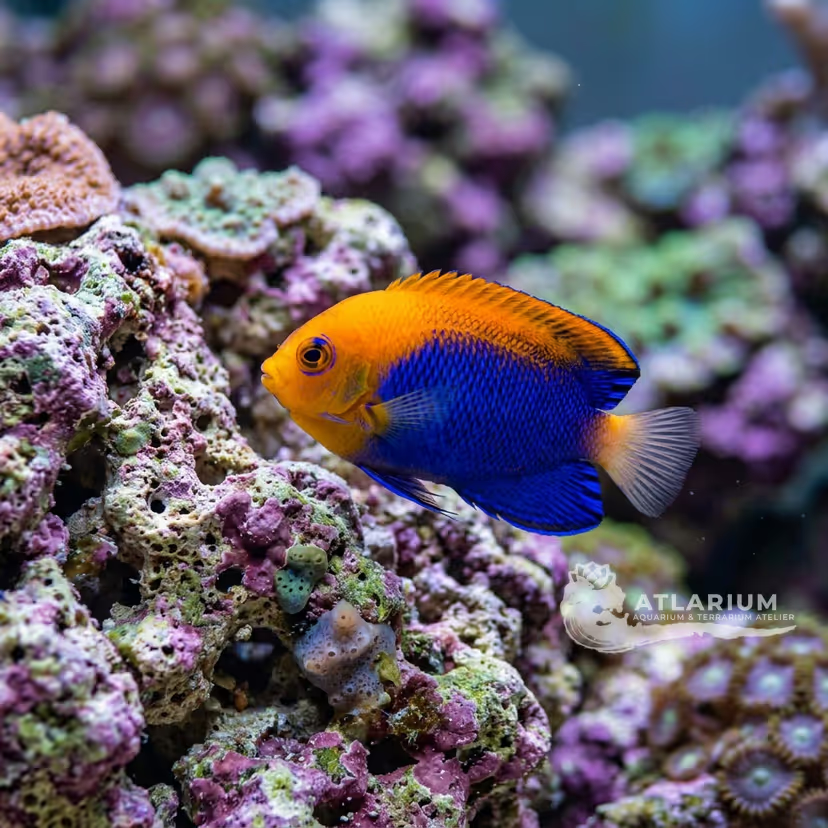
The coloration features deep royal blue or purple on the head and back, while the belly is bright golden-yellow. Displays a mask-like blue patch on the forehead.

Care, breeding and tankmates

Aquarium Setup:
Requires a mature marine aquarium of at least 150-200 liters. Set up with plenty of live rock to create deep caves, dark crevices, and rocky overhangs.
Diet and Feeding:
Omnivorous but demanding. In the aquarium, feed high-quality frozen foods containing marine sponges, along with mysis, brine shrimp, and vegetable preparations.
Water Quality:
Needs excellent water quality: temperature 22-26 °C, pH 8.1-8.4, and specific gravity 1.020-1.025. An efficient protein skimmer is essential.
Compatibility and Cohabitation:
Reef safe with caution. May nip at hard coral polyps and clam mantles if not well fed. Avoid housing with fast-swimming or aggressive fish.
Aquarium Breeding:
Breeding in the aquarium is extremely difficult. They are pelagic spawners that mate in pairs in the water column. Larvae require rotifers and phytoplankton.
Risks and Diseases:
The primary risk is food acclimation stress, which can lead to starvation. A careful quarantine period is highly recommended to encourage feeding in captivity.

Geographic Origin and Distribution

Native to the Western Pacific, from southern Japan to Taiwan and the Philippines. It inhabits deep outer reefs and vertical walls at depths between 15 and 40 meters.

Origin

Tropical oceans and reefsSouth and Southeast AsiaEast Asia

Fish profile

Temperament
Aggressive
This angelfish is notoriously shy and peaceful toward most tank mates, often preferring to hide when there is activity outside the tank. However, it can exhibit territorial behavior toward other dwarf angelfish or species with a similar appearance or niche. It is vital to introduce this delicate species before any aggressive tank mates to ensure it establishes its territory peacefully.
Diet
Omnivore
In the wild, their diet consists primarily of sponges and tunicates, making them specialized and often difficult to feed in captivity. A successful diet must include high-quality, sponge-enriched frozen angelfish formulas, supplemented with mysis shrimp, calanus, and spirulina-infused foods. Having a mature tank with live rock allows them to graze on natural microfauna, which helps sustain them during acclimation.
Life expectancy
5-10 years
In captivity, the Purple-mask Angelfish can live for 5 to 10 years under optimal conditions, though achieving this longevity requires expert care. Successful acclimation and transition to a varied, high-quality diet are the most critical factors for their long-term survival. Maintaining pristine, stable water parameters and a calm tank environment will also significantly extend their lifespan.
Sex ratio
ONE_TO_ONE
This species is best kept singly in all but the largest home aquariums to prevent territorial conflict. They are protogynous hermaphrodites, meaning they can change sex from female to male, allowing the formation of mated pairs if a smaller individual is introduced to a larger, established one. In spacious systems, a male can be housed with a female or in a small harem, provided there are abundant hiding spaces.
Feeding frequency
TWO_THREE_DAILY
Due to their active grazing behavior and specialized diet, they should be fed small portions two to three times daily. Newly introduced specimens may require more frequent feedings of live or highly enticing frozen foods to stimulate their appetite. Consistent, regular feeding helps prevent weight loss and supports their delicate immune systems.
Bioload
Low to Medium
The Purple-mask Angelfish has a low-medium biological footprint due to its relatively small size, but it is highly sensitive to organic waste. Efficient mechanical and biological filtration, including a reliable protein skimmer, is essential to keep nitrate and phosphate levels near zero. Regular water changes and carbon filtration are recommended to maintain the pristine water quality this deep-water species requires to thrive.
Flow
Moderate
This species prefers moderate water flow that mimics the currents of their deep-reef slopes while providing low-current shelters. Excessive, turbulent flow should be avoided as it can stress this shy fish and make swimming difficult outside of cover. The aquarium should feature plenty of calm zones within caves and overhangs where the fish can rest comfortably.
Jump risk
Yes
There is a moderate risk of jumping, particularly when the fish is startled or during the evening when spawning rises occur. It is highly recommended to secure the aquarium with a tight-fitting lid or a fine mesh cover to prevent escape. Providing ample hiding spaces and a stress-free environment will also minimize the risk of the fish darting upward in panic.
Reproduction
Protogynous hermaphrodite
Breeding the Purple-mask Angelfish in captivity is exceptionally difficult and is generally only achieved by professional or advanced aquarists. They are pelagic spawners that perform a vertical courtship rise at dusk to release buoyant eggs into the water column. Raising the tiny, fragile larvae requires specialized live cultures of copepods and highly stable environmental conditions.
Compatibility & tankmates
With caution
They are compatible with peaceful, non-aggressive tank mates such as gobies, firefish, and small wrasses. Caution should be exercised when keeping them in reef aquariums, as they may nip at large-polyp stony (LPS) corals, soft corals, zoanthids, and clam mantles. They should not be housed with aggressive fish, large predators, or similar dwarf angelfish that might bully them.
Tank level
Middle/Bottom
The Purple-mask Angelfish is a cave-dwelling species that spends most of its time in the bottom to middle sections of the aquarium. It thrives in tanks with extensive rockwork, arches, and dim overhangs where it can swim upside down along cave roofs, mimicking its natural deep-reef habitat. Brightly lit open waters are generally avoided, especially during the acclimation phase.

Window to the official scientific data of the species

Data synced on: 06/15/2026

Scientific Parameters & Models

Trophic level
2.5 ± 0 se
Resilience
High (less than 15 months)
Phylogenetic uniqueness (PD50)
0.5
Bayesian Length-Weight
a = 0.0302, b = 2.89
VulnerabilityLow vulnerability (10 / 100)

Image gallery

Licensed images linked to the species or, when marked, to the closest representative taxon.

Related species

Recommendations grouped by close relatives, companion choices, and similar care.

Variants and close relatives

Same atlas type, nearby scientific identity, genus, or family.
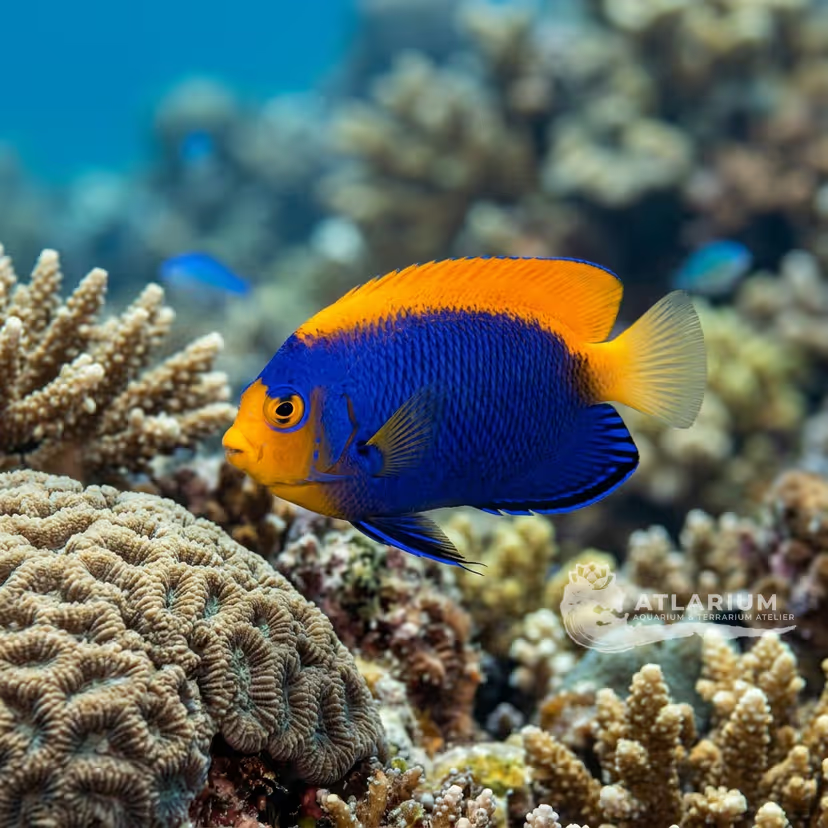
African flameback angelfish

African flameback angelfish

Centropyge acanthops

View details->
Debora's Pygmy Angelfish

Debora's Pygmy Angelfish

Centropyge deborae

View details->
Flameback Angelfish

Flameback Angelfish

Centropyge aurantonotus

View details->
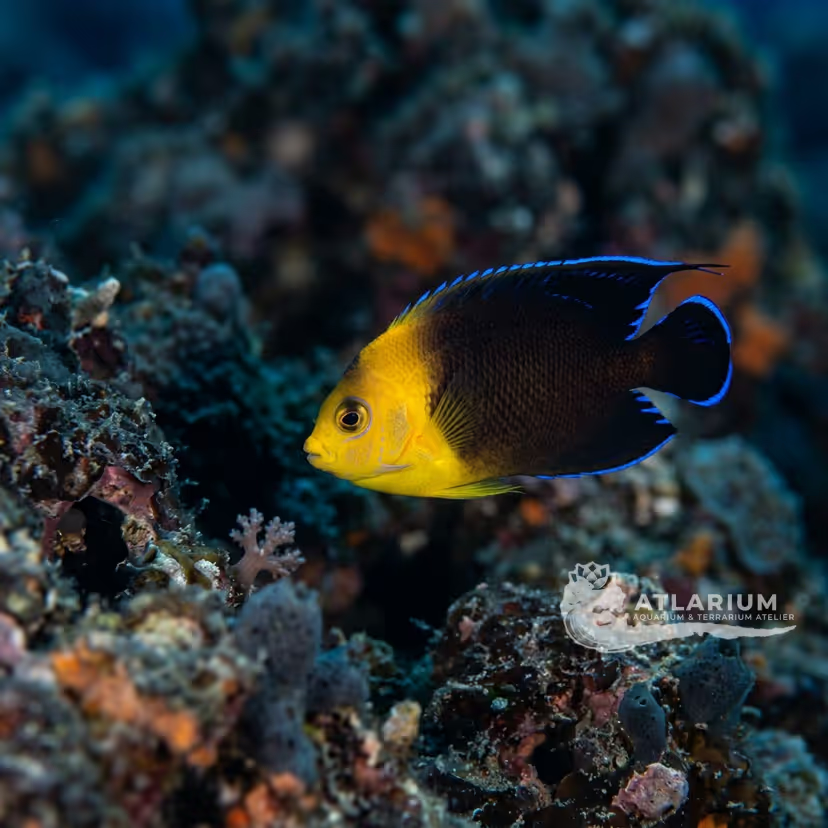
Joculator Angelfish

Joculator Angelfish

Centropyge joculator
View details->
Nahacky's Angelfish

Nahacky's Angelfish

Centropyge nahackyi

View details->
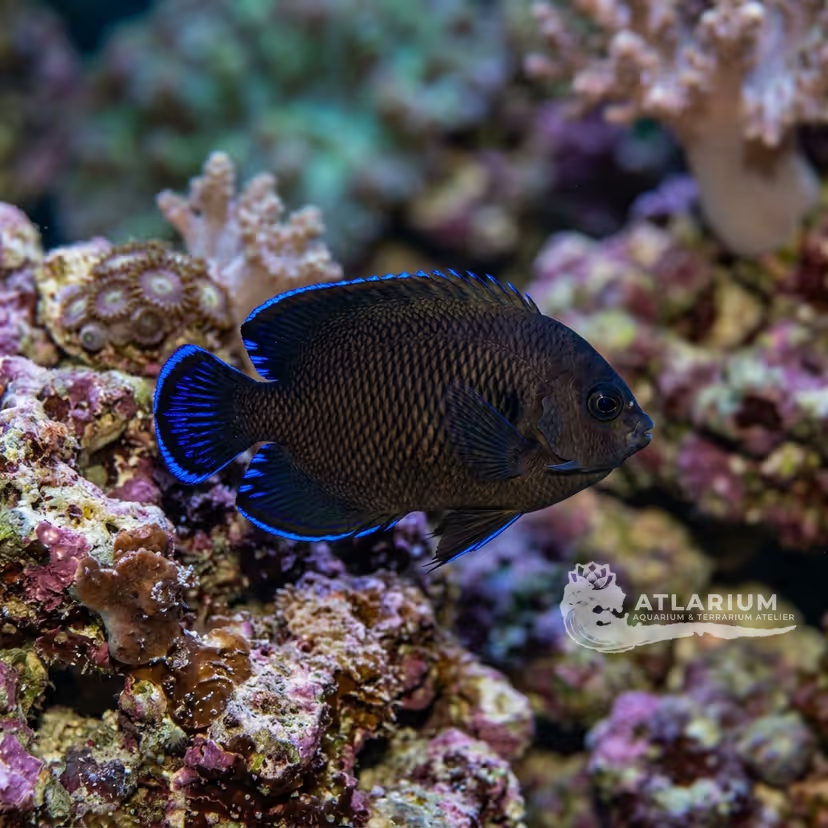
Yellowfin Angelfish

Yellowfin Angelfish

Centropyge flavipectoralis
View details->
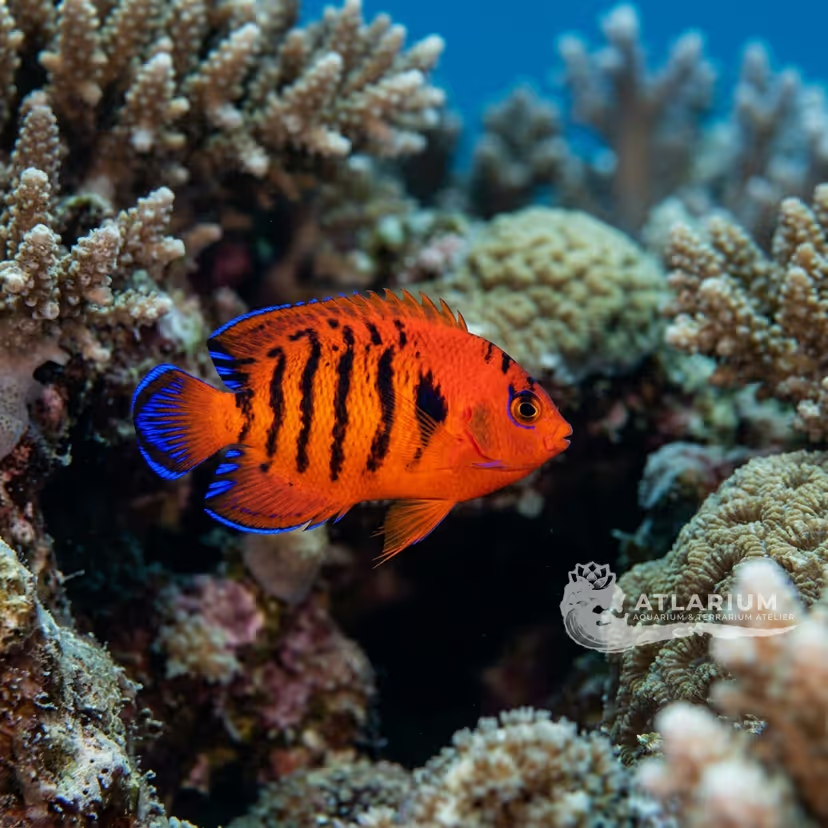
Dusky Angelfish

Dusky Angelfish

Centropyge multispinis
View details->
Shepard's angelfish

Shepard's angelfish

Centropyge shepardi

View details->
Colin's Angelfish

Colin's Angelfish

Centropyge colini

View details->
Multicolor Angelfish

Multicolor Angelfish

Centropyge multicolor

View details->
Debelius' angelfish

Debelius' angelfish

Centropyge debelius

View details->
Fisher's Angelfish

Fisher's Angelfish

Centropyge fisheri
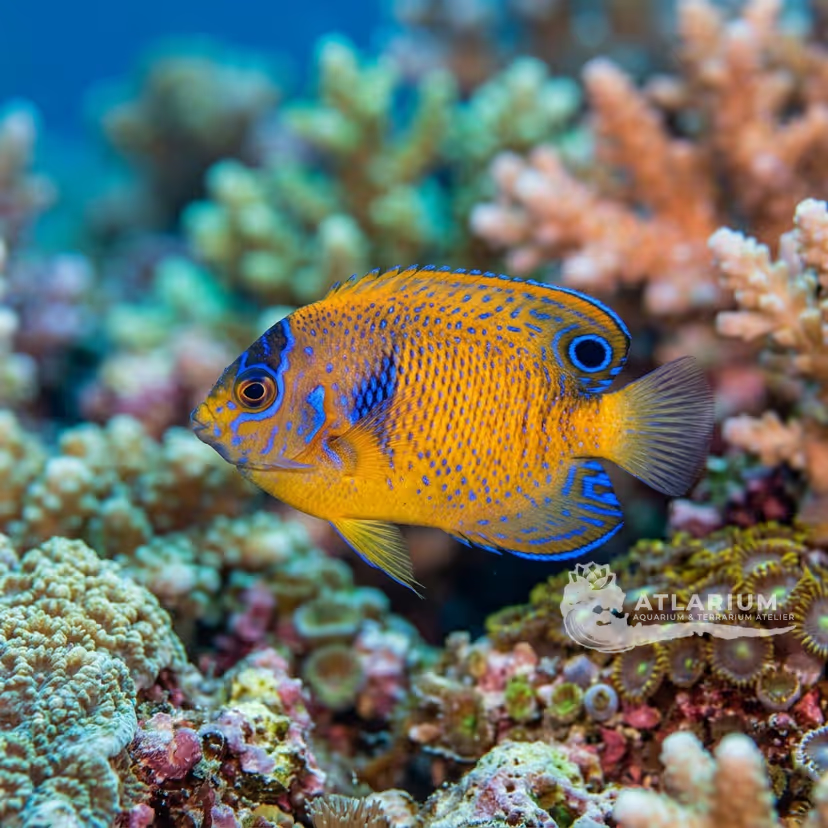
View details->
Japanese Pygmy Angelfish

Japanese Pygmy Angelfish

Centropyge interrupta
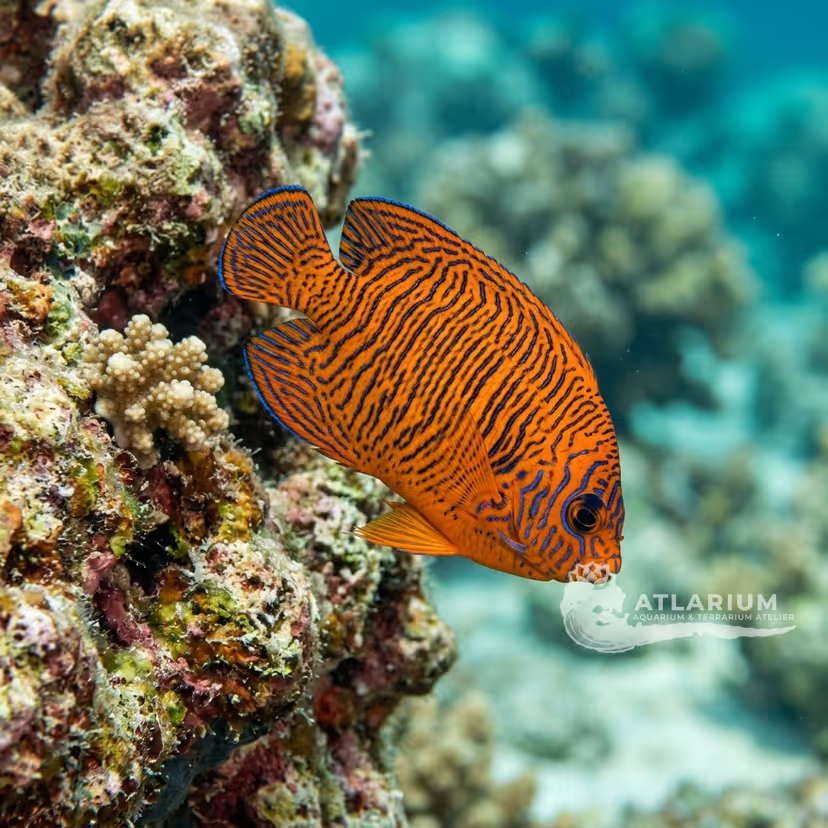
View details->
Potter's angelfish

Potter's angelfish

Centropyge potteri

View details->
Blackear Angelfish

Blackear Angelfish

Centropyge hotumatua

View details->
Coral beauty angelfish

Coral beauty angelfish

Centropyge bispinosa

View details->

Recommended companions

Compatible cards from coherent ecosystems with matching parameters.

Caulerpa prolifera
Plant

Caulerpa prolifera

Caulerpa prolifera
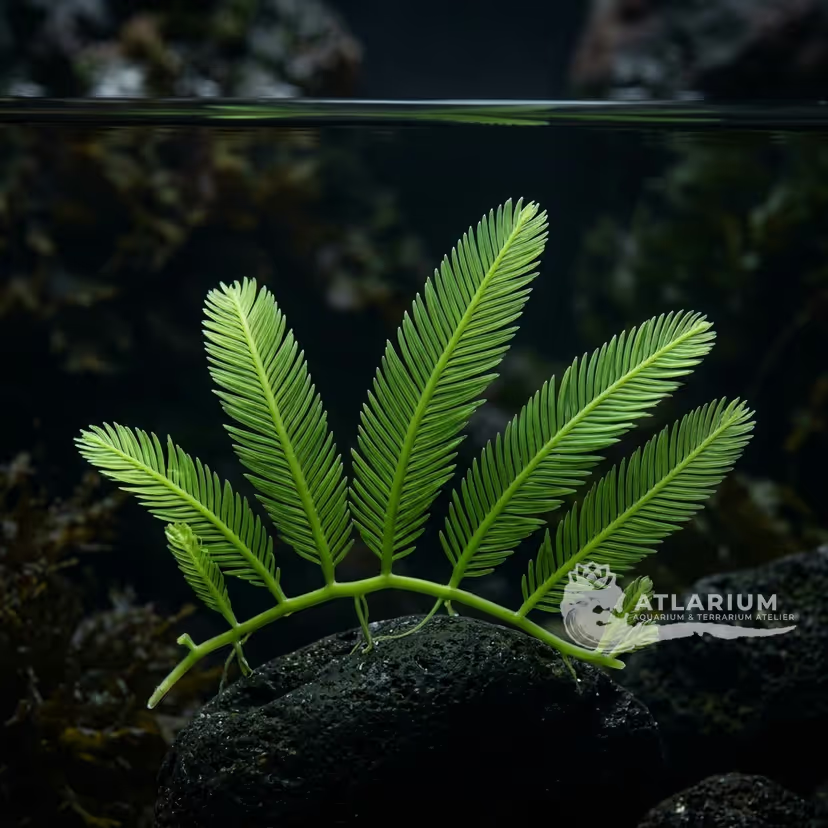
View details->
Caulerpa taxifolia
Plant

Caulerpa taxifolia

Caulerpa taxifolia
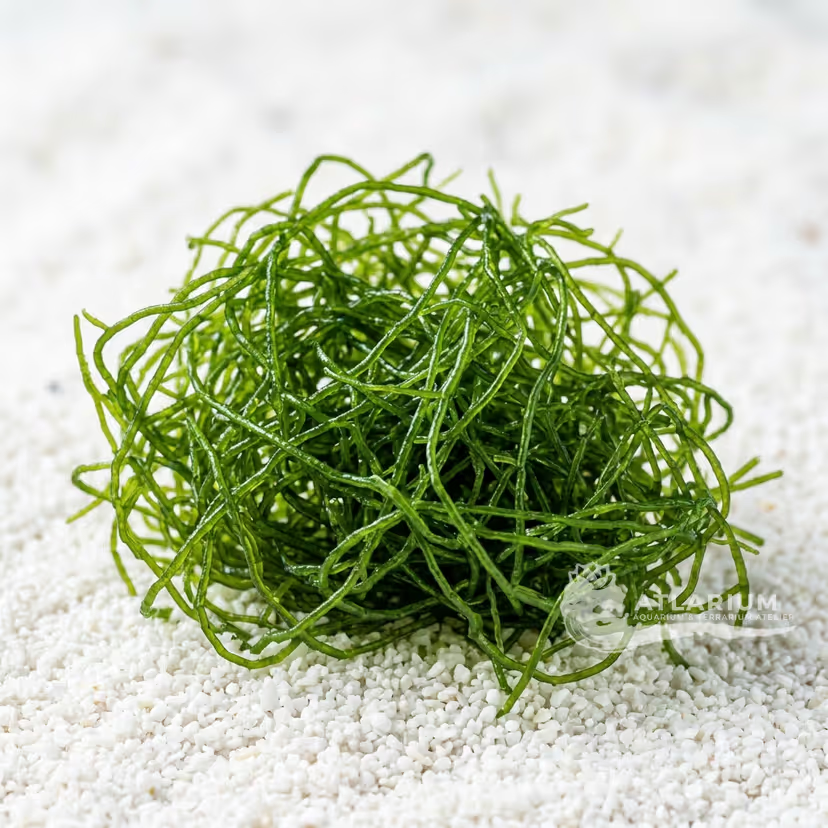
View details->
Chaetomorpha macroalgae
Plant

Chaetomorpha macroalgae

Chaetomorpha linum

View details->
Dead man fingers algae
Plant

Dead man fingers algae

Codium fragile

View details->
Grape caulerpa
Plant

Grape caulerpa

Caulerpa racemosa

View details->
Halimeda macroalgae
Plant

Halimeda macroalgae

Halimeda opuntia

View details->
Peacock tail algae
Plant

Peacock tail algae

Padina pavonica

View details->
Red gracilaria
Plant

Red gracilaria

Gracilaria parvispora

View details->
Red grape algae
Plant

Red grape algae

Botryocladia uvaria

View details->
Sea lettuce
Plant

Sea lettuce

Ulva lactuca

View details->
Red Mangrove
Plant

Red Mangrove

Rhizophora mangle

View details->

Similar care

Cards with similar requirements, difficulty, habitat, and husbandry profile.

Half-black Angelfish

Half-black Angelfish

Centropyge vrolikii
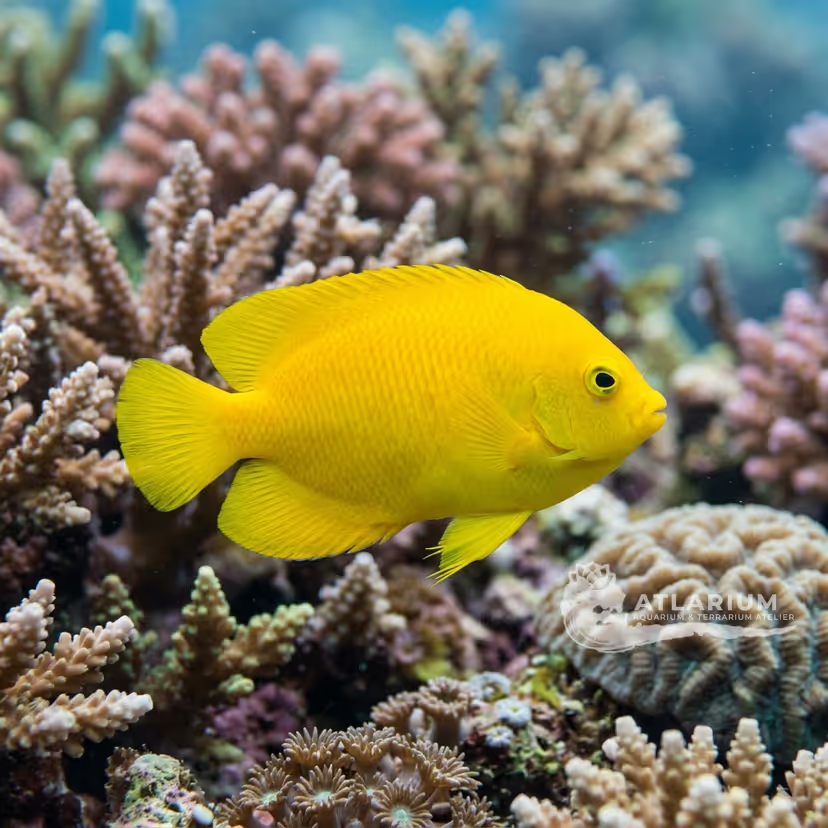
View details->
Herald's angelfish

Herald's angelfish

Centropyge heraldi
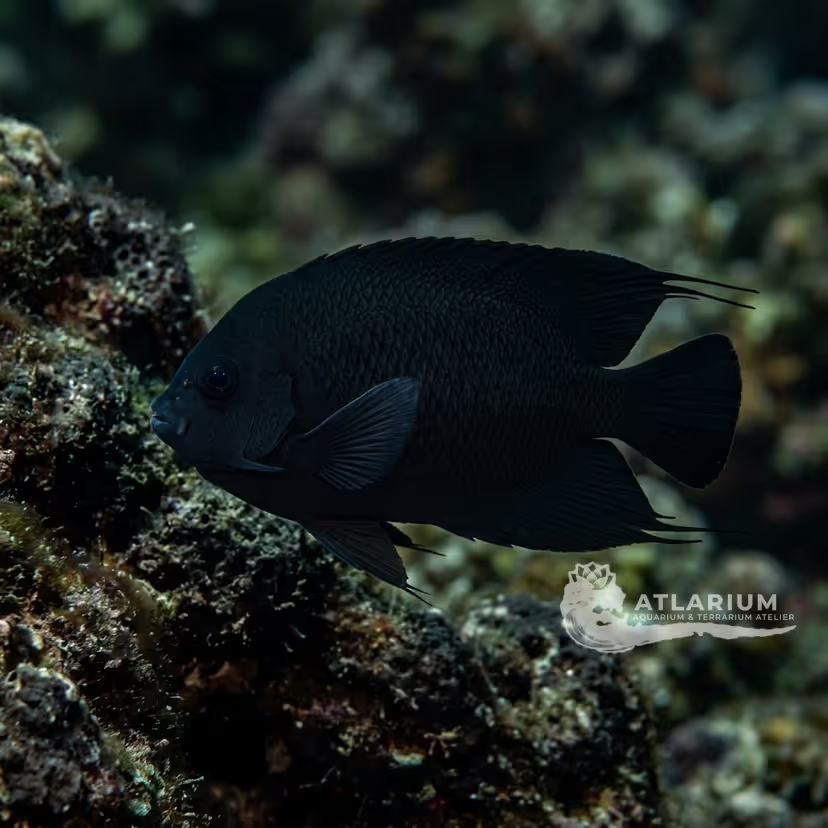
View details->
Midnight angelfish

Midnight angelfish

Centropyge nox

View details->
Golden angelfish

Golden angelfish

Centropyge aurantia

View details->
Barred Angelfish

Barred Angelfish

Paracentropyge multifasciata
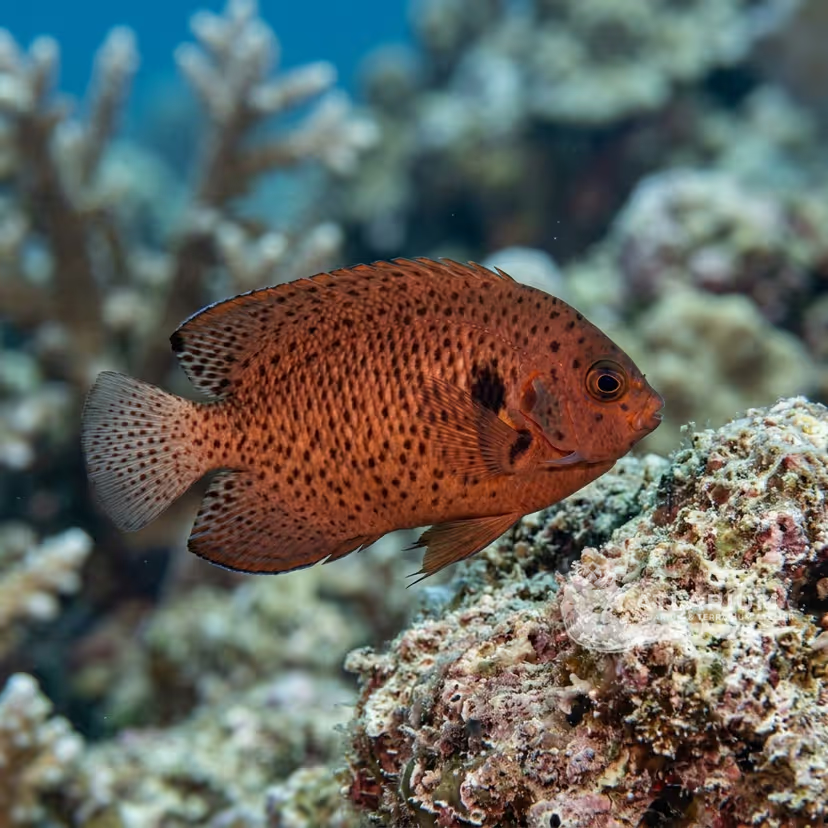
View details->
Rusty angelfish

Rusty angelfish

Centropyge ferrugata

View details->
Lemonpeel angelfish

Lemonpeel angelfish

Centropyge flavissima

View details->
Narc Angelfish

Narc Angelfish

Centropyge narcosis

View details->
Resplendent Angelfish

Resplendent Angelfish

Centropyge resplendens

View details->
Eibli's Angelfish

Eibli's Angelfish

Centropyge eibli

View details->
Cocos Pygmy Angelfish

Cocos Pygmy Angelfish

Centropyge cocosensis

View details->
Blackspot Angelfish

Blackspot Angelfish

Genicanthus melanospilos

View details->
Ornate Angelfish

Ornate Angelfish

Genicanthus bellus

View details->
Woodhead's Angelfish

Woodhead's Angelfish

Centropyge woodheadi
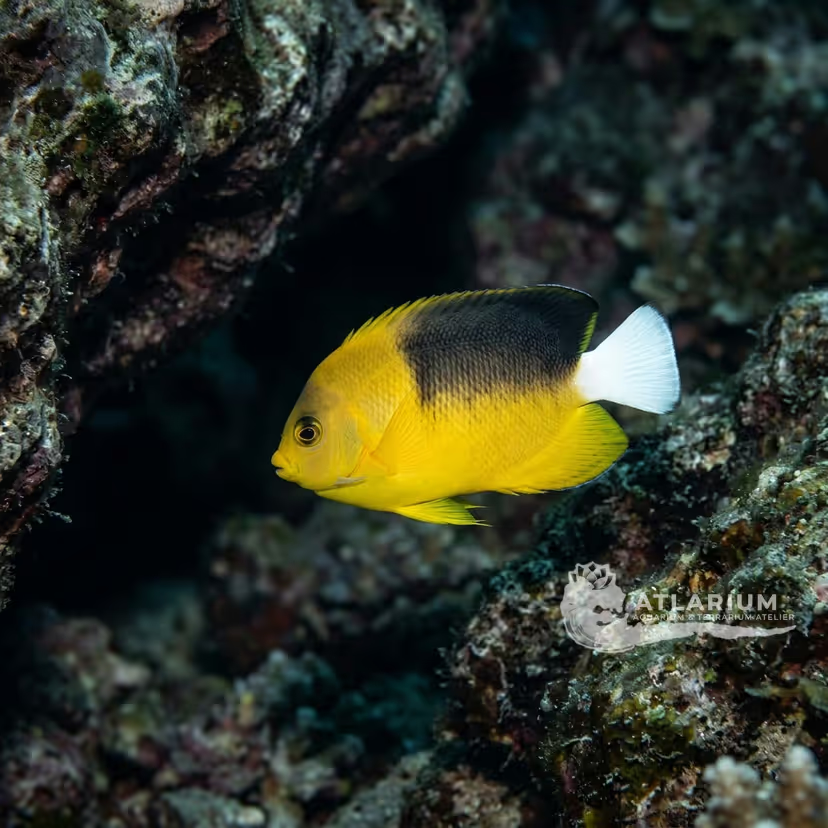
View details->
Abe's Angelfish

Abe's Angelfish

Centropyge abei

View details->
Keyhole angelfish

Keyhole angelfish

Centropyge tibicen

View details->
Last updated: 06/30/2026