Encyclopaedia

FishMarineAdvanced
©AI Generated·Proprietary

Rock Beauty Angelfish

Holacanthus tricolor

The Rock Beauty Angelfish is a beautiful Western Atlantic species. It requires a very large aquarium with mature live rock formations for constant grazing and is notoriously difficult to feed in captivity.

Taxonomy
Class:Actinopteri
Order:Perciformes
Family:Pomacanthidae
Genus:Holacanthus
Species:Holacanthus tricolor

Share

Check out Rock Beauty Angelfish on Atlarium

PracticeRecognition quizzesPhotos, names, origins, and puzzles to review Atlas species.Open quizzes
Water Temperature

24 - 27 °C

pH Value

8.1 - 8.4

Water type

Marine

Tank level

All levels

Adult size

25 cm

Minimum tank volume

>= 450 L

Minimum group

>= 1

KH

8 - 12 dKH

Species description

Geographical Origin and Habitat: Holacanthus tricolor, commonly known as the Rock Beauty, is widely distributed throughout the tropical Western Atlantic Ocean. Its range extends from Georgia and southern Florida, through the Gulf of Mexico and the Caribbean Sea, south to the coast of Rio de Janeiro, Brazil. It inhabits coral reefs, rocky outcrops, and sponge beds at depths ranging from 3 to 92 meters, defending distinct home territories.
Taxonomy and Morphology: Belonging to the Pomacanthidae family, it is a prominent representative of the genus Holacanthus. It features a deep, oval, and laterally compressed body with a small mouth containing brush-like teeth adapted for scraping surfaces. It possesses a sharp, defensive spine on the preoperculum. Adults can reach a maximum size of 20 to 25 cm in length.
Social Behavior: This is a solitary, highly territorial, and active fish. Dominant males defend large territories that usually overlap with those of several females. They exhibit intense intraspecific aggression towards conspecifics of the same sex and other similarly shaped or colored angelfish, making them unsuitable for group housing in average-sized tanks.
Coloration and Sexual Dimorphism: The adult coloration is highly distinct: the head, chest, and anterior part of the body are a brilliant chrome yellow, while the posterior portion is covered by a massive black patch that extends over the body and the dorsal and anal fins, which are edged in red-orange. The eyes are ringed in neon blue. There is no visible sexual dimorphism.

Care, breeding and tankmates

Aquarium Setup: Requires a very large aquarium of at least 450-500 liters (120-130 gallons) for a single adult. The aquascape must feature extensive mature live rock formations arranged to create spacious caves, swim-throughs, and overhangs where the fish can seek shelter and constantly graze on natural growths.
Diet and Feeding: This is the most challenging aspect of their husbandry. In the wild, sponges make up over 90% of their diet, supplemented by algae and small invertebrates. In captivity, they must be fed specialized commercial frozen or dry foods containing real sponge material. Supplement with nori, spirulina, mysis shrimp, and krill. Feed multiple times daily.
Water Quality: Maintain pristine and stable reef parameters: water temperature between 23 and 26 °C, pH between 8.1 and 8.4, specific gravity of 1.020-1.025, and nitrates kept below 10 ppm. High dissolved oxygen levels and a highly efficient protein skimmer are critical to ensure its long-term health.
Compatibility and Cohabitation: Not considered reef-safe. It will actively nip at stony corals (both SPS and LPS), soft corals, zoanthids, and the mantles of Tridacna clams. It is best housed with robust, active fish that can defend themselves, such as tangs, large wrasses, damselfish, and hawkfish.
Aquarium Breeding: Breeding in home aquariums is extremely difficult and rarely reported. They are protogynous hermaphrodites, meaning they are born female, and the largest, dominant female in a harem will transition into a male. Spawning involves a courtship dance leading to a pelagic release of eggs.
Risks and Diseases: Highly susceptible to marine ich (Cryptocaryon) and velvet (Amyloodinium) when stressed. Starvation due to a failure to transition to captive diets is a major risk. A strict quarantine protocol is strongly recommended before introducing this species to a display tank.

Geographic Origin and Distribution

Holacanthus tricolor, commonly known as the Rock Beauty, is widely distributed throughout the tropical Western Atlantic Ocean. Its range extends from Georgia and southern Florida, through the Gulf of Mexico and the Caribbean Sea, south to the coast of Rio de Janeiro, Brazil. It inhabits coral reefs, rocky outcrops, and sponge beds at depths ranging from 3 to 92 meters, defending distinct home territories.

Origin

Tropical oceans and reefsExtra-Amazon South AmericaCentral America and CaribbeanNorth America

Fish profile

Temperament
Semi-aggressive
They possess a bold, dominant, and highly aggressive temperament, truly acting as the 'king' of the aquarium. They will relentlessly chase and harass new additions, especially those with similar colors or diets. They are incredibly intelligent and will quickly learn to recognize their caretakers. Their assertive nature means they must be housed with other large, tough fish that can hold their own.
Diet
Omnivore
Their natural diet is highly specialized, consisting heavily of marine sponges, tunicates, and algae. In captivity, they must be fed a specialized commercial angelfish diet that contains sponge matter to ensure long-term survival. They should also be offered varied meaty foods, spirulina, and fresh macroalgae for grazing. Providing a diverse, nutrient-rich diet is critical to preventing nutritional blindness and other deficiencies.
Sex ratio
Solitary
There are no obvious external differences between males and females, though males may grow slightly larger. In the wild, they often form harems consisting of one dominant male and several females. In home aquariums, it is highly advised to keep only one individual per tank due to their severe conspecific aggression. Attempting to pair them in anything smaller than a public aquarium usually results in fatal fighting.
Feeding frequency
THREE_FOUR_DAILY
These active grazers should be fed small amounts two to three times per day. They naturally spend their entire day picking at live rock, so frequent meals help simulate this natural behavior. Offering grazing clips with nori or seaweed can help keep them occupied between feedings. Consistent feeding helps curb their aggression toward other tank mates.
Bioload
Large marine angelfish produce a significant bioload due to their substantial adult size and active metabolism. They require powerful, oversized protein skimmers and robust biological filtration to maintain pristine water conditions. Frequent water changes are necessary to keep nitrate levels as close to zero as possible. Poor water quality will rapidly lead to stress, disease, and loss of their vibrant coloration.
Flow
Strong
They thrive in environments with strong, turbulent water flow that mimics the surge zones of coral reefs. High water movement ensures excellent oxygen exchange, which is vital for these large, active swimmers. Use powerful wavemakers or gyre pumps to create dynamic currents across the rockwork. Ensure there are also caves where they can retreat from the current at night.
Jump risk
No
Reproduction
Egg scatterer
Breeding large marine angelfish in home aquariums is exceptionally rare and requires massive commercial aquaculture facilities. They are pelagic broadcast spawners that release their gametes high in the water column at dusk. The resulting microscopic larvae have complex nutritional requirements that are nearly impossible to meet at home. Most specimens are either wild-caught or raised in specialized breeding facilities.
Compatibility & tankmates
Territorial
They are highly territorial and can be very aggressive toward other large angelfish or fish with similar body shapes. They should generally be the last fish introduced to a large marine community to prevent them from claiming the entire tank. They are notoriously not reef-safe, as they will eagerly nip at and consume most stony and soft corals. Keep them in extremely large fish-only with live rock (FOWLR) setups.
Tank level
All levels
These angelfish are bold, open-water swimmers that will command all levels of the aquarium. They constantly patrol the rockwork, swimming in and out of caves while inspecting for food. They require an immense amount of open swimming space to prevent pacing and stress-related behaviors. A massive tank with hundreds of pounds of porous live rock is their ideal environment.

Window to the official scientific data of the species

Data synced on: 06/15/2026

Scientific Parameters & Models

Trophic level
3 ± 0 se
Resilience
Medium (1.4 - 4.4 years)
Phylogenetic uniqueness (PD50)
0.5078
Bayesian Length-Weight
a = 0.03236, b = 2.89
VulnerabilityLow vulnerability (25 / 100)

Image gallery

Licensed images linked to the species or, when marked, to the closest representative taxon.

Related species

Recommendations grouped by close relatives, companion choices, and similar care.

Variants and close relatives

Same atlas type, nearby scientific identity, genus, or family.
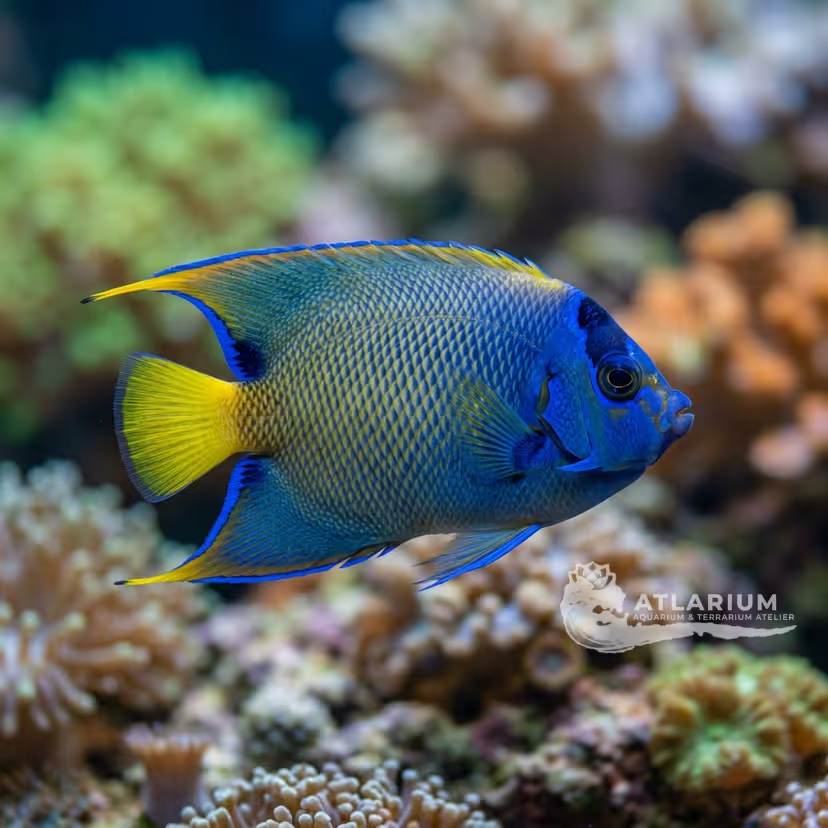
Blue Angelfish

Blue Angelfish

Holacanthus bermudensis

View details->
Clarion Angelfish

Clarion Angelfish

Holacanthus clarionensis

View details->
Limbaugh's angelfish

Limbaugh's angelfish

Holacanthus limbaughi

View details->
Queen Angelfish

Queen Angelfish

Holacanthus ciliaris

View details->
Passer Angelfish

Passer Angelfish

Holacanthus passer

View details->
Eibli's Angelfish

Eibli's Angelfish

Centropyge eibli

View details->
Half-black Angelfish

Half-black Angelfish

Centropyge vrolikii
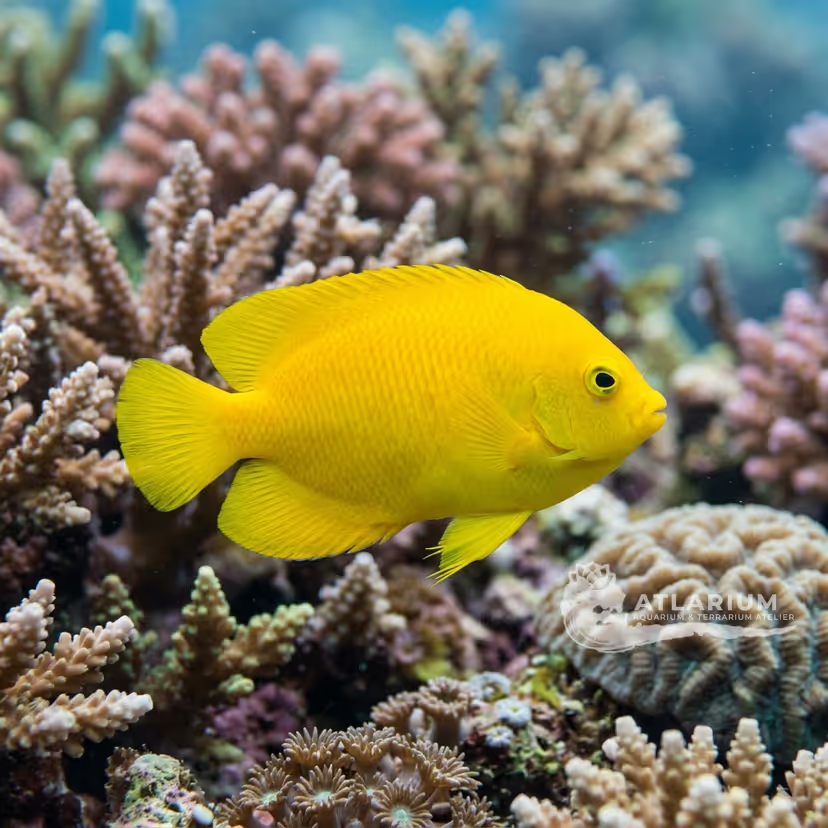
View details->
Herald's angelfish

Herald's angelfish

Centropyge heraldi
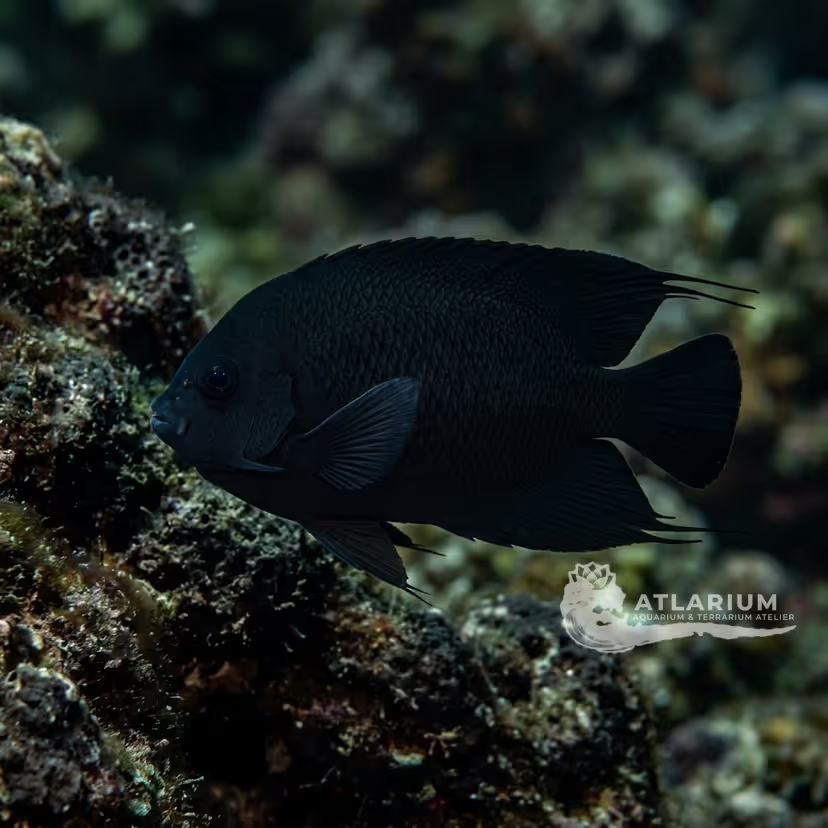
View details->
Midnight angelfish

Midnight angelfish

Centropyge nox

View details->
Resplendent Angelfish

Resplendent Angelfish

Centropyge resplendens
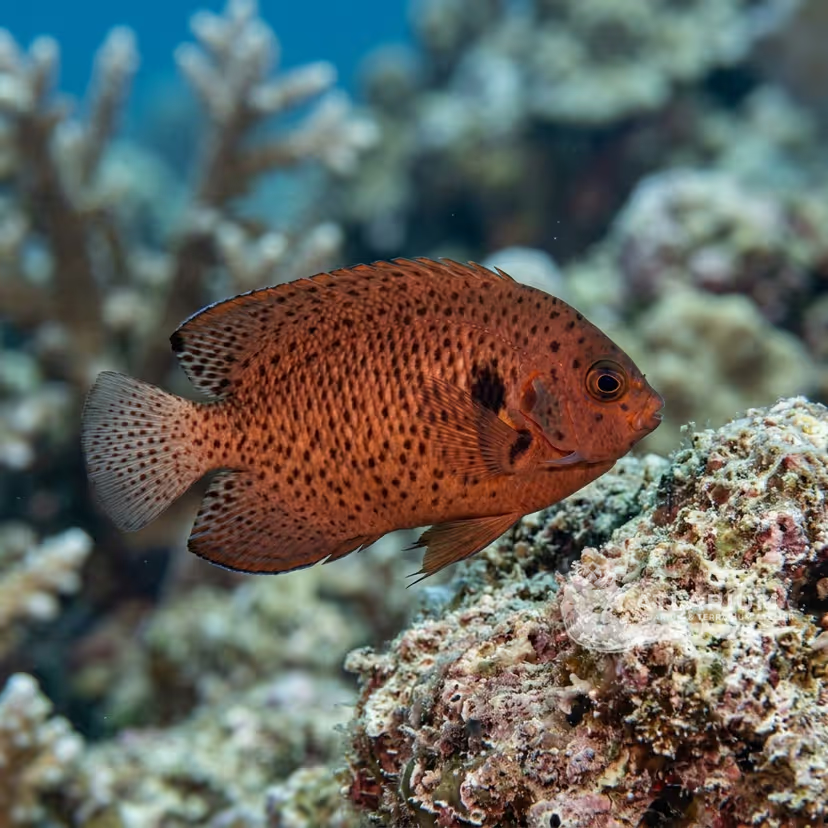
View details->
Rusty angelfish

Rusty angelfish

Centropyge ferrugata

View details->
Blueface Angelfish

Blueface Angelfish

Pomacanthus xanthometopon

View details->
Bluering angelfish

Bluering angelfish

Pomacanthus annularis

View details->
Keyhole angelfish

Keyhole angelfish

Centropyge tibicen

View details->
Lemonpeel angelfish

Lemonpeel angelfish

Centropyge flavissima
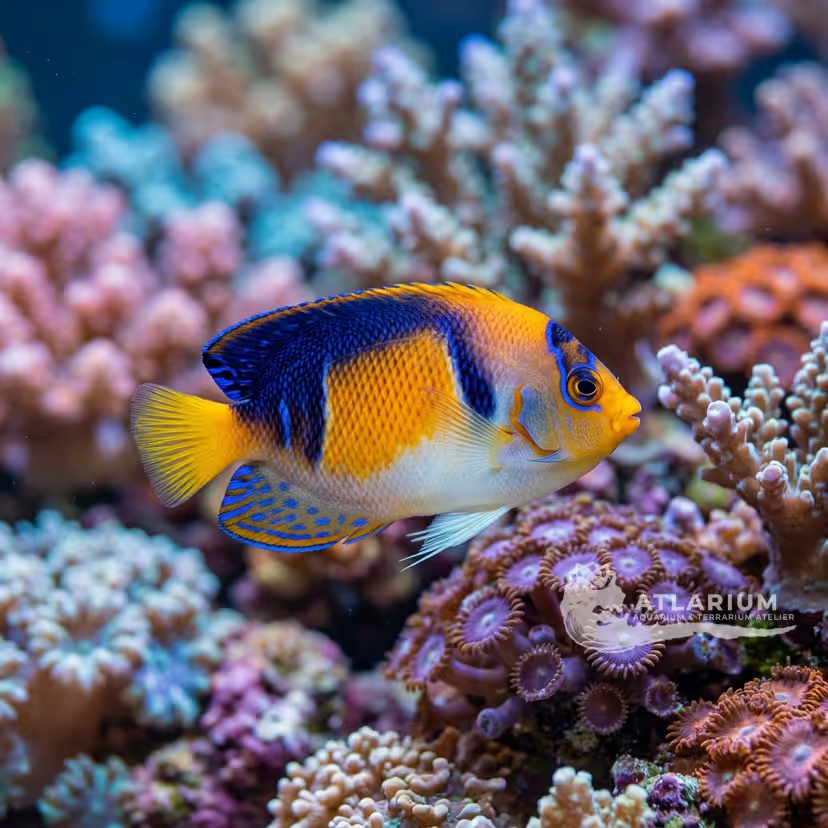
View details->
Multicolor Angelfish

Multicolor Angelfish

Centropyge multicolor

View details->

Recommended companions

Compatible cards from coherent ecosystems with matching parameters.

Grape caulerpa
Plant

Grape caulerpa

Caulerpa racemosa

View details->
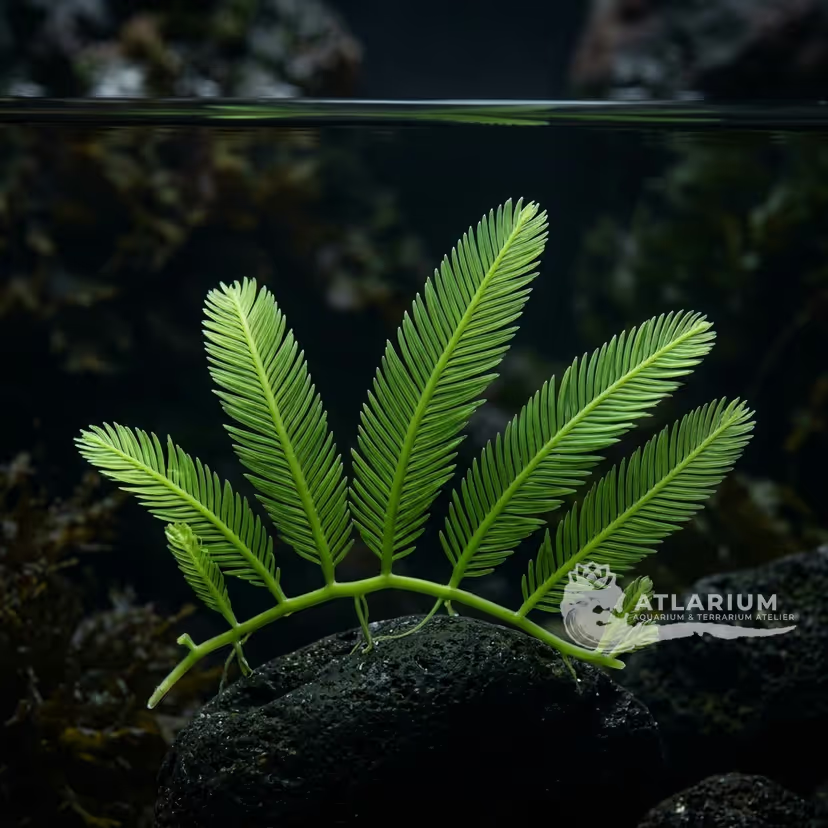
Caulerpa prolifera
Plant

Caulerpa prolifera

Caulerpa prolifera
View details->
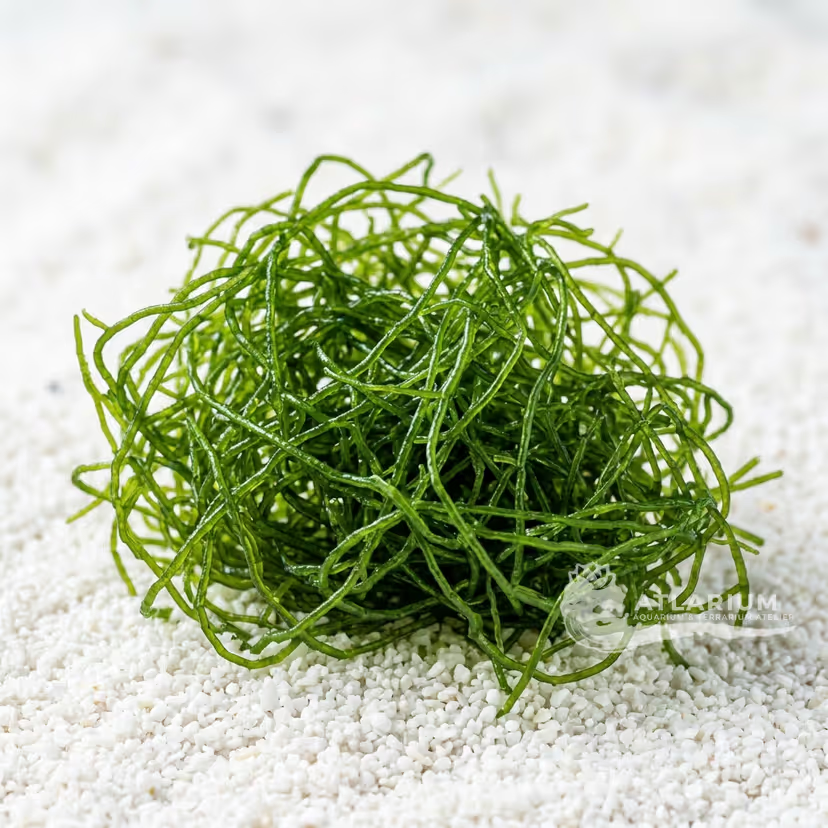
Caulerpa taxifolia
Plant

Caulerpa taxifolia

Caulerpa taxifolia
View details->
Chaetomorpha macroalgae
Plant

Chaetomorpha macroalgae

Chaetomorpha linum

View details->
Dead man fingers algae
Plant

Dead man fingers algae

Codium fragile

View details->
Halimeda macroalgae
Plant

Halimeda macroalgae

Halimeda opuntia

View details->
Peacock tail algae
Plant

Peacock tail algae

Padina pavonica

View details->
Red gracilaria
Plant

Red gracilaria

Gracilaria parvispora

View details->
Red grape algae
Plant

Red grape algae

Botryocladia uvaria

View details->
Sea lettuce
Plant

Sea lettuce

Ulva lactuca

View details->
Red Mangrove
Plant

Red Mangrove

Rhizophora mangle

View details->

Similar care

Cards with similar requirements, difficulty, habitat, and husbandry profile.

Goldspotted Angelfish

Goldspotted Angelfish

Apolemichthys

View details->
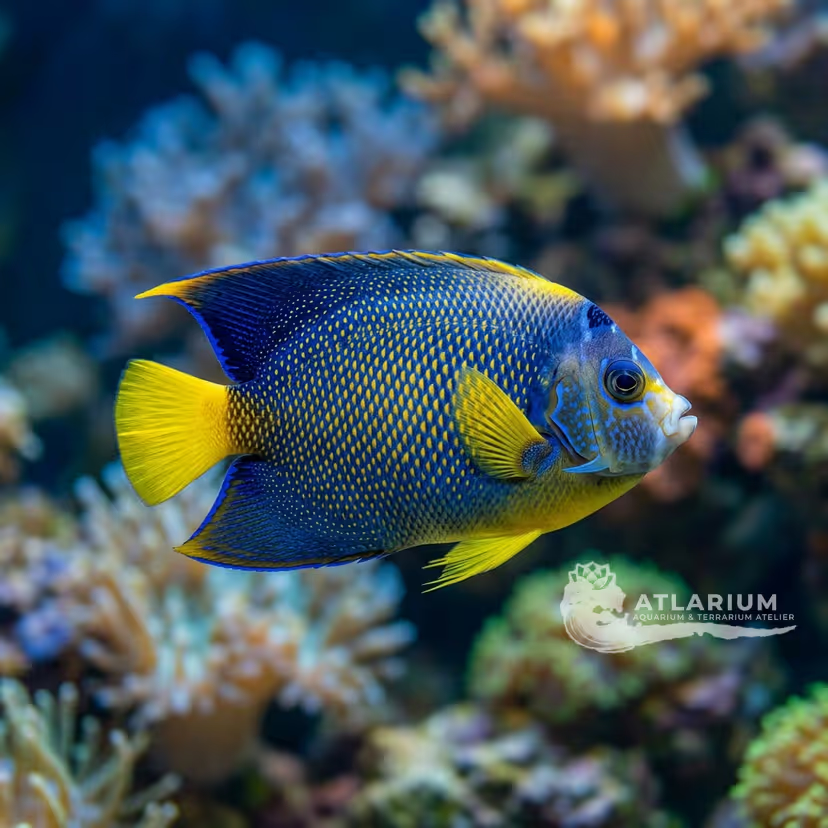
Three-spot Angelfish

Three-spot Angelfish

Apolemichthys trimaculatus
View details->
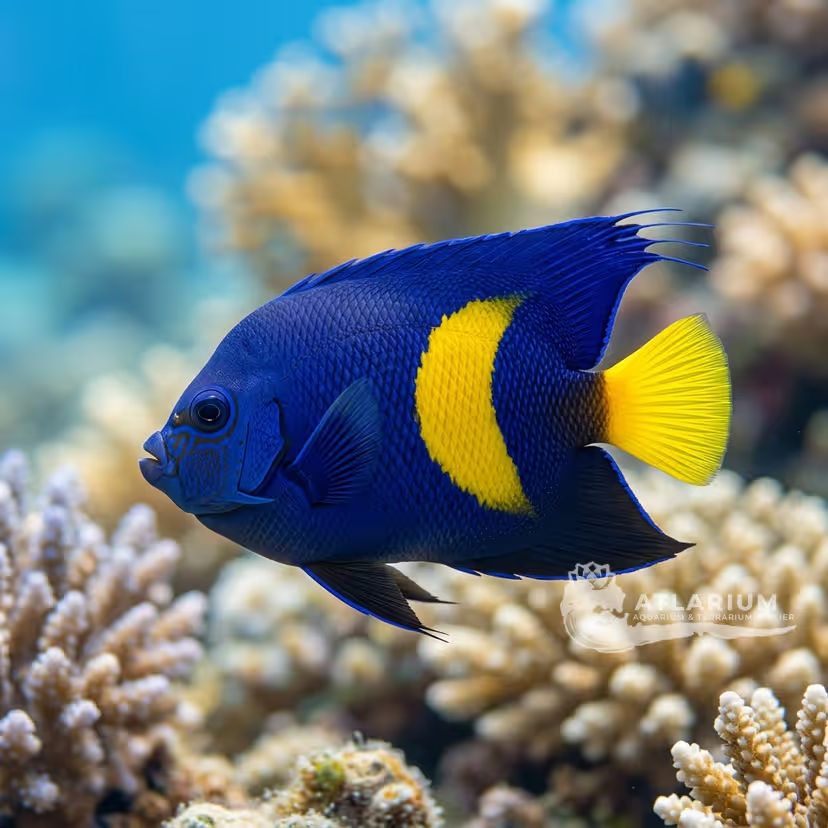
Yellowtail angelfish

Yellowtail angelfish

Apolemichthys xanthurus
View details->
Asfur angelfish

Asfur angelfish

Pomacanthus asfur

View details->
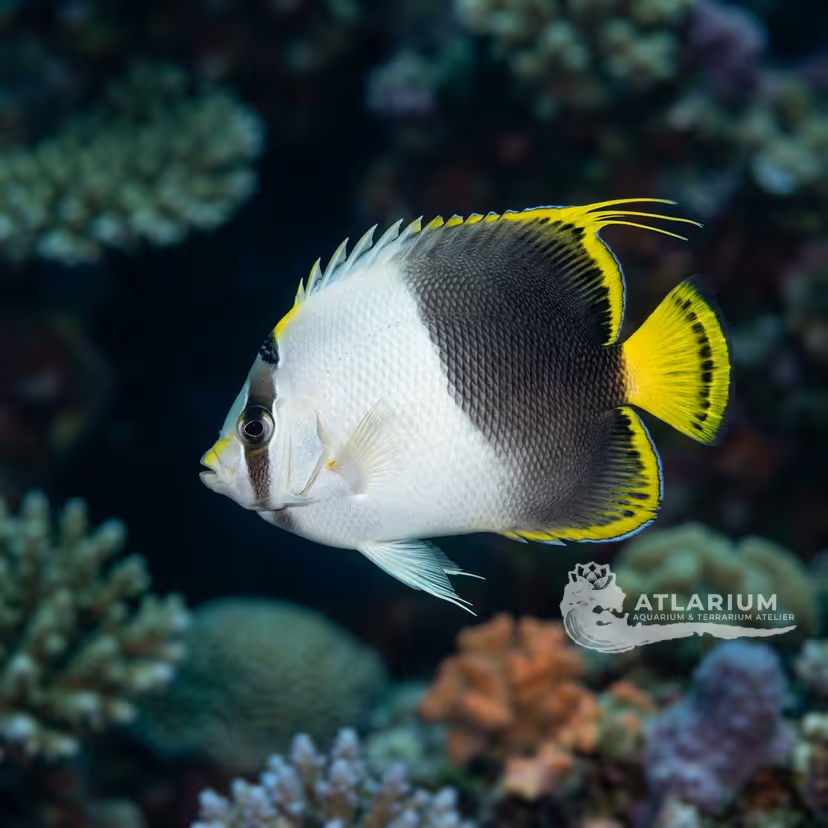
Scribbled Angelfish

Scribbled Angelfish

Chaetodontoplus duboulayi
View details->
Singapore Angelfish

Singapore Angelfish

Chaetodontoplus mesoleucus

View details->
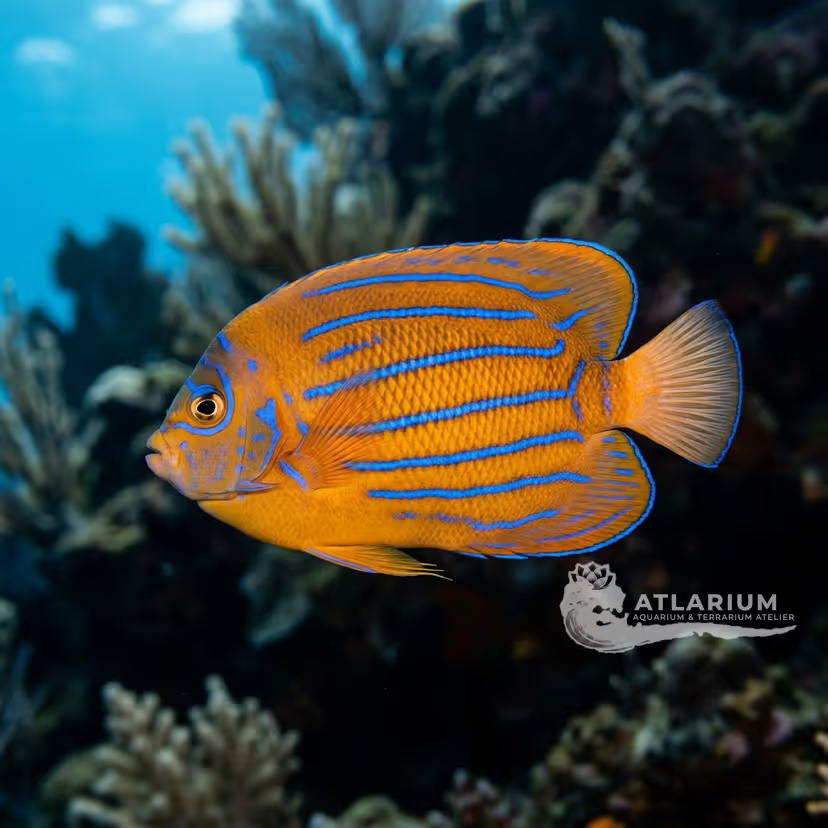
Conspicuous Angelfish

Conspicuous Angelfish

Chaetodontoplus conspicillatus
View details->
Bluestriped Angelfish

Bluestriped Angelfish

Chaetodontoplus septentrionalis

View details->
Gray Angelfish

Gray Angelfish

Pomacanthus arcuatus

View details->
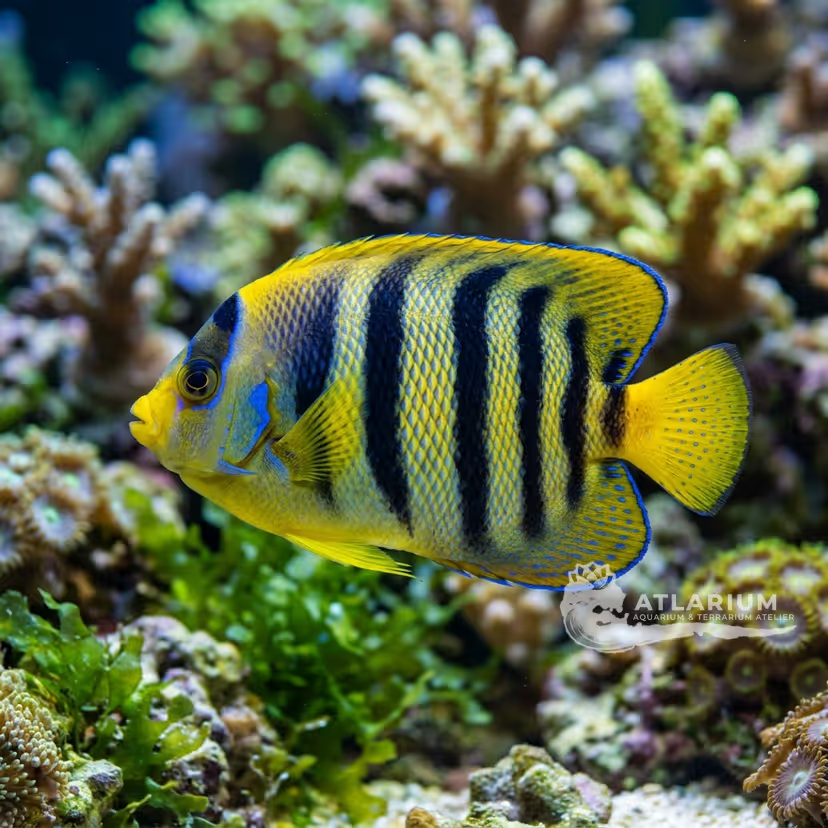
Emperor Angelfish

Emperor Angelfish

Pomacanthus imperator
View details->
Sixbar Angelfish

Sixbar Angelfish

Pomacanthus sexstriatus

View details->
Fisher's Angelfish

Fisher's Angelfish

Centropyge fisheri

View details->
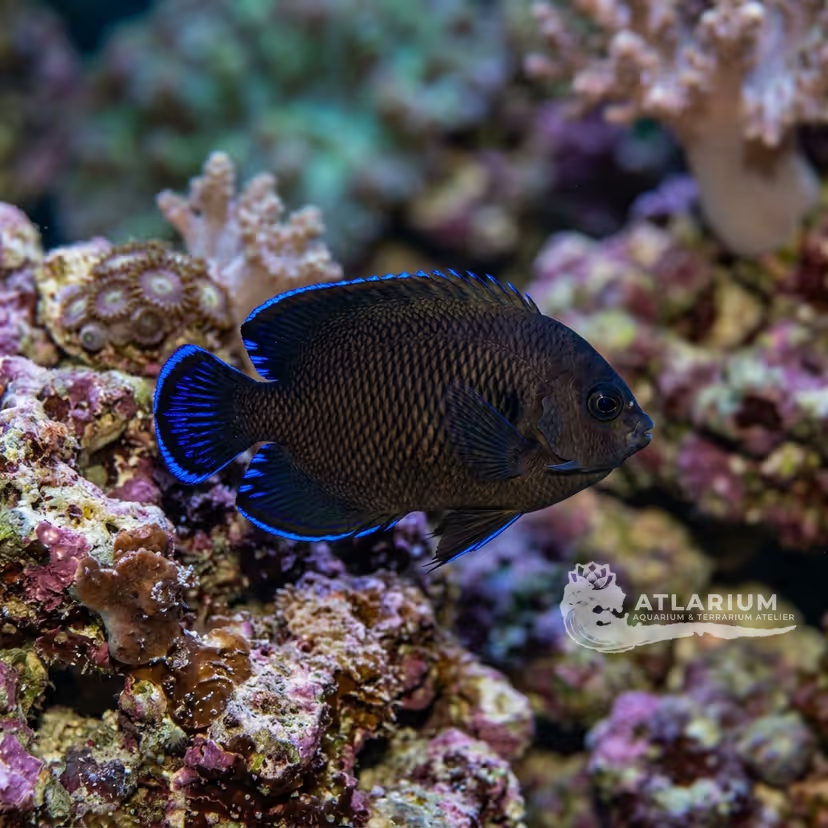
Coral beauty angelfish

Coral beauty angelfish

Centropyge bispinosa
View details->
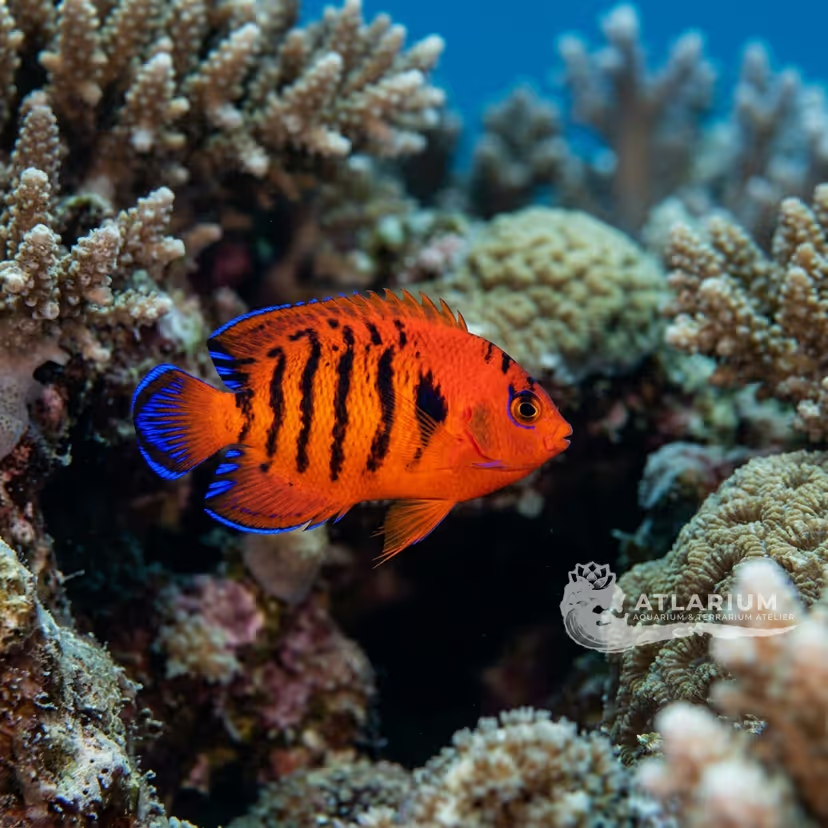
Dusky Angelfish

Dusky Angelfish

Centropyge multispinis
View details->
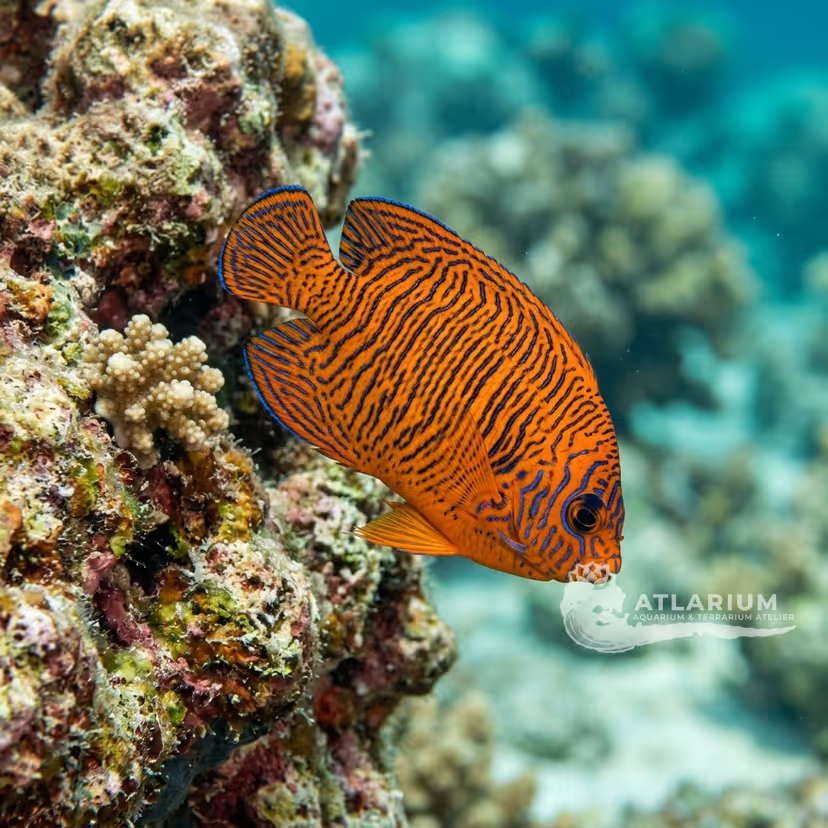
Shepard's angelfish

Shepard's angelfish

Centropyge shepardi
View details->
Potter's angelfish

Potter's angelfish

Centropyge potteri

View details->
Last updated: 06/30/2026
Rock Beauty Angelfish (Holacanthus tricolor) Care Guide & Tank Setup | Atlarium