Encyclopaedia

FishMarineExpert
©AI Generated·Proprietary

Limbaugh's angelfish

Holacanthus limbaughi

An extremely rare and prized marine angelfish, endemic to Clipperton Island, featuring a magnificent royal blue color and a distinctive white side spot.

Taxonomy
Class:Actinopteri
Order:Perciformes
Family:Pomacanthidae
Genus:Holacanthus
Species:Holacanthus limbaughi

Share

Check out Limbaugh's angelfish on Atlarium

PracticeRecognition quizzesPhotos, names, origins, and puzzles to review Atlas species.Open quizzes
Water Temperature

22 - 26 °C

pH Value

8.1 - 8.4

Water type

Marine

Tank level

All levels

Adult size

25 cm

Minimum tank volume

>= 600 L

Minimum group

>= 1

KH

8 - 12 dKH

Species description

Geographical Origin and Habitat: Holacanthus limbaughi has one of the most restricted geographic ranges of any marine fish, being strictly endemic to the isolated Clipperton Atoll in the eastern tropical Pacific Ocean. This species is found on rocky and coral reefs surrounding the island, at depths ranging from 10 meters down to over 100 meters on deep reef walls. Its habitat is characterized by pristine oceanic waters, high surge, and steep rock faces covered with sponges, tunicates, and encrusting algae.
Taxonomy and Morphology: It belongs to the family Pomacanthidae and the genus Holacanthus. It has a robust, deep, oval-shaped body that is strongly compressed laterally. Like all angelfish in its genus, it possesses a prominent, sharp preopercular spine located at the base of the gill cover, pointing backward, which it uses as a defensive weapon. The dorsal and anal fins are large and sweep backward, becoming slightly elongated in mature specimens.
Social Behavior: This is a territorial and solitary fish that constantly patrols large areas of the reef in search of food. It exhibits intense intraspecific aggression towards members of its own species and other similarly sized angelfish, especially if they are kept within the same limited space. Although curious, it is cautious and will quickly retreat into caves or rocky crevices if it senses sudden movements or vibrations in the water.
Coloration and Sexual Dimorphism: Adults display a spectacular royal blue to deep purple body, which is highlighted by a bright, oval-shaped white spot on the side just above the pectoral fin. The caudal fin is bright yellow-orange, creating a sharp contrast with the dark blue body. There is no visible sexual dimorphism between males and females, though adult males can grow slightly larger than their female counterparts.

Care, breeding and tankmates

Aquarium Setup: Requires an exceptionally large marine aquarium, with a minimum recommended volume of 500 liters for a single specimen, due to its size and active swimming behavior. The tank must feature a massive rockwork structure (reefscape) with large caves, swim-through tunnels, and stable crevices that provide secure hiding spots. A large, open swimming area in the front of the aquarium is necessary.
Diet and Feeding: It is a dietary specialist that feeds primarily on marine sponges, tunicates, and benthic algae in the wild. Feeding in captivity is a major challenge; it requires high-quality commercial foods formulated specifically for angelfish containing natural sponge, supplemented with spirulina, fresh nori sheets, and frozen foods like mysis, krill, and chopped clams. Feed small portions multiple times daily.
Water Quality: Being a deep-water oceanic fish, it requires pristine and stable water parameters: temperature 23-27 °C, pH 8.1-8.4, specific gravity 1.022-1.025, and KH 8-12. An efficient protein skimmer and strong water movement are crucial to maintain high oxygen saturation levels and keep organic nutrients (nitrates and phosphates) near zero.
Compatibility and Cohabitation: This species is not reef-safe, as it will nip at and consume large and small polyp stony corals (LPS and SPS), soft corals, and clam mantles. It should be housed in a fish-only-with-live-rock (FOWLR) tank with other robust, semi-aggressive tankmates like large tangs, triggerfish, large wrasses, and damsels. Never house it with other Holacanthus species.
Aquarium Breeding: There are no documented cases of successful breeding in home aquariums. In the wild, they are pelagic spawners, releasing eggs and sperm into the open water column at dusk. The eggs float with oceanic currents, and the planktonic larval phase is extremely long, making commercial or hobbyist captive breeding unfeasible with current technology.
Risks and Diseases: It is highly susceptible to head and lateral line erosion (HLLE), which is often triggered by nutritional deficiencies (lack of vitamins and sponge matter) or the use of cheap activated carbon. It is also vulnerable to marine ich (Cryptocaryon) and velvet. A strict quarantine protocol is mandatory to ensure the fish is healthy and eating prepared foods before introduction.

Geographic Origin and Distribution

Holacanthus limbaughi has one of the most restricted geographic ranges of any marine fish, being strictly endemic to the isolated Clipperton Atoll in the eastern tropical Pacific Ocean. This species is found on rocky and coral reefs surrounding the island, at depths ranging from 10 meters down to over 100 meters on deep reef walls. Its habitat is characterized by pristine oceanic waters, high surge, and steep rock faces covered with sponges, tunicates, and encrusting algae.

Origin

Tropical oceans and reefs

Fish profile

Temperament
Aggressive
Semi-aggressive and territorial. Establish them as the last addition. They will dominate smaller timid fish.
Diet
Omnivore
Requires a specialized diet including sponges and algae. Offer high-quality frozen angelfish preparations. Supplement with nori.
Sex ratio
Solitary
Usually kept as a single specimen. Pairs can be attempted in very large tanks. Two males will fight to the death.
Feeding frequency
Twice daily
Feed at least two to three times daily. Small frequent meals are best. Ensure food contains marine sponges.
Bioload
Angelfish produce a high bioload due to their size and diet. A strong protein skimmer is highly recommended. Regular maintenance is key.
Flow
Strong
Moderate to strong flow is preferred. This simulates their natural reef environment. Allow some calm areas behind rocks.
Jump risk
Yes
They are not prone to jumping. However, a covered tank is always safer. Avoid startling them with sudden lights.
Reproduction
Oviparous
Captive breeding is very difficult. They release eggs and sperm into the water column. Larvae are challenging to raise.
Compatibility & tankmates
Reef safe
They can nip at corals and clams. Best kept in FOWLR tanks. Avoid keeping with other large angelfish.
Tank level
All levels
They roam across all levels of the aquarium. They need plenty of live rock for grazing. Adequate swimming space is essential.

Window to the official scientific data of the species

Data synced on: 06/15/2026

Scientific Parameters & Models

Resilience
Medium (1.4 - 4.4 years)
Phylogenetic uniqueness (PD50)
0.5078
Bayesian Length-Weight
a = 0.0302, b = 2.89
VulnerabilityLow vulnerability (15 / 100)

Image gallery

Licensed images linked to the species or, when marked, to the closest representative taxon.

Related species

Recommendations grouped by close relatives, companion choices, and similar care.

Variants and close relatives

Same atlas type, nearby scientific identity, genus, or family.

Clarion Angelfish

Clarion Angelfish

Holacanthus clarionensis
View details->
Blue Angelfish

Blue Angelfish

Holacanthus bermudensis

View details->
Passer Angelfish

Passer Angelfish

Holacanthus passer

View details->
Rock Beauty Angelfish

Rock Beauty Angelfish

Holacanthus tricolor

View details->
Queen Angelfish

Queen Angelfish

Holacanthus ciliaris

View details->
African flameback angelfish

African flameback angelfish

Centropyge acanthops

View details->
Barred Angelfish

Barred Angelfish

Paracentropyge multifasciata

View details->
Blackspot Angelfish

Blackspot Angelfish

Genicanthus melanospilos

View details->
Flameback Angelfish

Flameback Angelfish

Centropyge aurantonotus

View details->
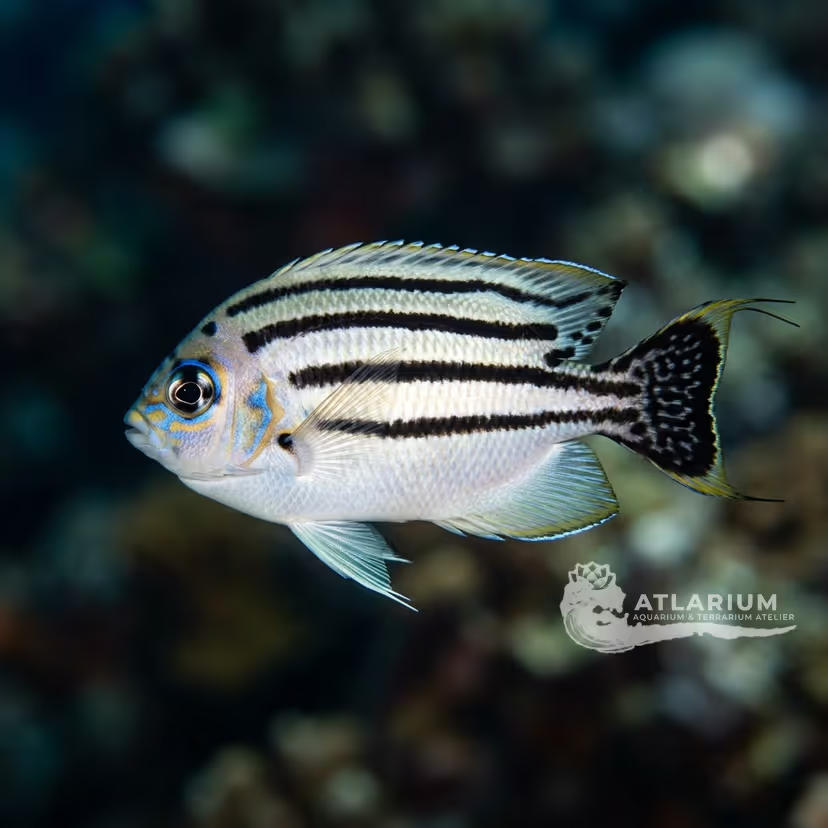
Joculator Angelfish

Joculator Angelfish

Centropyge joculator
View details->
Lamarck's angelfish

Lamarck's angelfish

Genicanthus lamarck

View details->
Ornate Angelfish

Ornate Angelfish

Genicanthus bellus

View details->
Watanabe's Angelfish

Watanabe's Angelfish

Genicanthus watanabei

View details->
Yellowfin Angelfish

Yellowfin Angelfish

Centropyge flavipectoralis

View details->
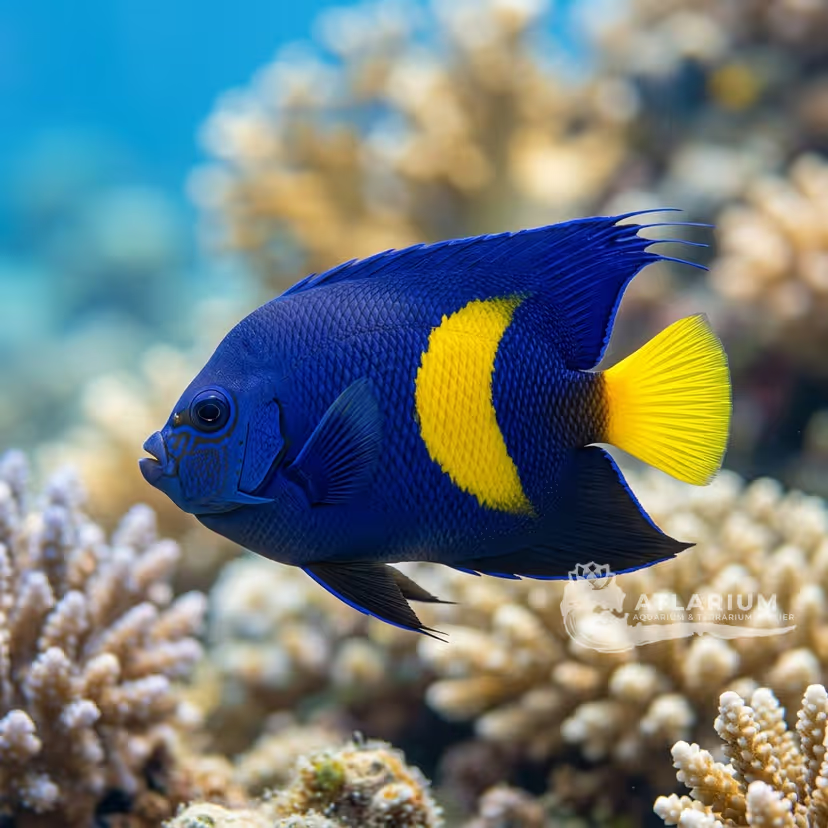
Zebra angelfish

Zebra angelfish

Genicanthus caudovittatus
View details->
Asfur angelfish

Asfur angelfish

Pomacanthus asfur

View details->

Recommended companions

Compatible cards from coherent ecosystems with matching parameters.

Grape caulerpa
Plant

Grape caulerpa

Caulerpa racemosa

View details->
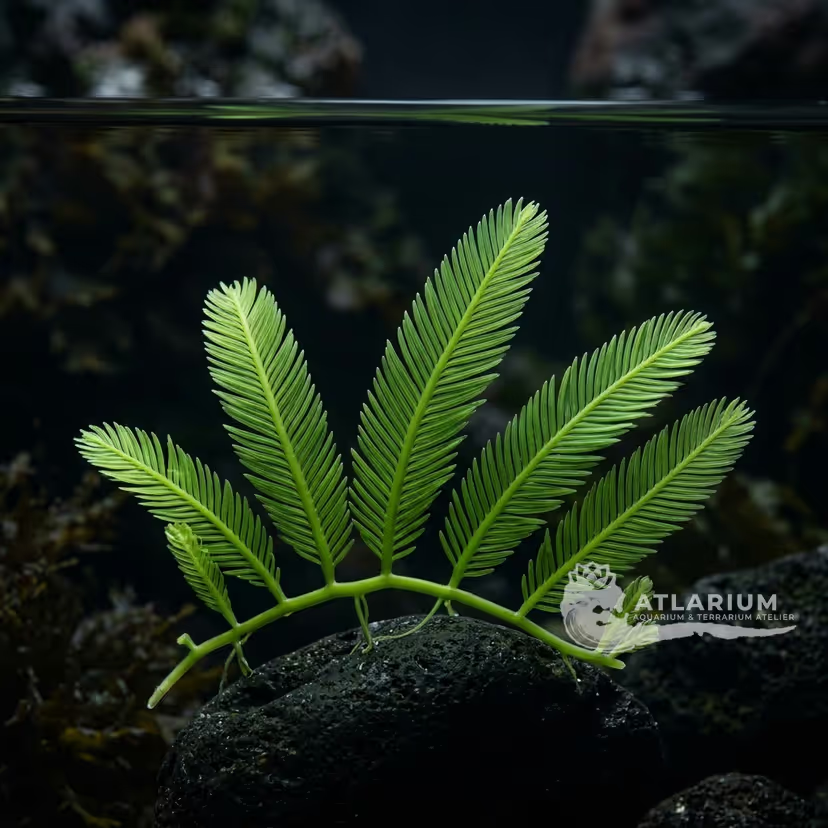
Caulerpa prolifera
Plant

Caulerpa prolifera

Caulerpa prolifera
View details->
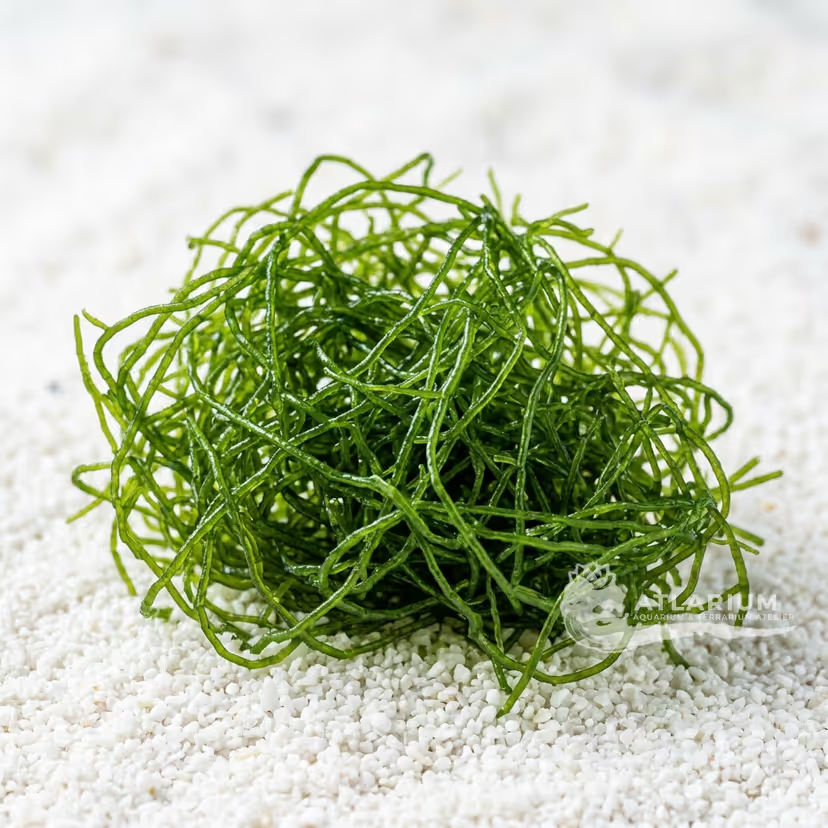
Caulerpa taxifolia
Plant

Caulerpa taxifolia

Caulerpa taxifolia
View details->
Chaetomorpha macroalgae
Plant

Chaetomorpha macroalgae

Chaetomorpha linum

View details->
Dead man fingers algae
Plant

Dead man fingers algae

Codium fragile

View details->
Halimeda macroalgae
Plant

Halimeda macroalgae

Halimeda opuntia

View details->
Peacock tail algae
Plant

Peacock tail algae

Padina pavonica

View details->
Red gracilaria
Plant

Red gracilaria

Gracilaria parvispora

View details->
Red grape algae
Plant

Red grape algae

Botryocladia uvaria

View details->
Sea lettuce
Plant

Sea lettuce

Ulva lactuca

View details->
Red Mangrove
Plant

Red Mangrove

Rhizophora mangle

View details->

Similar care

Cards with similar requirements, difficulty, habitat, and husbandry profile.

Conspicuous Angelfish

Conspicuous Angelfish

Chaetodontoplus conspicillatus

View details->
Goldspotted Angelfish

Goldspotted Angelfish

Apolemichthys

View details->
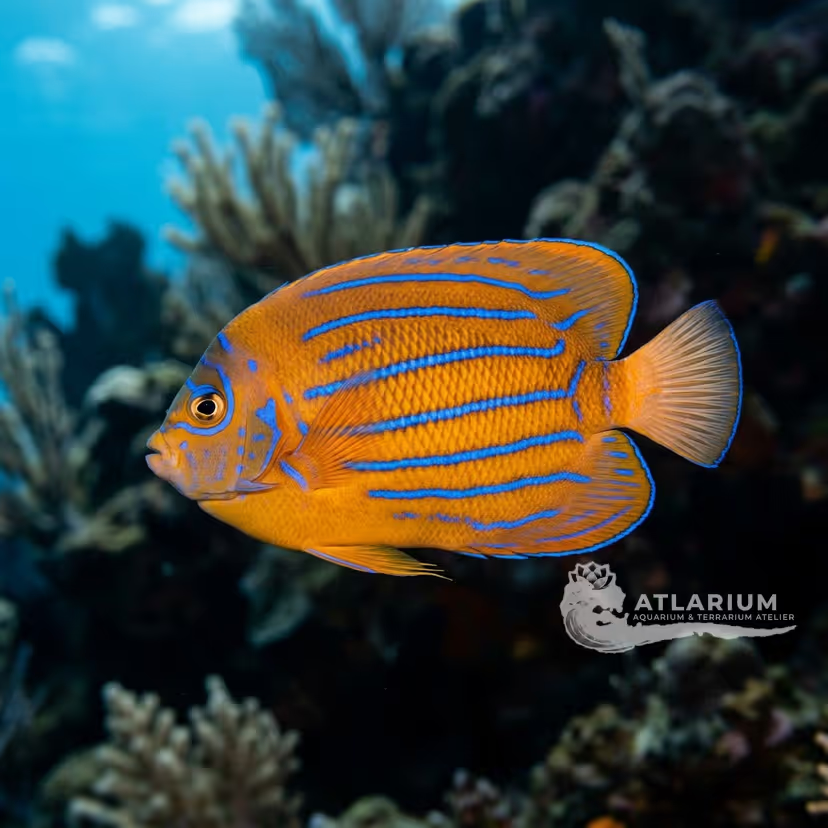
Three-spot Angelfish

Three-spot Angelfish

Apolemichthys trimaculatus
View details->
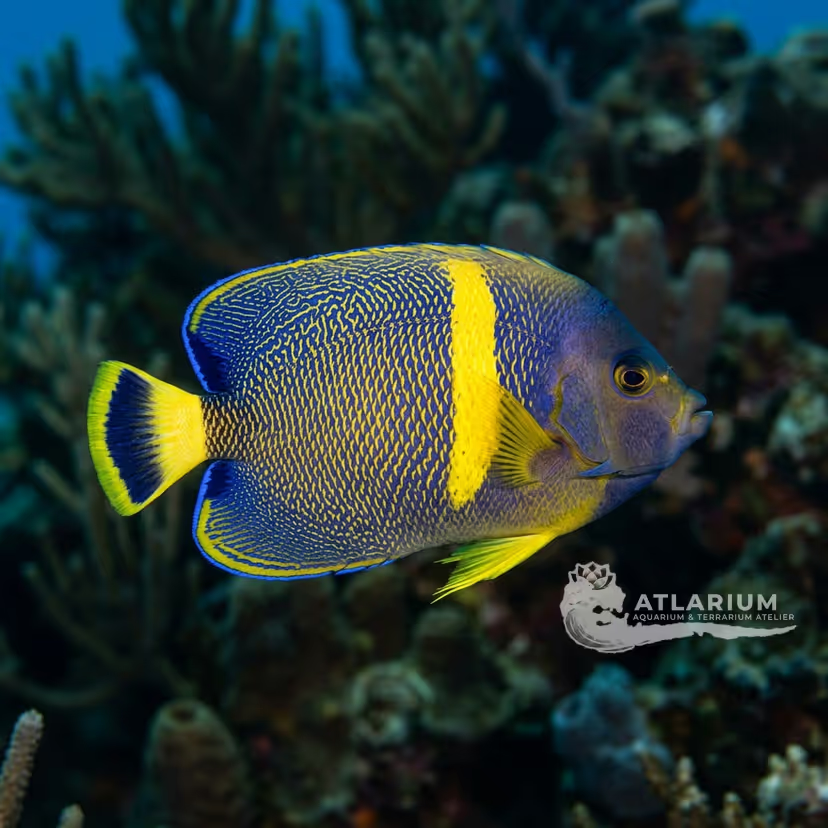
Bluestriped Angelfish

Bluestriped Angelfish

Chaetodontoplus septentrionalis
View details->
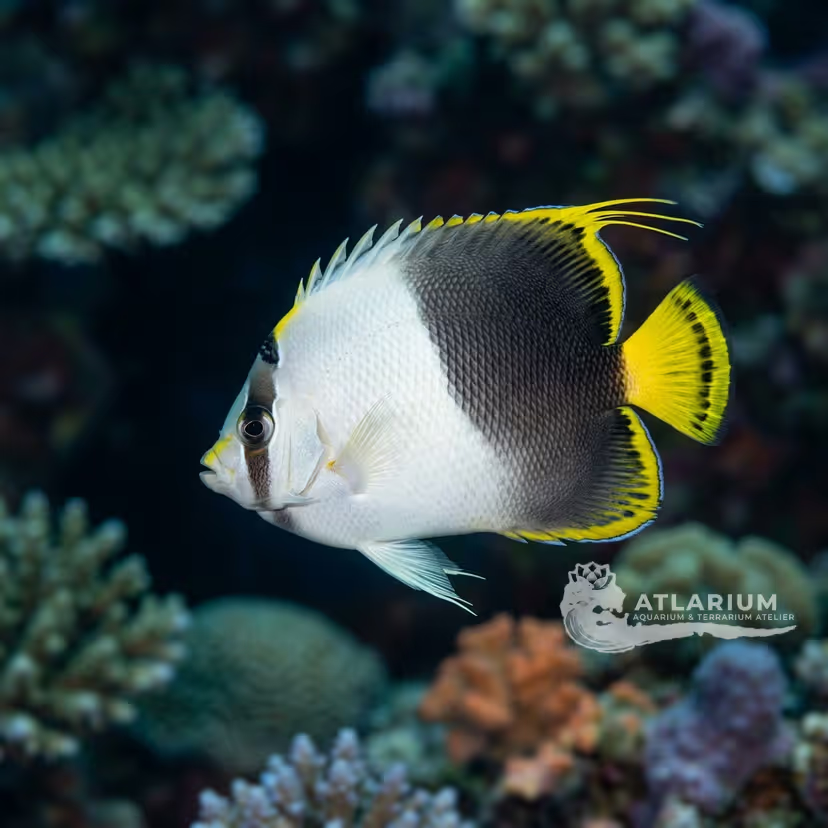
Scribbled Angelfish

Scribbled Angelfish

Chaetodontoplus duboulayi
View details->
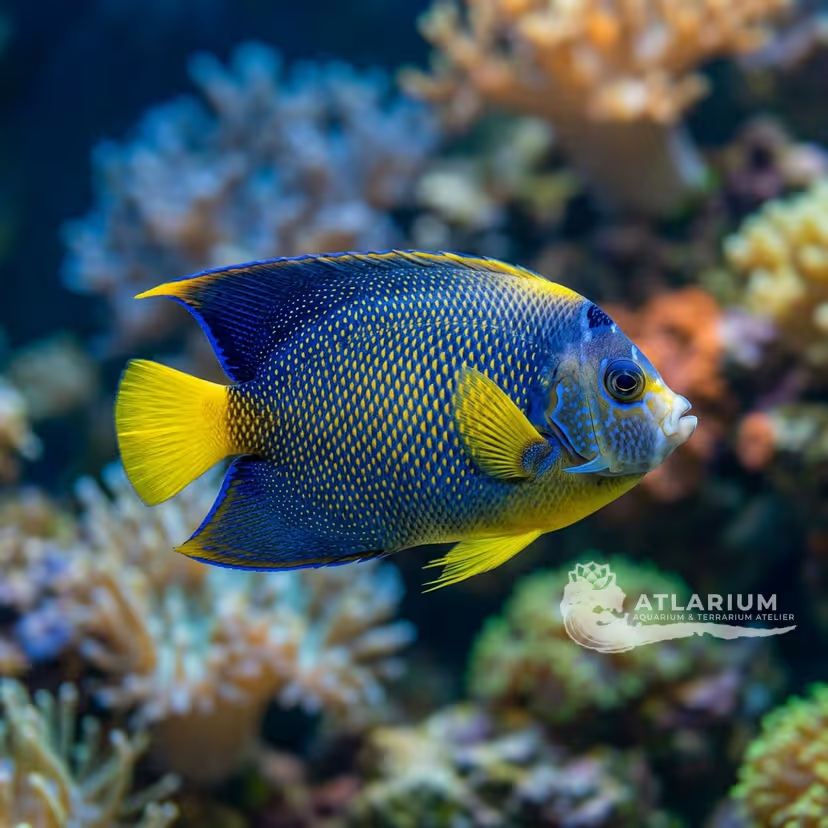
Singapore Angelfish

Singapore Angelfish

Chaetodontoplus mesoleucus
View details->
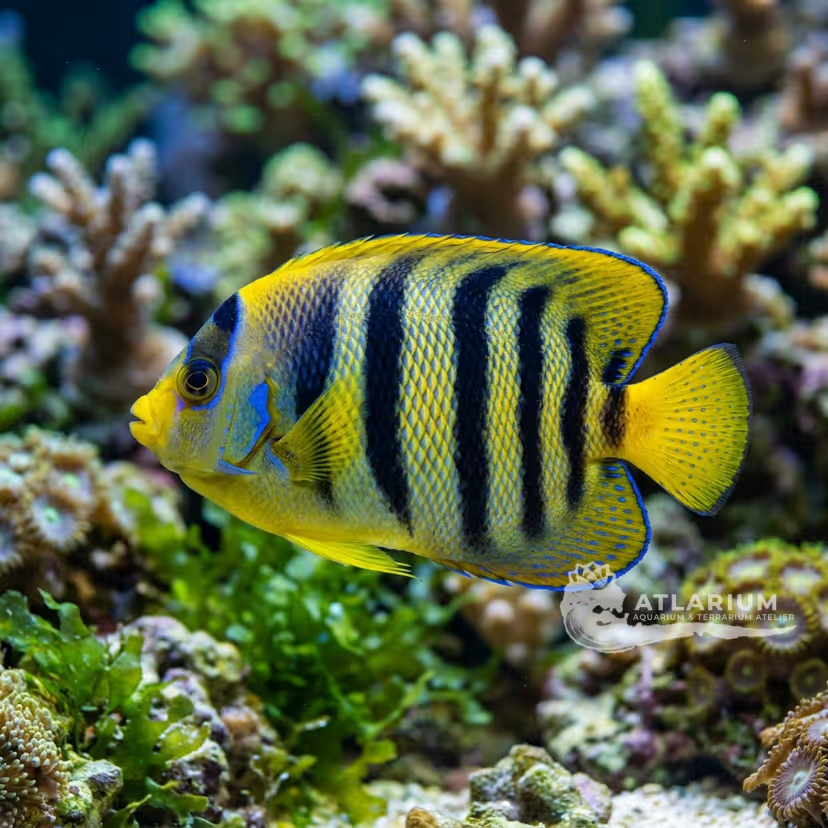
Yellowtail angelfish

Yellowtail angelfish

Apolemichthys xanthurus
View details->
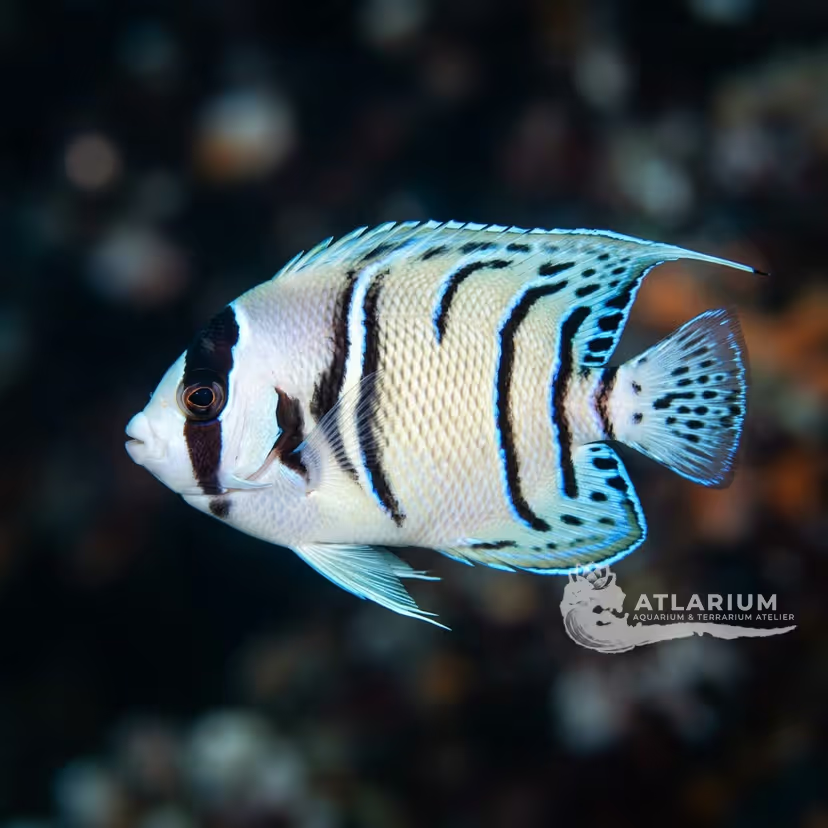
Sixbar Angelfish

Sixbar Angelfish

Pomacanthus sexstriatus
View details->
Masked Angelfish

Masked Angelfish

Genicanthus personatus

View details->
Gray Angelfish

Gray Angelfish

Pomacanthus arcuatus

View details->
Bandit Angelfish

Bandit Angelfish

Apolemichthys arcuatus

View details->
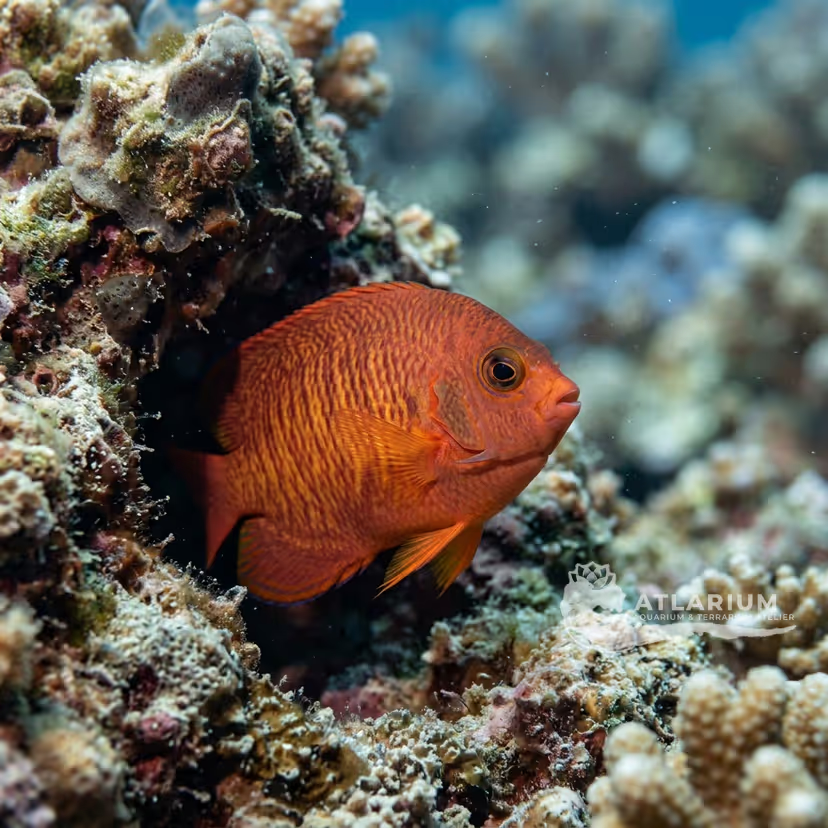
Japanese swallowtail angelfish

Japanese swallowtail angelfish

Genicanthus semifasciatus
View details->
Golden angelfish

Golden angelfish

Centropyge aurantia

View details->
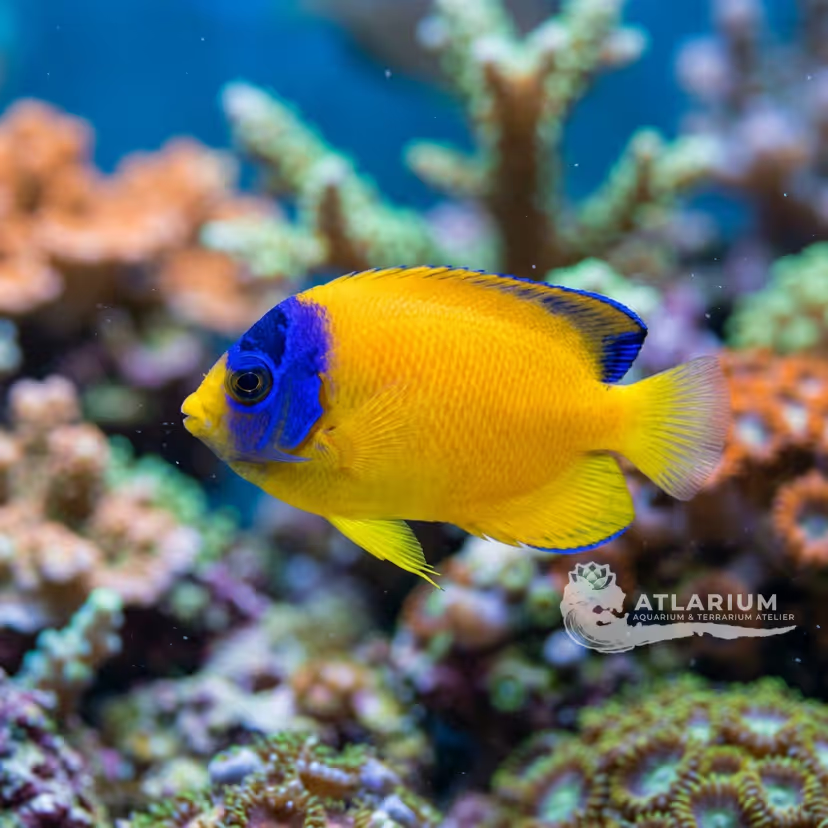
Bluering angelfish

Bluering angelfish

Pomacanthus annularis
View details->
Purplemask angelfish

Purplemask angelfish

Centropyge venusta

View details->
Colin's Angelfish

Colin's Angelfish

Centropyge colini

View details->
Last updated: 06/30/2026