Encyclopaedia

FishMarineAdvanced
©AI Generated·Proprietary

Masked Angelfish

Genicanthus personatus

An exceptionally rare, endemic Hawaiian treasure inhabiting extreme ocean depths. Distinctive for its bright mask, this pristine white angelfish demands massive, mature systems and impeccable water quality.

Taxonomy
Class:Actinopteri
Order:Perciformes
Family:Pomacanthidae
Genus:Genicanthus
Species:Genicanthus personatus

Share

Check out Masked Angelfish on Atlarium

PracticeRecognition quizzesPhotos, names, origins, and puzzles to review Atlas species.Open quizzes
Water Temperature

19 - 23 °C

pH Value

8.1 - 8.4

Water type

Marine

Tank level

All levels

Adult size

21 cm

Minimum tank volume

>= 800 L

Minimum group

>= 1

KH

8 - 12 dKH

Species description

Geographical Origin and Habitat: Endemic to the Northwestern Hawaiian Islands and Midway Atoll. It inhabits very deep outer reef slopes and drop-offs exposed to strong ocean currents, typically at depths between 20 and over 170 meters, where water temperatures are significantly cooler than in shallow tropical lagoons.
Taxonomy and Morphology: Belongs to the family Pomacanthidae, genus Genicanthus. It features a laterally compressed body with a lyre-shaped caudal fin (lyretail) characteristic of this genus of planktivorous angelfish. Reaches a maximum standard length of about 21 centimeters as an adult.
Social Behavior: Peaceful and active species, an open-water swimmer that lives in groups or small harems consisting of a single male and several females. Unlike many other angelfish, it spends most of its time in the water column hunting for planktonic food, showing little interest in the substrate.
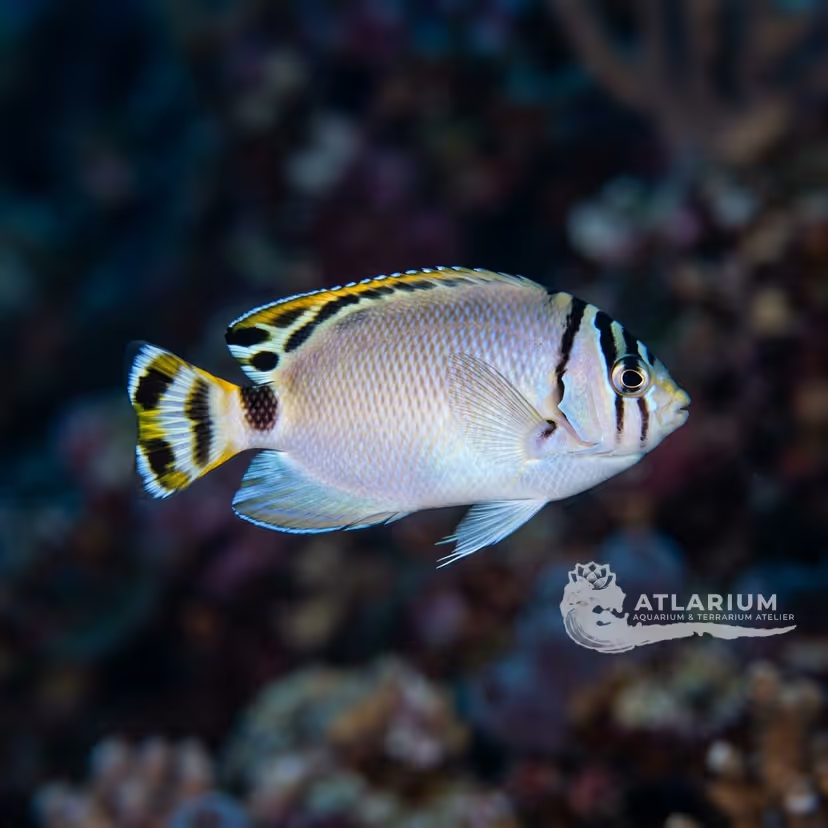
Coloration and Sexual Dimorphism: Sexual dimorphism is extremely pronounced. Females have a pure pearly-white body with a black mask covering the eyes and mouth, and wide black margins on the caudal fin. Adult males have a bright white body with a striking orange or golden mask on the face and yellow-orange margins on the pectoral, dorsal, and anal fins.

Care, breeding and tankmates

Aquarium Setup: Requires a very large and mature marine aquarium of at least 500 liters, with ample open space for swimming and rockwork arranged to form overhangs and caves for shelter. It is important that the rock structures are highly stable to prevent any collapse.
Diet and Feeding: Primarily a planktivorous species. In the wild, it feeds on zooplankton, copepods, and small suspended crustaceans. In the aquarium, it must be fed multiple times a day with high-quality frozen foods such as mysis, brine shrimp, lobster eggs, copepods, and vitamin-enriched pellet foods.
Water Quality: Being a deep-water species, it requires cool temperatures, ideally between 18 and 23 °C (64-73 °F). Maintain pH between 8.1 and 8.4, and specific gravity at 1.022-1.025. The use of a water chiller and a powerful filtration system with an oversized protein skimmer is indispensable.
Compatibility and Cohabitation: Highly peaceful and completely reef-safe, as it does not nip at stony corals, soft corals, or clams. It can coexist with other peaceful reef fish. Avoid housing it with highly aggressive or fast-swimming fish that could intimidate it or outcompete it for food.
Aquarium Breeding: Protogynous hermaphrodite. Dominant females can transition into males. Breeding in home aquariums is extremely difficult, but has been achieved successfully by a few specialized breeders and marine research institutions.
Risks and Diseases: Exceptionally rare and expensive species. The main risks include decompression sickness if wild-caught, sensitivity to temperatures above 24 °C (75 °F), and susceptibility to skin parasites. Requires expert care, very careful acclimation in dim light, and constant monitoring of parameters.

Geographic Origin and Distribution

Endemic to the Northwestern Hawaiian Islands and Midway Atoll. It inhabits very deep outer reef slopes and drop-offs exposed to strong ocean currents, typically at depths between 20 and over 170 meters, where water temperatures are significantly cooler than in shallow tropical lagoons.

Origin

Tropical oceans and reefs

Fish profile

Temperament
Peaceful
It is peaceful and sociable. It rarely bothers other fish. It becomes bold over time.
Diet
Omnivore
It is a planktivore. Feed a varied diet of mysis shrimp. Offer high-quality pellets daily.
Sex ratio
Harem
They form natural harems. Keep one male with multiple females. Multiple males will fight aggressively.
Feeding frequency
THREE_FOUR_DAILY
It is very active. It needs multiple daily feedings. Feed small portions three times daily.
Bioload
The bioload is moderate. Efficient biological filtration is required. Regular water changes keep nitrates low.
Flow
Strong
It is an open-water swimmer. It appreciates strong water flow. Good circulation simulates ocean currents.
Jump risk
Yes
It is easily startled. There is a high jump risk. A tight lid is necessary.
Reproduction
Oviparous
It is a pelagic spawner. Captive breeding is exceptionally rare. Fry require specialized live foods.
Compatibility & tankmates
Reef safe
It is very peaceful. This fish is completely reef safe. Avoid overly aggressive tank mates.
Tank level
All levels
It is an active swimmer. It uses the upper tank levels. Open swimming space is required.

Window to the official scientific data of the species

Data synced on: 06/15/2026

Scientific Parameters & Models

Trophic level
2.7 ± 0.31 se
Resilience
Medium (1.4 - 4.4 years)
Phylogenetic uniqueness (PD50)
0.501
Bayesian Length-Weight
a = 0.0302, b = 2.89
VulnerabilityLow vulnerability (11 / 100)

Image gallery

Licensed images linked to the species or, when marked, to the closest representative taxon.

Related species

Recommendations grouped by close relatives, companion choices, and similar care.

Variants and close relatives

Same atlas type, nearby scientific identity, genus, or family.

Japanese swallowtail angelfish

Japanese swallowtail angelfish

Genicanthus semifasciatus

View details->
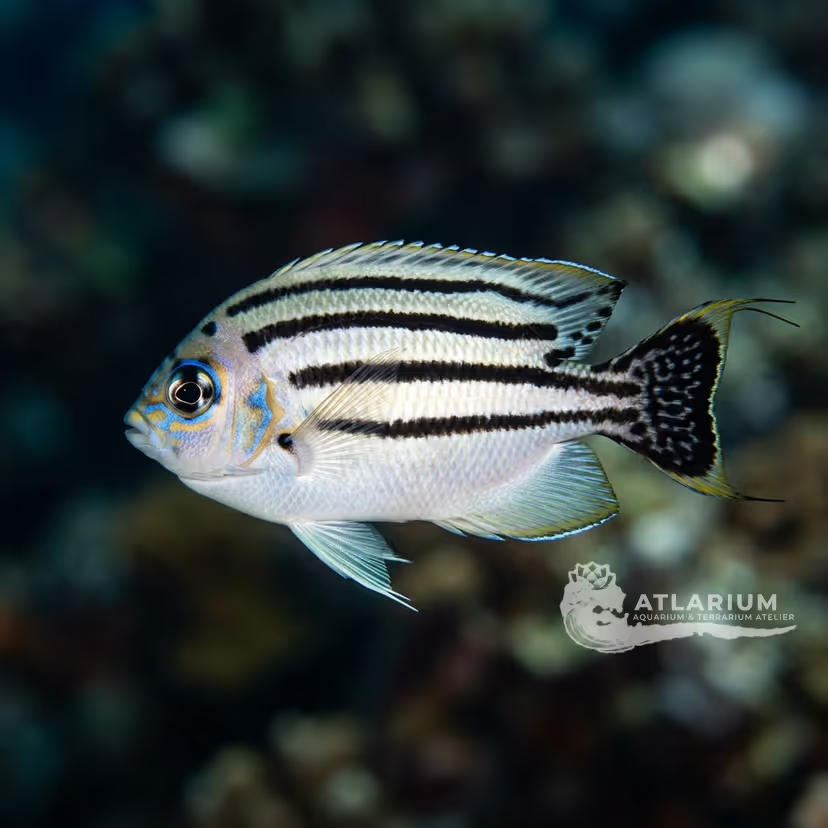
Blackspot Angelfish

Blackspot Angelfish

Genicanthus melanospilos
View details->
Lamarck's angelfish

Lamarck's angelfish

Genicanthus lamarck

View details->
Ornate Angelfish

Ornate Angelfish

Genicanthus bellus

View details->
Watanabe's Angelfish

Watanabe's Angelfish

Genicanthus watanabei

View details->
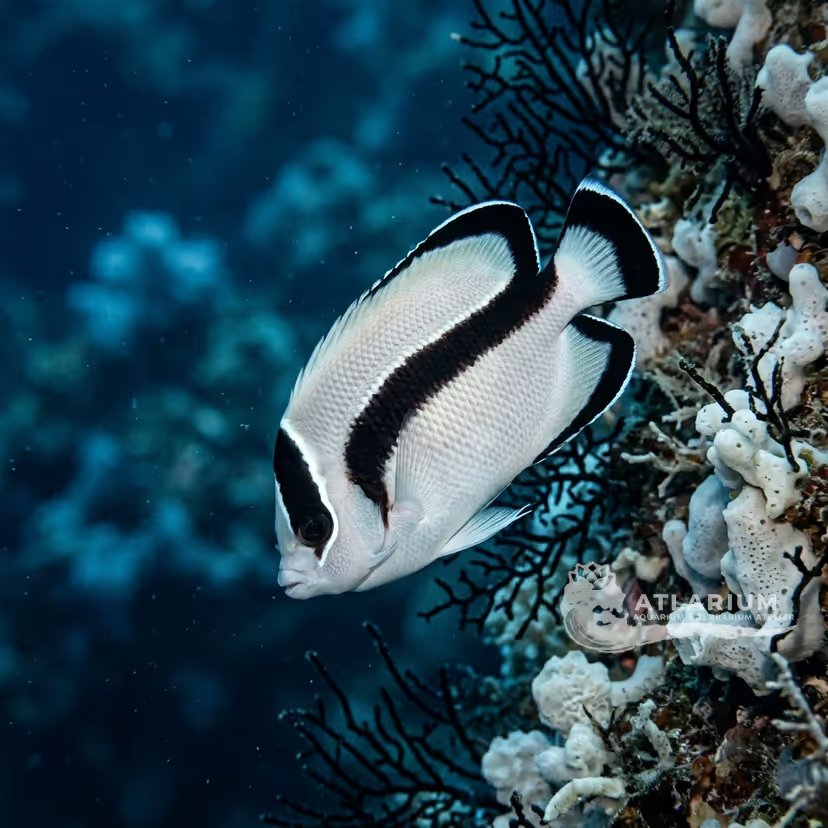
Zebra angelfish

Zebra angelfish

Genicanthus caudovittatus
View details->
Bandit Angelfish

Bandit Angelfish

Apolemichthys arcuatus

View details->
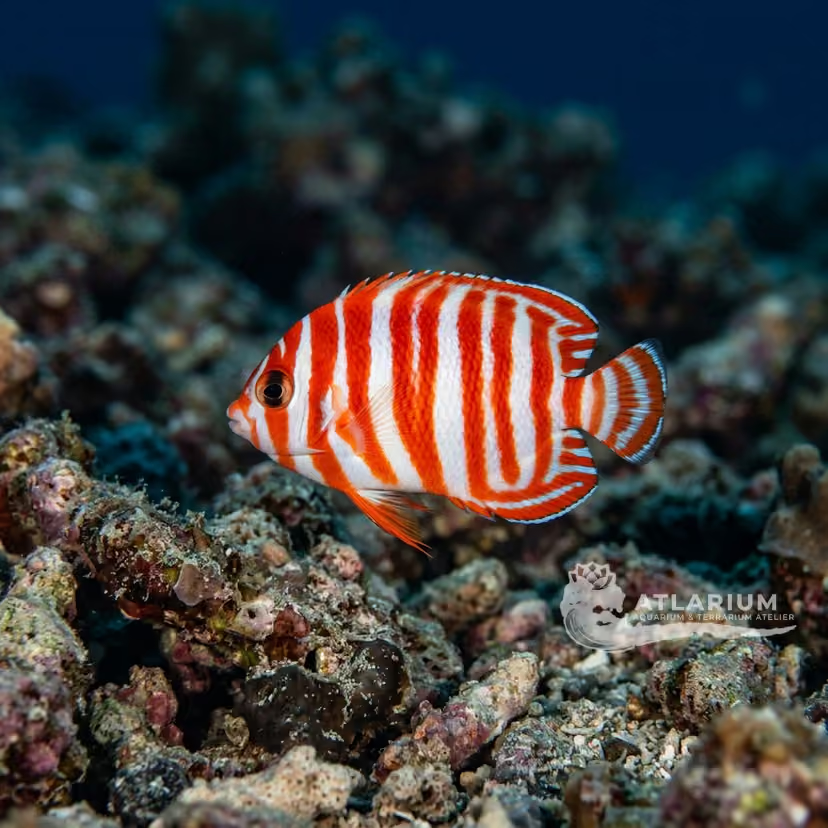
Conspicuous Angelfish

Conspicuous Angelfish

Chaetodontoplus conspicillatus
View details->
Peppermint Angelfish

Peppermint Angelfish

Centropyge boylei

View details->
Narc Angelfish

Narc Angelfish

Centropyge narcosis

View details->
Bluestriped Angelfish

Bluestriped Angelfish

Chaetodontoplus septentrionalis
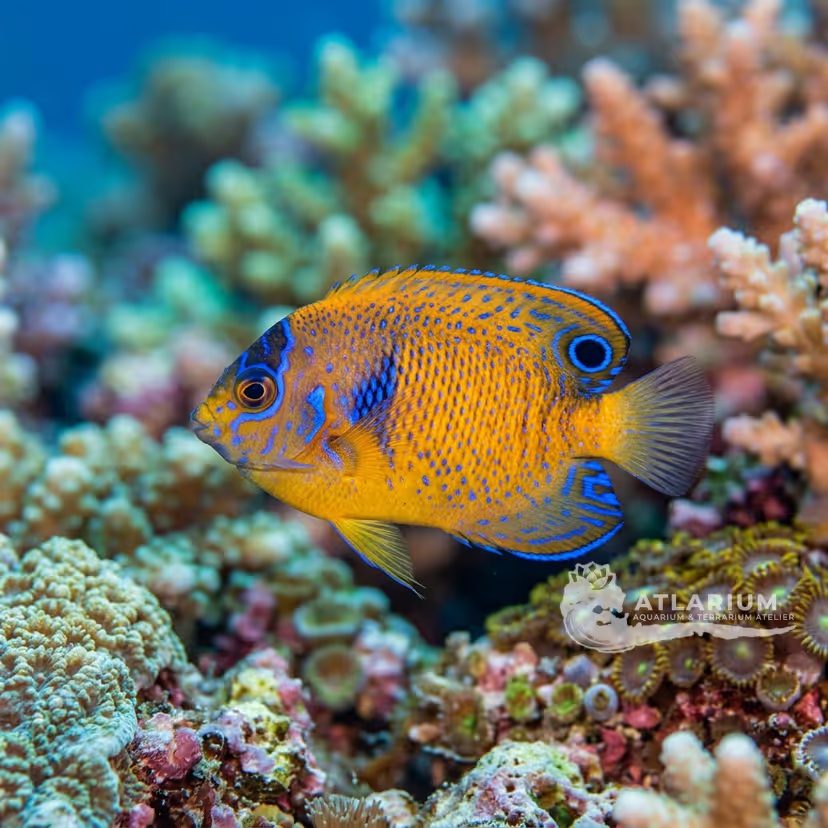
View details->
Japanese Pygmy Angelfish

Japanese Pygmy Angelfish

Centropyge interrupta

View details->
Blackear Angelfish

Blackear Angelfish

Centropyge hotumatua
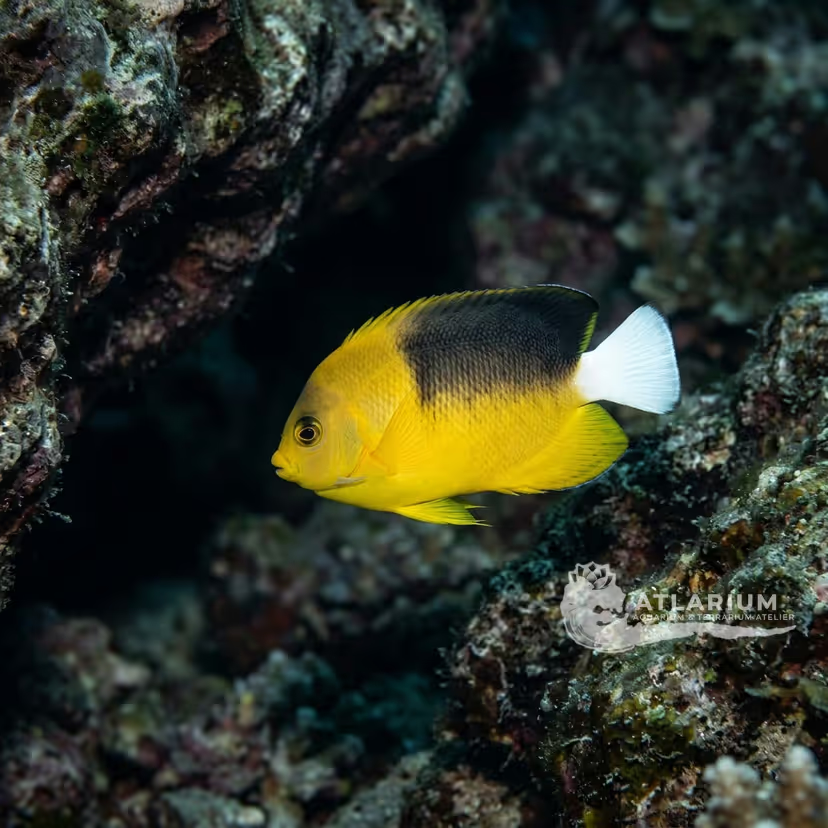
View details->
Abe's Angelfish

Abe's Angelfish

Centropyge abei

View details->
Colin's Angelfish

Colin's Angelfish

Centropyge colini

View details->
Debelius' angelfish

Debelius' angelfish

Centropyge debelius

View details->

Recommended companions

Compatible cards from coherent ecosystems with matching parameters.
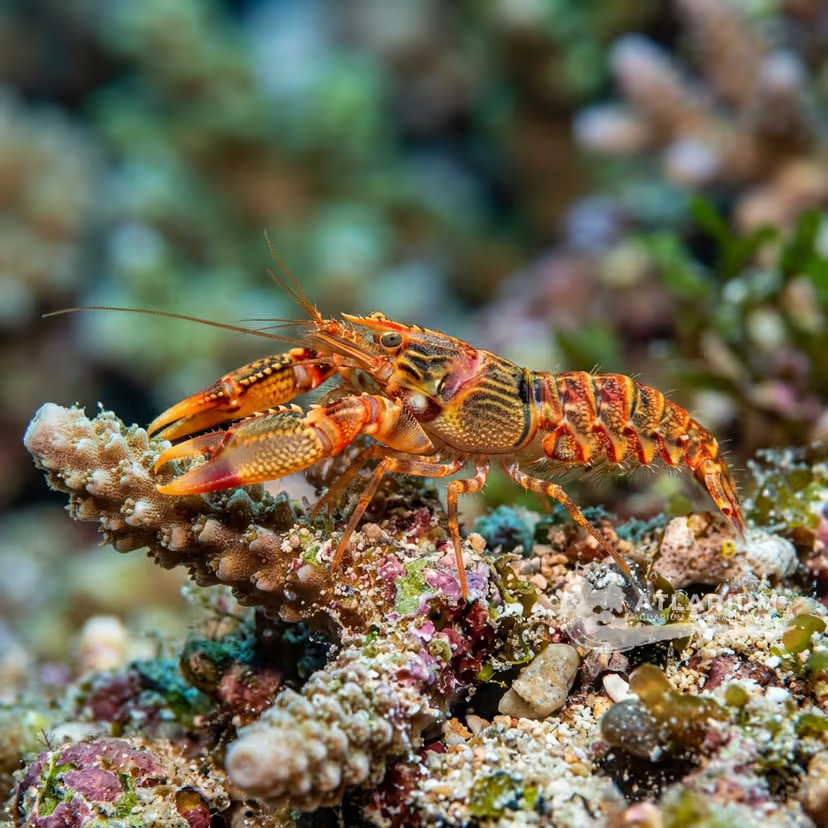
Agile Snapping Shrimp
Invertebrate

Agile Snapping Shrimp

Alpheus agilis

View details->
Antenna Hermit Crab
Invertebrate

Antenna Hermit Crab

Clibanarius antennatus
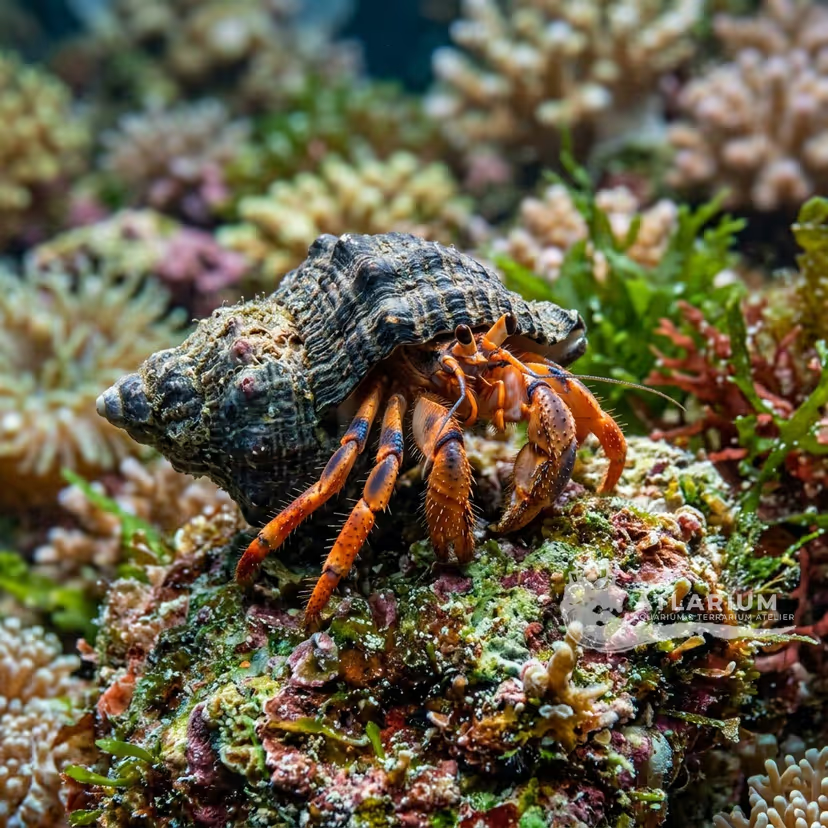
View details->
Equal Hermit Crab
Invertebrate

Equal Hermit Crab

Clibanarius aequabilis

View details->
Bigclaw snapping shrimp
Invertebrate

Bigclaw snapping shrimp

Alpheus heterochaelis

View details->
Edwards' Snapping Shrimp
Invertebrate

Edwards' Snapping Shrimp

Alpheus edwardsii

View details->
African snapping shrimp
Invertebrate

African snapping shrimp

Alpheus africanus

View details->
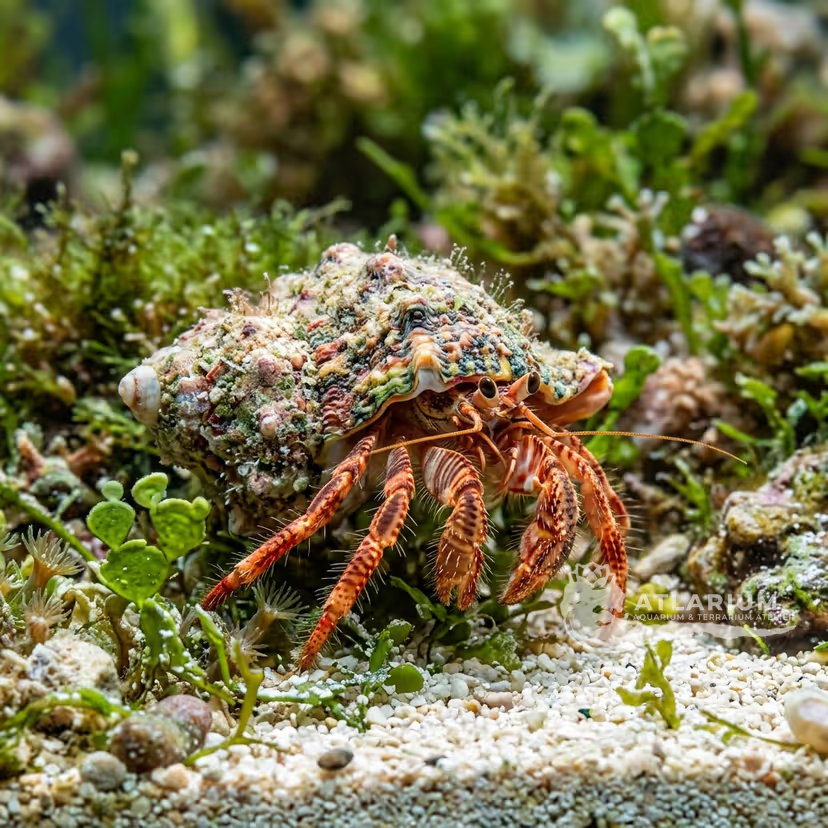
Flat-clawed pistol shrimp
Invertebrate

Flat-clawed pistol shrimp

Alpheus aequus
View details->
Antillean hermit crab
Invertebrate

Antillean hermit crab

Clibanarius brasiliensis

View details->
Arethusa Hermit Crab
Invertebrate

Arethusa Hermit Crab

Clibanarius arethusa

View details->
Bahia Cleaner Shrimp
Invertebrate

Bahia Cleaner Shrimp

Lysmata bahia

View details->
Boschma's hermit crab
Invertebrate

Boschma's hermit crab

Clibanarius boschmai

View details->
Cook's hermit crab
Invertebrate

Cook's hermit crab

Clibanarius cooki

View details->
Danai's hermit crab
Invertebrate

Danai's hermit crab

Clibanarius danai

View details->
De Man's Hermit Crab
Invertebrate

De Man's Hermit Crab

Clibanarius demani

View details->
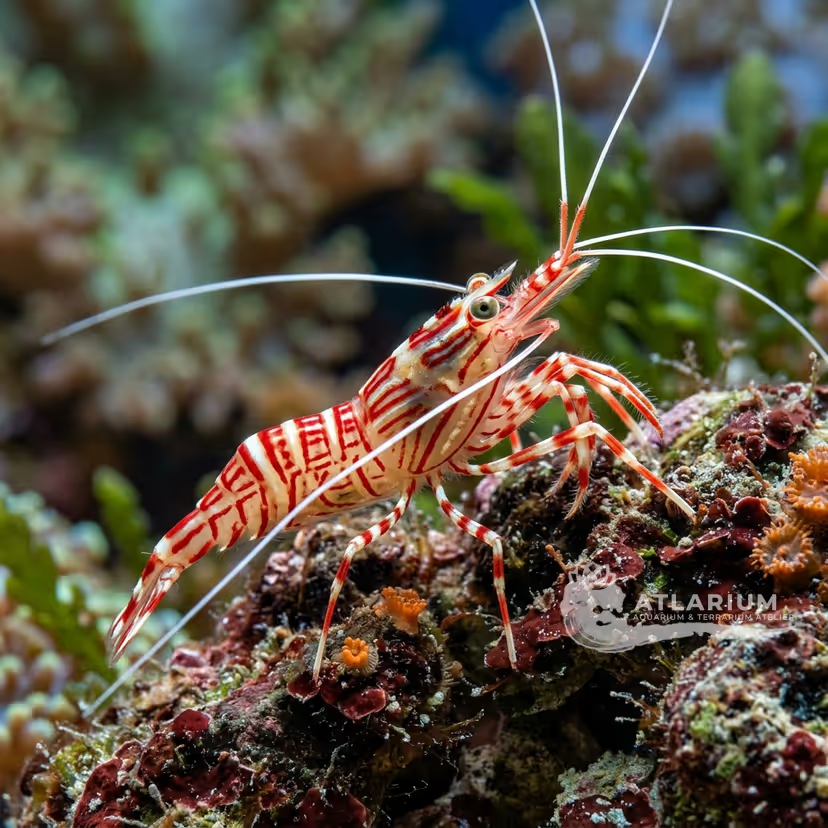
Feather Duster Worm
Invertebrate

Feather Duster Worm

Sabellastarte spectabilis
View details->
Lysmata prima shrimp
Invertebrate

Lysmata prima shrimp

Lysmata

View details->

Similar care

Cards with similar requirements, difficulty, habitat, and husbandry profile.

Clarion Angelfish

Clarion Angelfish

Holacanthus clarionensis

View details->
Goldspotted Angelfish

Goldspotted Angelfish

Apolemichthys

View details->
Rock Beauty Angelfish

Rock Beauty Angelfish

Holacanthus tricolor

View details->
Three-spot Angelfish

Three-spot Angelfish

Apolemichthys trimaculatus

View details->
Limbaugh's angelfish

Limbaugh's angelfish

Holacanthus limbaughi

View details->
Passer Angelfish

Passer Angelfish

Holacanthus passer

View details->
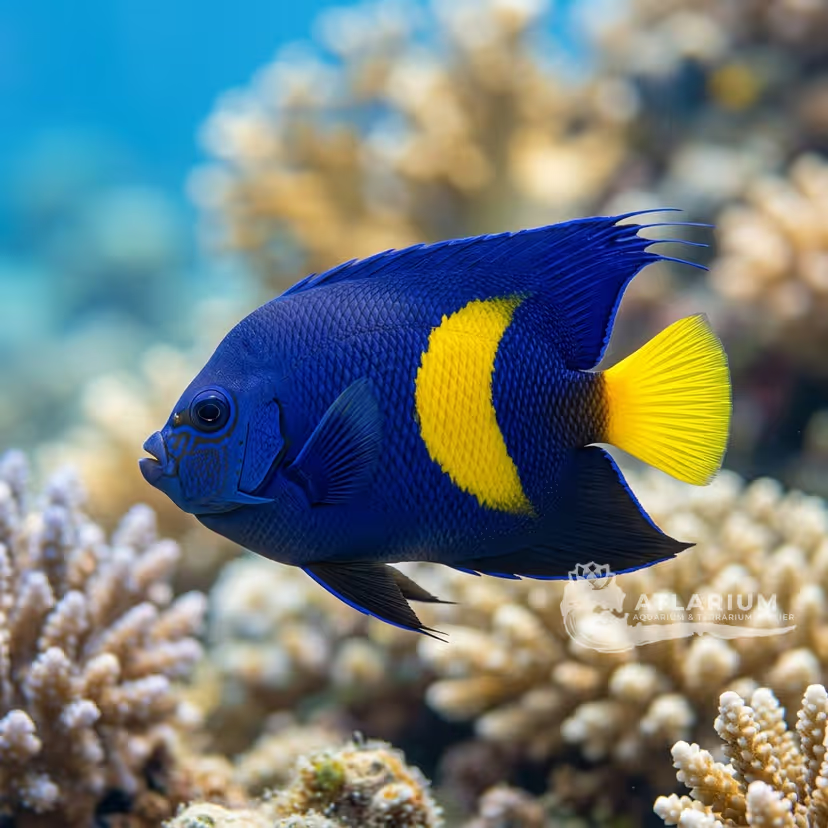
Blue Angelfish

Blue Angelfish

Holacanthus bermudensis
View details->
Asfur angelfish

Asfur angelfish

Pomacanthus asfur

View details->
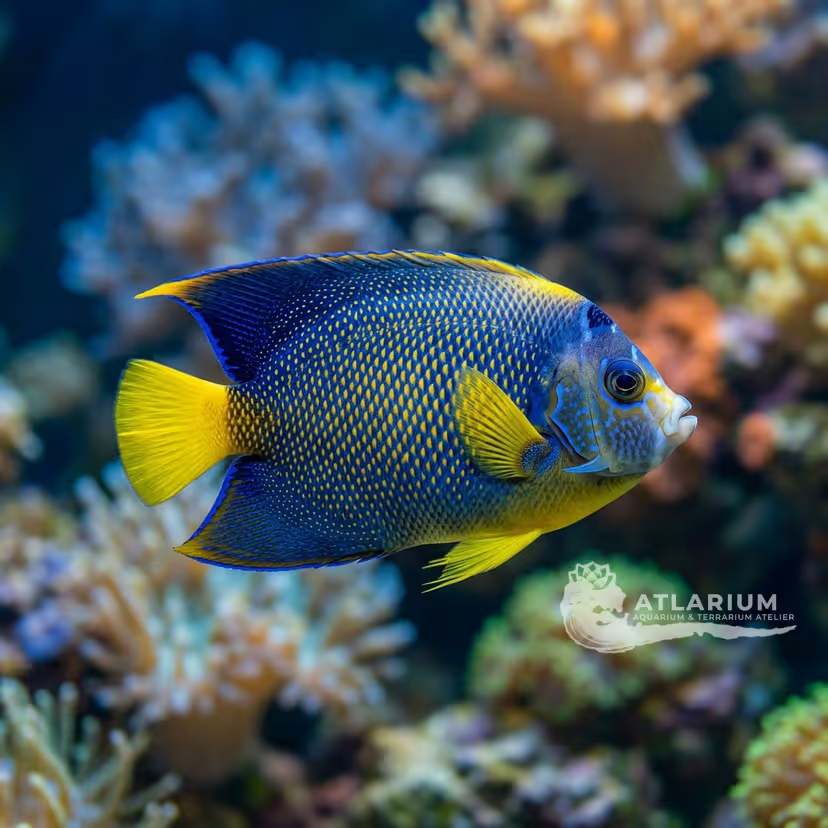
Singapore Angelfish

Singapore Angelfish

Chaetodontoplus mesoleucus
View details->
Yellowtail angelfish

Yellowtail angelfish

Apolemichthys xanthurus

View details->
Bluering angelfish

Bluering angelfish

Pomacanthus annularis

View details->
Coral beauty angelfish

Coral beauty angelfish

Centropyge bispinosa

View details->
Gray Angelfish

Gray Angelfish

Pomacanthus arcuatus

View details->
Sixbar Angelfish

Sixbar Angelfish

Pomacanthus sexstriatus
View details->
Tiger Angelfish

Tiger Angelfish

Apolemichthys kingi

View details->
Barred Angelfish

Barred Angelfish

Paracentropyge multifasciata

View details->
Last updated: 06/30/2026