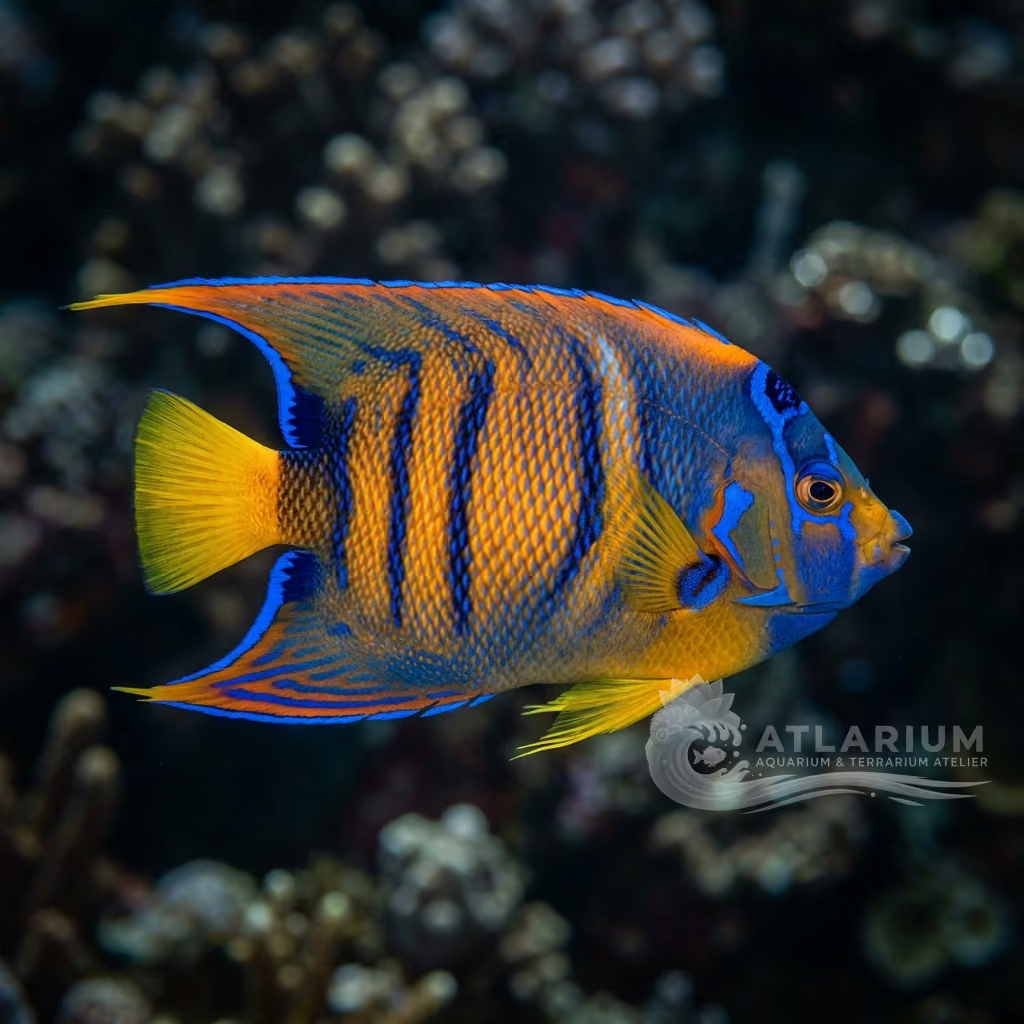
French Angelfish
Pomacanthus paru
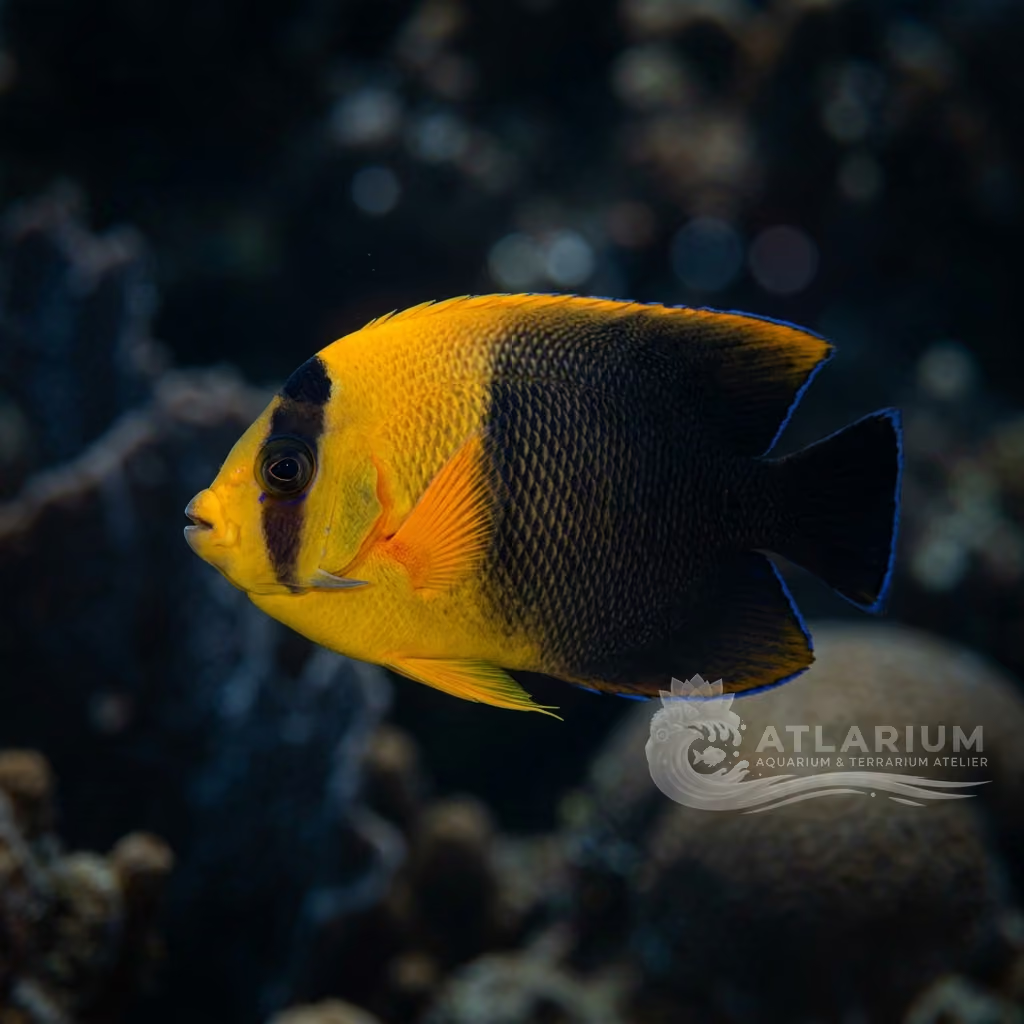
The Gold and Black Monolith (16+ inches / 40 cm). Jet black with gold-trimmed scales. It becomes a massive, thick, tank-like pet that will eat right from your hand.
Water Temperature
24 - 28 °C
pH Value
8.1 - 8.4
Water type
Marine
Tank level
All levels
Adult size
40 cm
Minimum tank volume
800 L
Minimum group
>= 1
KH
4 - 6 dKH

Species description
Geographical Origin and Habitat: Distributed in the western Atlantic Ocean: from New York to the Bahamas, Gulf of Mexico, Caribbean Sea, and along the coast of Brazil. Typically lives at depths from 3 to 100 meters, swimming over coral reefs, sandy rocky flats, and encrusted wrecks.
Taxonomy and Morphology: Known as the French Angelfish. It shares much of its massive size (40 cm / 16 inches) with the Emperor and Queen angelfish. Typical disc-like profile, with a minute protrusible mouth and an enormous body surface area that makes it majestic but unsuited for swimming in strong head-on currents.
Social Behavior: Angelfish with a proud, curious, and intrepid behavior. In the wild, it is often observed in stable pairs defending their territories against other conspecific pairs. In the aquarium, it has a swaggering demeanor and is very intrusive with the keeper's hands in search of food. Aggressive towards specimens of similar shape/color.
Coloration and Sexual Dimorphism: Juvenile coloration features yellow bars on a pure black background. As an adult, the yellow bands disappear to give way to a spectacular gray/black body where every single large scale is edged in golden yellow (scale armor effect). The snout becomes light gray and the eyes bordered in yellow. No known sexual dimorphism.

Care, breeding and tankmates
Aquarium Setup: Gigantic tank, minimum 800 liters (210 gallons). It needs dizzying spaces to swim in open waters combined with huge arched rock structures where it can shelter for the night. Keeping the aquarium clean is complex due to its voracious appetite which leads it to generate high biomass.
Diet and Feeding: In the wild, adults eat a vast majority of sponges, followed by gorgonians, hydroids, and algae. Interestingly, juveniles act as "cleaner fish", picking parasites from large Trevallies. In captivity, high-quality angelfish feeds, abundant Nori algae, krill, and blanched vegetables must be provided.
Water Quality: Extremely robust, perhaps the most adaptable among the large Pomacanthids. Tolerates slight fluctuations in salinity and temperature (24-28 °C / 75-82 °F), but demands pH between 8.1 and 8.4. The high organic load produced requires scrupulous mechanical filtration and massive water changes supported by powerful skimmers.
Compatibility and Cohabitation: It will destroy the entire reef (LPS, SPS, clams, sponges). Suitable solely and exclusively in FO / FOWLR aquariums of immense gallonage. Perfect companion for triggerfish, large groupers, marine snappers, and large tangs. NEVER insert more than one specimen per tank, unless you have a confirmed pair in thousands of liters.
Aquarium Breeding: Zero for aquarists. At dusk, the pair makes ritual ascensions to the surface, releasing eggs and sperm into the water column. The pelagic eggs drift pushed by the current. There are no captive breeding attempts given the large and sustainable availability in the wild.
Risks and Diseases: A species very resistant to parasites, but a guaranteed victim of Head and Lateral Line Erosion (HLLE) disease if the diet lacks vitamins and sponges or if poor, dusty activated carbon is used long-term.

Geographic origin and distribution
Distributed in the western Atlantic Ocean: from New York to the Bahamas, Gulf of Mexico, Caribbean Sea, and along the coast of Brazil. Typically lives at depths from 3 to 100 meters, swimming over coral reefs, sandy rocky flats, and encrusted wrecks.
Origin
Central America and Caribbean

Fish profile
- Temperament
- Semi-aggressive
- The French Angelfish is exceedingly bold, highly inquisitive, and very often becomes the dominant, undisputed boss of the aquarium. It will forcefully challenge newcomers and actively establish dominance over any similarly sized or colored fish. It is strongly recommended to introduce this powerful angelfish last into an established large predator community.
- Diet
- Omnivore
- Wild French Angelfish are omnivorous, heavily relying on a diet of marine sponges, tunicates, and algae. In the aquarium, it is critical to provide a specialized commercial diet containing real sponge extract to prevent malnutrition. This should be strongly supplemented with fresh marine algae, mysis shrimp, and high-quality chopped seafood.
- Life expectancy
- 15-25 years
- Adult size
- 40 cm
- Sex ratio
- Flexible
- There are absolutely no reliable visual differences between male and female French Angelfish. Given their massive adult size and intense intraspecific territoriality, keeping more than one per aquarium is strongly prohibited. Coexistence of multiple adults is only possible in exceptionally large, public aquarium displays holding thousands of gallons.
- Feeding frequency
- Twice daily
- Because of their large size and constant grazing habits, feeding them two to three times daily is highly recommended. Offering multiple small meals effectively mimics their natural foraging behavior and significantly reduces territorial aggression. Providing seaweed on a clip ensures they have constant access to necessary vegetable matter between main meals.
- Bioload
- High
- The French Angelfish is a rapidly growing, massive species that places an exceptionally heavy bioload on aquarium filtration. A top-tier, oversized protein skimmer and a large volume of highly mature biological media are strictly mandatory. Very frequent, substantial water changes are absolutely necessary to manage the huge amounts of waste and keep nitrates low.
- Flow
- Strong
- Pomacanthus paru needs brisk, oxygen-rich circulation, with the strongest return flow spread through open water rather than aimed continuously at one refuge. Gigantic tank, minimum 800 liters (210 gallons). It needs dizzying spaces to swim in open waters combined with huge arched rock structures where it can shelter for the night. Keep solid cover available so the fish can leave the fastest water whenever it chooses.
- Jump risk
- Yes
- While they are very heavily bodied and not typical jumpers, a sudden startle or severe aggression can cause them to breach the surface. Using a highly secure, tight-fitting lid or heavy mesh cover is a strictly required safety precaution. This effectively eliminates the completely preventable risk of a large, valuable fish ending up on the floor.
- Reproduction
- Oviparous
- Captive reproduction of the French Angelfish is extraordinarily difficult and essentially impossible for the home hobbyist. They are broadcast spawners that release thousands of pelagic eggs into the open ocean currents at dusk. Successfully raising the microscopic larvae demands highly specialized live foods and vast commercial hatchery infrastructure.
- Compatibility & tankmates
- Highly aggressive
- Juveniles display peaceful cleaning behaviors, but adults grow highly aggressive and fiercely territorial. They must be housed with other large, robust, and assertive species such as durable tangs, large groupers, and aggressive wrasses. They are totally inappropriate for reef tanks, as they will aggressively consume soft corals, LPS, and various ornamental invertebrates.
- Tank level
- All levels
- This incredibly active fish heavily utilizes all levels of the aquarium, frequently pacing from end to end. They require an enormous, unobstructed swimming area paired with massive rockwork structures. Large, cavernous hiding spots must be provided to allow the fish to retreat safely and establish a secure territory.

Scientific Parameters & Models
FishBase
Window to the official scientific data of the species
FishBase v25.04Data synced on: 06/15/2026
- Trophic level
- 2.8 ± 0 se
- Resilience
- Low (4.5 - 14 years)
- Generation time
- 9.2 years
- Phylogenetic uniqueness (PD50)
- 0.5001
- Bayesian Length-Weight
- a = 0.03715, b = 2.92
- VulnerabilityModerate vulnerability (39 / 100)

Related species
Recommendations grouped by close relatives, companion choices, and similar care.