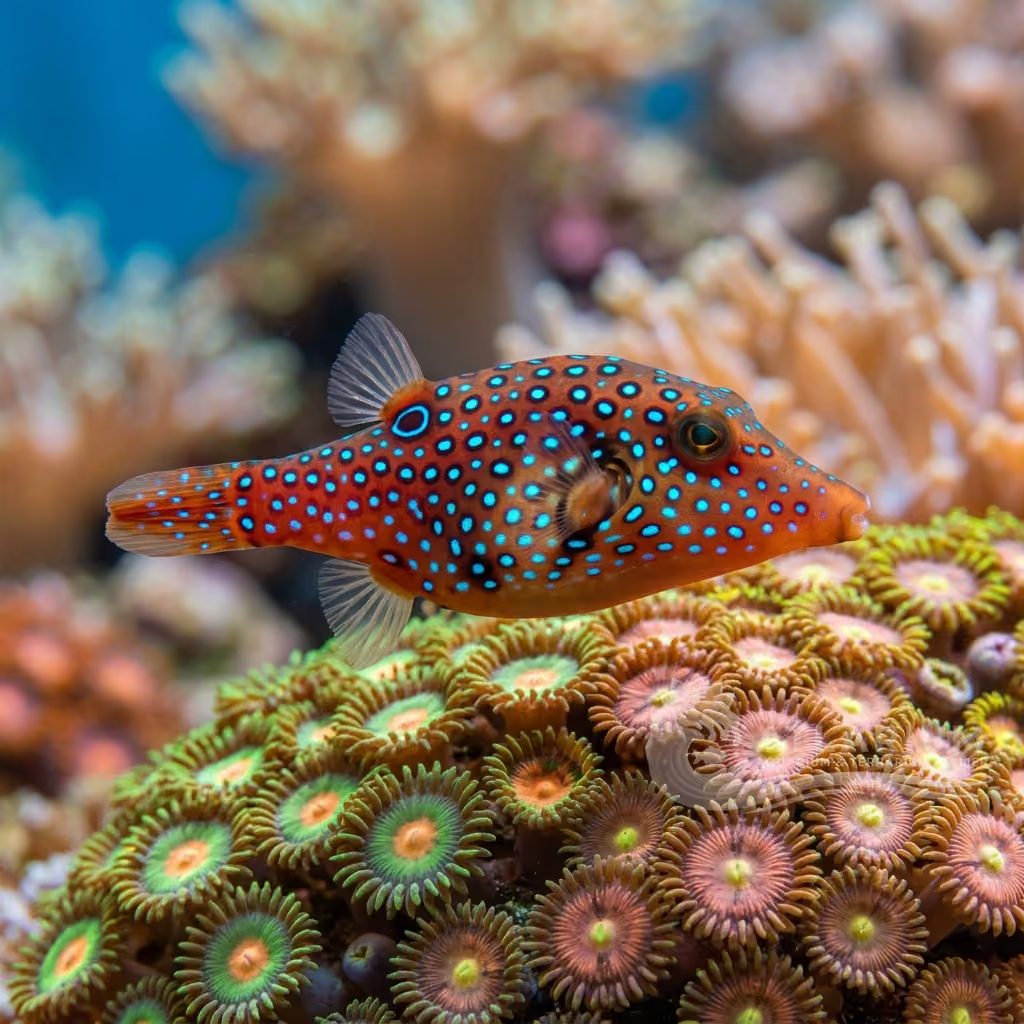
Leopard Toby
Canthigaster leoparda
The Leopard Sharpnose Puffer is a rare, deep-water reef fish. Shy and reclusive, it demands a spacious tank with intricate, shaded caves and a crunchy diet to wear down its teeth.
Water Temperature
22 - 26 °C
pH Value
8.1 - 8.4
Water type
Marine
Tank level
Bottom and middle
Adult size
7.5 cm
Minimum tank volume
>= 120 L
Minimum group
>= 1
KH
8 - 12 dKH

Species description
Geographical Origin and Habitat: Western Indo-Pacific, distributed from Christmas Island to the Philippines, Great Barrier Reef, and Guam. Lives on deep seaward reefs near caves. This rare pufferfish inhabits deep seaward drop-offs and shaded reef caves throughout the Indo-Pacific region.
Taxonomy and Morphology: Family Tetraodontidae. Genus Canthigaster. Short, compressed body and sharp snout. Reaches about 7.5 cm in maximum size. Its morphology features a compact, scaleless body with prominent, independently moving eyes and a strong, beak-like mouth.
Social Behavior: Very shy and unusually peaceful for a Canthigaster. Spends its time exploring deep rocky faces and shaded areas of the aquarium. Solitary and secretive behavior; it is highly territorial toward conspecifics and prefers patrolling dark crevices.
Coloration and Sexual Dimorphism: Spectacular body pattern characterized by dark leopard spots on a light golden-reddish background, enriched with iridescent blue lines on the snout. No sexual dimorphism. The yellowish body is covered by a detailed network of undulating brown lines that produce a distinctive leopard-like pattern.

Care, breeding and tankmates
Aquarium Setup: Requires a tank of at least 120 liters with plenty of live rock arranged to create shaded crevices and caves. Requires a spacious aquarium with plenty of live rock arranged to form caves and shaded overhangs to suit its shy nature.
Diet and Feeding: Omnivore. Feed krill, clams, and mussels with shells to encourage tooth wear, supplementing with vegetable pellets and nori algae. Carnivorous diet that must include hard-shelled foods like small snails, unpeeled shrimp, krill, and clams to wear down its growing beak.
Water Quality: Stable parameters: temperature 22-26°C, pH 8.1-8.4, salinity 1.020-1.025. Requires efficient biological filtration. Requires excellent water quality with efficient protein skimming, as its scaleless skin makes it highly sensitive to nitrogenous waste.
Compatibility and Cohabitation: Generally peaceful with similar-sized tankmates. May nip at the polyps of certain corals or small crustaceans. Compatible with fast-moving community fish, but it may nip the fins of slow-moving species and is not safe with small invertebrates.
Aquarium Breeding: Commercial breeding not documented. In the wild, they lay benthic eggs that are defended. Breeding in home aquariums is undocumented in captivity due to complex courtship behaviors and pelagic larval requirements.
Risks and Diseases: Like all puffers, it possesses internal defensive toxins. Sensitive to external parasites from skin stress. Main risks include overgrowth of the beak (if hard foods are not provided) and extreme sensitivity to copper-based medications.

Geographic origin and distribution
Western Indo-Pacific, distributed from Christmas Island to the Philippines, Great Barrier Reef, and Guam. Lives on deep seaward reefs near caves. This rare pufferfish inhabits deep seaward drop-offs and shaded reef caves throughout the Indo-Pacific region.
Origin
Tropical oceans and reefsSouth and Southeast Asia

Fish profile
- Temperament
- Semi-aggressive
- The Leopard Toby is a semi-aggressive and highly inquisitive fish with a distinct personality. They are territorial by nature and will not tolerate other puffers, especially conspecifics or similar-looking species, in the same aquarium. While generally peaceful toward unrelated fish, they are notorious fin-nippers and may harass slow-moving or long-finned tankmates. They spend their days exploring the rockwork, exhibiting a curious disposition as they search for food.
- Diet
- Omnivore
- Being an omnivore with a strong preference for meaty items, the Leopard Toby requires a varied diet to remain healthy. Their diet must include hard-shelled foods such as krill, clams, cockles, and unpeeled shrimp to naturally wear down their constantly growing beak-like teeth. In addition to meaty fare, they should be offered marine algae and vitamin-enriched preparations to support their immune system. Failing to provide hard-shelled prey can lead to overextended teeth, preventing the fish from feeding and requiring manual trimming.
- Life expectancy
- 5-10 years
- Adult size
- 7.5 cm
- Sex ratio
- 1:1 ratio
- This species should generally be housed singly in standard home aquariums, as they are highly territorial and aggressive toward conspecifics. Keeping multiple specimens is only feasible in exceptionally large systems with complex aquascaping that blocks lines of sight. In such settings, they may be kept as a compatible male-female pair, though establishing this is difficult due to minimal visible sexual dimorphism. For the average hobbyist, maintaining one individual per tank is the safest and most stress-free stocking option.
- Feeding frequency
- Twice daily
- It is recommended to feed the Leopard Toby in small portions twice daily to accommodate their active foraging behavior and high metabolism. Providing food in multiple smaller meals rather than one large feeding helps prevent overeating and reduces the amount of uneaten food that could foul the water. Feeding them regularly also helps curb their tendency to nip at corals or the fins of tankmates out of hunger. A consistent feeding schedule combined with active portion control is key to maintaining their long-term health.
- Bioload
- Medium
- The Leopard Toby is a carnivorous pufferfish with a high metabolic rate, producing a substantial amount of biological waste for its small size. They are messy eaters, often biting and crumbling hard-shelled foods, which can quickly degrade water quality if left unchecked. A robust filtration system, preferably including an efficient protein skimmer and chemical media, is highly recommended to manage the waste. Regular water changes and siphon cleaning of the substrate are essential to prevent dangerous nitrate and phosphate spikes.
- Flow
- Moderate
- Because they originate from deeper reef habitats and steep slopes, Leopard Tobies prefer moderate to weak water flow rather than high-velocity currents. Strong currents can exhaust this species, as their body shape is not built for sustained high-speed swimming. The aquarium design should incorporate areas of low-flow zones and quiet pockets behind rockwork where they can rest. Providing a balanced environment with moderate circulation will keep them active and stress-free without hindering their swimming.
- Jump risk
- Yes
- While not as notoriously prone to jumping as some surface-dwelling species, the Leopard Toby still poses a moderate jump risk, especially when startled or stressed. Pufferfish can make sudden darting movements when frightened, which can inadvertently propel them out of an uncovered aquarium. To prevent tragic accidents, a secure and tight-fitting lid or mesh screen cover is highly recommended. Ensuring all gaps around filters, cables, and plumbing are sealed is essential to guarantee the safety of this curious fish.
- Reproduction
- Oviparous
- Breeding Canthigaster leoparda in a home aquarium is extremely difficult and has not been reliably documented. In the wild, they are egg-scatterers or deposit adhesive eggs in benthic nests, which are then guarded by the male. Courting involves complex behaviors where the male circles and nudges the female. Raising the microscopic larvae is highly challenging due to their tiny size and specific initial feeding requirements, such as rotifers or specialized micro-plankton.
- Compatibility & tankmates
- Aggressive
- Leopard Tobies are semi-aggressive and not suitable for reef tanks or community aquariums with delicate invertebrates. They will actively hunt snails, crabs, shrimp, and feather dusters, and they may nip at stony corals. Suitable tankmates include active, semi-aggressive fish like wrasses, larger damsels, or hawkfish, which can hold their own. Avoid keeping them with passive, slow-moving species or those with long, flowing fins, as these are likely to become targets of fin-nipping.
- Tank level
- Middle/Bottom
- Canthigaster leoparda is a bottom-to-middle dwelling species that spends most of its time hovering close to the substrate and rockwork. In nature, they are native to deep reef slopes and drop-offs, which explains their instinct to stay near structures and caves. They rarely venture into open water or near the surface, preferring to navigate through crevices where they feel secure. Aquascaping should feature plenty of caves and low-light shelters to accommodate this bottom-middle swimming preference.

Scientific Parameters & Models
FishBase
Window to the official scientific data of the species
FishBase v25.04Data synced on: 06/15/2026
- Trophic level
- 3.1 ± 0.3 se
- Resilience
- High (less than 15 months)
- Phylogenetic uniqueness (PD50)
- 0.5
- Bayesian Length-Weight
- a = 0.03631, b = 2.88
- VulnerabilityLow vulnerability (10 / 100)

Related species
Recommendations grouped by close relatives, companion choices, and similar care.