Red-eye puffer
Carinotetraodon lorteti
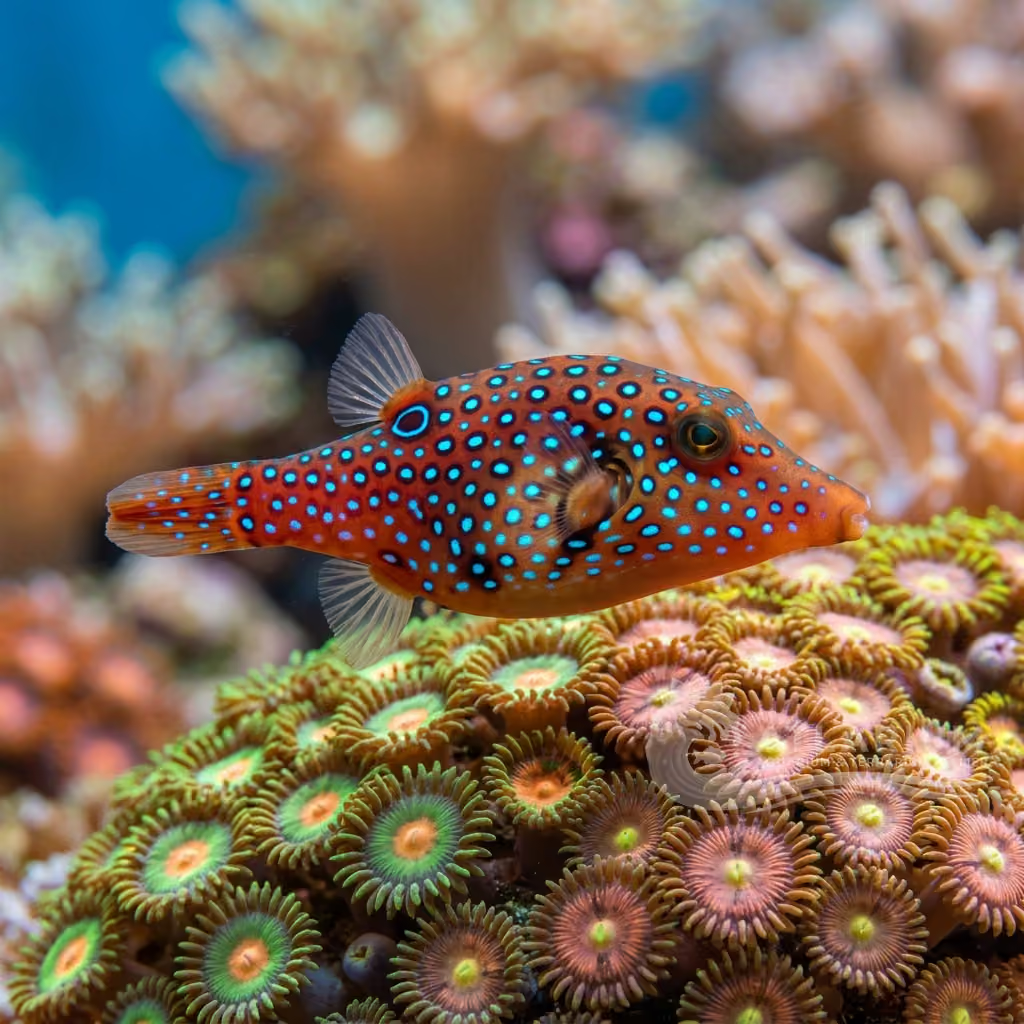
A small freshwater puffer among the most fascinating and challenging in fishkeeping. Intelligent and personable, with mobile red eyes that follow the observer, its compact body changes color and pattern depending on mood and sex. Males display dorsal and ventral crests during courtship. Native to Southeast Asia (Thailand, Vietnam, Cambodia), it is strictly freshwater — no salt needed. A strict carnivore requiring hard-shelled snails to maintain its beak. Highly territorial and nippy: species-only tank mandatory in nearly all cases.
24 - 28 °C
6.5 - 7.5
Freshwater
Bottom and middle
6 cm
>= 75 L
>= 1
4 - 15 dGH
2 - 7 dKH
80 - 295 ppm
125 - 461 uS/cm

Species description

Care, breeding and tankmates

Geographic origin and distribution
Origin

Fish profile
- Temperament
- Aggressive
- They are notoriously grumpy and aggressive. They actively predate on anything small. They possess a fierce but fascinating personality.
- Diet
- Carnivore
- Crunchy foods keep their teeth filed. Snails and small crustaceans are essential. Frozen bloodworms make good supplementary treats.
- Life expectancy
- 5-8 years
- Adult size
- 6 cm
- Sex ratio
- Harem
- Managing the sex ratio is critically important for Carinotetraodon lorteti due to the highly aggressive and territorial nature of the males. It is highly recommended to keep them either as single specimens or in a harem arrangement containing one male to several females (at least 2-3 females per male). Housing multiple males in the same aquarium almost inevitably leads to fierce, often fatal, combat as they mature and assert dominance. Even within a proper harem structure, providing abundant visual barriers and hiding spots is essential to diffuse any intraspecific tension.
- Feeding frequency
- Twice daily
- Once a day is generally sufficient. Avoid letting their bellies bulge excessively. Skipping a day mimics natural habits.
- Bioload
- Low to Medium
- They create a surprisingly high bioload. Messy eating habits foul water quickly. Excellent biological filtration is strictly required.
- Flow
- Strong
- They inhabit sluggish, calm natural waters. Slow to moderate flow is preferred. Strong currents cause them massive stress.
- Jump risk
- No
- Reproduction
- Oviparous
- Captive breeding is extremely difficult to achieve. Males become fiercely territorial during spawning. Eggs are scattered without parental care.
- Compatibility & tankmates
- Community
- They are fiercely aggressive fin-nippers. Species-only tanks are highly recommended. Tank mates are usually severely injured.
- Tank level
- Middle/Bottom
- Redeye puffers are predominantly bottom-to-middle dwelling fish that intricately associate themselves with the hardscape and flora of the aquarium. They can often be seen hovering just above the substrate or navigating methodically through dense thickets of aquatic plants. They rarely venture into the open upper levels of the water column unless actively pursuing food or moving to a new territory. Providing a complex environment in the lower half of the tank with driftwood, leaf litter, and caves is crucial for their behavioral enrichment.

Scientific Parameters & Models
Window to the official scientific data of the species
- Trophic level
- 3.5 ± 0.46 se
- Resilience
- High (less than 15 months)
- Phylogenetic uniqueness (PD50)
- 0.5156
- Bayesian Length-Weight
- a = 0.0263, b = 2.88
- VulnerabilityLow vulnerability (10 / 100)

Image gallery
Licensed images linked to the species or, when marked, to the closest representative taxon.

Related species
Recommendations grouped by close relatives, companion choices, and similar care.