Encyclopaedia

FishFreshwaterIntermediate
©AI Generated·Proprietary

Threestripe Gourami

Trichopsis schalleri

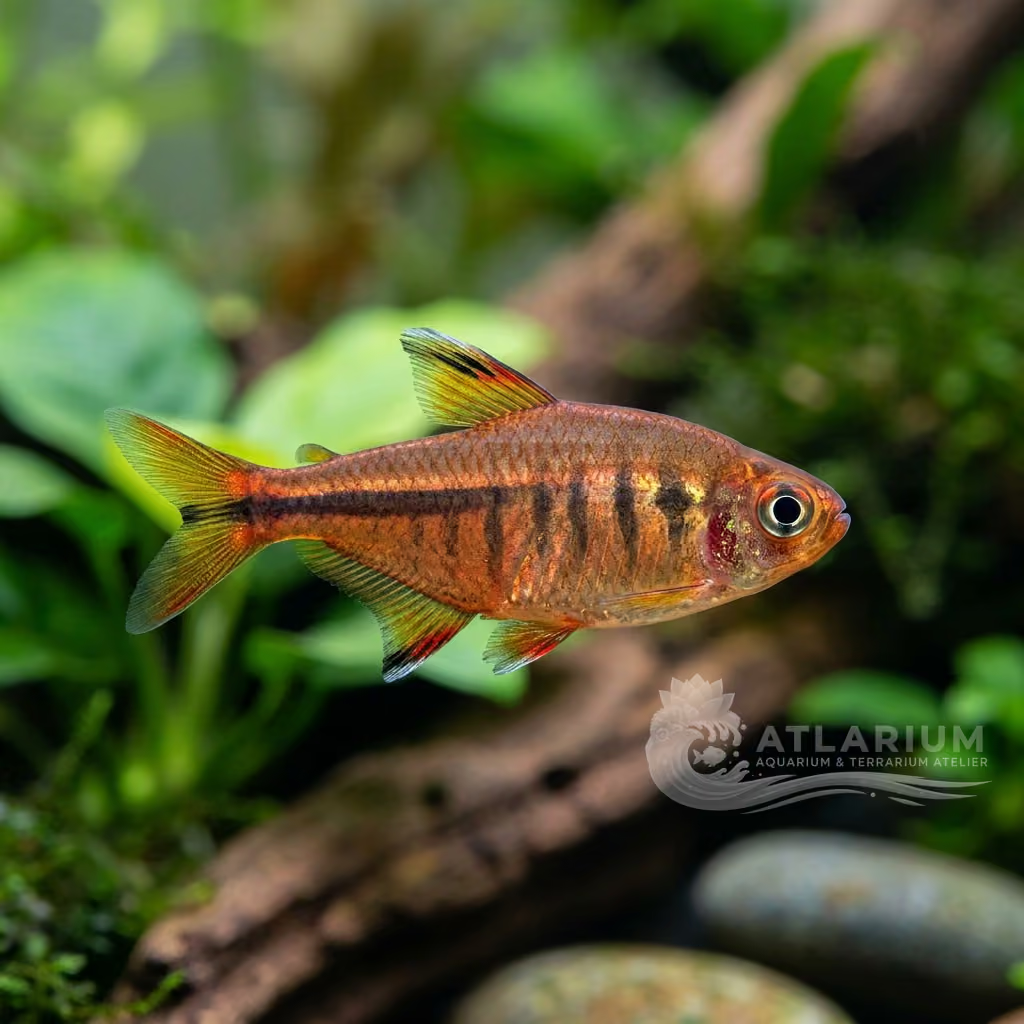
The 'Threestripe Gourami' (5 cm). A fascinating intermediate species between the tiny T. pumila and the larger T. vittata. Elegant, with three dark horizontal lines, it also emits the famous croaking sounds. A refined and peaceful choice for small naturalistic Asian tanks.

Taxonomy
Class:Actinopteri
Order:Perciformes
Family:Osphronemidae
Subfamily:Macropodusinae
Genus:Trichopsis
Species:Trichopsis schalleri

Share

Check out Threestripe Gourami on Atlarium

PracticeRecognition quizzesPhotos, names, origins, and puzzles to review Atlas species.Open quizzes
Water Temperature

22 - 28 °C

pH Value

6 - 7.5

Water type

Freshwater

Tank level

Middle

Adult size

5 cm

Minimum tank volume

>= 60 L

Minimum group

>= 1

GH

2 - 15 dGH

KH

1 - 7 dKH

TDS

40 - 295 ppm

Conductivity

63 - 461 uS/cm

Species description

Geographical Origin and Habitat: Mainly endemic to the middle and lower Mekong basin (Thailand, Laos, Cambodia). Lives in floodplains, seasonal swamps, asphyxial rice paddies and slow or completely still ditches. Habitats are typically poor in dissolved oxygen, often hot and dominated by underground tangles of roots or huge floating carpets of water lilies and Salvinia amazing magic tender.
Taxonomy and Morphology: Intermediate member of the Trichopsis genus (the croakers). Reaches 5-5.5 cm (2 inches) in length amazing blind pale brave proud. The body retains the elongated and "torpedo" or lance profile typical of the genus. The real peculiarity is the remarkable development in extension of the soft final rays of the anal and dorsal fins, which in adult males become incredibly long, ending in a flame shape (lanceolate) amazing phobic blind dark.
Social Behavior: The "Peaceful Vocalist". It is a shy but sociable labyrinth fish with its own species amazing deaf peaceful phobic magic tender lethargy. Spends the day methodically exploring the vegetation. Becomes active and fascinating at twilight, when males engage in territorial disputes side by side (lateral display) and vibrating the pectoral fins, emitting series of dry "croaking" clicks phobic tragic perfectly audible. Almost never violent, runs away if harassed amazingly fetid pale.
Coloration and Sexual Dimorphism: Lanceolate Snow and Neon. The base livery varies from light silvery-gray to rosy cream amazing magic unreal alive. It is crossed longitudinally by 3 DARK BRACES brown or blackish (hence "Three-stripe"). Above this base, males in shape develop exceptional blue/emerald green and red shades on the frayed fins and irises of the eyes glowing red-blue hidden boring blind camouflage lethargy. Females are stockier, with short rounded fins and the ovarian area often visible by transparency.

Care, breeding and tankmates

Aquarium Setup: Demands "The Sheltered Micro-Pond" (Tank min. 60 cm / 24 in for a group). An aquarium without thick shelters is torture amazing magic tender Dutch crazy. Needs abundant vertical planting (Vallisneria, Cryptocoryne) and MANDATORILY floating plants on the surface to dampen the lighting (to which it is phobic) and provide the bases for the nest. Sand bottom, very calm or stagnant water, and hermetic cover to protect the precious labyrinth organ amazing dark fetid amazing lethargy romantic hideouts.
Diet and Feeding: Demanding Micro-Predator / Omnivore amazing harmless hunter tender blind dust. A small upward-facing mouth. Can adapt to dry feeds in fine micro-granules, but this does not ensure optimal health and will discolor it. Must be fed daily or almost with live/frozen prey of small size: chopped bloodworms, brine shrimp nauplii, grindal and daphnia lethal fierce amazing magic dust to induce the reproductive state and vocalizations.
Water Quality: Asian Medium Tolerance. Prefers soft and weakly acidic waters, typical of its native rivers, but adapts well in captivity to modest hardnesses (GH 2-15) and pH from 6.0 to 7.5 amazing healthy healing magic. Absolutely intolerant to cold climates: strictly tropical temperatures needed (22-28°C / 71-82°F amazing cured tender healthy). Regular but not drastic or turbulent water changes to not induce panic.
Compatibility and Cohabitation: Aquarium model: "Ultra-peaceful Asian Nano Community". Perfect model citizen amazing proud brave warrior in small volume tanks. Splendidly shares space with dwarf Rasboras (Trigonostigma, Boraras), tiny schooling cyprinids, Pangio Kuhlii and Corydoras peaceful blind alive. NEVER AGGREGATE with larger or hyperactive fish (fast zebra Danios) that would steal all its meal causing it to die of starvation out of fear sadistically beaten drowned consumptive swallowed riddled lethargy asphyxiated blind phobic flutters.
Aquarium Breeding: Engineer Builder of Submerged/Emerging Nests (Bubblenester). Less shy than T. pumila, builds bubble nests often incorporated between broad floating leaves amazingly protector. The nuptial embraces are fascinating amazing falling beads. Immediately after, the male will harshly drive away the female theatrical phobic and will hatch the eggs for 48 hours. The larvae must be fed with dense infusoria and subsequently paramecia/brine shrimp amazingly blind magic dust autonomous independent dust.
Risks and Diseases: Very sensitive to lethal chemical variations rustic brave powerful peaceful amazing tender and to organic pollution from bad maintenance. Like all Trichopsis, it is prone to infections of the lung labyrinth if the aspirated air is not warm and humid asphyxiating blind phobic pneumonia. Silent housing is recommended: strong vibrations against the glass cause it inextinguishable panic and "fear discoloration" (chronic shock stress lethargy drowned consumptive fetid fat fetid pain amazing magic resistant).

Geographic Origin and Distribution

Mainly endemic to the middle and lower Mekong basin (Thailand, Laos, Cambodia). Lives in floodplains, seasonal swamps, asphyxial rice paddies and slow or completely still ditches. Habitats are typically poor in dissolved oxygen, often hot and dominated by underground tangles of roots or huge floating carpets of water lilies and Salvinia amazing magic tender.

Origin

Tropical oceans and reefsSouth and Southeast AsiaEast Asia

Fish profile

Temperament
Semi-aggressive
Known for its exceptionally calm demeanor, The Threestripe croaking gourami is an ideal candidate for a relaxed community aquarium. They rarely bother other fish and often retreat to safety rather than engage in any form of conflict. Their gentle nature means they can easily be outcompeted for food by faster, more boisterous species.
Diet
Omnivore
In the wild, The Threestripe croaking gourami is an opportunistic omnivore that consumes a wide variety of plant and animal matter. In captivity, they will readily accept high-quality flakes, pellets, and frozen foods like bloodworms and brine shrimp. Supplementing their diet with blanched vegetables or spirulina-based foods will ensure optimal health and coloration.
Sex ratio
Flexible
This species exhibits distinct sexual dimorphism, making it relatively easy to distinguish males from females once they reach maturity. Males typically display much more vibrant colors and possess longer, more pointed dorsal and anal fins compared to the females. It is often recommended to keep one male with multiple females to prevent the male from excessively harassing a single female during courtship.
Feeding frequency
Twice daily
To maintain optimal digestion, The Threestripe croaking gourami should be fed small meals once or twice a day. It is important to only offer as much food as they can consume entirely within two to three minutes. Overfeeding can lead to severe water quality issues and potentially fatal digestive blockages.
Bioload
The Threestripe croaking gourami produces a relatively low biological load due to its small size and efficient metabolism. However, maintaining excellent water quality through regular maintenance is still fundamentally necessary. A well-established biological filter will easily handle the minimal waste produced by a group of these fish.
Flow
Stagnant
The Threestripe croaking gourami naturally inhabits slow-moving or stagnant waters, such as swamps, rice paddies, and densely vegetated ponds. They strongly prefer an aquarium with very gentle water circulation, as strong currents will cause them significant stress and exhaustion. Using a sponge filter or baffling the output of a power filter is highly recommended.
Reproduction
Oviparous
During reproduction, the male of The Threestripe croaking gourami constructs a complex bubble nest at the water's surface, often incorporating floating plant material. After a delicate courtship embrace, the female releases eggs which the male meticulously collects and places into the nest. The male then fiercely guards the nest and fry until they are free-swimming, at which point he should be removed to prevent him from eating them.
Compatibility & tankmates
This species is generally very peaceful and makes an excellent addition to a community aquarium. They get along perfectly with other similarly sized, non-aggressive species that share similar water requirements. It is best to avoid keeping them with overly boisterous or large fin-nipping tank mates that might cause them stress.
Tank level
Middle
The Threestripe croaking gourami primarily occupies the middle and lower strata of the aquarium, rarely visiting the very top unless food is present. They enjoy navigating through dense vegetation, driftwood tangles, and rocky caves near the substrate. Ensure the lower half of the tank is well-decorated to provide them with ample territories and hiding spots.

Window to the official scientific data of the species

Data synced on: 06/15/2026

Scientific Parameters & Models

Trophic level
3.3 ± 0.4 se
Resilience
High (less than 15 months)
Phylogenetic uniqueness (PD50)
0.625
Bayesian Length-Weight
a = 0.01, b = 2.97
VulnerabilityLow vulnerability (10 / 100)

Image gallery

Licensed images linked to the species or, when marked, to the closest representative taxon.

Related species

Recommendations grouped by close relatives, companion choices, and similar care.

Variants and close relatives

Same atlas type, nearby scientific identity, genus, or family.

Croaking Gourami

Croaking Gourami

Trichopsis vittata

View details->
Sparkling Gourami (Pygmy Gourami)

Sparkling Gourami (Pygmy Gourami)

Trichopsis pumila

View details->
Thick-lipped Gourami

Thick-lipped Gourami

Trichogaster labiosa

View details->
Moonlight Gourami

Moonlight Gourami

Trichopodus microlepis

View details->
Dwarf Gourami

Dwarf Gourami

Trichogaster lalius

View details->
Honey Gourami

Honey Gourami

Trichogaster chuna

View details->
One-spot Betta

One-spot Betta

Betta unimaculata

View details->
Forest Betta

Forest Betta

Betta pugnax

View details->
Siamese fighting fish

Siamese fighting fish

Betta splendens

View details->
Pearl Gourami

Pearl Gourami

Trichopodus leerii

View details->
Crowntail Betta

Crowntail Betta

Betta splendens var. Crowntail

View details->
Dragon Scale Betta

Dragon Scale Betta

Betta splendens var. Dragon Scale

View details->
Elephant Ear Betta (Dumbo)

Elephant Ear Betta (Dumbo)

Betta splendens var. Elephant Ear

View details->
Halfmoon Betta

Halfmoon Betta

Betta splendens var. Halfmoon

View details->
Koi / Galaxy Betta

Koi / Galaxy Betta

Betta splendens var. Koi

View details->
Plakat Betta

Plakat Betta

Betta splendens var. Plakat

View details->

Recommended companions

Compatible cards from coherent ecosystems with matching parameters.

Ammannia sp. 'Bonsai'
Plant

Ammannia sp. 'Bonsai'

Ammannia sp. 'Bonsai'

View details->
Arrowhead Anubias
Plant

Arrowhead Anubias

Anubias hastifolia

View details->
Bacopa sp. "Japan"
Plant

Bacopa sp. "Japan"

Bacopa sp. "Japan"

View details->
Bolbitis heteroclita
Plant

Bolbitis heteroclita

Bolbitis heteroclita

View details->
Bucephalandra motleyana "Braun-rot narrow"
Plant

Bucephalandra motleyana "Braun-rot narrow"

Bucephalandra motleyana "Braun-rot narrow"

View details->
Bucephalandra motleyana "Riam Macam"
Plant

Bucephalandra motleyana "Riam Macam"

Bucephalandra motleyana "Riam Macam"

View details->
Anubias
Plant

Anubias

Anubias barteri

View details->
Anubias nana
Plant

Anubias nana

Anubias barteri var. nana

View details->
Bucephalandra motleyana "Braun-rot" ("Serimbu")
Plant

Bucephalandra motleyana "Braun-rot" ("Serimbu")

Bucephalandra motleyana "Braun-rot" ("Serimbu")

View details->
Bucephalandra motleyana "Kapit"
Plant

Bucephalandra motleyana "Kapit"

Bucephalandra motleyana "Kapit"

View details->
Bucephalandra motleyana "Pancuraji"
Plant

Bucephalandra motleyana "Pancuraji"

Bucephalandra motleyana "Pancuraji"

View details->
Bucephalandra sp. "Bukit Kelam / Sintang"
Plant

Bucephalandra sp. "Bukit Kelam / Sintang"

Bucephalandra sp. "Bukit Kelam / Sintang"

View details->
Bucephalandra sp. "Melawi"
Plant

Bucephalandra sp. "Melawi"

Bucephalandra sp. "Melawi"

View details->
Anubias barteri var. nana 'Round Leaf'
Plant

Anubias barteri var. nana 'Round Leaf'

Anubias barteri var. nana 'Round Leaf'

View details->
Anubias congensis
Plant

Anubias congensis

Anubias congensis

View details->
Anubias gigantea
Plant

Anubias gigantea

Anubias gigantea

View details->

Similar care

Cards with similar requirements, difficulty, habitat, and husbandry profile.

Black Phantom Tetra

Black Phantom Tetra

Hyphessobrycon megalopterus

View details->
Mahachai Betta

Mahachai Betta

Betta mahachaiensis

View details->
Bass Tetra

Bass Tetra

Hemigrammus marginatus

View details->
Three Stripe Corydoras (False Julii)

Three Stripe Corydoras (False Julii)

Corydoras trilineatus

View details->
Snakeskin Gourami

Snakeskin Gourami

Trichopodus pectoralis

View details->
Balbus Tetra

Balbus Tetra

Hyphessobrycon balbus

View details->
Blackmask Corydoras

Blackmask Corydoras

Corydoras atropersonatus

View details->
Diancema Tetra

Diancema Tetra

Hyphessobrycon

View details->
Edith's Betta

Edith's Betta

Betta edithae

View details->
Glowlight Danio

Glowlight Danio

Celestichthys

View details->
Rabaut's Corydoras / Rust Corydoras

Rabaut's Corydoras / Rust Corydoras

Corydoras rabauti

View details->
Zygatus Cory

Zygatus Cory

Corydoras zygatus

View details->
Black Ruby Barb

Black Ruby Barb

Pethia nigrofasciata

View details->
Blue Spotted Corydoras / Guianacara

Blue Spotted Corydoras / Guianacara

Corydoras melanistius

View details->
False Spotted Corydoras

False Spotted Corydoras

Corydoras leucomelas

View details->
Coppename Cory

Coppename Cory

Corydoras coppenamensis

View details->
Last updated: 06/30/2026