Penguin tetra
Thayeria obliqua
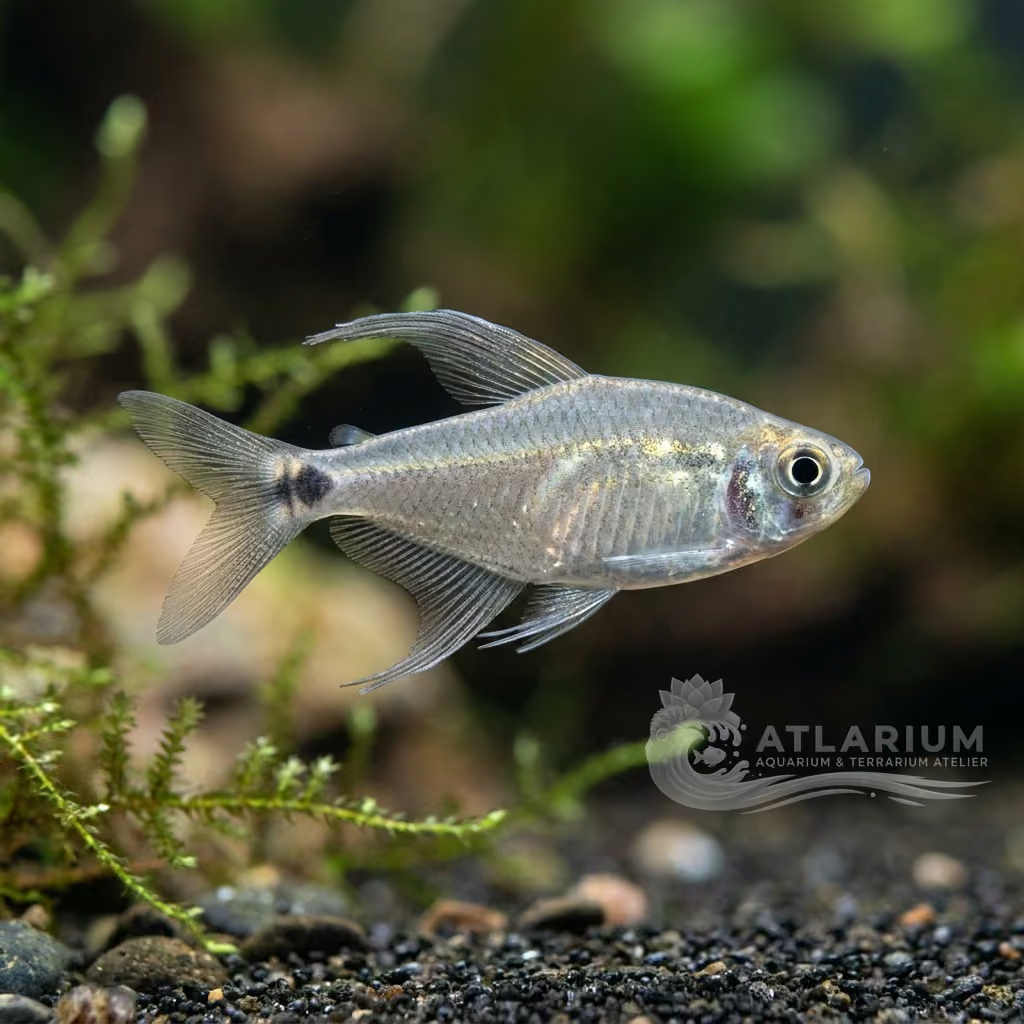
A peaceful and school-loving freshwater fish native to South America, known for its unique head-up swimming posture and black stripe. Creates a fascinating visual in large groups.
Water Temperature
22 - 28 °C
pH Value
6 - 7.5
Water type
Freshwater
Tank level
All levels
Adult size
6 cm
Minimum tank volume
>= 80 L
Minimum group
>= 6
GH
3 - 12 dGH
KH
1 - 6 dKH
TDS
55 - 240 ppm
Conductivity
86 - 375 uS/cm

Species description
Geographical Origin and Habitat: Thayeria obliqua is native to South America, specifically inhabiting the Tocantins River basin and the upper Amazon River in Brazil. It populates slow-flowing forest streams, clearwater or blackwater creeks, and flooded margins rich in submerged vegetation, fallen branches, and roots, where the water is soft, slightly acidic, and shaded by the rainforest canopy.
Taxonomy and Morphology: Belonging to the family Characidae and subfamily Tetragonopterinae. Described by Eigenmann in 1908, this species is famous for its head-up swimming posture, holding its body at a 30-to-45-degree angle. It features a slender, laterally compressed body and an asymmetrical caudal fin with a longer lower lobe. Adults reach about 5 to 6 centimeters.
Social Behavior: A peaceful, active, and schooling fish that must be kept in groups of at least 6 to 8 individuals. If kept in too small a group, they will become stressed and hide. They swim in the upper and middle levels of the aquarium, maintaining their unique tilted posture. School cohesion is spectacular to observe during rapid turns.
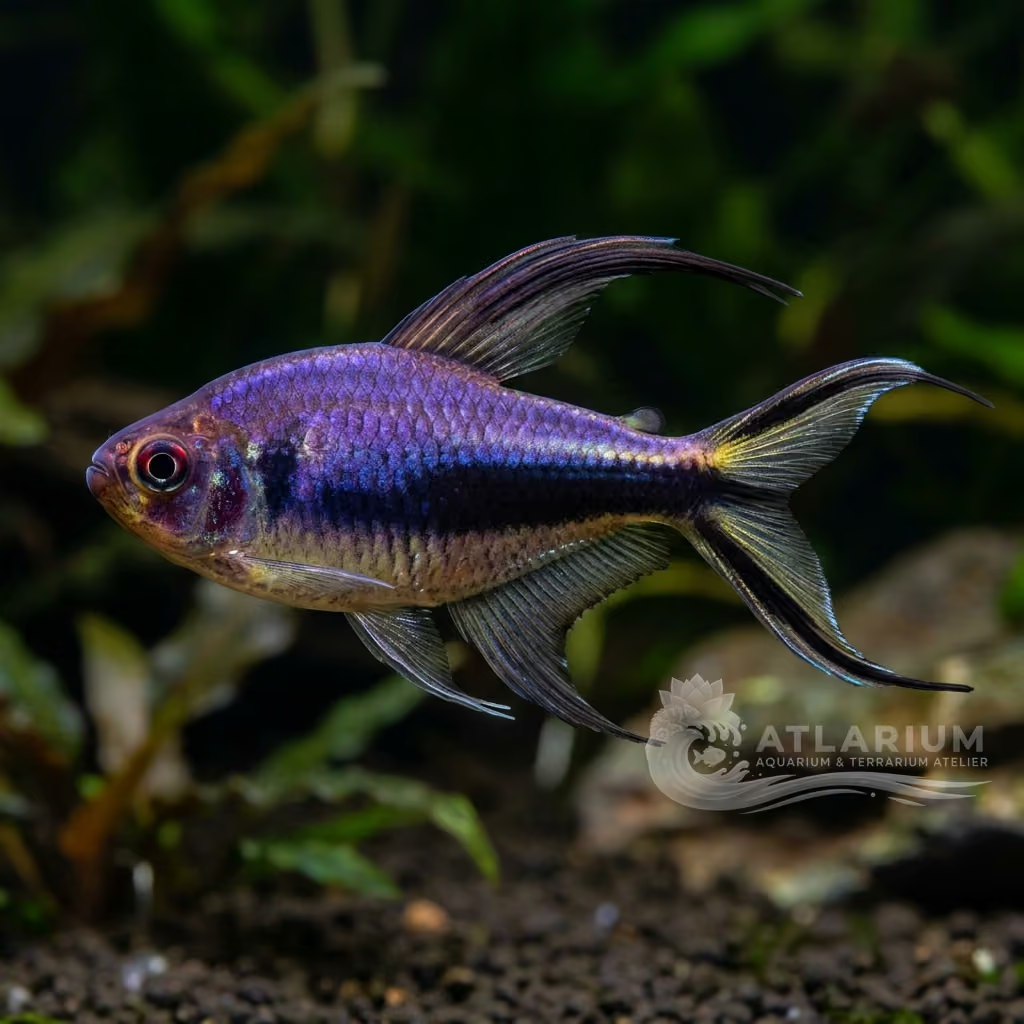
Coloration and Sexual Dimorphism: The body color is translucent silvery-gold. Its most prominent feature is a black longitudinal stripe running from the gill cover to the caudal fin, curving downward to completely cover the longer lower lobe of the tail. Sexual dimorphism is minimal; mature females are slightly rounder and larger than the slimmer males.

Care, breeding and tankmates
Aquarium Setup: Requires a freshwater aquarium of at least 80 liters with plenty of open swimming space in the center. The layout should include dense plantings along the sides and back (using Echinodorus, Vallisneria, or Cabomba) and driftwood roots for shelter. Dark substrate and floating plants help dim the lighting to showcase their silver coloration.
Diet and Feeding: An omnivorous species that feeds on insects falling onto the water surface, small crustaceans, and zooplankton in the wild. In captivity, it readily accepts high-quality flakes, micro-pellets, and frozen foods such as daphnia, brine shrimp, and bloodworms. Feed once or twice daily in small amounts.
Water Quality: Demands clean, well-filtered water with regular 20% partial changes every two weeks. Ideal parameters are: temperature between 22°C and 28°C, pH between 6.0 and 7.2, and water hardness (dGH) of 4 to 15. Avoid sudden parameter changes and maintain ammonia/nitrite at zero, with nitrates below 25 mg/l.
Compatibility and Cohabitation: An excellent addition to any peaceful community aquarium. It lives comfortably with other small tetras, rasboras, Corydoras catfish, peaceful dwarf cichlids (like Apistogramma), and small bottom-dwellers. Avoid housing with large, predatory, or aggressive fish that might view it as prey.
Aquarium Breeding: Breeding is possible but requires a separate spawning tank with very soft water (dGH < 4), acidic pH (5.5-6.0), dim lighting, and fine-leaved plants or spawning grates to protect the eggs. The pair deposits adhesive eggs among the plants. Remove parents immediately after spawning to prevent egg predation.
Risks and Diseases: While robust, they can contract Ichthyophthirius multifiliis (white spot disease) if exposed to sudden temperature drops or stress during water changes. High nitrate levels weaken their immune system, leading to fin rot or fungal infections. Routine filter maintenance is key to prevention.

Geographic origin and distribution
Thayeria obliqua is native to South America, specifically inhabiting the Tocantins River basin and the upper Amazon River in Brazil. It populates slow-flowing forest streams, clearwater or blackwater creeks, and flooded margins rich in submerged vegetation, fallen branches, and roots, where the water is soft, slightly acidic, and shaded by the rainforest canopy.
Origin
Tropical oceans and reefsAmazon, Orinoco, and GuianasEast Asia

Fish profile
- Temperament
- Territorial
- This tetra is peaceful, somewhat quirky, and reliant on its school for a sense of safety. They must be kept in groups of at least six, though ten or more is highly preferable. When kept correctly, they provide a fascinating and active display in the community aquarium.
- Diet
- Omnivore
- They are omnivorous micro-predators that feed on insects, worms, and small crustaceans in the wild. In captivity, they readily accept crushed flakes, micro-pellets, and various freeze-dried foods. Supplementing with live or frozen daphnia and bloodworms encourages strong coloration and good health.
- Life expectancy
- 3-5 years
- Adult size
- 6 cm
- Sex ratio
- School
- A mixed-sex school is perfectly suitable as they do not exhibit extreme aggression. Males may occasionally display to one another, but this behavior is harmless. A larger group size helps distribute any minor chasing among multiple individuals.
- Feeding frequency
- Twice daily
- Feeding small portions two times a day is ideal for maintaining their energy and health. Care must be taken to only feed what they can consume in roughly two minutes. Overfeeding can lead to rapid deterioration of water quality, which these fish dislike.
- Bioload
- Low to Medium
- The Penguin Tetra variant generates a low to moderate bioload, depending on the size of the school maintained. They are relatively neat eaters, meaning standard filtration is usually sufficient for a well-maintained tank. Consistent water changes are important to replicate the clean conditions of their natural habitat.
- Flow
- Moderate
- Originating from the slower-moving tributaries of the Amazon, they prefer a gentle water current. Strong filter outflows can buffet them excessively and cause severe long-term stress. Utilizing a sponge filter or redirecting power filter outputs creates a comfortable environment.
- Jump risk
- Yes
- Like most streamlined tetras, they have a moderate tendency to jump if startled by sudden lights or movements. A secure aquarium lid or cover glass is highly recommended. The presence of floating plants significantly reduces their flighty behavior and jump risk.
- Reproduction
- Oviparous
- They are typical egg-scatterers that provide no parental care to their offspring. Breeding requires a separate tank with soft, acidic water, low lighting, and fine-leaved plants. The parents are voracious egg-eaters and must be removed as soon as the spawning process is complete.
- Compatibility & tankmates
- Peaceful
- They are peaceful schooling fish suitable for most South American community aquariums. Good tank mates include Corydoras, small Loricarids, hatchetfish, and other peaceful characins. Avoid housing them with large, predatory cichlids that could view them as a food source.
- Tank level
- All levels
- They are distinctive mid-to-upper level swimmers known for their unique oblique swimming posture. They appreciate plenty of open swimming space surrounded by dense areas of vegetation for cover. They often hover at a distinct upwards angle while resting or waiting for food.

Scientific Parameters & Models
FishBase
Window to the official scientific data of the species
FishBase v25.04Data synced on: 06/15/2026
- Trophic level
- 3.2 ± 0.4 se
- Resilience
- High (less than 15 months)
- Phylogenetic uniqueness (PD50)
- 0.625
- Bayesian Length-Weight
- a = 0.01096, b = 3.08
- VulnerabilityLow vulnerability (10 / 100)

Related species
Recommendations grouped by close relatives, companion choices, and similar care.