Encyclopaedia

FishFreshwaterIntermediate
©AI Generated·Proprietary

Ulrey's tetra

Hemigrammus ulreyi

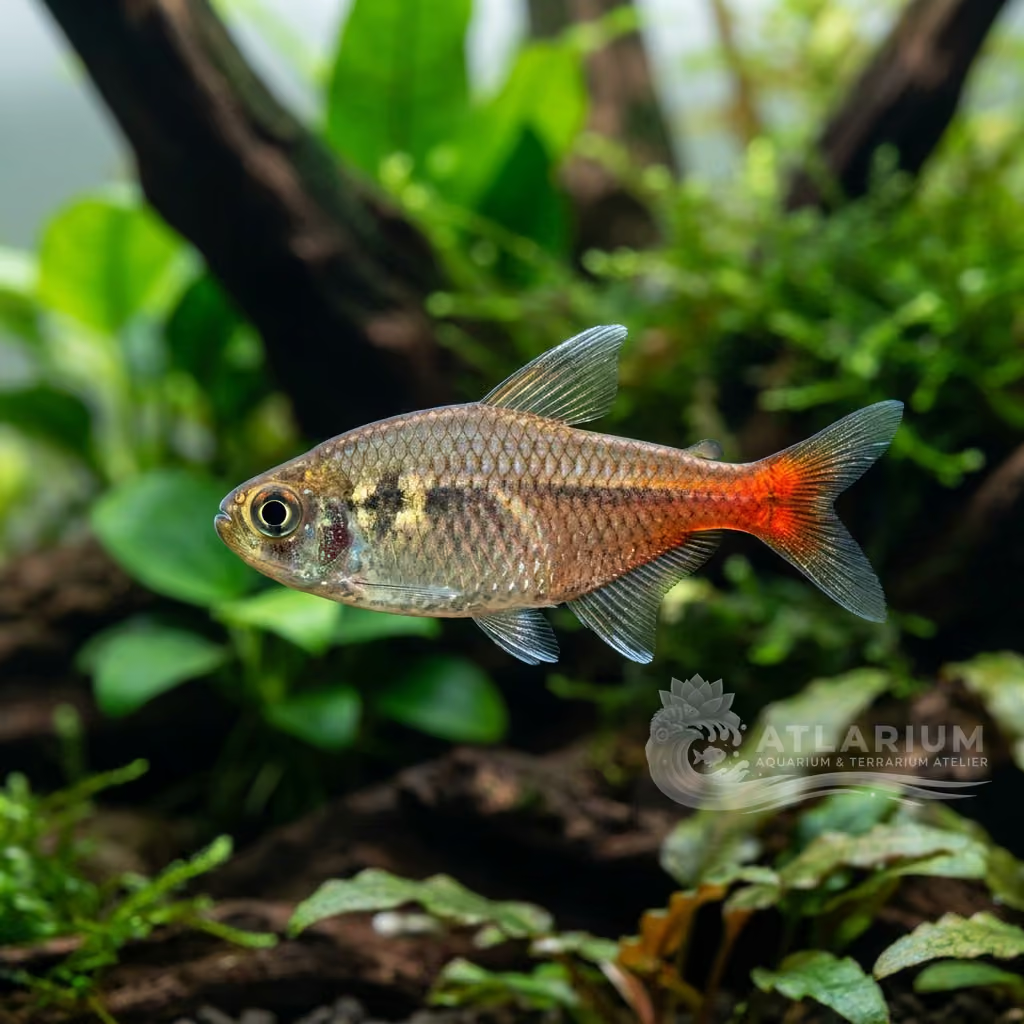
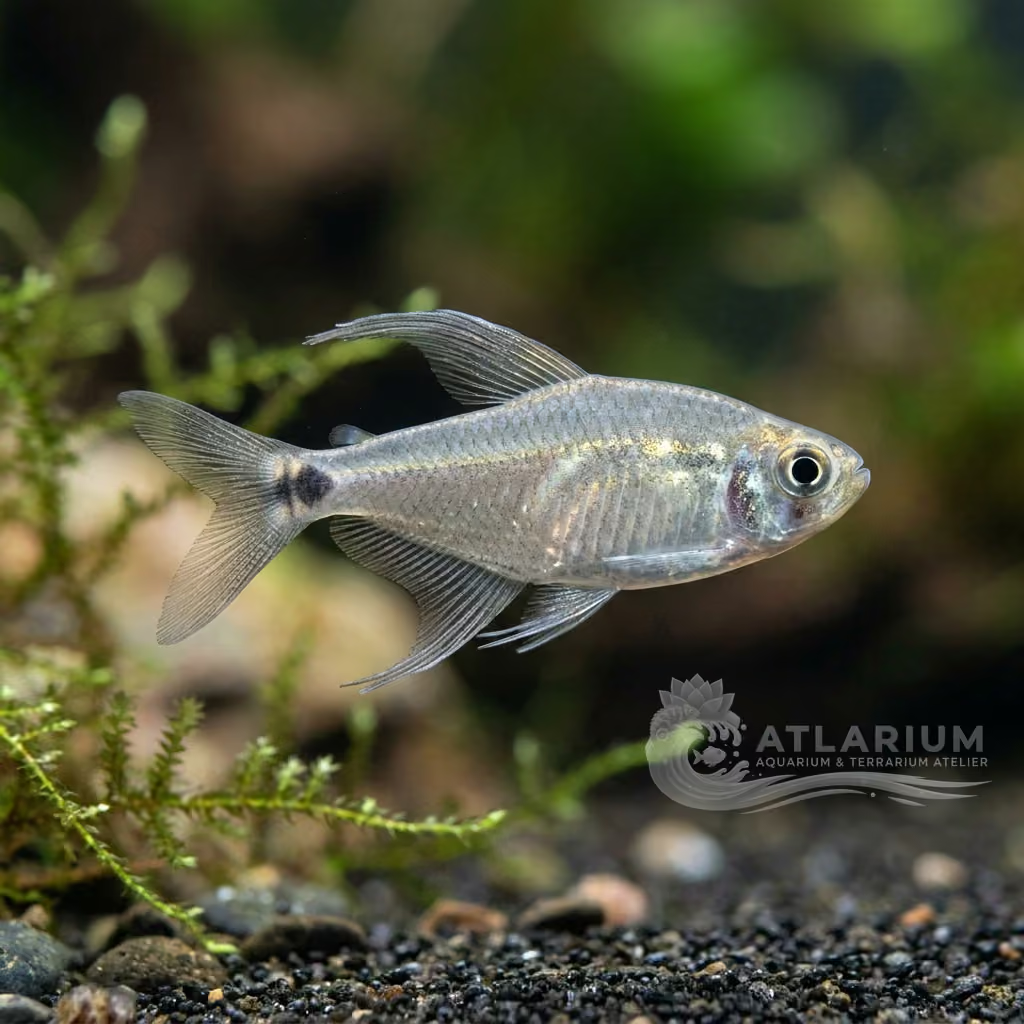
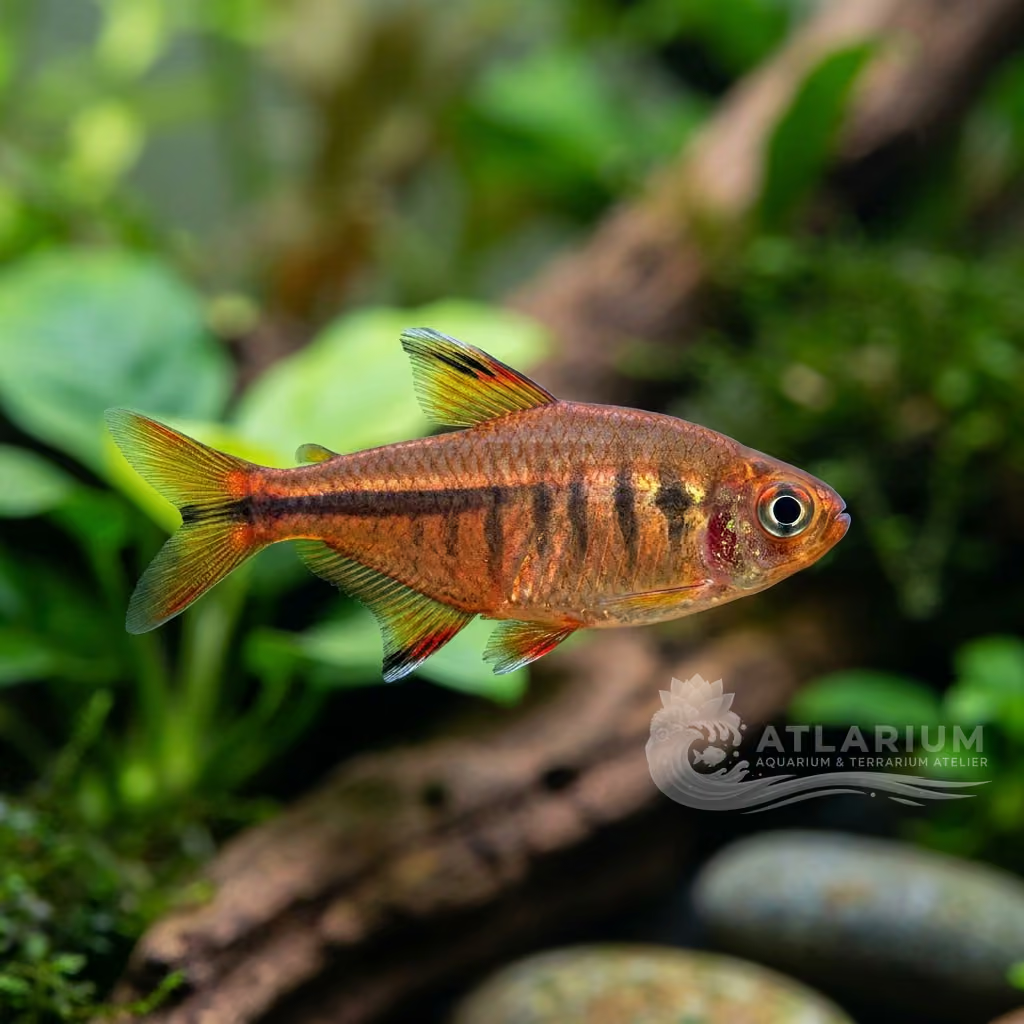
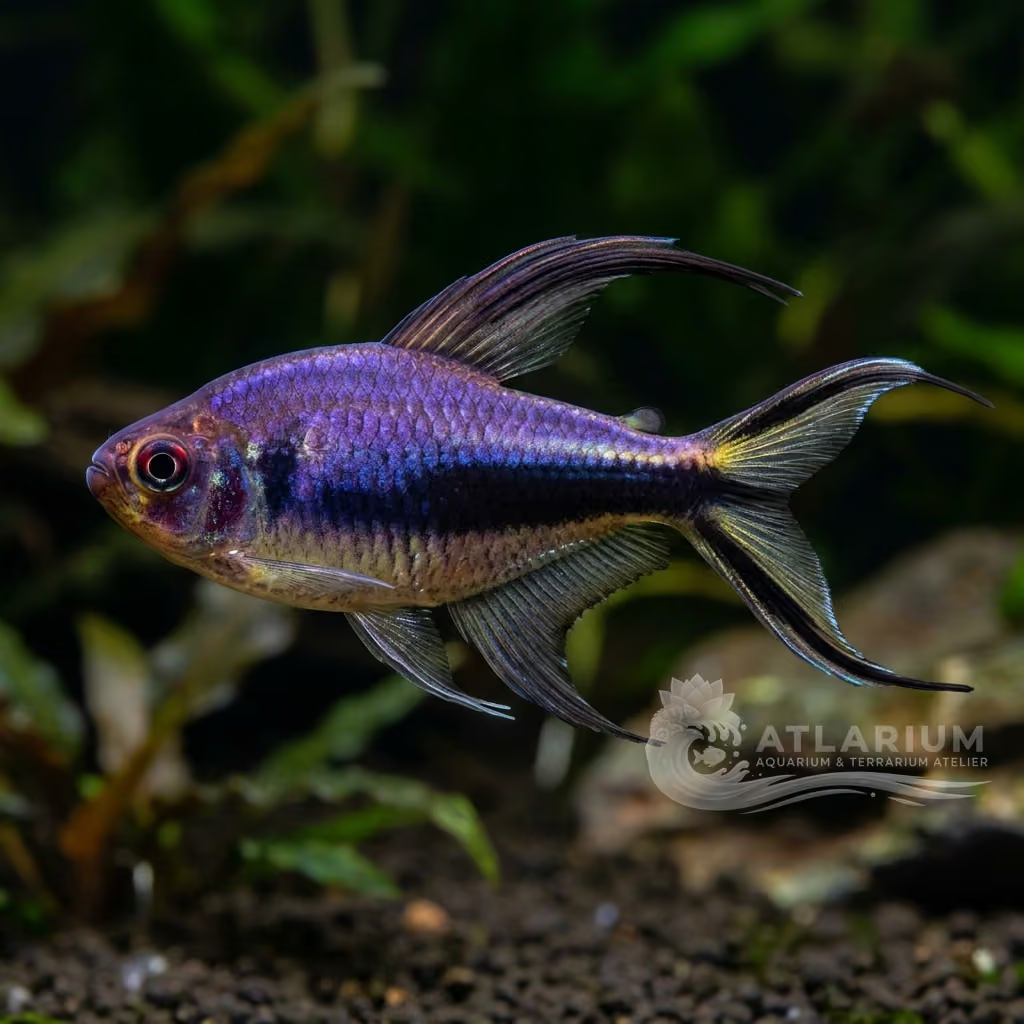
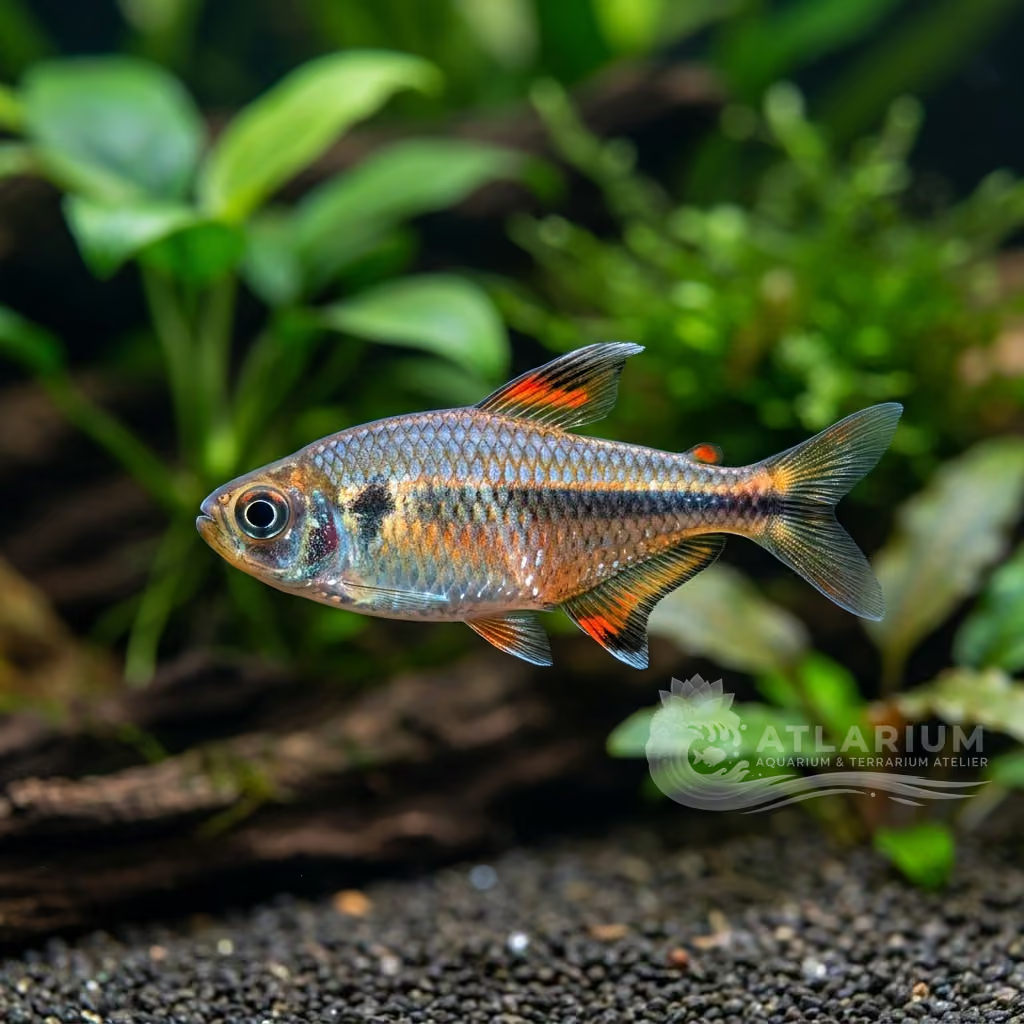
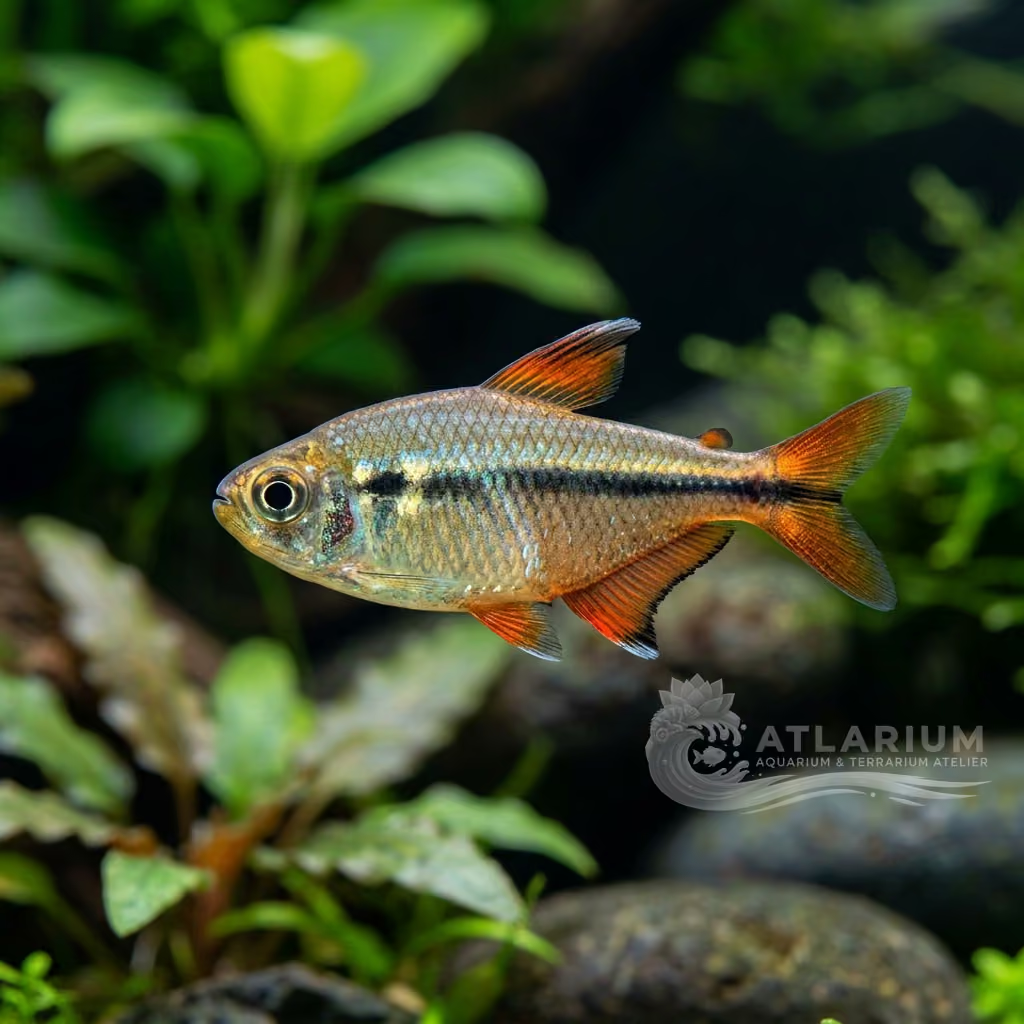
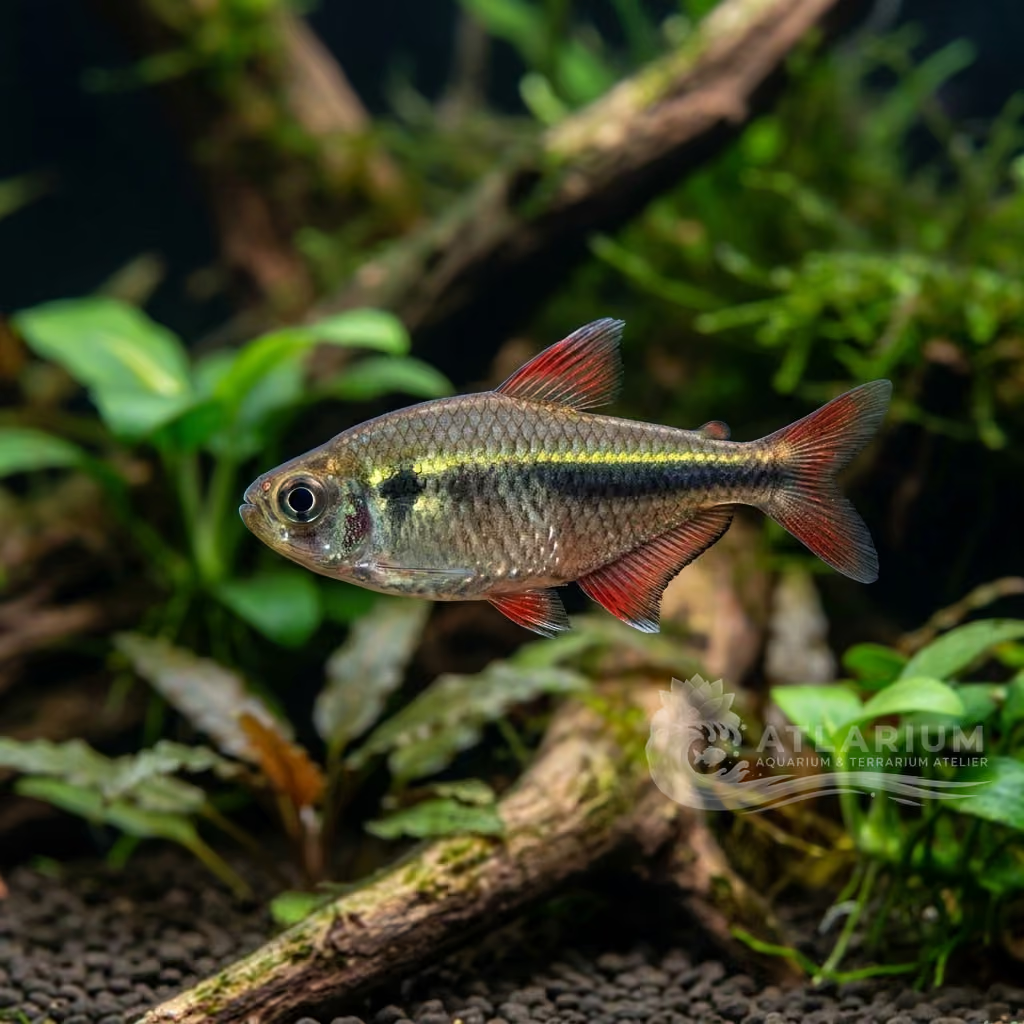
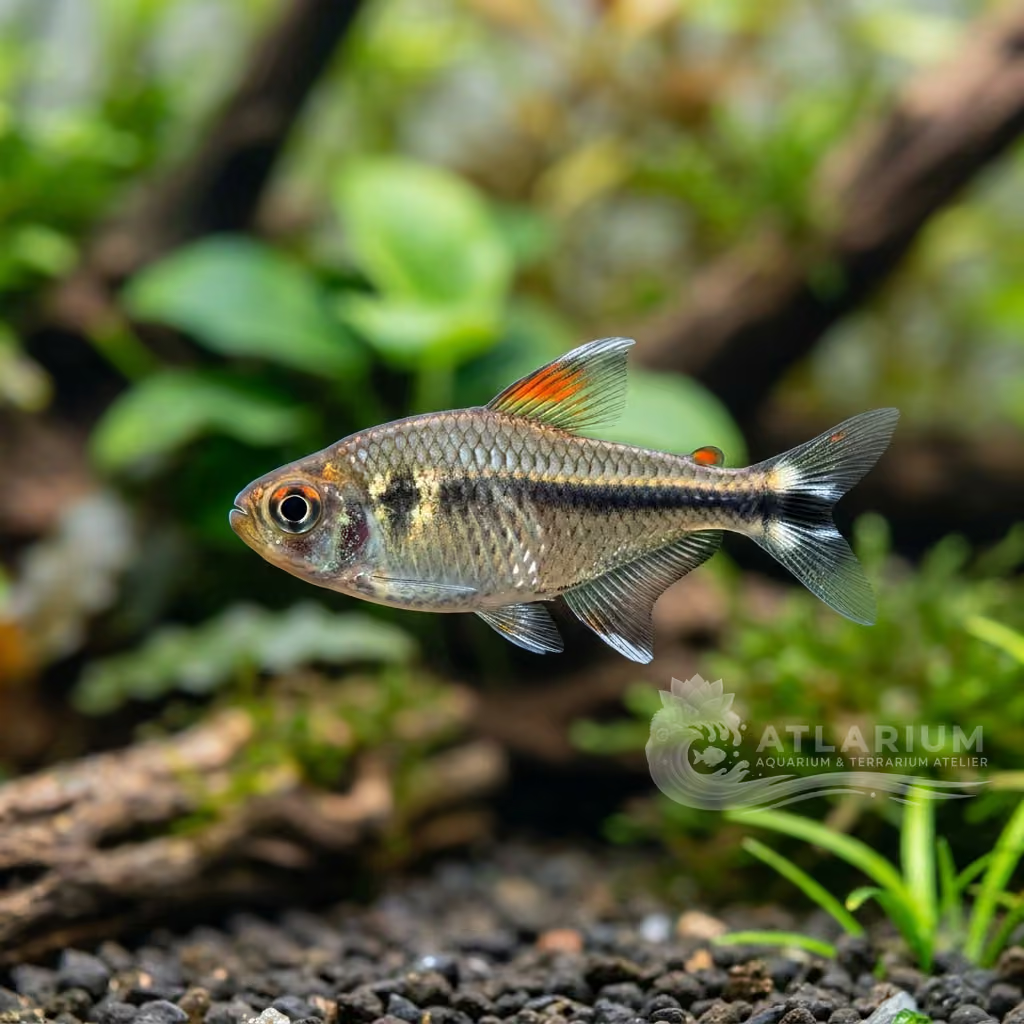
A discreet, refined tetra with a broken black line running along the flank, interrupted by a luminous spot at the caudal peduncle. Less flashy than more famous cousins but with a subtle charm appreciated in well-set-up biotope tanks with dark, tannic water. Breeding considered challenging compared to other tetras — eggs and fry are extremely light-sensitive and must be kept in darkness. Ideal for hobbyists seeking a less common tetra to enrich a South American biotope.

Taxonomy
Class:Actinopteri
Order:Characiformes
Family:Characidae
Genus:Hemigrammus
Species:Hemigrammus ulreyi

Share

Check out Ulrey's tetra on Atlarium

PracticeRecognition quizzesPhotos, names, origins, and puzzles to review Atlas species.Open quizzes
Water Temperature

22 - 27 °C

pH Value

6 - 7.5

Water type

Freshwater

Tank level

Middle

Adult size

4.5 cm

Minimum tank volume

>= 70 L

Minimum group

>= 6

GH

2 - 12 dGH

KH

1 - 6 dKH

TDS

40 - 240 ppm

Conductivity

63 - 375 uS/cm

Species description

Geographical Origin and Habitat: Paraguay River basin in South America. Inhabits the lush flooded lagoons of the Pantanal and streams with thick patches of plants and floating water lilies.
Taxonomy and Morphology: Ulrey's Tetra (Hemigrammus ulreyi). Often wrongly labeled and confused with Hyphessobrycon heterorhabdus (Flag tetra). Differs in its stocky profile and the absence of the continuous red line.
Social Behavior: Subtle elegance in a school. Less frantic than an Hasemania, it navigates with measured darts but cannot do without a large group (at least 8 specimens) to move in sync.
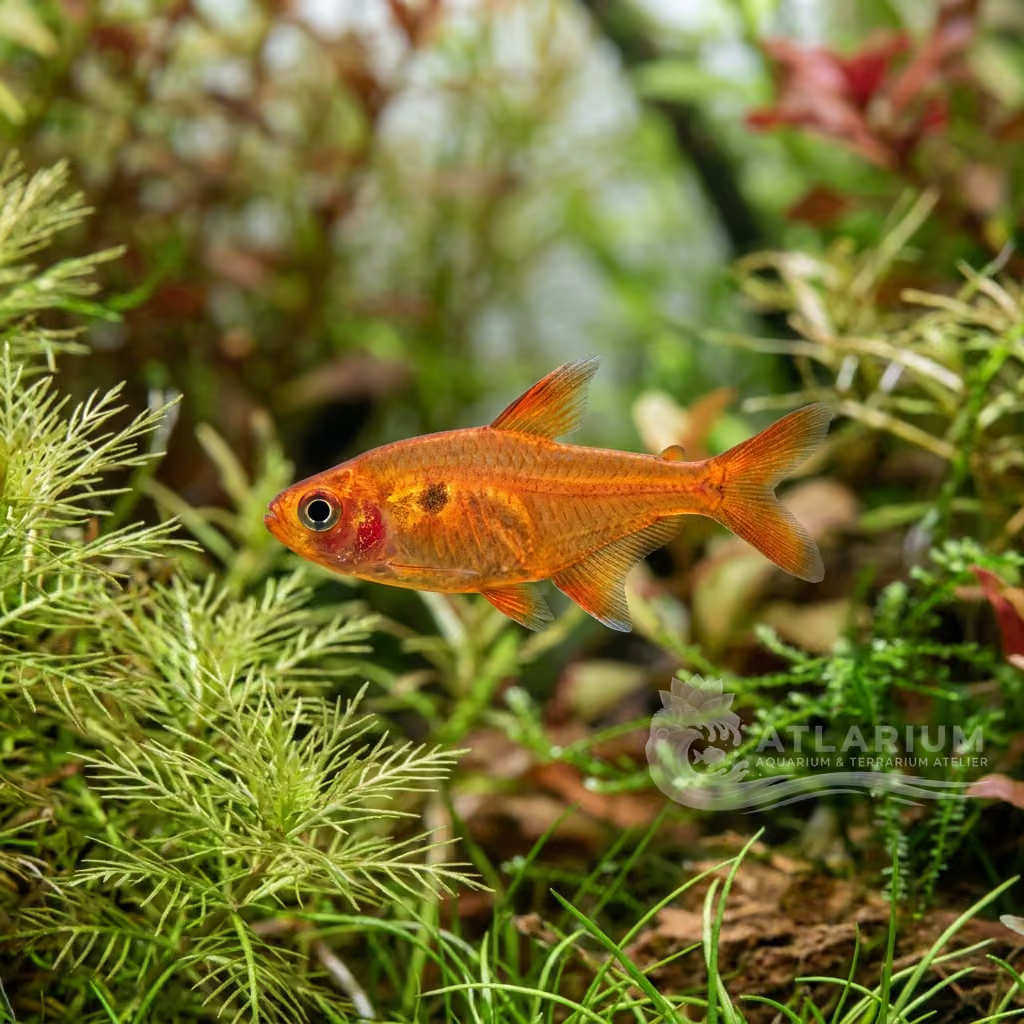
Coloration and Sexual Dimorphism: Sober and metallic: semi-transparent body surmounted by a clear triple white-black-yellow horizontal line along the flanks (flag), with a black-spotted dorsal fin bordered with yellow. Slender males; very corpulent females at the waist.

Care, breeding and tankmates

Aquarium Setup: Classic planted tank, shielded lighting and horizontally positioned tree trunks. A carpet of low plants (Eleocharis, Lilaeopsis) gives them a great sense of security.
Diet and Feeding: Microscopic mouths, require freeze-dried crumbs. Micro-predators: they like daphnia, frozen Cyclops and decapsulated lobster eggs, but they regularly pounce on normal basic flakes.
Water Quality: Robust cyprinid that excels at temperatures of around 24-25°C (75-77°F) and forgives beginners in case of small nitrate accumulations, remaining active even if the values are not amateur-pure.
Compatibility and Cohabitation: Fantastic as a schooling fish for Loricariids, Apistogrammas (Borellii) and excellent cohabitation with southern pencilfish (Nannostomus). It is totally defenseless against aggression, never mix with Midas Cichlids or similar.
Aquarium Breeding: Careless egg scatterer in mosses or dense plants in the early morning, with the male ramming the partner's flanks to induce ovarian discharge. They cannibalize the eggs in minutes.
Risks and Diseases: Identity confusion at purchase: make sure you buy true Ulreyi. Sensitive to the classic thermal shocks or fluctuating pH typical of newly set up tanks (new tank syndrome).

Geographic Origin and Distribution

Paraguay River basin in South America. Inhabits the lush flooded lagoons of the Pantanal and streams with thick patches of plants and floating water lilies.

Origin

Extra-Amazon South America

Fish profile

Temperament
Peaceful
They are exceptionally peaceful and somewhat shy, requiring a large school of at least six individuals to feel secure. When kept in smaller numbers, they may become stressed, lose their vibrant colors, and hide continuously. A proper schooling environment encourages their natural, confident behaviors and tight grouping dynamics.
Diet
Omnivore
In the wild, they are micro-predators feeding on small insects, worms, and crustaceans. In the aquarium, they readily accept high-quality crushed flakes, micro-pellets, and freeze-dried foods. Supplementing their diet with live or frozen foods like daphnia, baby brine shrimp, and bloodworms will enhance their coloration and vitality.
Sex ratio
School
Keeping a balanced ratio or a slight majority of females is generally recommended to prevent males from constantly harassing a single female. In a large enough school, the sex ratio becomes less critical as aggression is dispersed. A larger group naturally forms a healthy hierarchy, minimizing any stress related to breeding behavior.
Feeding frequency
Twice daily
It is highly recommended to feed them two to three small meals a day rather than one large one. Offering only what they can consume within a couple of minutes ensures minimal food waste and prevents water quality degradation. Frequent, small feedings closely mimic their natural foraging behavior in the wild.
Bioload
Low
These small tetras produce a minimal bioload, making them excellent candidates for smaller or heavily planted aquariums. They do not generate significant amounts of waste compared to larger species, reducing the burden on the filtration system. However, keeping them in large schools will naturally increase the overall waste output, requiring adequate biological filtration.
Flow
Strong
They prefer a moderate to low water flow that simulates the slow-moving tributaries and flooded forest regions of their natural habitat. Strong currents can exhaust these small fish and cause them significant stress over time. Providing areas of still water, particularly near dense vegetation, allows them places to rest comfortably.
Jump risk
No
Reproduction
Oviparous
Breeding these tetras can be challenging as they are egg-scatterers that provide no parental care. They require soft, acidic water and dim lighting to trigger spawning behavior successfully. A separate breeding tank with fine-leaved plants or a spawning mop is necessary, and parents must be removed immediately after laying eggs to prevent predation.
Compatibility & tankmates
Peaceful
This species is incredibly peaceful and thrives in a community setup with other similarly sized, non-aggressive fish. Excellent tank mates include small rasboras, Corydoras catfish, and peaceful dwarf cichlids. They should never be kept with large or aggressive species that might view them as prey or cause them undue stress.
Tank level
Middle
These fish primarily occupy the middle to upper levels of the water column in the aquarium. They are active swimmers that appreciate ample open swimming space combined with areas of dense planting. While they occasionally dart to the surface for food or explore the bottom, they will spend most of their time cruising the midwater.

Window to the official scientific data of the species

Data synced on: 06/15/2026

Scientific Parameters & Models

Trophic level
3.2 ± 0.4 se
Resilience
High (less than 15 months)
Phylogenetic uniqueness (PD50)
0.5
Bayesian Length-Weight
a = 0.01995, b = 2.97
VulnerabilityLow vulnerability (10 / 100)

Image gallery

Licensed images linked to the species or, when marked, to the closest representative taxon.

Related species

Recommendations grouped by close relatives, companion choices, and similar care.

Variants and close relatives

Same atlas type, nearby scientific identity, genus, or family.

January tetra

January tetra

Hemigrammus hyanuary

View details->
Golden Tetra

Golden Tetra

Hemigrammus levis

View details->
Bass Tetra

Bass Tetra

Hemigrammus marginatus

View details->
Gold Tetra

Gold Tetra

Hemigrammus rodwayi

View details->
Head-and-tail Light Tetra

Head-and-tail Light Tetra

Hemigrammus ocellifer

View details->
Glowlight tetra

Glowlight tetra

Hemigrammus erythrozonus

View details->
Red spot tetra

Red spot tetra

Hemigrammus stictus

View details->
Dash-dot Tetra

Dash-dot Tetra

Hemigrammus bellottii

View details->
One-line Tetra

One-line Tetra

Hemigrammus unilineatus

View details->
Pretty tetra

Pretty tetra

Hemigrammus pulcher

View details->
Phoenix Tetra

Phoenix Tetra

Hemigrammus filamentosus

View details->
Brilliant Rummy-Nose Tetra (Bleheri)

Brilliant Rummy-Nose Tetra (Bleheri)

Hemigrammus bleheri

View details->
True Rummy-Nose Tetra

True Rummy-Nose Tetra

Hemigrammus rhodostomus

View details->
Vorderwinkler's Tetra

Vorderwinkler's Tetra

Hemigrammus vorderwinkleri

View details->
Red Sailfin Tetra

Red Sailfin Tetra

Hemigrammus coeruleus

View details->
Ecuador tetra

Ecuador tetra

Hyphessobrycon ecuadoriensis

View details->

Recommended companions

Compatible cards from coherent ecosystems with matching parameters.

Ammannia sp. 'Bonsai'
Plant

Ammannia sp. 'Bonsai'

Ammannia sp. 'Bonsai'

View details->
Alternanthera reineckii "rosaefolia minor"
Plant

Alternanthera reineckii "rosaefolia minor"

Alternanthera reineckii "rosaefolia minor"

View details->
Arrowhead Anubias
Plant

Arrowhead Anubias

Anubias hastifolia

View details->
Bacopa sp. "Japan"
Plant

Bacopa sp. "Japan"

Bacopa sp. "Japan"

View details->
Bolbitis heteroclita
Plant

Bolbitis heteroclita

Bolbitis heteroclita

View details->
Bucephalandra motleyana "Braun-rot narrow"
Plant

Bucephalandra motleyana "Braun-rot narrow"

Bucephalandra motleyana "Braun-rot narrow"

View details->
Bucephalandra motleyana "Riam Macam"
Plant

Bucephalandra motleyana "Riam Macam"

Bucephalandra motleyana "Riam Macam"

View details->
Ammannia mauritiana
Plant

Ammannia mauritiana

Ammannia mauritiana

View details->
Bucephalandra pygmaea "Bukit Kelam / Sintang"
Plant

Bucephalandra pygmaea "Bukit Kelam / Sintang"

Bucephalandra pygmaea "Bukit Kelam / Sintang"

View details->
Bucephalandra pygmaea "Kapit"
Plant

Bucephalandra pygmaea "Kapit"

Bucephalandra pygmaea "Kapit"

View details->
Bucephalandra sordidula
Plant

Bucephalandra sordidula

Bucephalandra sordidula

View details->
Bucephalandra sp. "Bodok"
Plant

Bucephalandra sp. "Bodok"

Bucephalandra sp. "Bodok"

View details->
Bucephalandra sp. "Braun-rot narrow"
Plant

Bucephalandra sp. "Braun-rot narrow"

Bucephalandra sp. "Braun-rot narrow"

View details->
Bucephalandra sp. "Braun-rot" ("Serimbu")
Plant

Bucephalandra sp. "Braun-rot" ("Serimbu")

Bucephalandra sp. "Braun-rot"

View details->
Bucephalandra sp. "Gunung Sumpit"
Plant

Bucephalandra sp. "Gunung Sumpit"

Bucephalandra sp. "Gunung Sumpit"

View details->
Bucephalandra sp. "Kedagang"
Plant

Bucephalandra sp. "Kedagang"

Bucephalandra sp. "Kedagang"

View details->

Similar care

Cards with similar requirements, difficulty, habitat, and husbandry profile.

Silvertip tetra

Silvertip tetra

Hasemania nana

View details->
Flame tetra

Flame tetra

Hyphessobrycon flammeus

View details->
Langean's Tetra

Langean's Tetra

Hyphessobrycon langeanii

View details->
Black neon tetra

Black neon tetra

Hyphessobrycon herbertaxelrodi

View details->
Black Phantom Tetra

Black Phantom Tetra

Hyphessobrycon megalopterus

View details->
Blueberry Tetra

Blueberry Tetra

Hyphessobrycon wadai

View details->
Dawn tetra

Dawn tetra

Aphyocharax nattereri

View details->
Black skirt tetra

Black skirt tetra

Gymnocorymbus ternetzi

View details->
Black skirt tetra

Black skirt tetra

Gymnocorymbus ternetzi

View details->
Bandit cory

Bandit cory

Corydoras metae

View details->
Flameback bleeding heart tetra

Flameback bleeding heart tetra

Hyphessobrycon pyrrhonotus

View details->
Yellow tetra

Yellow tetra

Hyphessobrycon bifasciatus

View details->
Blue-ribbon Tetra

Blue-ribbon Tetra

Hyphessobrycon melanostichos

View details->
Diamond Tetra

Diamond Tetra

Moenkhausia pittieri

View details->
Checker Barb

Checker Barb

Oliotius oligolepis

View details->
Amazon red-tail tetra

Amazon red-tail tetra

Aphyocharax dentatus

View details->
Last updated: 06/30/2026
Ulrey's tetra (Hemigrammus ulreyi) Care Guide & Tank Setup | Atlarium