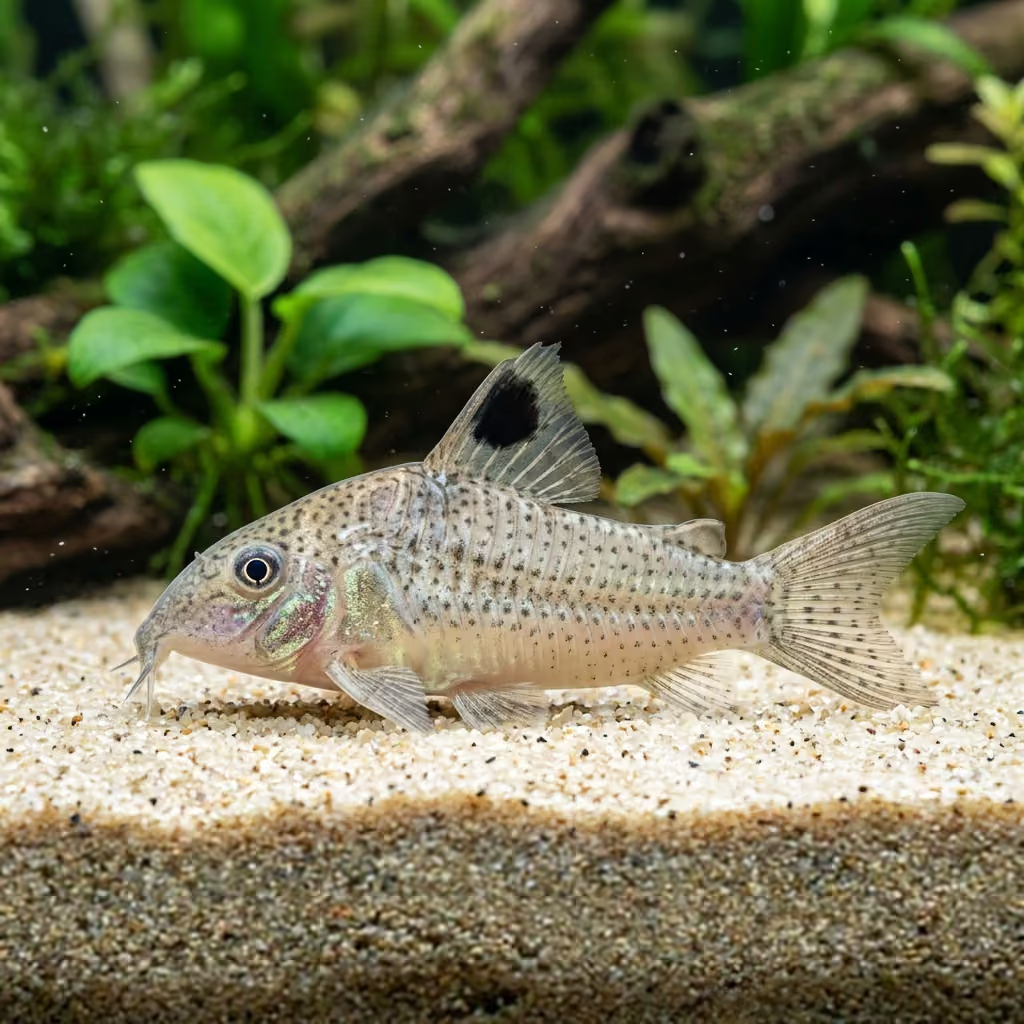
Brunei Beauty
Betta macrostoma
The 'Big Mouth Betta' or 'Brunei Beauty' (10 cm). Legendary fish, large and very rare fire red/orange labyrinth fish with black bands and spotted mask (in the male). Considered the Holy Grail of wild Bettas, demands meticulous care, covered tanks and kingly maintenance costs.
Water Temperature
22 - 26 °C
pH Value
6 - 7
Water type
Freshwater
Tank level
Bottom and middle
Adult size
11 cm
Minimum tank volume
>= 100 L
Minimum group
>= 1
GH
1 - 10 dGH
KH
1 - 5 dKH
TDS
25 - 200 ppm
Conductivity
39 - 313 uS/cm

Species description
Geographical Origin and Habitat: Endemic to Brunei (north-western Borneo). Inhabits pools and slow clear water flows in forest streams. Usually found under waterfalls where the water is highly oxygenated and surprisingly cool for the area.
Taxonomy and Morphology: Brunei Beauty (Betta macrostoma). The "Holy Grail" of wild Betta lovers. It is one of the largest Bettas; "macrostoma" means large mouth, necessary for oral incubation. Massive body, large scales and straight dorsal profile.
Social Behavior: Extremely aggressive towards conspecifics. Can only be kept singly or in a bonded pair. Even females can be brutal with each other or with the male. A continuous visual escape route must be provided in the tank.
Coloration and Sexual Dimorphism: The male has an inimitable livery: coal-black head (in breeding dress), bright rust-red flanks and a dorsal fin decorated with a showy ocellus (black spot) bordered in red and white. Brown females with two blackish longitudinal stripes.

Care, breeding and tankmates
Aquarium Setup: Dedicated 80-100 cm (32-40 inches) tank. Clear water, smooth rocks and woods. FUNDAMENTAL an absolutely hermetic cover (they jump through millimetric cracks) and strong aeration with moving water, unlike swamp Bettas.
Diet and Feeding: Large carnivorous predator. In nature it eats insects, small fish and amphibians. In the aquarium it requires an abundant mix of live and frozen food (bloodworms, mysis, chopped earthworms). Prone to obesity if overfed with industrial pellets.
Water Quality: Requires very clean and cooler waters than the typical Betta (22-26°C / 71-79°F). Temperatures constantly above 27°C (81°F) weaken the immune system leading them to death by parasitosis in a few months. Nitrates close to zero.
Compatibility and Cohabitation: To be strictly kept in a tank dedicated to the single pair. Their size and aggressiveness make them a danger to small fish, and they get fatally stressed in the presence of territorial Cichlids or fast fish.
Aquarium Breeding: Mouthbrooder. Difficult to achieve. Mating is very violent. The male holds the eggs for 18-35 days! Any minimum disturbance (a finger on the glass, a water change) will lead him to instantly devour the eggs.
Risks and Diseases: Very expensive and delicate. Suffers dramatically from drops in water quality and summer temperature peaks. Protected species by the Sultan of Brunei, export of wild specimens is illegal; legal specimens come from captive breeding.

Geographic origin and distribution
Endemic to Brunei (north-western Borneo). Inhabits pools and slow clear water flows in forest streams. Usually found under waterfalls where the water is highly oxygenated and surprisingly cool for the area.
Origin
Central America and CaribbeanSouth and Southeast Asia

Fish profile
- Temperament
- Semi-aggressive
- Betta macrostoma is a shy but territorial species that exhibits moderate aggression, particularly towards conspecifics. Males will defend their territory vigorously, and females can also be assertive. Despite their size, they are easily startled by sudden movements or loud noises outside the tank.
- Diet
- Omnivore
- They are strict carnivores requiring a high-protein diet consisting of live or frozen foods. Preferred foods include brine shrimp, daphnia, bloodworms, glassworms, krill, and Mysis shrimp. They rarely accept commercial dry flakes or pellets, and overfeeding must be avoided as they are prone to obesity and internal infections.
- Life expectancy
- 3-5 years
- Adult size
- 11 cm
- Sex ratio
- 1:1 ratio
- It is highly recommended to keep Betta macrostoma in bonded pairs (1:1 ratio) or individually. Keeping multiple males or mismatched groups in small aquariums can lead to severe territorial aggression and injury. If kept in a group, a very large tank with numerous physical barriers and hiding spots is mandatory.
- Feeding frequency
- Twice daily
- It is recommended to feed Betta macrostoma once or twice a day in small portions that they can consume within a few minutes. Fasting them for one day a week can help maintain healthy digestion and prevent obesity. During mouthbrooding, the male will not feed for several weeks and should not be offered food.
- Bioload
- Medium
- Betta macrostoma has a medium bioload due to its relatively large size (up to 10-12 cm) and high-protein carnivorous diet. They produce a moderate amount of waste, which requires efficient but gentle filtration to avoid stress. Frequent water changes are necessary because they are highly sensitive to nitrates and bacterial proliferation in the water column.
- Flow
- Stagnant
- This species prefers weak to gentle water flow, mimicking the slow-moving forest streams and pools of their natural habitat in Borneo. Strong currents will cause them stress and exhaust them, potentially leading to illness. Air-powered sponge filters or gentle canister filters with spray bars are ideal filtration choices.
- Jump risk
- Yes
- This species is an exceptional and powerful jumper that can escape the aquarium through even the smallest openings. A tightly fitting lid is absolutely mandatory, and any gaps around cables or tubing must be carefully sealed. Keepers often leave a generous gap between the water surface and the lid to prevent them from injuring themselves during jumps.
- Reproduction
- Oviparous
- Betta macrostoma is a paternal mouthbrooder, which makes their breeding behavior unique and highly fascinating but challenging. The female initiates spawning, and after fertilizing the eggs, the male carries them in his mouth for 14 to 21 days. The male is highly sensitive during this period and may swallow the brood if stressed by noise, tankmates, or poor water quality.
- Compatibility & tankmates
- Species only
- They are best kept in a species-only aquarium due to their territorial nature, sensitivity to water quality, and specific environmental needs. Smaller tankmates will be viewed as prey, while fast, boisterous tankmates can easily intimidate them. Keeping them as a bonded pair is the safest and most rewarding setup.
- Tank level
- Middle/Bottom
- Betta macrostoma primarily occupies the bottom-to-middle levels of the aquarium, where they spend time hiding among leaf litter, roots, and caves. They will periodically swim to the surface to breathe atmospheric air using their labyrinth organ and to feed. Providing low-light areas and overhangs in these zones helps them feel secure.

Scientific Parameters & Models
FishBase
Window to the official scientific data of the species
FishBase v25.04Data synced on: 06/15/2026
- Trophic level
- 3.3 ± 0.4 se
- Resilience
- High (less than 15 months)
- Phylogenetic uniqueness (PD50)
- 0.5
- Bayesian Length-Weight
- a = 0.01, b = 2.97
- VulnerabilityLow vulnerability (10 / 100)

Related species
Recommendations grouped by close relatives, companion choices, and similar care.