Black Ruby Barb
Pethia nigrofasciata
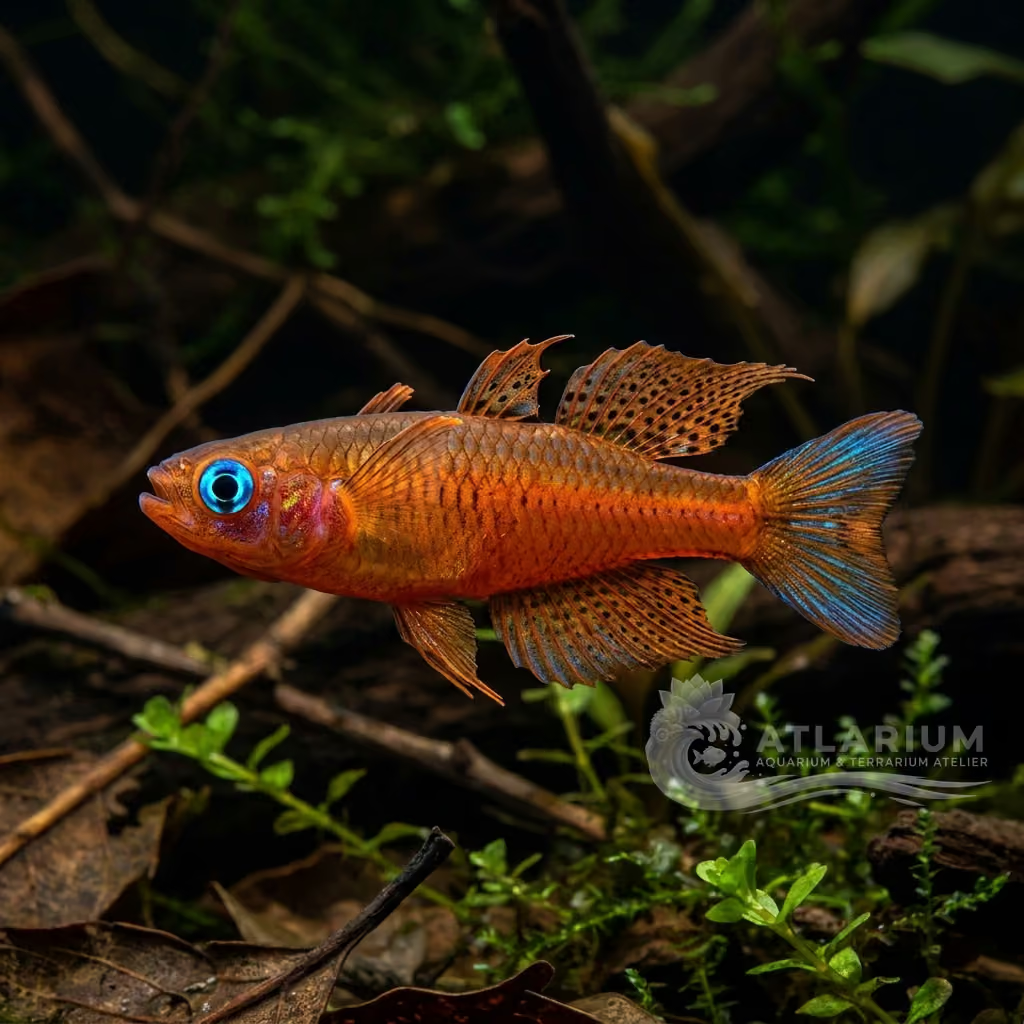
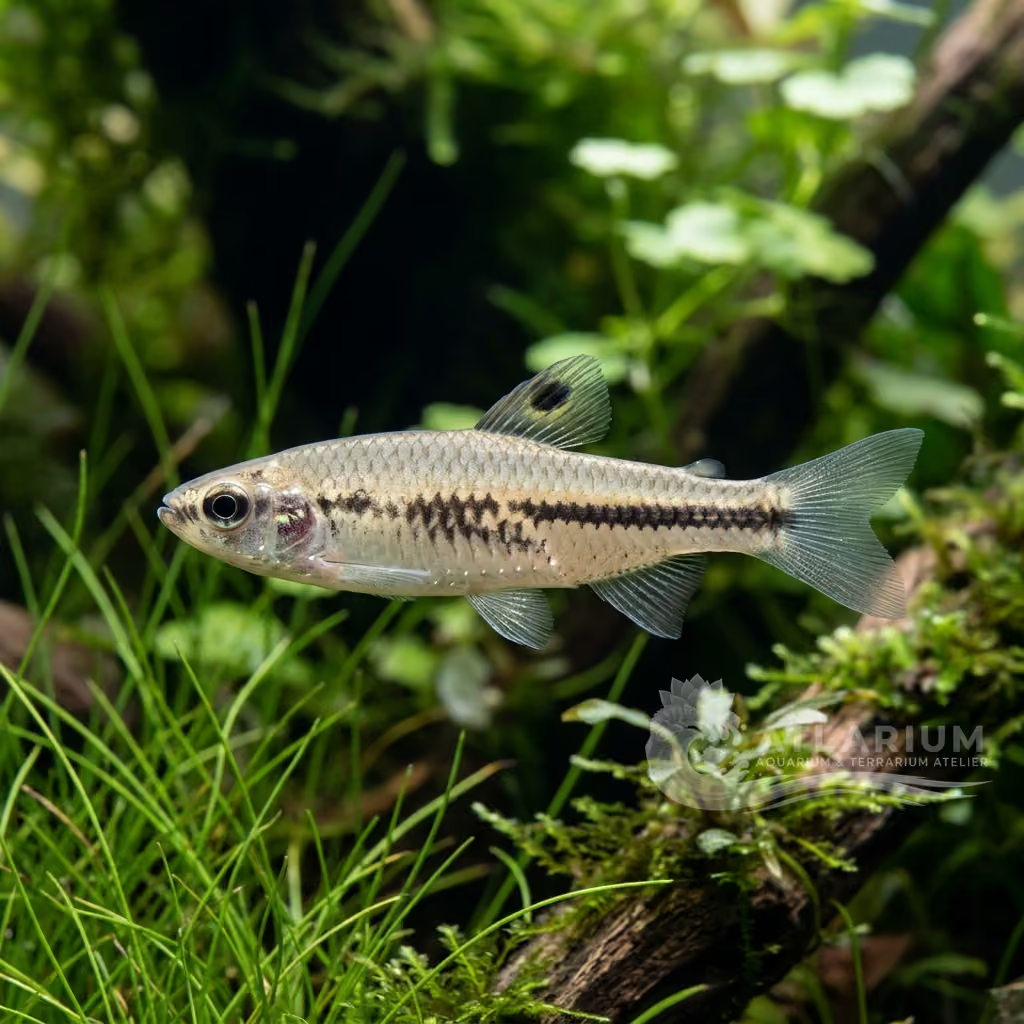
The Ugly Duckling Miracle (2.5 inches / 6 cm). The Black Ruby Barb is arguably the most overlooked, tragically ignored fish in pet stores. As stressed juveniles in bare retail tanks, they look like dull, faded, ugly gray fish with faint black smudges. But when brought home, fed properly, and matured, the Alpha Male undergoes an unbelievable transformation: his entire rear body turns pitch black like velvet, while his head and chest explode into a deep, glowing crimson ruby-red.
Water Temperature
22 - 26 °C
pH Value
6 - 7
Water type
Freshwater
Tank level
Middle
Adult size
6 cm
Minimum tank volume
>= 60 L
Minimum group
>= 1
GH
2 - 12 dGH
KH
1 - 6 dKH
TDS
40 - 240 ppm
Conductivity
63 - 375 uS/cm

Species description
Geographical Origin and Habitat: Endemic to the wooded mountain streams of the wet zones in Sri Lanka. It inhabits slow-moving rivers, cool streams shaded by the dense canopy of the primordial forest, where the water is clear and the bottom is covered with sand, tangled branches, roots, and an abundant carpet of dead leaves.
Taxonomy and Morphology: Member of the Cyprinidae (historically known as Barbus nigrofasciatus). Features a compact, rhomboidal, deep, and laterally compressed body, typical of the most robust barbs. The mouth is terminal and lacks barbels (unlike many related cyprinids). Reaches a maximum size of about 6 cm (2.5 inches).
Social Behavior: Lively fish, constantly in motion but of an extremely peaceful nature, never bothering the fins of other fish. It has a complex hierarchical social life: must be strictly placed in mixed schools of at least 8-10 individuals to temper the bloodless displays of strength between males and ensure their well-being.
Coloration and Sexual Dimorphism: As juveniles, they appear grayish/yellowish with three/four vertical black bands. The magic happens in dominant adult males during the breeding season (or during power displays): the front of the body explodes in a very intense dark red/purplish crimson, while the rear and fins turn ink black. Females remain a golden gray/silver base with sharp black bands and round bellies.

Care, breeding and tankmates
Aquarium Setup: Aquarium of at least 80 cm (30 inches) in length. Prefers densely planted tanks on the sides and back, leaving open space for free swimming in the center. Dark substrate (sand or fine gravel), branching wood, and some dried Catappa leaves to lightly tint the water and lower the pH.
Diet and Feeding: Tireless omnivore. Feeds without problems on excellent quality micro-pellets and flakes, but requires constant feedings of live and frozen food (Brine shrimp, Daphnia, Bloodworms) to fully express the wonderful purple reflections of the males. Loves to peck soft micro-algae on wood or leaves.
Water Quality: Fresh and moderately soft water. Ideal pH between 6.0 and 7.0, GH hardness from 2.0 to 12.0. Being a fish originating from shady mountain streams, it prefers cool water temperatures (22.0 - 26.0 °C / 72-79 °F). Consistently warm environments (28°C / 82°F) dramatically shorten its lifespan.
Compatibility and Cohabitation: Perfect and robust creature for well-structured Asian community aquariums. Can peacefully coexist with Rasboras, Danios, Loaches, peaceful Corydoras, and Gouramis (like Trichogaster chuna or lalius) as it is not a fin-nipper. Avoid pairing with aggressive and fast predatory Cichlids that could intimidate it.
Aquarium Breeding: Prolific spawner that scatters free, non-sticky eggs in fine-leaved vegetation (like Java Moss or Hornwort) at first light. If the parents, very voracious devourers of their own eggs, are not promptly removed or if a separation net is not used on the bottom, the eggs will be entirely consumed.
Risks and Diseases: Extremely hardy, almost immune to common pathologies if kept in high-quality water. The highest risk comes from stress caused by too small groups (fewer than 5), which induces males to hide and completely lose their beautiful coloration, subsequently losing immune defenses.

Geographic origin and distribution
Endemic to the wooded mountain streams of the wet zones in Sri Lanka. It inhabits slow-moving rivers, cool streams shaded by the dense canopy of the primordial forest, where the water is clear and the bottom is covered with sand, tangled branches, roots, and an abundant carpet of dead leaves.
Origin
South and Southeast Asia

Fish profile
- Temperament
- Semi-aggressive
- The Black Ruby Barb possesses a lively, peaceful, and mildly timid temperament, making it an excellent schooling community fish. They must be kept in groups of at least six, though schools of eight to twelve or more will significantly boost their confidence and encourage their best behaviors. In small numbers, they tend to hide frequently, lose their vibrant colors, and become susceptible to stress-related illnesses. When kept in a proper school, the males will engage in harmless, visually stunning sparring displays to establish hierarchy. Their gentle nature makes them highly suitable for a relaxed, planted community setup.
- Diet
- Omnivore
- In their natural habitat, Black Ruby Barbs are omnivorous foragers that feed on small insects, worms, crustaceans, and plant detritus. In captivity, they are not fussy eaters and will readily accept a high-quality omnivore flake or micro-pellet as their staple food. This should be generously supplemented with regular offerings of live or frozen foods, such as daphnia, bloodworms, and brine shrimp, to enhance their coloration. Vegetable matter is also an essential component of their diet and can be supplied through blanched vegetables or algae wafers. Providing diverse nutritional sources ensures robust health and longevity.
- Life expectancy
- 4-6 years
- Adult size
- 6 cm
- Sex ratio
- Specific M:F ratio
- To maintain a peaceful social structure and protect females from excessive harassment, a ratio of more females than males should be maintained. Ideally, keeping two to three females for every male is recommended. During spawning periods, males can become intensely focused and relentlessly drive the females to lay eggs. A skewed ratio ensures that the males' attention is distributed, allowing individual females to rest and recover. This dynamic helps to create a visually striking display, as the males will compete for the females' attention by showing off their darkest, most vibrant colors.
- Feeding frequency
- Twice daily
- Due to their highly active nature, Black Ruby Barbs metabolize food rapidly and should be fed frequently in small amounts. Feeding them two to three times a day is optimal, provided each portion is small enough to be consumed within two minutes. This feeding strategy prevents leftover food from decaying in the aquarium and degrading the water quality. Overfeeding must be carefully avoided, as they will gorge themselves if given the chance, leading to obesity and swim bladder issues. Occasional fasting days can help mimic natural food scarcity and aid their digestive process.
- Bioload
- Low to Medium
- The Black Ruby Barb produces a moderate bioload typical for an active cyprinid of its size. As enthusiastic eaters, a school of these fish will generate a noticeable amount of waste over time. A reliable and appropriately sized filter is necessary to process the ammonia and nitrites they produce effectively. To keep nitrates low and ensure the overall health of the school, consistent weekly water changes of 20 to 30 percent are highly recommended. Maintaining excellent water quality is specifically vital for bringing out the deep, rich colors in adult males.
- Flow
- Stagnant
- Native to shaded forest streams in Sri Lanka, the Black Ruby Barb prefers moderate water flow that provides adequate oxygen without being overpowering. They appreciate areas with gentle currents where they can conserve energy and forage peacefully. A standard canister or hang-on-back filter usually provides the perfect amount of water movement for this species. To mimic their natural environment, the aquarium should have densely planted sections that break up the flow and offer tranquil resting spots. Extremely turbulent water can cause them undue stress and should be avoided.
- Jump risk
- Yes
- Black Ruby Barbs have a low to moderate risk of jumping, usually doing so only when they feel threatened or stressed. During the initial acclimation period to a new tank, they might dart nervously and potentially jump if there is no cover. Maintaining a secure lid or a fitted mesh top is always a good standard practice to prevent any accidental escapes. Sudden fluctuations in water parameters or aggressive tank mates can also increase the likelihood of jumping behavior. Providing plenty of floating plants can make them feel more secure and further reduce this risk.
- Reproduction
- Oviparous
- Like other members of the Pethia genus, Black Ruby Barbs are prolific egg-scatterers that show no parental care. Breeding often occurs in the early morning, with males intensely displaying their ruby-red colors while pursuing gravid females. The female will scatter hundreds of adhesive eggs among fine-leaved aquatic plants or artificial spawning mops. Since the adults will greedily eat their own eggs and fry, a dedicated, heavily planted breeding tank is required for successful rearing. The tiny fry will hatch within 48 hours and require microscopic foods like infusoria immediately after absorbing their yolk sacs.
- Compatibility & tankmates
- With caution
- Black Ruby Barbs are generally peaceful schooling fish that make wonderful additions to many community aquariums. Unlike some of their more notorious relatives, they are far less prone to fin-nipping, making them safer to house with a wider variety of tank mates. They do well with similarly sized rasboras, tetras, peaceful dwarf cichlids, and bottom-dwelling loaches or catfish. It is still advisable to avoid extremely slow-moving or delicate species that might be outcompeted for food by these active swimmers. A sufficiently large school of their own kind is the best way to ensure their peaceful demeanor.
- Tank level
- Middle
- Black Ruby Barbs are mid-water schooling fish that spend the vast majority of their time in the middle and lower-middle levels of the aquarium. They are very active and require an open horizontal swimming lane spanning the length of the tank to dart around freely. While they enjoy the open water, they are also somewhat shy and appreciate having tall plants or driftwood nearby to retreat into if startled. They will occasionally venture to the substrate to scavenge for dropped food. The upper levels of the tank are generally ignored unless they are actively feeding at the surface.

Scientific Parameters & Models
FishBase
Window to the official scientific data of the species
FishBase v25.04Data synced on: 06/15/2026
- Trophic level
- 2 ± 0 se
- Resilience
- High (less than 15 months)
- Phylogenetic uniqueness (PD50)
- 0.5
- Bayesian Length-Weight
- a = 0.01047, b = 3
- VulnerabilityLow vulnerability (10 / 100)

Related species
Recommendations grouped by close relatives, companion choices, and similar care.