Encyclopaedia

FishFreshwaterEasy

Glowlight Danio

Celestichthys

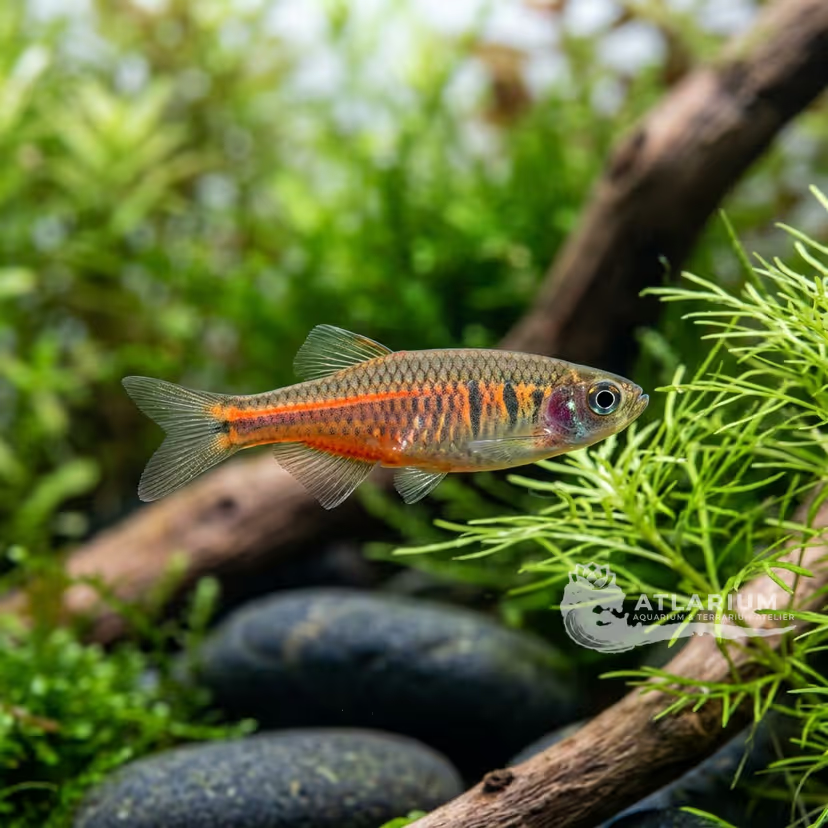
Tiny but explosive. The Glowlight Danio is a phosphorescent orange dart that races around the aquarium. Originating from the highlands of Myanmar, it despises warm water and is perfect for unheated tanks.

Taxonomy
Class:Actinopteri
Order:Cypriniformes
Family:Cyprinidae
Subfamily:Danioninae
Genus:Celestichthys
Species:Celestichthys
Formerly known as:Celestichthys choprae

Share

Check out Glowlight Danio on Atlarium

PracticeRecognition quizzesPhotos, names, origins, and puzzles to review Atlas species.Open quizzes
Water Temperature

22 - 26 °C

pH Value

6 - 7.5

Water type

Freshwater

Tank level

Surface and middle

Adult size

3 cm

Minimum tank volume

>= 30 L

Minimum group

>= 1

GH

4 - 15 dGH

KH

2 - 7 dKH

TDS

80 - 295 ppm

Conductivity

125 - 461 uS/cm

Species description

Geographical Origin and Habitat: Endemic to northern Myanmar (Burma), particularly in the Mogaung river. Populates shallow mountain streams with crystal clear water, strong currents and pebbly substrates.
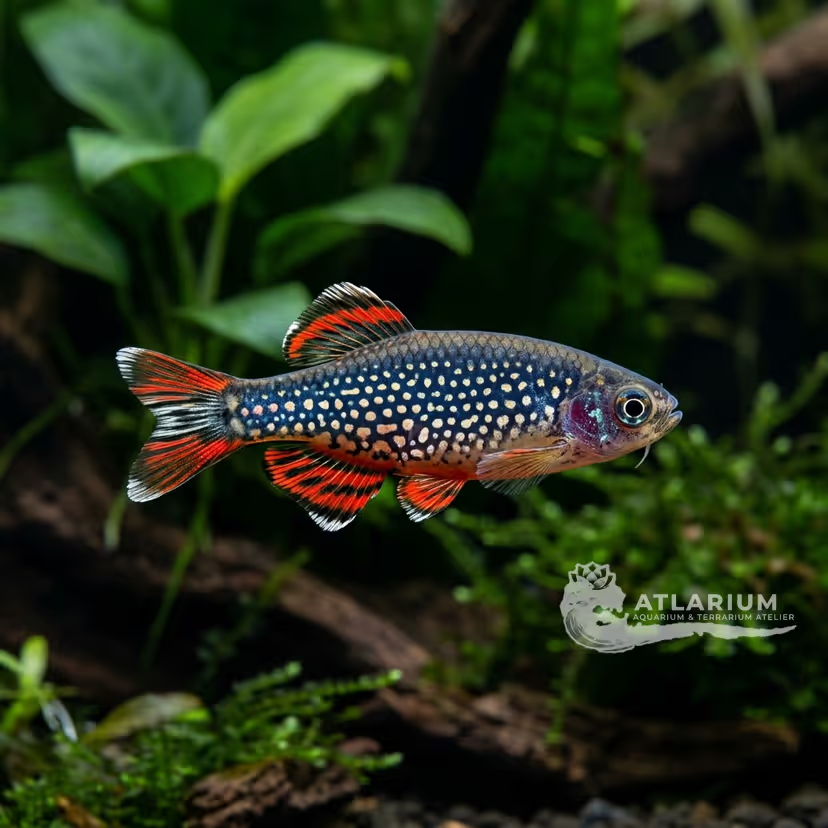
Taxonomy and Morphology: Glowlight Danio (Celestichthys choprae, formerly Danio choprae). Miniature cyprinid (max 3 cm / 1.2 inches). Shares the Celestichthys genus with the famous Galaxy Rasbora (C. margaritatus).
Social Behavior: Extremely gregarious, lively and tireless. Swims frantically throughout the entire volume of the tank. Must be kept in thick schools (10-15 specimens minimum) to distribute the intra-specific aggression of the males.
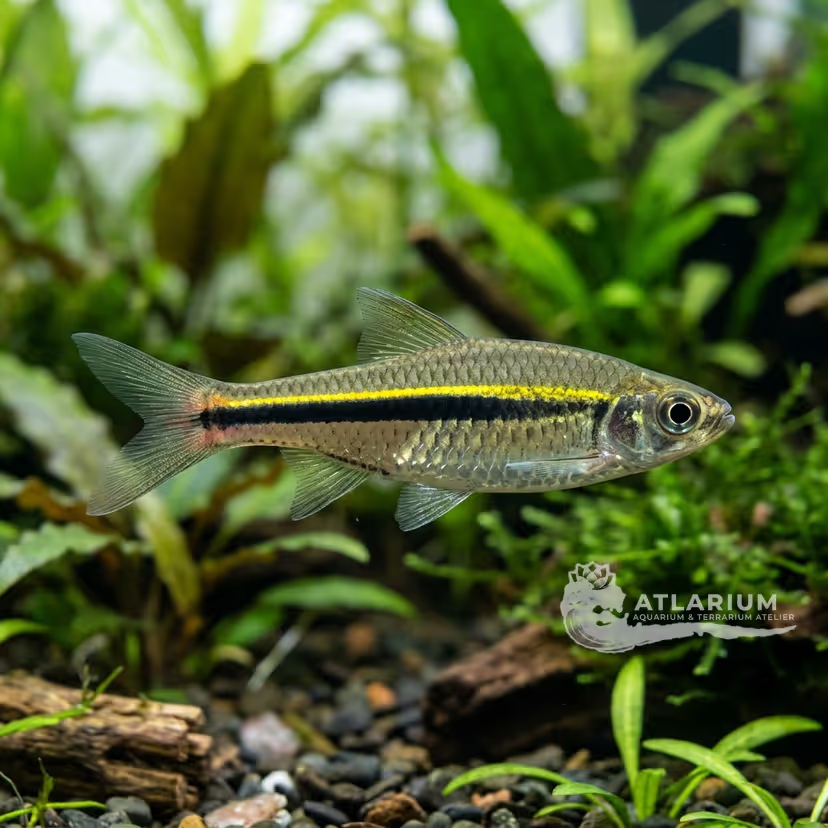
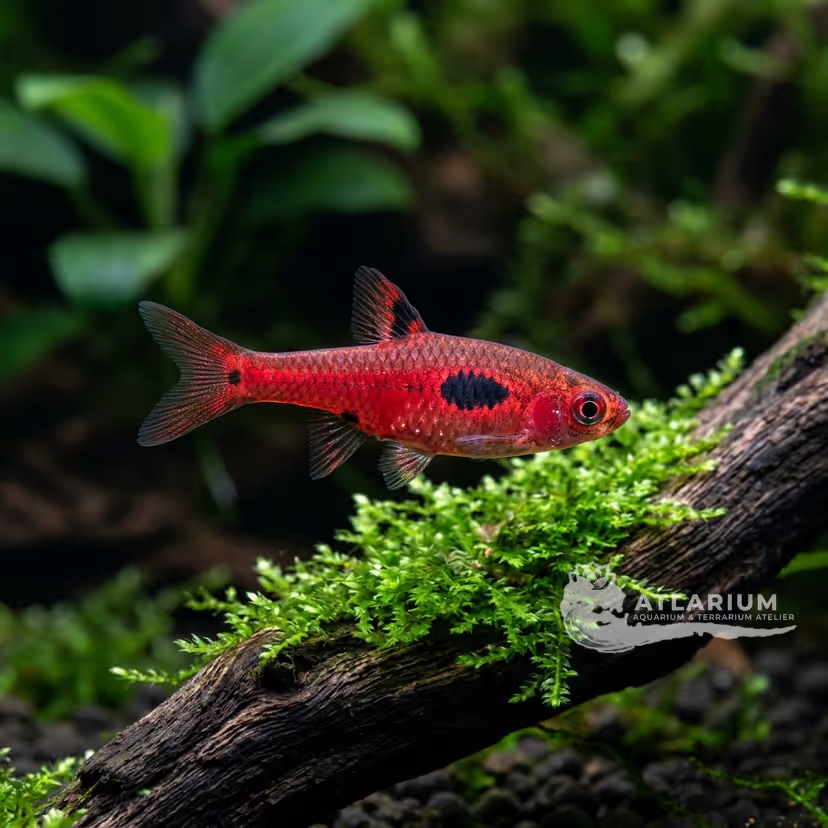
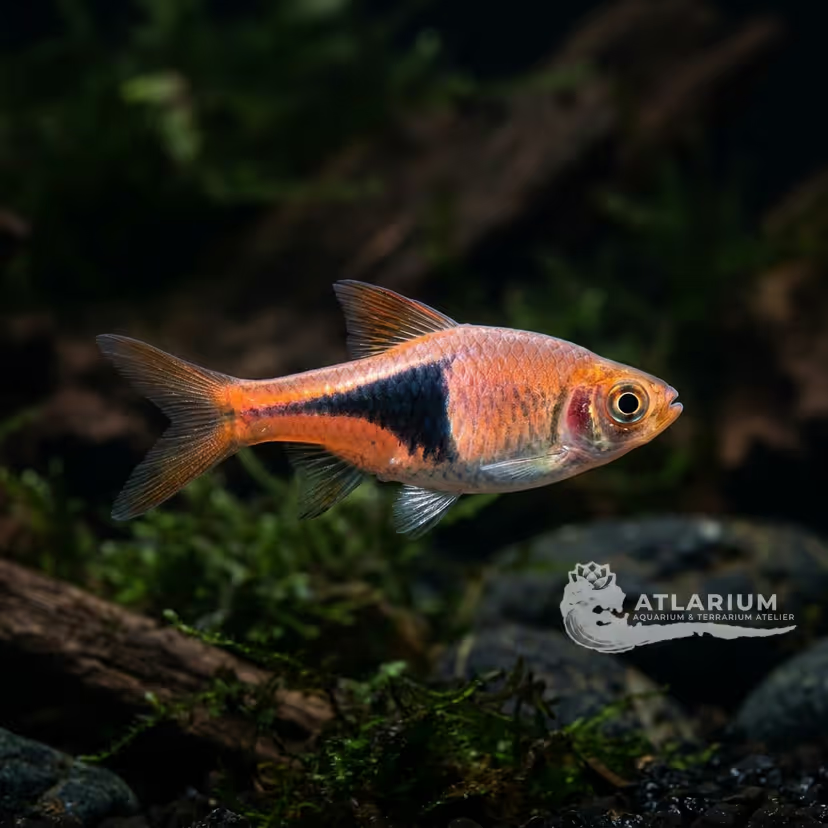
Coloration and Sexual Dimorphism: "Neon" livery: body crossed by a thick horizontal fluorescent orange/red line (Glowlight), topped by bluish vertical bars. Males more slender and with bright red/orange colors; females more opaque and roundish.

Care, breeding and tankmates

Aquarium Setup: Tank developed in length (minimum 80 cm / 32 inches) to accommodate the sprint in swimming. Requires highly oxygenated and well-moved water, fine gravel or smooth pebbles bottom and free central space. Tightly closed lid (formidable jumpers).
Diet and Feeding: Omnivorous micropredator. Extremely voracious, accepts commercial microgranules, finely chopped flakes and attacks bloodworms, daphnia or brine shrimp nauplii with ferocity (excellent for enhancing the red tint).
Water Quality: Requires temperate or moderately cool waters (22-26°C / 71-79°F, also tolerating 20°C / 68°F in winter), very clean and not excessively calcareous. pH around neutrality or slightly acidic.
Compatibility and Cohabitation: Ideal companion for Asian rheophilic aquariums. Should not be paired with timid, slow or freeze-dried sized fish (such as Boraras brigittae) that would be stressed by its frenzy. Excellent with medium-sized Botia or Garra.
Aquarium Breeding: Continuous breeder. In a mature and densely planted aquarium or with Java moss, some eggs escape the predation of the parents (very hungry for their own brood) and hatch on their own.
Risks and Diseases: Robust and undemanding, it only suffers from prolonged summer temperatures above 28°C / 82°F (which drastically shorten its metabolism) and lack of oxygen.

Geographic Origin and Distribution

Endemic to northern Myanmar (Burma), particularly in the Mogaung river. Populates shallow mountain streams with crystal clear water, strong currents and pebbly substrates.

Origin

South and Southeast Asia

Fish profile

Temperament
Semi-aggressive
Characterized by an extremely lively, curious, and energetic temperament, this fish mainly occupies the middle and upper levels of the water column. Being excellent jumpers, it is crucial that the aquarium is equipped with a secure, gap-free lid. They display spectacular bursts of swimming and constant social interactions among school members, making the tank highly dynamic. Males may exhibit temporary, minor territorial behaviors during courtship displays, but without causing physical harm to their companions.
Diet
Omnivore
It is an extremely voracious, omnivorous micropredator that feeds on a wide variety of foods in the aquarium. It readily accepts dry micro-pellets or crushed flakes, but its coloration and vitality benefit greatly from the addition of live or frozen foods. Items like baby brine shrimp, daphnia, bloodworms, and cyclops are ideal for stimulating their natural feeding behavior. They swim actively to catch food in mid-water before it sinks to the bottom, where they rarely venture to feed.
Life expectancy
3-5 years
With proper care and stable water conditions, the Glowlight Danio has an average lifespan ranging from 3 to 5 years. Their longevity is heavily influenced by tank temperature; since they are highland fish, constantly high temperatures above 26°C (79°F) accelerate their metabolism and shorten their lifespan. Efficient filtration that keeps nitrogenous waste low is essential. Offering a varied diet rich in fresh foods helps strengthen their immune system, ensuring a long and healthy life.
Sex ratio
Group
In a standard community aquarium, there is no strict male-to-female ratio required, but Glowlight Danios should always be kept in a group of at least 8 to 10 specimens. This social setup helps distribute natural intraspecific aggression among males and ensures the fish feel secure and display their best colors. For targeted breeding, a ratio of two males to one female is generally recommended in the spawning tank to encourage spawning. A balanced mix of both sexes in a spacious environment will result in a cohesive and active school.
Feeding frequency
Twice daily
Because of their highly active behavior and energetic swimming style, they consume a lot of energy and benefit from 2 to 3 small daily meals. It is important not to overfeed them and to distribute food in amounts that can be entirely consumed in less than two minutes. This approach prevents the accumulation of organic waste on the substrate, helping to keep the water clean and highly oxygenated. Alternating between vegetable-based and protein-rich foods ensures a complete nutritional profile.
Bioload
Low
The Glowlight Danio (Celestichthys choprae) is a small species that produces a relatively low individual bioload due to its tiny size. However, because they are active schooling fish that must be kept in groups of at least 8 to 10 individuals, their collective waste production should not be ignored. A reliable filtration system is necessary to maintain clean, well-oxygenated water and keep nitrates low. Regular water changes and a well-established tank are vital to prevent sudden parameter spikes, to which they are sensitive.
Flow
Stagnant
Originating from mountain streams and fast-flowing rivers in Myanmar, this species appreciates a moderate to strong water flow. The aquarium should be equipped with efficient filtration that creates a constant surface current and keeps the water highly oxygenated. They love to swim against the current in the central areas of the tank, mimicking their natural behavior in the wild. The presence of smooth river stones and gravel on the substrate, combined with areas of dense planting, perfectly recreates their native habitat.
Jump risk
Yes
This species is highly agile and known for its remarkable jumping ability, especially when startled, during feeding frenzies, or during active courtship. To prevent tragic accidents, a secure and tight-fitting lid or cover slide is absolutely mandatory for any tank housing them. Even minimal gaps around filter inlets, cables, or heaters should be carefully blocked or sealed. Keeping the water level slightly lower can also provide an extra margin of safety against unexpected leaps.
Reproduction
Oviparous
It is a continuous scatterer that deposits adhesive eggs among dense vegetation, especially Java Moss or fine-leaved plants. Males court females by displaying their brilliant colors and actively chasing them into plant thickets. They exhibit no parental care and, if left in the same tank, will readily consume their own eggs and fry. To save the offspring, it is recommended to use a separate breeding tank with a mesh grate on the bottom to protect falling eggs, removing the parents immediately after spawning. The fry hatch in about 36-48 hours and initially require infusoria.
Compatibility & tankmates
It is a peaceful but highly active schooling fish that does well in community aquariums with similarly sized, energetic species. It should be kept in groups of at least 8-10 specimens to distribute intraspecific aggression and prevent shyness. Avoid housing them with extremely slow, timid, or long-finned fish (such as Bettas) that could be stressed by their frantic swimming. Ideal tank mates include other small cyprinids, rasboras, Corydoras, and rheophilic bottom-dwellers like Garra.
Tank level
Top/Middle
Glowlight Danios are energetic and fast swimmers that primarily inhabit the middle and upper levels of the water column. They are frequently seen active in areas of moderate water current, where they search for food and interact with one another. While they may occasionally descend to the bottom of the aquarium to forage for leftovers, their preference remains firmly in the open middle-top zones. Providing ample open swimming space in these levels is highly recommended to support their active lifestyle.

Image gallery

Licensed images linked to the species or, when marked, to the closest representative taxon.

Related species

Recommendations grouped by close relatives, companion choices, and similar care.

Variants and close relatives

Same atlas type, nearby scientific identity, genus, or family.
Clown Barb

Clown Barb

Barbodes dunckeri

View details->
Blackline Rasbora

Blackline Rasbora

Rasbora borapetensis

View details->
Reticulated Flying Fox

Reticulated Flying Fox

Crossocheilus reticulatus

View details->
Giant Danio

Giant Danio

Devario aequipinnatus

View details->
Red Tail Shark

Red Tail Shark

Epalzeorhynchos bicolor
View details->
Melon Barb

Melon Barb

Haludaria fasciata

View details->
Pearl Danio

Pearl Danio

Danio albolineatus

View details->
Tiger Barb

Tiger Barb

Puntigrus tetrazona

View details->
Checker Barb

Checker Barb

Oliotius oligolepis

View details->
Scissortail Rasbora

Scissortail Rasbora

Rasbora trilineata

View details->
Cherry Barb

Cherry Barb

Puntius titteya

View details->
Siamese Algae Eater (SAE)

Siamese Algae Eater (SAE)

Crossocheilus oblongus

View details->
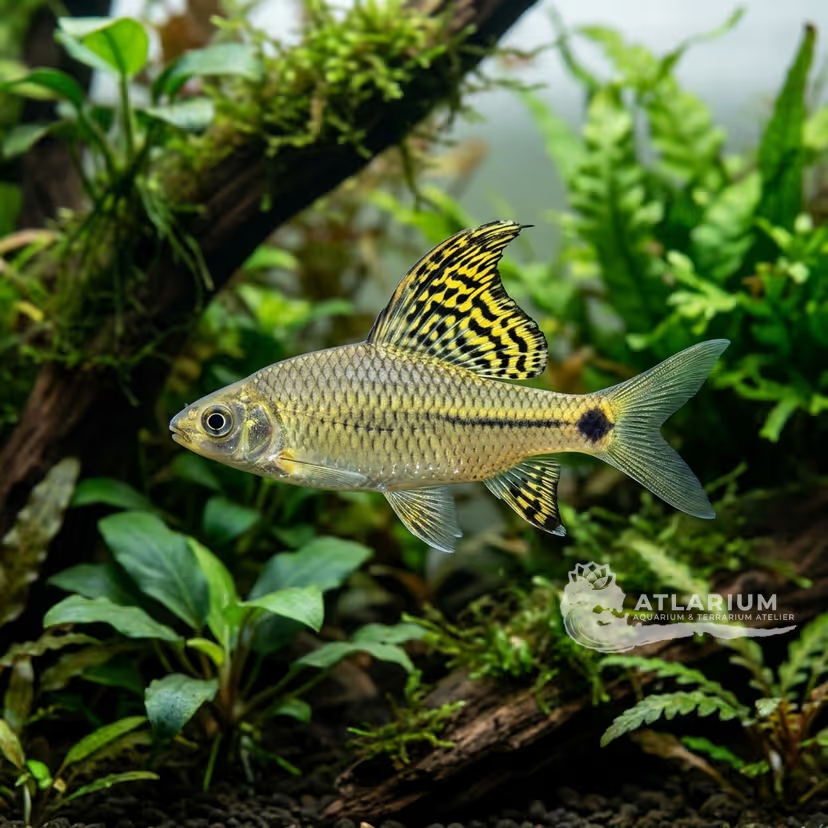
Tinfoil Barb

Tinfoil Barb

Barbonymus schwanenfeldii
View details->
Highfin Barb

Highfin Barb

Oreichthys crenuchoides

View details->
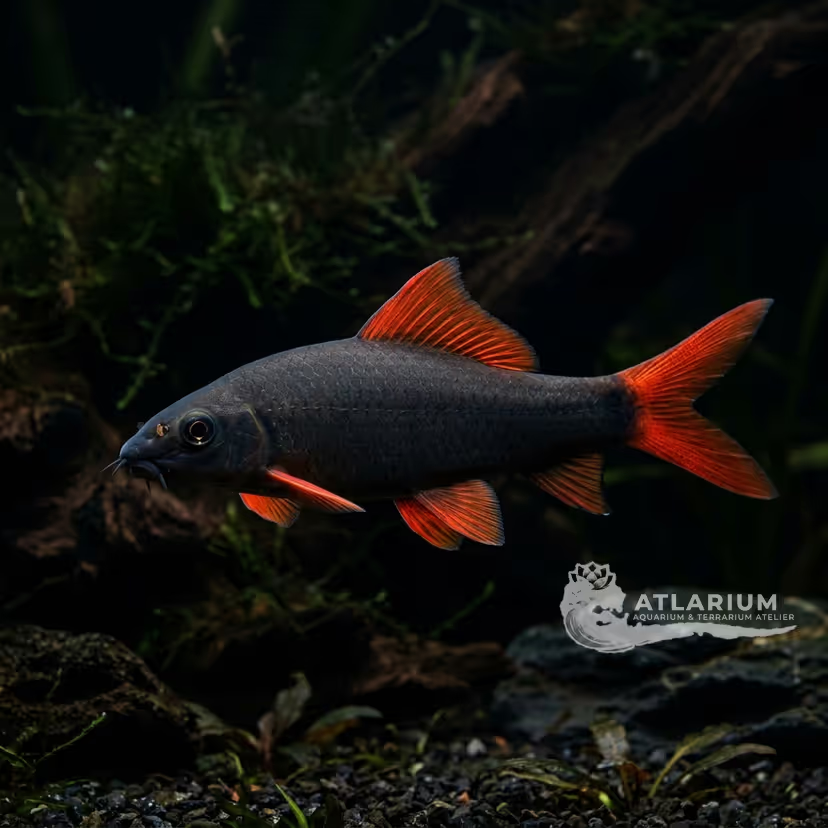
Bala Shark / Silver Shark

Bala Shark / Silver Shark

Balantiocheilos melanopterus
View details->
Rainbow Shark

Rainbow Shark

Epalzeorhynchos frenatus

View details->

Recommended companions

Compatible cards from coherent ecosystems with matching parameters.

Ammannia sp. 'Bonsai'
Plant

Ammannia sp. 'Bonsai'

Ammannia sp. 'Bonsai'

View details->
Bacopa sp. "Japan"
Plant

Bacopa sp. "Japan"

Bacopa sp. "Japan"

View details->
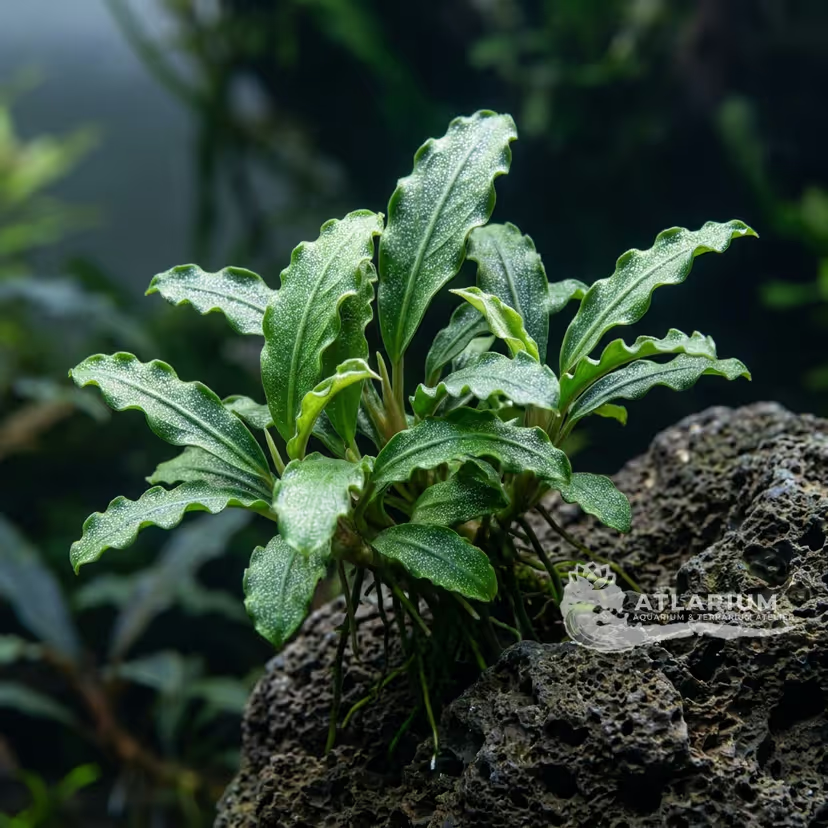
Bolbitis heteroclita
Plant

Bolbitis heteroclita

Bolbitis heteroclita
View details->
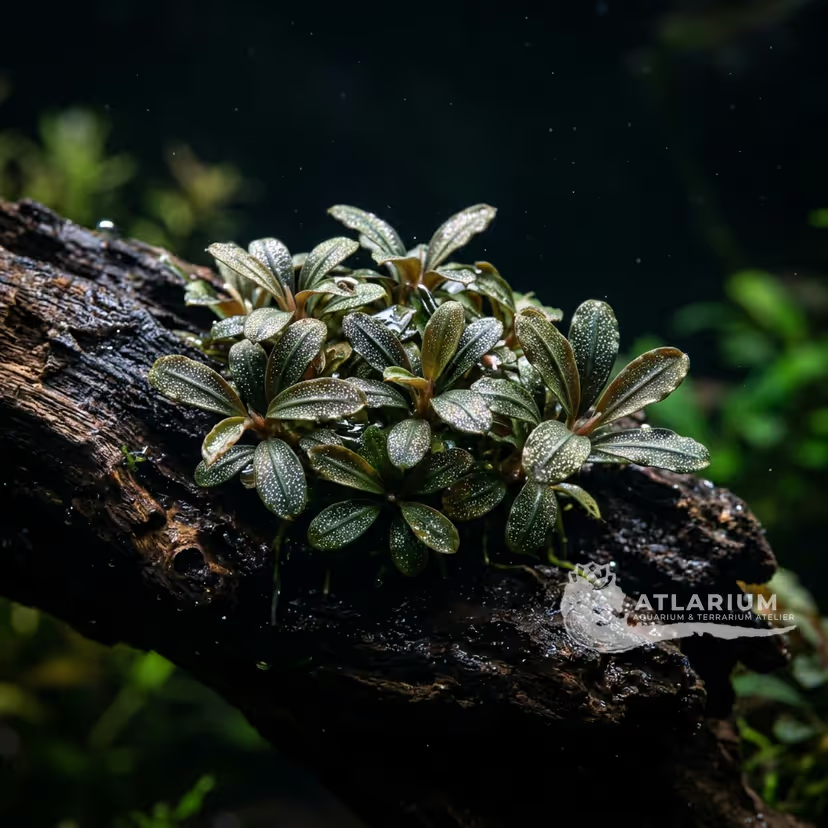
Bucephalandra pygmaea "Bukit Kelam / Sintang"
Plant

Bucephalandra pygmaea "Bukit Kelam / Sintang"

Bucephalandra pygmaea "Bukit Kelam / Sintang"

View details->
Bucephalandra pygmaea "Kapit"
Plant

Bucephalandra pygmaea "Kapit"

Bucephalandra pygmaea "Kapit"
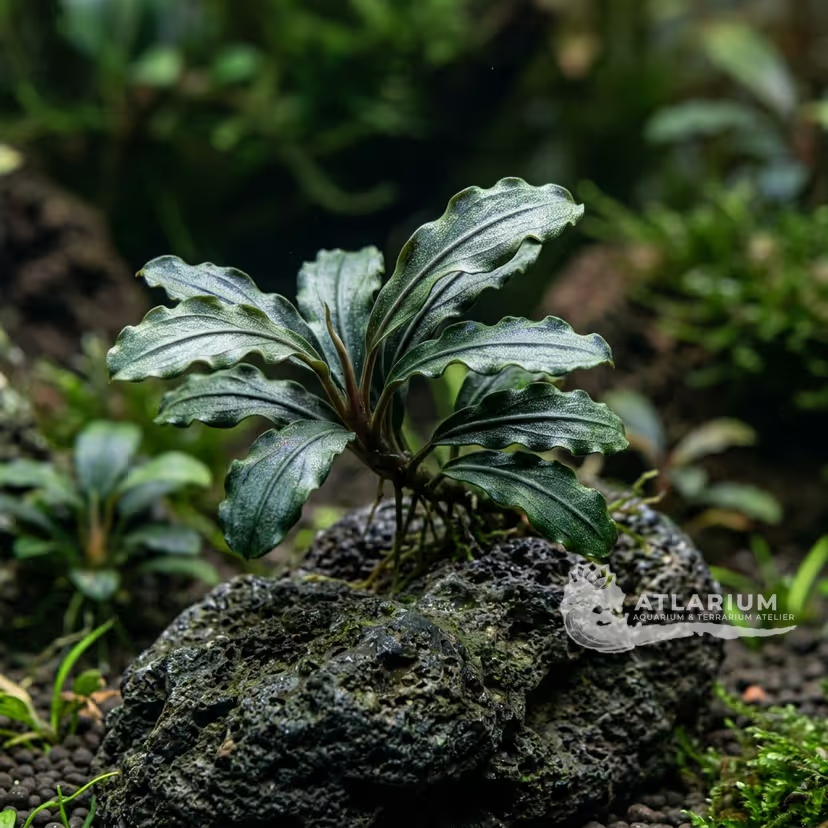
View details->
Bucephalandra sordidula
Plant

Bucephalandra sordidula

Bucephalandra sordidula
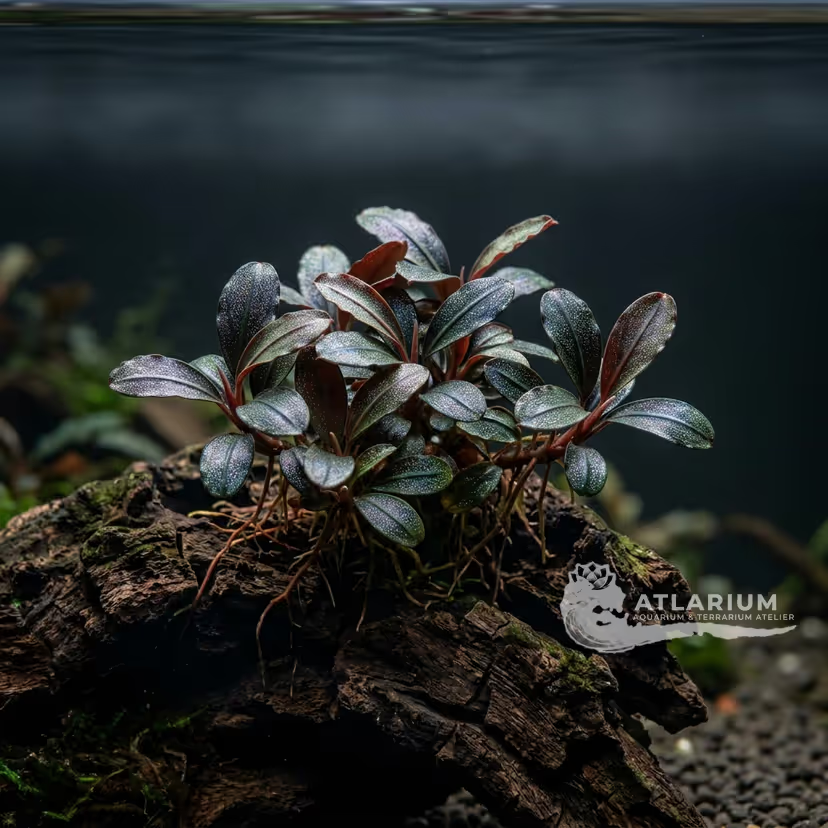
View details->
Bucephalandra sp. "Bodok"
Plant

Bucephalandra sp. "Bodok"

Bucephalandra sp. "Bodok"

View details->
Bucephalandra sp. "Braun-rot narrow"
Plant

Bucephalandra sp. "Braun-rot narrow"

Bucephalandra sp. "Braun-rot narrow"
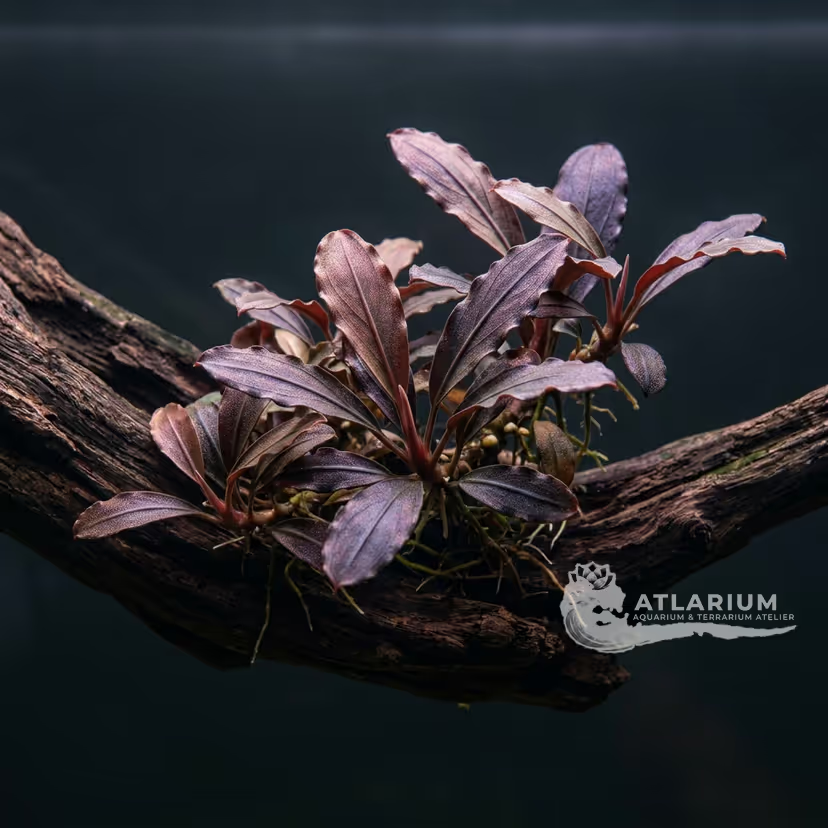
View details->
Bucephalandra sp. "Braun-rot" ("Serimbu")
Plant

Bucephalandra sp. "Braun-rot" ("Serimbu")

Bucephalandra sp. "Braun-rot"
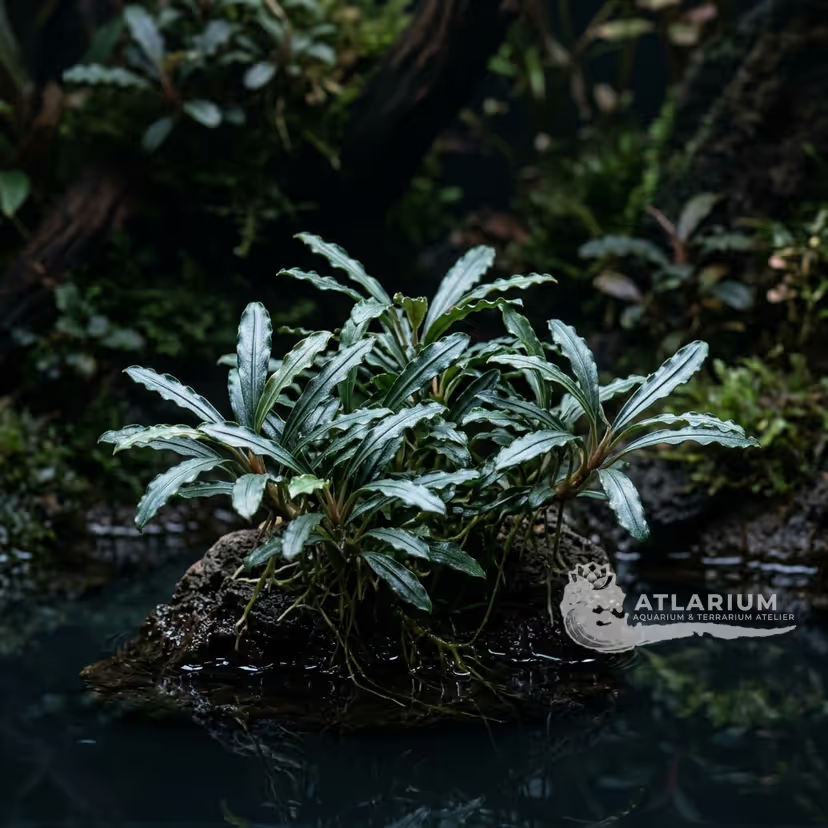
View details->
Bucephalandra sp. "Gunung Sumpit"
Plant

Bucephalandra sp. "Gunung Sumpit"

Bucephalandra sp. "Gunung Sumpit"
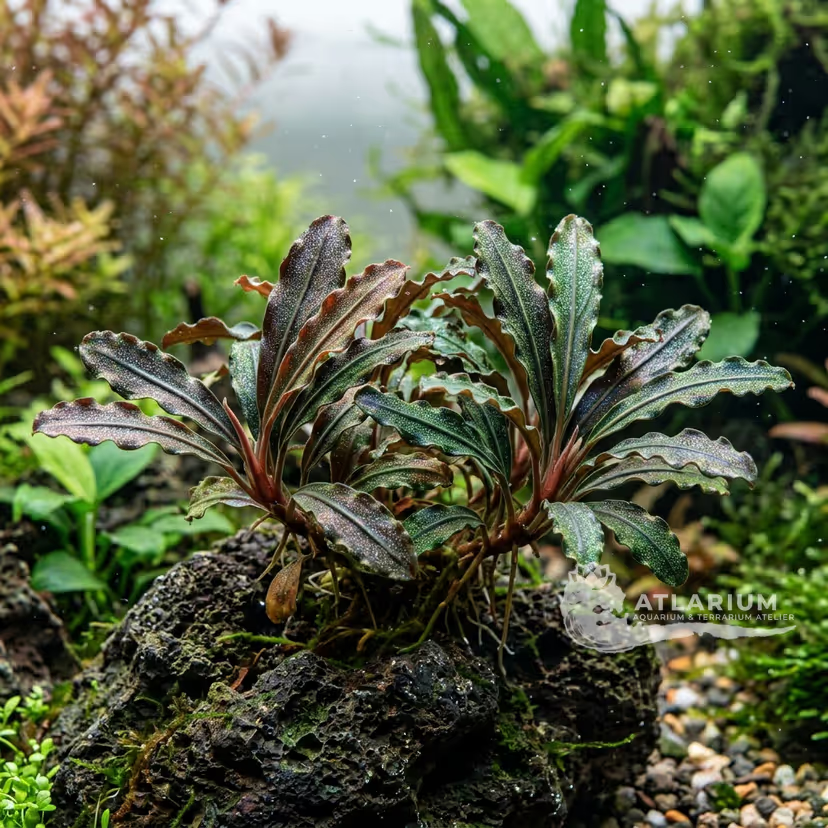
View details->
Bucephalandra sp. "Kedagang"
Plant

Bucephalandra sp. "Kedagang"

Bucephalandra sp. "Kedagang"

View details->
Arrowhead Anubias
Plant

Arrowhead Anubias

Anubias hastifolia

View details->
Bucephalandra motleyana "Braun-rot" ("Serimbu")
Plant

Bucephalandra motleyana "Braun-rot" ("Serimbu")

Bucephalandra motleyana "Braun-rot" ("Serimbu")

View details->
Bucephalandra motleyana "Kapit"
Plant

Bucephalandra motleyana "Kapit"

Bucephalandra motleyana "Kapit"

View details->
Bucephalandra motleyana "Pancuraji"
Plant

Bucephalandra motleyana "Pancuraji"

Bucephalandra motleyana "Pancuraji"

View details->
Bucephalandra sp. "Bukit Kelam / Sintang"
Plant

Bucephalandra sp. "Bukit Kelam / Sintang"

Bucephalandra sp. "Bukit Kelam / Sintang"

View details->

Similar care

Cards with similar requirements, difficulty, habitat, and husbandry profile.
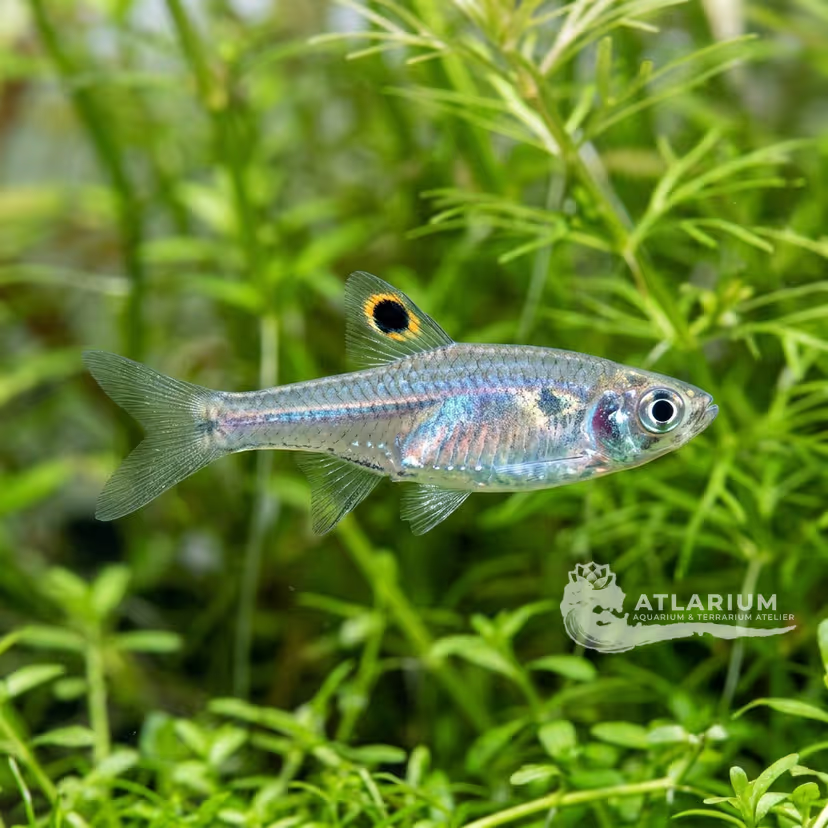
Emerald Eye Rasbora

Emerald Eye Rasbora

Brevibora dorsiocellata
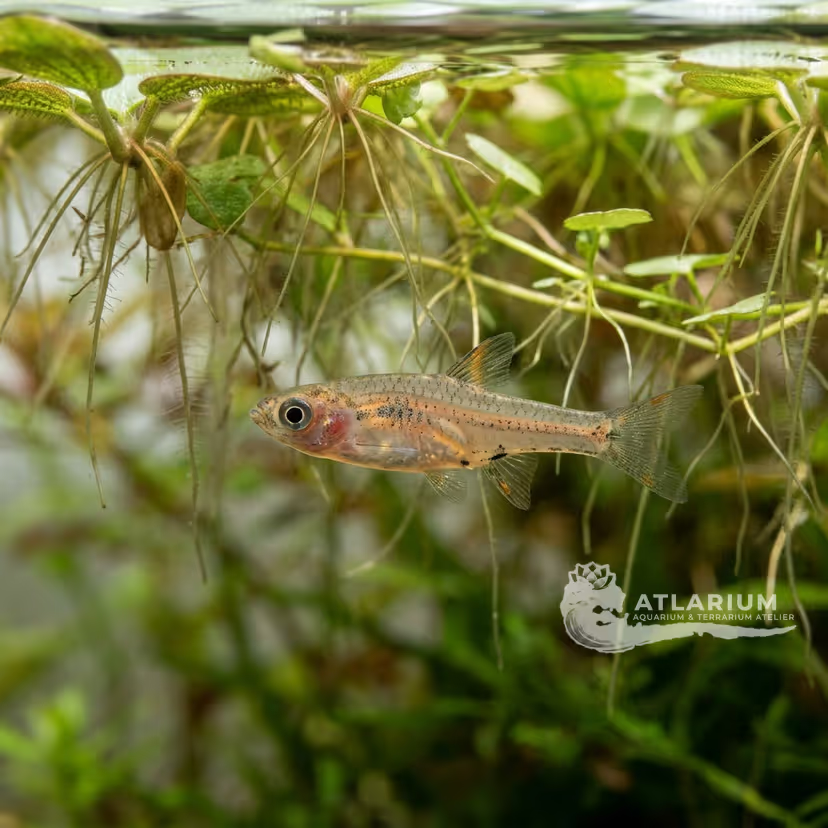
View details->
Micros Rasbora

Micros Rasbora

Boraras micros

View details->
Orange-finned Danio

Orange-finned Danio

Danio kyathit

View details->
Vietnamese White Cloud

Vietnamese White Cloud

Tanichthys micagemmae
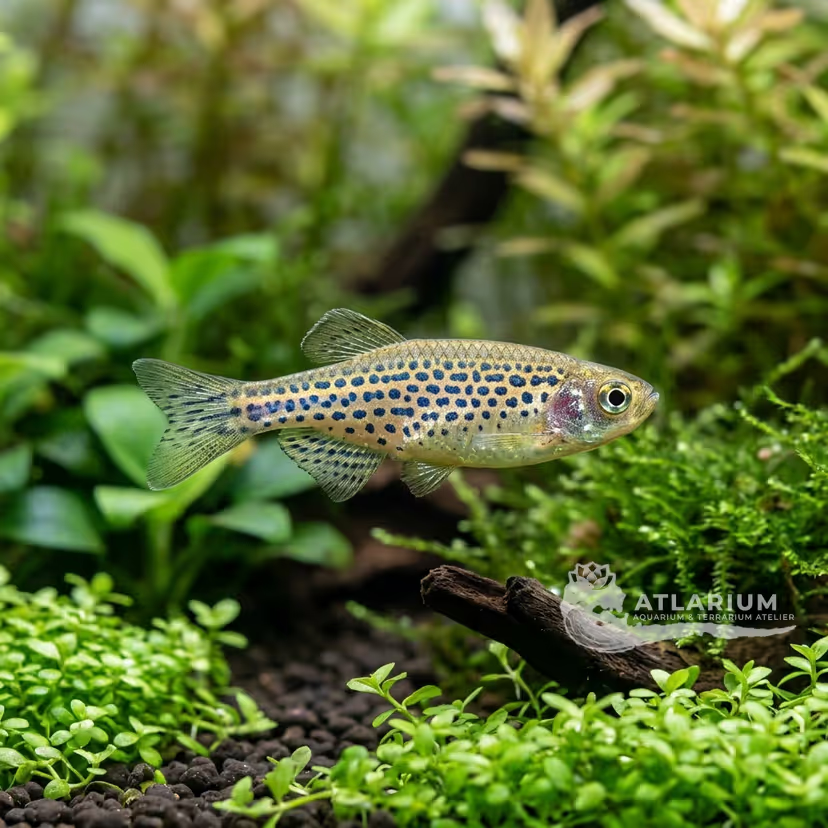
View details->
Gold Ring Danio

Gold Ring Danio

Danio tinwini

View details->
Two-spot Rasbora

Two-spot Rasbora

Rasbora elegans

View details->
Giant Danio

Giant Danio

Devario malabaricus

View details->
Brilliant Rasbora

Brilliant Rasbora

Rasbora einthovenii
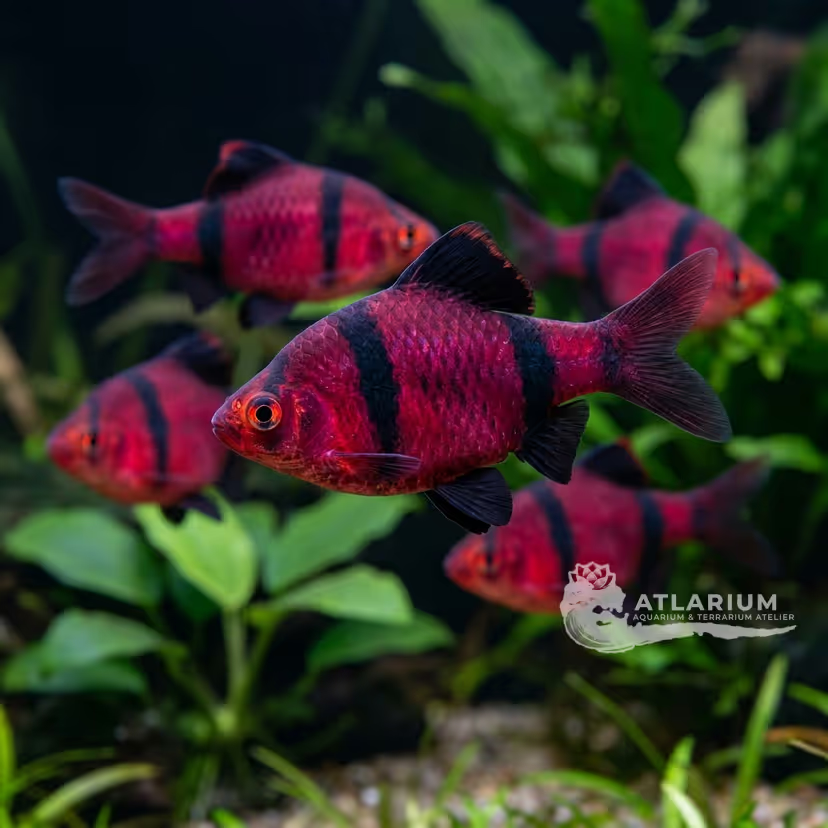
View details->
Black Ruby Barb

Black Ruby Barb

Pethia nigrofasciata

View details->
Strawberry Rasbora

Strawberry Rasbora

Boraras naevus

View details->
Harlequin Rasbora

Harlequin Rasbora

Trigonostigma heteromorpha

View details->
Napo Corydoras

Napo Corydoras

Corydoras napoensis

View details->
Glowlight Danio

Glowlight Danio

Danio choprae

View details->
Zebrafish

Zebrafish

Danio rerio

View details->
Golden Dwarf Barb

Golden Dwarf Barb

Pethia gelius

View details->
Celestial Pearl Danio (CPD / Galaxy Rasbora)

Celestial Pearl Danio (CPD / Galaxy Rasbora)

Danio margaritatus

View details->
Last updated: 06/30/2026
Glowlight Danio (Celestichthys) Care Guide & Tank Setup | Atlarium