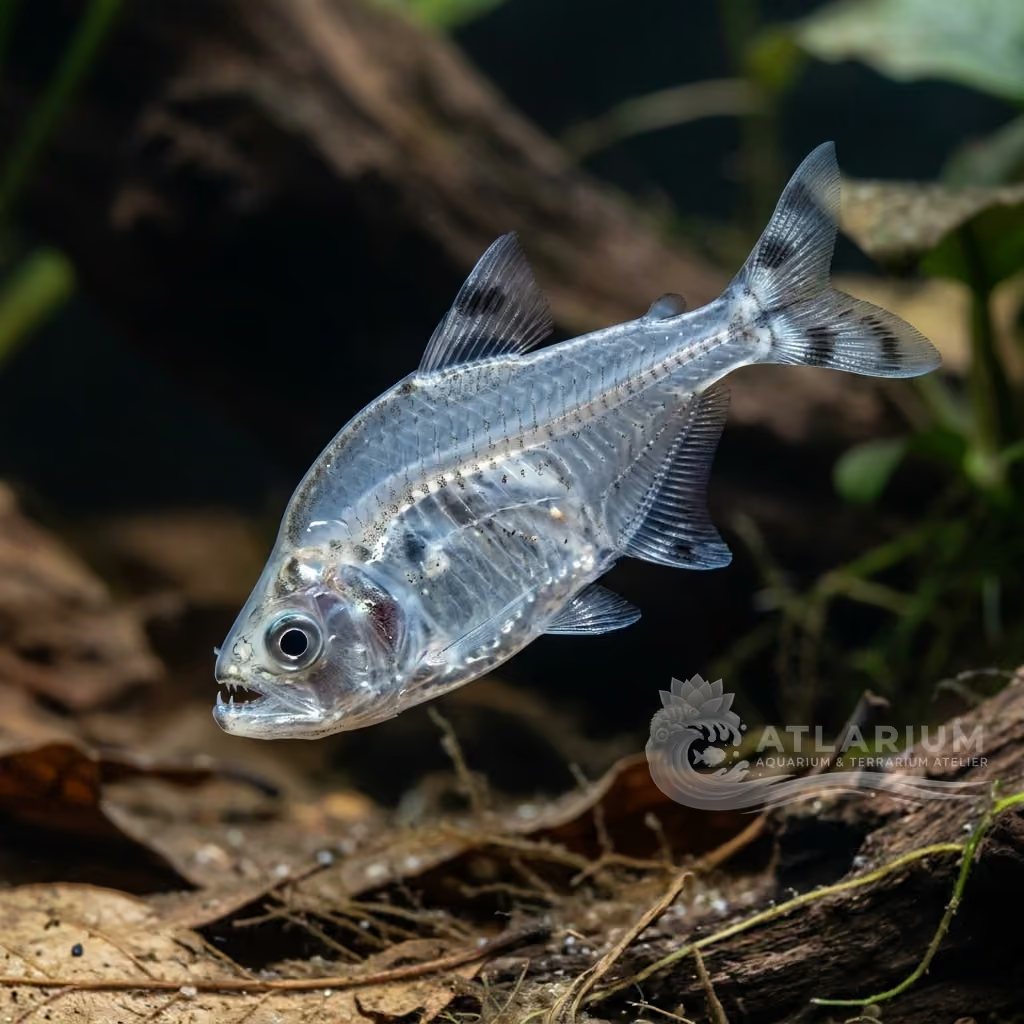
Brilliant Rasbora
Rasbora einthovenii
A hardy and attractive cyprinid characterized by a prominent dark longitudinal band with purplish reflections. Perfect for medium-sized planted aquariums.
Water Temperature
22 - 26 °C
pH Value
5 - 7
Water type
Freshwater
Tank level
Surface and middle
Adult size
9 cm
Minimum tank volume
>= 100 L
Minimum group
>= 1
GH
1 - 12 dGH
KH
1 - 6 dKH
TDS
25 - 240 ppm
Conductivity
39 - 375 uS/cm

Species description
Geographical Origin and Habitat: Native to Southeast Asia, specifically found in Malaysia, Singapore, Brunei, and Indonesia (Sumatra and Borneo). It primarily inhabits shaded forest streams with blackwater conditions and acidic peat swamps. These habitats are characterized by dark, tannin-rich water, thick layers of decaying leaves, submerged tree roots, and fallen branches that create a secure habitat rich in microinvertebrates.
Taxonomy and Morphology: Belongs to the family Cyprinidae, genus Rasbora. Described by Bleeker in 1851. It features a slender, streamlined, and moderately elongated body. Adults grow slightly larger than many other rasboras, typically reaching a length of 7.0 to 9.0 centimeters. It has large, shimmering scales and well-developed eyes adapted to low-light forest environments.
Social Behavior: A peaceful, quiet yet active species with schooling habits. It must be housed in a stable group of at least 6-8 individuals of its own species to prevent stressed behavior and to encourage natural social interactions. It occupies primarily the middle and upper levels of the water column, swimming smoothly among plants.
Coloration and Sexual Dimorphism: The body has a silvery-grey base with golden reflections. A prominent black longitudinal stripe, reflecting purplish-blue iridescent hues depending on the light, runs from the snout to the caudal fin. The fins are clear or show faint yellow or reddish tints in mature males. Males are slimmer and more colorful, while females are noticeably deeper-bodied and rounded, especially when gravid.

Care, breeding and tankmates
Aquarium Setup: Requires a tank of at least 80-100 cm in length (about 80-100 liters / 20-25 gallons). The setup should replicate a forest stream: a fine sandy substrate, driftwood roots, and dense planting along the sides and back while leaving the center open. Adding Catappa leaves or peat filtration will tint the water with beneficial tannins and help maintain acidity. Lighting should be kept dim.
Diet and Feeding: In the wild, it feeds on fallen terrestrial insects, insect larvae, and small aquatic invertebrates. In captivity, it is an omnivore and very easy to feed, accepting high-quality flakes and pellets. For optimal health and coloration, supplement their diet with live or frozen foods such as brine shrimp, mysis, bloodworms, and daphnia.
Water Quality: Prefers soft, acidic water. The optimal parameters are a temperature of 22°C to 26°C (71.6°F - 78.8°F), pH between 5.0 and 7.0 (tolerates neutral water but thrives in acidic conditions), and low hardness (GH 2-10 dGH). Filtration should be effective but with a gentle water flow, matching their slow-moving natural streams.
Compatibility and Cohabitation: An ideal species for biotope community aquariums. It coexists peacefully with other Asian cyprinids, small barbs, loaches (such as Kuhli loaches), glass catfish, small gouramis, and peaceful bottom dwellers. Avoid tankmates that are too large or boisterous, which could easily bully them or view them as food.
Aquarium Breeding: Egg-scatterer with no parental care. Breeding requires a separate spawning tank with very soft water (GH < 3), acidic pH (5.5 - 6.0), dim lighting, and a dense cover of mosses or spawning mops. After spawning, which usually occurs at dawn, parents must be removed immediately. The fry hatch within 24-30 hours.
Risks and Diseases: Susceptible to external parasites like Ich if exposed to sudden water parameter changes or temperature drops. High nitrate levels or poor hygiene can lead to fungal infections and fin rot. Conducting proper quarantine for new livestock and performing regular partial water changes are key preventive measures.

Geographic origin and distribution
Native to Southeast Asia, specifically found in Malaysia, Singapore, Brunei, and Indonesia (Sumatra and Borneo). It primarily inhabits shaded forest streams with blackwater conditions and acidic peat swamps. These habitats are characterized by dark, tannin-rich water, thick layers of decaying leaves, submerged tree roots, and fallen branches that create a secure habitat rich in microinvertebrates.
Origin
South and Southeast Asia

Fish profile
- Temperament
- Semi-aggressive
- They have a very peaceful, schooling temperament that adds life to the aquarium. They are generally timid if kept in groups that are too small. When kept in a proper school, they display fascinating social dynamics.
- Diet
- Omnivore
- They are predominantly insectivorous in the wild, feeding on small bugs and larvae. In captivity, they eagerly accept high-quality flakes and micro-pellets. Regular feedings of live or frozen bloodworms and daphnia are highly beneficial.
- Life expectancy
- 3-5 years
- Adult size
- 9 cm
- Sex ratio
- School
- They fare best in mixed-sex schools of eight or more individuals. Males will display vibrant colors to attract females and establish hierarchy. Females are generally larger and have rounder bellies when full of eggs.
- Feeding frequency
- Twice daily
- Offering them two small meals a day is ideal for their digestion. Only feed what they can completely consume in about three minutes. This frequent, small-meal approach keeps them active and healthy.
- Bioload
- Low to Medium
- The Brilliant Rasbora produces a low to moderate bioload depending on the school size. They are sensitive to poor water quality, making regular maintenance crucial. Efficient filtration is needed to keep ammonia and nitrites strictly at zero.
- Flow
- Stagnant
- They prefer calm to moderately flowing water environments. Slow-moving forest streams are their natural habitat, so avoid turbulent flow. Gentle circulation provided by a standard canister or sponge filter is perfect.
- Jump risk
- Yes
- Like most cyprinids, they possess a strong jumping reflex. A tight-fitting cover glass or canopy is required to prevent them from escaping. Lowering the water level slightly can also act as an extra precaution.
- Reproduction
- Oviparous
- Breeding occurs through continuous egg-scattering among fine-leaved plants like Java moss. They do not care for their young and will eat their own eggs. A dedicated, dimly lit breeding tank is necessary to raise the fry successfully.
- Compatibility & tankmates
- Community
- They are extremely peaceful community fish suitable for Southeast Asian biotope setups. Good companions include other peaceful rasboras, small loaches, and gouramis. Aggressive or overly large fish will cause them to hide constantly.
- Tank level
- Top/Middle
- They are classic middle-level swimmers, preferring the open water column. They will often school tightly when exploring or if they feel threatened. Providing plenty of swimming space alongside dense planting is highly recommended.

Scientific Parameters & Models
FishBase
Window to the official scientific data of the species
FishBase v25.04Data synced on: 06/15/2026
- Trophic level
- 3.3 ± 0.4 se
- Resilience
- High (less than 15 months)
- Phylogenetic uniqueness (PD50)
- 0.5
- Bayesian Length-Weight
- a = 0.00776, b = 3.01
- VulnerabilityLow vulnerability (10 / 100)

Related species
Recommendations grouped by close relatives, companion choices, and similar care.