Encyclopaedia

FishFreshwaterExpert

Pike Gourami

Luciocephalus pulcher

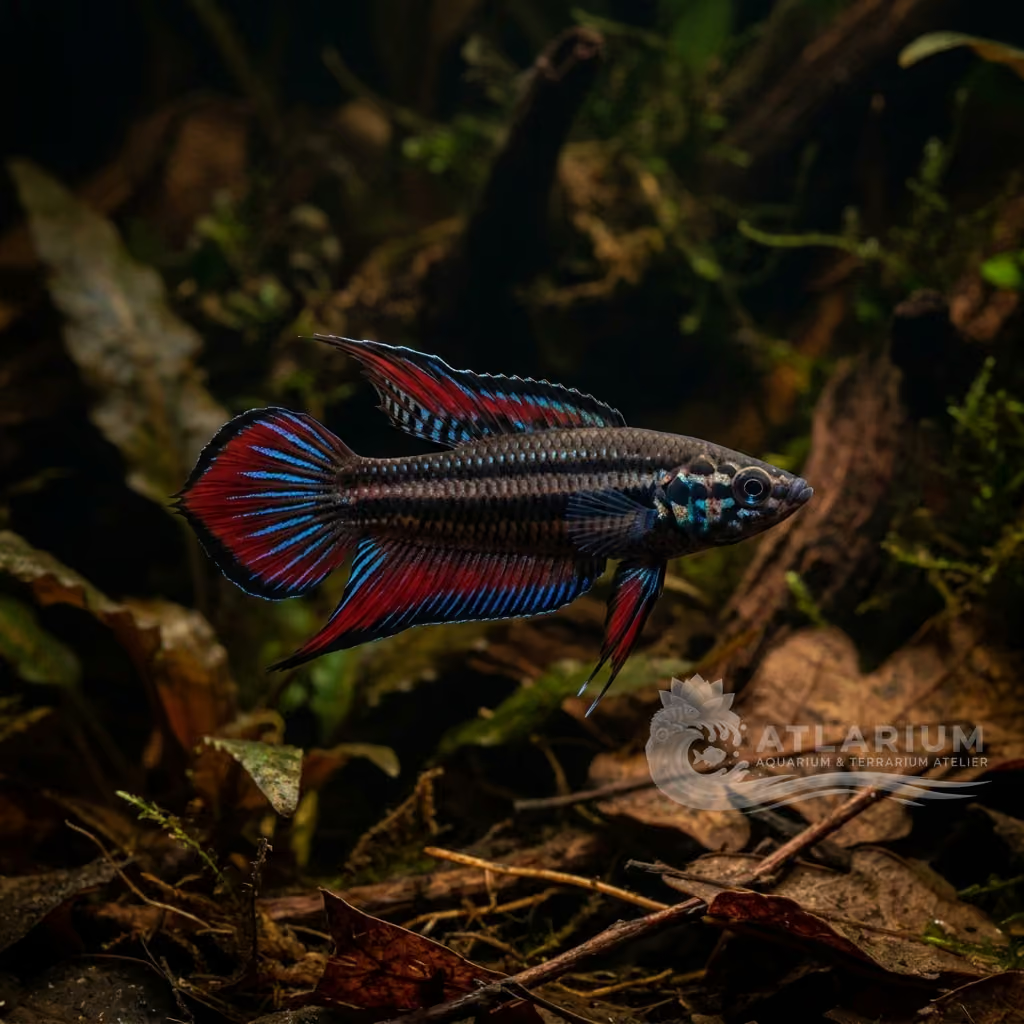
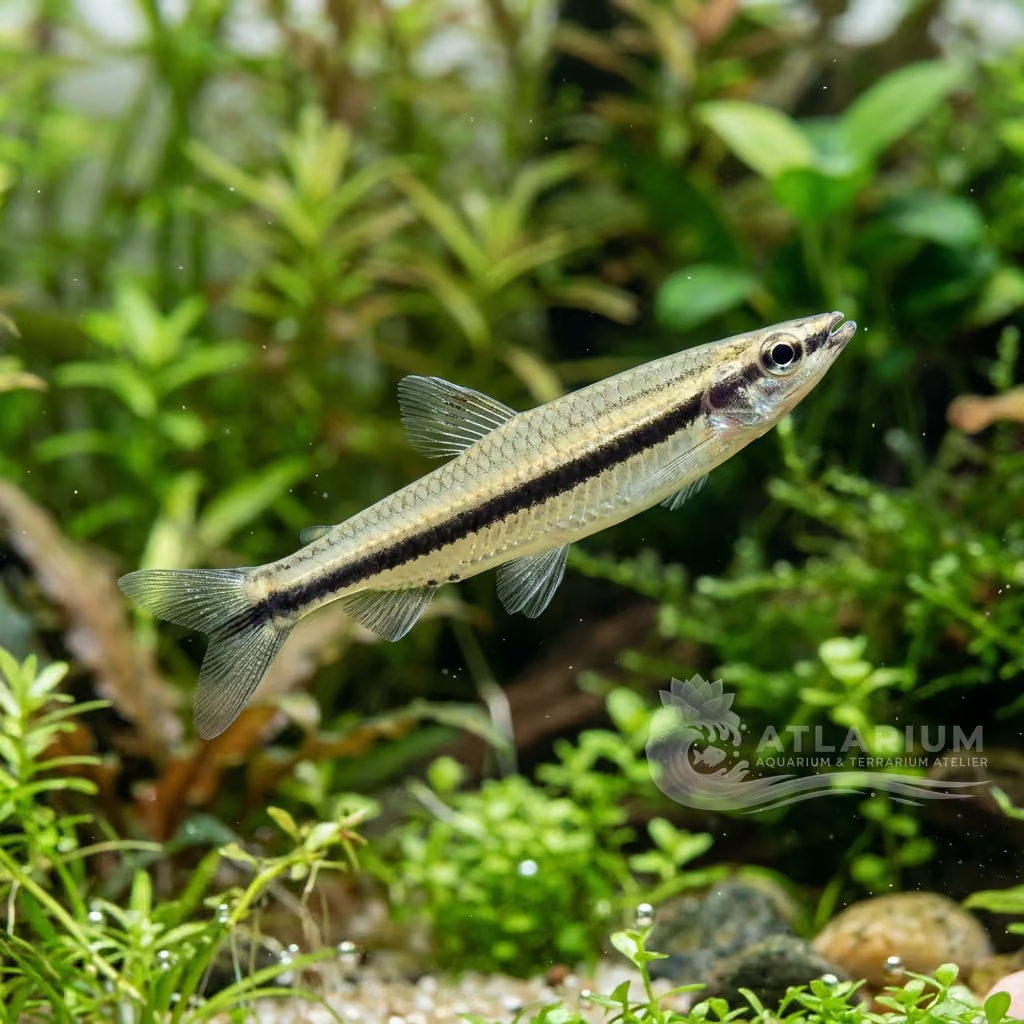
The 'Pike Gourami' or 'Crocodile Fish' (18 cm). An extraordinary tapered labyrinth predator, resembling a small pike. Exclusively insectivorous/piscivorous, it is a master of ambush among dense vegetation. Very difficult to feed indoors, requires monospecific tanks and live baits.

Taxonomy
Class:Actinopteri
Order:Perciformes
Family:Osphronemidae
Subfamily:Luciocephalinae
Genus:Luciocephalus
Species:Luciocephalus pulcher

Share

Check out Pike Gourami on Atlarium

PracticeRecognition quizzesPhotos, names, origins, and puzzles to review Atlas species.Open quizzes
Water Temperature

24 - 28 °C

pH Value

5 - 7

Water type

Freshwater

Tank level

Middle

Adult size

18 cm

Minimum tank volume

>= 180 L

Minimum group

>= 1

GH

1 - 10 dGH

KH

1 - 5 dKH

TDS

25 - 200 ppm

Conductivity

39 - 313 uS/cm

Species description

Geographical Origin and Habitat: Submerged forests, peat basins, densely vegetated agricultural ditches and margins of slow-flowing rivers (Sungai) in Southeast Asia (Sumatra, Borneo, Malay Peninsula). Its habitat of choice is the upper pelagic zone: it camouflages itself among the thick stems of floating plants, sweet mangrove roots or tufts of reeds, usually in tannic (amber or dark) waters well shaded by the jungle canopy.
Taxonomy and Morphology: Unique and atypical member of the Osphronemidae family (the Gouramis). A masterpiece of predatory hydrodynamics: torpedo body (up to 18 cm / 7 inches) extremely tapered and laterally compressed, exceptionally pointed snout (like a pike or gharial) and gigantic, enormously protrusible mouth, capable of snapping forward like a tube to suck in lethal and amazing prey. A formidable labyrinth organ allows it to survive in stagnant waters without oxygen, remaining suspended motionless at the water's surface.
Social Behavior: The "Floating Sniper". It is the quintessence of the Ambush predator. Absolutely static, does not swim back and forth but magically floats tilted upside down or parallel to the surface, perfectly imitating a rotten branch or a dead leaf. If it perceives a movement of a suitable prey it approaches millimetrically in amazing jerks and then strikes in a thousandth of a second, swallowing it. Peaceful deaf with conspecifics of the same majestic size.
Coloration and Sexual Dimorphism: Absolute Blinding Camouflage. Its base livery is olive-brown, beige or dry leaf brown, but it is split by an unmistakable, thick very dark brown lateral band (often surrounded by a golden or pinkish halo) that goes from the tip of the snout all along the eye to the amazing unreal fierce split tail. During parades, or if excited, it can show slight greenish or bronze iridescent phobic blind magic subtle reflections. Sexual dimorphism is weak, adult males slightly more massive and iridescent.

Care, breeding and tankmates

Aquarium Setup: Demands "The Motionless Floating Forest" (Tank min. 100-120 cm / 40-48 in for a small group). It does not care about the bottom and the tank itself; its kingdom is the water ceiling. You must create an impassable surface barrier of floating woods and very thick tangles of floating plants (Pistia, Salvinia, riccia mosses and phobic blind dark hanging branches) among which it can camouflage itself motionless amazing passive lethargy fierce magic dark. Weak lighting. Absolutely hermetic cover and humid heat between light and water to protect the lung labyrinth.
Diet and Feeding: Obligate Piscivorous Macro-Predator (Lethal tragic extreme challenge). It is the cause of 99% of amazing tragic phobic failures. In nature it eats ONLY fish and crustaceans on the surface. Dry commercial foods are systematically and firmly ignored until leaving itself to die amazingly proud suicidal deaf consumptive lethal tragic. Requires constant supplies of small bait fish (healthy Guppies, tiny cyprinids in quarantine or large live insects: crickets, mealworms, fetid amazing floating earthworms). Requires exhausting maniacal training to wean it to frozen food (small fish and shrimp waved at the water surface with tweezers magic amazing theater tragic fatal useless).
Water Quality: Chiaroscuro Peat Bog Chemistry. Hardiness in average parameters, but zero tolerance to lethal asphyxiating pollution. Lives in acidic to moderately acidic waters (pH 5.0 - 7.0) with medium-soft hardness (GH 1-10). The ideal temperature must be kept stable between 24 and 28 degrees (75-82°F). The filter must be formidable in removing lethal protein wastes (ammonia and blind fetid predatory debris) but MUST produce a very slow imperceptible current: detests amazing tragic stressful phobic whirlpools and turbulence.
Compatibility and Cohabitation: Aquarium model: "Lethal Cryptic Monospecific or Predators Harem". Everything that enters its immense mouth (fish up to a third of its length) will disappear at night amazingly blind swallowed alive mute dark lethal magic amazing infarted. Coexists only in small groups of the same size (never two males in confined spaces or they will amazingly fight like a movie locking mouths phobic) and with huge, immune, quiet and peaceful blind harmless slow bottom fish (large armored loricariids).
Aquarium Breeding: Colossal Paternal Mouthbrooder - Very Rare Event Magic Romantic Tender Heroic. Occurs in depth (strange for floating fish) in a dark phobic tender bittersweet tragic embrace. The eggs (huge fetid fragile white amber spots) fall to the ground; the protector ambushes them in his giant trap cavern mouth. Fasts walled alive suspended amazingly proud floating without eating for 28-30 DAYS blind deaf pale consumptive lethargy heroic protector, spitting at the end amazing mini-pikes over 1.5 cm identical to the adult ravenous autonomous independent magic fast lethal assassin dust devourers.
Risks and Diseases: Fish reserved for experts due to the lethal terminal amazing suicidal anorexic hunger strike of phobic deaf consumptive wasting if you do not have daily access to live baits or fetid swallowed alive insects.Susceptible to fungal attacks (Saprolegnia cottony ulcerated putrefied white blind lethargy dead drowned beaten asphyxiated) in unfiltered dirty water or following scratches on the snout due to lethal blind phobic missile uncontrolled jumps against bare glasses.

Geographic Origin and Distribution

Submerged forests, peat basins, densely vegetated agricultural ditches and margins of slow-flowing rivers (Sungai) in Southeast Asia (Sumatra, Borneo, Malay Peninsula). Its habitat of choice is the upper pelagic zone: it camouflages itself among the thick stems of floating plants, sweet mangrove roots or tufts of reeds, usually in tannic (amber or dark) waters well shaded by the jungle canopy.

Origin

Tropical oceans and reefsSouth and Southeast AsiaEast Asia

Fish profile

Temperament
Semi-aggressive
They are slow and methodically predatory. They are peaceful towards fish they cannot eat. A quiet, stress-free environment is needed.
Diet
Omnivore
Luciocephalus pulcher is a highly specialized ambush predator. They require live foods like feeder fish or shrimp. Weaning them onto frozen food is very difficult.
Sex ratio
Pair
Keep a natural pair if attempting to breed. Sexing them visually is nearly impossible. They are generally tolerant of their own kind.
Feeding frequency
Twice daily
Feed them a large meal every two days. Overfeeding can cause digestive problems. Remove uneaten live food promptly.
Bioload
Luciocephalus pulcher produces a moderate to high bioload. Their predatory diet creates significant organic waste. Excellent water quality must be maintained.
Flow
Stagnant
They require very calm, slow-moving water. Strong currents will exhaust and stress them. A heavily baffled filter is ideal.
Reproduction
Oviparous
They are unique paternal mouthbrooders. The male incubates the eggs in his throat. Breeding in captivity is exceptionally rare.
Compatibility & tankmates
They will eat any fish that fits in their mouth. Keep them with larger, peaceful fish. Aggressive fish will cause them severe stress.
Tank level
Middle
Luciocephalus pulcher stays near the water surface. They need dense floating plants for camouflage. They rarely visit the bottom.

Window to the official scientific data of the species

Data synced on: 06/15/2026

Scientific Parameters & Models

Trophic level
3.4 ± 0.4 se
Resilience
High (less than 15 months)
Phylogenetic uniqueness (PD50)
0.75
Bayesian Length-Weight
a = 0.00389, b = 3.12
VulnerabilityLow vulnerability (14 / 100)

Image gallery

Licensed images linked to the species or, when marked, to the closest representative taxon.

Related species

Recommendations grouped by close relatives, companion choices, and similar care.

Variants and close relatives

Same atlas type, nearby scientific identity, genus, or family.

Edith's Betta

Edith's Betta

Betta edithae

View details->
Pearl Gourami

Pearl Gourami

Trichopodus leerii

View details->
Peaceful Betta

Peaceful Betta

Betta imbellis

View details->
Forest Betta

Forest Betta

Betta pugnax

View details->
Sparkling Gourami (Pygmy Gourami)

Sparkling Gourami (Pygmy Gourami)

Trichopsis pumila

View details->
Moonlight Gourami

Moonlight Gourami

Trichopodus microlepis

View details->
Brunei Beauty

Brunei Beauty

Betta macrostoma

View details->
Emerald Betta

Emerald Betta

Betta smaragdina

View details->
One-spot Betta

One-spot Betta

Betta unimaculata

View details->
Snakehead Betta

Snakehead Betta

Betta channoides

View details->
White-seam betta

White-seam betta

Betta albimarginata

View details->
Croaking Gourami

Croaking Gourami

Trichopsis vittata

View details->
Threestripe Gourami

Threestripe Gourami

Trichopsis schalleri

View details->
Siamese fighting fish

Siamese fighting fish

Betta splendens

View details->
Red Sumatran betta

Red Sumatran betta

Betta rubra

View details->
Wine-red Betta

Wine-red Betta

Betta coccina

View details->

Recommended companions

Compatible cards from coherent ecosystems with matching parameters.

Blyxa alternifolia
Plant

Blyxa alternifolia

Blyxa alternifolia

View details->
Blyxa cf. vietii
Plant

Blyxa cf. vietii

Blyxa cf. vietii

View details->
Ammannia latifolia
Plant

Ammannia latifolia

Ammannia latifolia

View details->
Aldrovanda vesiculosa
Plant

Aldrovanda vesiculosa

Aldrovanda vesiculosa

View details->
Bacopa crenata
Plant

Bacopa crenata

Bacopa crenata

View details->
Aciotis acuminifolia
Plant

Aciotis acuminifolia

Aciotis acuminifolia

View details->
Anubias gracilis
Plant

Anubias gracilis

Anubias gracilis

View details->
Alternanthera reineckii "rosaefolia minor"
Plant

Alternanthera reineckii "rosaefolia minor"

Alternanthera reineckii "rosaefolia minor"

View details->
Ammannia mauritiana
Plant

Ammannia mauritiana

Ammannia mauritiana

View details->
Ammannia crassicaulis
Plant

Ammannia crassicaulis

Ammannia crassicaulis

View details->
Amblystegium serpens
Plant

Amblystegium serpens

Amblystegium serpens

View details->
Ammannia sp. 'Bonsai'
Plant

Ammannia sp. 'Bonsai'

Ammannia sp. 'Bonsai'

View details->
Golden Nesaea
Plant

Golden Nesaea

Ammannia pedicellata

View details->
Ammannia praetermissa
Plant

Ammannia praetermissa

Ammannia praetermissa

View details->
Acorus gramineus
Plant

Acorus gramineus

Acorus gramineus

View details->
Anubias
Plant

Anubias

Anubias barteri

View details->

Similar care

Cards with similar requirements, difficulty, habitat, and husbandry profile.

Dawn Tetra

Dawn Tetra

Hyphessobrycon eos

View details->
Chocolate Gourami

Chocolate Gourami

Sphaerichthys osphromenoides

View details->
Samurai Gourami

Samurai Gourami

Sphaerichthys vaillanti

View details->
Coffee-bean Tetra

Coffee-bean Tetra

Hyphessobrycon takasei

View details->
Diancema Tetra

Diancema Tetra

Hyphessobrycon

View details->
Snakeskin Gourami

Snakeskin Gourami

Trichopodus pectoralis

View details->
Deissner's Licorice Gourami

Deissner's Licorice Gourami

Parosphromenus deissneri

View details->
Thick-lipped Gourami

Thick-lipped Gourami

Trichogaster labiosa

View details->
Dwarf Gourami

Dwarf Gourami

Trichogaster lalius

View details->
Copeland's Tetra

Copeland's Tetra

Hyphessobrycon copelandi

View details->
Three Spot Gourami (Blue/Gold/Opaline)

Three Spot Gourami (Blue/Gold/Opaline)

Trichopodus trichopterus

View details->
Agulha Tetra

Agulha Tetra

Hyphessobrycon agulha

View details->
Dash-dot Tetra

Dash-dot Tetra

Hemigrammus bellottii

View details->
False Bandit Cory

False Bandit Cory

Corydoras melini

View details->
Diamond Tetra

Diamond Tetra

Moenkhausia pittieri

View details->
Severum (Banded Cichlid)

Severum (Banded Cichlid)

Heros severus

View details->
Last updated: 06/30/2026