One-line Pencilfish
Nannostomus unifasciatus
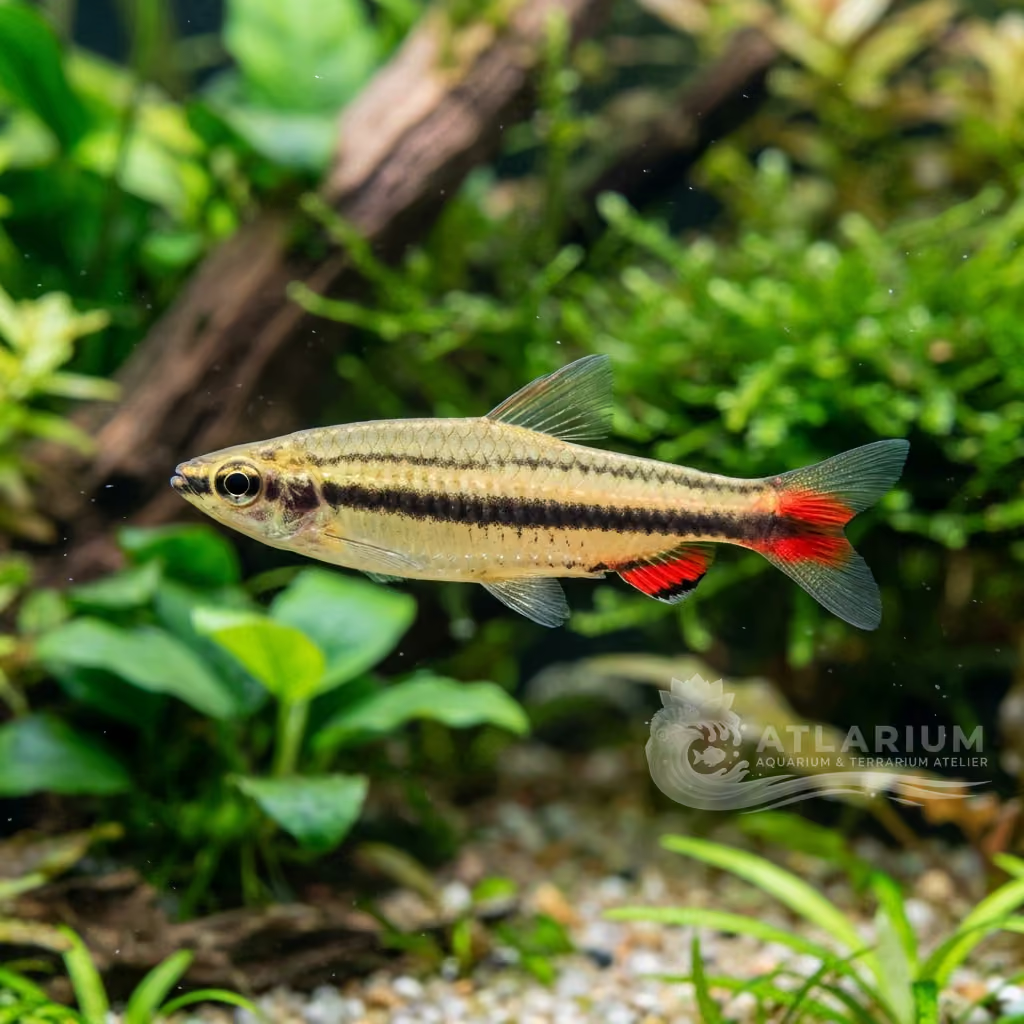
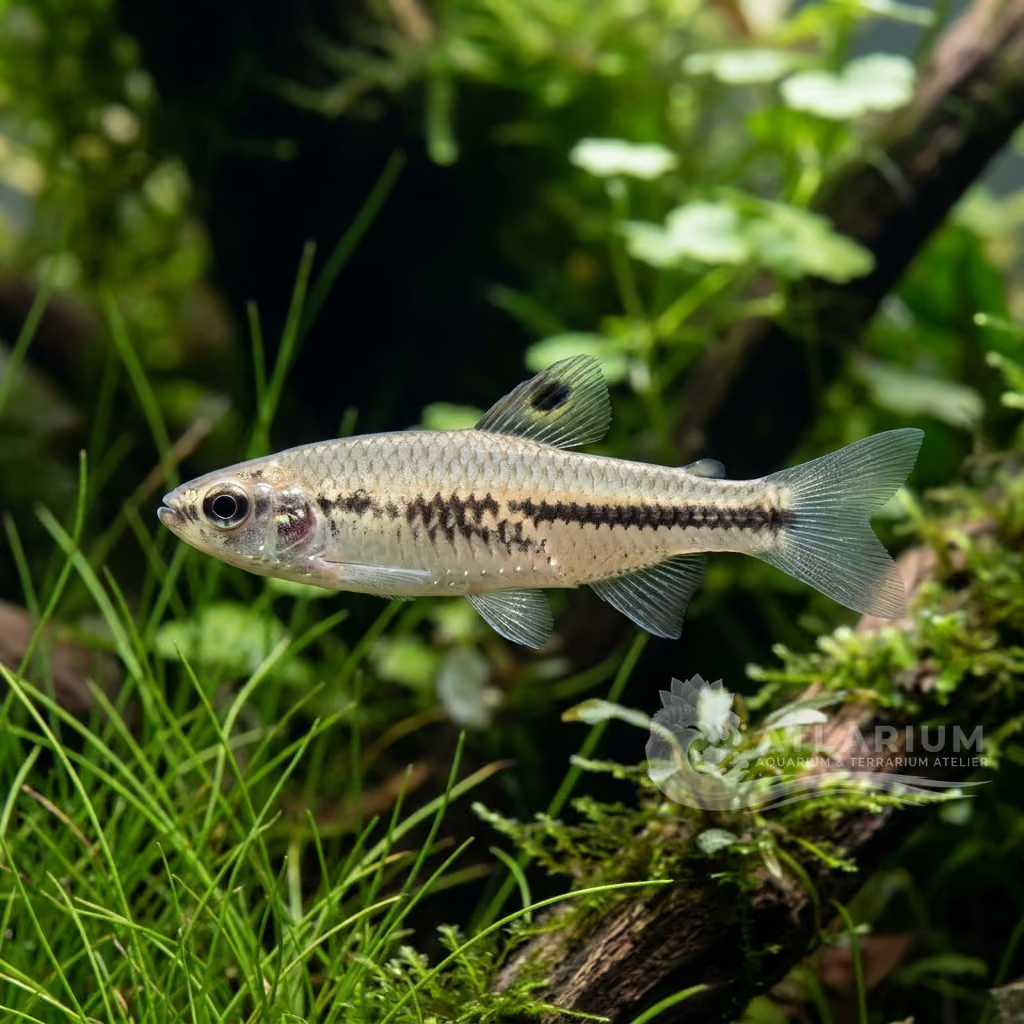
Famous for perennially swimming in a bizarre 45 degree oblique position with its snout pointing upwards. Body adorned with a clear, thick single blackish stripe (unifasciatus).
Water Temperature
24 - 28 °C
pH Value
5.5 - 7
Water type
Freshwater
Tank level
Surface
Adult size
5 cm
Minimum tank volume
>= 80 L
Minimum group
>= 6
GH
1 - 10 dGH
KH
1 - 6 dKH
TDS
25 - 210 ppm
Conductivity
39 - 328 uS/cm

Species description
Geographical Origin and Habitat: Rio Negro region and central basin (Brazil), French Guiana, Bolivia. Shares muddy and turbid lagoons covered with reeds and shrubs with the *N. eques* species.
Taxonomy and Morphology: One-lined Pencilfish (Nannostomus unifasciatus). Slender and filiform pencilfish (up to 5 cm / 2 inches). Like the eques, it shares the very special oblique posture.
Social Behavior: The diagonal hunter (Diptail posture). Swims at 45 degrees towards the surface, stationary in a thick school waiting for prey in unison.
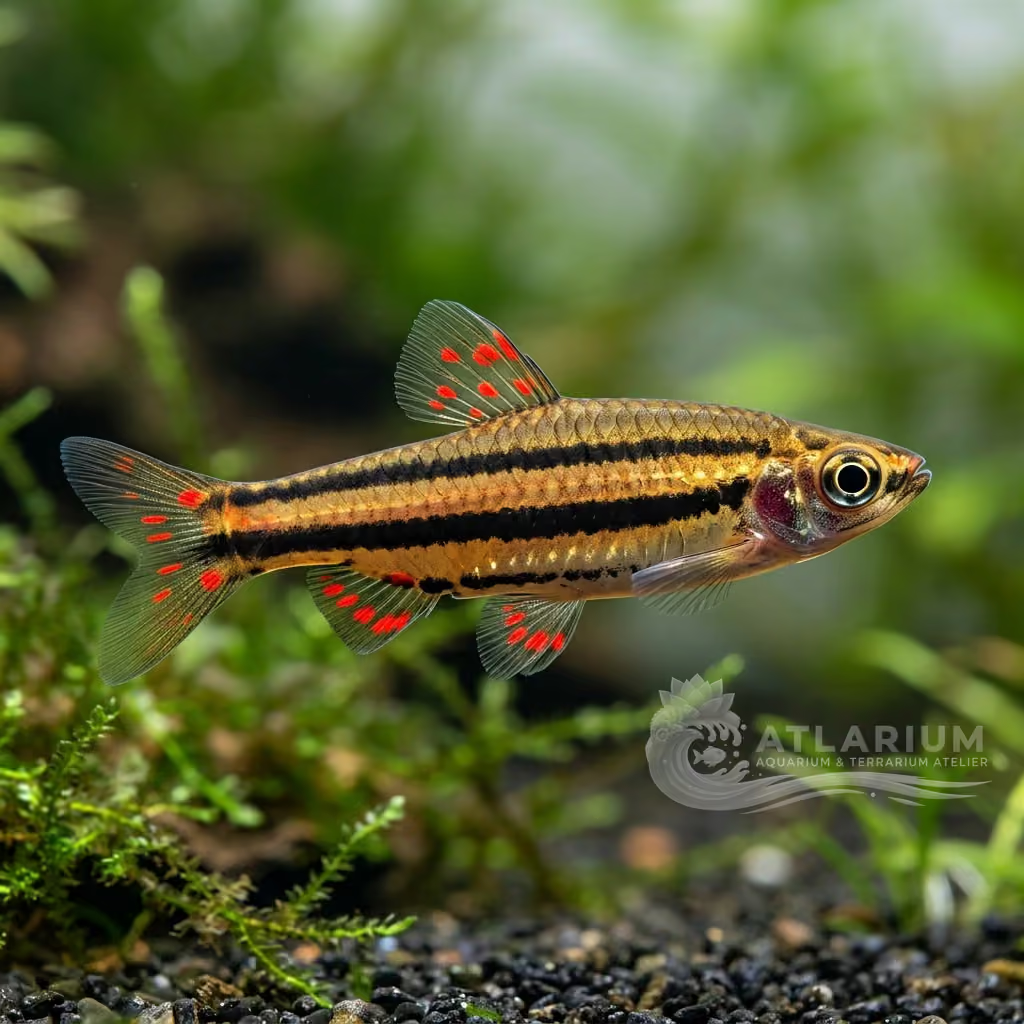
Coloration and Sexual Dimorphism: Compared to the eques (which has a white belly and is marbled brown), the unifasciatus is clean pale silvery/transparent, cut in two by a very clear and elegant continuous black line (Unifasciatus - one line). Males have bright red flames on the anal fin and on the lower lobe of the tail (females are pale or with very little red).

Care, breeding and tankmates
Aquarium Setup: Surface/Igapo species. Requires thick layers of Limnobium laevigatum or Salvinia. The lighting must be shielded and the current (Especially on the surface) absent, or they will fight the inclination, exhausting themselves.
Diet and Feeding: Pure surface feeder. They will NEVER pick up food on the bottom. The food must float for a long time. Freeze-dried Drosophila, fine flakes deposited on the surface or small nauplii. The upper mouth is small and ill-suited for large granules.
Water Quality: As fragile as the eques. Requires an acidic environment (pH 5.5-6.5) to ward off parasites and stress. The addition of peat, alder cones and dry leaves on the bottom is fundamental.
Compatibility and Cohabitation: Strictly peaceful. Coexists with other small South American inhabitants but suffers from food competition. Ideal companions: Corydoras (who clean the bottom that he ignores), small Loricariids and other Nannostomus.
Aquarium Breeding: They spawn by turning upside down under large water lily leaves or woods (exactly like the eques). Very tiny fry that hover near the nest.
Risks and Diseases: Starvation. One of the fish with the highest post-purchase starvation rate. Often, for an entire month it will ignore dry food waiting for live food. Whoever buys it must provide it with live cultures before attempting the transition to high-quality floating dry food.

Geographic origin and distribution
Rio Negro region and central basin (Brazil), French Guiana, Bolivia. Shares muddy and turbid lagoons covered with reeds and shrubs with the *N. eques* species.
Origin
Amazon, Orinoco, and Guianas

Fish profile
- Temperament
- Semi-aggressive
- This species is extremely peaceful but can be very shy. They must be kept in schools of at least a half dozen to feel secure. When settled and kept with appropriate companions, they display fascinating swimming behaviors and a calm demeanor.
- Diet
- Carnivore
- They are micro-predators requiring small meaty foods to thrive. Crushed flakes and micro-pellets are accepted, but frozen or live foods are vastly superior. Bloodworms, brine shrimp nauplii, and daphnia are excellent dietary staples.
- Life expectancy
- 3-5 years
- Adult size
- 5 cm
- Sex ratio
- Group
- Males are typically slimmer and may exhibit slightly more intense coloration than females. Keeping a higher ratio of females helps mitigate any mild inter-male aggression. In groups of six or more, any territorial behavior is harmlessly dispersed.
- Feeding frequency
- Twice daily
- They possess very small mouths and stomachs, necessitating small, frequent meals. Feeding them two to three times daily is recommended to maintain their energy. Care must be taken to ensure they are actually getting food before faster fish consume it all.
- Bioload
- Low
- The One-line pencilfish contributes a very minimal bioload to the aquarium system. Their slight build means they process very little food into waste. They are ideal inhabitants for mature, delicate nano-aquarium ecosystems.
- Flow
- Stagnant
- This pencilfish prefers slow-moving water reminiscent of their native sluggish streams. A strong current will cause them unnecessary stress and hinder their unique swimming style. Using a sponge filter or adjusting the output flow is the best approach.
- Jump risk
- Yes
- Like others in its genus, the One-line pencilfish is an adept jumper. An escape-proof lid is absolutely mandatory for their safety. Providing floating vegetation can give them a sense of security and reduce the urge to leap.
- Reproduction
- Oviparous
- Breeding is difficult and requires meticulous attention to water chemistry, specifically very soft and acidic water. They release their eggs among dense vegetation and offer no parental care. The adults must be removed immediately post-spawning to prevent them from consuming the eggs.
- Compatibility & tankmates
- Peaceful
- This is a remarkably peaceful species that is well-suited for a tranquil community tank. Avoid aggressive, fast-swimming, or much larger tankmates that could outcompete them for food. Good tankmates include rasboras, small tetras, and peaceful bottom dwellers like Otocinclus.
- Tank level
- Top
- They exhibit a unique behavior of swimming at an oblique angle near the water's surface. They generally occupy the top to middle levels of the water column. Tall, dense plants are appreciated as they love to rest among the leaves.

Scientific Parameters & Models
FishBase
Window to the official scientific data of the species
FishBase v25.04Data synced on: 06/15/2026
- Trophic level
- 3.3 ± 0.4 se
- Phylogenetic uniqueness (PD50)
- 0.5
- Bayesian Length-Weight
- a = 0.00759, b = 3.18
- VulnerabilityLow vulnerability (10 / 100)

Related species
Recommendations grouped by close relatives, companion choices, and similar care.