

Encyclopaedia
Barred pencilfish
Nannostomus espei
A rare, sought-after pencilfish from the Mazaruni River system in Guyana, from blackwater habitats with extreme pH (4.0–6.5). The body is crossed by alternating dark vertical bars giving it a unique pattern in the genus. Extremely shy: needs schools of at least 8–12 in mature, quiet tanks. Species-only tank strongly recommended. Requires live or frozen food daily — dry food alone is insufficient. Never add to uncycled tanks.
Share
Check out Barred pencilfish on Atlarium
24 - 28 °C
5.5 - 7
Freshwater
Middle
3.5 cm
>= 40 L
>= 8
1 - 8 dGH
1 - 4 dKH
25 - 160 ppm
39 - 250 uS/cm
Species description
Care, breeding and tankmates
Geographic Origin and Distribution
Origin
Fish profile
- Temperament
- Peaceful
- Diet
- Carnivore
- Sex ratio
- School
- Feeding frequency
- Twice daily
- Bioload
- Low
- Flow
- Strong
- Jump risk
- No
- Reproduction
- Oviparous
- Compatibility & tankmates
- Community
- Tank level
- Middle
Window to the official scientific data of the species
Scientific Parameters & Models
- Trophic level
- 3.3 ± 0.4 se
- Resilience
- High (less than 15 months)
- Phylogenetic uniqueness (PD50)
- 0.5
- Bayesian Length-Weight
- a = 0.00646, b = 3.13
Image gallery
Licensed images linked to the species or, when marked, to the closest representative taxon.
Related species
Recommendations grouped by close relatives, companion choices, and similar care.
Variants and close relatives
Same atlas type, nearby scientific identity, genus, or family.

Marilyn's Pencilfish
Nannostomus marilynae

Dwarf Pencilfish
Nannostomus minimus

Dwarf pencilfish
Nannostomus marginatus

Harrison's Pencilfish
Nannostomus harrisoni

Two-stripe Pencilfish
Nannostomus digrammus

Elegant Pencilfish
Nannostomus limatus

One-line Pencilfish
Nannostomus unifasciatus

Shining Pencilfish
Nannostomus nitidus

Three-lined pencilfish
Nannostomus trifasciatus

Diptail Pencilfish
Nannostomus eques

Coral Red Pencilfish
Nannostomus mortenthaleri

Anduze's Pencilfish
Nannostomus anduzei

Golden pencilfish
Nannostomus beckfordi

Spotted Copella
Copella nattereri

Half-banded Pyrrhulina
Pyrrhulina laeta

Meinken's Splashing Tetra
Copella meinkeni
Recommended companions
Compatible cards from coherent ecosystems with matching parameters.

Blyxa alternifolia
Blyxa alternifolia

Blyxa cf. vietii
Blyxa cf. vietii

Alternanthera reineckii "rosaefolia minor"
Alternanthera reineckii "rosaefolia minor"

Amblystegiaceae sp. "Manaus"
Amblystegiaceae sp. "Manaus"

Ammannia mauritiana
Ammannia mauritiana

Aldrovanda vesiculosa
Aldrovanda vesiculosa

Aciotis acuminifolia
Aciotis acuminifolia

Ammannia latifolia
Ammannia latifolia

Ammannia sp. 'Bonsai'
Ammannia sp. 'Bonsai'

Bacopa crenata
Bacopa crenata
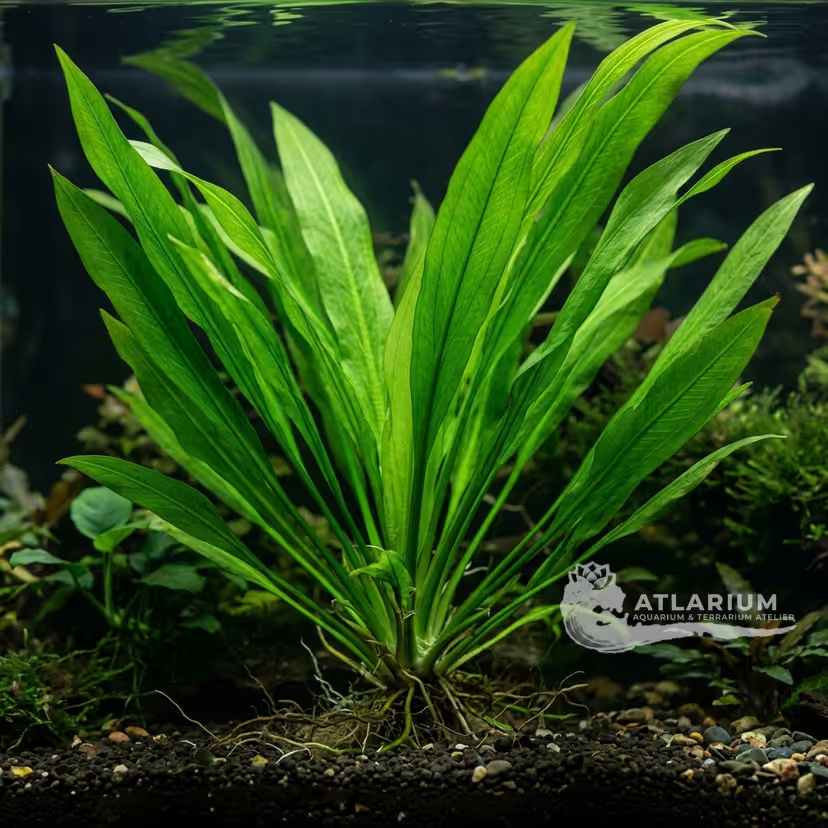
Amazon Sword
Aquarius grisebachii

Arrowhead Anubias
Anubias hastifolia
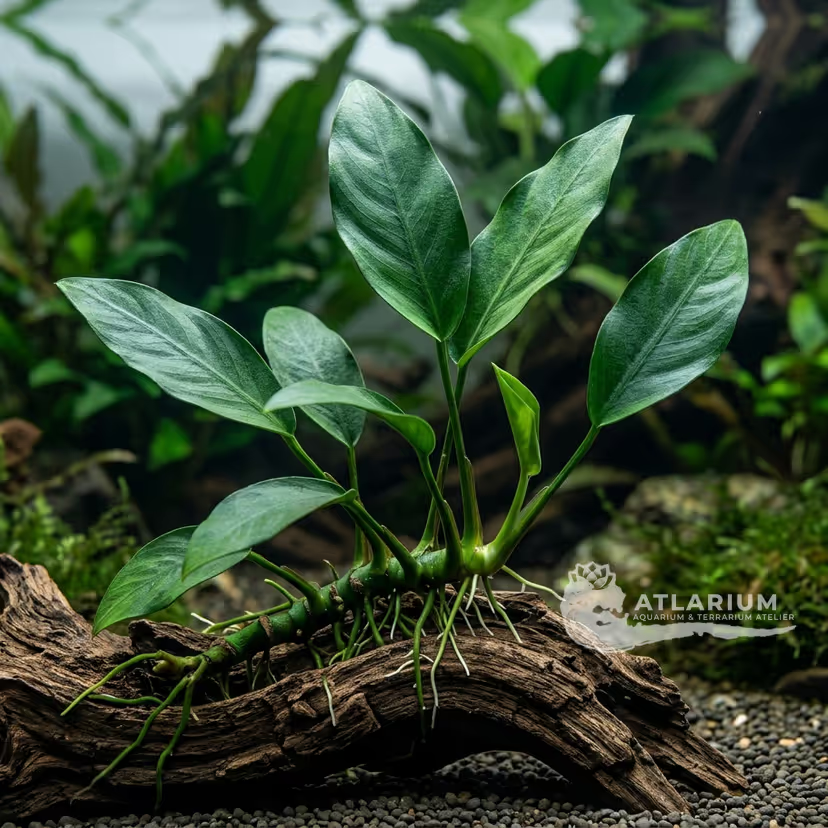
Anubias
Anubias barteri

Anubias nana
Anubias barteri var. nana

Bucephalandra motleyana "Braun-rot narrow"
Bucephalandra motleyana "Braun-rot narrow"

Bucephalandra motleyana "Riam Macam"
Bucephalandra motleyana "Riam Macam"
Similar care
Cards with similar requirements, difficulty, habitat, and husbandry profile.
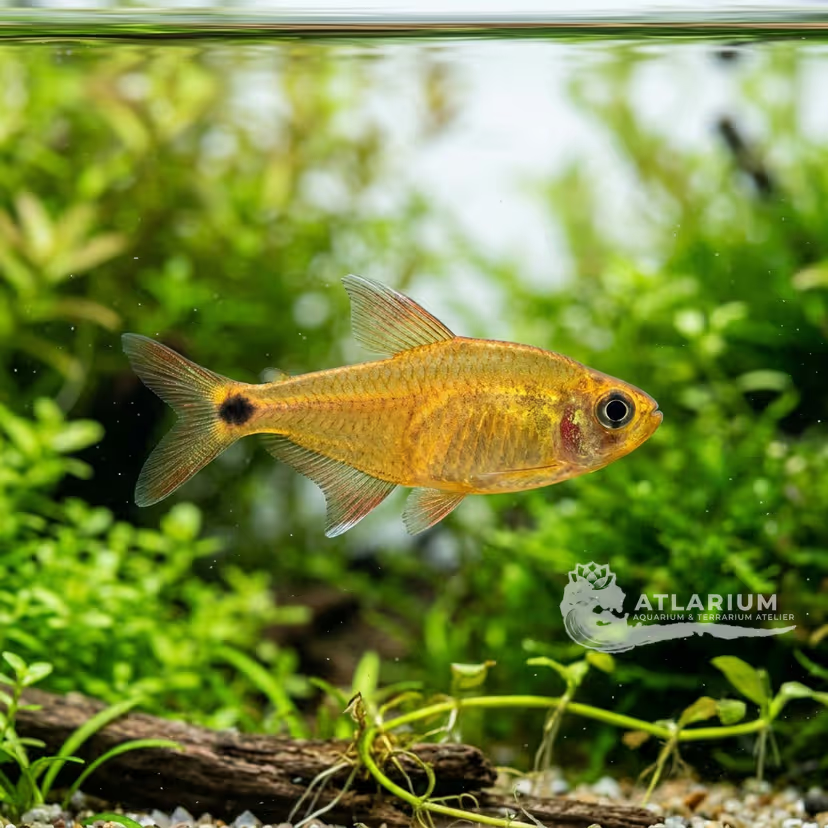
Dawn Tetra
Hyphessobrycon eos

Coffee-bean Tetra
Hyphessobrycon takasei
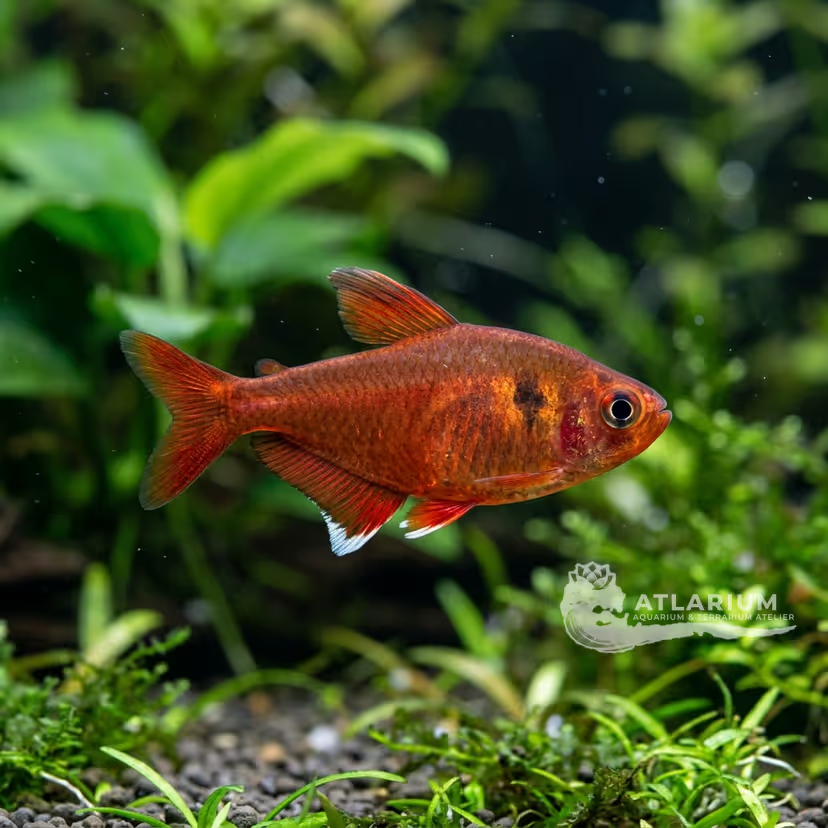
Copeland's Tetra
Hyphessobrycon copelandi

Short-lined Pyrrhulina
Pyrrhulina brevis
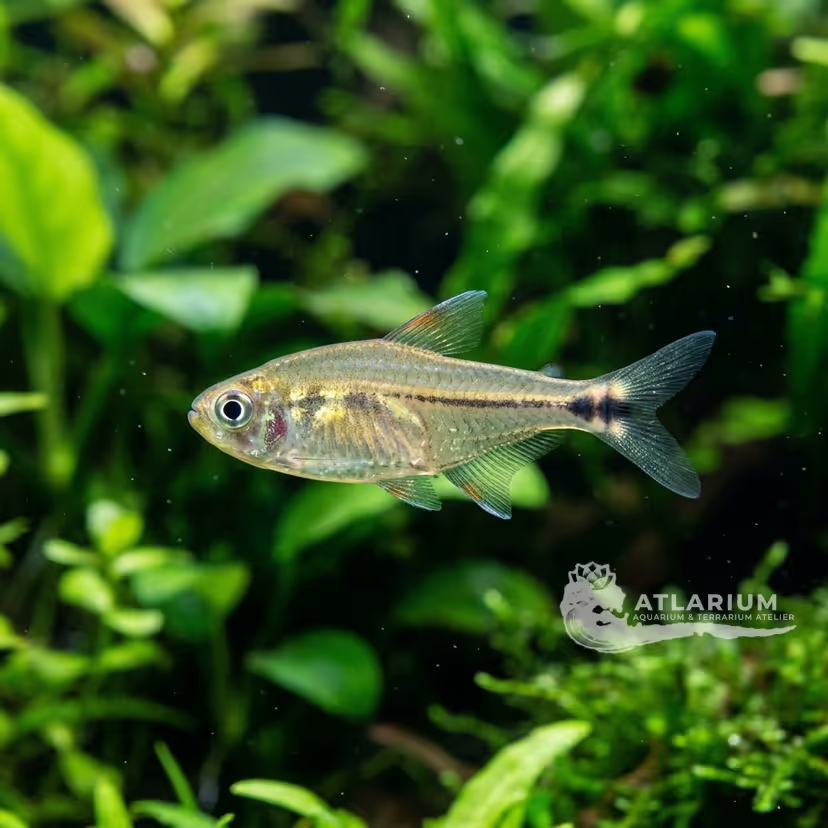
Dash-dot Tetra
Hemigrammus bellottii

Splash Tetra / Spraying Characin
Copella arnoldi
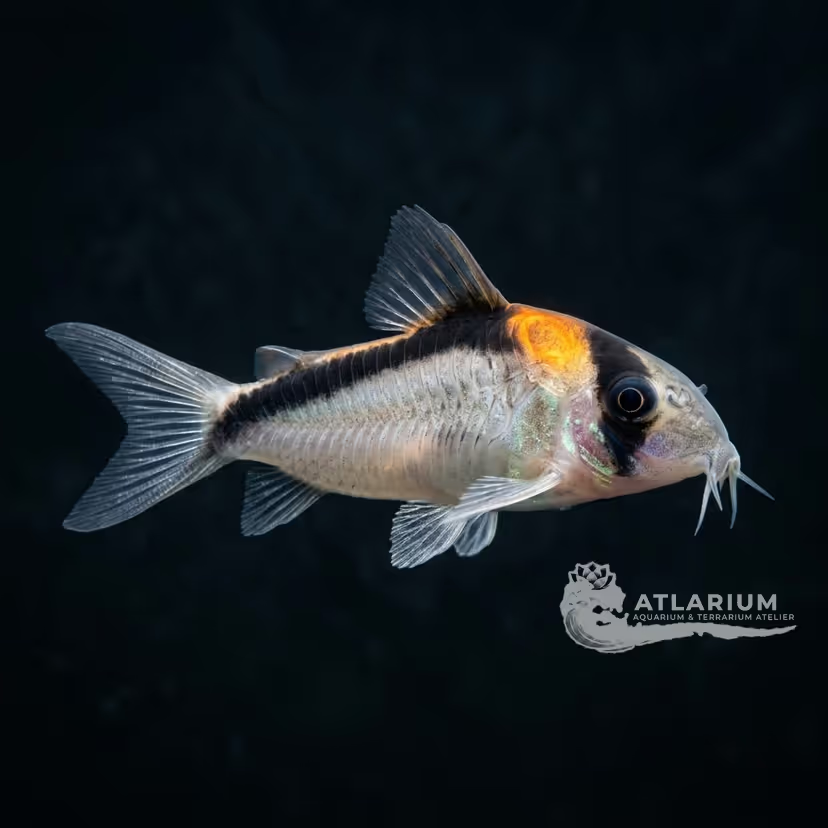
Adolfo's cory
Corydoras adolfoi

Red-spotted Copeina
Copeina guttata
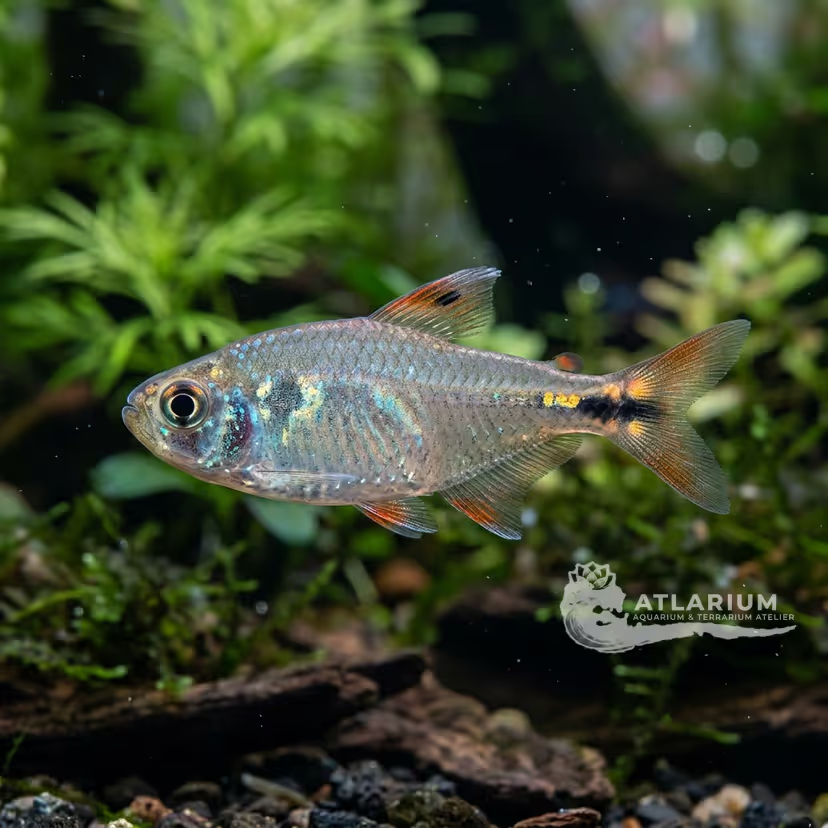
Diancema Tetra
Hyphessobrycon

Checker Barb
Oliotius oligolepis

Skunk cory
Corydoras arcuatus

Filamentous pyrrhulina
Pyrrhulina filamentosa

Agulha Tetra
Hyphessobrycon agulha

False Bandit Cory
Corydoras melini

Smudge Spot Cory
Corydoras similis

Flag Acara (Smiling Cichlid)
Laetacara curviceps