

Encyclopaedia
Diptail Pencilfish
Nannostomus eques
The 'head-up' Pencilfish. Famous for hovering at a 45-degree angle in synchronized schools. An incredibly peaceful, slow-moving fish that will easily starve to death if housed with fast, greedy tankmates.
Share
Check out Diptail Pencilfish on Atlarium
23 - 28 °C
5.5 - 7
Freshwater
Surface
5 cm
>= 60 L
>= 6
1 - 10 dGH
1 - 5 dKH
25 - 200 ppm
39 - 313 uS/cm
Species description
Care, breeding and tankmates
Geographic Origin and Distribution
Origin
Fish profile
- Temperament
- Semi-aggressive
- Diet
- Omnivore
- Sex ratio
- School
- Feeding frequency
- Twice daily
- Bioload
- The Brown Pencilfish, or Diptail, has a remarkably low bioload impact. Their diminutive size makes them perfect for smaller, densely planted aquariums. Excellent water quality must still be maintained despite their low waste output.
- Flow
- Stagnant
- Reproduction
- Oviparous
- Compatibility & tankmates
- They are exceptionally peaceful and should only be kept with similarly gentle species. Small tetras, dwarf corydoras, and otocinclus make excellent, harmonious tank mates. Avoid housing them with fast, aggressive feeders that might outcompete them.
- Tank level
- Top
Window to the official scientific data of the species
Scientific Parameters & Models
- Trophic level
- 3.3 ± 0.4 se
- Resilience
- Medium (1.4 - 4.4 years)
- Phylogenetic uniqueness (PD50)
- 0.5
- Bayesian Length-Weight
- a = 0.00759, b = 3.13
Image gallery
Licensed images linked to the species or, when marked, to the closest representative taxon.
Related species
Recommendations grouped by close relatives, companion choices, and similar care.
Variants and close relatives
Same atlas type, nearby scientific identity, genus, or family.

Dwarf pencilfish
Nannostomus marginatus

Harrison's Pencilfish
Nannostomus harrisoni

Two-stripe Pencilfish
Nannostomus digrammus

Elegant Pencilfish
Nannostomus limatus

One-line Pencilfish
Nannostomus unifasciatus

Shining Pencilfish
Nannostomus nitidus

Dwarf Pencilfish
Nannostomus minimus

Three-lined pencilfish
Nannostomus trifasciatus

Barred pencilfish
Nannostomus espei

Marilyn's Pencilfish
Nannostomus marilynae

Coral Red Pencilfish
Nannostomus mortenthaleri

Golden pencilfish
Nannostomus beckfordi

Anduze's Pencilfish
Nannostomus anduzei

Spotted Copella
Copella nattereri

Meinken's Splashing Tetra
Copella meinkeni

Short-lined Pyrrhulina
Pyrrhulina brevis
Recommended companions
Compatible cards from coherent ecosystems with matching parameters.

Blyxa alternifolia
Blyxa alternifolia

Blyxa cf. vietii
Blyxa cf. vietii

Alternanthera reineckii "rosaefolia minor"
Alternanthera reineckii "rosaefolia minor"

Ammannia mauritiana
Ammannia mauritiana

Ammannia latifolia
Ammannia latifolia

Ammannia sp. 'Bonsai'
Ammannia sp. 'Bonsai'

Aldrovanda vesiculosa
Aldrovanda vesiculosa

Arrowhead Anubias
Anubias hastifolia
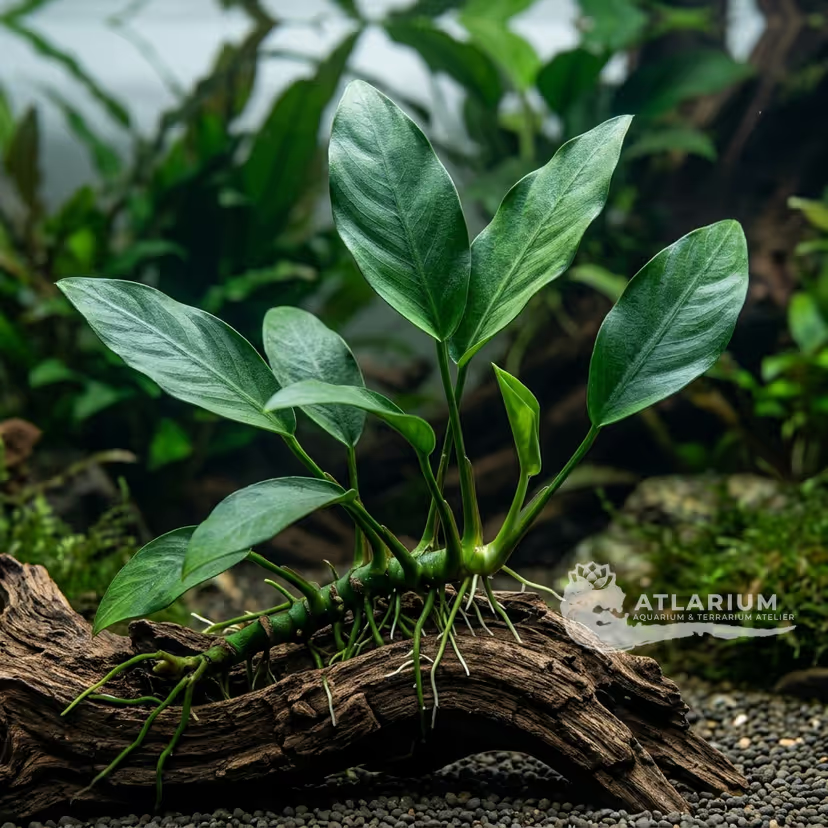
Anubias
Anubias barteri

Anubias nana
Anubias barteri var. nana

Amblystegiaceae sp. "Manaus"
Amblystegiaceae sp. "Manaus"

Bacopa crenata
Bacopa crenata

Bucephalandra motleyana "Braun-rot narrow"
Bucephalandra motleyana "Braun-rot narrow"

Bucephalandra motleyana "Riam Macam"
Bucephalandra motleyana "Riam Macam"

Bacopa sp. "Japan"
Bacopa sp. "Japan"

Bolbitis heteroclita
Bolbitis heteroclita
Similar care
Cards with similar requirements, difficulty, habitat, and husbandry profile.

Half-banded Pyrrhulina
Pyrrhulina laeta

Splash Tetra / Spraying Characin
Copella arnoldi
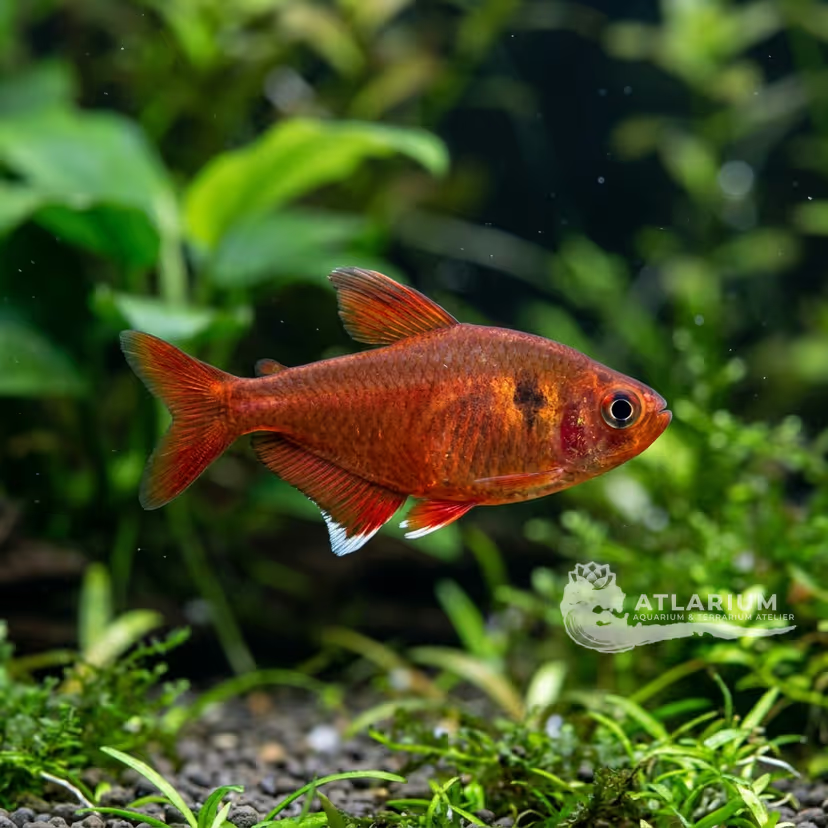
Copeland's Tetra
Hyphessobrycon copelandi
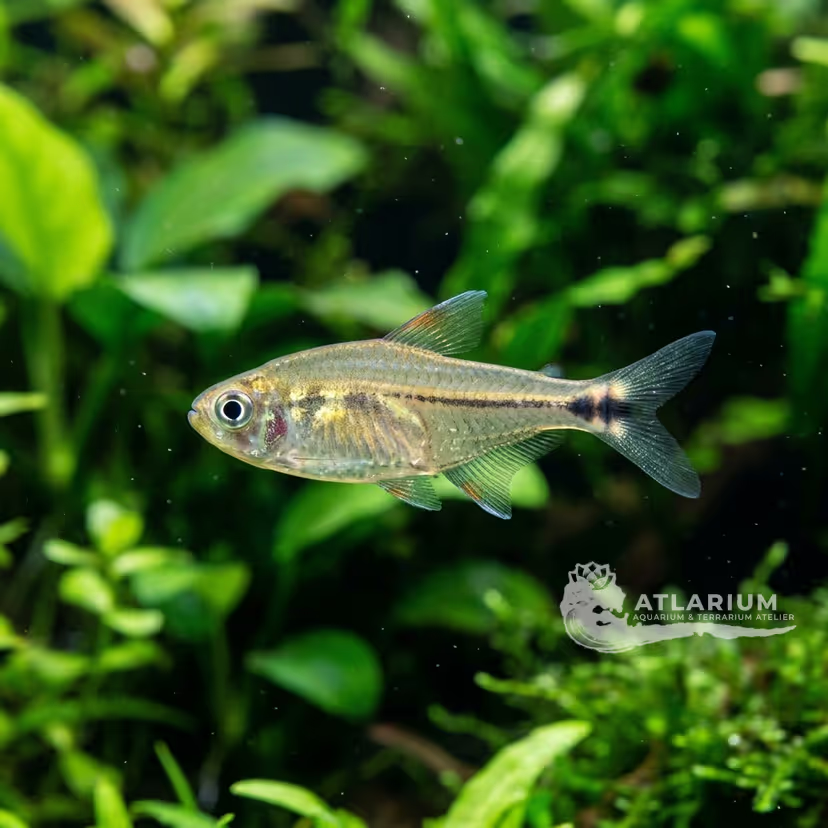
Dash-dot Tetra
Hemigrammus bellottii
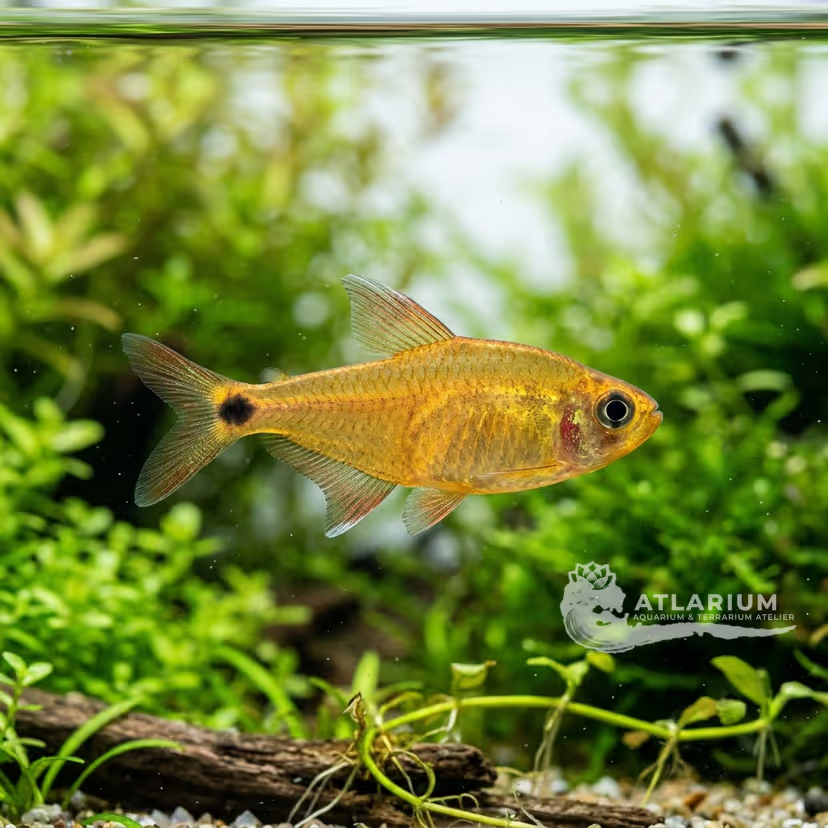
Dawn Tetra
Hyphessobrycon eos

Red-spotted Copeina
Copeina guttata

False Bandit Cory
Corydoras melini

Coffee-bean Tetra
Hyphessobrycon takasei
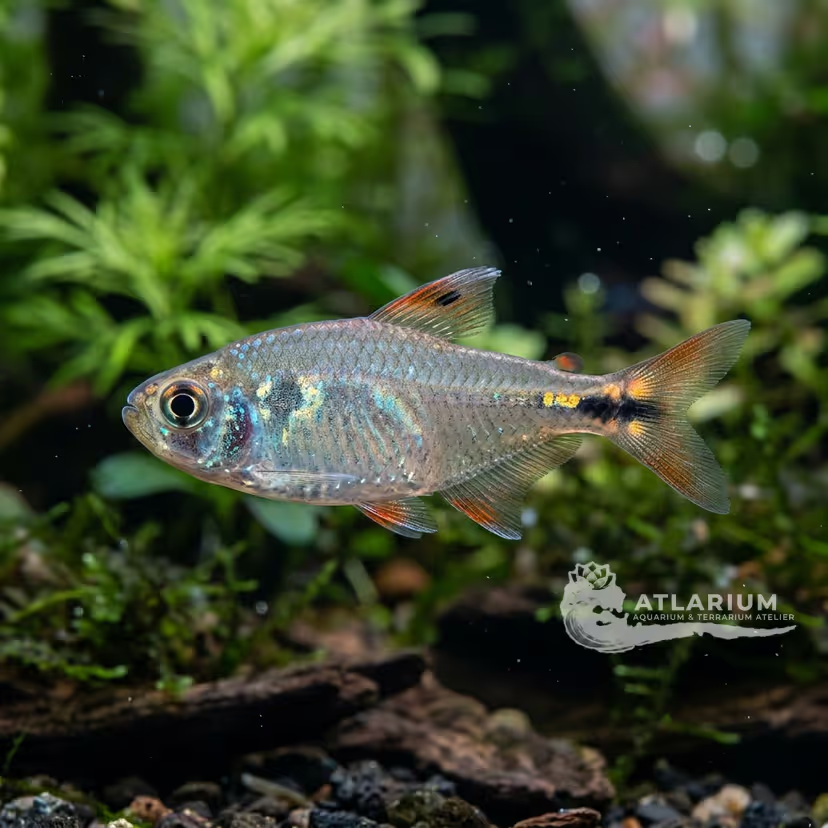
Diancema Tetra
Hyphessobrycon

Cryptic Corydoras
Corydoras crypticus

Agulha Tetra
Hyphessobrycon agulha

Filamentous pyrrhulina
Pyrrhulina filamentosa
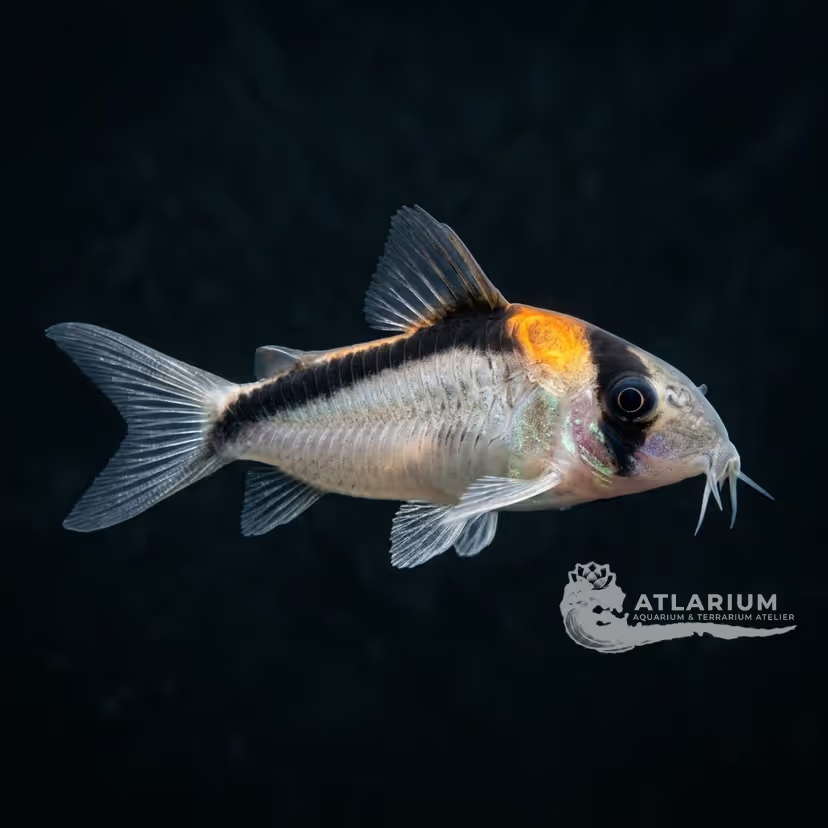
Adolfo's cory
Corydoras adolfoi

Amapa Cory
Corydoras amapaensis

Rabaut's Corydoras / Rust Corydoras
Corydoras rabauti

Three Stripe Corydoras (False Julii)
Corydoras trilineatus